Rosie 2.0
The Rosie 2.0 is a commercial-grade autonomous robot vacuum developed by Tailos, designed to handle large-scale floor cleaning in business and institutional environments. It is offered in a two-pack configuration, allowing facilities to deploy multiple units simultaneously for broader coverage and more efficient cleaning cycles. Built to commercial durability standards, the Rosie 2.0 combines intelligent navigation with powerful suction technology to reduce reliance on manual labor and improve facility maintenance consistency. It targets businesses, hospitality venues, retail spaces, and other high-traffic environments where reliable, automated cleaning is a priority.
Overview and Use Cases
The Rosie 2.0 is an autonomous commercial cleaning robot produced by Tailos. It is positioned as a labor-saving solution for facilities that require consistent, large-area floor maintenance. Typical deployment environments reportedly include:
- Hospitality and hotels — maintaining lobbies, corridors, and event spaces overnight or between guest activity
- Retail and shopping centers — covering expansive hard-floor or low-pile carpet areas during off-hours
- Corporate offices and campuses — automating routine vacuuming to free janitorial staff for higher-complexity tasks
- Healthcare and institutional facilities — supporting hygiene standards with scheduled, repeatable cleaning runs
The two-pack bundle configuration is a notable commercial differentiator, enabling buyers to cover larger floor plans without purchasing and managing units individually.
Key Technical Features
While Tailos has not publicly disclosed exhaustive technical specifications for the Rosie 2.0 as of available reporting, the robot is described as incorporating:
- Intelligent navigation — onboard sensors and mapping capabilities that allow the unit to plan efficient cleaning paths and avoid obstacles
- Powerful suction technology — commercial-grade suction designed to handle the debris loads typical of high-traffic environments
- Autonomous operation — the ability to execute cleaning cycles with minimal human supervision
- Commercial-grade durability — construction standards intended for repeated daily use in demanding settings
Specific figures for battery runtime, dustbin capacity, suction power (Pa), or sensor suite have not been independently confirmed and should be verified directly with Tailos before purchase decisions.
Comparison to Similar Robots
Within the commercial autonomous floor-care segment, the Rosie 2.0 competes broadly with products such as the iRobot Roomba i7+ (consumer-leaning but used commercially), Ecovacs DEEBOT commercial lines, and dedicated commercial units from brands like Tennant and Nilfisk. The Rosie 2.0's two-pack offering is a packaging approach less commonly seen among direct competitors, potentially lowering the per-unit cost of entry for multi-unit deployments.
Tailos's own product portfolio, based on publicly available information, appears focused on the cleaning robotics niche rather than spanning surgical, industrial, or underwater categories — unlike some larger robotics conglomerates. This specialization may translate to more tailored software and support for cleaning-specific workflows.
Market Context and Target Buyers
The Rosie 2.0 is positioned in the commercial and light-enterprise price tier, above consumer robot vacuums but below heavy industrial floor-scrubbing platforms. Target buyers are likely:
- Facility management companies
- Hotel and hospitality operators
- Property management firms
- Retail chain operators seeking scalable cleaning automation
Pricing has not been publicly listed in widely available sources; prospective buyers are advised to contact Tailos directly for current pricing and volume discount structures.
Deployments and Notable Customers
As of publicly available reporting, specific named customer deployments or case studies for the Rosie 2.0 have not been widely documented. Tailos has marketed the product toward commercial facility operators, but independently verified reference accounts are not confirmed at this time.
Future Outlook
The commercial cleaning robotics market is experiencing sustained growth, driven by labor cost pressures, hygiene awareness, and advances in autonomous navigation. Products like the Rosie 2.0 are well-positioned to benefit from these trends if Tailos continues to invest in software updates, fleet management capabilities, and integration with building management systems. Expanded connectivity features — such as remote monitoring dashboards and scheduling APIs — are increasingly expected by enterprise buyers and may represent areas of future development for the platform.
Related videos

Related entries
 Robot
RobotRelay Delivery Robot
The Relay Delivery Robot is an autonomous indoor delivery robot developed by Relay Robotics (formerly known as Savioke), designed primarily for hospitality and healthcare environments. It navigates hotel corridors and hospital hallways independently, rides elevators without human assistance, and delivers guest amenities, medications, linens, and other supplies directly to rooms or designated drop-off points. Relay is one of the most widely deployed service robots in its category, reportedly completing over one million lifetime deliveries with a publicly cited success rate of approximately 99.8%. With a cargo capacity of around 10 gallons, the robot is compact enough to operate in busy public spaces while carrying a meaningful payload of everyday supplies.
2,774 views
 Robot
RobotSpot
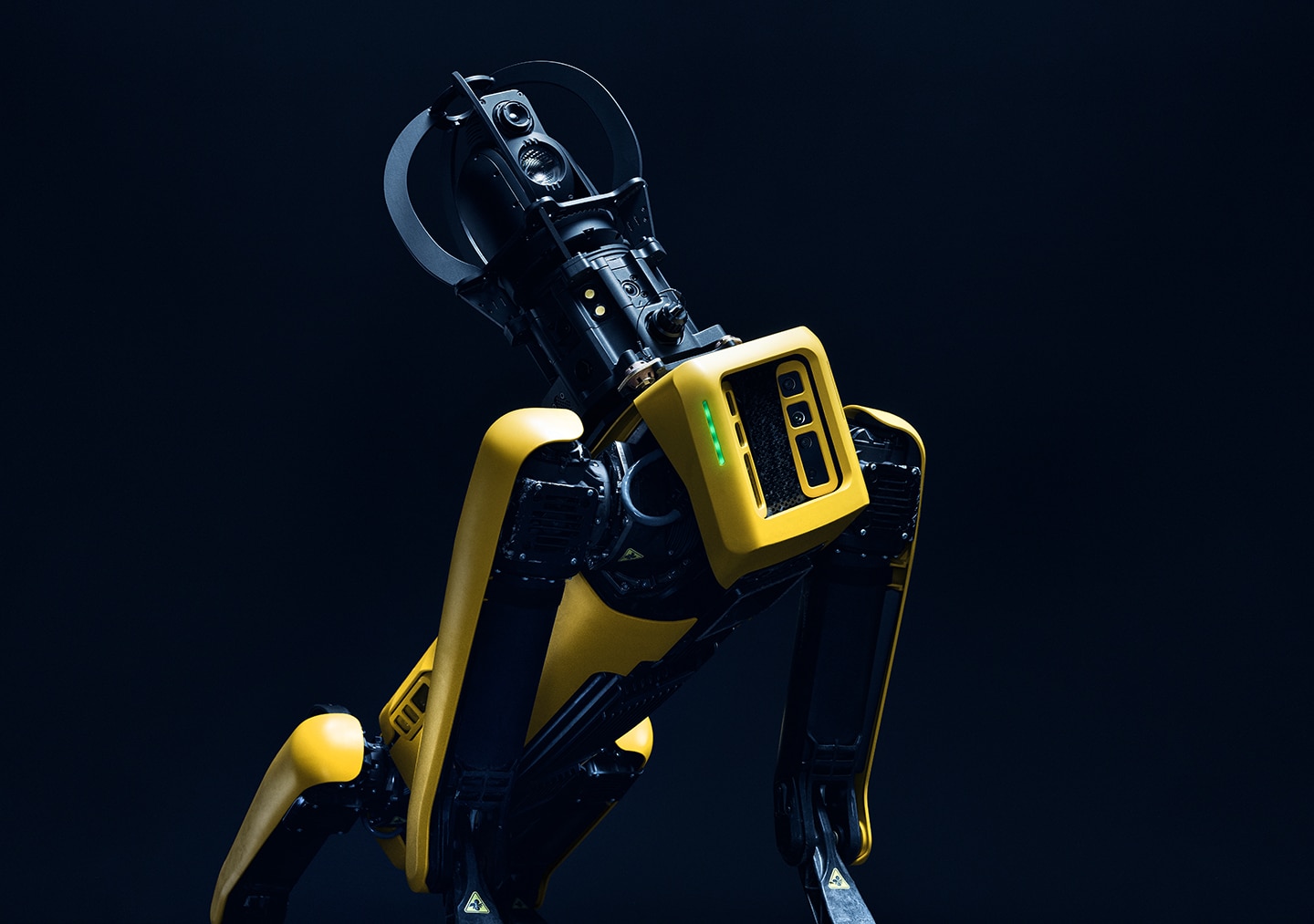
Spot is a four-legged autonomous robot developed by Boston Dynamics, a robotics company headquartered in Waltham, Massachusetts. Designed for inspection, security, and data collection in complex or hazardous environments, Spot can navigate stairs, rough terrain, and confined spaces that are inaccessible to wheeled robots. It is commercially available and has been deployed across industries including utilities, oil and gas, construction, and public safety. Spot supports a modular payload system that accommodates thermal cameras, pan-tilt-zoom (PTZ) cameras, lidar units, methane sensors, and other mission-specific hardware. Boston Dynamics also offers the Orbit fleet-management software platform, enabling operators to schedule autonomous inspection routes, aggregate sensor data, and manage multiple Spot units from a central interface. The robot is widely regarded as one of the most capable and commercially mature legged robots on the market.
1,469 views
 Robot
RobotRealSense Depth Camera D455
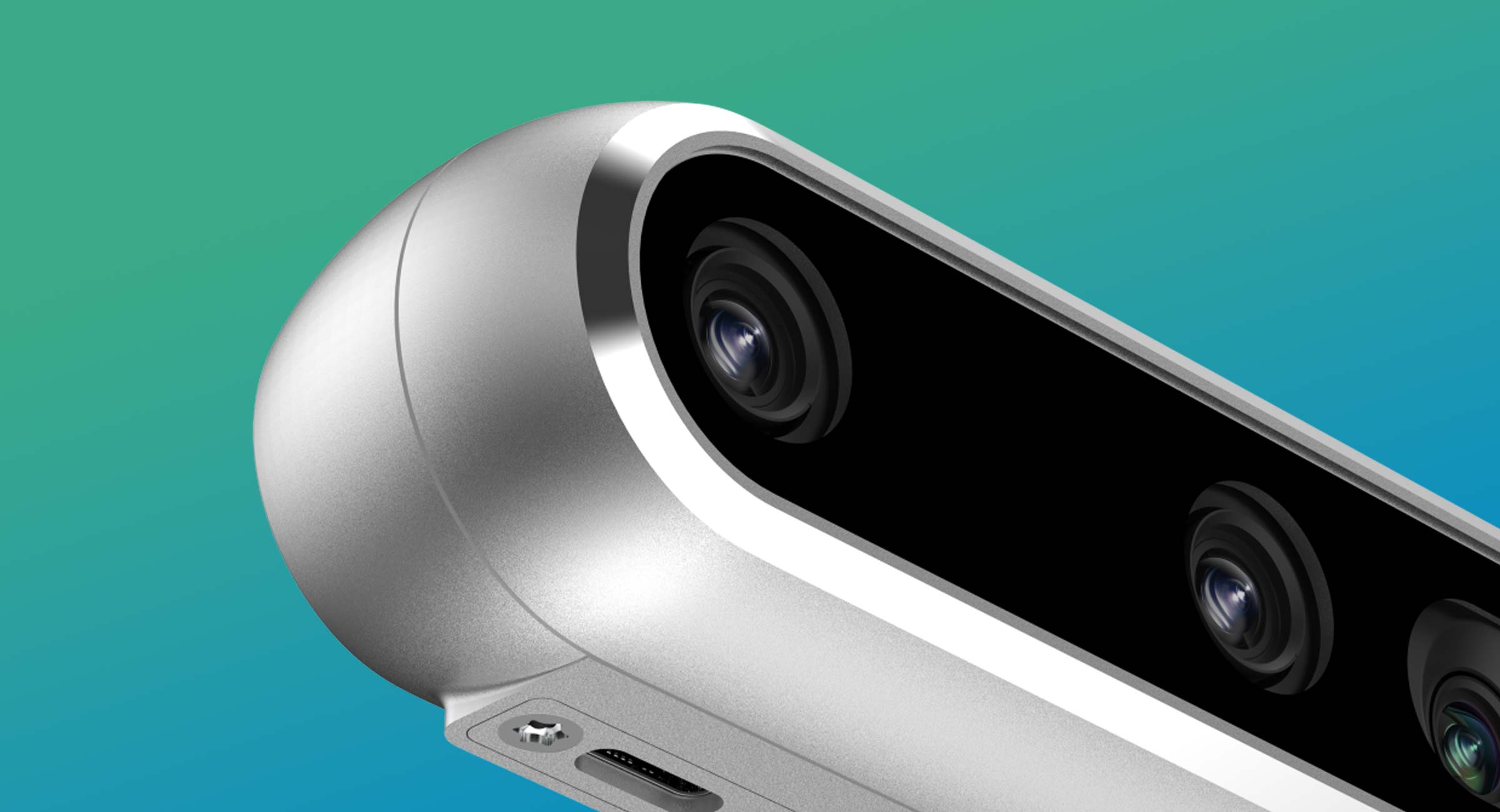
The RealSense Depth Camera D455 is a stereoscopic active-infrared depth camera belonging to Intel's D400 series, designed to capture high-fidelity depth data for robotics, autonomous mobile robots (AMRs), drones, and computer-vision applications. It features a 95 mm stereo baseline — the widest in the D400 lineup at the time of its introduction — which reportedly enables depth error of under 2% at ranges up to approximately 4 metres. Originally developed under the Intel RealSense brand, the D455 and related products were later spun off as part of an independent RealSense business unit following Intel's restructuring of the division around 2021–2022. The camera is widely adopted in research, industrial automation, and humanoid-robot development owing to its compact USB-powered form factor, open SDK support, and relatively accessible price point.
782 views
 Robot
RobotOptimus Gen 2
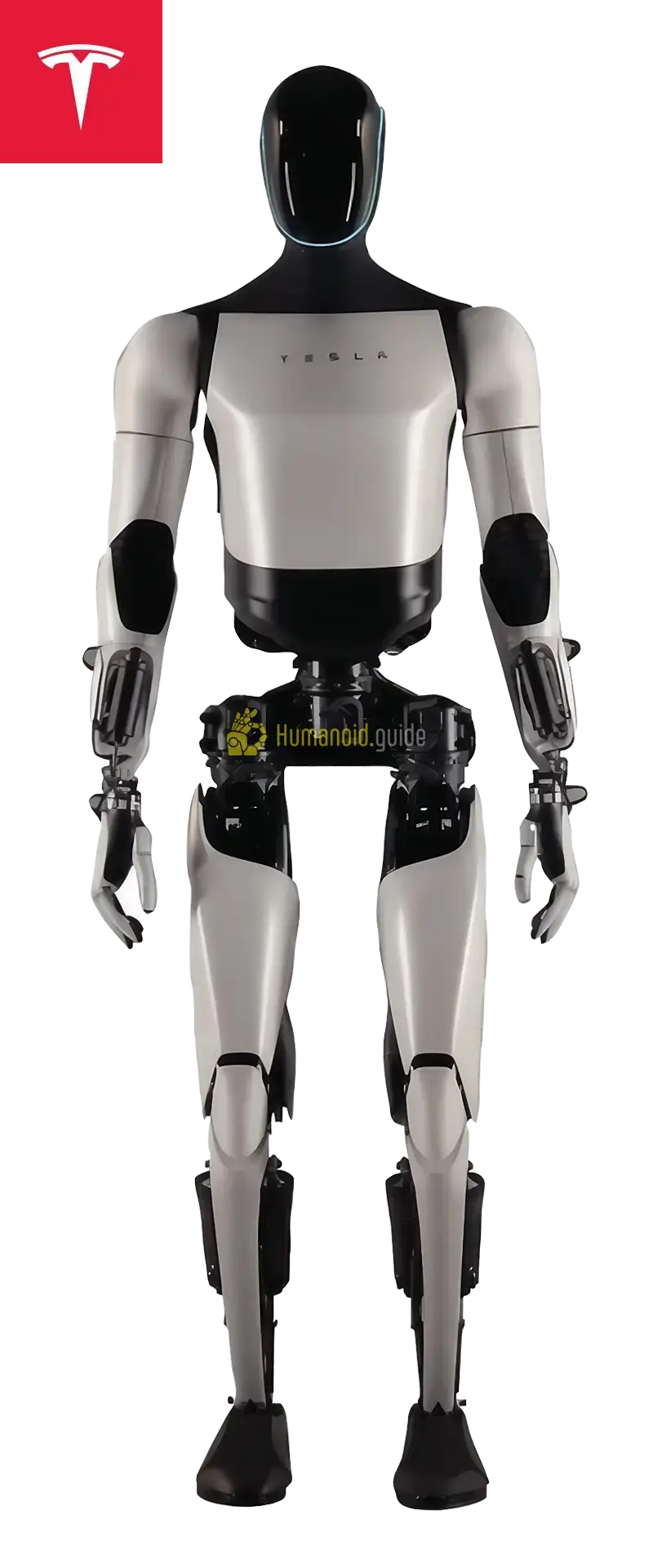
Optimus Gen 2 is a general-purpose humanoid robot developed by Tesla, representing the second major hardware iteration of the company's Optimus program. It is designed to perform a broad range of physical tasks, leveraging perception and motion-planning software derived from Tesla's Full Self-Driving (FSD) stack. As of public reporting, units are used for internal demonstrations and select tasks within Tesla's own manufacturing facilities. Tesla has stated an ambition to eventually offer Optimus at consumer-accessible pricing, positioning it as a mass-market humanoid rather than an industrial-only platform. Compared to its predecessor, Gen 2 reportedly features improved hand dexterity, smoother whole-body motion, and a lighter overall frame, though many detailed specifications remain unconfirmed or subject to ongoing revision as the program continues to iterate.
499 views