Optimus Gen 2
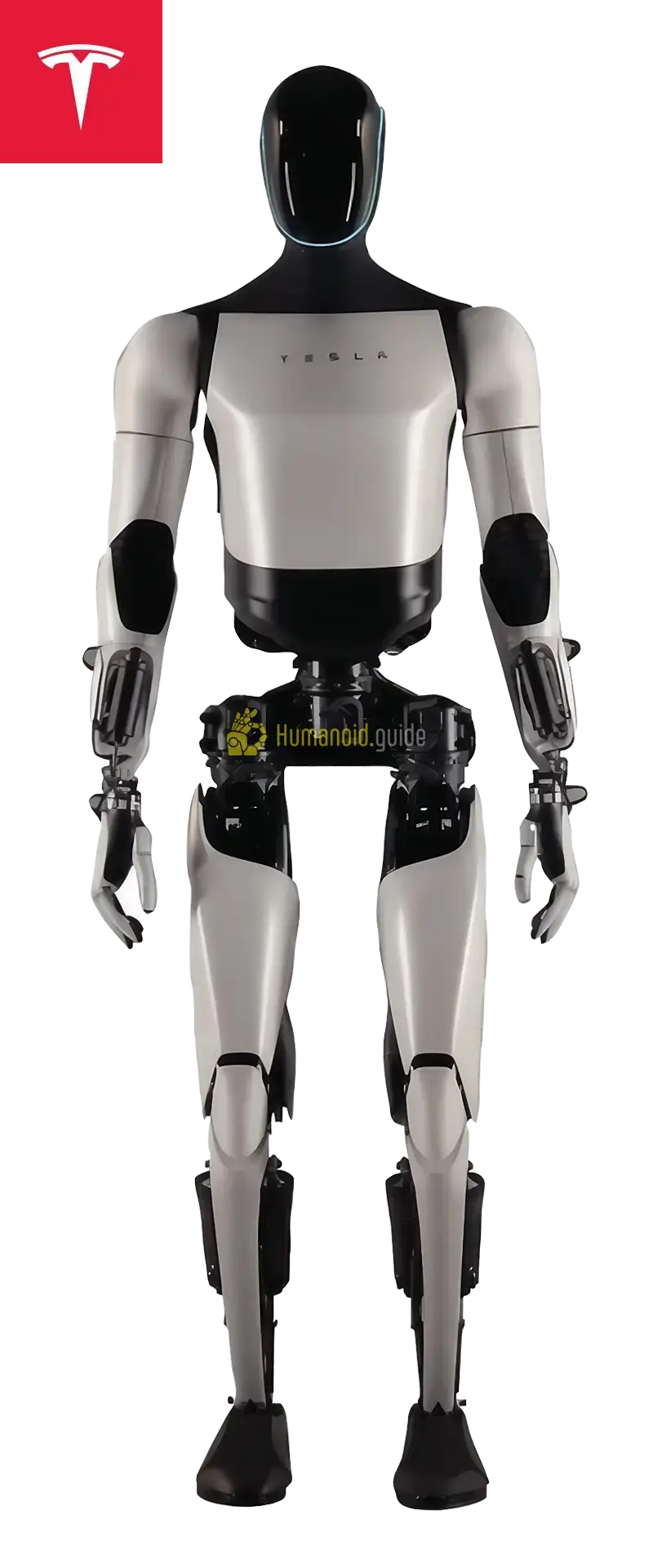
Optimus Gen 2 is a general-purpose humanoid robot developed by Tesla, representing the second major hardware iteration of the company's Optimus program. It is designed to perform a broad range of physical tasks, leveraging perception and motion-planning software derived from Tesla's Full Self-Driving (FSD) stack. As of public reporting, units are used for internal demonstrations and select tasks within Tesla's own manufacturing facilities. Tesla has stated an ambition to eventually offer Optimus at consumer-accessible pricing, positioning it as a mass-market humanoid rather than an industrial-only platform. Compared to its predecessor, Gen 2 reportedly features improved hand dexterity, smoother whole-body motion, and a lighter overall frame, though many detailed specifications remain unconfirmed or subject to ongoing revision as the program continues to iterate.
Overview and Use Cases
Optimus Gen 2 is Tesla's second-generation humanoid robot prototype, unveiled publicly in late 2023. It is built around the premise that a general-purpose humanoid can take on repetitive, physically demanding, or hazardous tasks that are currently performed by human workers. Tesla has demonstrated the robot performing tasks such as sorting objects, handling parts, and executing basic manipulation sequences.
The primary near-term use case is within Tesla's own factories, where units are reportedly being tested on real production-line tasks. Over the longer term, Tesla envisions Optimus operating in a wide variety of environments — from manufacturing and logistics to, eventually, consumer households.
Key Technical Details
While Tesla has not published a comprehensive technical datasheet, several features have been highlighted in official presentations and public demonstrations:
- Hands: Gen 2 features a redesigned hand with 11 degrees of freedom, enabling more precise grasping and manipulation compared to the first-generation prototype.
- Actuators: The robot uses Tesla-designed actuators throughout the body, with the company emphasizing cost reduction and in-house manufacturing as key goals.
- Locomotion: Gen 2 reportedly walks more fluidly than its predecessor, with improved balance and a faster walking speed (Tesla cited approximately 30% speed improvement over Gen 1, though this figure should be treated as a demonstration claim).
- Weight: The frame is said to be lighter than Gen 1, though an exact confirmed figure has not been independently verified.
- Perception: Sensors include cameras feeding into a vision system informed by Tesla's FSD neural network architecture. The robot does not rely on lidar, consistent with Tesla's camera-first philosophy.
- Onboard compute: Powered by Tesla's own silicon, though specific chip details for Gen 2 have not been fully disclosed publicly.
Comparison to Competitors
Optimus Gen 2 enters a competitive humanoid landscape that includes:
- Boston Dynamics Atlas: A highly capable research and demonstration platform known for dynamic mobility, but not positioned for mass-market consumer pricing.
- Figure 01 / Figure 02 (Figure AI): A U.S.-based humanoid targeting industrial deployment, with reported partnerships in automotive manufacturing.
- 1X Neo / EVE: Norwegian-American humanoid programs focused on service and light industrial tasks.
- Unitree H1/G1: Chinese humanoids competing on cost and agility.
Tesla's primary differentiator is its stated intent to achieve high-volume, low-cost production by leveraging existing manufacturing scale and its proprietary AI stack — an approach no competitor has yet demonstrated at scale.
Market Context and Target Buyers
Tesla has publicly suggested a long-term target price that would make Optimus accessible well below the cost of most industrial humanoids currently on the market, though no confirmed retail price has been announced. The implied target buyer segments include:
- Industrial / manufacturing: Repetitive assembly, parts handling, and inspection tasks.
- Logistics: Warehouse picking and sorting.
- Consumer (long-term): Household assistance, though this remains a speculative future application.
The robot is currently in a prototype and internal-deployment phase, not available for commercial sale as of public reporting.
Deployments and Notable Activity
As of available public information, Optimus Gen 2 units are deployed within Tesla's own facilities for testing and task evaluation. Tesla CEO Elon Musk has stated that the company aims to use thousands of Optimus robots internally before offering them externally. No third-party customer deployments have been publicly confirmed to date.
Future Outlook
Tesla has signaled aggressive development timelines for Optimus, with Musk making optimistic public statements about production ramp and eventual unit economics. Analysts and observers generally treat these timelines with caution given the technical challenges of general-purpose humanoid robotics. Key milestones to watch include the transition from demonstration tasks to sustained, unsupervised production work, the announcement of any external commercial availability, and further hardware revisions that may constitute a Gen 3 platform.
Related videos

Tesla's Optimus Factory Just Hit 4 Floors — 27,000 Robots/Day by 2027
Tech Revolution

Elon Musk SHOCKED Everyone With Tesla’s Most Human-Like Optimus Robot
Carros Show

Elon Musk STUNNED The Industry with Tesla's Strongest Optimus Robot
Carros Show

Optimus factory, Cybercab & Teslas Future: Joe Tegtmeyer Spills the beans!
Tesla Jigsaw

Tesla Optimus Gen 3 Finally UPDATED - It Could Change Retirement Forever!
Tesla Insider News

Elon Musk Revealed Tesla’s Largest Factory of Ultra-Realistic Optimus Robots
Carros Show
Community buzz (Reddit)
Communities pull together in a crisis.
r/Snorkblot · ▲ 60,039
Spot on
r/Millennials · ▲ 58,254
Curiosity wheels taken yesterday, showing the damages caused during the 13 years it has been on the Red Planet
r/spaceporn · ▲ 46,903
Gen Z really looked at alcohol and said ‘hard pass’
r/SipsTea · ▲ 41,688
Retail Stare
r/CuratedTumblr · ▲ 39,409
Related entries
 Robot
RobotRelay Delivery Robot
The Relay Delivery Robot is an autonomous indoor delivery robot developed by Relay Robotics (formerly known as Savioke), designed primarily for hospitality and healthcare environments. It navigates hotel corridors and hospital hallways independently, rides elevators without human assistance, and delivers guest amenities, medications, linens, and other supplies directly to rooms or designated drop-off points. Relay is one of the most widely deployed service robots in its category, reportedly completing over one million lifetime deliveries with a publicly cited success rate of approximately 99.8%. With a cargo capacity of around 10 gallons, the robot is compact enough to operate in busy public spaces while carrying a meaningful payload of everyday supplies.
2,727 views
 Robot
RobotSpot
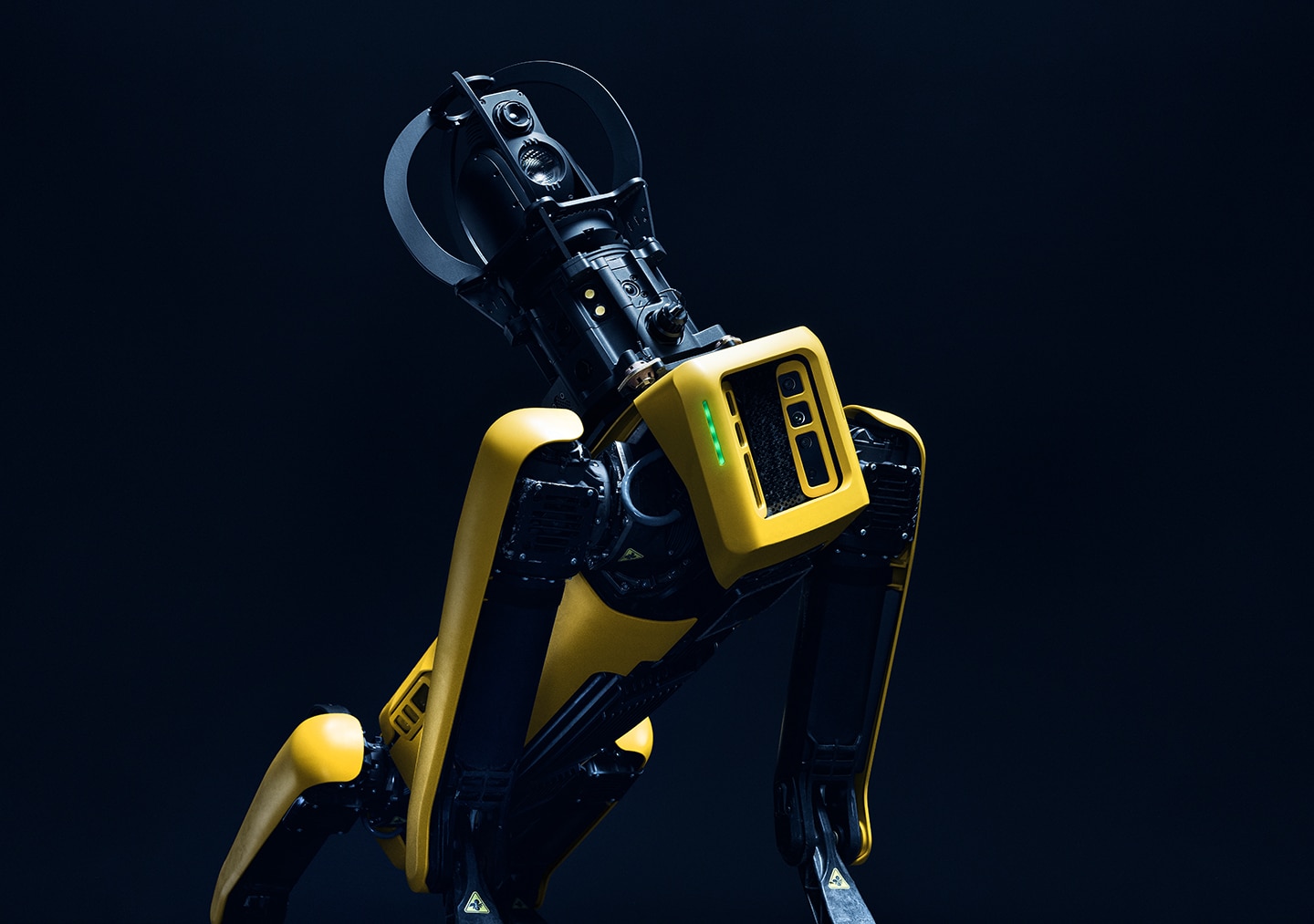
Spot is a four-legged autonomous robot developed by Boston Dynamics, a robotics company headquartered in Waltham, Massachusetts. Designed for inspection, security, and data collection in complex or hazardous environments, Spot can navigate stairs, rough terrain, and confined spaces that are inaccessible to wheeled robots. It is commercially available and has been deployed across industries including utilities, oil and gas, construction, and public safety. Spot supports a modular payload system that accommodates thermal cameras, pan-tilt-zoom (PTZ) cameras, lidar units, methane sensors, and other mission-specific hardware. Boston Dynamics also offers the Orbit fleet-management software platform, enabling operators to schedule autonomous inspection routes, aggregate sensor data, and manage multiple Spot units from a central interface. The robot is widely regarded as one of the most capable and commercially mature legged robots on the market.
1,204 views
 Robot
RobotRealSense Depth Camera D455
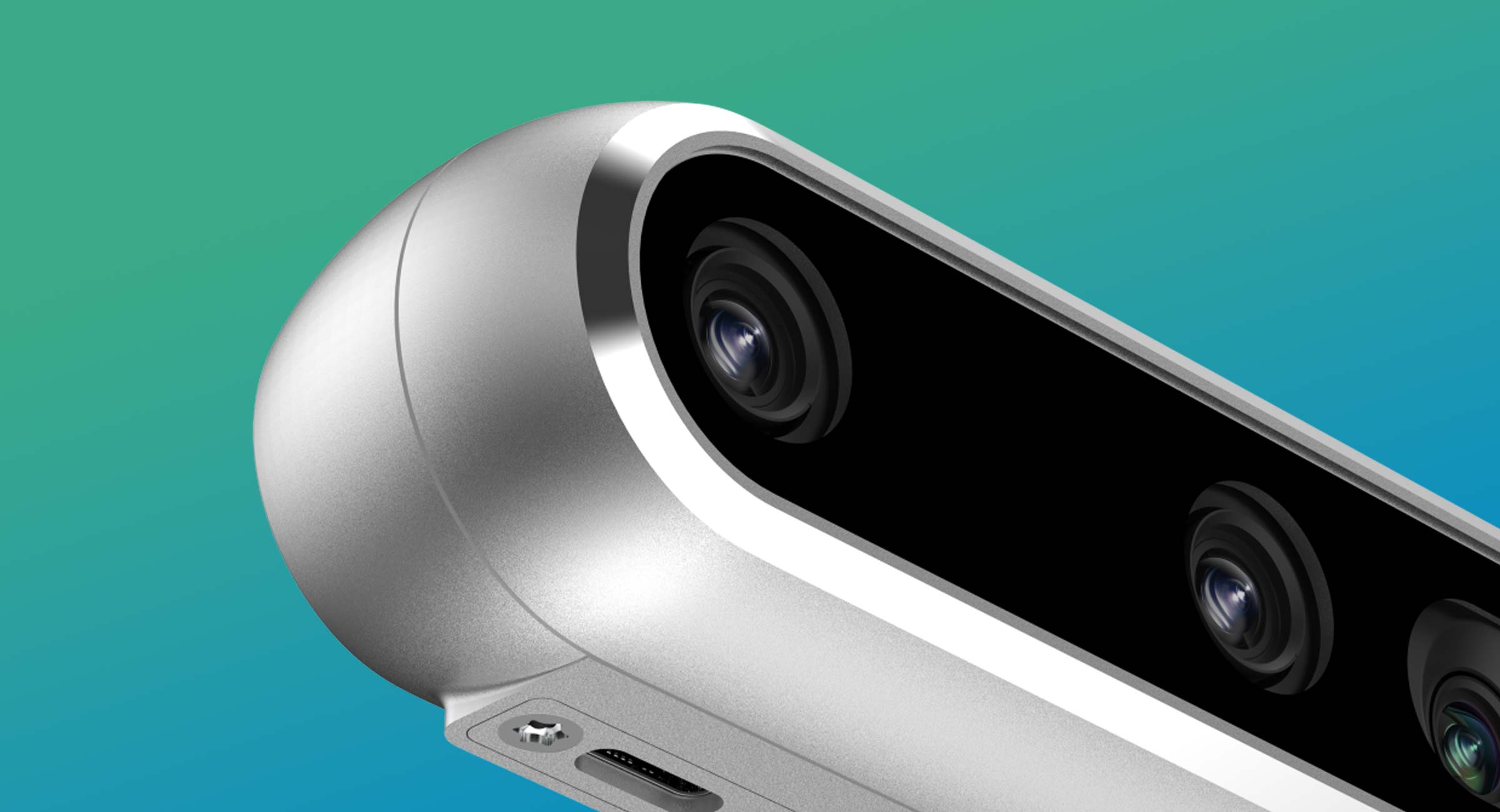
The RealSense Depth Camera D455 is a stereoscopic active-infrared depth camera belonging to Intel's D400 series, designed to capture high-fidelity depth data for robotics, autonomous mobile robots (AMRs), drones, and computer-vision applications. It features a 95 mm stereo baseline — the widest in the D400 lineup at the time of its introduction — which reportedly enables depth error of under 2% at ranges up to approximately 4 metres. Originally developed under the Intel RealSense brand, the D455 and related products were later spun off as part of an independent RealSense business unit following Intel's restructuring of the division around 2021–2022. The camera is widely adopted in research, industrial automation, and humanoid-robot development owing to its compact USB-powered form factor, open SDK support, and relatively accessible price point.
642 views
Rosie 2.0
The Rosie 2.0 is a commercial-grade autonomous robot vacuum developed by Tailos, designed to handle large-scale floor cleaning in business and institutional environments. It is offered in a two-pack configuration, allowing facilities to deploy multiple units simultaneously for broader coverage and more efficient cleaning cycles. Built to commercial durability standards, the Rosie 2.0 combines intelligent navigation with powerful suction technology to reduce reliance on manual labor and improve facility maintenance consistency. It targets businesses, hospitality venues, retail spaces, and other high-traffic environments where reliable, automated cleaning is a priority.
511 views