Relay Delivery Robot
The Relay Delivery Robot is an autonomous indoor delivery robot developed by Relay Robotics (formerly known as Savioke), designed primarily for hospitality and healthcare environments. It navigates hotel corridors and hospital hallways independently, rides elevators without human assistance, and delivers guest amenities, medications, linens, and other supplies directly to rooms or designated drop-off points. Relay is one of the most widely deployed service robots in its category, reportedly completing over one million lifetime deliveries with a publicly cited success rate of approximately 99.8%. With a cargo capacity of around 10 gallons, the robot is compact enough to operate in busy public spaces while carrying a meaningful payload of everyday supplies.

Overview and Use Cases
The Relay Delivery Robot is an autonomous last-mile delivery platform built for structured indoor environments. Its primary markets are hotels and hospitals, where it handles repetitive, time-sensitive delivery tasks that would otherwise require staff time. Typical payloads include:
- Hotels: towels, toiletries, bottled water, room-service items, and amenity packages
- Hospitals and healthcare facilities: medications, lab samples, linens, and light supply runs
- Multi-tenant buildings: mail, packages, and concierge items
Guests or staff request a delivery through a connected app or front-desk system; Relay autonomously navigates to the destination, calls and rides the elevator, and notifies the recipient upon arrival. After the recipient retrieves the items, Relay returns to its home base and recharges automatically.
Key Technical Features
Relay's design prioritizes reliability and social acceptability in crowded spaces. Reported and publicly documented characteristics include:
- Cargo capacity: approximately 10 gallons (the lockable top compartment opens only for the intended recipient)
- Autonomous elevator operation: Relay interfaces with building elevator systems via Wi-Fi or dedicated APIs, allowing it to call and board elevators without human help
- Obstacle avoidance: the robot uses a combination of sensors — reportedly including depth cameras and laser-based ranging — to detect and navigate around people, luggage, and other obstacles
- Fleet management: a cloud-based dashboard allows hotel or hospital operators to monitor robot status, delivery queues, and performance metrics
- Automatic charging: Relay returns to a docking station between deliveries
Specific sensor models, battery runtime figures, and precise motor specifications have not been officially published in detail; any third-party claims about these should be treated as approximate.
Market Context and Target Buyers
Relay Robotics positions the Relay robot as a labor-augmentation tool rather than a full labor replacement. The target buyer is typically a mid-to-large hotel chain, hospital system, or property management company seeking to reduce the burden on front-desk and housekeeping staff during peak hours or overnight shifts. The robot is generally offered under a robotics-as-a-service (RaaS) model, meaning customers pay a recurring subscription or per-delivery fee rather than a large upfront capital cost — though exact pricing has not been publicly disclosed.
This pricing structure lowers the barrier to adoption for hospitality operators who may be cautious about large capital expenditures on emerging technology.
Deployments and Notable Customers
Relay has been deployed across a broad range of properties. Publicly reported customers and partners have included major hotel brands and hospital networks in the United States and internationally, though Relay Robotics does not always disclose specific client names. The company has cited over one million completed deliveries as a milestone, suggesting sustained, multi-year deployments across its installed base. Some Hilton-branded properties and Residence Inn locations have been mentioned in press coverage as early adopters.
Comparison to Similar Robots
Within the indoor autonomous delivery segment, Relay competes with robots such as:
- Aethon TUG – focused more heavily on hospital logistics with larger payload capacity
- Keenon Robotics T8 / T9 – popular in Asian hospitality markets, often with tray-based open-top designs
- Gausium Scrubber 50 / Deliver series – combines cleaning and delivery in some configurations
Relay's differentiators are its long operational track record, its purpose-built hospitality UX (including a friendly screen interface for guest interaction), and its proven elevator-integration capability. Compared to open-tray competitors, Relay's enclosed, lockable compartment offers a privacy and security advantage for medication or sensitive deliveries.
Future Outlook
As labor costs in hospitality and healthcare continue to rise, demand for autonomous delivery robots is broadly expected to grow. Relay Robotics has continued to refine its software stack and expand its building-integration partnerships. The broader adoption of open elevator APIs and smart-building infrastructure should make deployment easier over time. As of public reporting, the company remains focused on deepening penetration in its existing verticals rather than expanding into outdoor or industrial delivery segments.
Community buzz (Reddit)
Fully autonomous valet robot that parks on its own
r/nextfuckinglevel · ▲ 99,790
This model's robotic costume
r/nextfuckinglevel · ▲ 81,602
Man Mimics Robot with INSANE Body Control
r/nextfuckinglevel · ▲ 78,021
Olaf robot at Paris Disneyland
r/Damnthatsinteresting · ▲ 74,191
Japanese researchers at the University of Tsukuba created CirculaFloor, robotic tiles that let you walk infinitely in VR without ever leaving your spot.
r/Damnthatsinteresting · ▲ 72,700
Related entries
 Robot
RobotSpot
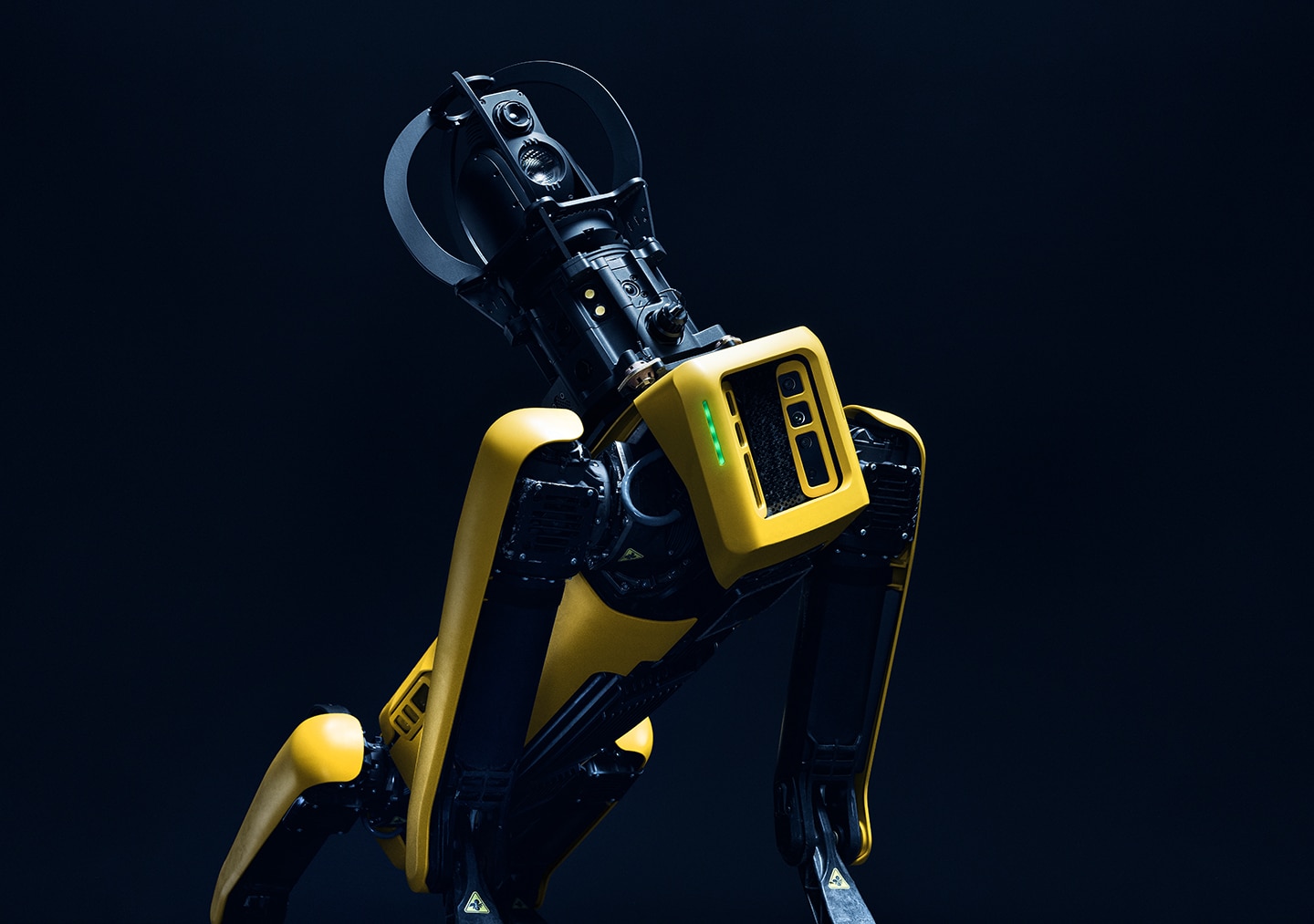
Spot is a four-legged autonomous robot developed by Boston Dynamics, a robotics company headquartered in Waltham, Massachusetts. Designed for inspection, security, and data collection in complex or hazardous environments, Spot can navigate stairs, rough terrain, and confined spaces that are inaccessible to wheeled robots. It is commercially available and has been deployed across industries including utilities, oil and gas, construction, and public safety. Spot supports a modular payload system that accommodates thermal cameras, pan-tilt-zoom (PTZ) cameras, lidar units, methane sensors, and other mission-specific hardware. Boston Dynamics also offers the Orbit fleet-management software platform, enabling operators to schedule autonomous inspection routes, aggregate sensor data, and manage multiple Spot units from a central interface. The robot is widely regarded as one of the most capable and commercially mature legged robots on the market.
1,204 views
 Robot
RobotRealSense Depth Camera D455
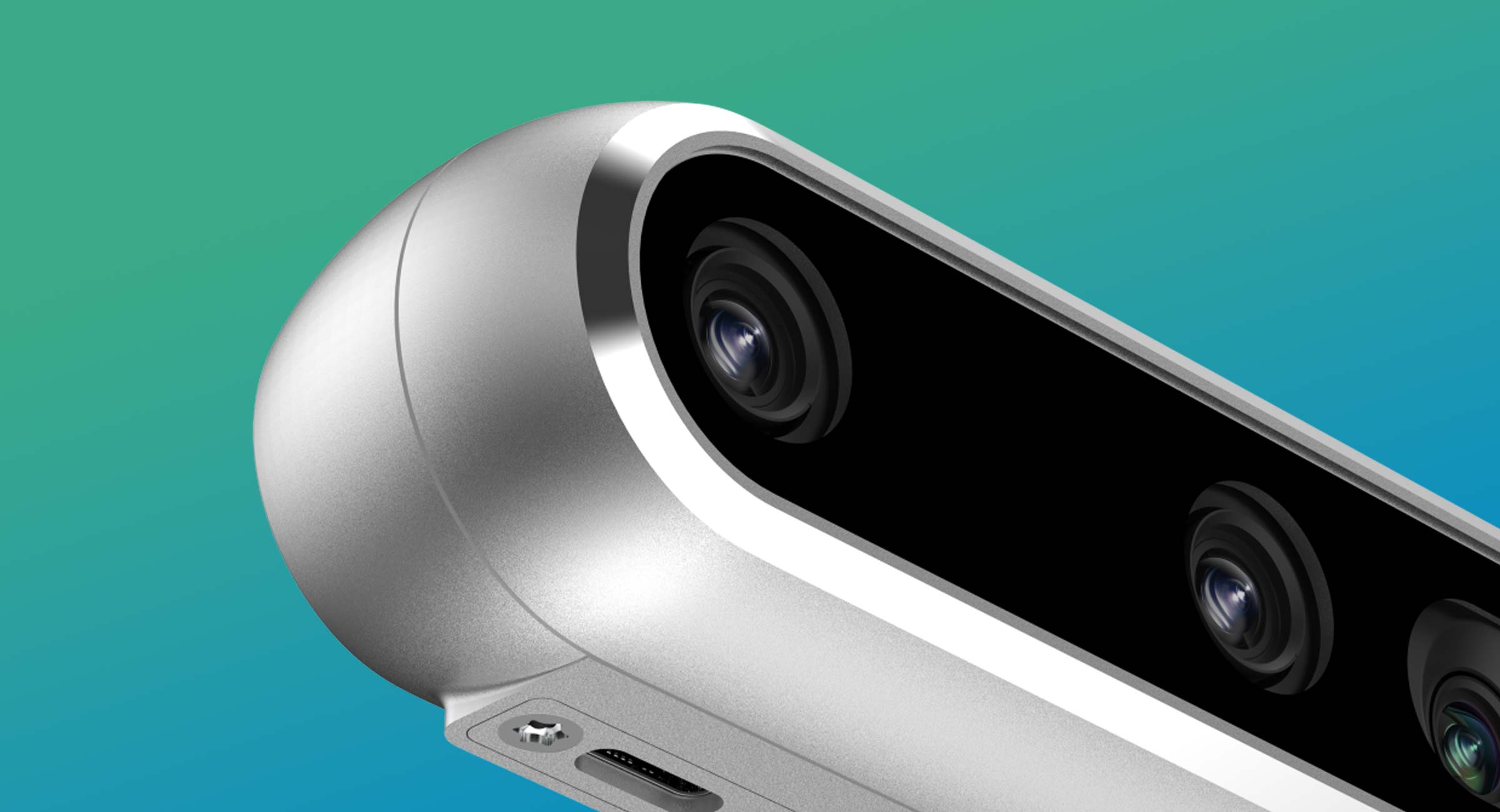
The RealSense Depth Camera D455 is a stereoscopic active-infrared depth camera belonging to Intel's D400 series, designed to capture high-fidelity depth data for robotics, autonomous mobile robots (AMRs), drones, and computer-vision applications. It features a 95 mm stereo baseline — the widest in the D400 lineup at the time of its introduction — which reportedly enables depth error of under 2% at ranges up to approximately 4 metres. Originally developed under the Intel RealSense brand, the D455 and related products were later spun off as part of an independent RealSense business unit following Intel's restructuring of the division around 2021–2022. The camera is widely adopted in research, industrial automation, and humanoid-robot development owing to its compact USB-powered form factor, open SDK support, and relatively accessible price point.
642 views
Rosie 2.0
The Rosie 2.0 is a commercial-grade autonomous robot vacuum developed by Tailos, designed to handle large-scale floor cleaning in business and institutional environments. It is offered in a two-pack configuration, allowing facilities to deploy multiple units simultaneously for broader coverage and more efficient cleaning cycles. Built to commercial durability standards, the Rosie 2.0 combines intelligent navigation with powerful suction technology to reduce reliance on manual labor and improve facility maintenance consistency. It targets businesses, hospitality venues, retail spaces, and other high-traffic environments where reliable, automated cleaning is a priority.
511 views
 Robot
RobotOptimus Gen 2
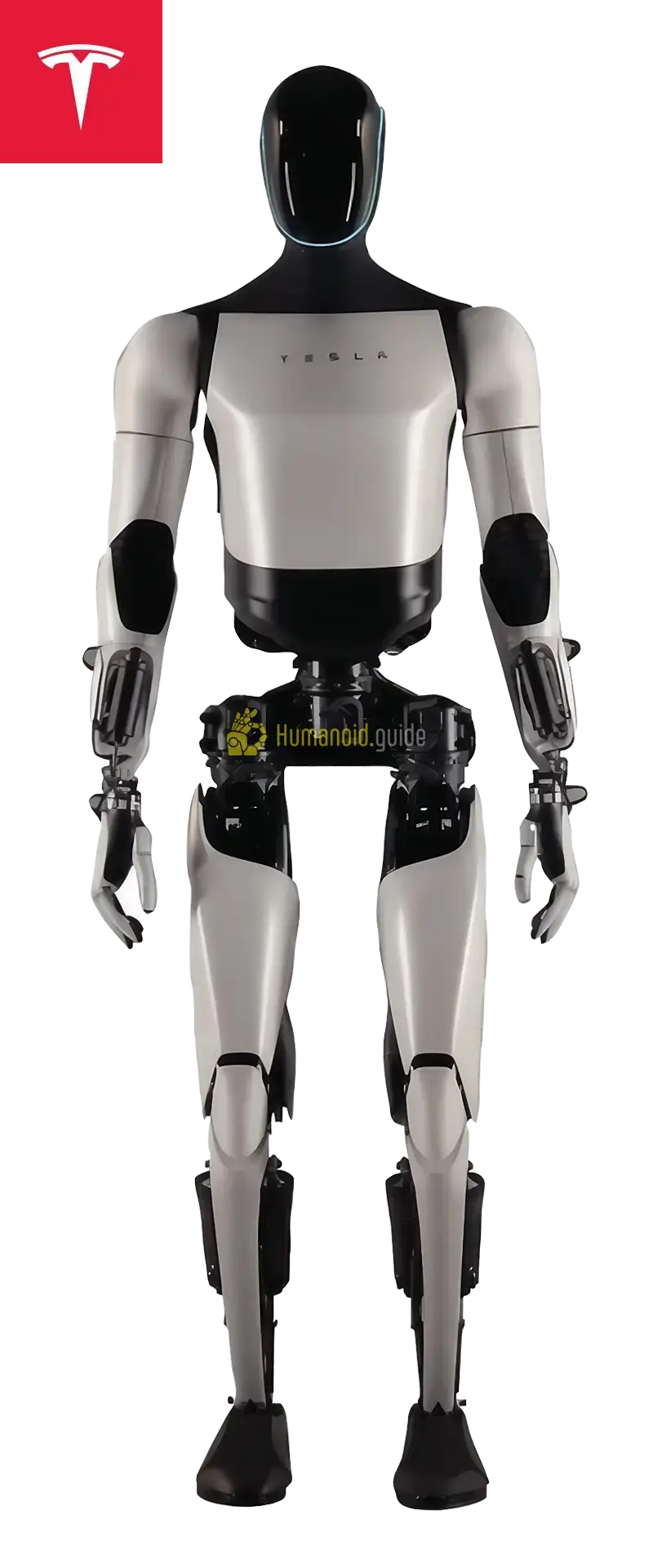
Optimus Gen 2 is a general-purpose humanoid robot developed by Tesla, representing the second major hardware iteration of the company's Optimus program. It is designed to perform a broad range of physical tasks, leveraging perception and motion-planning software derived from Tesla's Full Self-Driving (FSD) stack. As of public reporting, units are used for internal demonstrations and select tasks within Tesla's own manufacturing facilities. Tesla has stated an ambition to eventually offer Optimus at consumer-accessible pricing, positioning it as a mass-market humanoid rather than an industrial-only platform. Compared to its predecessor, Gen 2 reportedly features improved hand dexterity, smoother whole-body motion, and a lighter overall frame, though many detailed specifications remain unconfirmed or subject to ongoing revision as the program continues to iterate.
473 views