Dyno Robotics
SnapshotCompany claim
Robotics & AI for humans. We help your company grow through the latest technology. Everything begins with an idea, and no idea is too small. We welcome ideas in any stages.
- Founded
- Not disclosed
- HQ
- Not disclosed
- Models
- 1
- Categories
- 1
ContactCompany claim
- Address
- Sturegatan 12, Lgh 130158221 Linköping
Product families
Is this your company? Claim this profile to add verified data, respond to our analysis, and upgrade claims to Verified.
Claim this profile1. Executive Overview {#executive-overview}
Dyno Robotics presents itself as a robotics and AI consultancy-style firm operating under the tagline "Robotics & AI for humans," with a stated mission of helping companies grow through emerging technology. The company's public positioning emphasises accessibility and openness — explicitly welcoming ideas "at any stage" — which signals a services and integration orientation rather than a pure product-hardware play. Its known technical foundation is ROS 2 (Robot Operating System 2), a professional-grade open-source framework widely used in industrial and research robotics, and the company's own site describes a substantive capability set around autonomy stacks, SLAM, motion planning, simulation-first workflows, and web-based teleoperation interfaces.
The company also maintains a student representative programme and links to a dedicated careers site, suggesting an organisational model that engages with academic talent pipelines — a common and effective approach among European robotics consultancies and integrators. The contact email domain (student@dynorobotics.se) and the .se top-level domain place the company in Sweden, though country of incorporation and founding date are not publicly disclosed on the data available here.
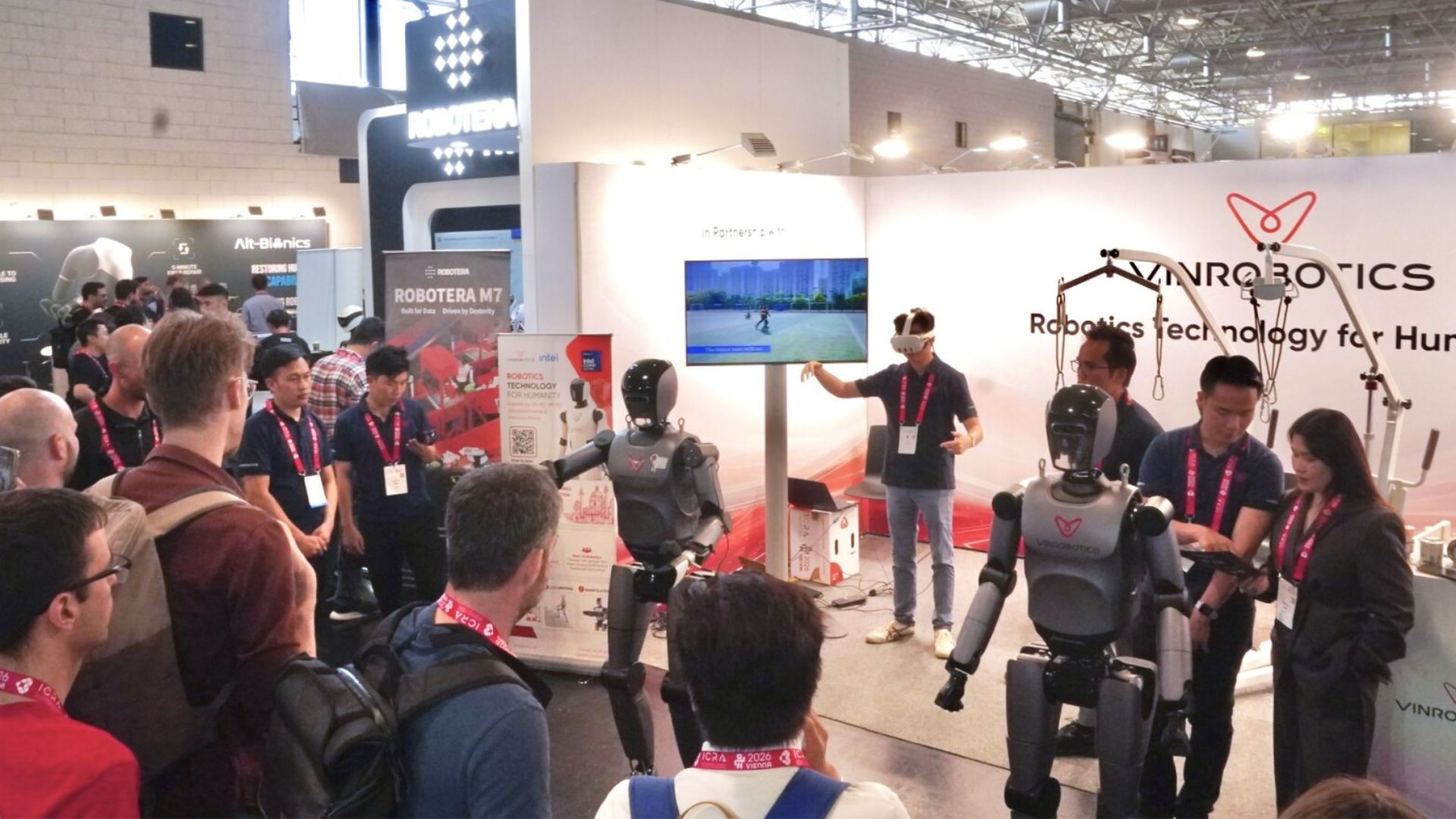
Note on press coverage: Three third-party articles from June 2026 (Yahoo Finance, Pulse2, Interesting Engineering) reference a "Dyno Humanoid Robot" debuted by a company named VinDynamics at ICRA 2026 and Computex Taipei 2026. These articles do not reference Dyno Robotics (dynorobotics.se) as the developer; the "Dyno" name in that coverage appears to be a product name used by VinDynamics. These sources are therefore treated as unconnected to dynorobotics.se and are not attributed to this company in the sections below. If a partnership or licensing relationship exists, Dyno Robotics is invited to claim and document it.
Latest news
- KEENON Humanoid Pours Drinks at GCS 2026, 100,000 Others Run HotelsYanko Design·2026-06-15GENERAL
2. The Company Story {#the-company-story}
Dyno Robotics operates at dynorobotics.se and presents its mission in accessible, human-centred language: "Robotics & AI for humans." The company frames itself as a partner for organisations seeking to adopt robotics and AI, with a deliberate emphasis on being approachable regardless of project maturity — "no idea is too small."
The founding date is not disclosed in available public data. The website metadata indicates the contact page was first published on 9 February 2022 and most recently modified on 22 January 2026, establishing that the company has been publicly active for at least several years and continues to maintain its web presence. The .se domain and Swedish-language context strongly indicate a Swedish base of operations, though the precise legal domicile is not confirmed in the available data.
The student representative programme — with a dedicated contact pathway for school fairs — and the presence of a career site suggest the company actively recruits from Swedish universities and polytechnics. This is consistent with a positioning as a growing technical services and integration firm that builds its team through academic-to-industry pipelines, a model well-suited to the Nordic robotics ecosystem. Broader founding narrative, investor history, and milestone events are not yet disclosed publicly; Dyno Robotics is invited to share that information for inclusion.
3. Product Portfolio {#product-portfolio}
Products & versions


Dyno Robotics' publicly documented technical offering centres on ROS 2 as a core framework for structuring and deploying robotic software systems. While ROS 2 itself is an open-source standard, the company's own site describes a meaningfully specific set of capabilities built on top of it: modular and distributed system architecture, sensor integration (LiDAR, cameras, IMUs, and encoders), full autonomy stacks covering localisation, SLAM, motion planning, and control, and simulation-first development workflows designed to allow safe iteration before physical hardware deployment. The offering also extends to combining ROS 2 autonomy with teleoperation, real-time monitoring, and web dashboards — pointing to a systems-integration and deployment service rather than a single boxed product.
The portfolio as publicly described reads as a capability-as-a-service or integration service model: Dyno Robotics appears to bring ROS 2 expertise to client projects, constructing bespoke robotic systems with a reproducible technical stack. The emphasis on reliability, safety, and long-term maintainability in the feature set suggests the company targets deployments that need to operate continuously in real environments, not only prototypes. Specific named robot platforms, hardware products, or off-the-shelf solutions beyond the ROS 2 framework are not yet disclosed publicly. Dyno Robotics is invited to list any proprietary hardware or packaged software products for inclusion.
4. Technology Stack {#technology-stack}
The technology stack is anchored in ROS 2, and Dyno Robotics' own site enumerates a coherent and professionally credible set of capabilities within that ecosystem. The following is grounded in their published feature descriptions:
- Perception: Integration of LiDAR, cameras, IMUs, and wheel encoders — the standard sensor suite for mobile robot localisation and environment mapping.
- Autonomy: SLAM (Simultaneous Localisation and Mapping), motion planning, and control — covering the full pipeline from raw sensor data to actuation commands.
- Simulation: A "simulation-first" workflow, consistent with use of tools such as Gazebo or Isaac Sim (the specific simulator is not named in available data).
- Operations: Teleoperation, real-time monitoring, and web dashboards — indicating a full-stack approach that extends from the robot itself to the operator interface.
- Architecture: Modular and distributed design, allowing components to be developed and replaced independently, which supports both reliability and iterative improvement.
Our read: The combination of simulation-first development, full autonomy stack coverage, and operator-facing web interfaces is consistent with a company that delivers complete, deployment-ready robotic systems rather than component libraries alone. The real-time support emphasis in their ROS 2 description suggests familiarity with ROS 2's real-time communication improvements over ROS 1, which is relevant for safety-critical or continuous-operation use cases. The specific middleware configuration (e.g., DDS vendor choice), cloud infrastructure, or AI/ML frameworks used are not publicly detailed. Dyno Robotics is invited to provide further technical disclosure for a more granular assessment.
5. Research, Papers, Authors, Labs {#research-papers}
Company-linked papers
Dyno Robotics does not appear, on current public evidence, to be an academic research publisher. No papers, preprints, affiliated researchers, or laboratory partnerships are listed on the company's public site. This is consistent with the profile of a robotics services and integration firm rather than a research institution — the majority of commercial robotics integrators operate this way, and the absence of publications is neither unusual nor a deficiency in this context.
If Dyno Robotics has contributed to open-source ROS 2 packages, technical blog posts, or collaborative research with Swedish universities, that work is not surfaced in the available data. The company is invited to share any such contributions for inclusion.
6. Media Evidence {#media-evidence}
Media library
Note on the available press items: Three articles published in June 2026 — by finance.yahoo.com, pulse2.com, and interestingengineering.com — cover the debut of a "Dyno Humanoid Robot" at ICRA 2026 and Computex Taipei 2026. These articles attribute the robot to VinDynamics, not to Dyno Robotics (dynorobotics.se). The "Dyno" designation in that coverage appears to be a product name chosen by VinDynamics. Without confirmed evidence of a connection between VinDynamics and dynorobotics.se, these articles are not cited as coverage of this company. Independent media coverage specifically referencing Dyno Robotics (dynorobotics.se) is not present in the available data. If coverage exists, Dyno Robotics is invited to submit links for inclusion.
7. Commercial Reality {#commercial-reality}
Customers & deployments
Revenue, customer count, contract values, and return-on-investment figures for Dyno Robotics are not disclosed in any available public data. Named customer deployments, case studies, or reference accounts are likewise not publicly listed on the company's site. This is not uncommon for early-stage or boutique robotics integrators, where client relationships are often governed by confidentiality.
The contact page's invitation for companies to submit ideas "at any stage" implies an active business development posture, and the careers site suggests ongoing or anticipated growth. However, the current scale of commercial operations — number of active clients, geographies served, or recurring revenue — cannot be assessed from available data and should not be inferred.
Dyno Robotics is invited to share customer references, deployment case studies, or aggregate commercial metrics for inclusion in this report.
8. Markets and Use Cases {#markets-use-cases}
Drawing directly from the ROS 2 capability set described on Dyno Robotics' own site, the following markets and use cases are derivable:
Industrial and warehouse automation: SLAM, motion planning, and LiDAR integration are foundational capabilities for autonomous mobile robots (AMRs) operating in factory floors, warehouses, and logistics environments. The real-time operation emphasis reinforces fit for continuous industrial deployment.
Infrastructure inspection and monitoring: LiDAR and camera integration combined with autonomous navigation maps well onto inspection use cases — utilities, construction sites, and large facilities — where human access is costly or hazardous.
Research and development partnerships: The simulation-first workflow and modular architecture make Dyno Robotics' stack well-suited for organisations building and iterating on robotics prototypes, including university spin-outs and corporate R&D teams.
Operator-monitored deployments: The inclusion of teleoperation, real-time monitoring, and web dashboards in the feature set points to use cases where a human supervisor oversees one or more robots remotely — a common model in security, agriculture, and field robotics.
Specific named industries or verticals are not tagged in the available product data. Dyno Robotics is invited to confirm or expand this use-case mapping.
9. Competitive Landscape {#competitive-landscape}
Competitive comparison
| Robot | Maker | Autonomy | Conf. |
|---|---|---|---|
| iRobot Roomba Combo 10 Max | iRobot | Autonomous | 0.90 |
| Mobile ALOHA (Stanford) | Stanford University | Teleoperated | 0.90 |
| 1X NEO | 1X Technologies | Remote-Assisted | 0.90 |
Dyno Robotics occupies a category that includes robotics systems integrators, ROS 2 consultancies, and autonomy-stack solution providers — a growing segment in Europe and globally as organisations seek expert help deploying robotic systems without building in-house capability from scratch. The competitive set in this space spans large industrial automation incumbents, specialist ROS-focused consultancies, and university-linked spin-offs, particularly within the Nordic and broader European technology ecosystem.
Our read: The differentiating factors in this category typically come down to domain depth (specific industry verticals), proprietary tooling built on top of open-source frameworks, and the strength of client relationships. Dyno Robotics' publicly stated emphasis on accessibility and its student talent pipeline could represent meaningful differentiation if translated into faster, lower-cost delivery for clients who would otherwise struggle to engage larger integrators. The module above maps the competitive peer set based on computed category and capability relationships.
10. Country Advantage / Geopolitical {#geopolitical}
Section not material for this company.
11. Hype vs Real vs Ugly {#hype-real-ugly}
Claim tracker
What is verifiable from public data:
- Dyno Robotics operates a public website (dynorobotics.se) with a consistently maintained presence dating to at least early 2022.
- The company describes a specific and technically coherent ROS 2 capability set — this is a grounded technical claim, not a vague aspiration.
- A student representative programme and career site are active, indicating some organisational infrastructure.
Company claims (labelled as such):
- "We help your company grow through the latest technology" — company-claim; no independent case studies or customer outcomes are available to validate this.
- "No idea is too small. We welcome ideas in any stages" — company-claim describing an open-door business development posture; cannot be independently assessed.
- The ROS 2 feature list (SLAM, motion planning, simulation-first workflows, web dashboards) — company-claim; technically plausible and internally consistent, but no third-party deployments or audits are available to confirm at-scale delivery.
Our read: The gap between the company's stated capabilities and verifiable commercial evidence is the primary analytical uncertainty here. The technical stack described is legitimate and well-scoped; the question that public data cannot answer is the depth and breadth of its real-world application. This is a fixable gap — customer references or case studies would materially change the assessment.
Not yet disclosed: Revenue, customer names, founding date, team size, and country of incorporation. Dyno Robotics is invited to claim and correct this record.
12. Future Scenarios {#future-scenarios}
Our read — Bull case: Dyno Robotics leverages its ROS 2 expertise and academic talent pipeline to establish itself as a recognised Nordic robotics integrator, accumulating referenceable deployments in industrial automation or inspection. The open, idea-stage-friendly positioning attracts a diversified client base, and the company transitions from project-by-project engagements toward recurring managed-service or software contracts. Sweden's strong industrial and engineering base provides a supportive home market.
Our read — Base case: Dyno Robotics continues as a specialist consultancy, delivering technically solid ROS 2-based projects for a modest roster of clients. Growth is steady but constrained by the inherent scaling challenges of services businesses and the need to continually compete for talent against larger technology employers. Public profile remains low; commercial traction is real but not widely documented.
Our read — Bear case: The absence of disclosed revenue, customers, or founding context — combined with a student-oriented contact structure — reflects a company that remains at an early or pre-commercial stage. Without named deployments or verifiable commercial scale, the company may find it difficult to compete for larger contracts against more established integrators. If the academic talent pipeline does not convert into senior delivery capacity, growth may stall.
13. What to Watch {#what-to-watch}
- Customer reference disclosures: Any named deployment or case study would be the single highest-signal update for this company's commercial status.
- Product announcements: Whether Dyno Robotics moves from framework-level capability to named, packaged robotic products or platforms.
- Team and funding disclosures: Headcount growth, senior hires, or any investment rounds would clarify organisational scale and ambition.
- Geographic expansion: Whether the company confirms a Swedish base and whether it signals moves into broader Nordic, European, or global markets.
- Academic partnerships: Formal ties with Swedish universities (e.g., KTH, Chalmers, LiU) would validate the talent pipeline and potentially signal research-to-commercial pathways.
- Open-source contributions: Any ROS 2 packages or tools published under the Dyno Robotics name would provide independent technical validation of the claimed stack.
14. Sources & Methodology {#sources-methodology}
Data sources used in this report:
| Source type | Description | Provenance label |
|---|---|---|
| Company website | dynorobotics.se — About, Contact, and product pages | Company-claim |
| Structured metadata | Schema.org markup extracted from site pages | Company-claim |
| Third-party press | finance.yahoo.com, pulse2.com, interestingengineering.com (June 2026) | Independent — assessed as not attributable to this company; see Media Evidence section |
Methodology rubric (applied consistently to every company in this series):
- All factual assertions are grounded in the data provided. No products, customers, revenues, partnerships, or specifications have been invented or inferred beyond what the source data supports.
- Inferences are labelled "Our read:" and distinguished from verified or company-claimed facts.
- Company-sourced statements are labelled "(company-claim)" and treated as unverified assertions pending independent corroboration.
- Gaps in the public record are noted as "Not yet disclosed" with an explicit invitation to the company to claim, correct, or expand the record.
- Strengths lead each section; gaps follow.
- No unsourced negative characterisations are made as statements of fact.
- Third-party press is cited by outlet name and assessed for relevance before attribution.

ROS 2 is a core framework used by Dyno Robotics for structuring and deploying complex robotic software. It enables building systems where perception, navigation, control, simulation, and user interfaces work together coherently. Its modular architecture allows independent development and replacement of components without compromising stability. Dyno Robotics integrates sensors like LiDAR, cameras, IMUs, and encoders, and builds autonomy stacks for localization, SLAM, motion planning, and control. Simulation-first workflows enable safe iteration before physical deployment. ROS 2 combines autonomy with teleoperation, monitoring, and web dashboards, ensuring transparent and controllable behavior. Its real-time support and improved communication model suit continuous operation in real environments.
- •Modular and distributed architecture for independent component development
- •Integrates sensors such as LiDAR, cameras, IMUs, and encoders
- •Builds autonomy stacks for localization, SLAM, motion planning, and control
- •Simulation-first workflows for safe iteration before physical deployment
- •Combines ROS 2 autonomy with teleoperation, monitoring, and web dashboards
- •Real-time support and improved communication model for continuous operation
- •Designed for reliability, safety, and long-term maintainability
Detailed specs not disclosed.
Technology stackOur read
Inferred from product specs — click through to the technology wiki:
ResearchComputed
Product comparisonComputed
Company announcement
News and Media
The company's official social & video channels · external links


News
From third-party news outlets (China & abroad) · external links