Spot
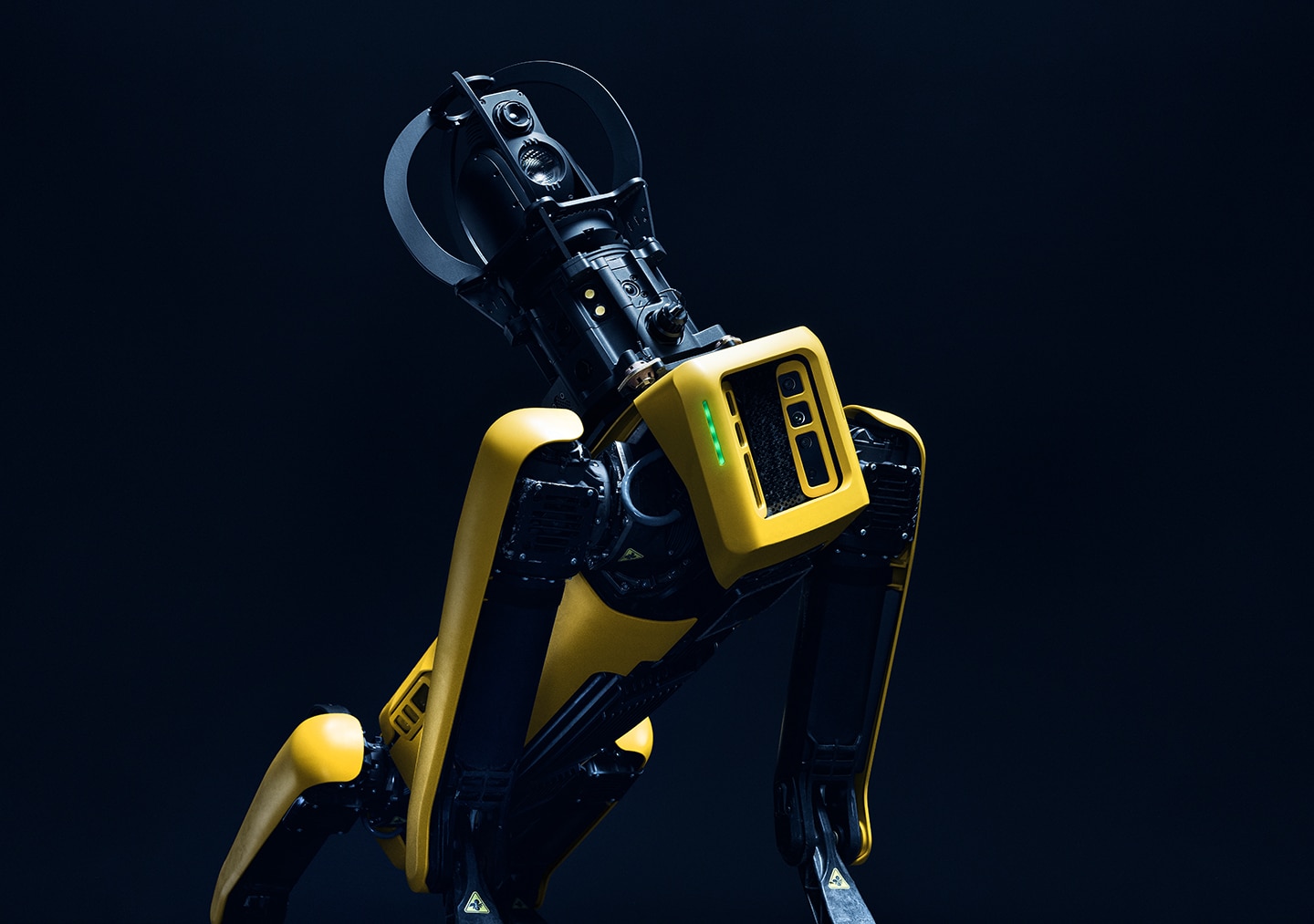
Spot is a four-legged autonomous robot developed by Boston Dynamics, a robotics company headquartered in Waltham, Massachusetts. Designed for inspection, security, and data collection in complex or hazardous environments, Spot can navigate stairs, rough terrain, and confined spaces that are inaccessible to wheeled robots. It is commercially available and has been deployed across industries including utilities, oil and gas, construction, and public safety. Spot supports a modular payload system that accommodates thermal cameras, pan-tilt-zoom (PTZ) cameras, lidar units, methane sensors, and other mission-specific hardware. Boston Dynamics also offers the Orbit fleet-management software platform, enabling operators to schedule autonomous inspection routes, aggregate sensor data, and manage multiple Spot units from a central interface. The robot is widely regarded as one of the most capable and commercially mature legged robots on the market.
Overview and Use Cases
Spot is Boston Dynamics' flagship commercial quadruped robot, purpose-built for autonomous inspection and security missions in environments that challenge traditional mobile platforms. Its four-legged locomotion allows it to traverse stairs, slopes, gravel, mud, and other unstructured terrain while maintaining stability. Core use cases include:
- Industrial inspection: Routine walkthroughs of power plants, refineries, offshore platforms, and manufacturing floors, capturing sensor readings and visual data without requiring human entry into hazardous zones.
- Security patrol: Autonomous or semi-autonomous perimeter and facility patrols, with live video feeds and anomaly detection.
- Construction site monitoring: Progress documentation, safety compliance checks, and 3D mapping using lidar payloads.
- Public safety and emergency response: Reconnaissance in disaster zones or environments with unknown hazards.
Key Technical Details
Spot's design centers on a modular payload bay system located on its back, allowing operators to swap sensor packages depending on the mission. Commonly reported payload options include:
- Thermal (FLIR-type) cameras for heat anomaly detection
- Pan-tilt-zoom (PTZ) cameras for long-range visual inspection
- Lidar units for 3D mapping and simultaneous localization and mapping (SLAM)
- Methane and gas detection sensors for oil and gas applications
- The optional Spot Arm attachment, which adds a five-degree-of-freedom manipulator capable of opening doors and operating valves
Spot is reported to operate for approximately 90 minutes on a single battery charge under typical conditions, though runtime varies with payload and terrain. It can be operated via a handheld controller, a tablet interface, or fully autonomously through pre-programmed mission routes managed by the Orbit platform. The robot supports remote teleoperation over LTE or Wi-Fi networks.
Comparison to Related Robots
Within Boston Dynamics' lineup, Spot occupies a distinct niche from its siblings:
- Spot (Industrial) shares the same platform but is positioned specifically for manufacturing and process-industry workflows.
- Spot Arm is an accessory that extends Spot's manipulation capabilities rather than a standalone robot.
- Stretch is a wheeled, arm-equipped robot optimized for warehouse case handling — a fundamentally different form factor.
- Atlas (Electric) is Boston Dynamics' humanoid research and development platform, not yet a commercial inspection product.
Against competitors, Spot is frequently compared to:
- ANYbotics ANYmal: A Swiss-made quadruped with a similar inspection focus, competing directly in the oil, gas, and utilities sectors.
- Unitree B2 and Unitree Go2: Lower-cost Chinese quadrupeds that have gained traction in research and some industrial pilots.
- Ghost Robotics Vision 60: A U.S.-made quadruped with a strong defense and security positioning.
Spot is generally considered a premium product, with a higher price point than many emerging competitors but a more mature software ecosystem and broader third-party integration support.
Market Context and Target Buyers
Spot is positioned in the enterprise and industrial market segment. Boston Dynamics has publicly listed Spot's price in the range of approximately $74,500 USD in earlier commercial releases, though pricing may vary by configuration, region, and software licensing. Target buyers include:
- Energy and utilities companies seeking to reduce human exposure in hazardous inspection zones
- Oil and gas operators requiring continuous facility monitoring
- Large manufacturers pursuing digital twin and predictive maintenance programs
- Government agencies and defense contractors for reconnaissance applications
The Orbit fleet-management platform is sold as a software layer on top of the hardware, enabling enterprise-scale deployments with centralized data management.
Notable Deployments
As of public reporting, Spot has been deployed by a range of high-profile customers and organizations, including:
- BP and other major energy companies for offshore and onshore facility inspection
- Ford Motor Company for manufacturing plant documentation
- Various police and public safety agencies in the United States and internationally for reconnaissance and bomb disposal support roles
- Construction firms using Spot with lidar payloads for BIM (Building Information Modeling) data capture
Future Outlook
Boston Dynamics continues to develop Spot's software capabilities, with increasing emphasis on AI-driven anomaly detection, expanded Orbit platform features, and tighter integration with enterprise asset management systems. The addition of the Spot Arm and ongoing improvements to autonomous navigation suggest a trajectory toward more complex manipulation tasks beyond pure inspection. Competition in the legged-robot market is intensifying, particularly from lower-cost Asian manufacturers, which may pressure Boston Dynamics to differentiate further on software, reliability, and ecosystem depth rather than hardware alone.
Related videos

A look at the high tech security in place for the World Cup including 'Spot' the robot!
WFAA

Deep-Sea Robot Spots a Doorway in the Titanic Wreck No Diver Had Ever Seen...
The Stage

This robot owns the gym floor 🤖💪Watch how autonomous cleaning keeps this fitness center spotless
RobotLAB Inc.

👏👏Robotic spot welding on BIW line by KUKA robot🦾🦾
NKF Intelligent Equipment Co., Ltd

NASA Spot Wreckage on Mars
Dr Ben Miles

Spot, Donald Trump's security robot dog • FRANCE 24 English
FRANCE 24 English
Recent news
[Prime] roborock Qrevo Curv 2 Flow Robot Vacuum&Roller Mop, Powerful 200… $1,199 (RRP $2,499) Delivered @ Amazon AU
Ozbargain.com.au · 7/7/2026
Sick of mowing the lawn? Hand it off to this Worx Landroid robot while it’s more than $410 off
9to5Toys · 7/6/2026
Hyundai Uses World Cup Spotlight To Advance Its Robotics Future
Forbes · 7/6/2026
10 Best AI Marketing Agents & Automation Platforms in 2026
Ctlabs.ai · 6/30/2026
What marketing automation really means for a small business (and where the AI Act fits)
Lolasquared.com · 6/30/2026
Community buzz (Reddit)
Japanese researchers at the University of Tsukuba created CirculaFloor, robotic tiles that let you walk infinitely in VR without ever leaving your spot.
r/Damnthatsinteresting · ▲ 72,694
a robot dog with Elon Musk's head on it has been spotted prancing around the streets of San Francisco
r/oddlyterrifying · ▲ 14,478
Husband has a new chosen family he prioritizes and sees every week, I’m jealous and frustrated
r/BestofRedditorUpdates · ▲ 14,213
Accidentally solved a year-long litter box problem in one weekend (sharing in case it helps someone)
r/cats · ▲ 12,874
[16] My cat died today. I want to tell you about her.
r/seniorkitties · ▲ 10,901
Related entries
 Robot
RobotRelay Delivery Robot
The Relay Delivery Robot is an autonomous indoor delivery robot developed by Relay Robotics (formerly known as Savioke), designed primarily for hospitality and healthcare environments. It navigates hotel corridors and hospital hallways independently, rides elevators without human assistance, and delivers guest amenities, medications, linens, and other supplies directly to rooms or designated drop-off points. Relay is one of the most widely deployed service robots in its category, reportedly completing over one million lifetime deliveries with a publicly cited success rate of approximately 99.8%. With a cargo capacity of around 10 gallons, the robot is compact enough to operate in busy public spaces while carrying a meaningful payload of everyday supplies.
2,728 views
 Robot
RobotRealSense Depth Camera D455
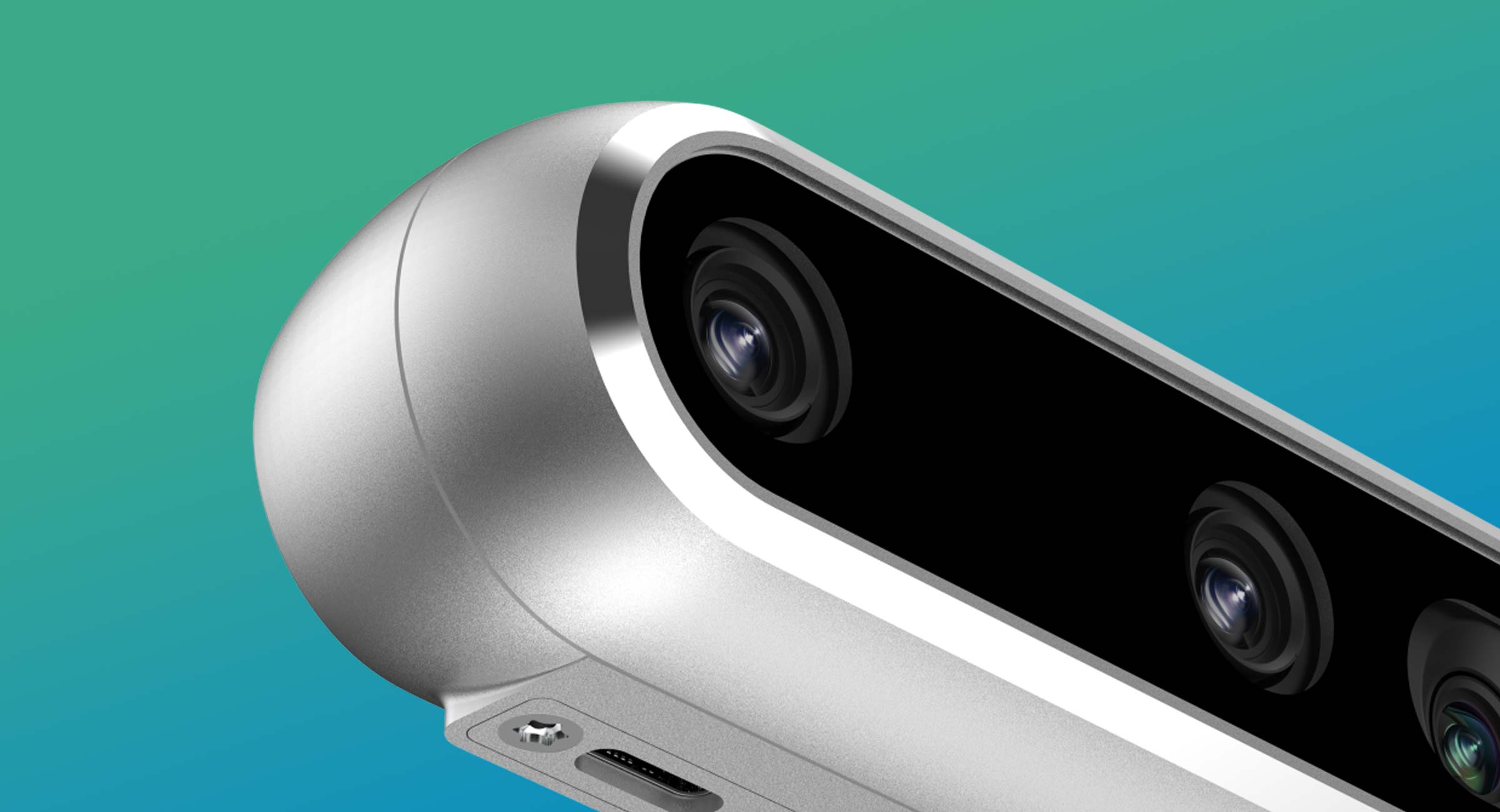
The RealSense Depth Camera D455 is a stereoscopic active-infrared depth camera belonging to Intel's D400 series, designed to capture high-fidelity depth data for robotics, autonomous mobile robots (AMRs), drones, and computer-vision applications. It features a 95 mm stereo baseline — the widest in the D400 lineup at the time of its introduction — which reportedly enables depth error of under 2% at ranges up to approximately 4 metres. Originally developed under the Intel RealSense brand, the D455 and related products were later spun off as part of an independent RealSense business unit following Intel's restructuring of the division around 2021–2022. The camera is widely adopted in research, industrial automation, and humanoid-robot development owing to its compact USB-powered form factor, open SDK support, and relatively accessible price point.
643 views
Rosie 2.0
The Rosie 2.0 is a commercial-grade autonomous robot vacuum developed by Tailos, designed to handle large-scale floor cleaning in business and institutional environments. It is offered in a two-pack configuration, allowing facilities to deploy multiple units simultaneously for broader coverage and more efficient cleaning cycles. Built to commercial durability standards, the Rosie 2.0 combines intelligent navigation with powerful suction technology to reduce reliance on manual labor and improve facility maintenance consistency. It targets businesses, hospitality venues, retail spaces, and other high-traffic environments where reliable, automated cleaning is a priority.
511 views
 Robot
RobotOptimus Gen 2
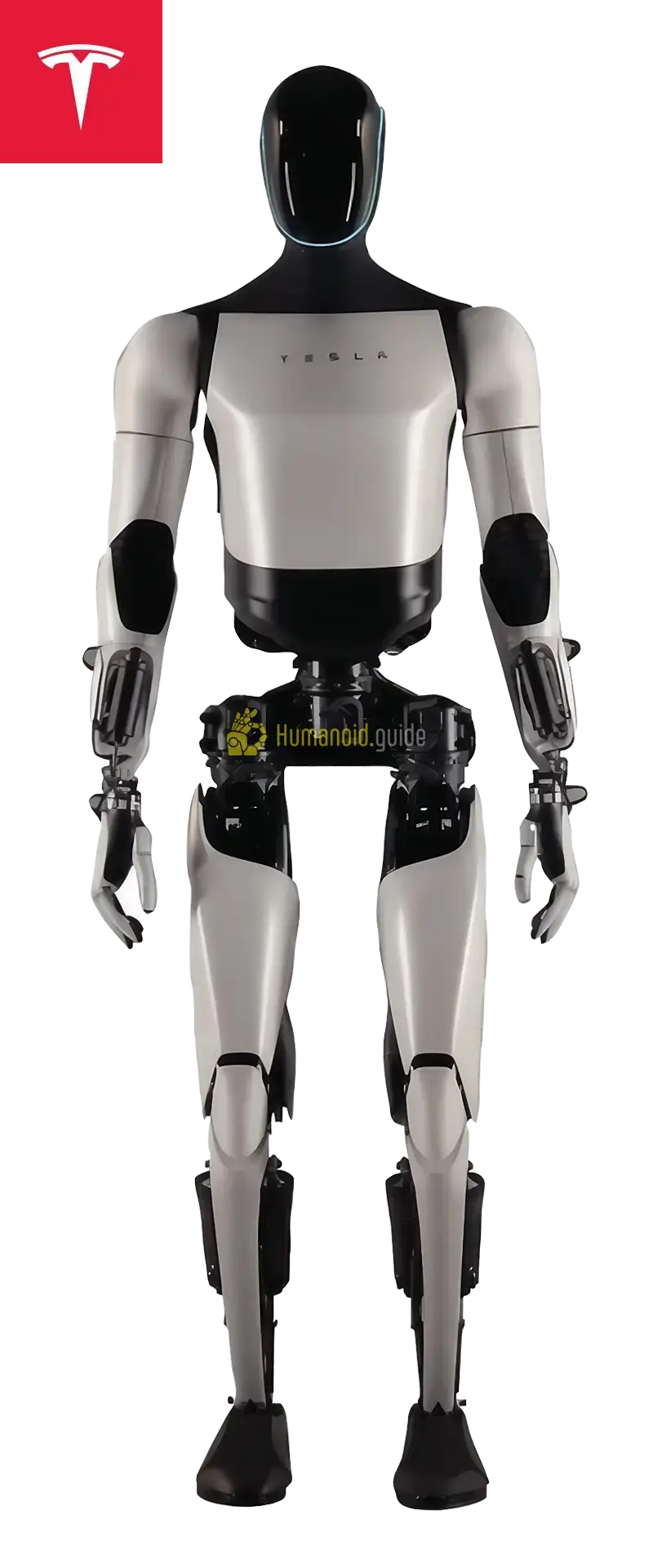
Optimus Gen 2 is a general-purpose humanoid robot developed by Tesla, representing the second major hardware iteration of the company's Optimus program. It is designed to perform a broad range of physical tasks, leveraging perception and motion-planning software derived from Tesla's Full Self-Driving (FSD) stack. As of public reporting, units are used for internal demonstrations and select tasks within Tesla's own manufacturing facilities. Tesla has stated an ambition to eventually offer Optimus at consumer-accessible pricing, positioning it as a mass-market humanoid rather than an industrial-only platform. Compared to its predecessor, Gen 2 reportedly features improved hand dexterity, smoother whole-body motion, and a lighter overall frame, though many detailed specifications remain unconfirmed or subject to ongoing revision as the program continues to iterate.
474 views