Tailos
US · tailos.com
SnapshotCompany claim
Tailos offers products available through their online store. They accept bulk discount inquiries and distribution requests. Contact them via phone, email, or social media for general questions.
- Founded
- Not disclosed
- HQ
- US
- Models
- 11
- Categories
- 3
ContactCompany claim
- Address
- Not disclosed
Product families
Is this your company? Claim this profile to add verified data, respond to our analysis, and upgrade claims to Verified.
Claim this profile1. Executive Overview {#executive-overview}
Tailos is a US-based commercial robotics company that has built a focused, commercially viable product around a single well-defined problem: labor-intensive floor cleaning in hospitality, multi-family residential, retail, and office environments. Its flagship product, the Rosie robotic vacuum, is a commercial-grade autonomous cleaning robot equipped with SLAM-based laser LiDAR navigation and 3D depth sensing — a technology stack borrowed from self-driving vehicle development and applied to the comparatively tractable domain of indoor floor care. The core value proposition is concrete and measurable: the company claims Rosie saves approximately 54 minutes of labor per hour while consistently cleaning 95% of a given floor area, at a cleaning speed of up to 2,000 sq ft per hour with a capacity of 15,000 sq ft per eight-hour shift.
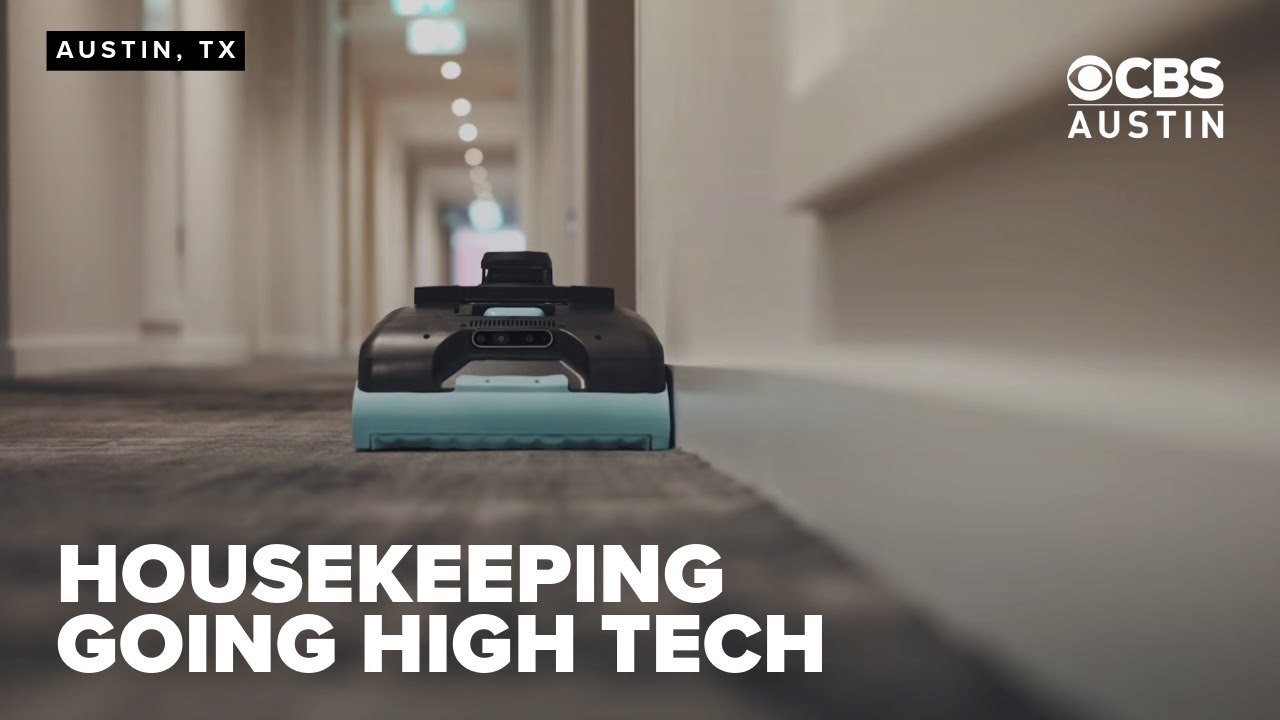
The product has achieved meaningful third-party validation. Hotel Technology News reported in June 2023 that Tailos had reached a milestone of 10 million square feet of property space cleaned by Rosie robots — an operational metric that moves the company well beyond prototype status. Rosie has also attracted design recognition, earning a Good Design Award for 2021–2022, and CBS Austin covered the product in October 2024 as a "robotic revolution in commercial cleaning." Tailos sells both direct-purchase and subscription models through its Shopify-powered storefront, with a distribution inquiry channel suggesting active channel-partner development.
The primary acknowledged gap is limited public disclosure around financials, named customer deployments, and company founding history. These are addressed in the relevant sections below with invitations to the company to claim or correct.
Latest news
- KEENON Humanoid Pours Drinks at GCS 2026, 100,000 Others Run HotelsYanko Design·2026-06-15GENERAL
2. The Company Story {#the-company-story}
Tailos is a US-headquartered company operating at the intersection of commercial robotics and facility management services. Its founding date is not publicly disclosed on its website or in available press coverage; not yet disclosed — Tailos is invited to share its founding year and origin story for this report.
What is publicly traceable is the company's commercial trajectory. The Rosie robot has been on the market long enough to accumulate a 10 million square foot cleaning milestone, reported by Hotel Technology News in June 2023. The product received a Good Design Award for the 2021–2022 cycle, suggesting the hardware had reached a commercially presentable state by at least 2021. CBS Austin's October 2024 coverage indicates the company remains active and newsworthy nearly three years later — a meaningful signal of operational continuity in a sector where many robotics startups do not survive early deployment phases.
Tailos has positioned itself primarily around the hospitality sector — hotels are the lead industry tag on nearly every product listing — while also targeting multi-family residential, commercial real estate, and retail environments. The company's go-to-market approach combines a direct e-commerce channel (via Shopify) with bulk and distribution inquiry pathways, suggesting it is pursuing both property-level sales and potential channel partnerships with facilities management or property management companies. Its subscription model ($479/month, month-to-month, no-risk cancellation) reflects a strategic move toward recurring revenue and reduced friction for prospective buyers hesitant to commit to an outright hardware purchase.
3. Product Portfolio {#product-portfolio}
Products & versions
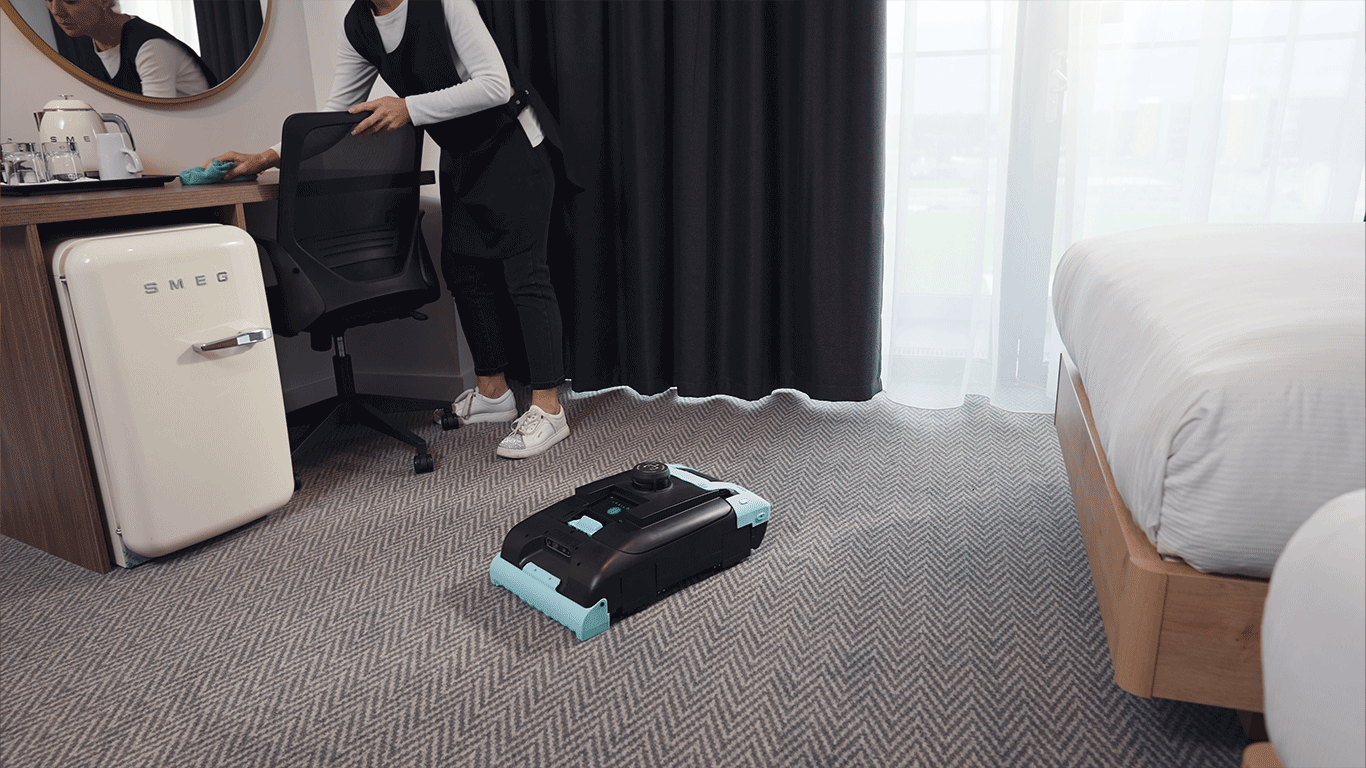


Tailos' lineup is tightly organized around a single hardware platform — the Rosie commercial robotic vacuum — offered across multiple purchasing configurations, complemented by a small set of accessories and a service plan. The core robot (Rosie 2.0) is available as a single unit ($479), a two-pack ($958), a four-pack ($1,916), a monthly subscription ($479/month), and as a legacy outright-purchase configuration (Rosie 1-Pack at $7,999.99, 2-Pack at $15,199.99, 4-Pack at $30,399.99 with optional $1,249/year renewal). This pricing architecture covers a wide range of buyer profiles, from a single-property operator testing one unit to a large hotel group deploying a fleet under subscription terms.
The accessory layer is small but purposeful. The Rosie Transportation Cart ($199) supports fleet operations at scale, carrying up to six robots, eighteen batteries, and cleaning tools simultaneously — a meaningful operational enabler for multi-floor hotel properties. The Rosie Stair Stopper ($49.99) addresses a genuine safety gap for properties with exposed stairwells. The Safety Flag (preorder, $99.99) adds high-visibility signaling for crowded or complex environments. Rounding out the portfolio is TAILOS Care, a 12-month service plan ($588) covering theft protection, accidental damage, and access to the Tailos Aware real-time performance monitoring dashboard. One listing ("Test 4") appears to be a backend artifact with no public-facing product content and is not considered here. Together, the lineup reflects a company that has thought carefully about fleet deployment logistics and risk mitigation alongside the core hardware.
4. Technology Stack {#technology-stack}
The Rosie 2.0's navigation system is built on Simultaneous Localization and Mapping (SLAM) — the company explicitly draws a parallel to "self-driving car technology" in its product descriptions. The two primary sensing modalities are a laser LiDAR scanner for spatial mapping and a 3D depth sensing camera for obstacle detection. A notable design choice, stated explicitly in product listings, is that the 3D depth camera does not record video — a deliberate privacy feature likely significant to hospitality customers wary of surveillance liability in guest-facing spaces.
Our read: The decision to operate without pre-mapping is technically significant. Consumer robot vacuums have long required initial mapping runs; eliminating this step reduces staff training burden and makes redeployment across rooms or floors operationally trivial. The "Press Play, Walk Away" interface, described as operable without reading English or Spanish, suggests the UI is icon-driven and designed for a diverse, multilingual housekeeping workforce — a practical industrial design choice, not merely a marketing claim.
Our read: The hardware specifications (88 CFM suction, 62 dB noise level, 188.7 Wh battery, 8.2 kg weight, 280 mm brush width) are consistent with a mid-to-high-performance commercial vacuum form factor. The three battery modes — Boost (90 min), Balanced (135 min), and Eco (180 min) — give operators meaningful control over runtime versus suction trade-offs within a shift. The kit-based battery system (three batteries per robot) implies the design assumes swap-based continuous operation across a shift rather than wall-charging downtime.
The Tailos Aware dashboard, referenced in the TAILOS Care service plan, indicates a cloud-connected monitoring layer exists, enabling real-time performance insights across a deployed fleet. Limited public technical detail is available on the software architecture, connectivity protocols, or mapping data handling beyond what is stated in product descriptions.
5. Research, Papers, Authors, Labs {#research-papers}
Company-linked papers
Tailos does not appear to be a research-publishing organization. No academic papers, technical reports, or affiliated research lab affiliations are present in the available data. This is consistent with the company's profile as a commercial service-robotics firm focused on product deployment rather than foundational research — the norm for this category of company, not an anomaly.
6. Media Evidence {#media-evidence}
Media library
Three third-party press items are on record. Hotel Technology News (hoteltechnologynews.com) reported on June 21, 2023, that Tailos had reached the milestone of 10 million square feet cleaned by Rosie robots — a credible industry trade outlet covering the hospitality technology vertical. CBS Austin (cbsaustin.com) ran a feature on October 5, 2024, framing Rosie as a "robotic revolution in commercial cleaning," indicating broadcast media pickup in a major US market. The Good Design Awards (gooddesignawards.org) recognized the Tailos Rosie for the 2021–2022 cycle, providing design-community validation independent of trade press. No additional linked media sources are present in the available data.
7. Commercial Reality {#commercial-reality}
Customers & deployments
Revenue figures, total units deployed, named customer accounts, and ROI case studies are not publicly disclosed by Tailos. The 10 million square feet cleaned milestone (reported by Hotel Technology News, June 2023) is the strongest publicly available proxy for commercial scale, indicating meaningful real-world deployment beyond pilot programs. The availability of a six-robot transportation cart as a standard product accessory further implies that multi-unit fleet deployments are an operational reality, not an edge case.
Pricing is publicly listed: subscription at $479/month per robot, outright purchase at $479 per unit (Rosie 2.0 single), and legacy pricing up to $7,999.99 for the original Rosie single-unit purchase with $1,249/year renewal. These price points, and the existence of bulk discount and distribution inquiry channels, are consistent with a company transacting at a meaningful volume.
All revenue, customer count, and ROI data remain not disclosed. Tailos is invited to share verified customer deployments, aggregate fleet size, or financial milestones for inclusion in this report.
8. Markets and Use Cases {#markets-use-cases}
Tailos' products carry explicit industry tags across their listings, and the use-case picture that emerges is coherent and focused. The primary target vertical is hospitality (hotels), which appears as an industry tag on every core Rosie product listing. The rationale is evident: hotels have large carpeted and hard-floor corridors, high cleaning frequency requirements, multilingual housekeeping staff, and acute labor cost pressure — all conditions that favor autonomous floor care adoption.
Multi-family residential (apartments) is the second identified vertical, appearing in listings for the Rosie 2.0 single, two-pack, and four-pack configurations. Large apartment complexes share the hotel property's challenge of distributed floor area across multiple floors and a need for consistent, repeatable cleaning without dedicated skilled operators.
Commercial real estate and office environments represent a third tier, with office appearing in listings for the original Rosie, the two-pack, and the four-pack. Retail is similarly tagged, suggesting applicability in large-format retail spaces with regular after-hours or pre-opening cleaning requirements.
The Rosie Transportation Cart's industry tags include logistics, hinting at potential applicability in warehouse or distribution center environments — though no dedicated logistics-facing product description is present, and this should be treated as an exploratory rather than established market.
The single use case across the entire product line is floor cleaning. This is a deliberate and defensible focus: Tailos is not attempting to solve multiple robotics problems simultaneously, but rather to do one thing — commercial autonomous vacuuming — at a level of performance and usability that justifies commercial deployment.
9. Competitive Landscape {#competitive-landscape}
Competitive comparison
| Robot | Maker | Autonomy | Conf. |
|---|---|---|---|
| iRobot Roomba Combo 10 Max | iRobot | Autonomous | 0.90 |
| Mobile ALOHA (Stanford) | Stanford University | Teleoperated | 0.90 |
| 1X NEO | 1X Technologies | Remote-Assisted | 0.90 |
The commercial autonomous floor-cleaning segment is an established and growing category, with Tailos occupying a position defined by its hospitality focus, subscription-first go-to-market, and emphasis on deployment simplicity over complex fleet-management software. The segment includes both purpose-built commercial robotic vacuum companies and larger robotics platforms that address floor care as one of multiple use cases.
Tailos' differentiation — no pre-mapping required, multilingual icon-driven UI, White Glove implementation support, and a privacy-safe no-video-recording camera — is most legible in contrast to competitors whose deployments require dedicated technical setup or ongoing IT involvement. The subscription model with month-to-month cancellation represents a direct response to buyer hesitation around capital expenditure in a category where many hotel operators are still in early evaluation phases.
10. Country Advantage / Geopolitical {#geopolitical}
Section not material for this company.
11. Hype vs Real vs Ugly {#hype-real-ugly}
Claim tracker
Real (third-party validated):
- 10 million square feet of property space cleaned — reported by Hotel Technology News (June 2023), an independent trade outlet. This is the single strongest external validation of commercial deployment scale in the available record.
- Good Design Award recognition (2021–2022) — independently awarded by the Good Design Awards organization.
- CBS Austin broadcast coverage (October 2024) — independent editorial coverage in a major US market.
Company claims (stated in product descriptions; not independently verified in available data):
- "Saves approximately 54 minutes of labor per hour" — a specific and compelling labor-savings claim that would benefit from published methodology or customer case study. Not yet independently verified in available data; Tailos is invited to share supporting evidence.
- "Cleans 95% of floor consistently" — a coverage claim that likely reflects performance under specific test conditions. Not yet disclosed: the conditions, floor types, and measurement methodology behind this figure.
- "18,000 sq ft per day" (Enterprise Subscription) vs. "72,000 sq ft daily" (Four-Pack) — daily coverage figures that scale with unit count as expected, but the underlying per-shift capacity of 15,000 sq ft per robot is a company claim without independent verification in available data.
- Multilingual interface operable "without English or Spanish" — a design claim consistent with the icon-driven UI description; no independent usability testing data is available.
Gaps (fixable):
- Not yet disclosed: founding year, leadership team, total units deployed, named customer references, and financial performance. Tailos is invited to claim or correct any of these data points for inclusion in this report.
- Not yet disclosed: technical specifications or third-party audit of the Tailos Aware dashboard's data security and privacy practices — a material consideration for hospitality operators handling guest-space data.
Our read: The product's core claims are internally consistent with the hardware specifications and are corroborated at the macro level by the 10 million square feet milestone. The labor savings figure is the claim most in need of published substantiation, as it is the primary economic justification for the subscription price point.
12. Future Scenarios {#future-scenarios}
Our read — Bull case: Tailos converts its hospitality foothold into a recognized category leader in commercial autonomous floor care. The subscription model generates predictable recurring revenue, reduces churn through White Glove onboarding, and creates a data advantage via Tailos Aware fleet telemetry. Distribution partnerships (signaled by the active distribution inquiry channel) accelerate penetration into multi-family residential and commercial real estate at scale. A second hardware generation addresses multi-surface or multi-task capability, expanding addressable market without abandoning the operational simplicity that differentiates the current platform.
Our read — Base case: Tailos maintains a stable and growing niche in mid-to-large hotel properties and apartment complexes, with the subscription model providing sufficient recurring revenue to sustain operations and incremental product development. Accessories and the TAILOS Care service plan improve unit economics per deployed robot. Growth is steady but constrained by the pace of hospitality operator adoption and the relatively narrow single-use-case product focus. The company remains a focused specialist rather than a broad commercial robotics platform.
Our read — Bear case: Margin pressure intensifies as larger robotics platforms with deeper R&D budgets enter the commercial vacuum segment with competitive hardware and integrated facility management software. The single-platform, single-use-case strategy limits addressable market expansion. If the subscription model experiences elevated cancellation rates — enabled by the no-risk cancellation terms — recurring revenue proves insufficient to fund the next hardware generation. Not yet disclosed financials make the company's runway and burn rate impossible to assess externally.
13. What to Watch {#what-to-watch}
- Fleet deployment scale: Any updated public milestone beyond the 10 million square feet figure (June 2023) would be a strong signal of continued commercial momentum. Watch for press releases, trade show announcements, or updated Hotel Technology News coverage.
- Distribution partnerships: The active distribution inquiry channel suggests channel deals may be in development. A named partnership with a facilities management company, property management group, or group purchasing organization would materially validate the go-to-market strategy.
- Second-generation hardware: Any announcement of a Rosie 3.0 or adjacent product category (e.g., mopping, UV sanitation) would signal R&D investment capacity and addressable market expansion ambition.
- Tailos Aware dashboard: Expanded disclosure of the fleet monitoring platform's capabilities — particularly data privacy practices and analytics depth — is material for enterprise hospitality customers subject to guest-data compliance obligations.
- Labor savings substantiation: Publication of a formal case study or third-party audit of the 54-minutes-per-hour labor savings claim would meaningfully strengthen the commercial case and reduce buyer skepticism.
- Leadership and funding disclosure: Any public identification of the founding team, investor base, or funding rounds would improve the company's credibility profile with enterprise procurement and channel partners.
- Preorder conversion: The Safety Flag is currently listed as a preorder item. Conversion to in-stock availability would indicate product development pipeline activity and manufacturing capacity.
14. Sources & Methodology {#sources-methodology}
Primary source: All product specifications, descriptions, pricing, key features, and company descriptions are extracted from Tailos' own website (tailos.com) and are classified throughout this report as company-claim provenance. They represent what Tailos states about itself and its products, not independently verified facts.
Third-party press sources (independent validation):
- Hotel Technology News (hoteltechnologynews.com) — trade press, June 21, 2023
- CBS Austin (cbsaustin.com) — broadcast media, October 5, 2024
- Good Design Awards (gooddesignawards.org) — design award body, 2021–2022 cycle
Computed relations: Category peers, market positioning inferences, and scenario analyses are derived analytically from the available data and are labeled "Our read:" throughout to distinguish analyst inference from stated fact.
Methodology rubric (applied uniformly to every company on this platform):
- Every factual claim is sourced to either a named third-party outlet or the company's own site (with provenance labeled).
- Gaps are noted as "Not yet disclosed" with an explicit invitation to the company to claim or correct.
- Analyst inferences are labeled "Our read:" and are never presented as verified fact.
- No competitor, customer, revenue figure, or technical specification is introduced that does not appear in the source data.
- Negative characterizations are structural (gaps, not-yet-discloseds) rather than editorial.
Rosie 2.0 - Commercial Robot Vacuum (Single)
CleaningRosie 2.0 is an AI-powered commercial robot vacuum using self-driving car technology (SLAM). Designed for housekeeping in commercial spaces, it cleans up to 18,000 sq ft daily with 95% floor coverage. Features laser LiDAR, 3D depth sensing, and easy touchscreen control. Saves approximately 54 minutes of labor per hour.
- •Laser LiDAR Scanner with self-driving car technology, no pre-mapping required
- •Easy-to-use touchscreen interface: Press Play, Walk Away
- •3D Depth Sensing Camera for obstacle detection
- •Cleans 18,000 sq ft per day, 95% floor coverage consistently
- •Easy access dust bag replacement, 1.7 L capacity
- •Up to 2000 sq ft per hour cleaning speed with 11-inch brush width
- •Battery life: 90 min (Boost), 135 min (Balanced), 180 min (Eco)
- •Low noise operation at 62 dB
- •Saves average 54 minutes per hour of labor
- •White Glove Support included with subscription
| Depth | 85 mm |
| Width | 207 mm |
| Height | 127 mm |
| Weight | 8.2 kg |
| Suction c f m | 88 |
| Brush width (cm) | 28 |
| Noise level (db) | 62 |
| Battery voltage | 12 |
| Battery watt hour | 188.7 |
| Dust bag capacity (l) | 1.7 |
| Battery life eco (min) | 180 |
| Battery life boost (min) | 90 |
| Battery life balanced (min) | 135 |
| Cleaning speed sqft per hour | 2000 |
| Cleaning capacity sqft per8 hour shift | 15000 |
Use cases
Industries
Technology stackOur read
Inferred from product specs — click through to the technology wiki:
ResearchComputed
Product comparisonComputed
Each row leads with this company's product, side-by-side with similar ones · click a row to expand full specs, click again to collapse
Rosie 2.0 - Commercial Robot Vacuum (Single)

Elfin-Pro10
Cobot Lift
Autonomus Cleaning Machine C5

Freo
DEEBOT X2 OMNI
Rosie 2.0 - Commercial Robot Vacuum (Four-Pack)
Cobot Lift
Autonomus Cleaning Machine C5
Freo
DEEBOT X2 OMNI
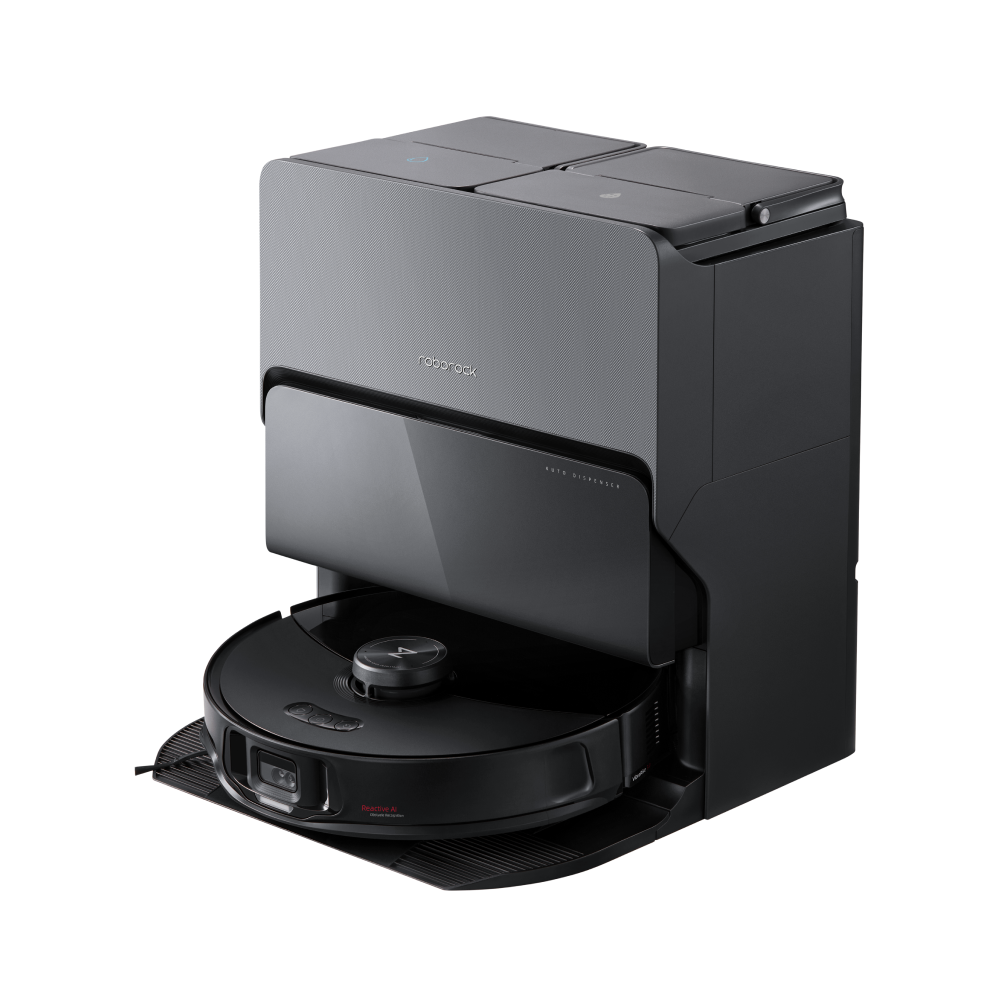
S8 Pro Ultra
Rosie 2.0 - Commercial Robot Vacuum (Two-Pack)
Autonomus Cleaning Machine C5
Freo
DEEBOT X2 OMNI
S8 Pro Ultra
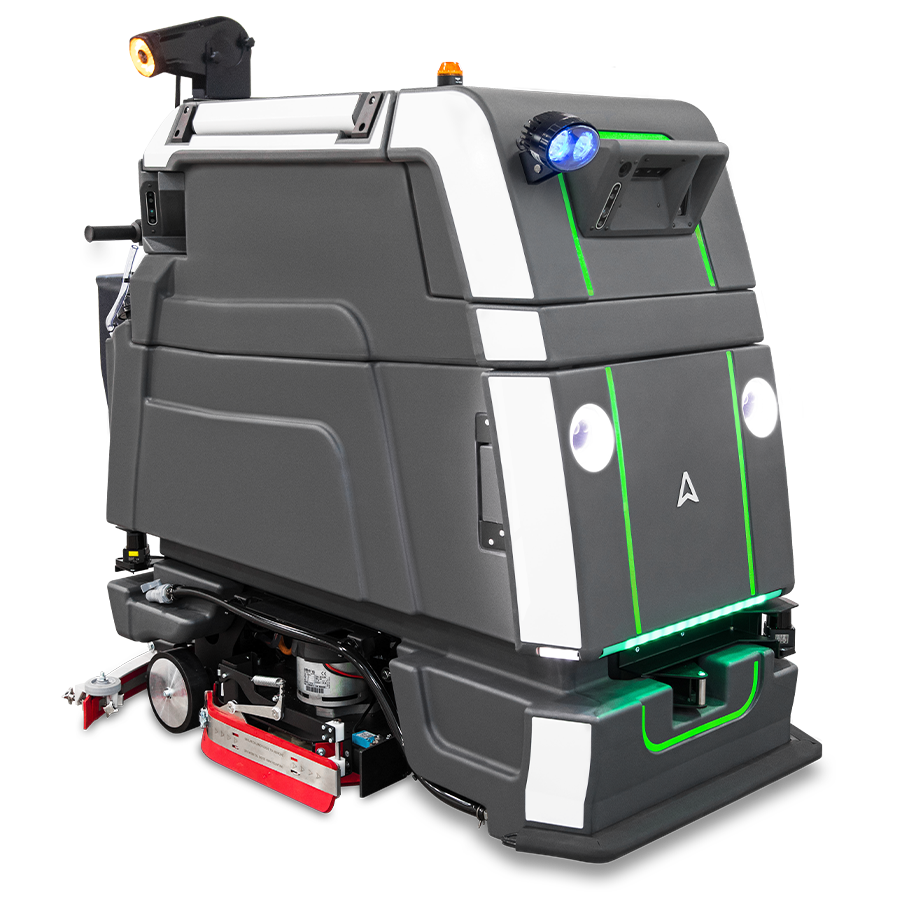
Rosie 2.0 - Enterprise Subscription
Freo
DEEBOT X2 OMNI
S8 Pro Ultra
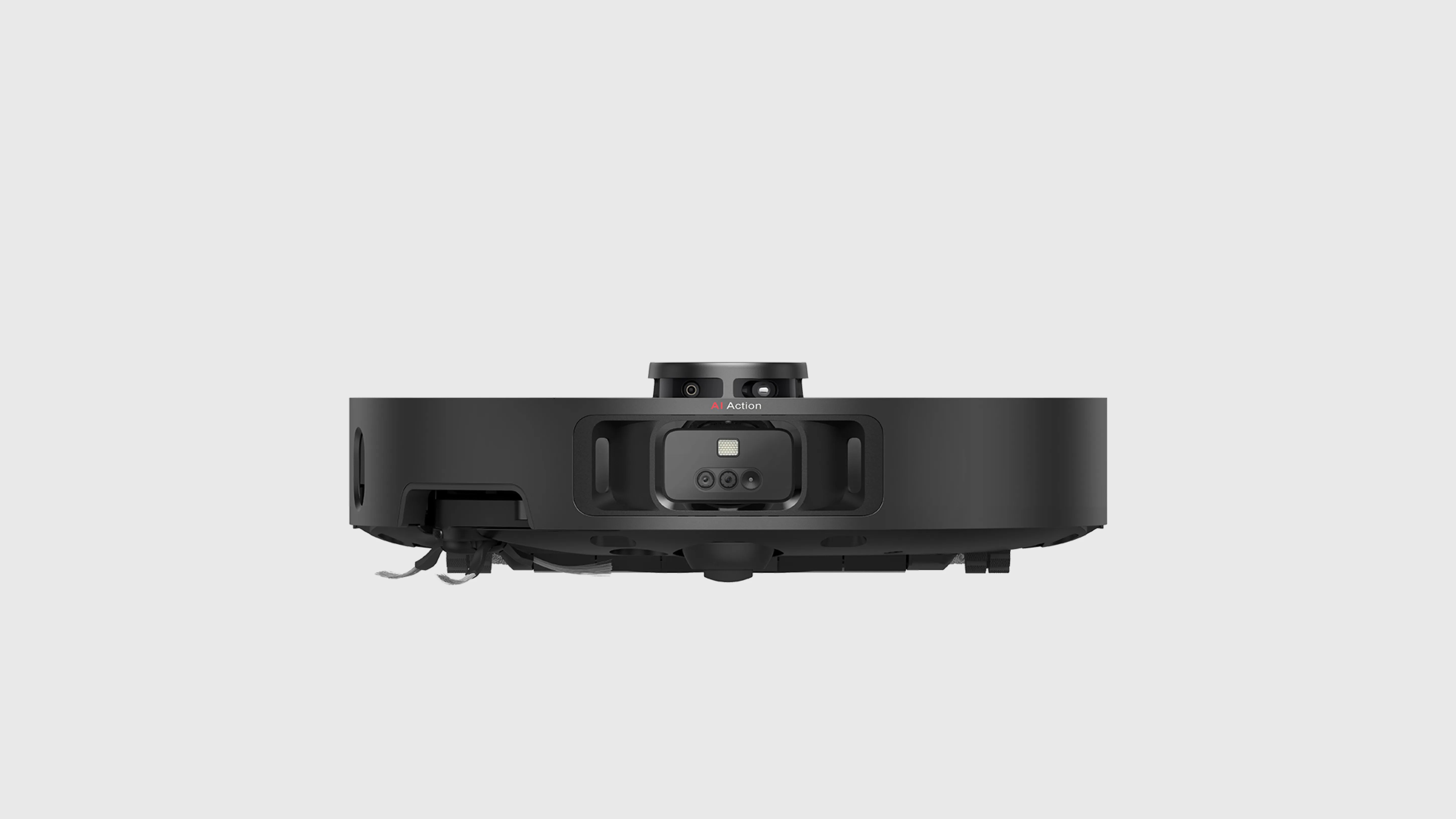
Dreame X40 Ultra
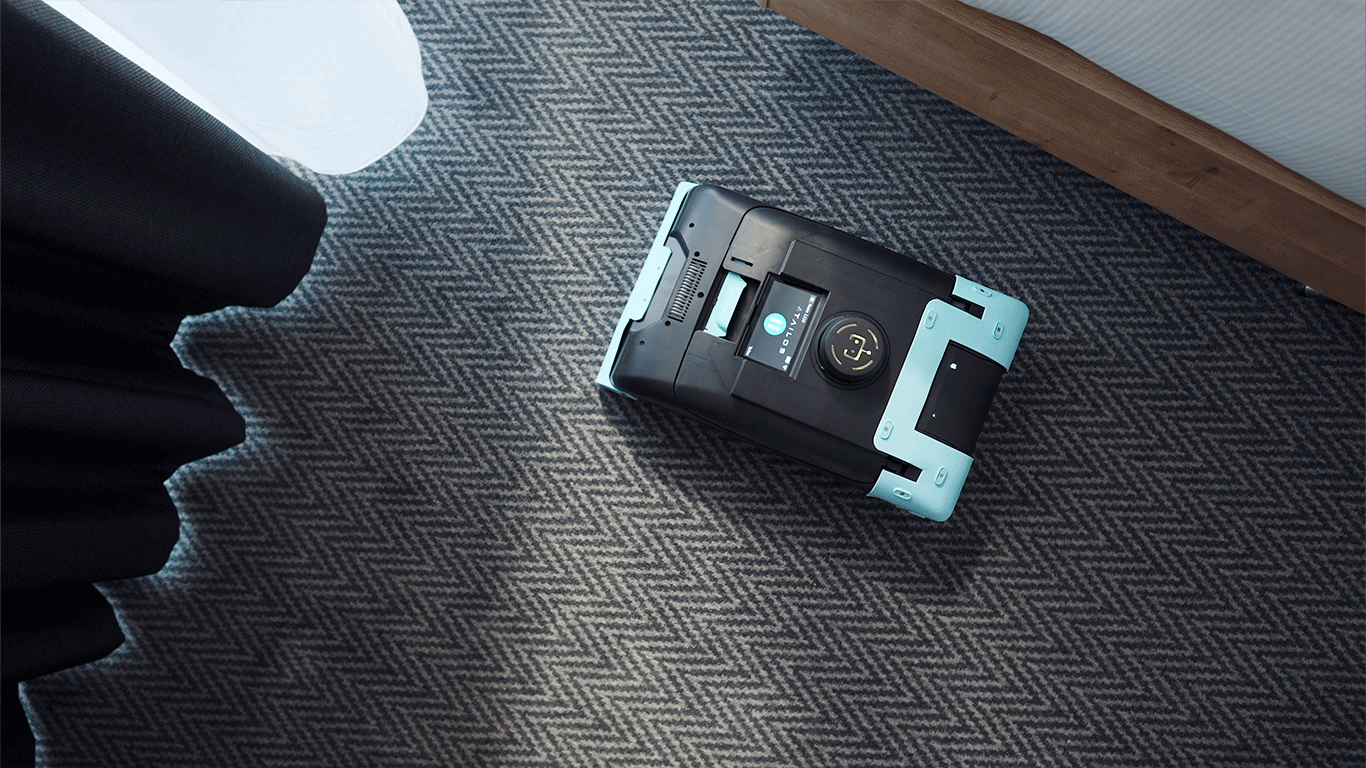
Rosie: Commercial Grade Robotic Vacuum
DEEBOT X2 OMNI
S8 Pro Ultra
Dreame X40 Ultra
Rosie Subscription Program
S8 Pro Ultra
Dreame X40 Ultra
ATP RobotX Cleaning Robot
Company announcement
News and Media
The company's official social & video channels · external links


News
From third-party news outlets (China & abroad) · external links

