gitamini
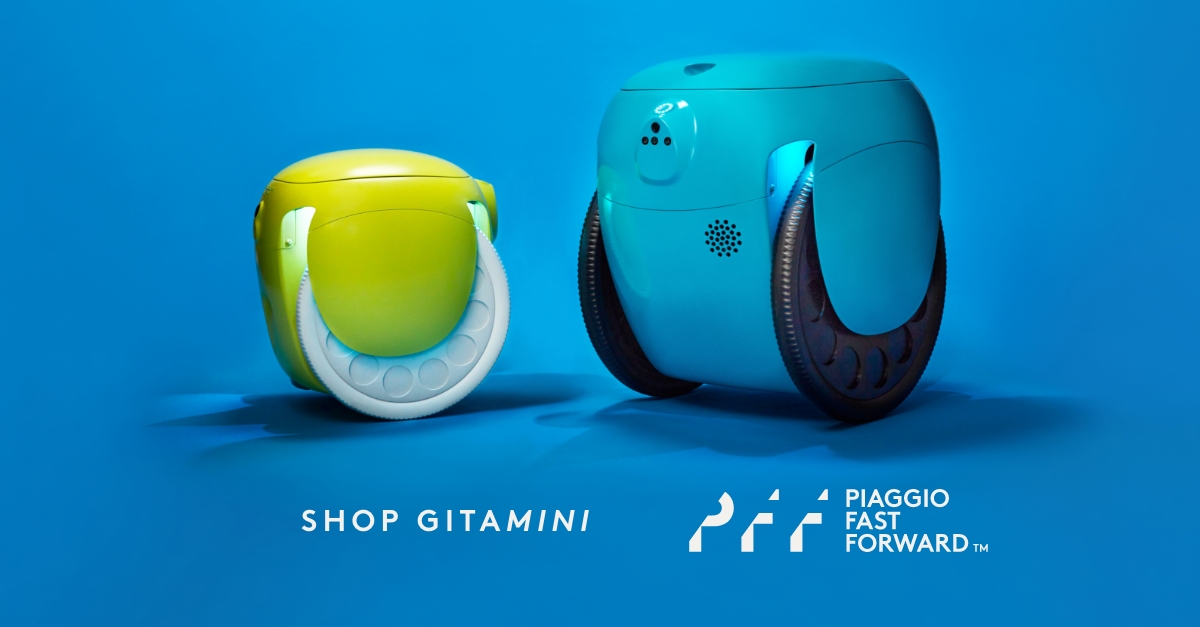
The gitamini is a compact, cargo-carrying personal following robot developed by Piaggio Fast Forward (PFF), a subsidiary of the Italian mobility company Piaggio Group. Designed for everyday pedestrian use, it autonomously follows its owner using computer-vision-based tracking, carrying personal items hands-free at walking pace across sidewalks, campuses, and urban environments. The gitamini is the smaller sibling of PFF's original gita robot, offering a more portable form factor while reportedly retaining the core follow-me functionality and a payload capacity of up to approximately 20 lb (around 9 kg). It targets individual consumers and enterprise customers seeking a last-mile personal cargo solution.
Overview and Use Cases
The gitamini is a wheeled, self-balancing personal cargo robot built around a single core premise: follow its designated user and carry their belongings without requiring any manual effort beyond initial pairing. PFF positions it for a range of everyday scenarios, including grocery runs, campus commutes, airport transit, and recreational outings such as golf or hiking on paved paths.
Unlike delivery robots that navigate autonomously to a fixed destination, the gitamini is a following robot — it stays locked onto a specific person using onboard cameras and machine-learning algorithms, adapting to their pace and direction in real time. This human-centric design philosophy distinguishes it from warehouse or logistics automation.
Key Technical Details
- Payload: Reportedly up to approximately 20 lb (~9 kg), stored in an internal cargo bay accessed via a top-opening lid.
- Speed: Designed to match typical human walking speeds; exact maximum speed figures have not been consistently confirmed in public documentation.
- Sensors: Relies on computer vision and onboard cameras for person-following; does not require the user to wear any special tracking device, though a smartphone app is used for pairing and configuration.
- Form factor: Compact and roughly torso-height, with a rounded cylindrical body intended to be unobtrusive in pedestrian environments.
- Battery / Runtime: Specific runtime figures have not been definitively published in widely available sources; PFF has indicated it is designed for typical errand-length outings.
- Connectivity: Pairs with a companion mobile app for setup, user profiles, and operational controls.
Comparison to Related Robots
Within PFF's own lineup, the gitamini is the smaller, more consumer-accessible counterpart to the original gita, which features a larger cargo capacity and a more prominent form factor. Both share the same follow-me architecture.
Among broader companion and cargo-following robots, the gitamini occupies a niche distinct from stationary smart-home companions (such as Vector 2.0, which focuses on voice interaction and personality rather than cargo) and from autonomous delivery platforms. Its closest conceptual competitors include other personal following robots and smart luggage products, though few direct commercial rivals have matched its specific combination of payload, form factor, and pedestrian-environment focus as of public reporting.
Market Context and Target Buyers
PFF has targeted both individual consumers and institutional or enterprise buyers. Reported use cases on the enterprise side include hospitality, healthcare campuses, and retail environments where staff or guests need hands-free cargo assistance. On the consumer side, the gitamini is positioned as a premium lifestyle product.
The robot sits in a relatively high price tier for consumer robotics, reflecting its sensor suite and autonomous capabilities. Exact retail pricing has varied and should be verified through current official channels. Its target buyer is typically a tech-forward urban consumer or a facilities manager seeking to reduce manual carrying tasks.
Deployments and Notable Customers
PFF has conducted pilots and partnerships with various organizations, reportedly including hospitality venues and university campuses, though comprehensive public deployment data is limited. The company has demonstrated the gitamini and its larger sibling at trade events and in media coverage, generating interest in last-mile personal mobility contexts.
Future Outlook
The personal cargo-following robot category remains nascent as of public reporting, with adoption dependent on factors such as sidewalk regulation, consumer willingness to pay, and continued improvements in pedestrian-environment navigation. PFF's continued development of the gita product family suggests ongoing investment in this space. Broader trends in autonomous mobility and AI-driven computer vision are likely to improve the reliability and capability of follow-me robots over time, potentially expanding the gitamini's addressable market.
Related entries
 Robot
RobotRelay Delivery Robot
The Relay Delivery Robot is an autonomous indoor delivery robot developed by Relay Robotics (formerly known as Savioke), designed primarily for hospitality and healthcare environments. It navigates hotel corridors and hospital hallways independently, rides elevators without human assistance, and delivers guest amenities, medications, linens, and other supplies directly to rooms or designated drop-off points. Relay is one of the most widely deployed service robots in its category, reportedly completing over one million lifetime deliveries with a publicly cited success rate of approximately 99.8%. With a cargo capacity of around 10 gallons, the robot is compact enough to operate in busy public spaces while carrying a meaningful payload of everyday supplies.
2,757 views
 Robot
RobotSpot
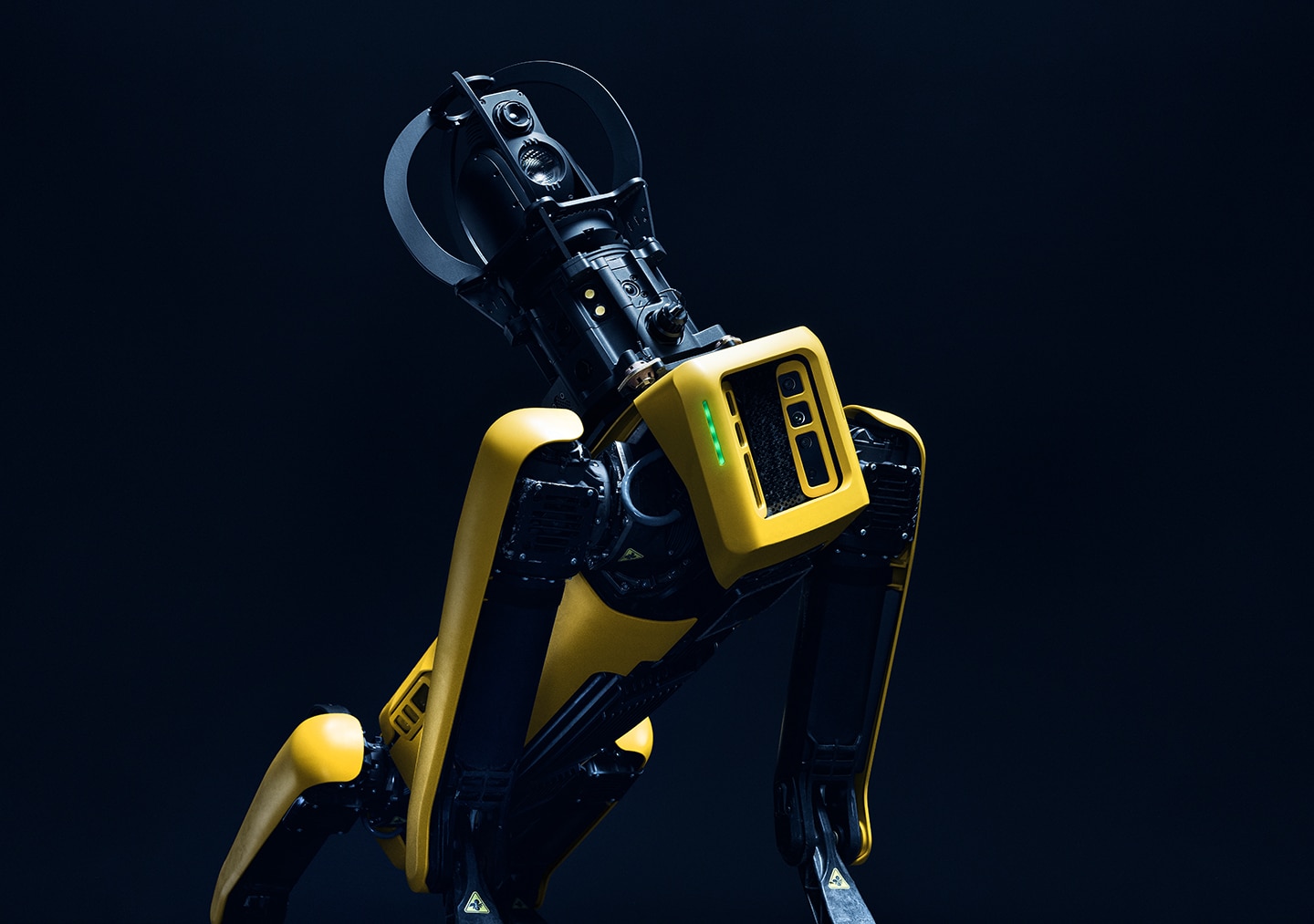
Spot is a four-legged autonomous robot developed by Boston Dynamics, a robotics company headquartered in Waltham, Massachusetts. Designed for inspection, security, and data collection in complex or hazardous environments, Spot can navigate stairs, rough terrain, and confined spaces that are inaccessible to wheeled robots. It is commercially available and has been deployed across industries including utilities, oil and gas, construction, and public safety. Spot supports a modular payload system that accommodates thermal cameras, pan-tilt-zoom (PTZ) cameras, lidar units, methane sensors, and other mission-specific hardware. Boston Dynamics also offers the Orbit fleet-management software platform, enabling operators to schedule autonomous inspection routes, aggregate sensor data, and manage multiple Spot units from a central interface. The robot is widely regarded as one of the most capable and commercially mature legged robots on the market.
1,242 views
 Robot
RobotRealSense Depth Camera D455
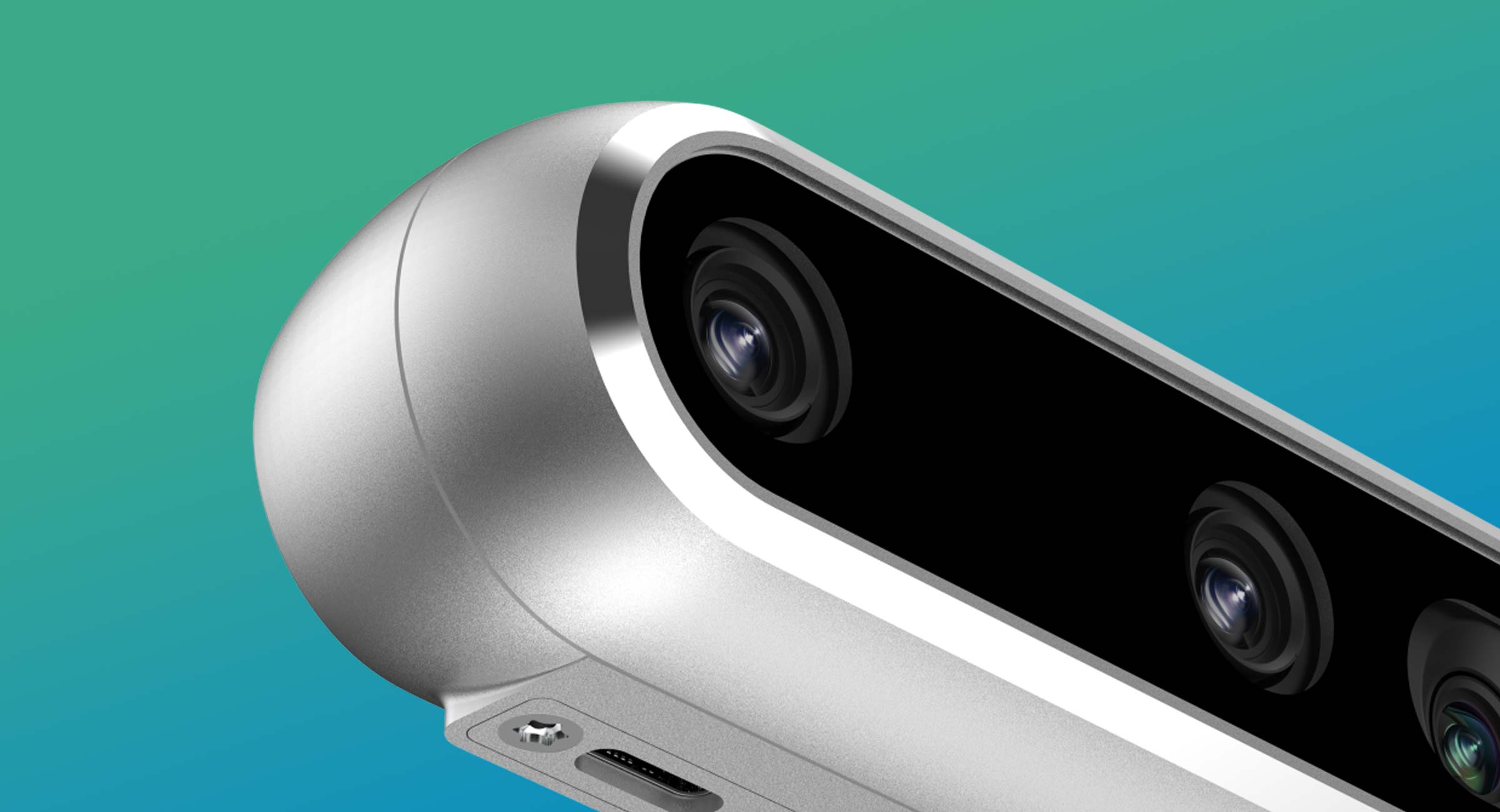
The RealSense Depth Camera D455 is a stereoscopic active-infrared depth camera belonging to Intel's D400 series, designed to capture high-fidelity depth data for robotics, autonomous mobile robots (AMRs), drones, and computer-vision applications. It features a 95 mm stereo baseline — the widest in the D400 lineup at the time of its introduction — which reportedly enables depth error of under 2% at ranges up to approximately 4 metres. Originally developed under the Intel RealSense brand, the D455 and related products were later spun off as part of an independent RealSense business unit following Intel's restructuring of the division around 2021–2022. The camera is widely adopted in research, industrial automation, and humanoid-robot development owing to its compact USB-powered form factor, open SDK support, and relatively accessible price point.
742 views
Rosie 2.0
The Rosie 2.0 is a commercial-grade autonomous robot vacuum developed by Tailos, designed to handle large-scale floor cleaning in business and institutional environments. It is offered in a two-pack configuration, allowing facilities to deploy multiple units simultaneously for broader coverage and more efficient cleaning cycles. Built to commercial durability standards, the Rosie 2.0 combines intelligent navigation with powerful suction technology to reduce reliance on manual labor and improve facility maintenance consistency. It targets businesses, hospitality venues, retail spaces, and other high-traffic environments where reliable, automated cleaning is a priority.
521 views