Let's compare
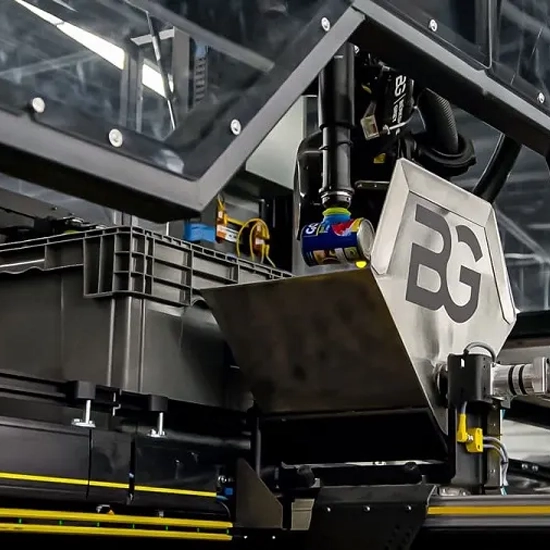
Robotic Parcel Sortation
Berkshire Grey
Not yet assessed
- Height
- —
- Payload
- —
- Verified autonomy
- not assessed
- Real deployment
- not assessed
- Status
- —
- Price
- —
Robotic Parcel Sortation
Berkshire GreyRobotic parcel sortation encompasses multiple distinct systems from different vendors, including Berkshire Grey (Scoop trailer unloader, Core picking, Stride/Dispatch sortation), LiBiao Robotics (AMR-based sortation for Kuryenet/Turkey and Correo Argentino), Amazon Robotics (RSS robotic sortation floors), and Figure AI (humanoid robot parcel sorting). The core sortation task — routing parcels from induction to destination chutes — is performed autonomously by robots, with humans performing upstream induction (placing parcels onto robots) in AMR-based systems, while trailer unloading and picking systems claim full autonomous task execution. Performance claims (>99% uptime, 99.9% accuracy, 45,000 items/hour) are predominantly vendor-sourced; independent evidence confirms real deployments at scale but does not independently verify headline metrics. A notable tension exists between vendor claims of full autonomy and the structural reality that human workers staff induction stations in AMR sortation systems, though this represents task-adjacent labor rather than humans performing the sortation task itself.
Availability
Specification
- human_vs_robot_speed_comparison
- Humans slightly faster per shift; robots' advantage is 24/7 continuous operation without fatigue
- figure_ai_autonomous_battery_management
- Robots autonomously request handoff and self-navigate to maintenance area when battery low (vendor claim)
Price
No public price — contact the supplier for a quote.
Good · Bad · Ugly
Evidence-graded claims from the Berkshire Grey deep report
Berkshire Grey systems are deployed at scale with named enterprise customers including Walmart, Target, FedEx, and Maersk (UK).
Wikipedia [7] and a Berkshire Grey press release [12] independently confirm named customer deployments including Maersk's UK showcase warehouse (2023); however, deployment scale (unit counts, throughput volumes) at each customer remains unverified by any independent source.
from Berkshire Grey deep report →Berkshire Grey went public via SPAC at a $2.7B valuation and was subsequently taken private by SoftBank — representing a dramatic valuation collapse from its SPAC peak.
TechCrunch [8], Wikipedia [7], and Tracxn [13] independently confirm both the $2.7B SPAC valuation (February 2021) and the subsequent SoftBank go-private acquisition, with the Reddit/SPACs community [9] having flagged valuation concerns pre-merger; the magnitude of the valuation decline is materially relevant to assessing vendor financial stability and long-term deployment commitments.
from Berkshire Grey deep report →
Berkshire Grey's Core robotic picking system achieves up to 2x human pick-and-release throughput with >99% picking accuracy and >99% uptime — and requires no prior SKU data from day one.
All three metrics (throughput, accuracy, uptime) and the zero-SKU-data claim originate exclusively from Berkshire Grey's own product pages [4]; no independent third-party test, customer audit, or journalist benchmark in the dossier corroborates or refutes any of these figures.
from Berkshire Grey deep report →
About the company
Editorial directory of real robot products from leading global manufacturers. Each entry links to the manufacturer's official page.