Peer Robotics
USA · peerrobotics.ai
SnapshotCompany claim
Peer Robotics leverages robotic innovation to alleviate physical demands on workers, aiming for seamless human-robot collaboration. It is headquartered in the USA with an R&D center in India, providing intelligent, cost-effective automation solutions for global manufacturers.
- Founded
- Not disclosed
- HQ
- USA
- Models
- 1
- Categories
- 1
Product families
Is this your company? Claim this profile to add verified data, respond to our analysis, and upgrade claims to Verified.
Claim this profile1. Executive Overview {#executive-overview}
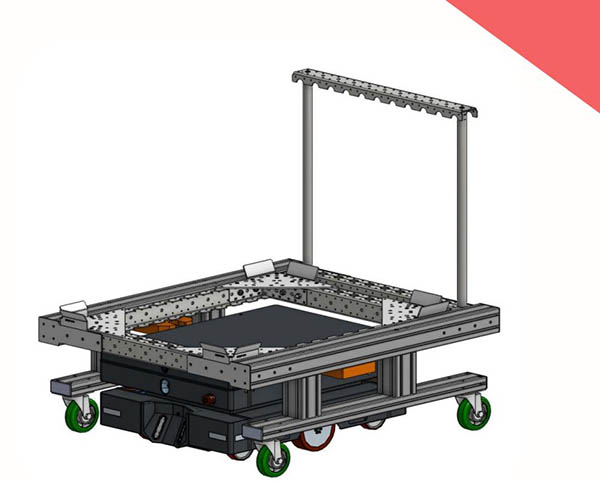
Peer Robotics is a US-headquartered robotics company with an R&D center in India, focused on autonomous mobile robots (AMRs) designed for heavy-duty material handling in manufacturing, warehouse, and logistics environments. The company's core value proposition is human-centric automation: robots that take on physically demanding and repetitive tasks alongside workers, rather than replacing them. Their flagship RM Series AMRs — including the RM500 and RM250 — are CE and ISO certified, support payloads up to 500 kg, and are engineered for integration into existing facilities with minimal infrastructure changes. Peer Robotics has achieved third-party press validation at multiple funding milestones, with coverage from respected industry outlets including Robotics 24/7 and The Robot Report.
The company's positioning centers on democratizing automation for global manufacturers who have historically been underserved by expensive, complex robotics deployments. With an extensive partner and system integrator network, Peer Robotics claims the ability to service manufacturers across global markets from its dual-country operational structure. The company is actively hiring, signaling a growth phase consistent with its documented fundraising trajectory.
Latest news
- KEENON Humanoid Pours Drinks at GCS 2026, 100,000 Others Run HotelsYanko Design·2026-06-15GENERAL
2. The Company Story {#the-company-story}
Peer Robotics was founded in the United States, though the precise founding date has not been publicly disclosed. The company operates with headquarters in the USA and a dedicated R&D center in India — a structure that suggests a deliberate strategy to combine proximity to North American manufacturing customers with access to cost-competitive engineering talent.
The company's earliest documented public milestone is a $2.3 million seed funding round, reported in September 2022 by both Robotics 24/7 and The Robot Report. Notably, coverage at this stage specifically referenced haptic-sensing mobile robots, indicating that early R&D had a sensor-rich, human-interaction-aware focus. This seed round provided the foundation for product development and early commercialization efforts.
A subsequent Series A round — the terms of which have not been publicly confirmed in the available data — was reported by RobotWale News in July 2026, marking a significant step in the company's growth trajectory. This progression from seed to Series A within a few years, with coverage from multiple credible industry publications, provides external validation of investor confidence in the company's direction.
Peer Robotics positions itself as a "solutions-focused partner" rather than a pure hardware vendor, emphasizing its expertise in human-robot interaction, vision systems, and embedded intelligence. The company's stated values — Collaboration, Innovation, and Transparency — are operationalized through its product design philosophy: AMRs that work alongside humans, interfaces requiring minimal training, and CE/ISO certification as a baseline safety commitment.
3. Product Portfolio {#product-portfolio}
Products & versions


Peer Robotics' current disclosed lineup centers on the RM Series of Autonomous Mobile Robots, with at least two named variants publicly surfaced: the RM500 and the RM250. These sit within a broader solutions architecture that the company organizes by use case rather than purely by hardware model — covering Pallet Movement, Trolley Movement, Trolley Tugging, Bin Movement, and Pallet/Shelf Movement solutions. The Peer 3000 is also listed as a product on the company's site, though detailed specifications for this model are not yet publicly disclosed.
The RM500 is the most fully described product in the available data: a heavy-duty AMR with a 500 kg payload capacity, smart autonomous navigation, and a design emphasis on large-scale operations. Its key differentiators, per company claims, are flexibility, ease of use, and the ability to integrate into existing facilities without significant infrastructure modification. The solution-category framing — pallet tugging, trolley movement, bin handling — suggests the RM Series is designed as a configurable platform adaptable to multiple material-flow scenarios in factory and warehouse environments. The RM250, by naming convention, likely targets a lower payload tier, though full specifications have not been disclosed in the available data.
4. Technology Stack {#technology-stack}
Peer Robotics publicly claims expertise in three technical domains: human-robot interaction, vision systems, and embedded intelligence. The company's CE and ISO certifications confirm that its products meet recognized international safety and quality standards for industrial robotics — a non-trivial compliance bar that validates the maturity of at least the safety engineering layer.
The RM500's "smart autonomous navigation" feature, combined with the early seed-round coverage that specifically called out haptic-sensing capabilities, points to a multi-modal sensing architecture. Our read: the combination of vision systems (likely camera- or LiDAR-based navigation) and haptic sensing suggests Peer Robotics is pursuing an AMR design that can operate safely in dynamic, human-populated environments — a technically more demanding target than fixed-path AGV deployments. This is consistent with their human-centric collaboration positioning.
Our read: The "minimal infrastructure changes" and "intuitive interfaces" claims, if substantiated at scale, imply either a robust simultaneous localization and mapping (SLAM) capability or a similarly infrastructure-light navigation approach, rather than reliance on floor tape or fixed beacons. The embedded intelligence claim suggests onboard processing for navigation and obstacle avoidance rather than purely cloud-dependent computation, though this inference cannot be confirmed from public data alone.
Not yet disclosed: Detailed technical specifications — including speed (m/s), runtime hours, battery capacity, charge time, dimensional data, and sensor modalities — are not publicly available for the RM Series. Peer Robotics is invited to claim or correct this data to enable a more complete technical assessment.
5. Research, Papers, Authors, Labs {#research-papers}
Company-linked papers
Peer Robotics does not appear to be a research-publishing organization in the academic sense. No peer-reviewed papers, preprints, or named research lab affiliations are surfaced in the available data. This is entirely consistent with the profile of a commercial service-robotics company at the seed-to-Series-A stage, where engineering resources are directed toward product development and deployment rather than academic publication.
6. Media Evidence {#media-evidence}
Media library
Peer Robotics has secured coverage from credible, specialist robotics industry outlets at documented funding milestones. Robotics 24/7 reported the company's $2.3M seed round in September 2022, with specific mention of haptic-sensing mobile robots. The Robot Report independently covered the same seed funding event — notable because this publication applies editorial standards to robotics coverage. RobotWale News (robotwale.com) reported a Series A close in July 2026. Taken together, these three placements across three distinct outlets over multiple years constitute a consistent, if modest, external media footprint for a company at this stage.
7. Commercial Reality {#commercial-reality}
Customers & deployments
Revenue figures, customer counts, named customer deployments, and ROI metrics are not disclosed in any available public data for Peer Robotics. The company's fundraising record — a documented $2.3M seed round (2022) and a reported Series A (2026) — provides indirect evidence of investor-validated commercial progress, but does not substitute for deployment or revenue data.
Peer Robotics is invited to claim, correct, or disclose customer references, deployment counts, or commercial performance data to enable a more complete commercial assessment on this platform.
8. Markets and Use Cases {#markets-use-cases}
Peer Robotics' products and solutions are explicitly tagged across three primary industry verticals: factory/manufacturing, warehouse, and logistics. Within these verticals, the company's solution categories — Pallet Movement, Trolley Movement, Trolley Tugging, Bin Movement, and Pallet/Shelf Movement — map directly to the most labor-intensive and injury-prone material-handling tasks in industrial environments.
The heavy-transport use case anchored by the RM500's 500 kg payload capacity positions Peer Robotics in the segment of manufacturers handling large, heavy components or palletized goods — industries such as automotive parts, consumer goods manufacturing, food and beverage distribution, and general warehousing. The company's stated focus on alleviating physical demands on workers also aligns with regulatory and labor-market pressures in these sectors, where musculoskeletal injury rates are high and labor availability is increasingly constrained.
The global reach claim — serviced through a partner and system integrator network — suggests Peer Robotics is targeting customers beyond the North American market, consistent with its India R&D center and the "global manufacturers" framing used throughout its site copy. The "minimal infrastructure changes" positioning specifically targets mid-market manufacturers who cannot afford lengthy, disruptive deployment projects, differentiating Peer Robotics from enterprise-tier automation vendors whose deployments require significant facility retrofitting.
9. Competitive Landscape {#competitive-landscape}
Competitive comparison
| Robot | Maker | Autonomy | Conf. |
|---|---|---|---|
| iRobot Roomba Combo 10 Max | iRobot | Autonomous | 0.90 |
| Mobile ALOHA (Stanford) | Stanford University | Teleoperated | 0.90 |
| 1X NEO | 1X Technologies | Remote-Assisted | 0.90 |
The AMR market for heavy-duty material handling in factory and warehouse environments is an active and increasingly crowded segment, with vendors ranging from large incumbent industrial automation companies to venture-backed AMR specialists. Peer Robotics competes on the basis of cost-effectiveness, ease of integration, and a human-centric design philosophy — differentiators that are most relevant to mid-market manufacturers who represent an underserved tier between artisanal manual operations and fully automated greenfield facilities.
Our read: The 500 kg payload class and the multi-solution-category approach (pallets, trolleys, bins) position Peer Robotics as a horizontal material-handling platform rather than a single-use-case specialist. This breadth is a competitive asset for manufacturers with varied internal logistics needs, but also requires the company to demonstrate reliable performance across a wider range of deployment scenarios than a narrowly focused competitor would face.
10. Country Advantage / Geopolitical {#geopolitical}
Peer Robotics' dual-country structure — US headquarters, India R&D — is a deliberate operational choice with material implications. The India R&D center provides access to a deep pool of engineering talent at cost structures favorable to a venture-backed startup, enabling the company to build and iterate on embedded intelligence and vision systems at a pace that would be more capital-intensive if conducted entirely in the US. Simultaneously, US headquarters positions the company favorably for North American enterprise sales, regulatory compliance (CE/ISO certification is already claimed), and access to US-based investors and manufacturing customers.
In the current geopolitical environment, where US manufacturers are actively evaluating supply chain resilience and sourcing robotics solutions from trusted-country vendors, Peer Robotics' all-US/India footprint — with no disclosed manufacturing or IP dependency on China — may represent a latent commercial and policy advantage that the company has not yet prominently marketed.
11. Hype vs Real vs Ugly {#hype-real-ugly}
Claim tracker
Verified and externally corroborated:
- $2.3M seed funding round (2022) — confirmed by Robotics 24/7 and The Robot Report, two editorially independent outlets.
- Series A funding close — reported by RobotWale News (2026); terms not yet publicly confirmed.
- CE and ISO certification — company claim, consistent with described product maturity; not independently verified in available data.
- RM500 500 kg payload capacity — company claim; no independent third-party test data available.
Company claims, not independently verified:
- "Seamless human-robot collaboration" — aspirational positioning language; no deployment case studies or performance benchmarks disclosed.
- "Minimal infrastructure changes" required for deployment — company claim; plausible given AMR category norms, but not substantiated by named customer references.
- "Intuitive interfaces" requiring no extensive training — company claim; not independently assessed.
- Global serviceability through partner/integrator network — company claim; named partners not disclosed.
Gaps (fixable):
- Not yet disclosed: Customer names, deployment counts, or production performance data. Peer Robotics is invited to claim or correct this.
- Not yet disclosed: Full technical specifications for the RM250 and Peer 3000 product lines.
- Not yet disclosed: Series A round size and lead investors.
12. Future Scenarios {#future-scenarios}
Bull case — Our read: Peer Robotics successfully converts its Series A capital into a scaled North American customer base, leveraging the "minimal infrastructure changes" positioning to land mid-market manufacturers who have been locked out of AMR adoption by cost and complexity. The India R&D center accelerates product iteration, yielding a broader RM Series lineup with expanded payload ranges and use-case coverage. The company's early haptic-sensing work differentiates it in human-collaborative environments as safety regulations tighten. A Series B follows within 24–36 months, with named enterprise customer deployments providing the proof-of-scale narrative.
Base case — Our read: Peer Robotics establishes a solid regional footprint in North American manufacturing and warehouse verticals, growing steadily through its system integrator network. The RM Series captures a defensible niche in heavy-payload AMR deployments. Growth is measured rather than explosive, constrained by the competitive intensity of the AMR market and the sales cycle length typical of industrial automation. The company remains a credible, specialized player without achieving category leadership in the near term.
Bear case — Our read: The AMR market consolidates faster than Peer Robotics can scale, with larger, better-capitalized competitors compressing margins in the 500 kg payload class. The absence of publicly disclosed customer references limits the company's ability to build a credible sales pipeline in risk-averse manufacturing procurement environments. If Series A capital is insufficient to reach proof-of-scale milestones, a subsequent fundraise becomes more difficult. The dual-country R&D structure, while cost-efficient, introduces coordination overhead that could slow product development velocity.
13. What to Watch {#what-to-watch}
- Series A details: Round size, lead investors, and strategic investors (if any) — will signal market confidence and capital runway.
- Named customer deployments: First publicly referenceable enterprise customer will be a significant commercial validation milestone.
- RM250 and Peer 3000 specifications: Full product specs when disclosed will clarify the breadth and positioning of the RM Series platform.
- Certification progress: The company notes additional certifications are in process — watch for announcements that expand addressable geographies or customer segments.
- Partner/integrator network: Named system integrator partnerships will indicate geographic reach and sales channel maturity.
- Haptic-sensing productization: Whether the haptic-sensing capability referenced at seed stage has been integrated into shipping products or remains in R&D.
- Hiring cadence: Role categories and volume of open positions will signal whether the company is scaling engineering, sales, or operations — each implying a different growth phase.
- India R&D output: Any patents filed or technical publications would indicate the depth and direction of R&D investment.
14. Sources & Methodology {#sources-methodology}
Primary source: Company website (peerrobotics.ai) — About page, product descriptions, solution categories, FAQs, and stated values. All content from this source is labeled (company-claim) throughout this report and reflects the company's own representation of its products, capabilities, and positioning. It has not been independently audited.
External press sources (independent validation):
- Robotics 24/7 (robotics247.com) — Seed funding coverage, September 2022.
- The Robot Report (therobotreport.com) — Seed funding coverage, date not specified in available data.
- RobotWale News (robotwale.com) — Series A coverage, July 2026.
Computed relations: Competitive landscape, market categorization, and technology inferences are derived from product use-case tags, industry tags, and feature descriptions extracted from the company site, cross-referenced against publicly known AMR market dynamics. Inferences are labeled "Our read:" throughout and are not asserted as verified facts.
Methodology rubric (applied uniformly to every company on this platform): (1) Lead with verified strengths; (2) label all company claims as such; (3) label all inferences; (4) render all undisclosed commercial data as "Not disclosed" with an invitation to claim or correct; (5) cite only named, independent outlets for external validation; (6) apply no unsourced negatives.

The RM500 is an advanced AMR with a 500 kg payload capacity, engineered for large scale heavy-duty material handling. It features smart autonomous navigation and is designed for flexibility and ease of use.
- •500 kg payload capacity
- •Advanced AMR for heavy-duty material handling
- •Smart autonomous navigation
- •Designed for large scale operations
- •Flexible and easy to use
| Payload | 500 kg |
Technology stackOur read
Inferred from product specs — click through to the technology wiki:
ResearchComputed
Product comparisonComputed
Each row leads with this company's product, side-by-side with similar ones · click a row to expand full specs, click again to collapse
RM Series
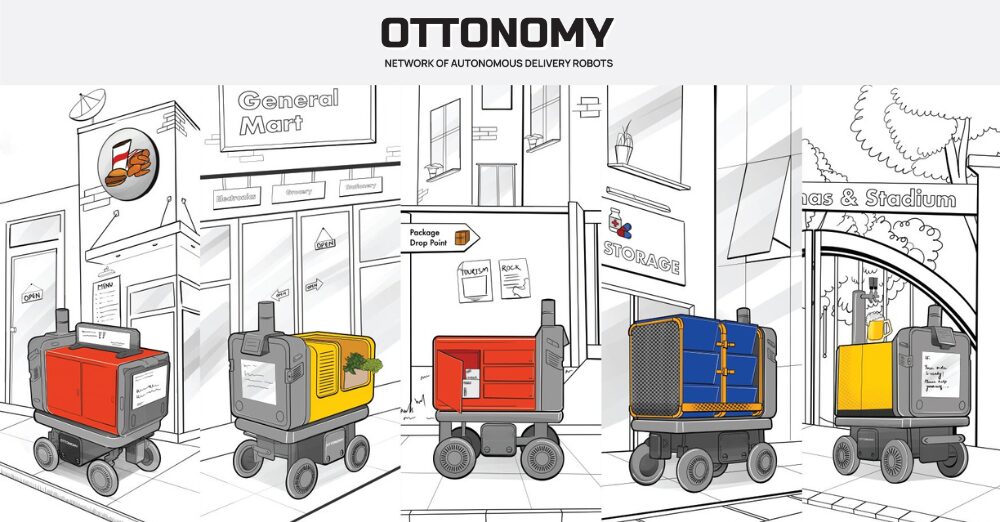
Ottobot
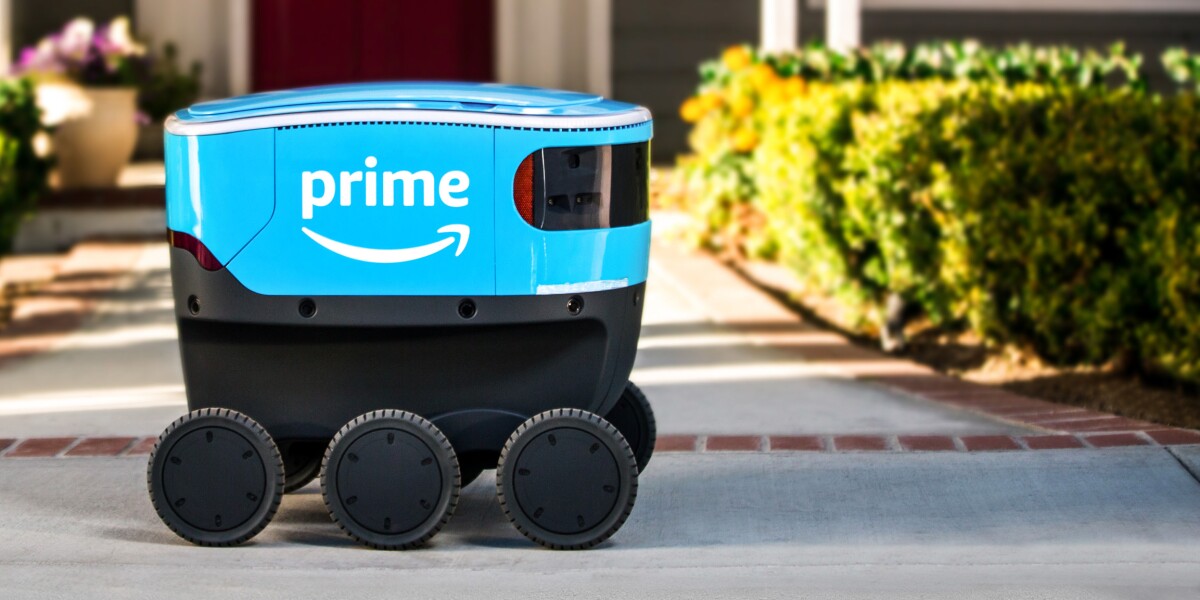
Amazon Scout

LuckiBot Pro

KettyBot
Pudu CC1
Company announcement
News and Media
The company's official social & video channels · external links
News
From third-party news outlets (China & abroad) · external links