Pepper
Pepper is a 1.2-metre semi-humanoid social robot developed by SoftBank Robotics, designed to interact with people through natural conversation, facial expression recognition, and expressive gestures. Its primary purpose is to serve as a customer-facing companion and assistant in public-facing environments such as retail stores, hotel lobbies, schools, and hospitals. Equipped with cameras, microphones, touch sensors, and a chest-mounted tablet, Pepper can detect human emotions and respond accordingly, making it one of the most widely recognised social robots in the world. Since its commercial introduction, it has been deployed by numerous organisations globally as a greeter, information kiosk, and engagement tool.

Overview and Use Cases
Pepper was introduced by SoftBank Robotics as a companion robot intended to live and work alongside humans. Unlike industrial robots focused on physical tasks, Pepper's core competency is social interaction. Its applications span several sectors:
- Retail: Greeting customers, answering product queries, and guiding shoppers within stores.
- Hospitality: Acting as a concierge or check-in assistant in hotels and airports.
- Education: Engaging students in interactive lessons and supporting teachers in classroom settings.
- Healthcare: Providing information to patients and visitors in hospital reception areas, and reportedly being trialled for companionship in elder-care facilities.
- Corporate: Welcoming visitors in office lobbies and delivering presentations.
Pepper's ability to detect emotional cues and adapt its responses makes it particularly suited to environments where human engagement and brand experience are priorities.
Key Technical Details
Pepper stands approximately 1.2 metres tall and weighs around 28 kg, according to commonly cited specifications. Notable hardware features include:
- Sensors: Two HD cameras (eyes), a 3D depth sensor (forehead), four directional microphones, sonar, laser, and infrared sensors for obstacle detection.
- Touch sensors: Located on the head and hands to enable tactile interaction.
- Display: A 10.1-inch chest-mounted tablet for visual content delivery.
- Mobility: An omnidirectional wheeled base allowing smooth movement across flat surfaces.
- Battery: Reported runtime of approximately 12 hours under typical usage conditions, though this varies with workload.
- Software: Runs on NAOqi OS and supports integration with third-party cloud AI services for enhanced natural language processing.
Pepper is not designed for heavy manipulation tasks and carries no significant payload; its value lies in communication rather than physical labour.
Comparison to Similar Robots
Within the broader SoftBank Robotics ecosystem, Pepper is distinct from the warehouse and logistics robots associated with partner brands. Robots such as the GreyOrange Ranger GTP, Locus Origin, Quicktron M100, and Geek+ P800 are autonomous mobile robots (AMRs) built for goods transport and fulfilment centre operations — a fundamentally different category from Pepper's social role. Artly: The Barista Bot occupies a hospitality niche focused on beverage preparation rather than conversation.
Among competitors in the social robot space, Pepper is often compared to:
- NAO (also by SoftBank Robotics): A smaller educational robot sharing the NAOqi platform.
- Furhat Robotics Furhat: A social robot head focused on conversational AI research.
- LG CLOi: A service robot targeting similar retail and hospitality verticals.
Pepper's distinguishing factors are its human-like form factor, emotional recognition capability, and the scale of its global deployments.
Market Context and Target Buyers
Pepper is positioned in the premium tier of social and service robots. It is typically offered to enterprise customers through leasing or subscription models rather than outright purchase, though exact pricing terms vary by region and partner. Target buyers include retail chains, hotel groups, airports, healthcare providers, and educational institutions seeking to enhance customer or visitor experience through technology.
The robot is generally not aimed at individual consumers, reflecting its design around high-traffic, public-facing deployments.
Notable Deployments
Pepper has been deployed by a wide range of organisations globally. Reported deployments include:
- Retail: Deployed in stores by brands such as Nestlé, Carrefour, and various telecoms retailers in Japan and Europe.
- Banking: Trialled in bank branches to assist customers with routine enquiries.
- Healthcare: Piloted in hospitals in Japan and Europe for patient-facing roles.
- Education: Used in schools across Japan, the United Kingdom, and other markets to support STEM education.
- Government: Deployed at public information points in several countries.
As of public reporting, tens of thousands of Pepper units have been deployed worldwide, making it one of the most commercially distributed social robots to date.
Future Outlook
The social robotics market continues to evolve rapidly, with advances in large language models (LLMs) and multimodal AI offering new possibilities for robots like Pepper. SoftBank Robotics has reportedly explored integrating more sophisticated conversational AI into Pepper's platform. However, the robot has also faced scrutiny regarding the practical return on investment for enterprise customers, and some high-profile deployments have been scaled back.
The long-term trajectory of Pepper will likely depend on continued software improvements, cost optimisation, and the ability to demonstrate measurable business value in its target verticals.
Related videos

BellaBot Service Roboter at Miss PeppeR Restaurant Frechen. #robots #robot #roboter #bot #restaurant
RobotsBlog
Peppermint Robotics | Smarter Cleaning Robots for Modern Facilities
Peppermint Robotics

Meet Pepper, the Friendly Humanoid Robot, Can Pepper robot interact with people?
Science online

Meet Pepper – the social robot
Chalmers University of Technology

@Agriplantnv #pepper 🌶️ #agriculture #robot #automation #puremichigan
Puehler AgCo, Inc.

Peppermint Robotics industrial floor cleaning robot for Airports
Peppermint Robotics
Related entries
 Robot
RobotRelay Delivery Robot
The Relay Delivery Robot is an autonomous indoor delivery robot developed by Relay Robotics (formerly known as Savioke), designed primarily for hospitality and healthcare environments. It navigates hotel corridors and hospital hallways independently, rides elevators without human assistance, and delivers guest amenities, medications, linens, and other supplies directly to rooms or designated drop-off points. Relay is one of the most widely deployed service robots in its category, reportedly completing over one million lifetime deliveries with a publicly cited success rate of approximately 99.8%. With a cargo capacity of around 10 gallons, the robot is compact enough to operate in busy public spaces while carrying a meaningful payload of everyday supplies.
2,796 views
 Robot
RobotSpot
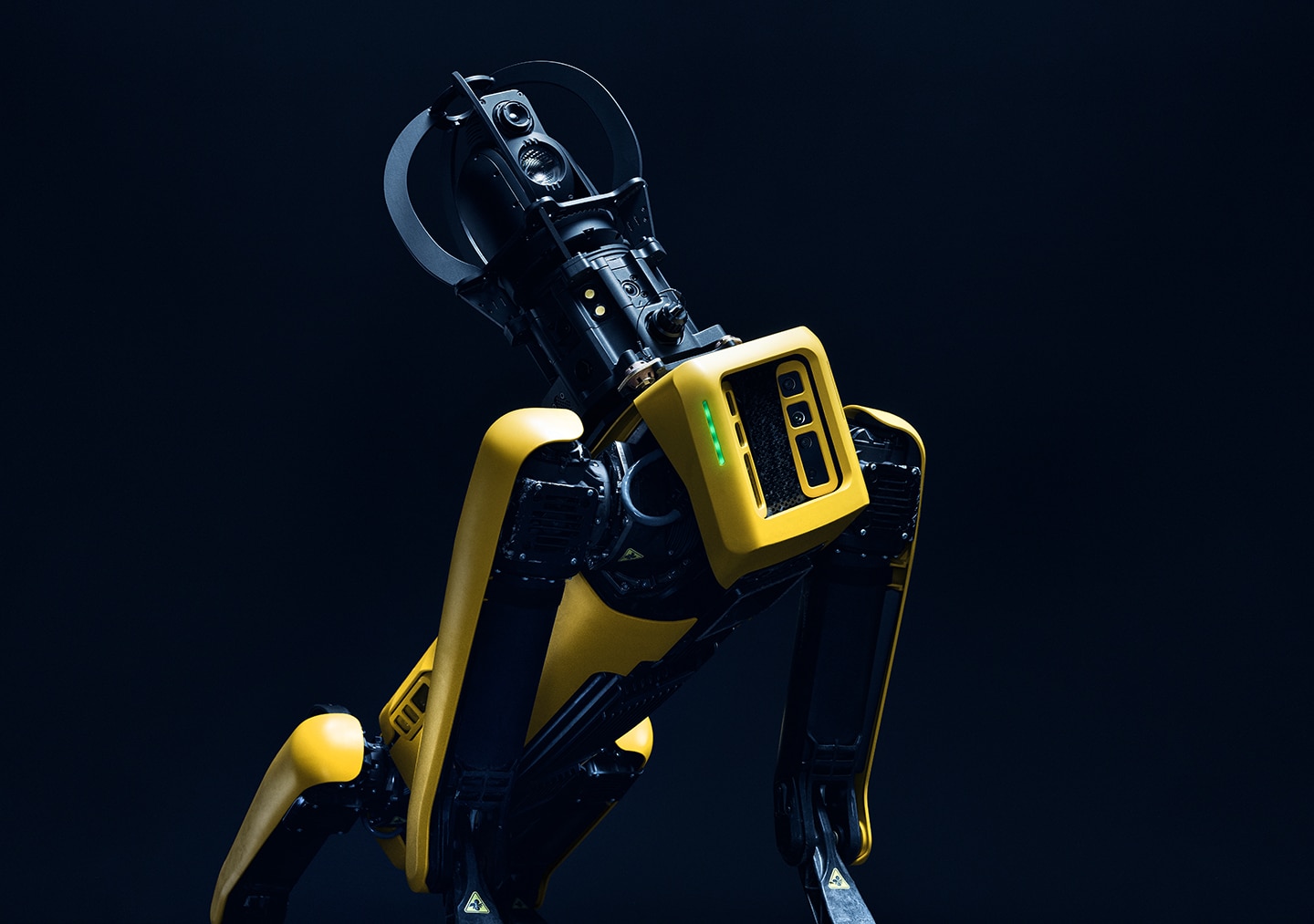
Spot is a four-legged autonomous robot developed by Boston Dynamics, a robotics company headquartered in Waltham, Massachusetts. Designed for inspection, security, and data collection in complex or hazardous environments, Spot can navigate stairs, rough terrain, and confined spaces that are inaccessible to wheeled robots. It is commercially available and has been deployed across industries including utilities, oil and gas, construction, and public safety. Spot supports a modular payload system that accommodates thermal cameras, pan-tilt-zoom (PTZ) cameras, lidar units, methane sensors, and other mission-specific hardware. Boston Dynamics also offers the Orbit fleet-management software platform, enabling operators to schedule autonomous inspection routes, aggregate sensor data, and manage multiple Spot units from a central interface. The robot is widely regarded as one of the most capable and commercially mature legged robots on the market.
1,505 views
 Robot
RobotRealSense Depth Camera D455
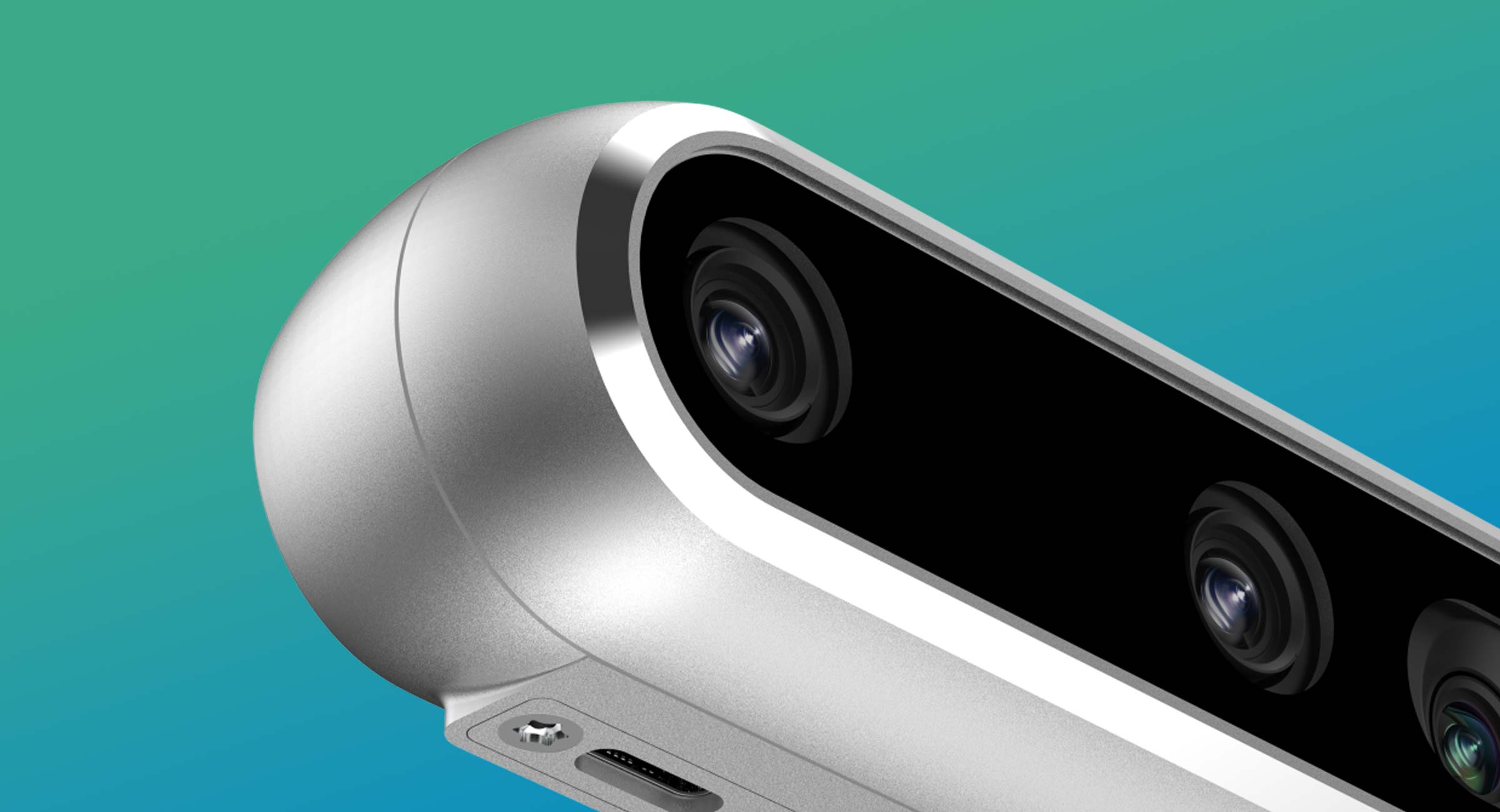
The RealSense Depth Camera D455 is a stereoscopic active-infrared depth camera belonging to Intel's D400 series, designed to capture high-fidelity depth data for robotics, autonomous mobile robots (AMRs), drones, and computer-vision applications. It features a 95 mm stereo baseline — the widest in the D400 lineup at the time of its introduction — which reportedly enables depth error of under 2% at ranges up to approximately 4 metres. Originally developed under the Intel RealSense brand, the D455 and related products were later spun off as part of an independent RealSense business unit following Intel's restructuring of the division around 2021–2022. The camera is widely adopted in research, industrial automation, and humanoid-robot development owing to its compact USB-powered form factor, open SDK support, and relatively accessible price point.
817 views
Rosie 2.0
The Rosie 2.0 is a commercial-grade autonomous robot vacuum developed by Tailos, designed to handle large-scale floor cleaning in business and institutional environments. It is offered in a two-pack configuration, allowing facilities to deploy multiple units simultaneously for broader coverage and more efficient cleaning cycles. Built to commercial durability standards, the Rosie 2.0 combines intelligent navigation with powerful suction technology to reduce reliance on manual labor and improve facility maintenance consistency. It targets businesses, hospitality venues, retail spaces, and other high-traffic environments where reliable, automated cleaning is a priority.
536 views