PARO
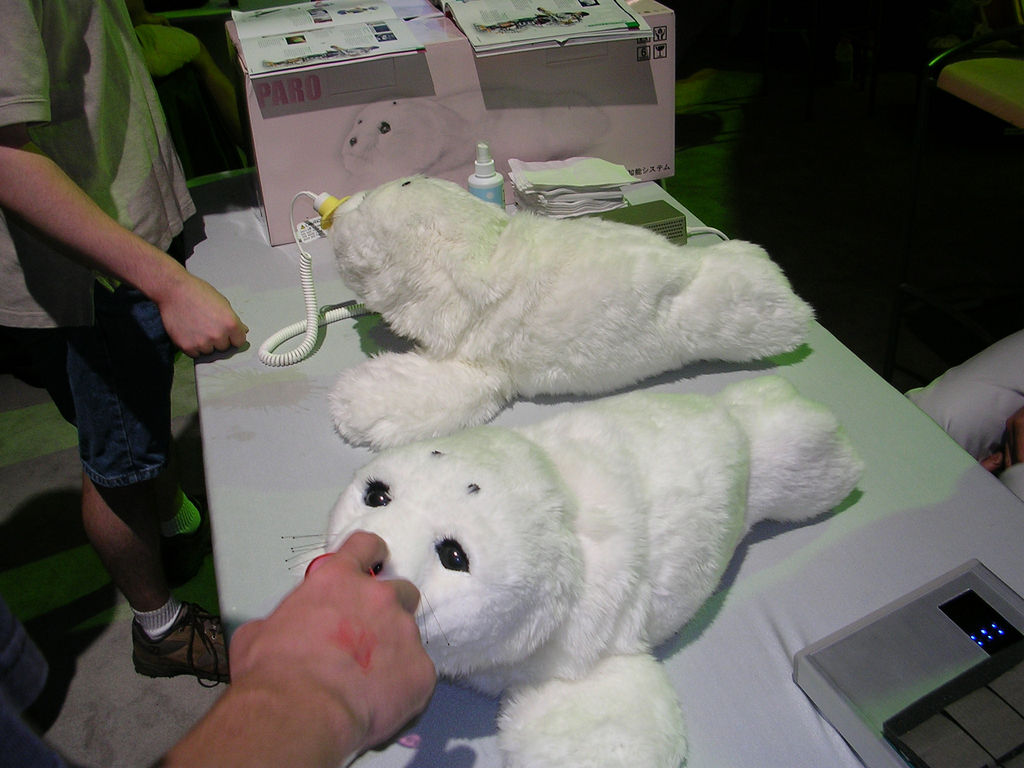
PARO is a therapeutic companion robot developed by Japan's National Institute of Advanced Industrial Science and Technology (AIST) and commercialized under the PARO Robots brand. Designed to resemble a baby harp seal, it is used primarily in dementia and elder care settings to reduce patient stress, anxiety, and loneliness, and has been associated in clinical studies with reduced reliance on antipsychotic medication. The robot incorporates five types of tactile sensors, light sensors, auditory sensors capable of voice recognition, and a posture sensor, allowing it to respond to touch, sound, and its environment. PARO's behavior adapts over time based on interaction history, enabling it to learn the preferences of individual users. It has received regulatory clearance as a medical device in several countries and is reportedly one of the most clinically studied social robots in the world.
Overview and Use Cases
PARO was developed at Japan's National Institute of Advanced Industrial Science and Technology (AIST) under the direction of researcher Takanori Shibata, with early prototypes dating to the 1990s. The robot is shaped and textured to resemble a baby harp seal, a design choice intended to evoke positive emotional responses without triggering preconceived expectations that users might have about dogs or cats.
Primary use cases include:
- Dementia and Alzheimer's care: Stimulating communication and emotional engagement among patients who may be difficult to reach through conventional therapy.
- Stress and anxiety reduction: Used in hospitals, nursing homes, and hospice settings to calm agitated patients.
- Social isolation: Providing companionship to elderly residents in long-term care facilities.
- Pediatric and psychiatric care: Deployed in some settings to support children and adults undergoing stressful medical procedures.
Several peer-reviewed studies have reported measurable reductions in stress hormones, agitation, and antipsychotic medication use among PARO users, though researchers continue to debate the scale and generalizability of these effects.
Key Technical Details
PARO's design prioritizes sensory responsiveness and behavioral adaptability over mobility or manipulation:
- Tactile sensors: Five types embedded across the body detect touch, pressure, and stroking.
- Auditory sensors: Microphones enable the robot to detect voices and respond to its own name; it can recognize the direction of sound.
- Light sensors: Located in the eyes to detect ambient light levels.
- Posture sensor: Detects the robot's orientation relative to gravity.
- Actuators: Internal motors animate the eyelids, head, front flippers, and rear flipper, producing lifelike movements.
- Voice and sound output: PARO emits seal-like vocalizations that vary in response to interaction.
- Adaptive behavior: Onboard software tracks interaction history so the robot reinforces behaviors that users respond to positively and reduces those that provoke negative reactions.
- Battery operation: The robot is cordless during use and charges via a pacifier-shaped connector, maintaining the aesthetic illusion.
- Hygienic cover: The white fur coat is reportedly washable or replaceable.
Specific battery runtime and processor specifications are not consistently disclosed in public documentation.
Regulatory Status and Certifications
PARO has received regulatory recognition as a medical device in Japan and the United States (FDA-cleared as a Class II medical device), and has been approved or registered in various European and other markets. This regulatory standing distinguishes it from most consumer companion robots and has facilitated its adoption in clinical and government-funded care environments.
Market Context and Pricing
PARO occupies a premium niche in the social and therapeutic robotics market. Its price has been reported in various sources as being in the range of several thousand US dollars per unit, placing it well above consumer companion robots such as Hasbro's Joy for All animatronic pets, but positioning it as a clinical or institutional purchase rather than a consumer product. Target buyers include hospitals, nursing homes, dementia care facilities, and government health agencies.
Competitor products in the broader therapeutic companion robot space include Sony's AIBO (a robotic dog aimed more at consumers), Consequential Robotics' MiRo (a research and care-oriented animal robot), and various simpler animatronic pets. PARO's clinical evidence base and medical device status are generally considered differentiating factors.
Notable Deployments
PARO has been deployed in care facilities across Japan, the United States, Denmark, Australia, and numerous other countries. Denmark has been noted as an early and significant adopter, with the robot used in publicly funded elder care. In the United States, the Department of Veterans Affairs has reportedly evaluated or used PARO in veteran care programs. The robot has also been featured in academic research partnerships with universities and hospitals worldwide.
Future Outlook
As global populations age and demand for elder care grows, interest in therapeutic companion robots is expected to increase. PARO's established clinical record and regulatory approvals give it a durable position in institutional markets. Ongoing research continues to explore its efficacy across different patient populations and care contexts. Broader trends in social robotics—including advances in AI-driven natural language interaction and more expressive actuation—may eventually influence future iterations, though as of public reporting no next-generation successor model has been formally announced.
Related videos

PAROL6 singularity avoidance - open source 3D printed robot #3dprinting #robotics #robot
Source Robotics

Robotic surgery vs laparoscopic surgery? PART 1
Obesity Control Center

PAROL6 3D printed robot - MAX speed
Source Robotics

The difference between robotic vs laparoscopic surgery
AdventHealth West Florida Division

Top 5 Lifelike AI Pet Robots | Meta Cat, Moflin, Paro, Tombot, Hasbro
Petopedia

Da Vinci Robotic Surgery Program: Robot-Assisted Laparoscopic Surgery l Cleveland Clinic Abu Dhabi
Cleveland Clinic Abu Dhabi
Recent news
Related entries
 Robot
RobotRelay Delivery Robot
The Relay Delivery Robot is an autonomous indoor delivery robot developed by Relay Robotics (formerly known as Savioke), designed primarily for hospitality and healthcare environments. It navigates hotel corridors and hospital hallways independently, rides elevators without human assistance, and delivers guest amenities, medications, linens, and other supplies directly to rooms or designated drop-off points. Relay is one of the most widely deployed service robots in its category, reportedly completing over one million lifetime deliveries with a publicly cited success rate of approximately 99.8%. With a cargo capacity of around 10 gallons, the robot is compact enough to operate in busy public spaces while carrying a meaningful payload of everyday supplies.
2,911 views
 Robot
RobotSpot
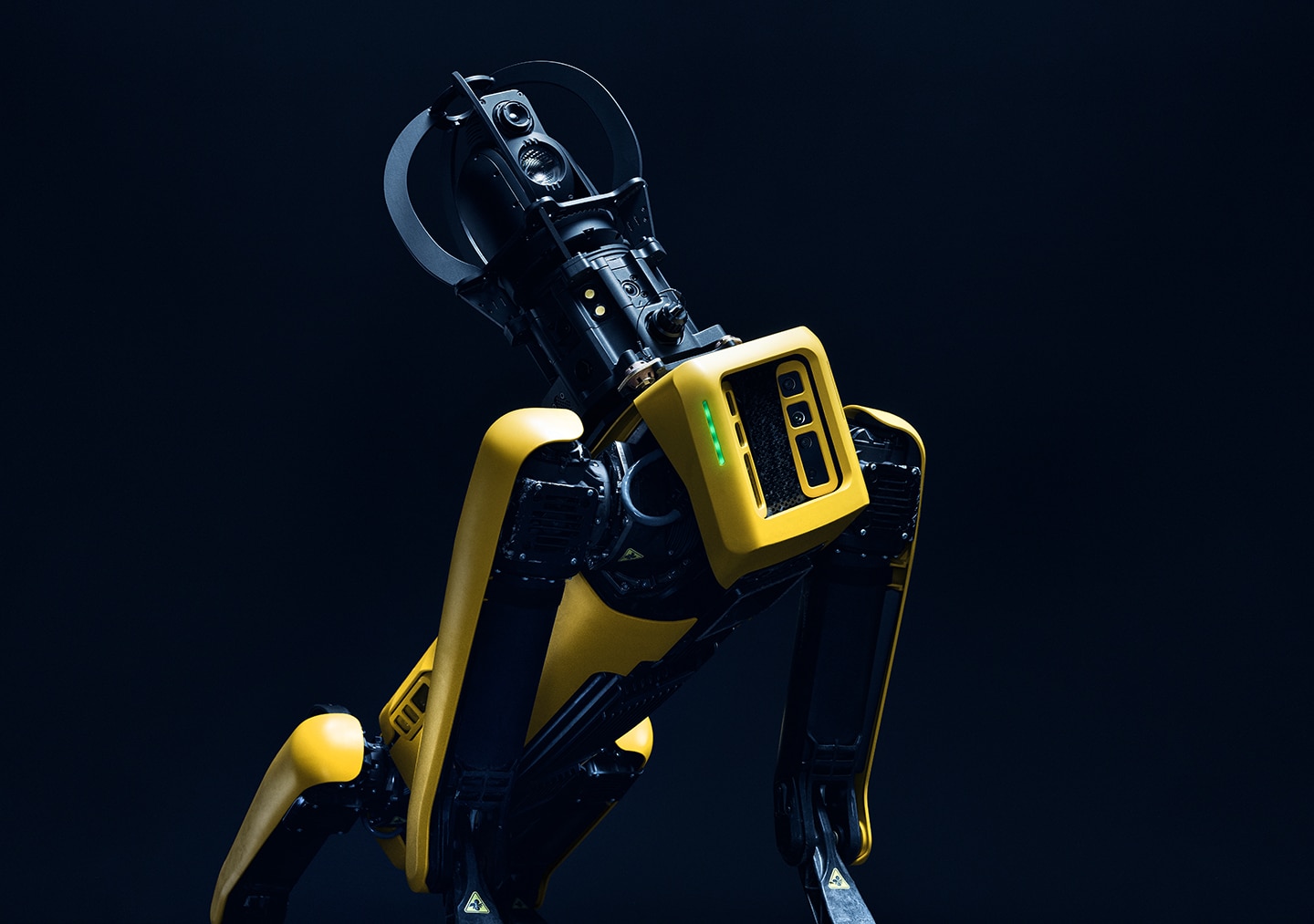
Spot is a four-legged autonomous robot developed by Boston Dynamics, a robotics company headquartered in Waltham, Massachusetts. Designed for inspection, security, and data collection in complex or hazardous environments, Spot can navigate stairs, rough terrain, and confined spaces that are inaccessible to wheeled robots. It is commercially available and has been deployed across industries including utilities, oil and gas, construction, and public safety. Spot supports a modular payload system that accommodates thermal cameras, pan-tilt-zoom (PTZ) cameras, lidar units, methane sensors, and other mission-specific hardware. Boston Dynamics also offers the Orbit fleet-management software platform, enabling operators to schedule autonomous inspection routes, aggregate sensor data, and manage multiple Spot units from a central interface. The robot is widely regarded as one of the most capable and commercially mature legged robots on the market.
1,598 views
 Robot
RobotRealSense Depth Camera D455
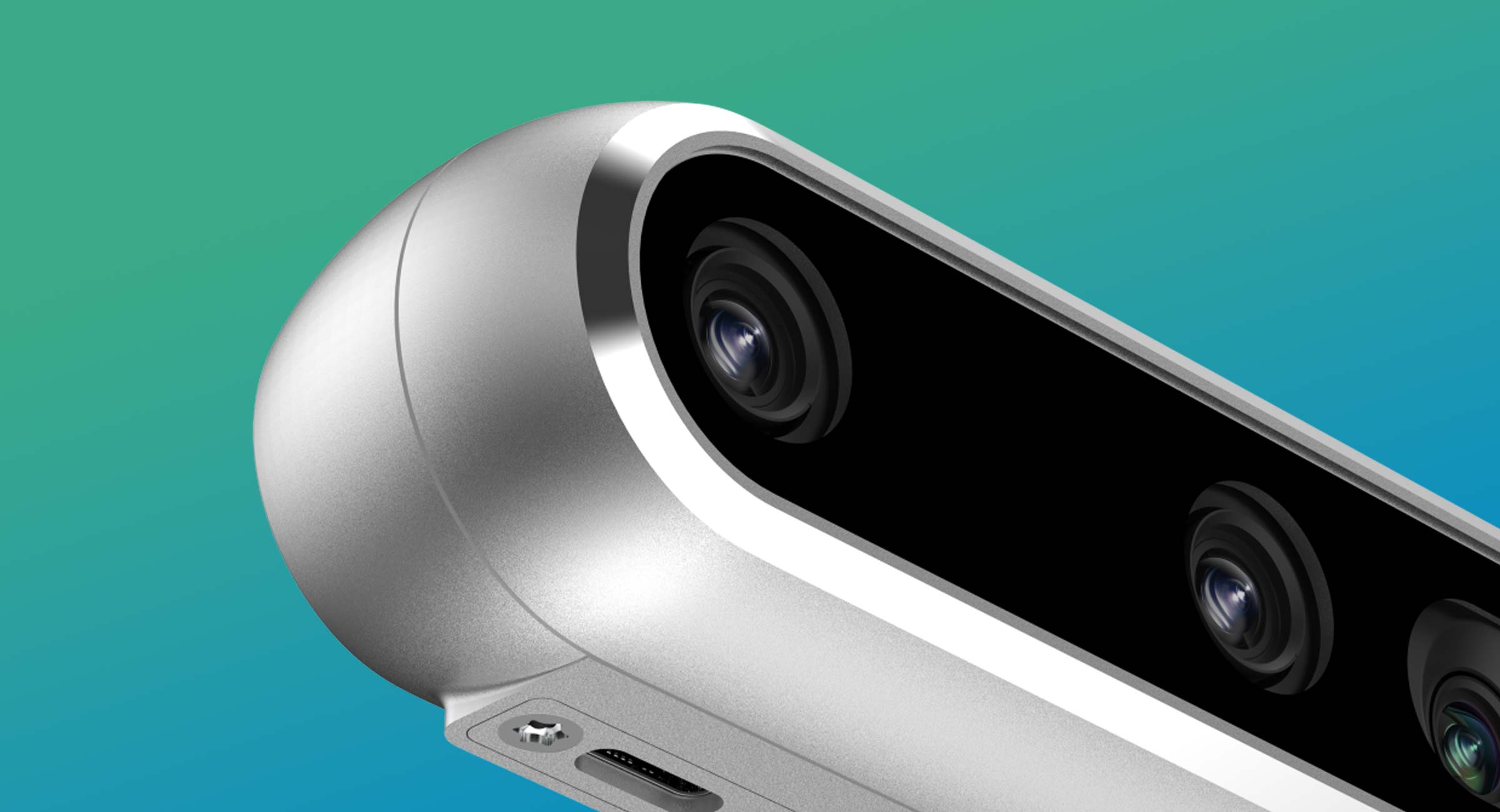
The RealSense Depth Camera D455 is a stereoscopic active-infrared depth camera belonging to Intel's D400 series, designed to capture high-fidelity depth data for robotics, autonomous mobile robots (AMRs), drones, and computer-vision applications. It features a 95 mm stereo baseline — the widest in the D400 lineup at the time of its introduction — which reportedly enables depth error of under 2% at ranges up to approximately 4 metres. Originally developed under the Intel RealSense brand, the D455 and related products were later spun off as part of an independent RealSense business unit following Intel's restructuring of the division around 2021–2022. The camera is widely adopted in research, industrial automation, and humanoid-robot development owing to its compact USB-powered form factor, open SDK support, and relatively accessible price point.
910 views
 Robot
RobotOptimus Gen 2
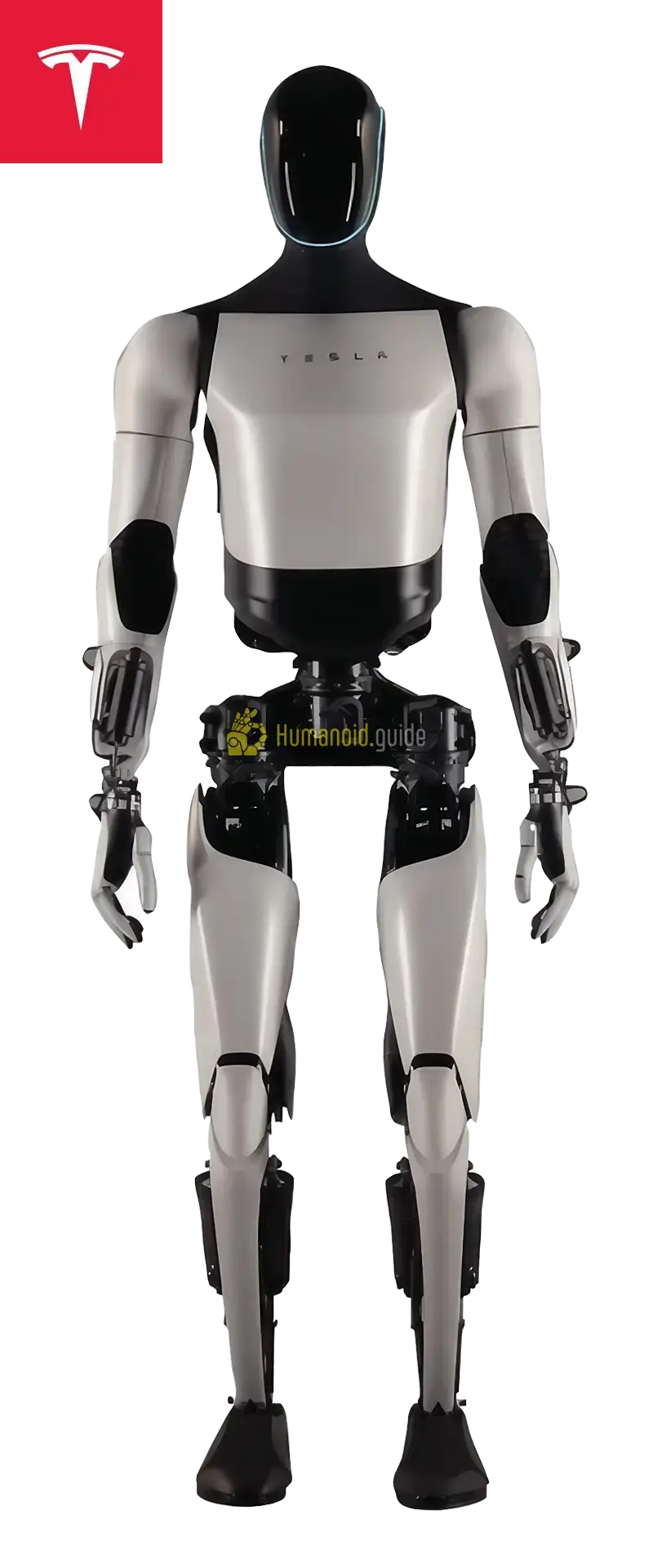
Optimus Gen 2 is a general-purpose humanoid robot developed by Tesla, representing the second major hardware iteration of the company's Optimus program. It is designed to perform a broad range of physical tasks, leveraging perception and motion-planning software derived from Tesla's Full Self-Driving (FSD) stack. As of public reporting, units are used for internal demonstrations and select tasks within Tesla's own manufacturing facilities. Tesla has stated an ambition to eventually offer Optimus at consumer-accessible pricing, positioning it as a mass-market humanoid rather than an industrial-only platform. Compared to its predecessor, Gen 2 reportedly features improved hand dexterity, smoother whole-body motion, and a lighter overall frame, though many detailed specifications remain unconfirmed or subject to ongoing revision as the program continues to iterate.
624 views