Introducing Figure 03
Figure 03 is a next-generation humanoid robot developed by Figure, a US-based robotics company focused on deploying general-purpose humanoid robots in industrial and commercial environments. Building on the foundation of its predecessors, Figure 01 and Figure 02, the Figure 03 reportedly features improved dexterity, enhanced mobility, and more capable onboard AI systems designed to handle complex real-world manipulation tasks with greater autonomy. The robot is designed primarily for industrial use cases such as warehouse logistics, manufacturing assembly, and other labor-intensive environments where human-form factors offer practical advantages. Figure 03 represents the company's ongoing effort to develop embodied AI platforms that can be trained and deployed at scale, leveraging advances in neural network architectures and physical hardware design.
Overview and Use Cases
Figure 03 is the third major hardware iteration from Figure, a robotics company founded with the mission of building autonomous humanoid robots capable of performing economically valuable work alongside humans. The robot is engineered for deployment in structured industrial environments, with a particular emphasis on:
- Warehouse and logistics operations – picking, sorting, and moving goods
- Manufacturing assembly lines – handling components and performing repetitive manipulation tasks
- General material handling – tasks that benefit from a human-like form factor and bimanual dexterity
Figure's approach centers on training robots using a combination of teleoperation data, imitation learning, and reinforcement learning, allowing Figure 03 to generalize across a range of tasks without requiring hard-coded programming for each action.
Key Technical Details
While Figure has not publicly disclosed a comprehensive technical specification sheet for Figure 03 as of available reporting, the robot is described as featuring:
- Improved hand and finger dexterity compared to earlier Figure models, enabling finer manipulation of objects
- Enhanced locomotion systems for more stable and efficient bipedal movement
- Onboard AI inference hardware supporting real-time perception and decision-making
- Multimodal sensing including cameras and proprioceptive sensors for environmental awareness
Specific figures for payload capacity, battery runtime, and joint torque have not been officially confirmed in public documentation and should not be assumed.
Comparison to Predecessor Models and Competitors
Figure 03 follows Figure 01 — which gained public attention through a widely viewed demonstration in collaboration with OpenAI — and Figure 02, which reportedly introduced hardware refinements and improved AI integration. Figure 03 is positioned as a further step toward commercial-scale deployment readiness.
In the broader humanoid robot landscape, Figure 03 competes with platforms such as:
- Tesla Optimus – targeting in-house manufacturing automation
- Boston Dynamics Atlas – a research and demonstration platform transitioning toward commercial use
- Agility Robotics Digit – deployed in Amazon warehouse pilots
- 1X Technologies NEO – another general-purpose humanoid targeting industrial work
Figure differentiates itself through its emphasis on end-to-end AI training pipelines and its partnerships with major industrial customers.
Market Context and Target Buyers
Figure is targeting large enterprise customers in logistics, automotive manufacturing, and general industrial sectors. The company has publicly announced a partnership with BMW for pilot deployments in manufacturing facilities, representing one of the more concrete commercial engagements in the humanoid robot industry as of available reporting.
Figure 03 sits in the premium tier of the humanoid robot market. No official MSRP or lease pricing has been publicly confirmed. The target buyer profile includes:
- Large-scale manufacturers seeking to automate repetitive or ergonomically challenging tasks
- Logistics operators facing labor shortages
- Companies investing in long-term automation infrastructure
Notable Deployments and Partnerships
Figure's most publicly documented deployment partnership involves BMW Group, with robots reportedly operating in automotive manufacturing environments. The company has also attracted significant venture investment, reflecting investor confidence in its commercial trajectory. As of public reporting, Figure 03 represents the platform intended to scale these early pilot programs into broader production deployments.
Future Outlook
Figure has signaled an intent to continuously iterate on hardware and software in parallel, with Figure 03 likely serving as a bridge toward higher-volume manufacturing and more diverse task coverage. Key areas of anticipated development include:
- Expanded task libraries through continued AI training
- Improved hardware reliability and mean time between failures for industrial-grade uptime
- Broader customer deployments beyond initial pilot partners
- Potential cost reductions as manufacturing scales
The humanoid robot sector remains highly competitive and rapidly evolving, and Figure 03's long-term success will depend on demonstrating reliable, cost-effective performance in real production environments.
Related videos

Introducing ASCEND: The World's First Robotic Tower Crane 3D Construction System
LUYTEN®

Introducing the Knightscope K7 Autonomous Security Robot
Knightscope, Inc.

Unitree Introducing | Unitree H2 Destiny Awakening!🥳
Unitree Robotics

Introducing robotic assisted surgery at IH
Interior Health

Introducing Figure 03
Figure

Unitree Introducing | Unitree A2 Stellar Explorer
Unitree Robotics
Related entries
 Robot
RobotRelay Delivery Robot
The Relay Delivery Robot is an autonomous indoor delivery robot developed by Relay Robotics (formerly known as Savioke), designed primarily for hospitality and healthcare environments. It navigates hotel corridors and hospital hallways independently, rides elevators without human assistance, and delivers guest amenities, medications, linens, and other supplies directly to rooms or designated drop-off points. Relay is one of the most widely deployed service robots in its category, reportedly completing over one million lifetime deliveries with a publicly cited success rate of approximately 99.8%. With a cargo capacity of around 10 gallons, the robot is compact enough to operate in busy public spaces while carrying a meaningful payload of everyday supplies.
2,799 views
 Robot
RobotSpot
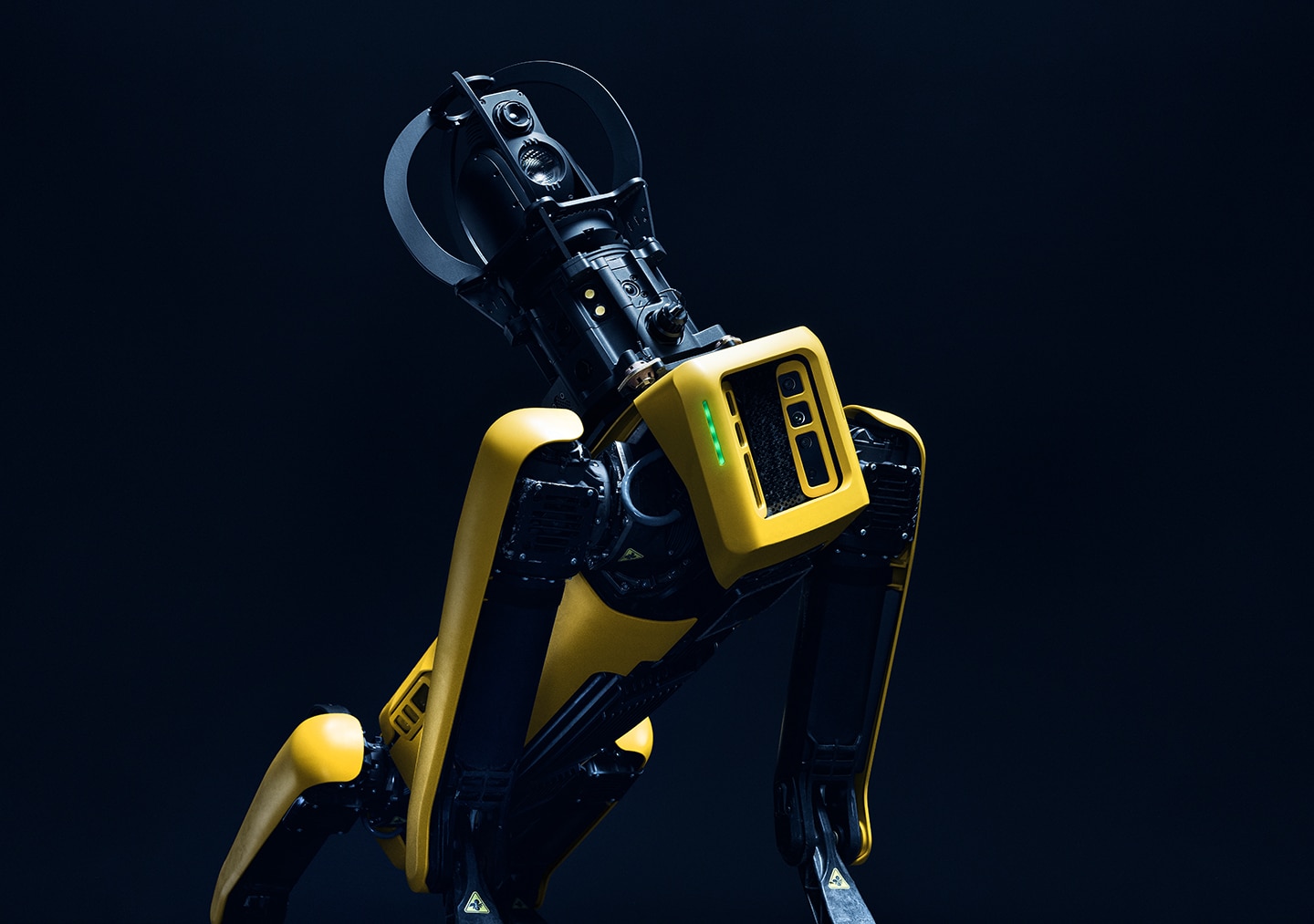
Spot is a four-legged autonomous robot developed by Boston Dynamics, a robotics company headquartered in Waltham, Massachusetts. Designed for inspection, security, and data collection in complex or hazardous environments, Spot can navigate stairs, rough terrain, and confined spaces that are inaccessible to wheeled robots. It is commercially available and has been deployed across industries including utilities, oil and gas, construction, and public safety. Spot supports a modular payload system that accommodates thermal cameras, pan-tilt-zoom (PTZ) cameras, lidar units, methane sensors, and other mission-specific hardware. Boston Dynamics also offers the Orbit fleet-management software platform, enabling operators to schedule autonomous inspection routes, aggregate sensor data, and manage multiple Spot units from a central interface. The robot is widely regarded as one of the most capable and commercially mature legged robots on the market.
1,508 views
 Robot
RobotRealSense Depth Camera D455
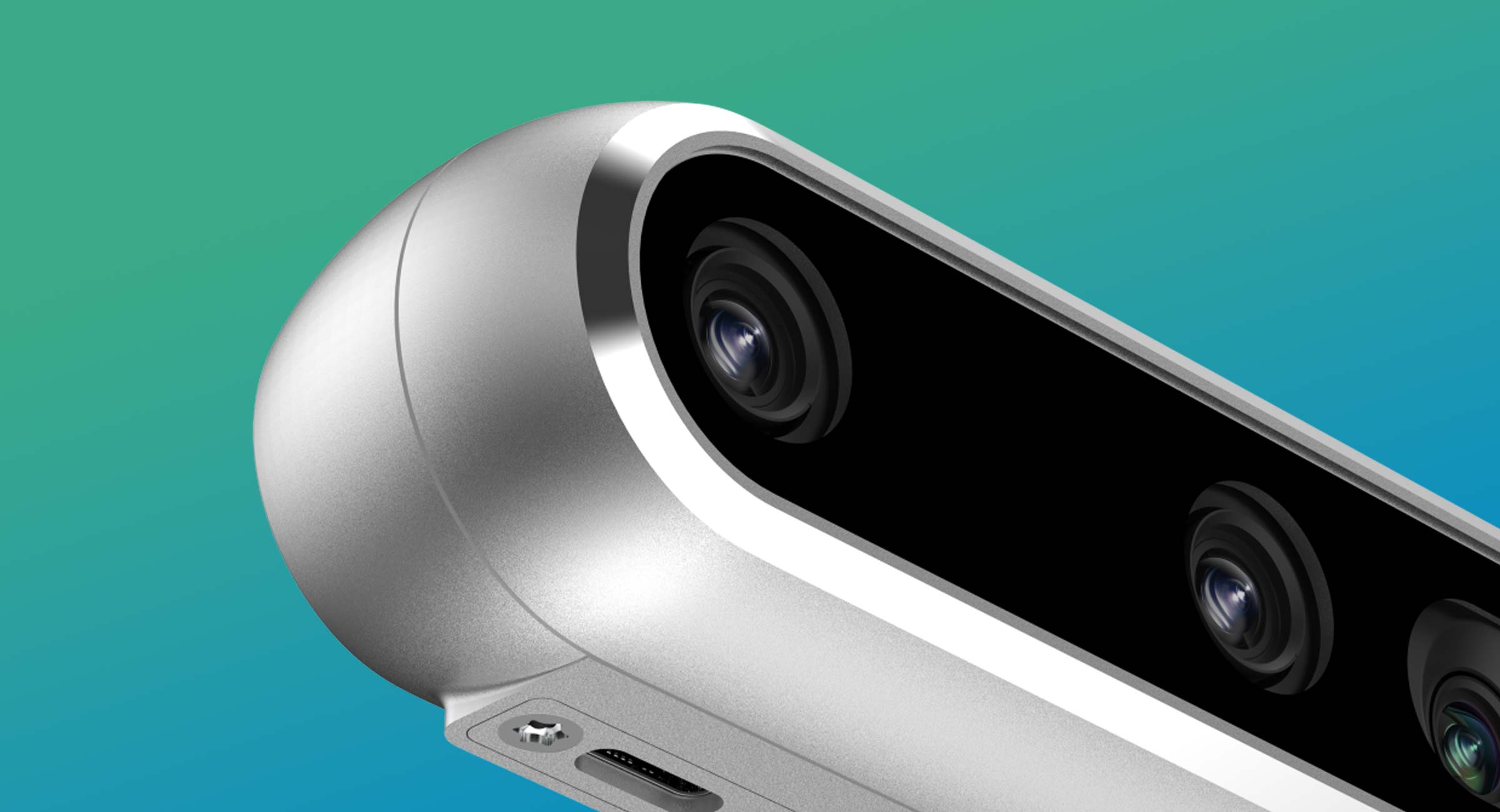
The RealSense Depth Camera D455 is a stereoscopic active-infrared depth camera belonging to Intel's D400 series, designed to capture high-fidelity depth data for robotics, autonomous mobile robots (AMRs), drones, and computer-vision applications. It features a 95 mm stereo baseline — the widest in the D400 lineup at the time of its introduction — which reportedly enables depth error of under 2% at ranges up to approximately 4 metres. Originally developed under the Intel RealSense brand, the D455 and related products were later spun off as part of an independent RealSense business unit following Intel's restructuring of the division around 2021–2022. The camera is widely adopted in research, industrial automation, and humanoid-robot development owing to its compact USB-powered form factor, open SDK support, and relatively accessible price point.
824 views
Rosie 2.0
The Rosie 2.0 is a commercial-grade autonomous robot vacuum developed by Tailos, designed to handle large-scale floor cleaning in business and institutional environments. It is offered in a two-pack configuration, allowing facilities to deploy multiple units simultaneously for broader coverage and more efficient cleaning cycles. Built to commercial durability standards, the Rosie 2.0 combines intelligent navigation with powerful suction technology to reduce reliance on manual labor and improve facility maintenance consistency. It targets businesses, hospitality venues, retail spaces, and other high-traffic environments where reliable, automated cleaning is a priority.
536 views