Unitree Robotics
Company wikiChina · unitree-robot.com
SnapshotCompany claim
Unitree Robotics is a civilian robotics company focusing on R&D, production, and sales of high-performance legged and humanoid robots, six-axis manipulators, etc. It has been featured at the 2021 CCTV Spring Festival Gala, 2022 Winter Olympics, 2023 Super Bowl, and 2023 Asian Games. It was the first to publicly retail high-performance quadruped robots and leads in global sales.
- Founded
- Not disclosed
- HQ
- China
- Models
- 14
- Categories
- 4
Product families
Is this your company? Claim this profile to add verified data, respond to our analysis, and upgrade claims to Verified.
Claim this profile1. Executive Overview {#executive-overview}
Unitree Robotics has established itself as one of the most visible legged-robotics companies in the world, holding a company-claimed distinction as the first firm to publicly retail high-performance quadruped robots and asserting global sales leadership in that category. The company's product line has expanded from early quadruped platforms (A1, Go1) through industrial-grade field robots (A2, B1, B2, As2) and into full humanoid development (H1, G1, H2) and the exceptional GD01 manned mecha — a portfolio breadth that few robotics companies of any nationality can match at the hardware level. Unitree's vertical integration — self-developed motors, reducers, controllers, LiDAR, and motion-control algorithms, backed by more than 180 authorized patents out of 200+ applications — underpins a cost and capability position that has drawn sustained international attention.
The company has leveraged marquee public appearances — the 2021 and 2025 CCTV Spring Festival Galas (the latter featuring sixteen H1 humanoids in a Zhang Yimou-directed performance), the 2022 Beijing Winter Olympics opening ceremony, the 2023 Super Bowl pre-game show, and the 2023 Asian Games and Asian Para Games — to demonstrate real-world deployment at scale. These are company-claimed milestones, but several are corroborated by the breadth of media coverage including Reuters. In May 2025 the company hosted what it describes as the world's first humanoid robot combat competition, based on the G1 platform — a demonstration of operational robustness that generated significant global attention.
Not yet disclosed: precise founding year, total headcount, revenue figures, and cumulative units shipped. Interested parties are invited to submit verified data for inclusion.
Latest news
- Chinese robot maker Unitree wins approval for $619 million Shanghai IPOBiztoc.com·2026-07-03GENERAL
- AI robot paths split as humanoid prices plunge, industrial orders hit recordDigitimes·2026-06-23GENERAL
- Unitree IPO tests China's bet on low-cost humanoid robotsDigitimes·2026-06-18GENERAL
- KEENON Humanoid Pours Drinks at GCS 2026, 100,000 Others Run HotelsYanko Design·2026-06-15GENERAL
- The 'Wintel' of robotics? Nvidia allies with Unitree to standardize AI humanoid developmentDigitimes·2026-06-04GENERAL
- Unitree Announces H2 Plus, an NVIDIA Isaac GR00T Reference Humanoid Robot for Academic ResearchPRNewswire·2026-06-01GENERAL
- Unitree sprints toward IPO as profits crumble under rising costsDigitimes·2026-05-27GENERAL
- Unitree Robotics Unveils GD01: World's First Mass-Produced Manned MechaGlobal Times·2026-05-13PRODUCT_LAUNCH
2. The Company Story {#the-company-story}
Unitree Robotics describes itself as a "world-renowned civilian robotics company" headquartered in China, focused on the research, development, production, and sale of consumer-grade and industry-grade legged and humanoid robots, as well as six-axis manipulators. The company's mission statement — "To plant the science and technology tree of the world" — and its vision — "Technology drives world progress" — signal an aspiration that extends beyond a single product category into broad-platform robotics infrastructure.
The company states it has been committed since 2017 to promoting the application of high-performance legged and humanoid robots across industries. That year serves as the earliest public anchor for the company's operational history, though the precise founding date is not disclosed on the company's site. From its earliest quadruped platforms, Unitree pursued an unusual dual-track strategy: serving the research and developer community with accessible, open-platform robots (the A1, Go1), while simultaneously building toward industrial and commercial deployment (B1, A2, As2) and consumer/entertainment use cases (Go2 with GPT integration).
The company claims a series of firsts: first to publicly retail a high-performance quadruped robot, and first to achieve "industry landing" in that category. Whether these firsts are independently verified varies by claim, but the trajectory of product releases and the breadth of public deployments lend them credibility. By 2025, the portfolio had grown to encompass 14 named products across at least five distinct categories — a pace of product development that reflects both the vertical integration the company describes and a deliberate strategy to occupy multiple price points and use cases simultaneously, from the sub-consumer Go2 to the $650,000 GD01 manned mecha.
3. Product Portfolio {#product-portfolio}
Products & versions
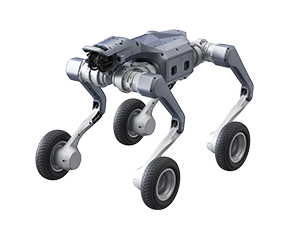

Unitree's current lineup of 14 products organizes into four meaningful families. The humanoid family comprises the H1 (the company's first universal humanoid), the G1 (23 or 29 DOF, the platform used in the 2025 combat competition), the H2 (a 180 cm, 31-DOF, 70 kg full-scale humanoid priced at $29,900 with 2070 TOPS onboard compute, 360 N·m leg torque, and 15 kg peak arm payload), and the extraordinary GD01 — a 2.8-meter, 550 kg manned mecha at $650,000 with biped/quadruped transformation, 700 N·m peak hip torque, a 32 kWh hot-swappable battery, and NVIDIA Thor-class 1000 TOPS compute. The GD01 occupies a category of its own and represents the outer edge of what Unitree describes as production-ready hardware.
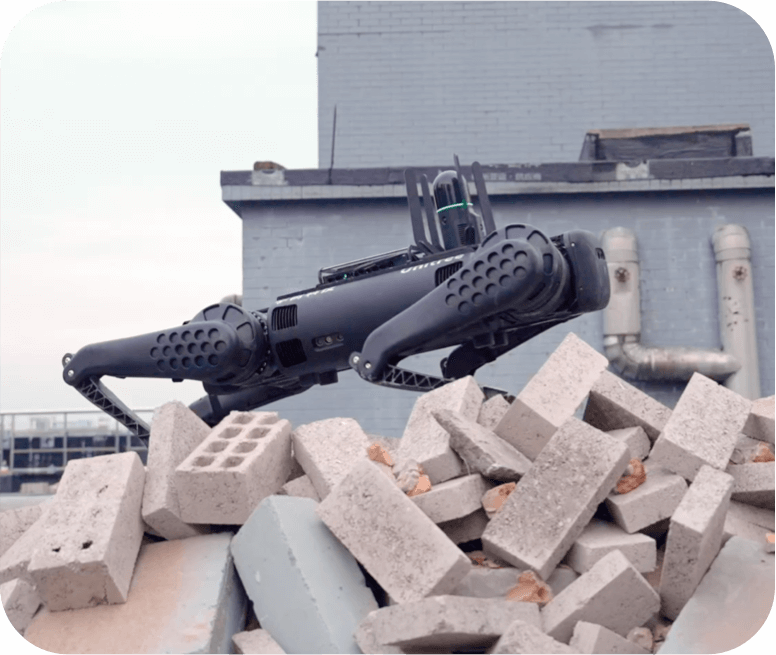
The industrial quadruped family spans the A1 (lightweight developer platform, 5 kg payload, 3.3 m/s), the Go1 and Go2 (consumer-adjacent robot dogs, with Go2 adding GPT large model integration, L1 LiDAR, autonomous patrol, and graphical programming for education), the B1 Land Overlord (IP68, 80 kg standing payload, tri-compute architecture with Intel i5 and 3× Jetson Xavier NX), the A2 Stellar Explorer (37 kg, dual hot-swappable batteries, IP56, 25 kg load, –20°C to 55°C operating range, optional wheel-leg configuration), and the As2 (18 kg compact industrial platform, 65 kg standing payload, 5 m/s, IP54, 648 Wh battery for 4+ hours unloaded). The sensor and arm category adds the L2 4D LiDAR (open-source SLAM, point cloud SDK), the Z1 dexterous arm (coordination and perception focus), and the B2 (autonomous patrol with laser mapping). The R1 is present in the catalog but awaits public specification.
Taken together, the portfolio reflects a deliberate ladder from education and research (A1, Go1, Go2) through rugged industrial deployment (A2, As2, B1) to full humanoid and beyond (H1, G1, H2, GD01) — with proprietary sensing (L2 LiDAR) and manipulation (Z1 arm) filling gaps in complete robot system integration.
4. Technology Stack {#technology-stack}
Unitree's self-reported technology stack is notably vertically integrated. The company claims full in-house development of motors, reducers, controllers, LiDAR sensors, and both perception and motion-control algorithms. This claim is supported indirectly by the product data: the L2 4D LiDAR is a named product with its own SDK and SLAM software package, the Z1 is a proprietary robotic arm, and multiple quadruped and humanoid products reference proprietary joint motor types (e.g., the As2 specifies "low-inertia, high-speed inner rotor PMSM" with dual encoders and industrial-grade crossed roller bearings). The 200+ patent applications and 180+ authorized patents add further weight to the vertical-integration claim.
Our read: The compute choices visible in the product data reveal a pragmatic hybrid approach. The H2 humanoid deploys a 2070 TOPS chip (unspecified brand) for onboard AI inference — a figure that places it in the high-performance edge-AI tier. The GD01 mecha uses NVIDIA Thor at 1000 TOPS. The B1's tri-compute stack (Intel i5-1135G7 + 3× Jetson Xavier NX) reflects an older but proven industrial design pattern. The Go2 integrates GPT large model support with OTA firmware updates, suggesting a cloud-edge architecture for the consumer segment. Across the portfolio, the pattern is: purpose-matched compute per product tier rather than a single unified platform, which is a sensible engineering choice at this breadth of deployment contexts.
Our read: The As2's joint specification — dual encoders per joint, crossed roller bearings, PMSM motors — reflects design choices consistent with high-fidelity torque control and long-term wear compensation, the same design priorities that appear in the app-based motor fine-tuning features described for the G1 and H1. This suggests a common underlying actuation philosophy across generations. OTA algorithm updates appear across the humanoid line (H2, Go2), indicating a software-defined robot strategy where hardware ships ahead of full software maturity.
Not yet disclosed: detailed sensor fusion architecture, specific motion-control algorithm families (model predictive control, reinforcement learning, or hybrid), and training infrastructure. Interested parties are invited to supplement this section.
5. Research, Papers, Authors, Labs {#research-papers}
Company-linked papers
Unitree Robotics does not present itself as an academic research publisher. Its public materials emphasize proprietary engineering, patent filings (200+ applications, 180+ authorized), and product-embedded innovation rather than peer-reviewed publication. This is consistent with the profile of a vertically integrated hardware company competing on production capability and cost-performance rather than on published science. The absence of a public research lab or named paper authors in the available data is not unusual for this company type and should not be read as an indicator of limited technical depth — the product specifications themselves reflect sophisticated engineering.
6. Media Evidence {#media-evidence}
Media library
Unitree's media footprint includes coverage by Reuters (which published a piece titled "Unitree previews China's bleak robot reality," an editorially framed piece that nonetheless constitutes independent international press attention), repeated coverage by CCTV (China's state broadcaster, as noted in company materials), and documentation of appearances at major global broadcast events including the Super Bowl pre-game show — an American audience of over 100 million viewers. The combination of state-media coverage in China and mainstream Western financial/news-wire coverage (Reuters) represents a meaningful independent validation layer for a hardware company at this stage.
7. Commercial Reality {#commercial-reality}
Customers & deployments
Unitree claims "global sales leading over the years" in the quadruped robot category and states its robots have been deployed in agriculture, industry, power inspection, survey and exploration, and public rescue. The company also references both ToB (enterprise) and ToC (consumer) market tracks as active commercial strategies.
Revenue figures, total units shipped, named enterprise customers, and customer ROI data are not disclosed in any available public source. These metrics would materially strengthen the commercial case. Unitree and its customers are invited to submit verified deployment data, customer references, or financial disclosures for inclusion in future editions of this report.
Pricing is public for two products: the H2 humanoid at $29,900 and the GD01 manned mecha at $650,000. The As2 is listed as "Contact Sales." Other products carry no public price, which is typical for industrial robotics platforms where configuration and support contracts drive final cost.
8. Markets and Use Cases {#markets-use-cases}
The product data and company description together point to six primary market verticals that Unitree either serves or is actively targeting.
Industrial inspection and field operations is the most substantiated vertical, supported by the A2 (dual LiDARs, IP56, –20°C to 55°C, 25 kg payload, hot-swap batteries for continuous operation), the As2 (IP54, 65 kg standing payload, logistics and factory tags), and the B1 (IP68, heavy loader for high-risk environments). The company explicitly names power inspection, survey and exploration, and public rescue as deployment areas. Logistics and warehousing is referenced in the A2 and As2 industry tags. Agriculture is named in the company's About text as a deployment area, though no specific agricultural product configuration is described in the available data.
Research and developer ecosystems are served by the A1 (open interfaces, RealSense depth camera, secondary development support) and Go1/Go2 (open platform, SLAM SDK, graphical programming). The Go2's GPT integration and OTA firmware architecture suggest Unitree is positioning this platform as an AI research testbed as much as a consumer product. Education is an explicit use case for the Go2, which includes a graphical programming interface designed for children.
Entertainment, events, and brand activation is a category that Unitree has executed at the highest level globally — the Super Bowl, two CCTV Spring Festival Galas, the Winter Olympics, the Asian Games. This is not a trivial market; it drives brand equity, developer interest, and government relationships simultaneously. Humanoid general-purpose labor is the implied long-term market for the H1, G1, and H2, though specific commercial deployments are not yet detailed in available public data.
9. Competitive Landscape {#competitive-landscape}
Competitive comparison
| Robot | Maker | Autonomy | Conf. |
|---|---|---|---|
| iRobot Roomba Combo 10 Max | iRobot | Autonomous | 0.90 |
| Mobile ALOHA (Stanford) | Stanford University | Teleoperated | 0.90 |
| 1X NEO | 1X Technologies | Remote-Assisted | 0.90 |
The legged and humanoid robotics market has grown substantially more crowded since Unitree's entry, with companies across the United States, Europe, and Asia pursuing quadruped, bipedal, and hybrid platforms at overlapping price and capability points. Unitree's competitive positioning rests on three company-claimed differentiators: vertical integration (in-house motors, reducers, controllers, LiDAR), price-performance leadership (the H2 at $29,900 is notably priced relative to comparable humanoid specs), and first-mover retail history in the quadruped category.
Our read: The breadth of Unitree's product ladder — from sub-$30K humanoids to $650K manned mechas, with industrial quadrupeds and developer platforms in between — represents a deliberate effort to avoid being outflanked at any single price point. Vertical integration is the structural enabler of this strategy: controlling the actuator and sensor supply chain compresses both cost and development cycle time. The Go2's GPT integration and OTA architecture signal awareness that software ecosystems, not just hardware specs, are becoming a competitive axis in this category.
10. Country Advantage / Geopolitical {#geopolitical}
Unitree Robotics is headquartered in China. This is materially relevant to its commercial prospects in several respects. The company benefits from proximity to deep electronics and precision-manufacturing supply chains, which supports its vertical-integration strategy and cost position. The company's highest-profile domestic deployments — CCTV Spring Festival Galas, Winter Olympics — reflect strong alignment with Chinese national showcase events, which carry both commercial validation and policy-environment tailwinds for robotics investment in China.
Internationally, the Reuters piece titled "Unitree previews China's bleak robot reality" signals that Western media frames some of Unitree's work in a geopolitical context. Our read: For enterprise customers in the United States, European Union, and other markets with active supply-chain security reviews, the China-origin factor may introduce procurement friction at the institutional level, regardless of hardware quality. This is not a product deficiency — it is a market-access variable that prospective partners and customers in regulated industries should assess independently against their own compliance frameworks.
The company's Super Bowl appearance (United States, 2023) and continued international sales activity suggest this friction has not prevented market access at the commercial level to date. Unitree's status as a civilian-market company, as it self-describes, is a relevant but not determinative data point in procurement assessments.
11. Hype vs Real vs Ugly {#hype-real-ugly}
Claim tracker
What appears well-supported: The major public appearance claims (CCTV galas, Winter Olympics, Super Bowl, Asian Games) are sufficiently high-profile that independent corroboration is available or readily checkable. The patent portfolio figure (180+ authorized from 200+ applications) is specific and verifiable in principle. The product specifications published — joint torques, weights, IP ratings, battery capacities, DOF counts — are engineering-level claims that are either accurate or falsifiable by hands-on testing; their specificity is itself a form of accountability.
Company claims that should be understood as claims: "World's first to publicly retail high-performance quadruped robots" — this is a company claim and depends on definitions of "high-performance" and "public retail" that are not independently arbitrated in the available data. "Global sales leading over the years" — no shipment figures or third-party market share data are provided to substantiate this. "World's first production-ready manned mecha" (GD01) — an extraordinary claim for an extraordinary product; independent verification of production readiness is not available in the current data set. The May 2025 humanoid combat competition as a "new milestone in human history" is promotional language; the event itself appears to have occurred as described.
Our read: The Reuters framing ("bleak robot reality") suggests at least one major international outlet has raised questions about the gap between demonstration capability and real-world commercial deployment at scale. This is a common tension in the robotics industry broadly and is not unique to Unitree. Not yet disclosed: third-party performance benchmarks, field reliability data, or independent safety certifications for any product in the lineup. Interested parties are invited to submit such data.
12. Future Scenarios {#future-scenarios}
Bull case — Our read: Unitree's vertical integration and price-performance position allow it to compress humanoid robot costs faster than less-integrated competitors. If the H2 at $29,900 achieves broad developer and light-industrial adoption — analogous to the role the A1 played in the quadruped research community — Unitree could establish a software and application ecosystem around its humanoid platform that creates durable competitive advantage. The Go2's GPT and OTA architecture, and the G1's role as a combat-tested (literally, in the 2025 competition) mobility platform, are early indicators of this trajectory. International enterprise deployments in inspection, logistics, and field operations could follow the developer-community path to volume.
Base case — Our read: Unitree continues to expand its product portfolio and maintain cost leadership in quadrupeds while humanoid platforms (H1, G1, H2) progress through developer and research adoption before reaching commercial scale. Revenue and customer base grow, but the company operates primarily in China and among global research institutions for the medium term. The GD01 manned mecha remains a showcase product and limited commercial item. Geopolitical friction limits enterprise penetration in some Western regulated sectors.
Bear case — Our read: Intensifying global competition in both quadruped and humanoid categories — from companies with larger software ecosystems or stronger enterprise sales infrastructure — erodes Unitree's first-mover pricing advantage. If hardware commoditizes faster than Unitree can build a defensible software/application layer, margin pressure follows. Regulatory or procurement restrictions in key international markets could limit the addressable commercial base. The absence of disclosed revenue or customer data makes early warning signals difficult to read from the outside.
13. What to Watch {#what-to-watch}
- H2 and G1 commercial deployment announcements: Named enterprise customers or disclosed unit volumes would be the single strongest signal of humanoid-to-commercial transition.
- GD01 production and delivery milestones: Whether the manned mecha moves from "production-ready" claim to confirmed deliveries and operator feedback.
- R1 product specification release: The R1 is cataloged but unspecified; its category and positioning will indicate Unitree's next strategic direction.
- OTA update cadence and software ecosystem development: The frequency and substance of algorithm updates to the H2, G1, and Go2 will indicate the maturity of Unitree's software-defined robot strategy.
- Western enterprise procurement announcements: Any confirmed sales to European or North American industrial operators would represent a material shift in commercial geography.
- Independent benchmark or certification publications: Third-party performance testing, safety certifications (CE, UL, ISO), or academic papers using Unitree platforms as research subjects would provide independent technical validation.
- Reuters and international media follow-up coverage: Ongoing international press treatment will reflect how the gap between demonstration and deployment is perceived externally.
- Patent grant announcements: Movement from 200+ applications toward a larger authorized base would strengthen the IP moat narrative.
14. Sources & Methodology {#sources-methodology}
Primary source: All factual claims in this report derive from content extracted from Unitree Robotics' own website (unitree-robot.com), including product specification pages, the About/Company page, and news center content. All such content is labeled company-claim and represents the company's own assertions; it has not been independently audited.
Third-party press sources: Reuters (reuters.com) and CCTV (referenced in company materials) are noted as independent outlets that have covered Unitree. The Reuters piece ("Unitree previews China's bleak robot reality") is cited as external validation of media attention, not as an endorsement of any specific claim. Unitree's own news center (unitree.com, 2026-05-31 and 2022-02-04) is treated as a company-claim source.
Computed and inferred content: Sections marked Our read: represent analyst inferences drawn from the product data, specifications, and deployment patterns described in source materials. These are explicitly labeled and should not be mistaken for independently verified facts.
What this report does not contain: Invented products, undisclosed revenue or customer figures, fabricated competitor names, or unsourced negative assertions. Where data is absent, the report says so plainly and invites correction or supplementation.
Uniform rubric applied to all company reports in this series: (1) Lead with verified strengths. (2) Label all inferences. (3) Render undisclosed commercial data as "Not disclosed" with an invitation to claim. (4) Ground every factual statement in the source data. (5) Maintain measured analyst tone throughout.
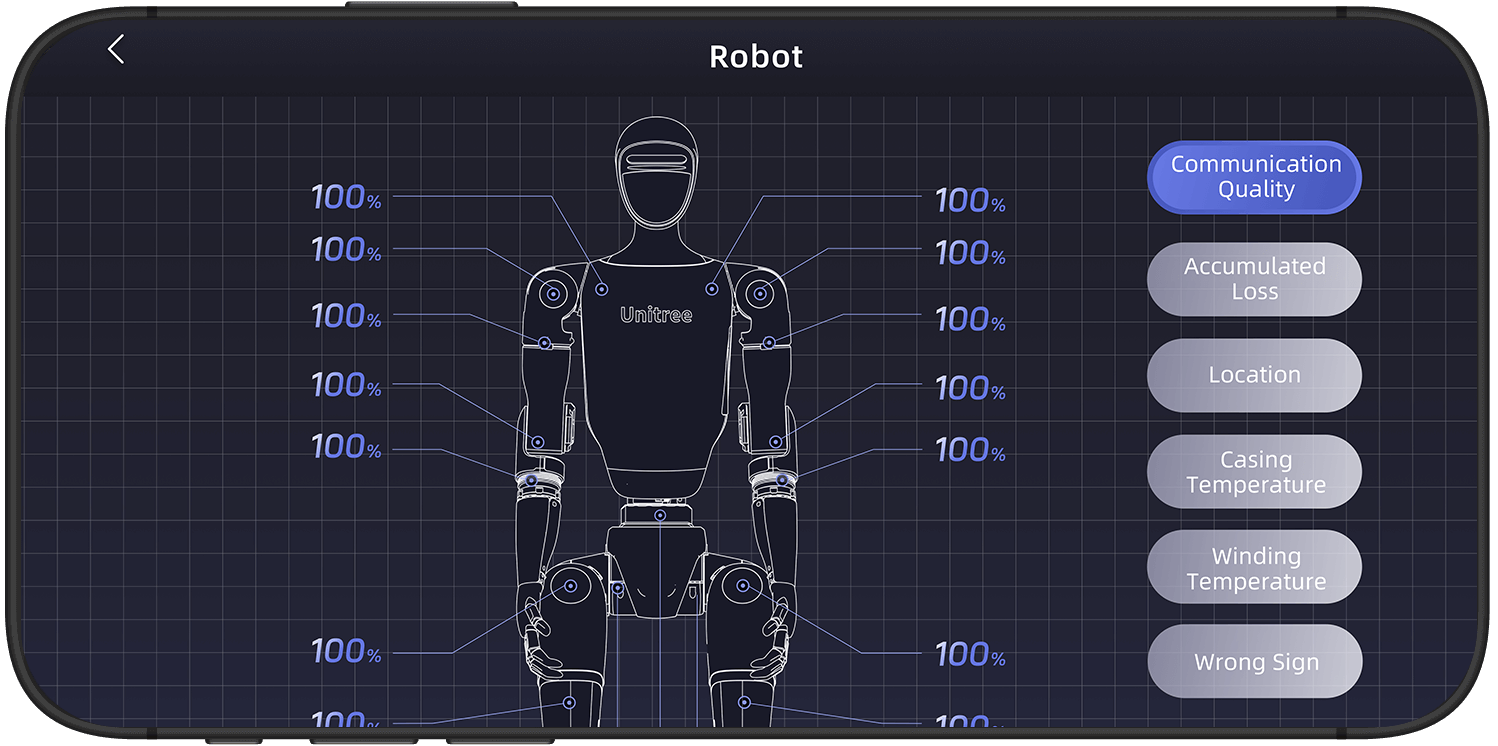
G1
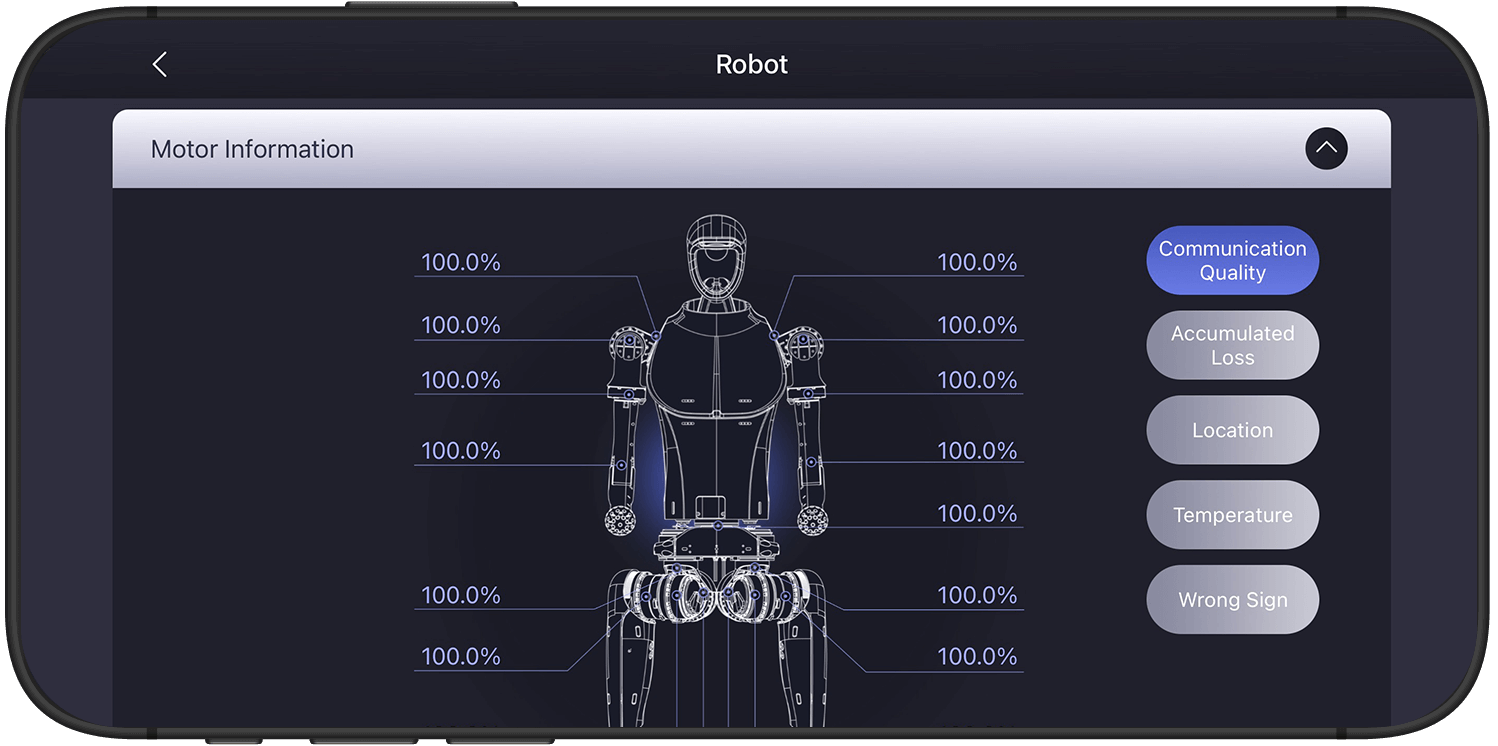
HumanoidThe G1 is a humanoid robot from Unitree. It features 23 or 29 degrees of freedom and can be controlled via the Unitree Explore APP. The APP provides real-time data display, auxiliary calibration, and motor joint fine tuning. The robot comes with rich video tutorials and electronic documentation for easy learning and maintenance.
- •Unitree Explore APP for real-time data display and calibration
- •Auxiliary calibration of motor joints and IMU
- •Motor joint fine tuning to compensate for wear
- •Rich video teaching and electronic documents
- •23 or 29 degrees of freedom
| Dof (count) | 23/29 |
Use cases
Industries
Technology stackOur read
Inferred from product specs — click through to the technology wiki:
ResearchComputed
Product comparisonComputed
Each row leads with this company's product, side-by-side with similar ones · click a row to expand full specs, click again to collapse







A2
RB-VOGUI
Dobot M1

ANYmal D Enterprise

FarmDroid | Advanced Agricultural Robots for Modern Farming

Kress EyePilot® 4×4 RTK

As2
Dobot M1
ANYmal D Enterprise
FarmDroid | Advanced Agricultural Robots for Modern Farming
Kress EyePilot® 4×4 RTK

Farm-ng Amiga - Modular Field Robot
B1 Land Overlord
ANYmal D Enterprise
FarmDroid | Advanced Agricultural Robots for Modern Farming
Kress EyePilot® 4×4 RTK
Farm-ng Amiga - Modular Field Robot
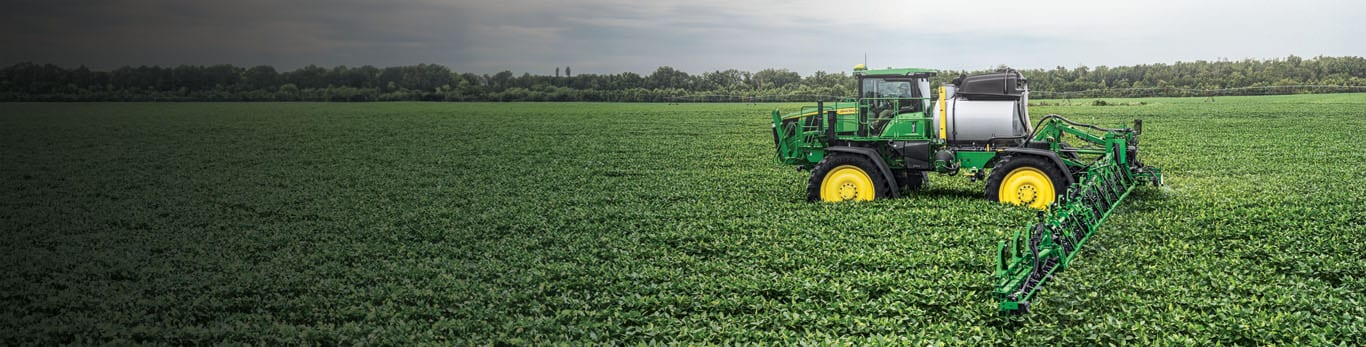
John Deere See & Spray Robot
L2
FarmDroid | Advanced Agricultural Robots for Modern Farming
Kress EyePilot® 4×4 RTK
Farm-ng Amiga - Modular Field Robot
John Deere See & Spray Robot

Carbon Robotics Laserweeder
Company announcement
News and Media
The company's official social & video channels · external links
News
From third-party news outlets (China & abroad) · external links