Underwater Inspection Solutions - Blue Atlas Robotics
Underwater Inspection Solutions by Blue Atlas Robotics comprises autonomous and remotely operated vehicles designed for subsea infrastructure monitoring. The systems provide high-resolution imaging and real-time data collection for inspection of pipelines, offshore platforms, cables, and marine structures across oil and gas, renewable energy, and maritime sectors.
Overview and Use Cases
Underwater Inspection Solutions represent a product line of subsea vehicles and systems developed by Blue Atlas Robotics for underwater asset assessment and documentation. The solutions serve multiple industries requiring reliable monitoring and inspection of submerged infrastructure.
Primary use cases include:
- Pipeline inspection and monitoring
- Offshore platform assessment
- Subsea cable inspection
- Marine structure documentation
- General underwater infrastructure evaluation
Target industries include oil and gas operations, renewable energy sectors, and maritime infrastructure management.
Key Capabilities
The Underwater Inspection Solutions are characterized by the following operational capabilities:
- Autonomous and Remote Operation: Systems function both as autonomous vehicles and remotely operated platforms, allowing flexibility in deployment and control methods
- High-Resolution Imaging: Equipped with imaging systems capable of detailed visual documentation of subsea structures
- Real-Time Data Collection: Enables live transmission and collection of inspection data during subsea operations
- Infrastructure Assessment: Designed to evaluate the condition and integrity of underwater assets
- Documentation Functions: Provides recorded data and visual records for archival and analysis purposes
Applications
The solutions support operational requirements across multiple subsea sectors:
- Oil and Gas: Inspection of production infrastructure, flowlines, and subsea equipment in deepwater and shallow-water environments
- Renewable Energy: Assessment of offshore wind farm foundations, cables, and supporting structures
- Maritime Infrastructure: Inspection of port facilities, harbor structures, and marine installations
- Cable Management: Monitoring of telecommunications and power transmission cables on the seafloor
Manufacturer
Underwater Inspection Solutions are produced by Blue Atlas Robotics, a company specializing in subsea robotic systems and autonomous underwater vehicle technology for industrial inspection applications.
Related videos

What is an Underwater Drone? | CHASING GLADIUS MINI S
Marusya Shiklina

An Underwater Drone Entered Jacob’s Well — The Footage Left Scientists Terrified
Curious Explorer

EyeROV Sagara | A Closer Look at Our Underwater ROV Operations
EyeROV (IROV Technologies Pvt. Ltd)
Ukraine’s Massive New Underwater Drone: Sea Trident ST-1000
Naval News

I Found a Van at the Bottom of Flat Bridge! (Underwater Drone Exploration)
YowNoel

This Underwater Camera Can Livestream from 1,600 Feet Deep
Great Lakes Now
Related entries
 Robot
RobotRelay Delivery Robot
The Relay Delivery Robot is an autonomous indoor delivery robot developed by Relay Robotics (formerly known as Savioke), designed primarily for hospitality and healthcare environments. It navigates hotel corridors and hospital hallways independently, rides elevators without human assistance, and delivers guest amenities, medications, linens, and other supplies directly to rooms or designated drop-off points. Relay is one of the most widely deployed service robots in its category, reportedly completing over one million lifetime deliveries with a publicly cited success rate of approximately 99.8%. With a cargo capacity of around 10 gallons, the robot is compact enough to operate in busy public spaces while carrying a meaningful payload of everyday supplies.
2,774 views
 Robot
RobotSpot
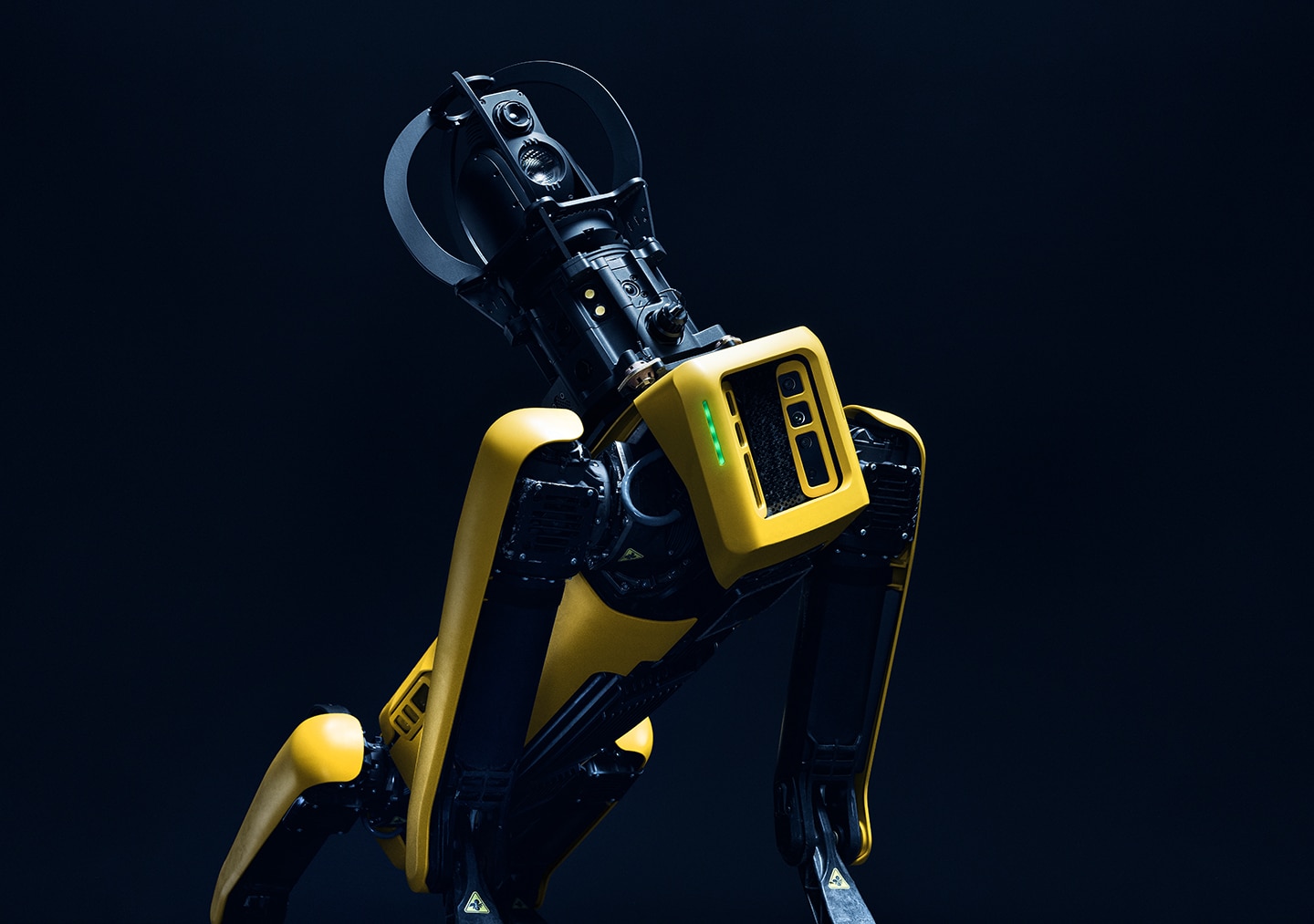
Spot is a four-legged autonomous robot developed by Boston Dynamics, a robotics company headquartered in Waltham, Massachusetts. Designed for inspection, security, and data collection in complex or hazardous environments, Spot can navigate stairs, rough terrain, and confined spaces that are inaccessible to wheeled robots. It is commercially available and has been deployed across industries including utilities, oil and gas, construction, and public safety. Spot supports a modular payload system that accommodates thermal cameras, pan-tilt-zoom (PTZ) cameras, lidar units, methane sensors, and other mission-specific hardware. Boston Dynamics also offers the Orbit fleet-management software platform, enabling operators to schedule autonomous inspection routes, aggregate sensor data, and manage multiple Spot units from a central interface. The robot is widely regarded as one of the most capable and commercially mature legged robots on the market.
1,469 views
 Robot
RobotRealSense Depth Camera D455
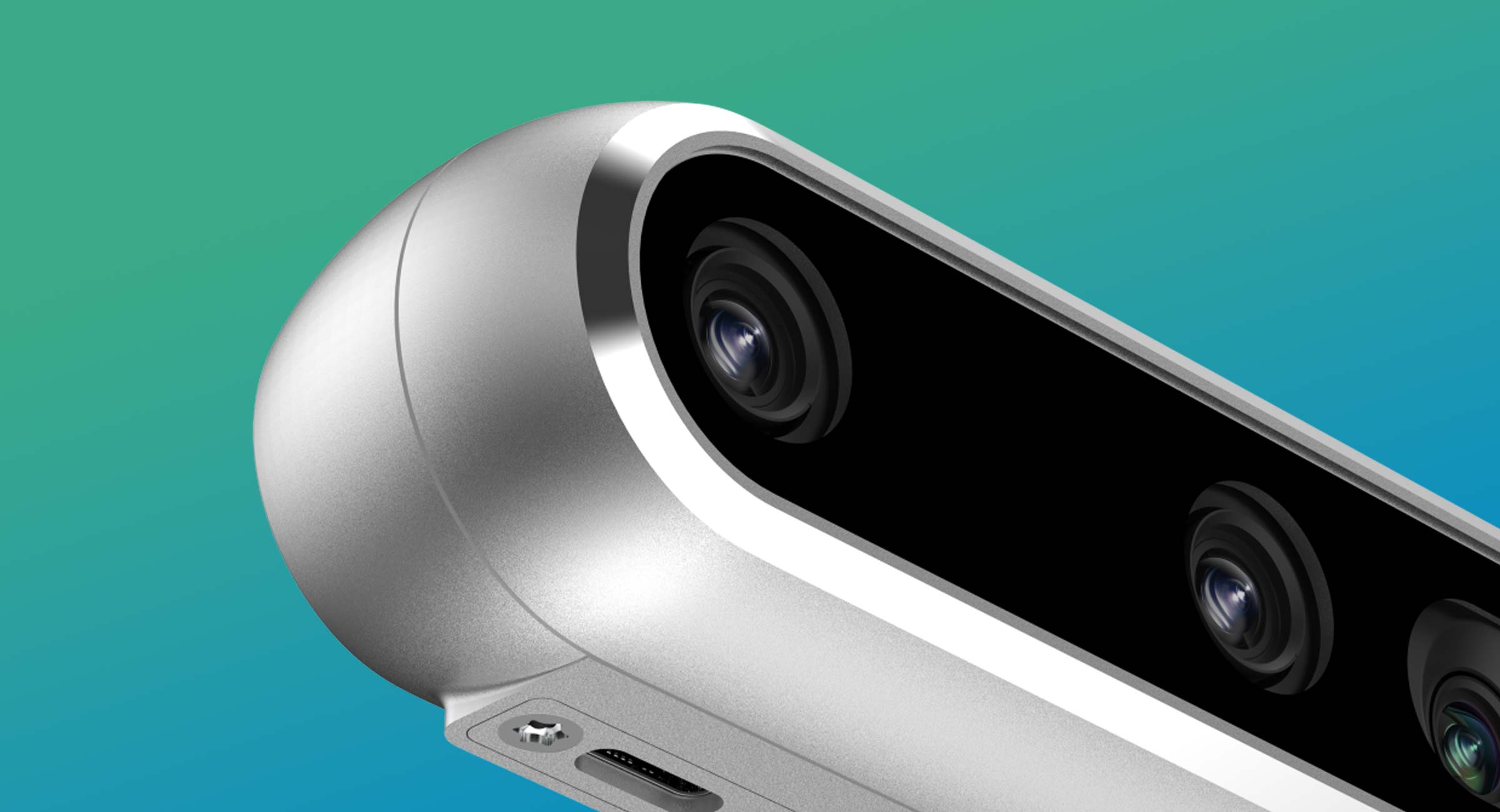
The RealSense Depth Camera D455 is a stereoscopic active-infrared depth camera belonging to Intel's D400 series, designed to capture high-fidelity depth data for robotics, autonomous mobile robots (AMRs), drones, and computer-vision applications. It features a 95 mm stereo baseline — the widest in the D400 lineup at the time of its introduction — which reportedly enables depth error of under 2% at ranges up to approximately 4 metres. Originally developed under the Intel RealSense brand, the D455 and related products were later spun off as part of an independent RealSense business unit following Intel's restructuring of the division around 2021–2022. The camera is widely adopted in research, industrial automation, and humanoid-robot development owing to its compact USB-powered form factor, open SDK support, and relatively accessible price point.
782 views
Rosie 2.0
The Rosie 2.0 is a commercial-grade autonomous robot vacuum developed by Tailos, designed to handle large-scale floor cleaning in business and institutional environments. It is offered in a two-pack configuration, allowing facilities to deploy multiple units simultaneously for broader coverage and more efficient cleaning cycles. Built to commercial durability standards, the Rosie 2.0 combines intelligent navigation with powerful suction technology to reduce reliance on manual labor and improve facility maintenance consistency. It targets businesses, hospitality venues, retail spaces, and other high-traffic environments where reliable, automated cleaning is a priority.
526 views