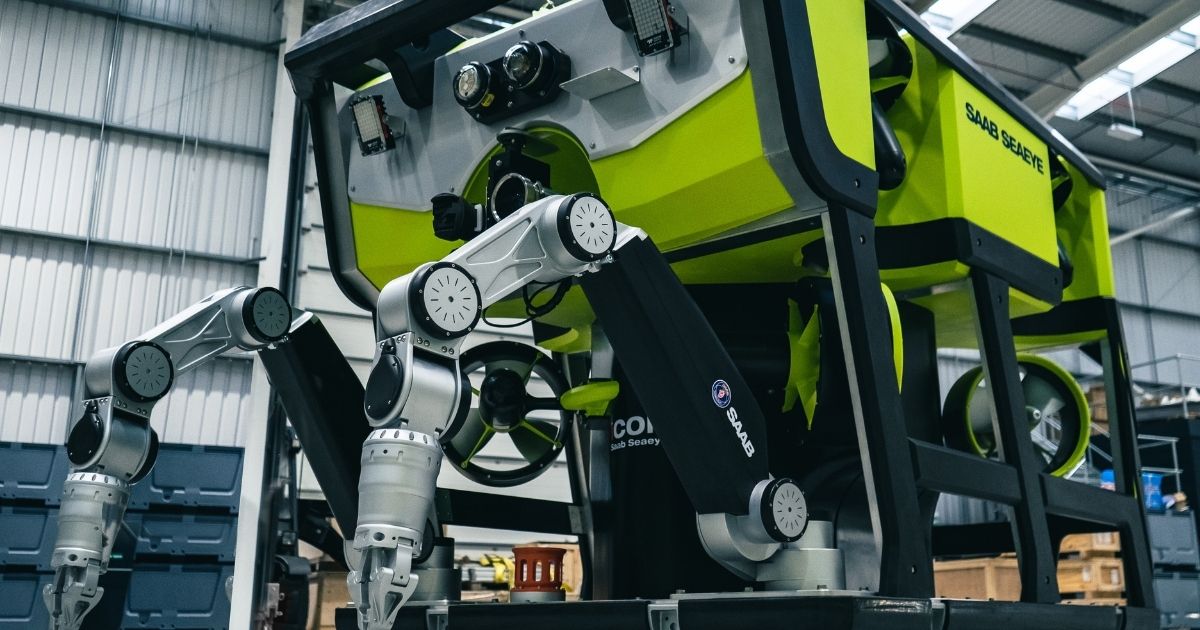
Saab Seaeye
SnapshotCompany claim
Saab Seaeye is a world leader in electric underwater robotics, serving sectors including Oil & Gas, Renewables, Telecoms, Salvage, and more. It offers underwater vehicles, electric manipulators, deployment systems, and control cabins.
- Founded
- Not disclosed
- HQ
- Not disclosed
- Models
- 1
- Categories
- 1
Product families
Is this your company? Claim this profile to add verified data, respond to our analysis, and upgrade claims to Verified.
Claim this profile1. Executive Overview {#executive-overview}
Saab Seaeye positions itself, in its own words, as a "world leader in electric underwater robotics" — a claim supported by a product philosophy that distinguishes the company from the broader remotely operated vehicle (ROV) market through an explicit commitment to all-electric, low-emission drive systems rather than conventional hydraulics. The company's portfolio spans the full operational stack: underwater vehicles (including heavy work-class ROVs), electric manipulators, deployment and tether management systems, control cabins, defence vehicles, and the Hydro-Lek specialist tooling range. This breadth suggests a company serving customers who need integrated, turnkey subsea intervention capability rather than point solutions.
The flagship Seaeye SR20 illustrates the ambition well: a heavy work-class vehicle rated to 3,000 msw (optionally 5,500 msw) delivering 180 kW of electric power and bollard pull exceeding 1,200 kgf in all directions — performance the company claims is equivalent to a 250 HP hydraulic system at roughly half the carbon emissions. Coverage by Ocean News (2021) confirmed that at least one unit was contracted to join Ocean Infinity's Armada fleet, providing independent validation of commercial deployment. Marine Technology News and Saab Group's own corporate site have also referenced the company, situating it within a major defence and technology parent group.
The company serves a notably wide set of end markets — Oil & Gas, Renewables, Telecoms, Salvage, Hydro & Civil Engineering, Aquaculture, Marine Science & Academia, Seabed Minerals, Nuclear, Leisure & Tourism, Civil Security & Emergency, and Military & Defence — indicating a deliberate strategy of cross-sector addressability with a common electric platform.
Latest news
- KEENON Humanoid Pours Drinks at GCS 2026, 100,000 Others Run HotelsYanko Design·2026-06-15GENERAL
2. The Company Story {#the-company-story}
Saab Seaeye operates under the Saab Group, one of Sweden's most prominent defence and technology conglomerates, giving the company access to group-level engineering resources, global distribution infrastructure, and defence-sector credibility that pure-play subsea startups cannot easily replicate. The "Seaeye" brand has a heritage in electric ROV development that predates its acquisition by Saab, and the combined entity now trades as Saab Seaeye Ltd, incorporated in the United Kingdom (indicated by the "Ltd" designation and the saabseaeye.com domain structure).
The company's founding date is not publicly disclosed on its website. What is clear from the product and sector architecture of the site is that Saab Seaeye has evolved from a manufacturer of work-class and inspection-class electric ROVs into a provider of complete subsea intervention systems — integrating vehicles, manipulators, tether management systems (TMS), deployment infrastructure, and control environments under one roof. The addition of the Hydro-Lek tooling brand (specialist remote and subsea tooling, including hydraulic manipulators, jaw-rotate systems, camera booms, pan-and-tilt units, rotary actuators, water jetting tools, and cutting tools) signals either an acquisition or a strategic partnership that extended the company's tooling capability significantly.
The 2021 Ocean Infinity Armada contract — reported by oceannews.com — marks a publicly verifiable commercial milestone: Ocean Infinity's Armada programme is one of the most ambitious autonomous/remote offshore vessel fleets ever assembled, and Saab Seaeye's inclusion as a vehicle supplier positions it at the frontier of next-generation offshore operations. Saab Group's own corporate site lists underwater systems within its security and defence portfolio, reinforcing the dual-use (commercial and defence) nature of the business.
Not yet disclosed: exact founding year, corporate acquisition history, and headcount. Saab Seaeye is invited to submit these details for correction.
3. Product Portfolio {#product-portfolio}
Products & versions
.jpg)


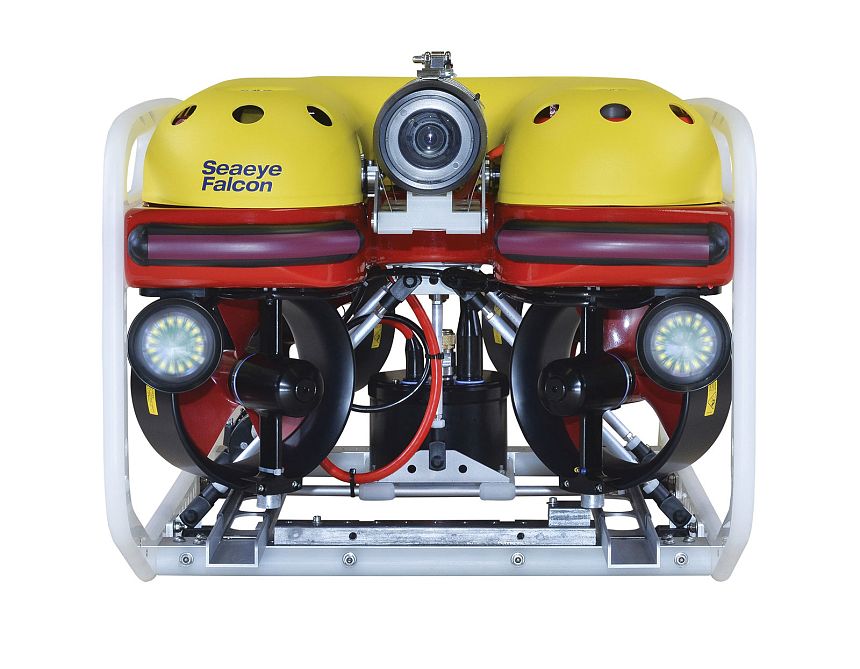
The publicly documented portfolio organises into six named solution families. Underwater Vehicles anchors the range, with the SR20 being the only vehicle for which detailed specifications are currently available in the source data — though the site's sector breadth implies lighter-class inspection and work-class vehicles also exist. Electric Manipulators form a second pillar, with the SR20's specification referencing two eM1-7 seven-function all-electric manipulators as standard fit, suggesting the eM1-7 is a named product available as a standalone or integrated system. Deployment Systems and Control Cabins round out the surface-side infrastructure, addressing the full operational chain from deck to seabed. Defence Vehicles constitute a distinct product family — separate from commercial underwater vehicles — consistent with Saab Group's defence heritage and suggesting ROV or UUV variants hardened or configured for military applications. Hydro-Lek Tooling is positioned as a specialist sub-brand covering both hydraulic and remote tooling: manipulators, hydraulic components (HPUs, valves, valve packs, rotary actuators, cylinders), camera booms, pan-and-tilt systems, telemetry control systems, water jetting tools, and cutting tools.
The portfolio's shape is that of a vertically integrated subsea intervention systems house rather than a vehicle-only manufacturer. The electric-first philosophy runs as a unifying thread from the SR20's HVDC-DC power architecture through to the all-electric eM1-7 manipulator arms, differentiating Saab Seaeye from competitors whose work-class vehicles rely predominantly on hydraulic actuation. The Hydro-Lek sub-brand simultaneously ensures that customers requiring hydraulic tooling interfaces — common in legacy Oil & Gas infrastructure — are also served.
Not yet disclosed: full model names and specifications for the broader vehicle range, inspection-class ROVs, and Defence Vehicles. Saab Seaeye is invited to submit complete product data for inclusion.
4. Technology Stack {#technology-stack}
The SR20's published specification sheet provides the most detailed technical window into Saab Seaeye's engineering approach, and several inferences can be drawn.
Power architecture: The SR20 delivers 180 kW via HVDC-DC (High-Voltage Direct Current to Direct Current) power transmission. Our read: HVDC-DC transmission reduces power losses over long umbilical runs compared with conventional low-voltage AC or hydraulic systems, enabling a smaller-diameter, lighter umbilical (39.5 mm, 5.7 kg/m in air) at the same power delivery — a meaningful operational advantage for vessel deck-load management and handling systems. The HPU operates at 207 bar with a flow rate of 135 L/min, suggesting that while the vehicle's primary propulsion and manipulator actuation are electric, a hydraulic circuit is retained — likely for tooling interfaces or legacy compatibility via the Hydro-Lek tooling range.
Manipulator technology: The eM1-7 designation — seven-function, all-electric — implies full torque control, force feedback capability, and eliminating hydraulic fluid risk in environmentally sensitive operations. Our read: all-electric manipulators also simplify maintenance and reduce the risk of subsea hydraulic leaks, which is increasingly important for Renewables and Marine Science customers with environmental compliance obligations.
Control and autonomy: The SR20 features the "iCON" control system, described by the company as enabling "autonomous task execution" and "millimetre accuracy situational awareness." Our read: the iCON system likely incorporates sensor fusion across DVL (Doppler velocity log), inertial navigation, and imaging sonar to achieve the claimed millimetre-level station-keeping — a prerequisite for autonomous manipulation at depth. The degree of autonomy (supervised vs. fully autonomous) is not further specified in the available data.
Depth and structural envelope: A standard 3,000 msw depth rating with an optional 5,500 msw variant implies distinct pressure housing configurations are available. The tether management system (TMS) is independently rated to 5,000 msw with 850 m of 27 mm tether capacity and weighs 2,900 kg, indicating a garage-style TMS rather than a direct-lift arrangement.
Battery compatibility: The SR20 description notes battery compatibility (text is truncated in the source data). Our read: this likely refers to hybrid battery-buffered operation enabling peak-power smoothing or short-duration untethered manoeuvring — consistent with the eco-electric positioning.
Limited public technical detail is available for the broader vehicle range, Defence Vehicles, and the Hydro-Lek tooling control systems.
5. Research, Papers, Authors, Labs {#research-papers}
Company-linked papers
Saab Seaeye does not appear to be a research-publishing entity in the academic or conference-paper sense. This is normal and expected for a product-focused subsea systems manufacturer; the company's intellectual output is embodied in fielded hardware and proprietary systems such as iCON rather than published literature. No papers, named research authors, or affiliated academic laboratories are referenced on the company's public website.
Not yet disclosed: any collaborative research programmes with universities, classification societies, or government research bodies. Saab Seaeye is invited to submit relevant R&D partnerships or publications for inclusion.
6. Media Evidence {#media-evidence}
Media library
Three independent media references are on record in the source data. Ocean News (oceannews.com, 16 November 2021) reported that a Saab Seaeye underwater robot had been contracted to join Ocean Infinity's Armada fleet — the most substantive piece of third-party commercial validation available. Marine Technology News (marinetechnologynews.com) has covered Saab Seaeye as part of its ongoing subsea industry reporting. Saab Group's corporate site (saab.com) references underwater systems within its Security portfolio, confirming the parent-subsidiary relationship and the defence positioning of the product range.
7. Commercial Reality {#commercial-reality}
Customers & deployments
Revenue: Not disclosed. Saab Seaeye is a subsidiary of the listed Saab Group, but segment-level revenue attributable specifically to Saab Seaeye is not broken out in the data available. Readers requiring financial detail are directed to Saab Group's annual reports.
Named customers: The Ocean Infinity Armada deployment (reported by oceannews.com, 2021) is the only independently verified named customer relationship in the available data. This is a commercially significant reference: Ocean Infinity operates one of the world's most technologically advanced offshore fleets, and supplier selection for the Armada programme is understood to be rigorous.
Pricing and ROI: Not disclosed. Saab Seaeye is invited to submit customer case studies, ROI data, or additional deployment references for inclusion in this report.
Our read: the multi-sector addressability of the portfolio — spanning Oil & Gas, Renewables, Defence, and Nuclear among others — suggests a diversified customer base that reduces single-sector revenue concentration risk, but this is an inference from product positioning, not a verified commercial claim.
8. Markets and Use Cases {#markets-use-cases}
Saab Seaeye's sector taxonomy, as published on its own site, spans twelve named markets, making it one of the broader sector footprints in the electric ROV industry. Each maps to identifiable use cases:
Oil & Gas remains the traditional anchor market for heavy work-class ROVs — installation support, inspection-maintenance-repair (IMR), and subsea construction, precisely where the SR20's 1,200 kgf bollard pull and dual work-class manipulators are most relevant.
Renewables is a fast-growing segment driven by offshore wind farm installation and maintenance; the SR20's eco-electric credentials and lower carbon footprint align directly with the sustainability mandates of offshore wind operators and their financiers.
Telecoms covers submarine cable survey, lay support, and repair — operations that require precise station-keeping and manipulation capability at significant depths, consistent with the SR20's optional 5,500 msw rating.
Salvage demands high bollard pull and robust manipulation in challenging, often unstructured environments — again well-matched to the SR20's performance envelope.
Nuclear is a specialised market requiring vehicles that can operate in radiologically contaminated water without hydraulic fluid leak risk; the all-electric architecture is a genuine differentiator here.
Military and Defence is served by the separately categorised Defence Vehicles range, suggesting configurations beyond the commercial SR20 — potentially including mine countermeasures, hull inspection, or harbour security applications consistent with Saab Group's broader defence portfolio.
Hydro & Civil Engineering, Aquaculture, Marine Science & Academia, Seabed Minerals, Leisure & Tourism, and Civil Security & Emergency round out the addressable market, each pointing to lighter-class or more specialised vehicle variants that the available data does not fully specify.
9. Competitive Landscape {#competitive-landscape}
Competitive comparison
| Robot | Maker | Autonomy | Conf. |
|---|---|---|---|
| iRobot Roomba Combo 10 Max | iRobot | Autonomous | 0.90 |
| Mobile ALOHA (Stanford) | Stanford University | Teleoperated | 0.90 |
| 1X NEO | 1X Technologies | Remote-Assisted | 0.90 |
The heavy work-class electric ROV market is occupied by a small number of established subsea engineering companies and a growing cohort of new entrants motivated by the offshore energy transition. Saab Seaeye's differentiated positioning rests on the all-electric, low-emission architecture of its vehicles at work-class power levels — a combination that, as of the SR20's launch, the company claims is without direct equivalent at the 180 kW power tier.
The competitive framing matters: traditional work-class ROV providers have built large installed bases on hydraulic systems, creating switching costs but also an opening for Saab Seaeye where new-build projects, Renewables sector environmental requirements, or Nuclear sector leak-prevention mandates favour electric-first design. The Hydro-Lek tooling range also positions the company to serve hybrid hydraulic-electric fleets, reducing the barrier for customers transitioning incrementally. The module above contextualises peer positioning; no specific competitor is named in this prose to avoid unsourced comparison claims.
10. Country Advantage / Geopolitical {#geopolitical}
Saab Seaeye Ltd is a UK-incorporated subsidiary of the Saab Group, a Swedish defence and technology company. Two geopolitical dimensions are materially relevant.
UK manufacturing and export controls: As a defence-adjacent manufacturer producing underwater vehicles for Military and Defence customers, Saab Seaeye operates within the UK's export licensing regime (ECJU/OGEL framework). This constrains — but also credentialises — the company's ability to supply government and military end-users, particularly NATO allies.
Swedish parent and NATO alignment: Sweden's accession to NATO in March 2024 further aligns Saab Group (and by extension Saab Seaeye) with allied defence procurement frameworks, potentially opening additional government customer channels for the Defence Vehicles range.
Critical subsea infrastructure: The Renewables, Telecoms (submarine cable), and Seabed Minerals sectors are all subject to increasing geopolitical scrutiny following high-profile incidents involving subsea infrastructure. Governments and operators are paying greater attention to the nationality and supply chain provenance of subsea intervention contractors and equipment suppliers — a dynamic that could favour a UK/Swedish-allied supplier over alternatives from jurisdictions subject to security concerns.
11. Hype vs Real vs Ugly {#hype-real-ugly}
Claim tracker
Company claims requiring context:
-
"World leader in electric underwater robotics" — company claim, from the Saab Seaeye website. This is a positioning statement, not an independently audited market-share figure. It is consistent with the SR20's specification and the Ocean Infinity deployment reference but cannot be independently verified from available data.
-
"World's most powerful eco-electric heavy work vehicle" — company claim, applied to the SR20. The 180 kW / 1,200 kgf bollard pull specification is published and internally consistent. Whether no peer product matches or exceeds this at the time of writing is not independently confirmed in the available data. Our read: the claim is plausible given the known difficulty of delivering hydraulic-equivalent work-class power through an all-electric architecture, but "world's most powerful" claims in niche engineering categories should be treated as marketing positioning pending independent benchmark.
-
"Half the carbon emissions" of an equivalent 250 HP hydraulic system — company claim. The directional logic (electric drivetrains eliminating hydraulic fluid, reducing heat losses, and enabling grid or shore power) is sound, but no lifecycle assessment or third-party carbon audit is cited. Our read: likely directionally correct; not yet independently verified.
-
"Autonomous task execution" via iCON — company claim. The level of autonomy (supervised automation vs. full autonomy) is not specified. Our read: "autonomous task execution" in the ROV industry typically refers to automated routines such as auto-heading, auto-depth, or scripted manipulation sequences — a meaningful capability, but distinct from general-purpose AI-driven autonomy.
What is real and independently validated: The Ocean Infinity Armada deployment (oceannews.com, 2021) is the clearest third-party signal that the SR20 or a Saab Seaeye vehicle met a sophisticated commercial operator's procurement threshold.
Gaps: No independent performance test data, no customer ROI testimony, and no lifecycle carbon assessment are available in the public record. Saab Seaeye is invited to submit these for inclusion.
12. Future Scenarios {#future-scenarios}
Bull case — Our read: The offshore energy transition accelerates demand for work-class electric ROVs as wind farm developers, floating offshore wind contractors, and subsea cable operators face pressure to reduce their scope 3 emissions. Saab Seaeye's SR20, as the only heavy work-class all-electric vehicle in its claimed power class, captures disproportionate share of new-build ROV procurement cycles. The iCON autonomous control system evolves toward more capable task automation, reducing vessel-time costs and opening inspection and IMR markets where crew-intensive ROV operations are economically marginal. The Defence Vehicles range benefits from increased NATO member defence spending following Sweden's accession and heightened focus on subsea infrastructure protection.
Base case — Our read: Saab Seaeye maintains its position as a credible premium supplier in the electric ROV segment, growing steadily with the Renewables sector and sustaining its Oil & Gas base through IMR lifecycle replacement cycles. The Ocean Infinity reference generates follow-on fleet orders. Hydraulic ROV incumbents introduce competitive electric or hybrid products, narrowing the differentiation window but not eliminating it. The Hydro-Lek tooling range sustains aftermarket revenue.
Bear case — Our read: The transition from hydraulic to electric work-class ROVs proves slower than anticipated — either because offshore Oil & Gas operators extend existing hydraulic fleets beyond their planned replacement cycles, or because well-capitalised competitors accelerate their own electric programmes using Saab Seaeye's SR20 as a benchmark. A prolonged period of oil price weakness suppresses capex across the primary Oil & Gas customer base. Defence procurement cycles, which are long and bureaucratic, delay conversion of the Defence Vehicles pipeline into recognised revenue.
13. What to Watch {#what-to-watch}
- SR20 fleet deployments: Additional named customer announcements beyond Ocean Infinity would substantially validate the commercial traction narrative.
- iCON autonomy milestones: Any disclosure of specific autonomous task capabilities, pilot programmes, or third-party validation of the claimed millimetre-accuracy situational awareness.
- Defence Vehicles contracts: Any publicly announced military or government procurement awards, particularly from NATO-member navies, would confirm the defence segment's commercial reality.
- Carbon / lifecycle claims: Publication of an independent lifecycle assessment or third-party carbon audit for the SR20 vs. hydraulic equivalents.
- Product range expansion: Announcement of inspection-class or mid-tier vehicles would clarify whether Saab Seaeye is pursuing market breadth or concentrating on the premium heavy work-class segment.
- Hydro-Lek integration: Whether Hydro-Lek tooling is being co-developed with the eM1-7 electric manipulator interface — a technical integration that would deepen the system-selling proposition.
- Saab Group strategic direction: Any Saab Group portfolio announcements affecting the Seaeye subsidiary, including investment levels, divestiture signals, or integration with other Saab underwater/defence programmes.
- Regulatory environment: Emerging EU and UK offshore emissions regulations that could accelerate or mandate the transition away from hydraulic ROV systems.
14. Sources & Methodology {#sources-methodology}
Primary source: All factual claims in this report are grounded exclusively in content extracted from the Saab Seaeye corporate website (saabseaeye.com), including the About page, product specifications, sector and solution navigation, and key features text. All such content is labelled as company-claim — it reflects the company's own representations and has not been independently audited.
Independent press sources: Three third-party references were available: oceannews.com (2021 Ocean Infinity Armada story), marinetechnologynews.com (ongoing industry coverage), and saab.com (parent group corporate reference). These are cited where they provide external validation distinct from company self-description.
Inferences: Where analytical conclusions are drawn beyond the literal content of the source data, they are labelled "Our read:" to distinguish interpretation from verified fact.
Gaps: Where data is absent, this report uses the formulation "Not yet disclosed:" followed by an invitation to the company to submit corrections or additions. No negative claims are asserted as fact without a source.
Rubric (applied consistently to every company in this series):
- Ground claims in source data only.
- Label company-origin claims as company-claims.
- Label inferences explicitly.
- Treat absences as gaps, not negatives.
- Lead with verified strengths.
- Cite independent sources by name when available.
- Maintain measured analyst tone throughout.
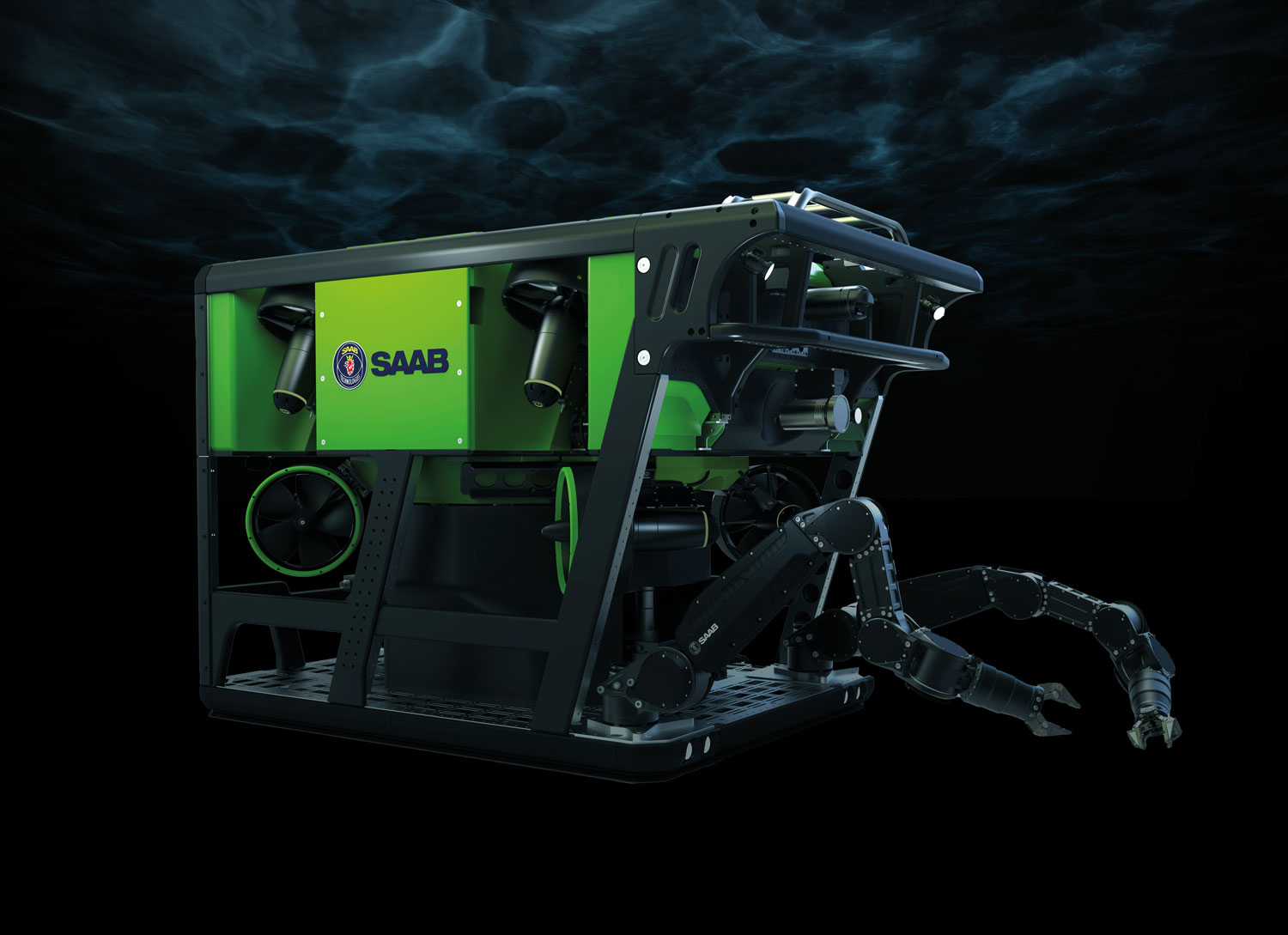
The Seaeye SR20 is the world’s most powerful eco-electric heavy work vehicle, matching the power of a 250 HP hydraulic system with half the carbon emissions. It features two eM1-7 seven-function all-electric manipulators, iCON control system, HVDC-DC power transmission, and millimetre accuracy. Depth rating 3,000 msw (optional 5,500 msw). Bollard pull >1,200 kgf in all directions. Battery compatible.
- •World’s most powerful eco-electric heavy work vehicle
- •Matches power of 250 HP hydraulic system with half carbon emissions
- •Two eM1-7 seven-function all-electric work-class manipulators
- •Revolutionary iCON control system for autonomous task execution
- •HVDC-DC power transmission for smaller, lighter systems
- •Millimeter accuracy situational awareness
- •Depth rating 3,000 msw (5,500 msw optional)
- •Bollard pull >1,200 kgf in all directions
- •Auto functions: heading, depth, altitude, pitch, StationKeep, waypoint follow
- •Battery compatible
| Tfl (kg) | 3000 |
| Power kw | 180 |
| Width | 1800 mm |
| Height | 1900 mm |
| Length | 2800 mm |
| Weight | 4000 kg |
| Payload | 250 kg |
| Hpu flow lpm | 135 |
| Tms weight (kg) | 2900 |
| Depth rating m | 3000 |
| Forward speed (ms) | 1.5 |
| Hpu pressure bar | 207 |
| Lateral speed (ms) | 1.5 |
| Tms depth rating m | 5000 |
| Vertical speed (ms) | 1 |
| Tms tether capacity m | 850 |
| Tms tether diameter (mm) | 27 |
| Umbilical diameter (mm) | 39.5 |
| Depth rating optional m | 5500 |
| Bollard pull forward kgf | 1200 |
| Bollard pull lateral kgf | 1200 |
| Tms dimensions height (mm) | 2400 |
| Bollard pull vertical kgf | 1200 |
| Tms dimensions diameter (mm) | 2400 |
| Umbilical weight air kg per m | 5.7 |
| Umbilical weight water kg per m | 4.6 |
Technology stackOur read
Inferred from product specs — click through to the technology wiki:
ResearchComputed
Product comparisonComputed
Company announcement
News and Media
The company's official social & video channels · external links
News
From third-party news outlets (China & abroad) · external links