LuckiBot
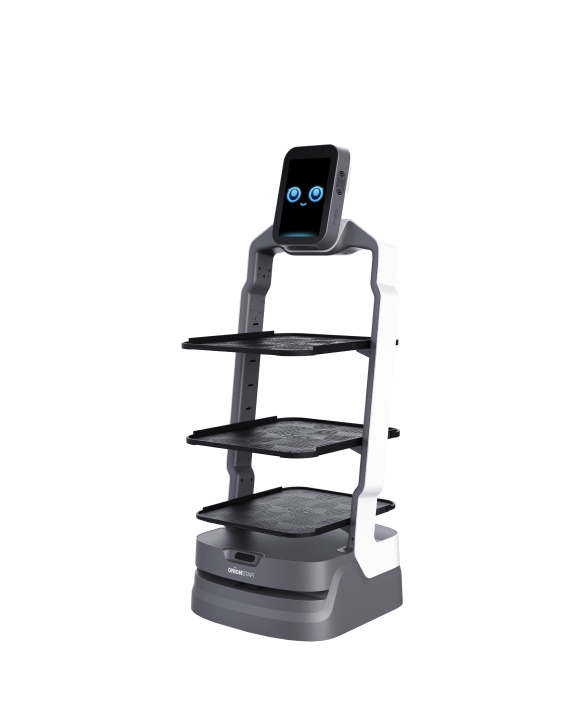
LuckiBot is an AI-powered food-delivery robot developed by OrionStar Robotics, designed primarily for restaurant and hospitality environments. It autonomously navigates dining areas to deliver meals from kitchen to table, reducing the workload on human staff while maintaining a friendly, interactive presence for guests. The robot features 3D depth detection, a dual-SLAM navigation system capable of operating in low-light conditions, and a six-microphone 360-degree voice array that enables natural voice interaction with customers. OrionStar, a Chinese AI and robotics company, positions LuckiBot as a practical automation solution for the food-service industry, where labor costs and service consistency are ongoing challenges.
Overview and Use Cases
LuckiBot is a hospitality-category service robot built to automate food and beverage delivery within restaurants, hotel dining rooms, buffets, and similar venues. Rather than replacing front-of-house staff entirely, it is typically deployed to handle repetitive delivery runs — shuttling dishes from a service counter or kitchen pass to designated tables — freeing human servers to focus on higher-value guest interactions such as taking orders, upselling, and resolving complaints.
Beyond simple delivery, LuckiBot's voice interaction capabilities allow it to greet diners, announce dish names, and respond to basic customer queries, giving it a dual role as both a logistics tool and a novelty attraction that can enhance the dining experience.
Key Technical Features
- 3D Depth Detection: Onboard depth sensors allow LuckiBot to perceive its environment in three dimensions, helping it detect obstacles such as chairs, bags, and moving people at varying heights.
- Dual-SLAM Navigation: The robot reportedly uses a dual Simultaneous Localization and Mapping (SLAM) system that combines multiple sensing modalities, enabling reliable navigation even in dimly lit dining environments where camera-only systems may struggle.
- 6-Microphone 360° Voice Array: A circular microphone array captures voice commands and customer speech from any direction, supporting natural-language interaction without requiring customers to speak directly into a specific panel.
- Multi-Tray Design: Like many food-delivery robots in its category, LuckiBot is understood to feature a multi-shelf or multi-tray configuration, allowing it to carry several dishes or orders in a single trip, though specific payload figures have not been independently confirmed.
- Autonomous Return and Charging: The robot is designed to return to a home base or charging dock autonomously when idle or when battery levels are low.
Comparison to OrionStar Siblings
Within OrionStar's broader portfolio, LuckiBot shares the hospitality segment with Artly: The Barista Bot, an automated coffee-making robot aimed at cafés and corporate lobbies. While Artly focuses on beverage preparation — a stationary, arm-based task — LuckiBot is a mobile delivery platform, making the two complementary rather than competing products. OrionStar's lineup also includes mobile robots oriented toward warehouse and logistics applications, though those models target a different buyer profile than LuckiBot's restaurant-focused positioning.
Market Context and Target Buyers
Food-delivery robots occupy a growing niche in the broader service-robot market, driven by rising labor costs and post-pandemic interest in contactless service. LuckiBot competes in a segment that includes products from companies such as Keenon Robotics (DINERBOT series), BellaBot by Pudu Robotics, and Bear Robotics' Servi. OrionStar differentiates LuckiBot through its emphasis on AI-driven voice interaction, reflecting the company's roots in conversational AI technology.
The target buyer is typically a mid-to-large restaurant operator, hotel food-and-beverage department, or chain dining brand seeking to reduce per-table labor costs without a full kitchen-automation overhaul. Pricing is not publicly listed and is generally negotiated through regional distributors or direct sales channels.
Deployments and Notable Customers
As of public reporting, LuckiBot has been deployed in restaurant settings primarily across China, with OrionStar citing use cases in chain dining venues and hospitality properties. Specific named customer deployments have not been widely confirmed in English-language sources, and independent third-party reviews of large-scale rollouts remain limited.
Future Outlook
The food-delivery robot segment is expected to continue growing as restaurant operators seek automation tools that integrate with point-of-sale and kitchen management systems. For LuckiBot, potential development directions could include tighter integration with ordering platforms, improved obstacle avoidance in crowded environments, and expanded language support for international markets. OrionStar's background in large-language-model and voice-AI research may position it to enhance LuckiBot's conversational capabilities as that technology matures.
Related entries
 Robot
RobotRelay Delivery Robot
The Relay Delivery Robot is an autonomous indoor delivery robot developed by Relay Robotics (formerly known as Savioke), designed primarily for hospitality and healthcare environments. It navigates hotel corridors and hospital hallways independently, rides elevators without human assistance, and delivers guest amenities, medications, linens, and other supplies directly to rooms or designated drop-off points. Relay is one of the most widely deployed service robots in its category, reportedly completing over one million lifetime deliveries with a publicly cited success rate of approximately 99.8%. With a cargo capacity of around 10 gallons, the robot is compact enough to operate in busy public spaces while carrying a meaningful payload of everyday supplies.
2,795 views
 Robot
RobotSpot
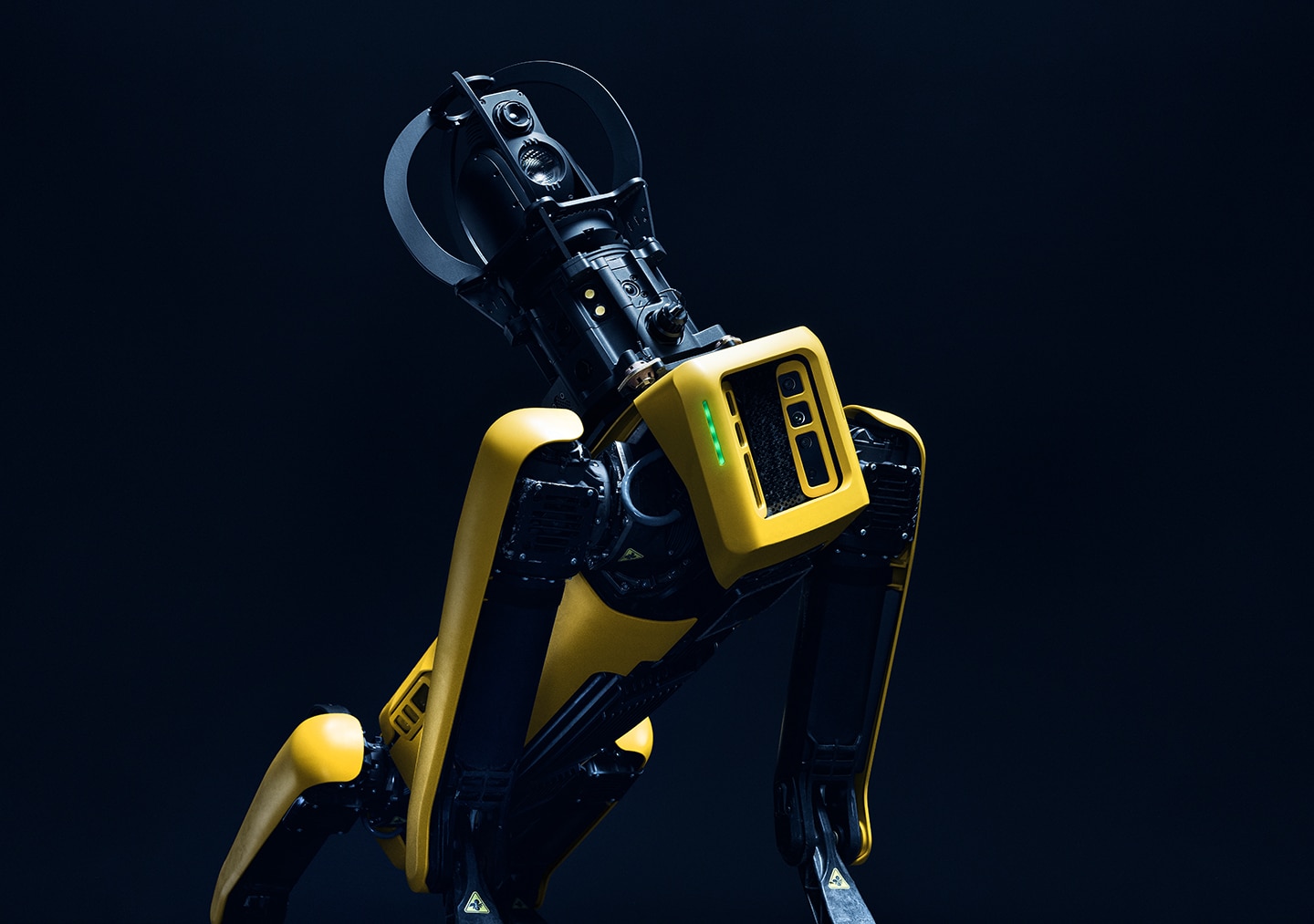
Spot is a four-legged autonomous robot developed by Boston Dynamics, a robotics company headquartered in Waltham, Massachusetts. Designed for inspection, security, and data collection in complex or hazardous environments, Spot can navigate stairs, rough terrain, and confined spaces that are inaccessible to wheeled robots. It is commercially available and has been deployed across industries including utilities, oil and gas, construction, and public safety. Spot supports a modular payload system that accommodates thermal cameras, pan-tilt-zoom (PTZ) cameras, lidar units, methane sensors, and other mission-specific hardware. Boston Dynamics also offers the Orbit fleet-management software platform, enabling operators to schedule autonomous inspection routes, aggregate sensor data, and manage multiple Spot units from a central interface. The robot is widely regarded as one of the most capable and commercially mature legged robots on the market.
1,505 views
 Robot
RobotRealSense Depth Camera D455
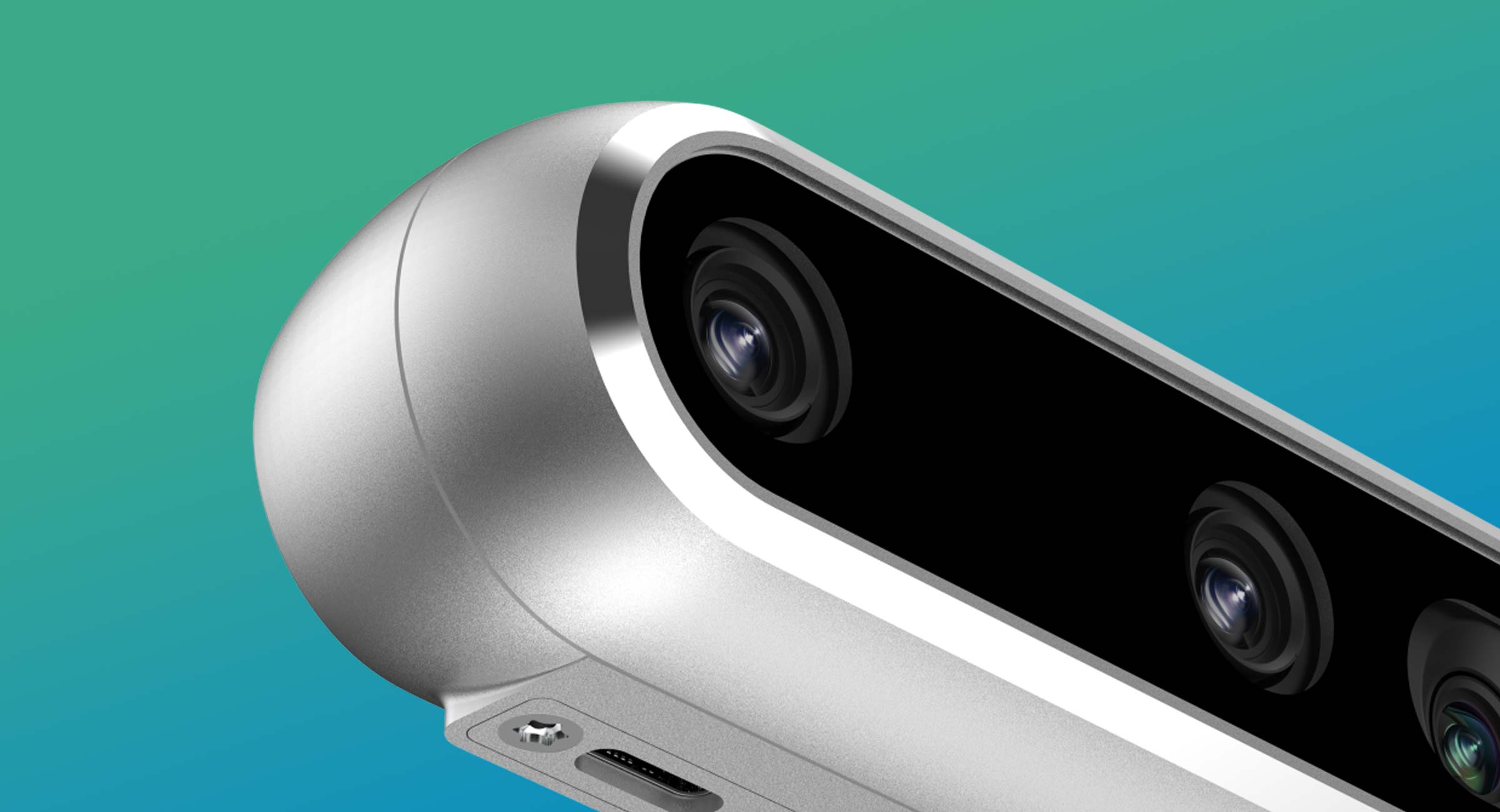
The RealSense Depth Camera D455 is a stereoscopic active-infrared depth camera belonging to Intel's D400 series, designed to capture high-fidelity depth data for robotics, autonomous mobile robots (AMRs), drones, and computer-vision applications. It features a 95 mm stereo baseline — the widest in the D400 lineup at the time of its introduction — which reportedly enables depth error of under 2% at ranges up to approximately 4 metres. Originally developed under the Intel RealSense brand, the D455 and related products were later spun off as part of an independent RealSense business unit following Intel's restructuring of the division around 2021–2022. The camera is widely adopted in research, industrial automation, and humanoid-robot development owing to its compact USB-powered form factor, open SDK support, and relatively accessible price point.
817 views
Rosie 2.0
The Rosie 2.0 is a commercial-grade autonomous robot vacuum developed by Tailos, designed to handle large-scale floor cleaning in business and institutional environments. It is offered in a two-pack configuration, allowing facilities to deploy multiple units simultaneously for broader coverage and more efficient cleaning cycles. Built to commercial durability standards, the Rosie 2.0 combines intelligent navigation with powerful suction technology to reduce reliance on manual labor and improve facility maintenance consistency. It targets businesses, hospitality venues, retail spaces, and other high-traffic environments where reliable, automated cleaning is a priority.
536 views