KEENON Robotics擎朗智能
Company wikiFounded 2010 · China · keenon.com
SnapshotCompany claim
Globally leading provider of service robotics and integrated solutions. Pioneer of autonomous delivery robots. Offers catering, hotel, medical, industrial, and disinfection robots across 60+ countries and 600 cities.
- Founded
- 2010
- HQ
- China
- Models
- 15
- Categories
- 5
ContactCompany claim
- Address
- Building 56, No.1000 Jinhai Road, Pudong District, Shanghai, China
Product families
Is this your company? Claim this profile to add verified data, respond to our analysis, and upgrade claims to Verified.
Claim this profileKEENON ROBOTICS
From restaurant delivery to humanoid ambition: whether 100,000 units shipped translates into a durable technology business or a hardware commodity trap
| Report status | First edition — sections 1–7 of 14 |
| Coverage date | 2 July 2026 |
| Company stage | Fully commercial, unicorn-valued, pre-IPO |
| Editorial standard | Evidence-led; claims separated from verified facts throughout |
How to Read This Report
This report applies a four-tier evidence framework throughout. Every substantive assertion is tagged or contextualised according to the following scheme:
| Label | Meaning |
|---|---|
| VERIFIED | Confirmed by regulatory filings, official product documentation, named-customer statements, peer-reviewed research, or corroboration across multiple independent sources |
| COMPANY CLAIM | Stated by KEENON Robotics or its appointed spokespeople; not independently verified |
| EDITORIAL INFERENCE | Reasoned conclusion drawn from the weight of available public evidence; clearly flagged as analytical rather than factual |
| UNKNOWN | Not publicly disclosed; absence of evidence noted rather than papered over |
Inline citations use bracketed numerals keyed to the Sources list in §14. Only sources present in the research dossier are cited. Where the dossier is thin, this report says so plainly. A choreographed product video is not treated as proof of autonomous capability. A shipment announcement is not treated as proof of productive deployment. A partnership press release is not treated as proof of a paying customer relationship.
01Executive Overview
KEENON Robotics occupies an unusual position in the global service robotics industry: it is simultaneously one of the most commercially mature companies in its field and one of the least scrutinised by the Western technology press. Founded in Shanghai in 2010 — a period when most Western robotics startups were still debating whether autonomous navigation was commercially viable — the company has spent sixteen years building a portfolio of delivery and cleaning robots that are, by any reasonable measure, genuinely autonomous within their operational domains 1. The Dinerbot T-series navigates restaurant floors, avoids obstacles, and delivers food to tables without a human at the controls. The Kleenbot C-series scrubs and sweeps commercial floors on scheduled routes. The Butlerbot S and W-series ride elevators, traverse hotel corridors, and deliver amenities to guest rooms. These are not research prototypes. They are products with published specifications, commercial pricing, and documented deployments across 70-plus countries 12.
The headline numbers are striking. KEENON claims to have shipped more than 100,000 units 12, operates across 600-plus cities 12, and holds approximately 23 percent of the global service robot shipment market by IDC's reckoning 17. Its 2021 Series D round, led by SoftBank Vision Fund 2, raised $200 million at an implied valuation of roughly $1 billion 97. Estimated 2025 revenue stands at approximately $139 million 10, though this figure comes from a single secondary source and should be treated with appropriate caution.
What makes KEENON analytically interesting — and commercially uncertain — is the tension between these achievements and the structural challenges that accompany them. The company's core business is hardware: physical robots sold or rented to restaurants, hotels, hospitals, and retailers. Hardware businesses at scale face margin compression, commoditisation pressure, and the perpetual risk that a lower-cost competitor undercuts on price before the incumbent can differentiate on software or services. KEENON's move into humanoid robotics — the XMAN-R1 wheeled humanoid, the XMAN-F1 bipedal platform, and the recently unveiled XMAN-L1 compact bipedal — represents either a credible expansion of its service robot thesis or a strategic distraction, depending on how one reads the evidence 21220.
CEO Li Tong's public statements are notably candid for a founder in a hype-saturated sector. He has explicitly told the press that KEENON does not expect to create an all-purpose robot, that humanoid deployment will evolve gradually from single tasks to multiple tasks, and that function matters more than form 1417. This pragmatism is either a sign of intellectual honesty or an acknowledgement that the company's humanoid capabilities are more limited than its marketing materials suggest — probably both.
The central question this report addresses is whether KEENON's commercial scale, accumulated deployment data, and SoftBank backing constitute a durable competitive moat, or whether the company is a well-executed first mover in a market that is about to become structurally more difficult as Chinese and international competitors close the gap on hardware specifications while the software differentiation that would justify premium pricing remains underdeveloped.
Latest news
- KEENON Humanoid Pours Drinks at GCS 2026, 100,000 Others Run HotelsYanko Design·2026-06-15GENERAL
02The KEENON ROBOTICS Story
Origins and Early Years
KEENON Robotics was founded in Shanghai in 2010 915. The founding year is significant: it predates the consumer robotics boom triggered by iRobot's Roomba by several years in terms of commercial seriousness, and it places the company's origins in a period when autonomous mobile robots for commercial environments were genuinely novel rather than merely fashionable. The company's early focus was on the food service industry — specifically, the problem of delivering food from kitchen to table in restaurants without human waitstaff. This was a narrower and more tractable problem than the general-purpose service robot ambitions that would later consume much of the industry's attention and capital.
The choice of Shanghai as a base was strategically rational. China's restaurant sector is enormous, fragmented, and labour-cost-sensitive. The country's manufacturing ecosystem provides access to components, contract manufacturing, and supply chain infrastructure that would be difficult to replicate elsewhere. And the regulatory environment for commercial service robots in China, while not without complexity, has generally been more permissive than in many Western jurisdictions when it comes to deploying autonomous systems in public-facing commercial spaces.
The specific district of Pudong within Shanghai is cited as the company's headquarters location 1, though one source erroneously conflated Pudong with Shandong province — a data error that the dossier correctly flags. Pudong is Shanghai's primary technology and financial district, home to numerous technology companies and well-connected to both domestic manufacturing networks and international logistics.
Funding History and Investor Relationships
KEENON's funding trajectory reflects the broader arc of investor enthusiasm for service robotics. The company raised multiple rounds before its headline Series D, accumulating a total of approximately $248 million across its funding history 7. The precise composition of pre-Series D rounds is not fully disclosed in the available sources, and the discrepancy between Caplight's figure of $248.46 million and Startupintros' figure of $229 million 15 likely reflects different methodologies for counting or attributing earlier rounds rather than a genuine factual conflict. Neither figure is independently verified from primary sources such as regulatory filings.
The Series D, announced in September 2021, is the most consequential funding event in the company's history 9. SoftBank Vision Fund 2 led the $200 million round — a meaningful endorsement from one of the world's most prominent technology investors, albeit one whose track record on robotics investments has been mixed. SoftBank's involvement brought not only capital but also the implicit credibility that comes with association with a globally recognised investment brand. The round valued the company at approximately $1 billion, placing it in the unicorn category 7, though this valuation is an estimate from a secondary financial data provider rather than a confirmed figure from a regulatory filing or prospectus.
The timing of the Series D — September 2021 — coincided with peak enthusiasm for automation and robotics driven by pandemic-era labour shortages and supply chain disruptions. Whether the valuation implied by that round reflects durable fundamentals or the froth of a particular market moment is a question that the company's subsequent revenue trajectory will need to answer. The $139 million in estimated 2025 revenue 10, if accurate, suggests the company has grown but has not dramatically outpaced the scale implied by its 2021 valuation — a pattern that will be familiar to observers of the broader SoftBank portfolio.
Strategic Evolution: From Delivery Robots to Humanoids
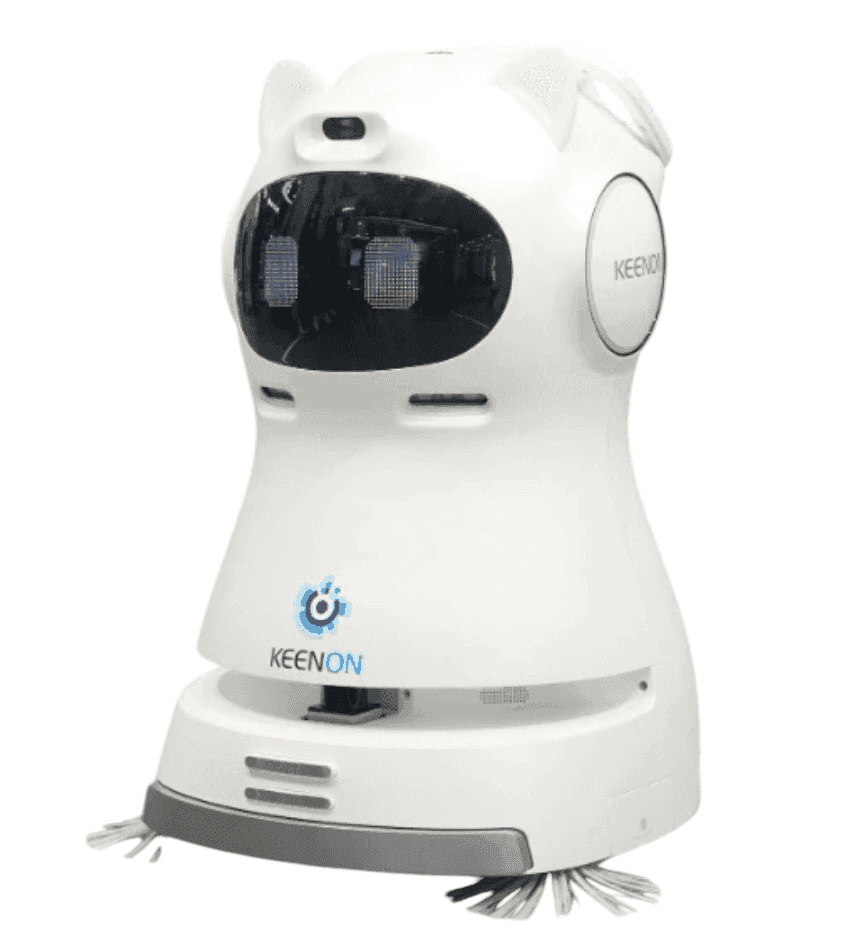
The company's product evolution follows a discernible logic. The Dinerbot T-series established KEENON's core competency: autonomous navigation in structured indoor environments, with sufficient obstacle avoidance capability to operate safely around human customers and staff. The Butlerbot series extended this competency to hotels and multi-floor buildings, requiring the additional capability of elevator integration — a technically non-trivial challenge that involves communication with building management systems and the ability to navigate the confined, dynamic space of an elevator car. The Kleenbot series applied the same navigation foundation to a different task: floor cleaning, which adds the complexity of managing consumables (water, cleaning solution, waste water) and optimising cleaning paths for coverage efficiency.
The move into humanoid robotics, represented by the XMAN series, is more recent and more contested 21220. The XMAN-R1 is a wheeled humanoid — a torso-and-arms configuration mounted on a wheeled base — that is designed to collaborate with KEENON's existing delivery and cleaning robots rather than replace them 2. The XMAN-F1 is a bipedal platform, and the XMAN-L1, unveiled more recently, is a compact bipedal robot with 42 degrees of freedom and 100 TOPS of edge computing capability 12. The company's press release describing the XMAN-R1's deployment at Shangri-La Traders Hotel in Shanghai frames this as the "world's first general-purpose and special-purpose robot collaboration model" 11 — a COMPANY CLAIM that requires scrutiny, as the novelty of the collaboration model is not independently verified and the scope of the humanoid's autonomous capabilities at the hotel is likely narrower than the marketing language implies.
CEO Li Tong's public positioning on humanoids is worth quoting directly, as it provides a more grounded counterpoint to the press release language. In an interview with KR-Asia, he articulated a function-over-form philosophy: the humanoid form factor is one tool option among several, not an end in itself, and the company's expectation is that humanoid deployment will evolve gradually from single tasks to multiple tasks rather than achieving general-purpose capability in the near term 14. In a separate interview with the South China Morning Post, he reiterated that KEENON does not expect to create an all-purpose robot 17. These statements are consistent with EDITORIAL INFERENCE that the company's humanoid programme is currently in an early commercial pilot phase rather than a mature deployment phase.
CES 2026 and the Lawn Mower Pivot
A notable recent development is KEENON's appearance at CES 2026, where it showcased its humanoid robot publicly for the first time in a Western trade show context and unveiled its first robotic lawn mower 20. The lawn mower announcement is strategically interesting: it represents a move into outdoor autonomous cleaning, a market with established players (Husqvarna, Worx, Robomow) and significant consumer and commercial demand. Whether this represents a genuine product line extension or a trade show attention-seeking exercise is UNKNOWN at this stage — no commercial availability dates, pricing, or specifications for the lawn mower are present in the available sources.
The CES appearance also signals an intensified effort to build brand recognition in Western markets, where KEENON's commercial presence has historically been mediated through distribution partners rather than direct brand relationships. This matters because the company's long-term pricing power and margin profile will depend partly on whether end customers in high-income markets associate the KEENON brand with quality and reliability, or whether the robots are perceived as interchangeable commodity hardware sourced from China.
03Product Portfolio: What KEENON ROBOTICS Actually Sells
KEENON's product portfolio is more coherent than it might appear from a distance. Rather than a collection of unrelated robots assembled opportunistically, the portfolio reflects a deliberate strategy of applying a common navigation and autonomy foundation to different task domains and deployment environments. The following sections examine each product family in detail, drawing on official specifications where available and flagging gaps where specifications are not publicly disclosed.
Dinerbot T-Series: The Core Business
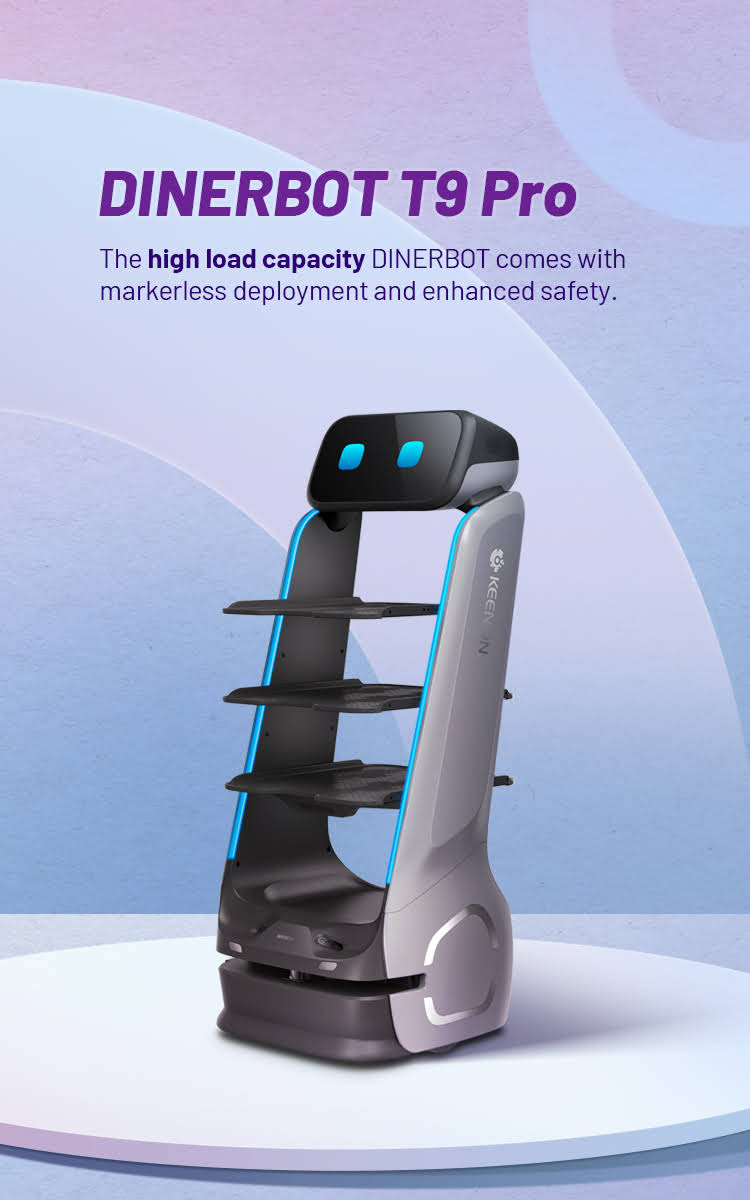
The Dinerbot T-series is KEENON's original and most commercially established product line. These are wheeled delivery robots designed for restaurant environments, capable of carrying food and beverages from kitchen to table without human intervention. The T-series encompasses multiple models at different price and capability points.
The Dinerbot T10 is the current flagship. It features a 23.8-inch display screen — a specification that reflects the dual function of these robots as both delivery vehicles and advertising platforms — and a three-tray configuration 25. The T10 can navigate gaps as narrow as 55 centimetres 25, which is a practically important specification for restaurant environments where table spacing is often constrained. The robot's ability to navigate 55-centimetre gaps is VERIFIED by the official product video, though the conditions under which this specification was measured (empty corridor versus occupied restaurant floor) are not specified.
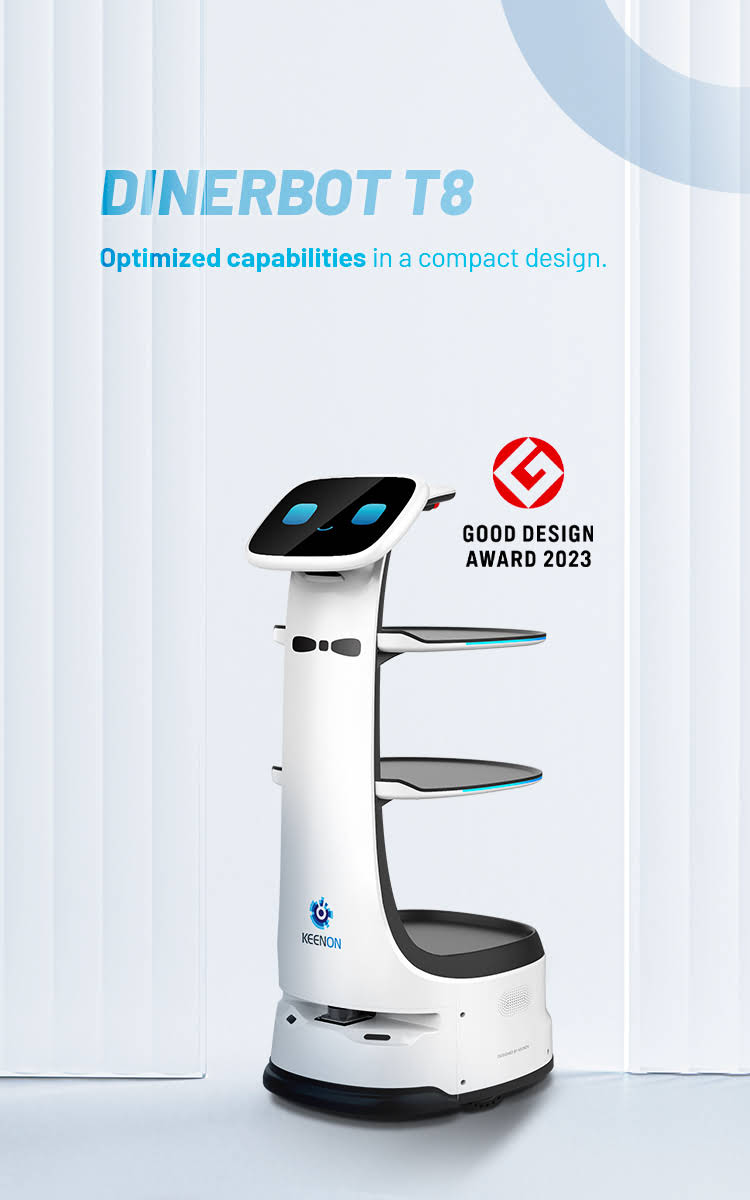
Pricing for the T10 is documented at $499 per month on a rental basis 5, with purchase options available through commerce partners. The Dinerbot T6, an earlier model, is listed at $12,240 for outright purchase 6. The T8 and T9/T9 Pro models occupy intermediate price points at $349 and $369–$415 per month respectively on rental terms 5.
The T-series robots perform their primary delivery task autonomously: they navigate to designated table positions, announce arrival, and return to the kitchen or charging station without human direction. This is VERIFIED by multiple independent sources including deployment videos and commerce partner descriptions. The setup process — mapping the restaurant environment, designating delivery points, configuring the app or dashboard — requires human effort, but this is a one-time or periodic overhead rather than a per-delivery intervention.
Butlerbot S and W-Series: Hotel and Building Delivery
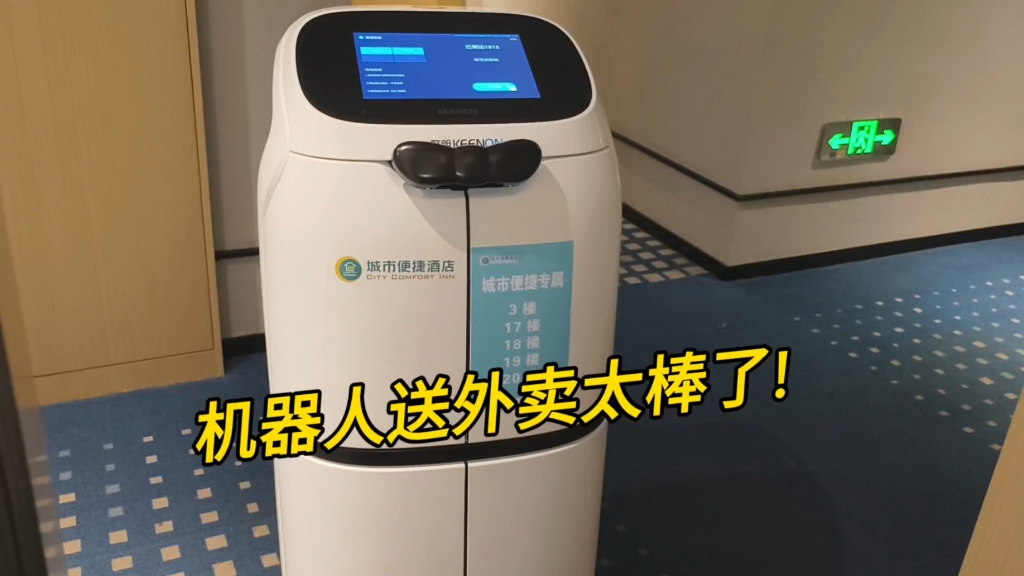
The Butlerbot series extends the delivery robot concept to hotel and multi-floor building environments. The Butlerbot W3 is documented in an official product video as capable of multi-floor delivery, elevator riding, and private, hygienic delivery to guest rooms 29. The S100 model is listed at $575 per month on a rental basis 5, making it the most expensive standard rental option in the KEENON portfolio.
The elevator integration capability is technically significant. Riding an elevator autonomously requires the robot to communicate with the building's elevator control system (or use a third-party integration layer), navigate into the elevator car, wait for the doors to close and the car to reach the correct floor, exit the car, and resume navigation on the new floor. This is a solved problem for KEENON in the sense that the capability is commercially deployed, but it is not a trivial capability and represents a meaningful barrier to entry for less experienced competitors.
Hotel and building delivery robots are priced at $18,400–$29,600 for outright purchase through commerce partners 8, reflecting the higher complexity and integration requirements of these deployments relative to restaurant delivery.
Kleenbot C-Series: Autonomous Commercial Cleaning
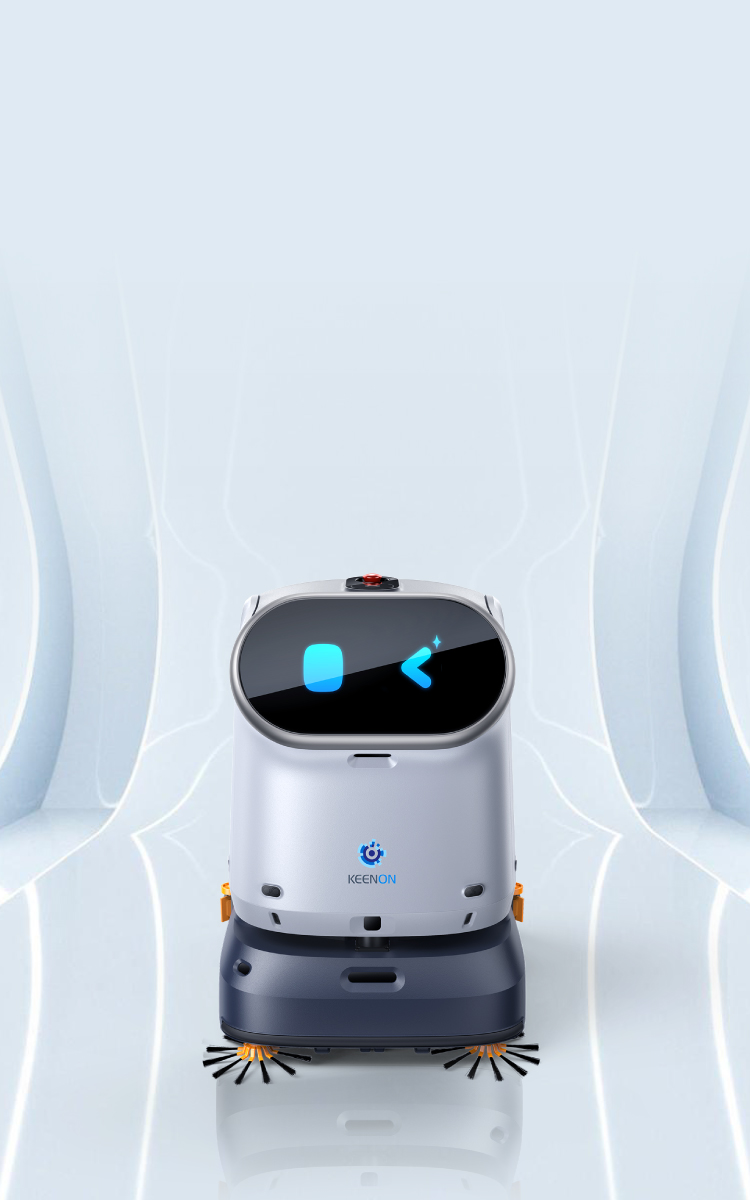
The Kleenbot C-series addresses a different task domain: autonomous floor cleaning in commercial environments. Two models are documented in sufficient detail to assess: the C40 and the C55.
Kleenbot C40: Verified Specifications
The C40's specifications are drawn from the official product page 4 and are among the most thoroughly documented in the KEENON portfolio:
| Specification | Value |
|---|---|
| Dimensions (without squeegee) | 578 × 500 × 690 mm |
| Dimensions (with squeegee) | 616 × 550 × 690 mm |
| Weight | 70 kg |
| Battery | DC 25.6V, 50Ah |
| Charge time | 2 hours |
| Runtime (scrubbing mode) | Up to 5 hours |
| Runtime (sweeping mode) | Up to 12 hours |
| Cleaning efficiency | Up to 1,100 m²/hour |
| Sweeping width | 560 mm (dual side brushes) |
| Vacuuming and scrubbing width | 400 mm |
| Clean water tank | 16 litres |
| Waste water tank | 14 litres |
| Dust bag | 8 litres |
| Trash bin | 0.7 litres |
| Target space size | 500–4,500 m² |
| Supported floor types | Carpet, marble, wood, tiles, vinyl, epoxy, granite |
The C40 supports quick battery replacement, which is practically important for continuous operation in large commercial spaces. The 1,100 m²/hour cleaning efficiency figure is a COMPANY CLAIM from the official product page; independent verification of this figure under real-world conditions is not available in the dossier.
Kleenbot C55: Differentiating Features
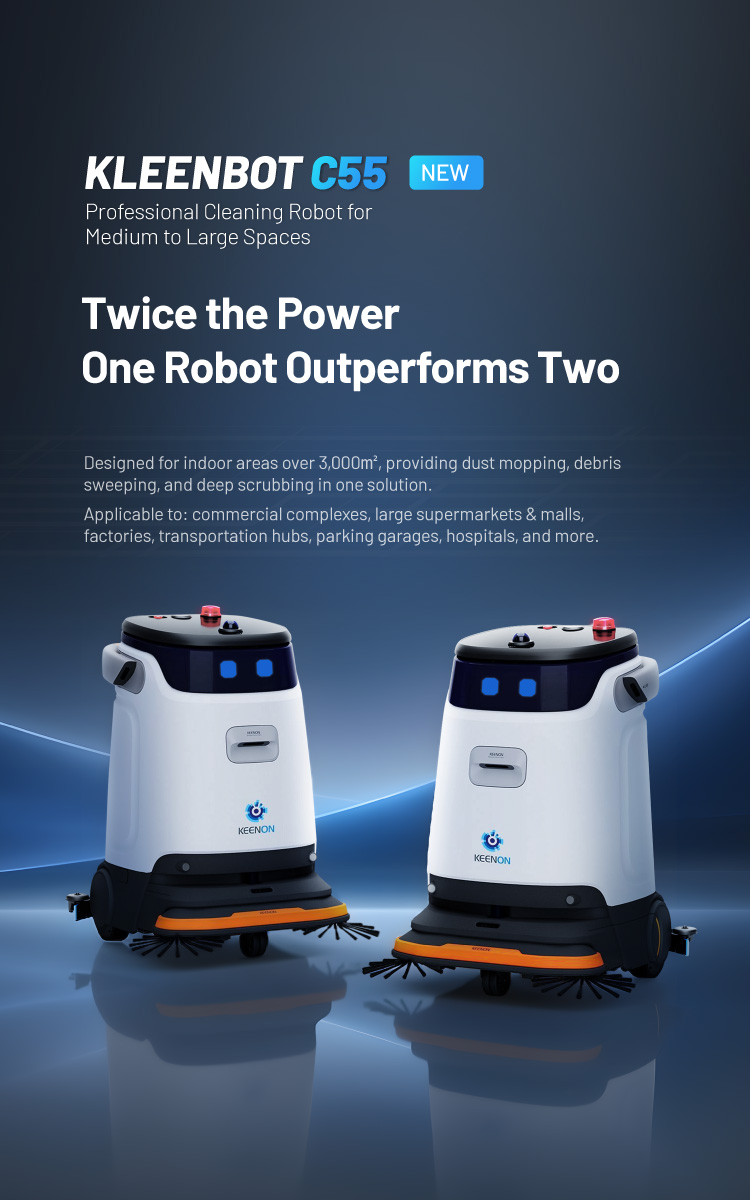
The C55 is positioned as a more capable cleaning platform. Its notable features include an industry-first triple-roller design that enables sweeping and scrubbing in a single pass, dual-battery hot-swap capability with a claimed five-second replacement time and zero downtime, and the ability to overcome obstacles up to 5 centimetres in height 3. The extra-large water tank is described as sufficient to cover approximately three football fields per fill — a COMPANY CLAIM that is plausible given the C40's 16-litre tank and the C55's implied larger capacity, but not independently verified.
The "industry-first triple-roller design" claim 3 is a COMPANY CLAIM. Whether this configuration is genuinely novel or whether similar designs exist from competitors is not assessed in the available sources.
Kleenbot Pricing
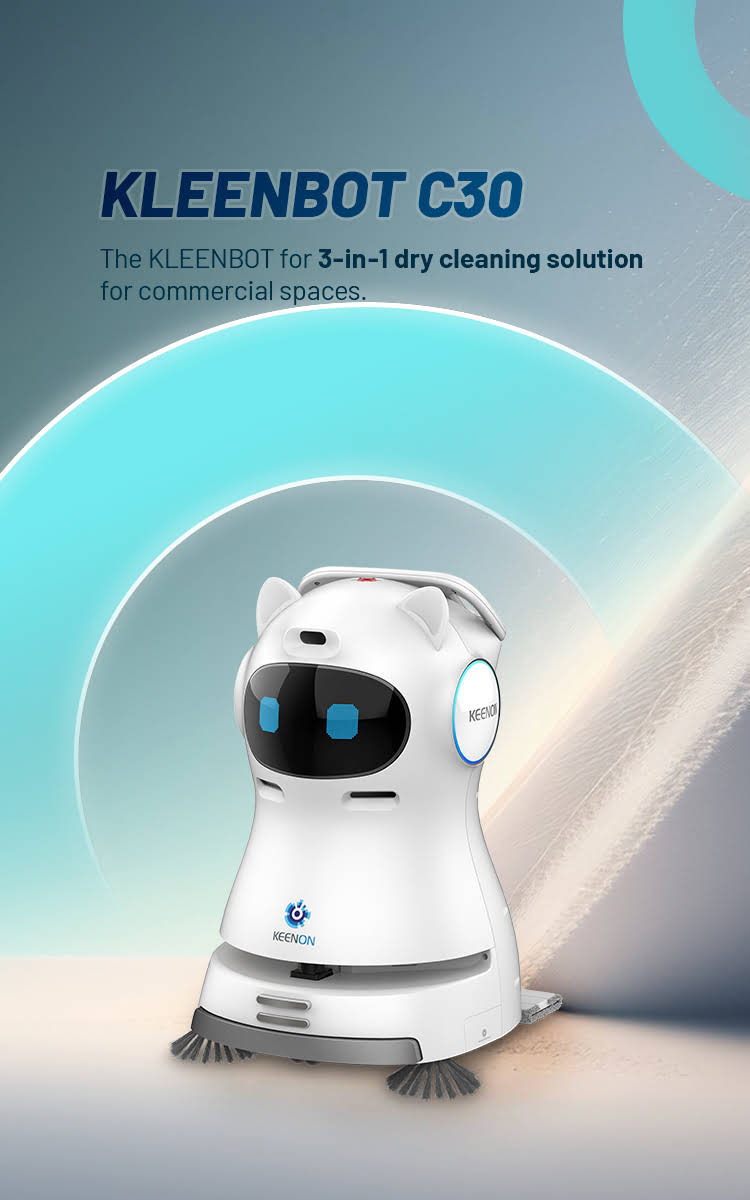
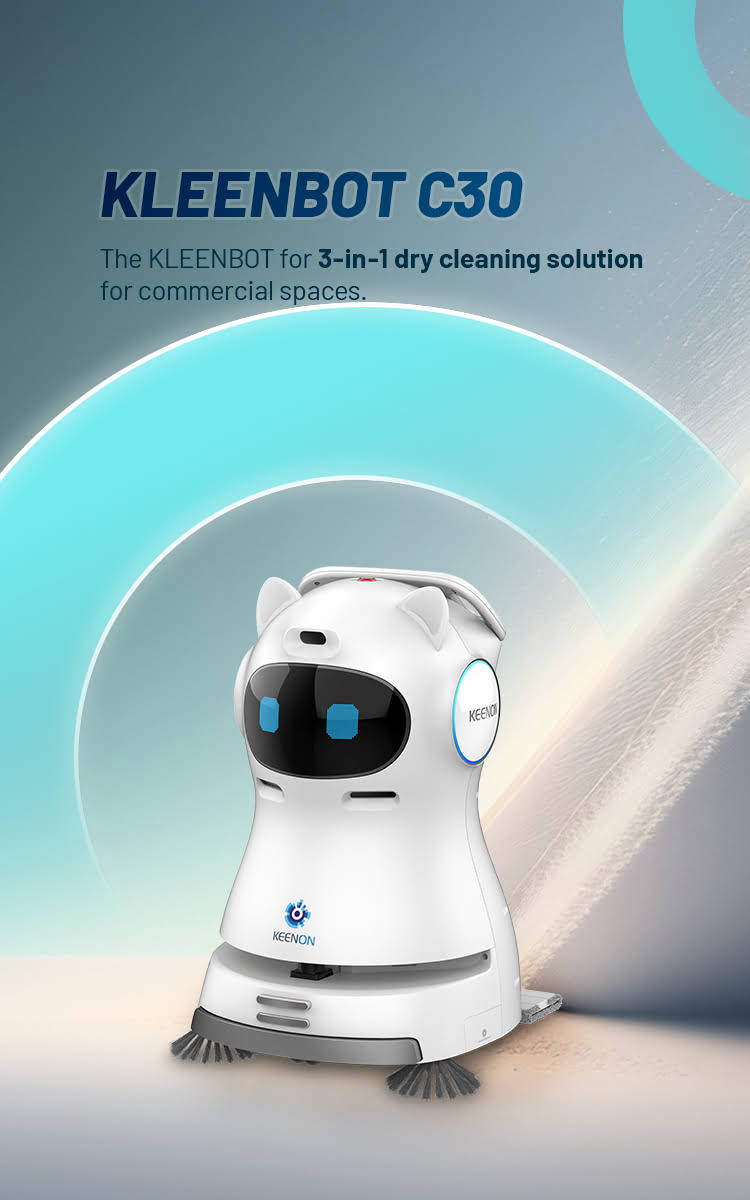
Kleenbot C30 pricing is documented at $349 per month on a rental basis 5. Pricing for the C40 and C55 is not publicly listed in the available sources — UNKNOWN.
XMAN Humanoid Series: Ambition Meets Constraint
The XMAN series represents KEENON's most ambitious product category and its most commercially uncertain. Three models are documented:
XMAN-R1: Wheeled Humanoid
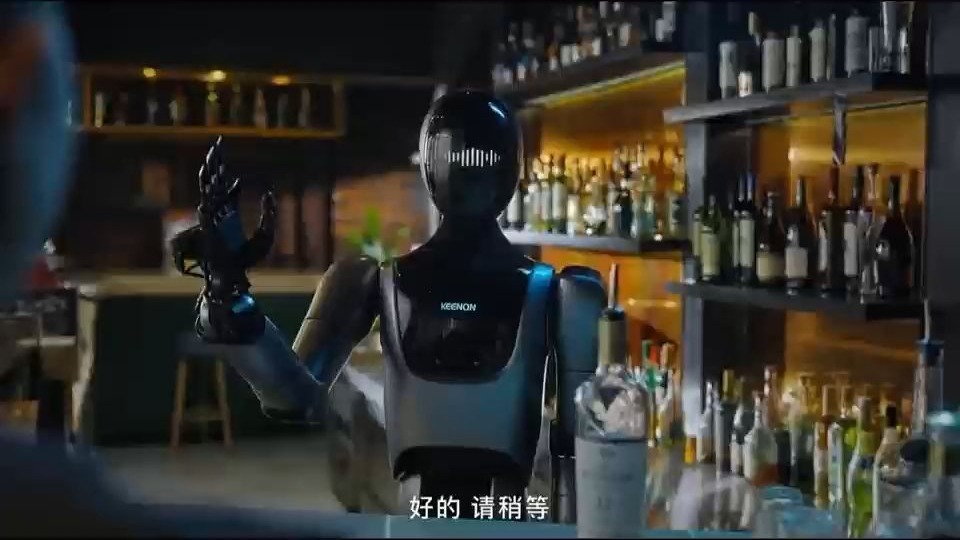
The XMAN-R1 is a wheeled humanoid — a torso-and-arms configuration on a wheeled mobile base — designed for hotel and hospitality environments 2. Its hardware specifications include adjustable tray heights at four positions (19.5 cm, 16.9 cm, 25.3 cm, and 22.8 cm), and it is designed to collaborate with the Dinerbot T10, Kleenbot C30, and Butlerbot S100 2. The collaboration model — where the wheeled humanoid handles tasks requiring arm manipulation (greeting, gift presentation, Q&A interaction) while specialised robots handle delivery and cleaning — is the basis for KEENON's "general-purpose and special-purpose robot collaboration" framing 11.
The XMAN-R1 is deployed at Shangri-La Traders Hotel at Shanghai Hongqiao Airport 11. The press release describes the robot performing front desk greeting, intelligent Q&A, welcome gift presentation, room cleaning, food and item delivery, and luggage handling. This list of capabilities is a COMPANY CLAIM. The CEO's own statements to the South China Morning Post — that humanoid deployment will evolve gradually from single tasks to multiple tasks — suggest that the full list of capabilities described in the press release may represent aspirational scope rather than current simultaneous deployment 17. The hotel deployment is almost certainly a curated pilot with a limited and carefully selected task scope.
XMAN-L1: Compact Bipedal
The XMAN-L1 is a compact bipedal humanoid unveiled more recently 12. Its documented specifications are more detailed than those of the R1:
| Specification | Value |
|---|---|
| Height | 136 cm |
| Degrees of freedom | 42 (bionic) |
| Peak knee torque | 132 N·m |
| Single-leg power | Over 2,000 W |
| Edge computing | 100 TOPS |
| LLM integration | Doubao (ByteDance) and Tencent LLMs |
The 42 degrees of freedom and 132 N·m peak knee torque figures are VERIFIED from the Gasgoo news article covering the XMAN-L1 launch 12. The LLM integrations with Doubao (ByteDance's model) and Tencent's platform are notable as they reflect the company's strategy of leveraging existing Chinese AI infrastructure rather than developing proprietary language models — a pragmatic choice that reduces development cost but creates dependency on third-party AI providers.
XMAN-F1: Bipedal Platform
The XMAN-F1 is referenced in the dossier as a bipedal platform, but detailed specifications are not available in the supplied sources — UNKNOWN. Its commercial status and deployment timeline are similarly undisclosed.
Robotic Lawn Mower: Early Stage
The robotic lawn mower unveiled at CES 2026 20 is documented only as an announcement. No specifications, pricing, availability timeline, or target market details are present in the available sources. This product is treated as pre-commercial for the purposes of this report.
Portfolio Summary
| Product Family | Primary Environment | Autonomy Status | Pricing (Rental/Purchase) |
|---|---|---|---|
| Dinerbot T-series | Restaurants, food service | Autonomous (VERIFIED) | $349–$499/month; T6 ~$12,240 purchase |
| Butlerbot S/W-series | Hotels, multi-floor buildings | Autonomous (VERIFIED) | $575/month; $18,400–$29,600 purchase |
| Kleenbot C-series | Commercial floors | Autonomous (VERIFIED) | $349/month (C30); C40/C55 UNKNOWN |
| XMAN-R1 | Hotels, hospitality | Limited autonomous (COMPANY CLAIM, pilot) | UNKNOWN |
| XMAN-L1 | TBD | Pre-commercial (EDITORIAL INFERENCE) | UNKNOWN |
| XMAN-F1 | TBD | Pre-commercial (EDITORIAL INFERENCE) | UNKNOWN |
| Robotic lawn mower | Outdoor | Pre-commercial | UNKNOWN |
Products & versions


04Technology Stack: Strengths and the Work That Remains
Navigation and Localisation
KEENON's core technology competency is autonomous navigation in structured indoor environments. The company's delivery and cleaning robots use a combination of sensors — the precise sensor suite is not fully disclosed in public documentation, but the capabilities described (obstacle avoidance, multi-floor navigation, dynamic environment handling) are consistent with a LIDAR-based SLAM (Simultaneous Localisation and Mapping) approach supplemented by camera-based perception 125. This is the industry-standard approach for commercial indoor autonomous mobile robots and represents a mature, well-understood technology stack rather than a novel research contribution.
The practical performance of KEENON's navigation system is evidenced by its commercial deployments. The ability to navigate 55-centimetre gaps in restaurant environments 25, ride elevators in hotel buildings 29, and operate on scheduled cleaning routes in commercial spaces 4 all require a navigation system that is robust to the dynamic, cluttered, and geometrically variable conditions of real commercial environments. The fact that these capabilities are commercially deployed at scale — rather than demonstrated only in controlled laboratory conditions — is meaningful evidence of navigation system maturity.
One independent research contribution that used a KEENON robot platform is worth noting. A paper from Sorbonne University and CNRS, titled "Legibot: Generating Legible Motions for Service Robots Using Cost-Based Local Planners," used a KEENON robot as the deployment platform for research on legible motion planning — the problem of making a robot's movements predictable and interpretable to nearby humans 21. This is VERIFIED as an independent research use of KEENON hardware, though the research itself was conducted by the academic institution rather than KEENON. The paper's existence suggests that KEENON's navigation platform is sufficiently open or accessible to support third-party research integration, which is a positive signal for the platform's technical maturity.
Obstacle Avoidance and Dynamic Environments
The dossier confirms that KEENON's robots perform real-time obstacle avoidance in dynamic environments 1. The Sorbonne/CNRS paper specifically addresses legible motion planning — the problem of generating robot trajectories that are not merely collision-free but also predictable to human observers — using a KEENON platform 21. This is a practically important capability for service robots operating in environments shared with humans, where unpredictable robot movements create safety concerns and reduce user acceptance.
The depth of KEENON's proprietary research contribution to obstacle avoidance and dynamic environment navigation is UNKNOWN. The company does not appear to publish academic research, and its internal R&D outputs are not publicly documented. Whether the navigation capabilities are built on proprietary algorithms, open-source frameworks (such as ROS-based navigation stacks), or licensed technology from third parties is not disclosed.
Multi-Robot Coordination
The XMAN-R1 product page explicitly describes collaboration between the wheeled humanoid and the Dinerbot T10, Kleenbot C30, and Butlerbot S100 2. This implies some form of multi-robot coordination — at minimum, task allocation and communication between robots operating in the same environment. The technical implementation of this coordination (centralised fleet management, peer-to-peer communication, or a hybrid approach) is not publicly documented. The commercial deployment at Shangri-La Hotel 11 provides some evidence that multi-robot coordination is operationally functional, but the scope and sophistication of the coordination in that deployment are UNKNOWN.
LLM and AI Integration
The XMAN-L1's integration of Doubao (ByteDance) and Tencent LLMs 12 represents KEENON's most explicit engagement with large language model technology. The practical implications of this integration for the robot's capabilities — specifically, whether it enables genuinely flexible natural language interaction or whether it supports a narrower set of scripted conversational flows — are not documented in the available sources. LLM integration in deployed service robots is a rapidly evolving area, and the gap between "integrates an LLM" and "provides useful, reliable natural language interaction in a commercial service context" is currently large across the industry.
The 100 TOPS of edge computing in the XMAN-L1 12 is a hardware specification that indicates the robot has sufficient on-device compute to run inference for vision and language models without constant cloud connectivity. This is a practically important capability for deployments in environments with unreliable network connectivity, though it does not in itself guarantee the quality of the AI-driven interactions.
Control Interface and Fleet Management
KEENON's robots are controlled via an app or web dashboard 254. The specific capabilities of this management interface — fleet-level monitoring, route planning, performance analytics, integration with building management systems — are not fully documented in the available sources. The availability of both manual and automatic modes on cleaning robots 4 suggests a degree of operational flexibility, but the sophistication of the fleet management software relative to competitors is UNKNOWN.
Technology Gaps and Open Questions
Several technology areas represent meaningful unknowns or acknowledged limitations:
| Technology Area | Current Status | Gap / Risk |
|---|---|---|
| Proprietary navigation algorithms | UNKNOWN — likely builds on standard SLAM approaches | Commoditisation risk if navigation is not proprietary |
| Fleet management software | Basic app/dashboard confirmed; depth UNKNOWN | Software differentiation is key to margin; current depth unclear |
| Humanoid manipulation | Limited pilot deployment (XMAN-R1); bipedal (L1, F1) pre-commercial | Dexterous manipulation in unstructured environments remains unsolved industry-wide |
| LLM interaction quality | Integration confirmed; real-world reliability UNKNOWN | Gap between LLM capability and reliable commercial service interaction is large |
| Outdoor navigation | Lawn mower announced; no specifications available | Outdoor SLAM is a different and harder problem than indoor; no track record |
| Proprietary AI/ML research | No published papers from KEENON researchers identified | Suggests limited proprietary AI research capability; dependency on third-party AI |
The absence of published academic research from KEENON's own researchers is notable. For a company of its scale and age, the lack of a visible research publication record suggests either that the company's R&D is primarily applied engineering rather than foundational research, or that research outputs are kept proprietary. Either interpretation has implications for the company's ability to sustain technological differentiation as the field matures.
05Research, Papers, Authors and Labs
The Research Landscape Around KEENON
KEENON Robotics does not appear to maintain a public academic research programme. No papers authored by KEENON researchers appear in the supplied dossier, and no KEENON-affiliated authors are identified in the research sources. This is a significant observation for a company that has been operating for sixteen years and has raised nearly a quarter of a billion dollars. It suggests that KEENON's competitive advantage is built on applied engineering, manufacturing scale, and commercial execution rather than on proprietary foundational research.
The research papers included in the dossier require careful disaggregation, as several are from institutions with no connection to KEENON:
| Paper | Institution | KEENON Connection |
|---|---|---|
| Legibot: Generating Legible Motions for Service Robots 21 | Sorbonne University / CNRS | VERIFIED: Uses a KEENON robot platform for deployment research |
| LOVON: Legged Open-Vocabulary Object Navigator 22 | HKUST (and affiliates) | None: Uses Unitree robots; no KEENON connection |
| ReKep: Spatio-Temporal Reasoning of Relational Keypoint Constraints 23 | Stanford / Columbia | None: Uses Stanford/Columbia platforms; no KEENON connection |
| VL-MP: Bridging VLM and KMP 24 | Unspecified (arxiv preprint) | None: No KEENON connection identified |
The dossier's own analysis correctly flags this disaggregation [dossier research note]. The LOVON, ReKep, and VL-MP papers are included in the research sources but describe systems built on entirely different hardware platforms. They are relevant to the broader field of robotics research but provide no evidence about KEENON's own technology capabilities.
The Legibot Paper: What It Actually Shows
The Sorbonne/CNRS Legibot paper 21 is the only research source in the dossier that directly involves KEENON hardware. The paper addresses the problem of legible motion planning — generating robot trajectories that are not merely collision-free but are also predictable and interpretable to nearby humans. The researchers used a KEENON robot as their deployment platform, which indicates that KEENON's navigation system is sufficiently accessible and well-documented to support third-party research integration.
What the paper does not show is any proprietary KEENON research contribution. The algorithms, methods, and results are the work of the Sorbonne/CNRS team. KEENON's role was as a hardware platform provider, not a research contributor. This is a useful distinction: it confirms that KEENON's robots are capable enough to serve as research platforms, but it does not provide evidence of KEENON's own research capabilities.
Implications for Technology Assessment
The absence of a KEENON research publication record has several implications. First, it means that independent assessment of KEENON's proprietary technology is difficult — there are no papers to read, no methods to scrutinise, no peer review to consult. Second, it suggests that KEENON's technology differentiation is likely to be found in system integration, manufacturing quality, and operational reliability rather than in novel algorithms or AI architectures. Third, it creates a vulnerability: if the navigation and autonomy capabilities that underpin KEENON's products are built primarily on open-source or widely available technology stacks, the barriers to replication by well-resourced competitors are lower than they would be if the technology were proprietary and published.
Company-linked papers
Code & simulation
Datasets & benchmarks
06Media Evidence Library: What the Videos Prove
Methodology for Video Evidence Assessment
Six video sources are included in the dossier. Each is assessed here for what it actually demonstrates versus what it implies or claims. A choreographed product video shot in a controlled environment is treated as weaker evidence than a deployment video showing robots operating in a live commercial environment with real customers and staff. Neither is treated as equivalent to independently verified operational data.
Dinerbot T10 Product Video [25]
The T10 product video documents the robot's physical specifications and navigation capabilities in a restaurant setting. The 23.8-inch screen, three-tray configuration, and 55-centimetre gap navigation capability are all visible in the video. The robot is shown navigating a restaurant floor, avoiding obstacles, and delivering food to table positions.
What this proves: The T10 exists as a physical product with the described form factor. It can navigate a restaurant environment in the conditions shown in the video.
What this does not prove: Performance in a fully occupied, dynamically unpredictable restaurant environment with real customers. The video appears to be a controlled demonstration rather than footage of live commercial operation with paying customers present.
XMAN-R1 Product Video [26]
The XMAN-R1 video presents the wheeled humanoid in a hotel-like setting, demonstrating greeting behaviours, tray handling, and interaction with other KEENON robots. The adjustable tray height specifications are consistent with the official product page.
What this proves: The XMAN-R1 exists as a physical product. It can perform basic greeting and tray-handling motions in a controlled demonstration environment.
What this does not prove: The full range of capabilities claimed in the Shangri-La Hotel press release (luggage handling, room cleaning, intelligent Q&A at scale). The video does not show the robot operating in a live hotel environment with real guests.
T10 at Automotive Retail in Brazil [27]
This video is more evidentially valuable than a pure product demonstration because it shows the T10 operating in what appears to be a live automotive retail environment in Brazil. The presence of what appear to be real customers and staff, rather than actors in a controlled set, increases the evidential weight.
What this proves: KEENON robots have been deployed in automotive retail environments in Brazil. The T10 can navigate a retail floor in conditions that include real human traffic.
What this does not prove: Long-term operational reliability, customer satisfaction, or commercial return on investment for the deploying business.
Kleenbot C40 Video [28]
The C40 video demonstrates the robot's cleaning modes — sweeping, vacuuming, and scrubbing — and shows the physical design including the squeegee attachment. The 40-centimetre scrubbing width visible in the video is consistent with the 400 mm specification on the official product page, confirming that these figures are consistent rather than conflicting [dossier conflicts section].
**
08Markets and Use Cases
Where KEENON's Robots Actually Work
KEENON's commercial footprint is concentrated in four verticals that share a common structural characteristic: high-frequency, low-complexity logistics tasks performed in semi-structured indoor environments with predictable floor plans and relatively slow-moving human traffic. Understanding why these verticals suit KEENON's current technology is as important as cataloguing the deployments themselves.
Food Service and Catering
This remains KEENON's founding market and its most mature deployment context. The Dinerbot T-series (T6, T8, T9, T9 Pro, T10) is purpose-built for restaurant environments: the T10 carries a 23.8-inch advertising screen, navigates gaps as narrow as 55 cm, and operates across a three-tray configuration 25. The value proposition is straightforward — a single robot can run continuous delivery loops during a service period without fatigue, sick days, or wage escalation. Monthly rental pricing of $349–$499 depending on model 5 positions the unit cost below a part-time front-of-house worker in most developed markets, though that comparison requires careful qualification (the robot does not take orders, handle complaints, or manage table turns).
The McDonald's Shanghai pilot launched in March 2026 30 is the most commercially significant food-service reference point in the dossier, but it must be read carefully. A pilot at a single location of the world's largest fast-food chain is not a rollout; it is a structured evaluation. McDonald's has the operational sophistication and negotiating leverage to extract favourable terms from any robotics vendor, and a pilot announcement carries no commitment to broader deployment. Whether the pilot has progressed to a commercial contract, and at what scale, is not publicly disclosed.
The automotive retail deployment in Brazil 27 — where T10 robots serve customers in dealership showrooms — illustrates an interesting adjacency: any high-footfall, service-oriented indoor space with defined circulation paths is a candidate environment, regardless of industry label. Dealerships share the relevant structural features with restaurants: predictable floor layouts, moderate human density, and a need for attentive but non-complex service interactions.
Hospitality and Hotels
The Butlerbot S100 and W3 are designed for multi-floor hotel delivery: amenities, laundry, room-service items. The W3 is specifically marketed for private, hygienic, single-guest delivery — a contactless model that gained traction during the COVID-19 period and has retained some stickiness in premium hospitality 29. Pricing at $575/month rental 5 or $18,400–$29,600 for purchase 8 positions these units in the mid-market hotel segment; luxury properties can absorb the cost as a differentiator, budget properties cannot justify it without demonstrable labour savings.
The Shangri-La Traders Hotel at Shanghai Hongqiao Airport is the most prominent named hospitality deployment 11. The PR Newswire release describes the XMAN-R1 humanoid performing front-desk greeting, Q&A, welcome gift presentation, and collaboration with the T10 and C30 robots. This is a genuine multi-robot deployment in a live commercial environment, which is notable. However, the scope of tasks described — greeting, scripted Q&A, gift handoff — is consistent with a narrow, curated workflow rather than general-purpose autonomous operation, a reading supported by CEO Li Tong's own public statements about gradual single-to-multi-task evolution 17.
The Spain deployment — Bunzl Distribution and Les Roches Marbella hospitality school 16 — adds a European reference point. A hospitality management school is a strategically useful deployment site: it exposes future hotel managers to KEENON hardware during their training, creating potential long-term brand familiarity in the buyer pipeline. Whether this constitutes a revenue-generating commercial deployment or a subsidised showcase arrangement is not publicly disclosed.
Healthcare and Hospitals
Hospital deployments are cited across multiple sources as a target and active vertical 110, and the structural fit is strong: hospitals have defined internal logistics routes, high labour costs for non-clinical tasks, infection-control imperatives that favour contactless delivery, and 24-hour operational requirements that suit autonomous systems. Medication delivery, linen transport, and meal delivery to wards are all tasks that KEENON's delivery robots can perform within their current capability envelope.
Specific named hospital deployments with confirmed operational details are not present in the dossier. This is a material gap. The healthcare vertical is frequently cited in KEENON's marketing materials 1 but independently verified named-customer deployments in this sector are not available from the supplied sources. Editorial inference: given the 100,000+ units shipped figure 12 and the breadth of the claimed deployment base, some hospital deployments are almost certainly operational, but the absence of named references limits confidence in assessing scale or operational depth.
Cleaning and Facilities Management
The Kleenbot C-series (C30, C40, C55) addresses a large and growing commercial cleaning market. The C40's specifications — 1,100 m²/h cleaning efficiency, 5-hour scrubbing runtime, 16-litre clean water tank, 400 mm scrub width, and compatibility with surfaces ranging from marble to epoxy 4 — are competitive with established commercial cleaning robot vendors. The C55's triple-roller design and 5-second hot-swap battery system 3 address two of the most common operational complaints about commercial cleaning robots: incomplete floor coverage and downtime during recharging.
The addressable market here is substantial. Commercial cleaning is a labour-intensive, low-margin service sector with chronic recruitment difficulties in developed markets. A robot that can autonomously scrub 1,100 m² per hour, operate for 5 hours between water refills, and be redeployed immediately via battery swap has a credible economic case in supermarkets, airports, shopping centres, and large office buildings — precisely the 500–4,500 m² use-case range cited in the C40 specification 4.
Emerging and Adjacency Markets
The Israel shipment via AIBotics 1319 signals an attempt to establish distribution infrastructure in the Middle East, a region with significant hospitality and healthcare investment and relatively limited incumbent robotics competition. The framing of this as a "post-war" first shipment introduces geopolitical complexity (addressed in §10), but the underlying market logic — high labour costs in the Gulf states, strong hospitality sector, government interest in automation — is sound.
The robotic lawn mower unveiled at CES 2026 20 represents a genuine product category expansion into outdoor autonomous maintenance. This is a competitive, commoditised market (Husqvarna, Worx, Mammotion are established players), and KEENON's competitive advantage in indoor SLAM navigation does not automatically transfer to outdoor unstructured environments. Whether this product reaches commercial scale or remains a portfolio signal is an open question.
The XMAN-L1 compact bipedal humanoid 12 — 136 cm, 42 degrees of freedom, 132 N·m peak knee torque, 100 TOPS edge computing, integrating Doubao and Tencent LLMs — is positioned for manufacturing and industrial inspection use cases. This is a significant market expansion ambition. Industrial environments are structurally more demanding than hotel lobbies: uneven floors, heavy machinery, safety-critical operations, and integration with existing MES/ERP systems. KEENON's track record in controlled indoor service environments does not directly validate capability in industrial settings.
Use Case Suitability Matrix
| Use Case | Environment Fit | Current Product Match | Evidence Quality | Key Risk |
|---|---|---|---|---|
| Restaurant food delivery | High | Dinerbot T-series | Strong (named deployments) | Labour cost arbitrage narrows in low-wage markets |
| Hotel amenity delivery | High | Butlerbot S/W-series | Moderate (named deployments) | Guest acceptance variability |
| Hospital logistics | High | Dinerbot/Butlerbot | Weak (no named hospital references in dossier) | Regulatory compliance, infection control certification |
| Commercial floor cleaning | High | Kleenbot C-series | Moderate (product specs verified) | Incumbent competition (Gaussian, Avidbots) |
| Automotive retail | Moderate | Dinerbot T10 | Moderate (Brazil deployment cited) | Niche volume ceiling |
| Hotel front desk (humanoid) | Moderate | XMAN-R1 | Weak (single pilot, narrow task scope) | Capability breadth vs. marketing claims |
| Manufacturing/industrial | Low-Moderate | XMAN-L1 | Very weak (pre-commercial) | Structural environment mismatch with current capability |
| Outdoor maintenance | Low | Lawn mower (new) | Very weak (CES announcement only) | Competitive market, no track record |
09Competitive Landscape
KEENON in Context: Market Position and Competitive Pressures
KEENON's claimed 23% global service robot shipment market share (IDC, 2024) 17 — if accurate — makes it the largest single vendor by volume in the commercial service robotics space. That is a meaningful position, but it is not an unassailable one. The competitive dynamics differ substantially by product category, and KEENON faces distinct competitive threats in each.
Delivery Robots: The Core Battleground
In food-service and hospitality delivery robots, KEENON's primary competitors are Bear Robotics (US, SoftBank-backed), Pudu Robotics (Shenzhen), and Richtech Robotics (US-listed). Pudu is the most direct competitor: also Shanghai-area founded, also targeting restaurants and hotels, also operating at scale globally. The two companies have competed directly in the same restaurant chains and hotel groups across Asia and Southeast Asia.
Bear Robotics, despite sharing a SoftBank investor relationship with KEENON, competes directly in the US market with its Servi platform. The SoftBank connection does not imply coordination; SoftBank Vision Fund 2 has backed multiple competing robotics companies simultaneously, a pattern consistent with portfolio diversification rather than strategic alignment.
Richtech Robotics (NASDAQ: RTC) provides a useful public-company comparison point. Its revenue figures and deployment counts are publicly disclosed in SEC filings, offering a benchmark against which KEENON's privately reported figures can be contextualised. Richtech's scale is substantially smaller than KEENON's claimed position, which is consistent with KEENON's market-share assertion but does not independently verify it.
Cleaning Robots: Established Incumbents
The commercial cleaning robot market has more established incumbents than the delivery segment. Gaussian Robotics (Gaussian, backed by Sequoia China) is the dominant player in Asia-Pacific commercial cleaning automation. Avidbots (Canada, acquired by Nilfisk) holds significant market share in North America and Europe. ICE Robotics (UK) and Tennant (US) also compete in this space.
KEENON's C-series enters a market where buyers have existing vendor relationships, service contracts, and operational familiarity with competing platforms. The C55's triple-roller design and hot-swap battery are genuine differentiators if they perform as specified, but differentiation on hardware features alone is insufficient in a market where after-sales service infrastructure, fleet management software integration, and local maintenance coverage are often the deciding factors for enterprise buyers.
Humanoid Robots: A Crowded and Overhyped Segment
In humanoid robotics, KEENON is a late entrant competing against better-capitalised and more technically advanced players. Unitree Robotics (also Chinese, also targeting commercial deployment) has a more extensive public research record and broader hardware platform range. Figure AI, Agility Robotics (Amazon-backed), and Boston Dynamics (Hyundai) are pursuing industrial humanoid deployment with substantially larger R&D budgets. In China specifically, KEENON competes with Fourier Intelligence, Leju Robotics, and the humanoid divisions of larger conglomerates including Xiaomi and Huawei ecosystem partners.
CEO Li Tong's stated strategy — function over form, gradual task expansion, pragmatic deployment — is a rational response to this competitive reality 1417. KEENON cannot win a general-purpose humanoid race against better-funded competitors. Its competitive advantage in humanoids, if it has one, lies in integration with its existing service robot fleet and its established relationships with hospitality and food-service operators. The XMAN-R1's ability to collaborate with the T10 and C30 2 is a genuine differentiator in that specific context; a hotel that already operates KEENON delivery robots has a lower integration barrier to adding an XMAN-R1 than to adopting a humanoid from a new vendor.
Geographic Competitive Dynamics
In China, KEENON faces intense domestic competition from Pudu, Gaussian, and emerging players. The domestic market is price-competitive and technologically sophisticated, which disciplines KEENON's pricing and forces genuine product development rather than reliance on brand premium.
In international markets — particularly Southeast Asia, the Middle East, and parts of Europe — KEENON benefits from lower incumbent competition, established distribution partnerships, and price competitiveness relative to Western vendors. The Israel/AIBotics partnership 1319 and the Spain hospitality deployment 16 reflect this international expansion logic.
In North America, KEENON competes against both domestic players (Bear Robotics, Richtech) and the general scepticism of enterprise buyers towards Chinese-origin hardware in sensitive operational environments — a headwind that is structural rather than product-specific (addressed further in §10).
Competitive Summary Table
| Competitor | Primary Segment | Geography Strength | Funding/Backing | Key Differentiator vs. KEENON |
|---|---|---|---|---|
| Pudu Robotics | Delivery, cleaning | Asia-Pacific, global | Private (~$150M+) | Direct competitor, similar product range |
| Bear Robotics | Delivery | North America | SoftBank, LG | US market presence, Servi brand recognition |
| Richtech Robotics | Delivery, bartending | North America | Public (NASDAQ) | US-listed, transparent financials |
| Gaussian Robotics | Cleaning | Asia-Pacific | Sequoia China | Dominant in commercial cleaning, Asia |
| Avidbots/Nilfisk | Cleaning | North America, Europe | Nilfisk (listed) | Western enterprise relationships, service network |
| Unitree Robotics | Humanoid, quadruped | Global (research/commercial) | Private | Stronger research record, broader hardware range |
| Figure AI | Humanoid | North America | Microsoft, BMW | Industrial deployment ambition, larger R&D |
| Agility Robotics | Humanoid (bipedal) | North America | Amazon | Amazon logistics integration, warehouse focus |
Competitive comparison
| Robot | Maker | Autonomy | Conf. |
|---|---|---|---|
| iRobot Roomba Combo 10 Max | iRobot | Autonomous | 0.90 |
| Mobile ALOHA (Stanford) | Stanford University | Teleoperated | 0.90 |
| 1X NEO | 1X Technologies | Remote-Assisted | 0.90 |
10Geopolitical Context and Constraints
Operating in the Shadow of US-China Technology Tensions
KEENON Robotics is a Chinese company operating globally at a moment when the geopolitical environment for Chinese technology hardware has become structurally more complex. This section does not assess KEENON's political intentions or make claims about data practices that are not evidenced; it maps the structural constraints that the geopolitical environment imposes on the company's commercial trajectory.
The Supply Chain and Component Dependency Question
KEENON's robots incorporate sensors (LiDAR, cameras, ultrasonic), compute hardware, and battery systems. The specific component sourcing is not publicly disclosed in the dossier. Editorial inference: Chinese service robotics companies at KEENON's scale typically source LiDAR from domestic suppliers (Hesai, Livox/DJI, SLAMTEC) and compute from a mix of domestic and international chipmakers. The degree of dependency on US-origin semiconductors — and therefore exposure to US export controls — is an unknown that matters for long-term supply chain resilience.
The XMAN-L1's cited 100 TOPS edge computing capability 12 implies a high-performance AI accelerator. Whether this is sourced from Nvidia (subject to US export controls on advanced AI chips to China), a domestic Chinese alternative (Cambricon, Biren, Huawei Ascend), or another supplier is not disclosed. This is a material unknown for any buyer or investor assessing long-term supply chain risk.
Data Governance and Enterprise Buyer Concerns
Service robots operating in commercial environments collect operational data: floor maps, movement patterns, interaction logs, and in the case of humanoids with cameras and LLM integration, potentially richer environmental and conversational data. KEENON's data governance practices — where data is stored, who has access, what is transmitted to cloud infrastructure, and under what legal jurisdiction — are not detailed in the publicly available sources in this dossier.
This is not a KEENON-specific concern; it applies to all Chinese-origin connected hardware operating in Western commercial environments. However, it is a concern that enterprise buyers in healthcare (HIPAA in the US, GDPR in Europe), government-adjacent facilities, and security-sensitive environments will raise during procurement. The absence of publicly available, independently audited data governance documentation is a commercial constraint in these segments.
The US market is the most acutely affected. Several US states and federal agencies have enacted or proposed restrictions on Chinese-origin connected hardware in sensitive environments. While these restrictions have primarily targeted surveillance cameras (Hikvision, Dahua) and telecommunications equipment (Huawei, ZTE), the regulatory logic is extensible to any connected device with sensors operating in sensitive spaces. KEENON's US distribution through partners like RobotLab 8 and Sedonatec 5 provides some commercial insulation, but does not resolve the underlying data governance question for enterprise buyers.
The Israel Deployment: Geopolitical Complexity in Practice
The AIBotics/Israel shipment 1319 is presented in the press release as a commercial milestone — the first post-war robotics shipment to Israel, targeting a $13 billion market. The geopolitical framing is deliberate: "post-war" signals that the deployment is proceeding despite regional instability, positioning KEENON as a reliable supplier under difficult conditions.
However, this deployment also illustrates the complexity of operating as a Chinese company in geopolitically contested regions. China's official position on the Israel-Gaza conflict has been more sympathetic to Palestinian positions than Western governments; a Chinese company making a commercial play in Israel navigates a degree of political sensitivity on both sides. The investment news framing 13 — targeting a $13 billion market — is a financial audience communication, not an operational deployment report. The actual scale of the initial shipment, the specific deployment context, and the commercial terms are not disclosed.
SoftBank's Strategic Position
SoftBank Vision Fund 2's $200M Series D investment 9 creates an interesting geopolitical dynamic. SoftBank is a Japanese company with deep US market relationships and a portfolio that spans both Chinese and Western technology companies. The SoftBank backing provides KEENON with a degree of international credibility that a purely Chinese-backed company might lack, and potentially facilitates introductions to SoftBank's broader portfolio of hospitality, retail, and technology companies globally.
However, SoftBank's own geopolitical positioning has become more complex since the Vision Fund era's peak. The fund's losses on high-profile investments have made it more cautious, and the broader US-China technology decoupling creates tension for any investor with significant positions on both sides of that divide. Whether SoftBank's backing actively facilitates KEENON's Western market access or has become more neutral in practice is not determinable from the available sources.
Export Control and Technology Transfer Risks
KEENON's humanoid robotics development — particularly the XMAN-L1 with its 132 N·m peak knee torque, 100 TOPS compute, and LLM integration 12 — sits in a technology category that Western governments are increasingly scrutinising for dual-use potential. Advanced robotics with high torque, AI-driven autonomy, and manipulation capabilities are on the radar of export control authorities in the US, EU, and UK, even when the stated application is commercial service robotics.
This does not mean KEENON's humanoid programme is subject to current export controls, but it does mean that the regulatory environment around advanced robotics hardware is tightening, and companies developing at the frontier of this technology face increasing compliance complexity in international markets.
11The Hype, the Real and the Ugly
Separating Verified Performance from Marketing Narrative
KEENON is a commercially serious company with genuine deployments and a defensible market position. It is also a company that, like most in the service robotics sector, presents its capabilities and ambitions in the most favourable possible light. This section maps the specific claims that require scrutiny against the evidence available.
What Is Genuinely Real
The unit shipment scale is credible. 100,000+ units across 70+ countries 121 is a large number, but it is consistent with KEENON's 15-year operating history, its Series D capital, and the IDC market share figure 17. No independent source disputes this order of magnitude.
The core delivery and cleaning autonomy is real. The Dinerbot and Butlerbot series perform multi-point delivery, elevator riding, and obstacle avoidance without human remote operation. The Kleenbot series performs scheduled floor cleaning autonomously. These are not choreographed demos; they are operational in live commercial environments with paying customers. The Sorbonne/CNRS legibility paper 21 used a KEENON robot platform for real-world deployment testing, providing independent academic confirmation that the navigation system operates in genuine environments.
The IDC market share figure is the strongest independent commercial validation in the dossier. A 23% global service robot shipment share 17, if the IDC methodology is sound, represents a genuine market leadership position. IDC is a reputable research firm with established methodology; this is not a self-reported figure.
The SoftBank investment is confirmed. The $200M Series D led by SoftBank Vision Fund 2 9 is confirmed by PR Newswire (primary source) and corroborated by multiple independent outlets 1817. This is not a rumour.
The Kleenbot C40 specifications are verified. The product page specifications 4 — dimensions, battery, runtime, cleaning width, tank capacity — are primary-source data. They describe what the product is designed to do; independent operational verification of these specs in real deployments is not available in the dossier, but the specifications themselves are not contested.
What Is Overstated or Unverified
The "world's first general-purpose + special-purpose robot collaboration model" claim [11] is a marketing assertion, not a technical or operational fact. The Shangri-La deployment involves a humanoid robot (XMAN-R1) working alongside delivery robots (T10, C30) — this is a multi-robot deployment, not a categorically new paradigm. Pudu, Bear Robotics, and others have deployed multiple robot types in the same environment. The "world's first" framing is unverifiable and almost certainly inaccurate.
The XMAN-R1 humanoid capability breadth is overstated in PR materials. The press release 11 describes the robot performing front-desk greeting, intelligent Q&A, welcome gift presentation, room cleaning, food delivery, and luggage handling. CEO Li Tong's own statements to SCMP 17 and KR-Asia 14 describe a gradual evolution from single tasks to multiple tasks, explicitly rejecting the all-purpose robot concept. These two communications cannot both be accurate simultaneously. The PR release describes an aspiration or a curated demonstration scope; the CEO's interviews describe the operational reality. The CEO's candid statements are more credible.
The McDonald's pilot [30] is presented in the YouTube video as a significant commercial milestone. A single-location pilot at McDonald's Shanghai is not a McDonald's deployment. It is an evaluation. The distinction matters enormously for assessing commercial traction.
The $139M 2025 revenue figure [10] comes from a single source (ainvest) with no methodology disclosed. It is plausible given the company's scale, but it is not independently verified. For a company of KEENON's claimed size and market position, the absence of audited financial disclosure is notable.
The 10,000+ employee count [15] is cited by a startup directory without independent verification. It is plausible for a company with 100,000+ units shipped and global operations, but it is not confirmed.
The XMAN-L1 bipedal humanoid [12] is described with impressive specifications (132 N·m knee torque, 100 TOPS compute, LLM integration) but the Gasgoo article covers its launch announcement, not its deployment. There is no evidence in the dossier of XMAN-L1 units operating in commercial environments. This is a product announcement, not a commercial deployment.
The research papers cited in the dossier [22][23][24] — LOVON (HKUST), ReKep (Stanford/Columbia), VL-MP — do not describe KEENON systems. They are from unrelated institutions using different hardware platforms. Their inclusion in a research context associated with KEENON is misleading; only the Sorbonne/CNRS legibility paper 21 actually uses KEENON hardware.
The Ugly: Structural Concerns
The hardware trap is real. The ainvest analysis 10 explicitly raises the question of whether KEENON can escape the hardware trap — the tendency for robotics companies to generate revenue primarily from hardware sales with thin margins, limited recurring revenue, and high replacement cycle risk. KEENON's rental and RaaS pricing models 58 are an attempt to address this, but the proportion of revenue from recurring software/service contracts versus one-time hardware sales is not disclosed.
Competitive commoditisation is accelerating. The service delivery robot market is becoming commoditised. Multiple Chinese manufacturers produce functionally similar delivery robots at declining price points. KEENON's brand and distribution network provide some protection, but the moat is not deep. The move into humanoids and cleaning robots is partly a response to this commoditisation pressure, but both segments have their own competitive dynamics.
The humanoid pivot carries execution risk. KEENON is attempting to transition from a mature, commoditising delivery robot business into a nascent, technically demanding humanoid robotics business. These require different engineering capabilities, different sales cycles, different customer relationships, and different regulatory environments. The CEO's pragmatic framing 14 is reassuring, but the organisational and technical challenge of executing this transition should not be underestimated.
Post-Series D funding gap. The Series D was completed in September 2021 9. No subsequent funding round is documented in the dossier. Given the capital intensity of humanoid robotics development and the competitive pressure in the service robot market, the question of whether KEENON has sufficient capital to execute its stated strategy — or whether a further fundraise is needed — is a material unknown.
Claim-vs-Evidence Tracker
| Claim | Source | Evidence Status | Editorial Assessment |
|---|---|---|---|
| "World's first general-purpose + special-purpose robot collaboration model" | PR Newswire 11 | COMPANY CLAIM — unverified | Almost certainly inaccurate; multi-robot deployments are not novel |
| 23% global service robot shipment market share | IDC via SCMP 17 | VERIFIED (IDC, independent research firm) | Strongest independent commercial validation in dossier |
| 100,000+ units shipped | Gasgoo 12 | COMPANY CLAIM — single source, plausible | Consistent with scale indicators; not independently audited |
| $139M 2025 revenue | ainvest 10 | COMPANY CLAIM — single source, unverified | Plausible but not independently confirmed |
| XMAN-R1 performs 6+ task types at Shangri-La | PR Newswire 11 | COMPANY CLAIM — contradicted by CEO statements | Overstated; CEO describes narrow, gradual task scope 1714 |
| McDonald's Shanghai pilot | YouTube 30 | VERIFIED (pilot confirmed) | Single location pilot, not a commercial rollout |
| $200M Series D, SoftBank Vision Fund 2 | PR Newswire 9 | VERIFIED (primary source) | Confirmed |
| Kleenbot C40: 1,100 m²/h, 5h runtime | Official product page 4 | VERIFIED (primary specification) | Design specification; operational verification not in dossier |
| XMAN-L1: 132 N·m, 100 TOPS, LLM integration | Gasgoo 12 | COMPANY CLAIM (launch announcement) | Specification claim; no deployment evidence |
| 70+ countries, 600+ cities | Gasgoo 12 | COMPANY CLAIM — plausible, unaudited | Consistent with scale; earlier company source said 60+ countries |
Claim tracker
12Future Scenarios
Three Plausible Trajectories for KEENON to 2028
The following scenarios are editorial inferences from the available evidence. They are not predictions. They are structured to help readers think about the range of outcomes and the conditions that would distinguish between them.
Scenario A: Consolidation as the Global Service Robot Infrastructure Layer (Base Case, ~45% Probability)
In this scenario, KEENON continues to grow its delivery and cleaning robot installed base, deepens its RaaS revenue model, and uses its distribution network and operator relationships to maintain market share leadership in the 20–25% range. The humanoid programme develops slowly, with XMAN-R1 deployed in a small number of high-visibility hospitality environments as a premium differentiator rather than a volume product. XMAN-L1 enters limited commercial deployment in 2026–2027 in controlled manufacturing environments in China.
Revenue grows modestly — perhaps to $180–220M by 2028 — driven by international expansion (Middle East, Southeast Asia, Europe) and increasing RaaS penetration. The company does not achieve a transformative breakthrough but builds a durable, cash-generative business in the commercial service robot infrastructure layer.
The conditions for this scenario: stable geopolitical environment for Chinese hardware in key markets, continued price competitiveness against domestic Chinese competitors, and successful execution of the RaaS transition. The risk: commoditisation accelerates faster than the RaaS transition, compressing margins and reducing the capital available for humanoid R&D.
Scenario B: Humanoid Breakthrough Drives Re-rating (Optimistic, ~25% Probability)
In this scenario, KEENON's pragmatic, integration-first approach to humanoids — deploying XMAN robots in environments where it already has delivery robot relationships — proves to be a more effective go-to-market strategy than the general-purpose humanoid approaches of better-funded competitors. The XMAN-L1's LLM integration (Doubao, Tencent) 12 enables genuinely useful multi-task operation in structured commercial environments by 2027, and KEENON's existing customer base provides a ready deployment channel.
A new funding round (Series E) is raised, potentially with a strategic investor from the hospitality or healthcare sector. Revenue reaches $300M+ by 2028, with humanoid products contributing a meaningful share. An IPO on the Hong Kong Stock Exchange or STAR Market becomes plausible.
The conditions for this scenario: LLM-driven task generalisation advances faster than expected, KEENON's integration advantage proves durable, and the geopolitical environment does not materially restrict international humanoid deployment. The risk: this scenario requires multiple things to go right simultaneously, and the humanoid market is crowded with better-capitalised competitors.
Scenario C: Competitive Squeeze and Strategic Pivot (Pessimistic, ~30% Probability)
In this scenario, the delivery robot market commoditises faster than KEENON can transition to recurring revenue. Domestic Chinese competitors (Pudu, emerging players) undercut on price; Western competitors (Bear Robotics, Richtech) defend North American and European market share. The humanoid programme consumes capital without generating proportionate revenue. Geopolitical restrictions on Chinese hardware in healthcare and government-adjacent environments close off the highest-value deployment segments in Western markets.
KEENON responds by focusing on China and Asia-Pacific, potentially accepting a reduced global market share in exchange for profitability in its home region. The company may seek a strategic acquirer — a large Chinese technology or manufacturing conglomerate — or pursue a domestic listing at a valuation below the $1B unicorn mark.
The conditions for this scenario: accelerating commoditisation, geopolitical headwinds in Western markets, and failure to achieve the RaaS transition. The risk for investors and partners: the company's international ambitions are scaled back significantly, and the SoftBank investment does not generate the expected return.
Scenario Comparison
| Dimension | Scenario A (Base) | Scenario B (Optimistic) | Scenario C (Pessimistic) |
|---|---|---|---|
| 2028 Revenue | $180–220M | $300M+ | $100–140M |
| Humanoid contribution | Marginal | Significant | Negligible |
| Geographic focus | Global, diversified | Global, accelerating | Asia-Pacific, retreating |
| Funding event | Possible Series E | Series E + IPO path | Strategic sale or domestic listing |
| Market share | 20–25% (stable) | 25–30% (growing) | 10–15% (declining) |
| Key enabler | RaaS transition | LLM-driven task generalisation | — |
| Key risk | Commoditisation | Competitive humanoid market | Geopolitical restrictions + price war |
13What to Watch: A Live Monitoring Checklist
The following indicators are the most informative signals for tracking KEENON's actual trajectory. They are ordered by evidential weight — the degree to which a confirmed signal would materially update the assessment in this report.
Tier 1: High-Evidential-Weight Signals
1. McDonald's Shanghai pilot outcome (Q3–Q4 2026) The single most important near-term commercial signal. A confirmed multi-location rollout with McDonald's — not a new pilot announcement, but a disclosed commercial contract — would be strong evidence of product-market fit in the world's largest food-service chain. Absence of follow-up news by end of 2026 should be read as a signal that the pilot did not convert.
2. New funding round announcement The Series D closed in September 2021 9. A Series E announcement would reveal: (a) whether the company can attract capital at or above the $1B unicorn valuation; (b) who the investors are (strategic vs. financial, Chinese vs. international); and (c) the stated use of proceeds (humanoid R&D, international expansion, RaaS infrastructure). No announcement by end of 2026 raises questions about capital sufficiency for the humanoid programme.
3. XMAN-L1 commercial deployment confirmation The XMAN-L1 was announced with impressive specifications 12 but no deployment evidence exists in the dossier. A confirmed commercial deployment — with a named customer, disclosed task
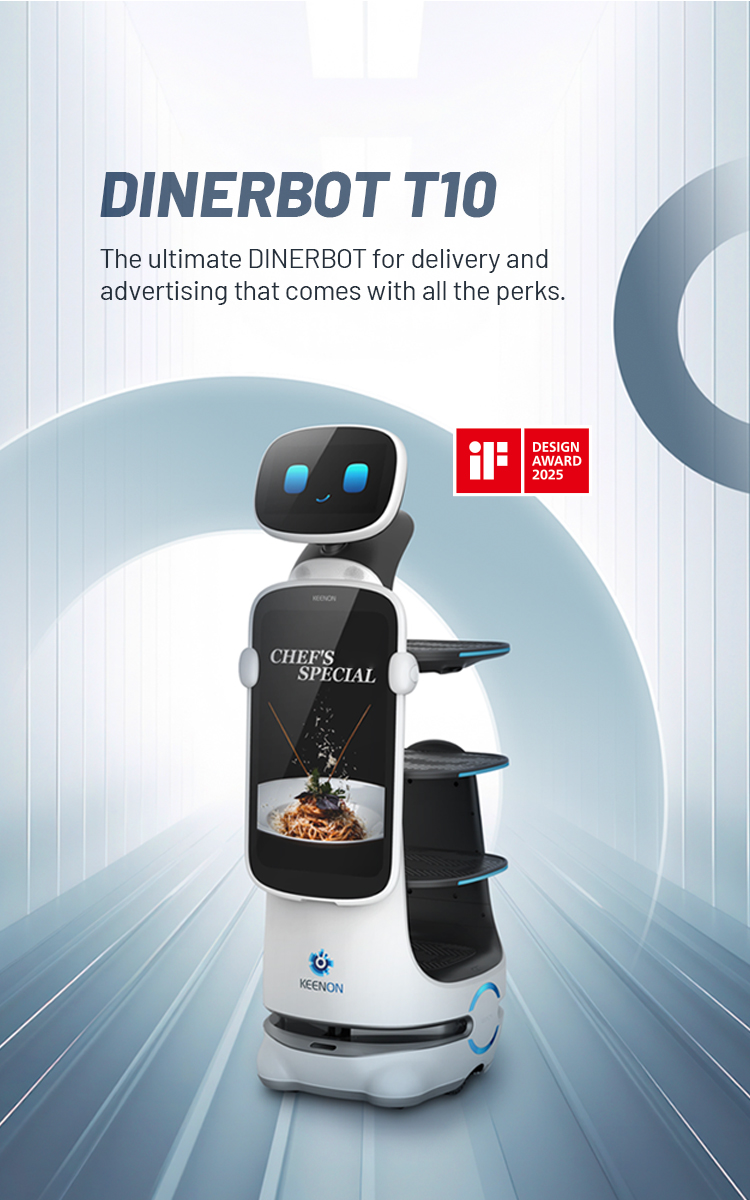
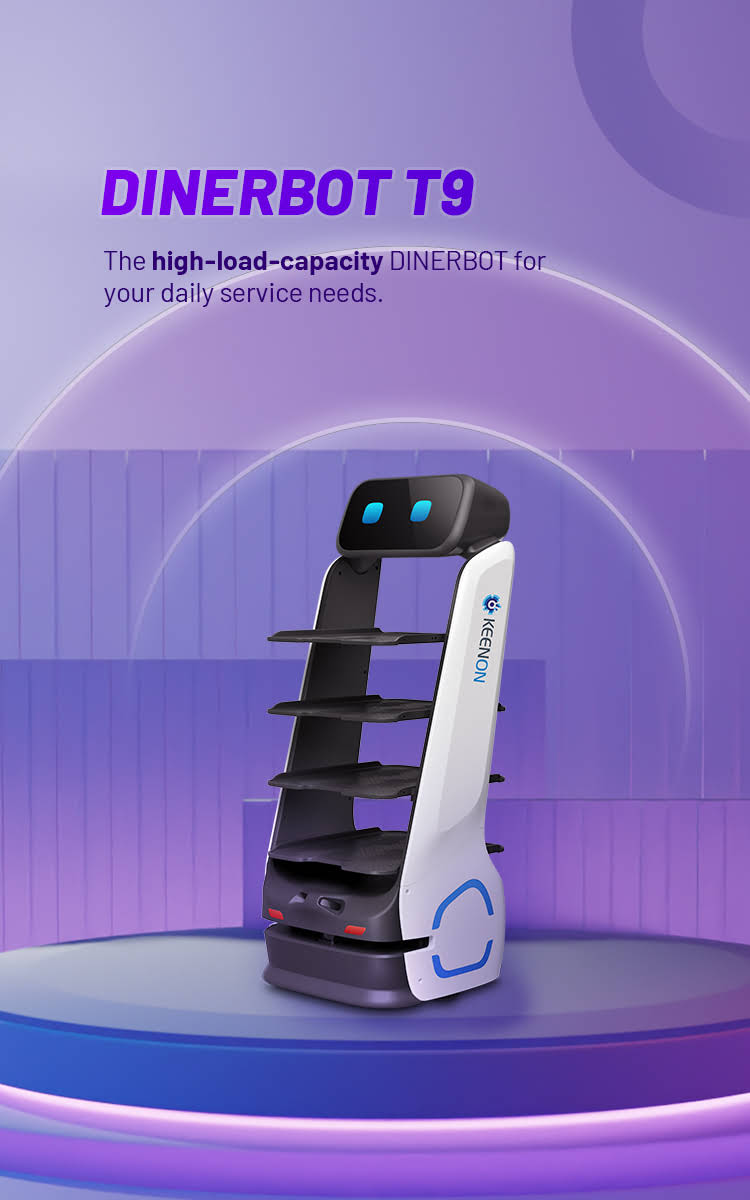
DINERBOT T10 is an interactive delivery robot featuring adaptive head movements, a 23.8" touchscreen, and dynamic engagement capabilities. Equipped with 360° recognition using 4 stereo vision sensors, VSLAM, and RGB camera for safe autonomous navigation. Supports 40 kg load capacity with 9-12.5 hour battery life.
- •Adaptive head movements respond to actions like movement, touch, and delivery
- •23.8" interactive screen with movable head and interactive buttons
- •360° recognition with 4 stereo vision sensors, VSLAM, and RGB camera
- •Touch control and AI tray detection for effortless pickup
- •Open-access tray with visual detection, tray lights, and voice prompts
- •Customizable head accessories, expressions, voices, and skins
- •Patented AI algorithms for optimized route planning and multi-robot dispatching
- •9-12.5 hour battery life with 5.5 hour charging time
- •40 kg total load capacity, supports 5° slope navigation
| Depth (mm) | 555 |
| Width (mm) | 486 |
| Height | 1399 mm |
| Weight (kg) | 58 |
| Battery | 9-12.5 h |
| Max speed (ms) | 1 |
| Rgb cameras | 1 |
| Screen | 23.8 ″ |
| Charge time (hrs) | 5.5 |
| Min passage width (cm) | 59 |
| Slope angle degrees | 5 |
| Stereo camera sensors | 4 |
| Total load capacity (kg) | 40 |
Use cases
Technology stackOur read
Inferred from product specs — click through to the technology wiki:
ResearchComputed
Product comparisonComputed
Each row leads with this company's product, side-by-side with similar ones · click a row to expand full specs, click again to collapse
DINERBOT T10

Starship Delivery Robot
Coco 2

Serve Robotics Gen3 Delivery Robot
Nuro R3
BellaBot
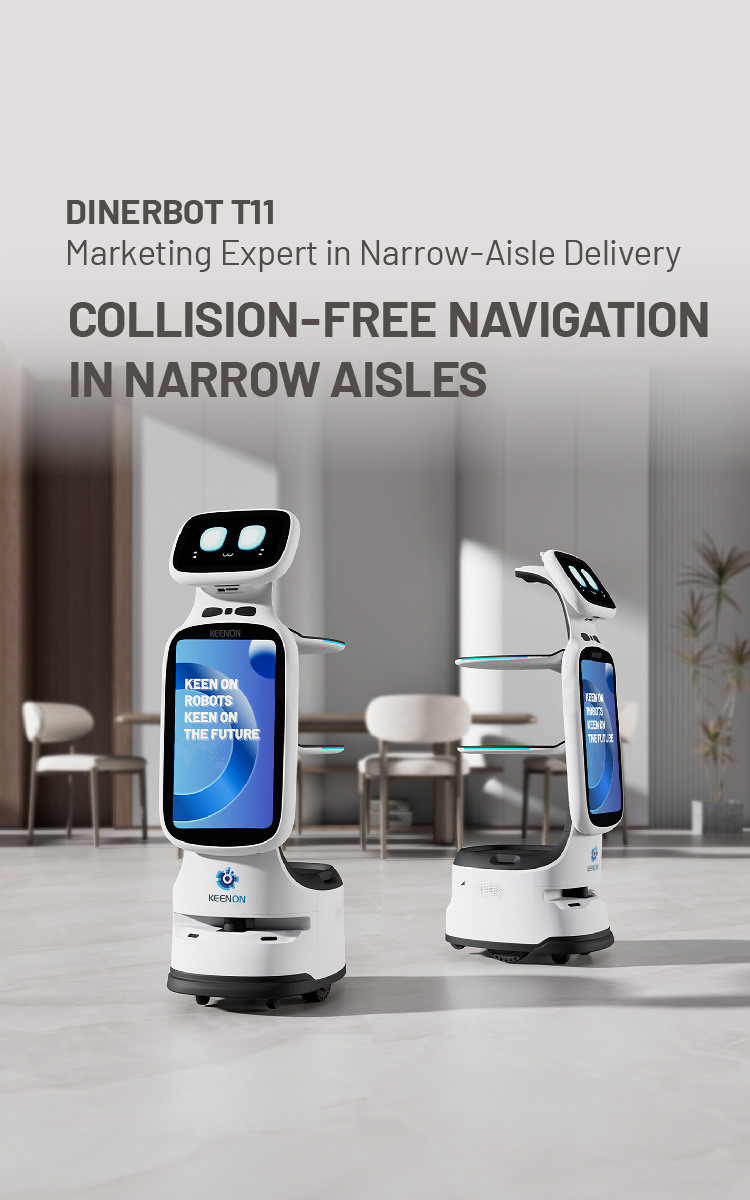
T11
Coco 2
Serve Robotics Gen3 Delivery Robot
Nuro R3
BellaBot
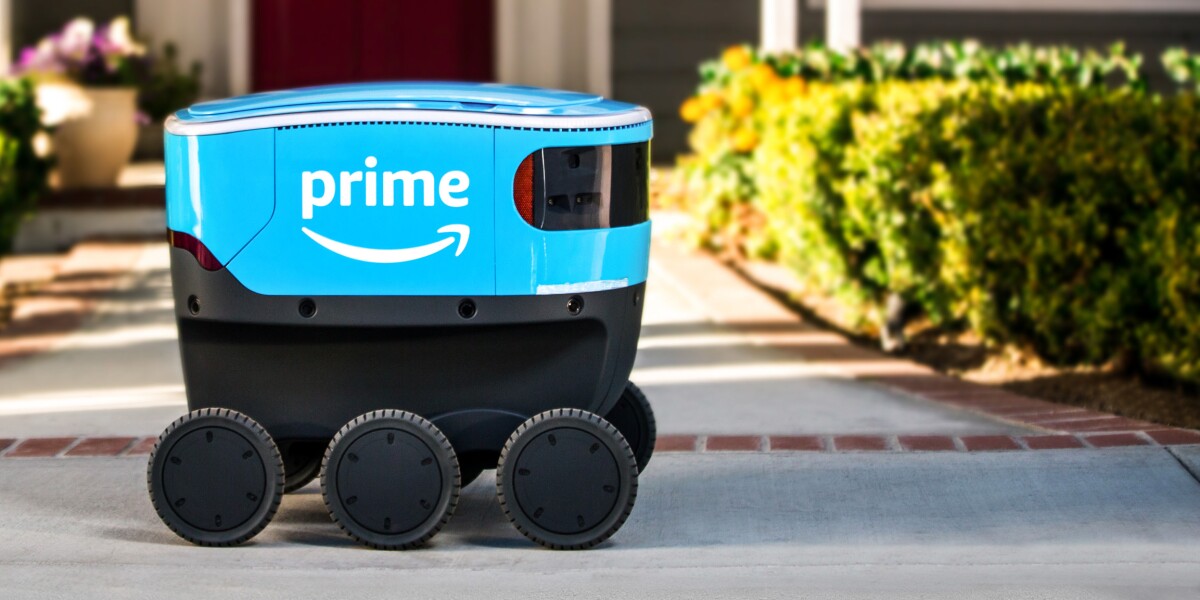
Amazon Scout
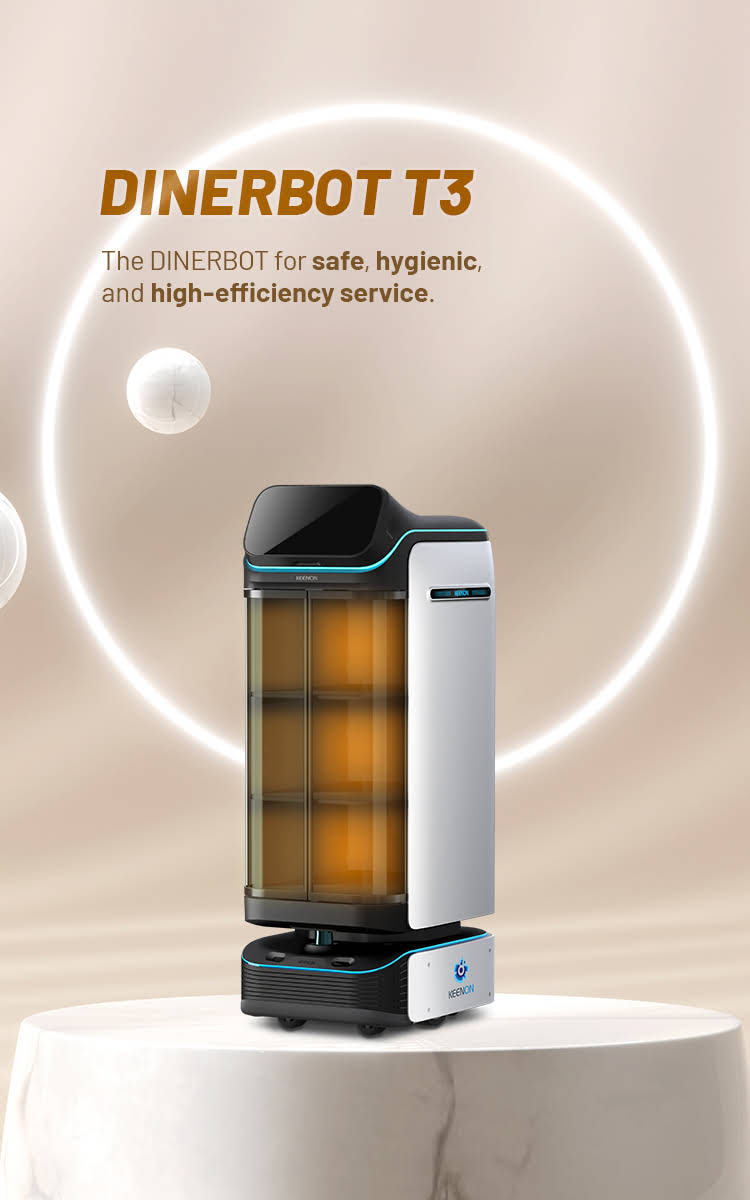
DINERBOT T3
Serve Robotics Gen3 Delivery Robot
Nuro R3
BellaBot
Amazon Scout
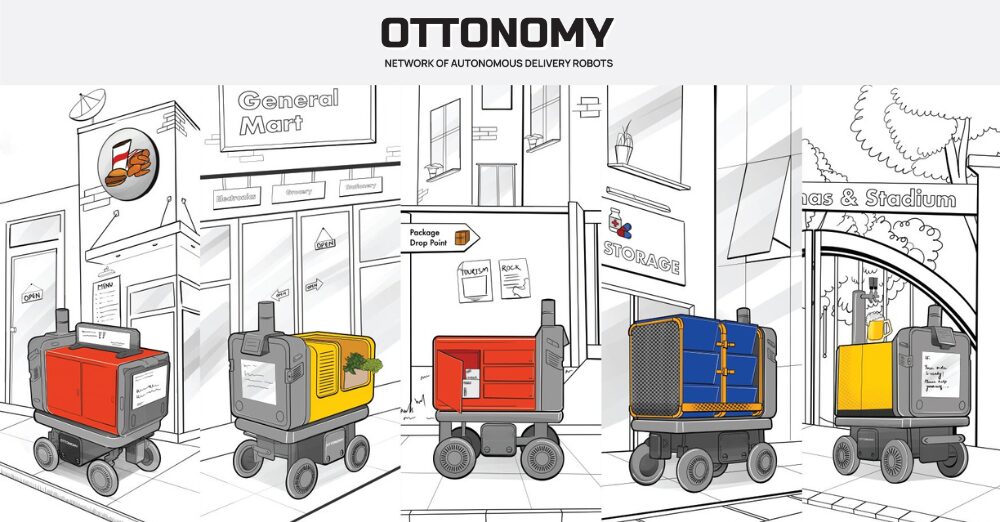
Ottobot
C20

PUDU CC1
Autonomus Cleaning Machine C5

Freo
DEEBOT X2 OMNI
S8 Pro Ultra
KLEENBOT C30
Autonomus Cleaning Machine C5
Freo
DEEBOT X2 OMNI
S8 Pro Ultra
Neo 2
KLEENBOT C40
Freo
DEEBOT X2 OMNI
S8 Pro Ultra
Neo 2
Dreame X40 Ultra

Company announcement
From the company's own site · external links
 Notice Against Purchasing Unauthorized ProductsVulnerability Disclosure Policy (VDP)↗2026-07-02Photo © KEENON Robotics · source ↗
- KEENON Robotics to Showcase Sustainable Intelligence at Interclean Amsterdam 2026↗2026-07-02Photo © KEENON Robotics · source ↗
- KEENON Robotics’ DINERBOT T10 Wins the iF DESIGN AWARD 2025↗2026-07-02Photo © KEENON Robotics · source ↗
- KEENON Robotics Showcases Innovative Smart Service Solutions with Embodied Intelligence at 2024 World Robot Conference↗2026-07-02Photo © KEENON Robotics · source ↗
- KEENON Robotics Marks a New Milestone with the Unveiling of the Humanoid Robot XMAN-R1 and the Latest KLEENBOT Additions↗2026-07-02Photo © KEENON Robotics · source ↗
News and Media
The company's official social & video channels · external links

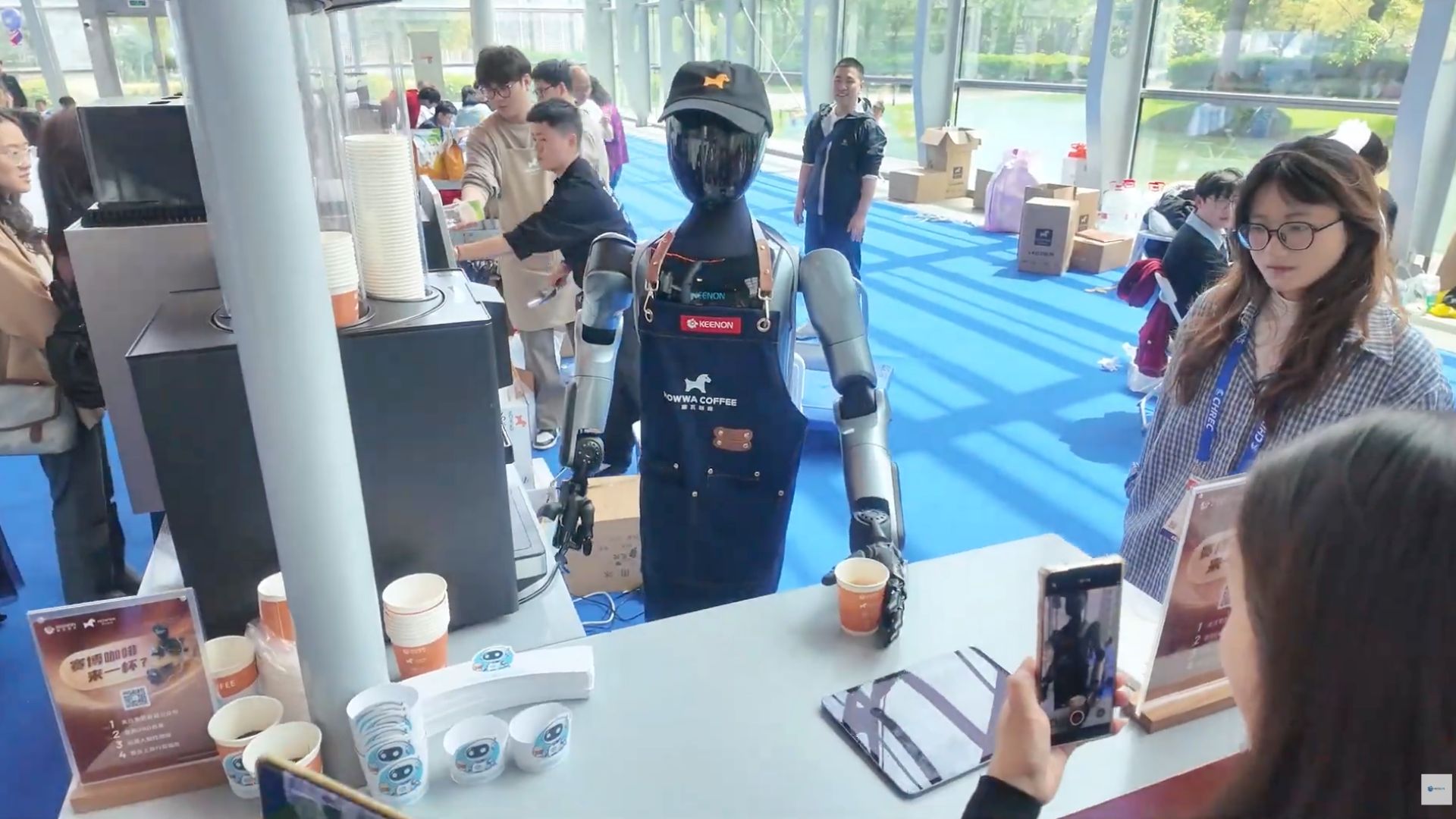
KEENON Robotics Partnership with NOWWA Coffee: Meet Your Robot Barista XMAN-R1!
2026-04-28
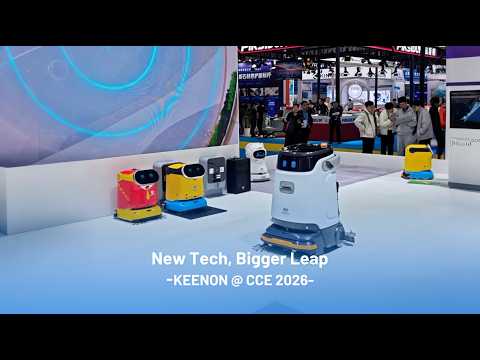
KEENON Event | New Robotics CleanTech Evolution in Motion at CCE 2026
2026-04-01

기다릴 필요 없는 서비스, KEENON T9 원격 호출 기능으로 더 스마트한 레스토랑 운영
2026-03-26
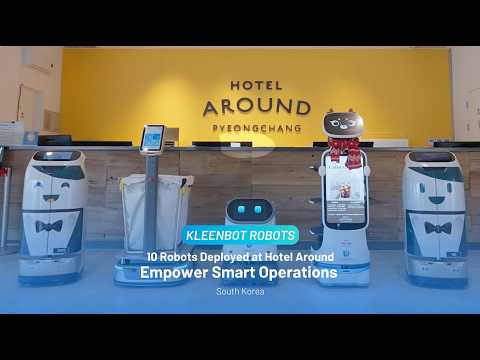
KEENON Robots | 10 robots deployed at Hotel AROUND in South Korea | Empower Smart Hotel Operations
2026-03-23
🍔 Smarter dining at Langranja Burger! Our KEENON T10 robot delivers seamlessly in-store, boosting efficiency and enhancing the guest experi
2025-09-04

Hospitality, redefined. 🏨✨ In Vietnam, our W3 Plus + T9 robots are running hotel operations smarter than ever — now even linked with the in
2025-09-03

Argeș TV report:KEENON T10 is now serving at Pizza Bonita House,Romania🍕🤖 As reported by Argeș TV, T10 helps with: 🍕 Food delivery via e-
2025-08-25

That’s a wrap at Food & Hospitality Thailand 2025! 🎉 It’s been amazing showcasing our robots in Bangkok, especially the C40 live demo. Big
2025-08-22

News
From third-party news outlets (China & abroad) · external links