KR236S
The Kress KR236S is a robotic lawn mower produced by Kress, a brand associated with outdoor power equipment. Designed for residential use, it autonomously navigates and mows lawns, using onboard sensors and scheduling software to maintain grass without manual intervention. The KR236S targets homeowners seeking a low-effort, automated approach to lawn care. It is reported to operate quietly and handle varied lawn conditions, making it a practical option in the growing consumer robotic mower segment.
Overview and Use Cases
The Kress KR236S is a robotic lawn mower intended for automated residential lawn maintenance. Like other robotic mowers in its class, it is designed to operate on a programmed schedule, returning to its charging base autonomously when its battery runs low or a mowing session is complete. The mower is suited for homeowners who want to reduce the time and physical effort associated with regular lawn care.
Typical use cases include:
- Routine mowing of residential lawns on a daily or multi-day schedule
- Maintaining a consistent grass height without user supervision
- Quiet operation that allows mowing during early morning or evening hours without disturbing neighbors
Key Technical Details
While Kress has not published a comprehensive public datasheet for the KR236S at the time of writing, robotic mowers in this category generally share several common characteristics:
- Navigation: Boundary wire or GPS-assisted systems to define the mowing area and avoid obstacles
- Sensors: Collision sensors, lift sensors, and tilt sensors for safety and navigation
- Cutting mechanism: Rotating blade disc with adjustable cutting height settings
- Charging: Automatic return-to-base charging
- Connectivity: Reportedly supports app-based scheduling and monitoring, consistent with Kress's broader smart outdoor equipment lineup
Specific runtime, cutting width, and maximum lawn area coverage figures have not been independently verified and should be confirmed via official Kress product documentation.
Comparison to Similar Robots
Within Kress's product range, the KR236S sits in the outdoor robotic equipment category alongside other cordless and automated garden tools. Kress has positioned itself as a brand focused on professional-grade and prosumer outdoor power tools, which may differentiate the KR236S from entry-level competitors.
In the broader robotic mower market, the KR236S competes with well-established models such as:
- Husqvarna Automower series – widely regarded as a market leader with extensive model range
- Bosch Indego series – known for systematic, parallel-line mowing patterns
- WORX Landroid series – popular for app connectivity and modular design
- Robomow series – noted for larger cutting decks suited to bigger lawns
The KR236S's competitive positioning relative to these brands depends on pricing, supported lawn size, and regional availability, details that prospective buyers should verify directly with Kress.
Market Context and Target Buyer
The robotic lawn mower market has grown steadily as homeowners increasingly adopt smart home and garden automation. The KR236S appears to target the residential mid-range segment, appealing to buyers who prioritize convenience and quiet operation over large-area commercial coverage.
Kress, as a brand, has historically focused on professional tradespeople and serious hobbyists, suggesting the KR236S may offer build quality and durability above typical entry-level robotic mowers. Pricing information was not publicly confirmed at the time of writing; prospective buyers are advised to consult authorized Kress retailers for current pricing.
Deployments and Notable Customers
No specific large-scale deployments or notable commercial customers for the KR236S have been reported in publicly available sources as of the time of writing. The model is primarily marketed toward individual residential consumers rather than fleet or commercial landscaping operators.
Future Outlook
The robotic outdoor equipment segment is expected to continue expanding, driven by labor cost pressures, smart home adoption, and improvements in navigation technology such as RTK-GPS and camera-based obstacle avoidance. Kress, as part of a broader power tool ecosystem, may update the KR236S or introduce successor models incorporating these advances. Buyers interested in long-term software support and ecosystem integration should monitor Kress's official communications for product roadmap announcements.
Related entries
 Robot
RobotRelay Delivery Robot
The Relay Delivery Robot is an autonomous indoor delivery robot developed by Relay Robotics (formerly known as Savioke), designed primarily for hospitality and healthcare environments. It navigates hotel corridors and hospital hallways independently, rides elevators without human assistance, and delivers guest amenities, medications, linens, and other supplies directly to rooms or designated drop-off points. Relay is one of the most widely deployed service robots in its category, reportedly completing over one million lifetime deliveries with a publicly cited success rate of approximately 99.8%. With a cargo capacity of around 10 gallons, the robot is compact enough to operate in busy public spaces while carrying a meaningful payload of everyday supplies.
2,783 views
 Robot
RobotSpot
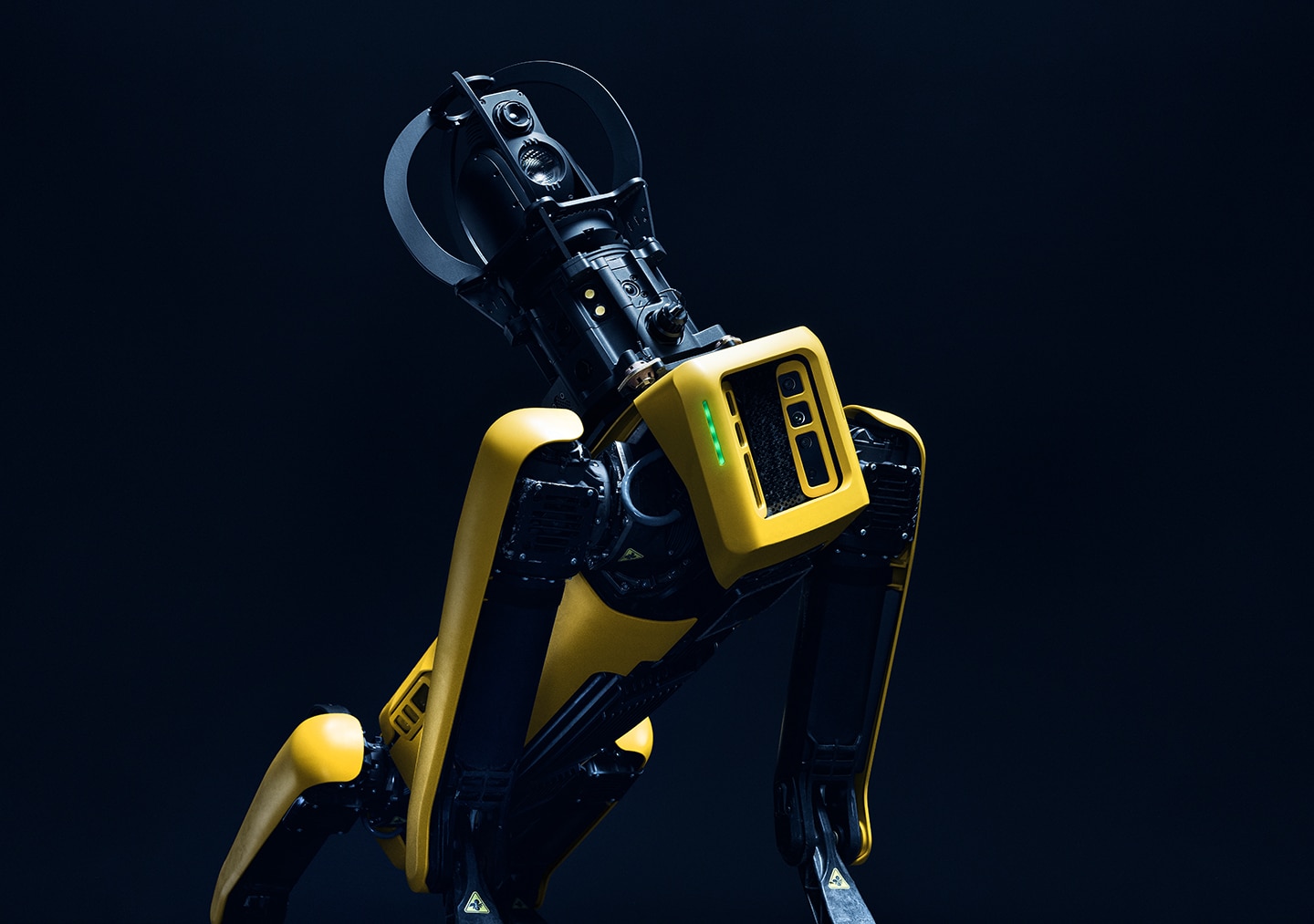
Spot is a four-legged autonomous robot developed by Boston Dynamics, a robotics company headquartered in Waltham, Massachusetts. Designed for inspection, security, and data collection in complex or hazardous environments, Spot can navigate stairs, rough terrain, and confined spaces that are inaccessible to wheeled robots. It is commercially available and has been deployed across industries including utilities, oil and gas, construction, and public safety. Spot supports a modular payload system that accommodates thermal cameras, pan-tilt-zoom (PTZ) cameras, lidar units, methane sensors, and other mission-specific hardware. Boston Dynamics also offers the Orbit fleet-management software platform, enabling operators to schedule autonomous inspection routes, aggregate sensor data, and manage multiple Spot units from a central interface. The robot is widely regarded as one of the most capable and commercially mature legged robots on the market.
1,480 views
 Robot
RobotRealSense Depth Camera D455
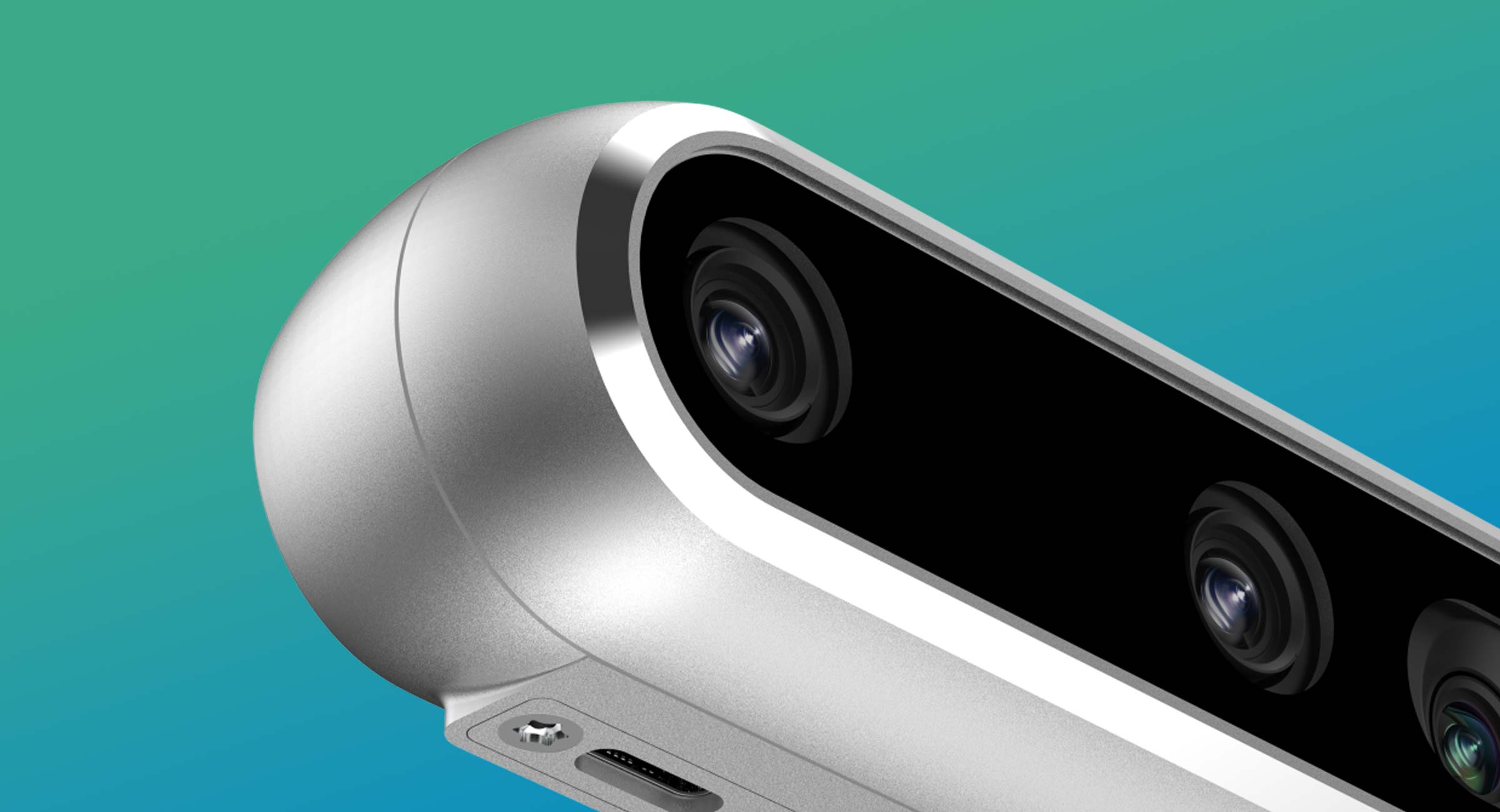
The RealSense Depth Camera D455 is a stereoscopic active-infrared depth camera belonging to Intel's D400 series, designed to capture high-fidelity depth data for robotics, autonomous mobile robots (AMRs), drones, and computer-vision applications. It features a 95 mm stereo baseline — the widest in the D400 lineup at the time of its introduction — which reportedly enables depth error of under 2% at ranges up to approximately 4 metres. Originally developed under the Intel RealSense brand, the D455 and related products were later spun off as part of an independent RealSense business unit following Intel's restructuring of the division around 2021–2022. The camera is widely adopted in research, industrial automation, and humanoid-robot development owing to its compact USB-powered form factor, open SDK support, and relatively accessible price point.
798 views
Rosie 2.0
The Rosie 2.0 is a commercial-grade autonomous robot vacuum developed by Tailos, designed to handle large-scale floor cleaning in business and institutional environments. It is offered in a two-pack configuration, allowing facilities to deploy multiple units simultaneously for broader coverage and more efficient cleaning cycles. Built to commercial durability standards, the Rosie 2.0 combines intelligent navigation with powerful suction technology to reduce reliance on manual labor and improve facility maintenance consistency. It targets businesses, hospitality venues, retail spaces, and other high-traffic environments where reliable, automated cleaning is a priority.
531 views