Stretch
Stretch is a mobile warehouse robot developed by Boston Dynamics, designed specifically for automated case handling in logistics and fulfillment environments. It is capable of unloading trailers and containers, as well as performing case picking, and is engineered to integrate into existing warehouse infrastructure with minimal facility modifications. Manufactured in the United States, Stretch represents Boston Dynamics' focused entry into the industrial logistics market, complementing the company's broader portfolio that includes the quadrupedal Spot robot and the humanoid Atlas platform. The robot targets high-throughput distribution centers and e-commerce fulfillment operations where repetitive heavy lifting poses ergonomic and labor challenges.
Overview and Use Cases
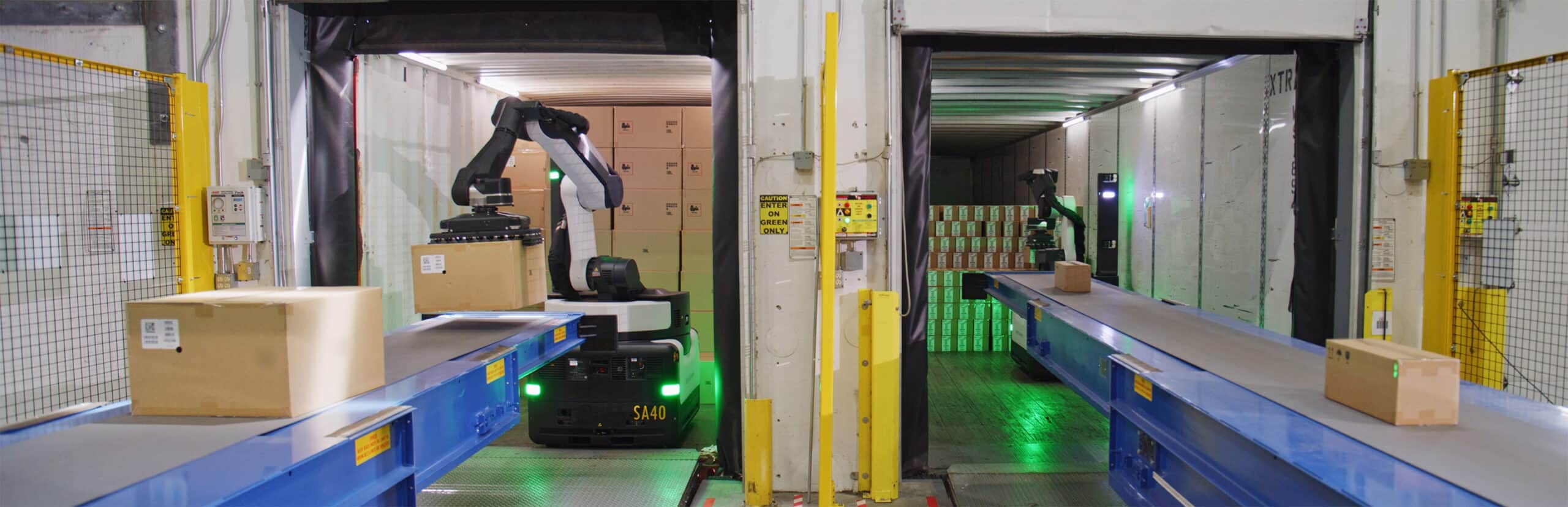
Stretch is Boston Dynamics' purpose-built mobile robot for warehouse logistics, announced publicly around 2021 and subsequently made available for commercial deployment. Unlike the company's more general-purpose platforms, Stretch was designed from the ground up to address a specific and high-demand task: moving boxes in distribution and fulfillment centers.
Primary use cases include:
- Trailer and container unloading – autonomously removing cases from the back of trucks or shipping containers onto conveyor systems
- Case picking – selecting individual cases from storage locations to fulfill orders
- Palletizing and depalletizing – stacking or unstacking cases on pallets
The robot is designed to operate in semi-structured environments without requiring extensive facility retrofits, making it attractive to operators who cannot afford lengthy warehouse downtime.
Key Technical Details
Stretch is built around a mobile base that allows it to maneuver within tight warehouse aisles and inside trailers. Its arm is equipped with a computer-vision-guided end effector featuring a vacuum-based gripper array capable of handling a wide variety of box sizes and weights. Key reported characteristics include:
- Perception system: Multiple cameras and depth sensors enabling real-time box detection and localization
- Onboard compute: Sufficient processing power to run perception and motion planning autonomously
- Payload capacity: Reportedly capable of handling cases up to approximately 50 lbs (around 23 kg), though buyers should confirm current specifications directly with Boston Dynamics
- Runtime: Designed for extended operational shifts; specific battery runtime figures have not been consistently published
- Footprint: Compact enough to enter standard shipping trailers
Comparison to Related Robots
Within the Boston Dynamics portfolio, Stretch occupies a distinct niche compared to its siblings:
- Spot (Industrial/Security): A quadrupedal inspection robot suited for unstructured terrain and remote monitoring — not optimized for repetitive manipulation tasks
- Spot Arm: Adds manipulation capability to Spot, but targets inspection and light interaction rather than high-throughput case handling
- Atlas (Electric): A research-oriented humanoid platform exploring general dexterity; not commercially positioned for warehouse logistics
In the broader competitive landscape, Stretch competes with dedicated warehouse automation systems from companies such as Symbotic, Berkshire Grey, and various automated storage and retrieval system (ASRS) vendors. Stretch's differentiator is its mobility and ability to work in unstructured spaces like the inside of trailers, where fixed automation is impractical.
Market Context and Target Buyers
Stretch is positioned in the premium industrial robotics segment. Target buyers include:
- Large-scale e-commerce fulfillment operators
- Third-party logistics (3PL) providers
- Grocery and retail distribution centers
- Parcel and freight handling facilities
Boston Dynamics has pursued a direct sales and partnership model, reportedly working with system integrators to deploy Stretch as part of broader warehouse automation solutions. Pricing has not been publicly disclosed; as with most industrial robotics platforms at this tier, total cost of ownership includes hardware, software licensing, integration, and support.
Notable Deployments
As of public reporting, Boston Dynamics has announced partnerships and pilot deployments with major logistics operators. DHL has been publicly cited as an early customer and partner for Stretch deployments in trailer unloading applications. Additional customers and deployment sites have not been broadly disclosed, which is common practice in enterprise robotics sales.
Future Outlook
Boston Dynamics has signaled that Stretch is a core commercial product alongside Spot, reflecting the company's strategic pivot toward revenue-generating industrial applications. Continued software improvements — particularly in perception, grasp planning, and fleet management — are expected to expand the range of case types and environments Stretch can handle. As warehouse labor shortages and e-commerce volumes continue to drive automation investment, mobile manipulation robots like Stretch are broadly anticipated to see growing adoption through the mid-2020s and beyond.
Related videos

Recent news
hello-robot-stretch4-body 2026.7.3
Pypi.org · 7/3/2026
hello-robot-stretch4-body 2026.7.2
Pypi.org · 7/2/2026
hello-robot-stretch4-tray 2026.7.1
Pypi.org · 7/2/2026
Show HN: A Browser Built for Browser Automation
Github.com · 6/21/2026
World Economic Forum Names Hello Robot a 2026 Technology Pioneer
www.businesswire.com · 6/10/2026
Community buzz (Reddit)
Characters with this specific hinge-like jaw design.
r/TopCharacterDesigns · ▲ 6,831
"Aha Instant" | Himeko • Nova
r/HonkaiStarRail · ▲ 5,172
'Superman' Review Thread
r/boxoffice · ▲ 3,100
After 3,5 years, Drifters still feel like worse operators.
r/Warframe · ▲ 2,576
Losercity robot women
r/Losercity · ▲ 2,342
Related entries
 Robot
RobotRelay Delivery Robot
The Relay Delivery Robot is an autonomous indoor delivery robot developed by Relay Robotics (formerly known as Savioke), designed primarily for hospitality and healthcare environments. It navigates hotel corridors and hospital hallways independently, rides elevators without human assistance, and delivers guest amenities, medications, linens, and other supplies directly to rooms or designated drop-off points. Relay is one of the most widely deployed service robots in its category, reportedly completing over one million lifetime deliveries with a publicly cited success rate of approximately 99.8%. With a cargo capacity of around 10 gallons, the robot is compact enough to operate in busy public spaces while carrying a meaningful payload of everyday supplies.
2,728 views
 Robot
RobotSpot
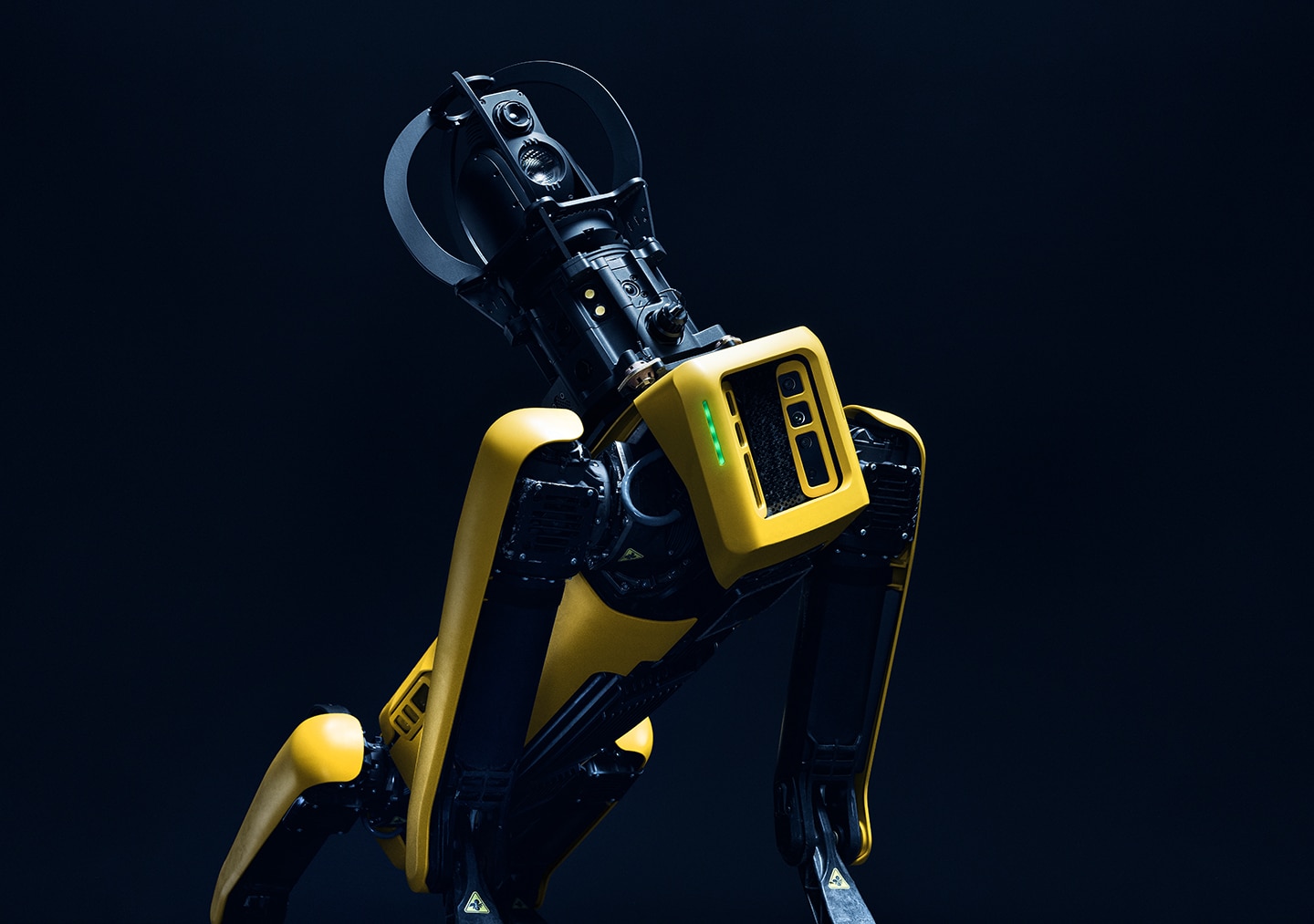
Spot is a four-legged autonomous robot developed by Boston Dynamics, a robotics company headquartered in Waltham, Massachusetts. Designed for inspection, security, and data collection in complex or hazardous environments, Spot can navigate stairs, rough terrain, and confined spaces that are inaccessible to wheeled robots. It is commercially available and has been deployed across industries including utilities, oil and gas, construction, and public safety. Spot supports a modular payload system that accommodates thermal cameras, pan-tilt-zoom (PTZ) cameras, lidar units, methane sensors, and other mission-specific hardware. Boston Dynamics also offers the Orbit fleet-management software platform, enabling operators to schedule autonomous inspection routes, aggregate sensor data, and manage multiple Spot units from a central interface. The robot is widely regarded as one of the most capable and commercially mature legged robots on the market.
1,204 views
 Robot
RobotRealSense Depth Camera D455
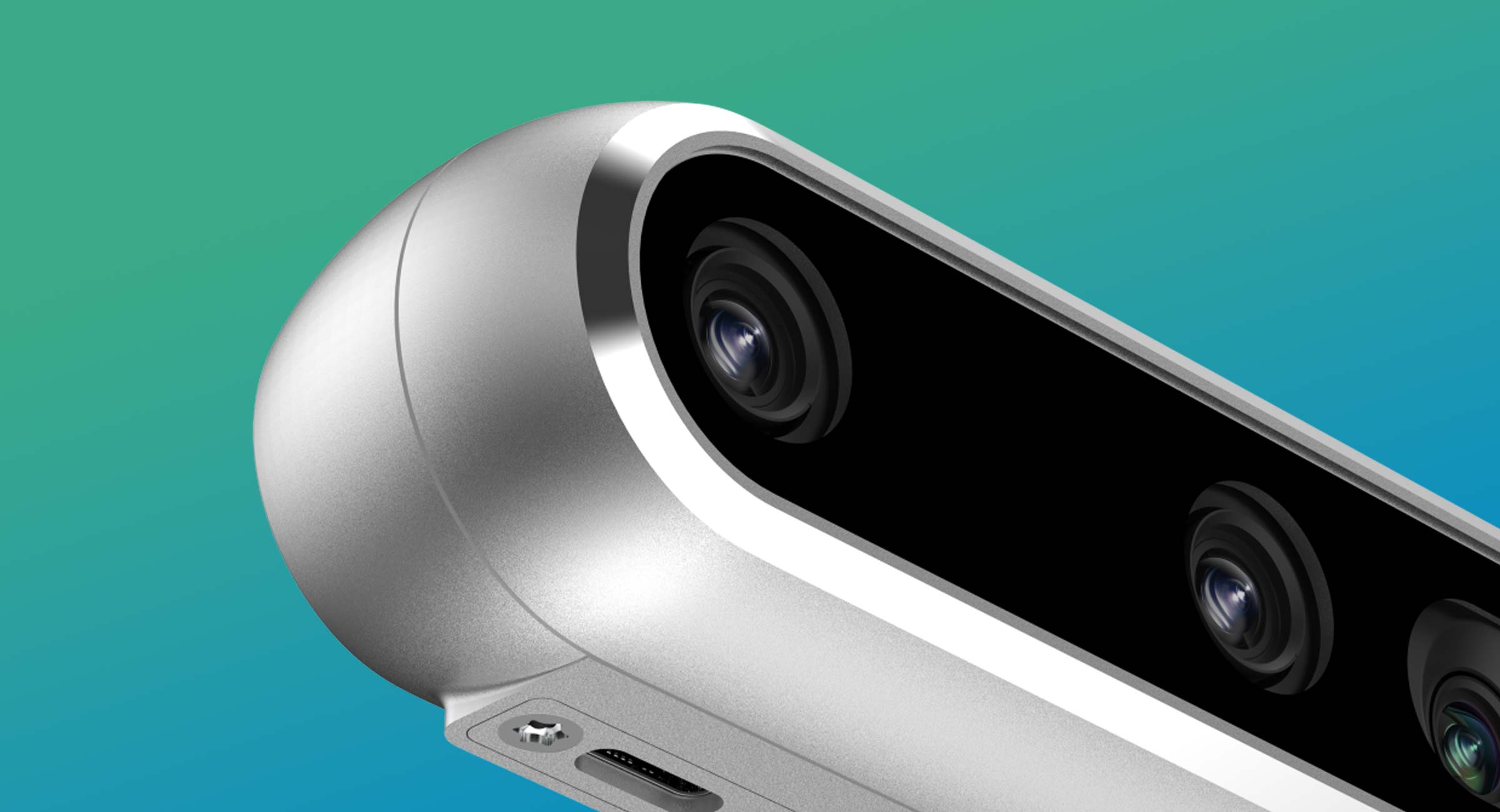
The RealSense Depth Camera D455 is a stereoscopic active-infrared depth camera belonging to Intel's D400 series, designed to capture high-fidelity depth data for robotics, autonomous mobile robots (AMRs), drones, and computer-vision applications. It features a 95 mm stereo baseline — the widest in the D400 lineup at the time of its introduction — which reportedly enables depth error of under 2% at ranges up to approximately 4 metres. Originally developed under the Intel RealSense brand, the D455 and related products were later spun off as part of an independent RealSense business unit following Intel's restructuring of the division around 2021–2022. The camera is widely adopted in research, industrial automation, and humanoid-robot development owing to its compact USB-powered form factor, open SDK support, and relatively accessible price point.
643 views
Rosie 2.0
The Rosie 2.0 is a commercial-grade autonomous robot vacuum developed by Tailos, designed to handle large-scale floor cleaning in business and institutional environments. It is offered in a two-pack configuration, allowing facilities to deploy multiple units simultaneously for broader coverage and more efficient cleaning cycles. Built to commercial durability standards, the Rosie 2.0 combines intelligent navigation with powerful suction technology to reduce reliance on manual labor and improve facility maintenance consistency. It targets businesses, hospitality venues, retail spaces, and other high-traffic environments where reliable, automated cleaning is a priority.
511 views