Serve Robotics Gen3 Delivery Robot
The Serve Robotics Gen3 is the third-generation autonomous sidewalk delivery robot developed by Serve Robotics, a San Francisco-based company that spun out of Uber Eats. Designed for last-mile food and package delivery on public sidewalks, the Gen3 operates fully electrically and uses onboard sensors and AI to navigate pedestrian environments without a human operator. Compared to its predecessors, the Gen3 reportedly features an expanded cargo bin capable of holding up to four 16-inch pizzas, approximately doubled speed and operating range, and a runtime exceeding 12 hours per charge. These improvements position it as a more commercially scalable platform for restaurant and retail delivery partners.

Overview and Use Cases
The Serve Robotics Gen3 is an autonomous, electrically powered sidewalk robot built for last-mile delivery in urban and suburban environments. It travels on public sidewalks and crosswalks, carrying food orders and small packages from merchants directly to customers' doors. Primary use cases include restaurant meal delivery, grocery delivery, and convenience retail fulfillment. The robot is designed to operate within geofenced service areas, typically in partnership with delivery platforms and local merchants.
Key Technical Features
While Serve Robotics has not published a comprehensive public datasheet for the Gen3, the company has highlighted several improvements over earlier generations:
- Cargo capacity: An expanded bin reportedly accommodates up to four 16-inch pizzas, making it suitable for larger or multi-item orders.
- Speed and range: Both are reportedly approximately doubled compared to prior generations, though exact figures have not been officially confirmed in public documentation.
- Runtime: The Gen3 is stated to achieve more than 12 hours of operation per charge, supporting extended deployment windows.
- Autonomy: The robot uses a combination of cameras, lidar, and AI-based perception to detect pedestrians, obstacles, and traffic signals, enabling Level 4-style autonomous operation in defined service zones.
- Form factor: The Gen3 retains the compact, low-profile sidewalk robot form factor characteristic of the Serve platform, designed to be unobtrusive in pedestrian spaces.
Comparison to Sibling and Competing Robots
Within Serve Robotics' own lineup, the Gen3 succeeds earlier Serve generations, with each iteration bringing improvements in payload, endurance, and autonomy. The Gen3 represents the most commercially mature platform the company has fielded as of public reporting.
In the broader sidewalk delivery robot market, the Gen3 competes with platforms such as:
- Starship Technologies robots, which are widely deployed across college campuses and suburban neighborhoods globally.
- Kiwibot, which has focused on university campus deployments.
- Nuro vehicles, which operate on roadways rather than sidewalks and target a different regulatory and use-case profile.
Serve Robotics differentiates itself through its heritage from Uber Eats, its focus on urban commercial corridors, and its partnerships with major delivery platforms.
Market Context and Target Buyers
Serve Robotics positions the Gen3 as a commercial-grade platform aimed at food delivery operators, restaurant chains, and third-party logistics providers seeking to reduce the cost of last-mile delivery. The company operates a robot-as-a-service (RaaS) model, meaning merchants and delivery platforms typically pay per delivery or through a subscription arrangement rather than purchasing robots outright. Specific pricing has not been disclosed publicly. The target buyer profile includes quick-service restaurant (QSR) chains, ghost kitchens, and delivery aggregators operating in dense urban markets.
Deployments and Notable Partnerships
Serve Robotics has conducted deployments in Los Angeles, California, which has served as its primary proving ground. The company has publicly announced a partnership with Uber Eats, through which Gen3 robots fulfill delivery orders placed on the Uber Eats platform. As of public reporting, Serve Robotics has also announced agreements to scale its fleet significantly, with plans to deploy hundreds of robots across multiple markets, though the timeline and full scope of these rollouts are subject to regulatory approvals and operational readiness.
Future Outlook
Serve Robotics has signaled ambitions to expand geographically beyond its initial California deployments, targeting additional U.S. cities with favorable sidewalk robot regulations. The Gen3 platform is expected to serve as the commercial backbone of this expansion. Broader industry trends—including rising labor costs in delivery, increasing municipal acceptance of sidewalk robots, and growing consumer familiarity with autonomous delivery—are generally seen as tailwinds for the platform. Future iterations or software updates may further extend the Gen3's operational capabilities, though no specific next-generation hardware has been publicly announced as of this writing.
Related videos
LEGO Education CS & AI Kit Lesson 1: Train Your Robot Server with Inputs, Outputs & Sequences
Sprattronics Learning Lab

Overweight? You Still Deserve the Best Cancer Surgery | Robotic Advantage
JKWomen Hospital

'Serve Robotics' brings autonomous deliveries to 14 Chicago neighborhoods with Uber Eats
WGN News

Tesla Optimus serves me popcorn at the Tesla Diner #fyp #tesla #optimus #tesladiner #teslarobot
Tesla Owners Silicon Valley

🏭Space Revolution: 1 KUKA Robot Serves 6 CNC Machines via Smart Linear Rail!
Jackson chen

High Point restaurant now has robot servers
WFMY News 2
Related entries
 Robot
RobotRelay Delivery Robot
The Relay Delivery Robot is an autonomous indoor delivery robot developed by Relay Robotics (formerly known as Savioke), designed primarily for hospitality and healthcare environments. It navigates hotel corridors and hospital hallways independently, rides elevators without human assistance, and delivers guest amenities, medications, linens, and other supplies directly to rooms or designated drop-off points. Relay is one of the most widely deployed service robots in its category, reportedly completing over one million lifetime deliveries with a publicly cited success rate of approximately 99.8%. With a cargo capacity of around 10 gallons, the robot is compact enough to operate in busy public spaces while carrying a meaningful payload of everyday supplies.
2,911 views
 Robot
RobotSpot
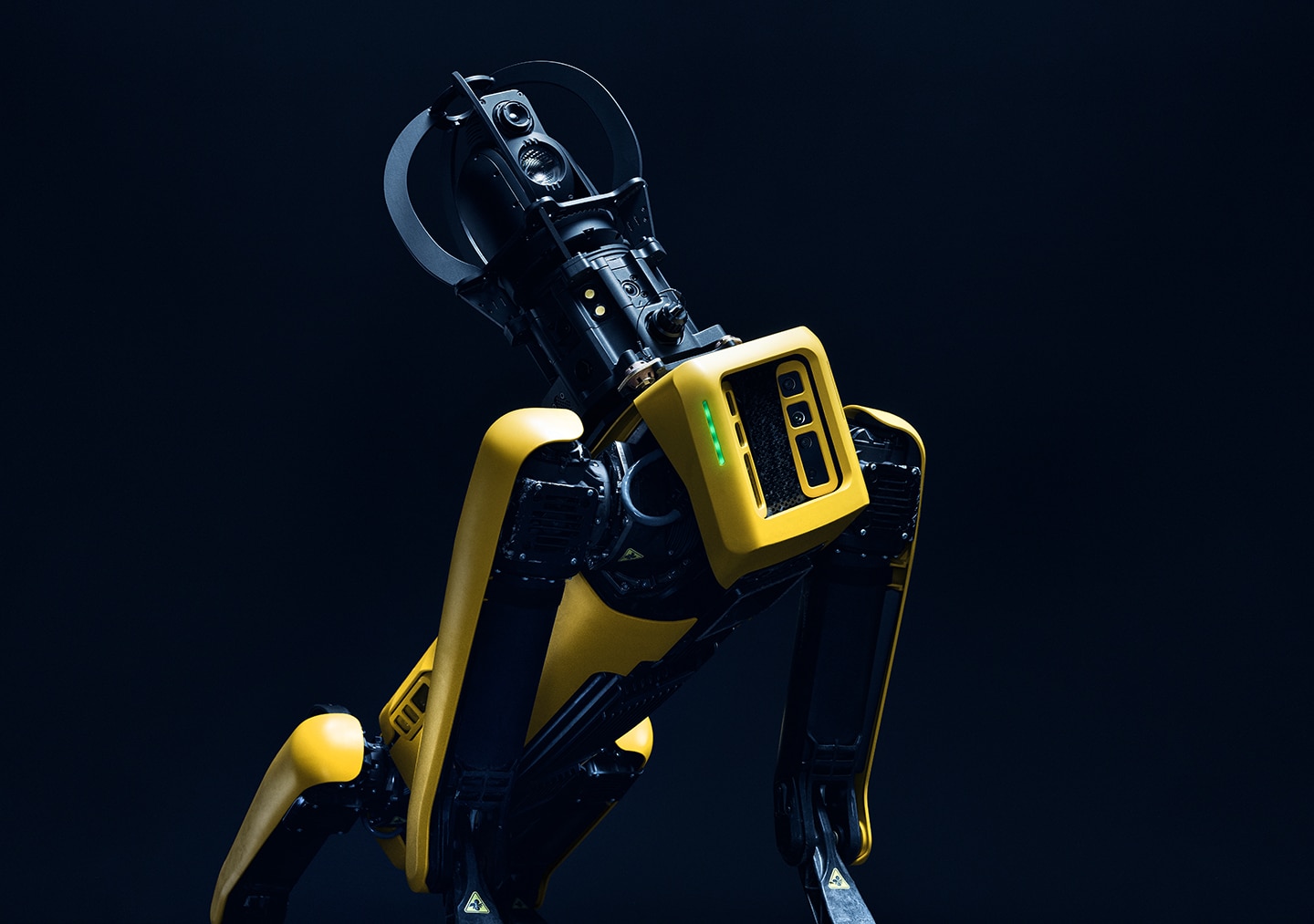
Spot is a four-legged autonomous robot developed by Boston Dynamics, a robotics company headquartered in Waltham, Massachusetts. Designed for inspection, security, and data collection in complex or hazardous environments, Spot can navigate stairs, rough terrain, and confined spaces that are inaccessible to wheeled robots. It is commercially available and has been deployed across industries including utilities, oil and gas, construction, and public safety. Spot supports a modular payload system that accommodates thermal cameras, pan-tilt-zoom (PTZ) cameras, lidar units, methane sensors, and other mission-specific hardware. Boston Dynamics also offers the Orbit fleet-management software platform, enabling operators to schedule autonomous inspection routes, aggregate sensor data, and manage multiple Spot units from a central interface. The robot is widely regarded as one of the most capable and commercially mature legged robots on the market.
1,598 views
 Robot
RobotRealSense Depth Camera D455
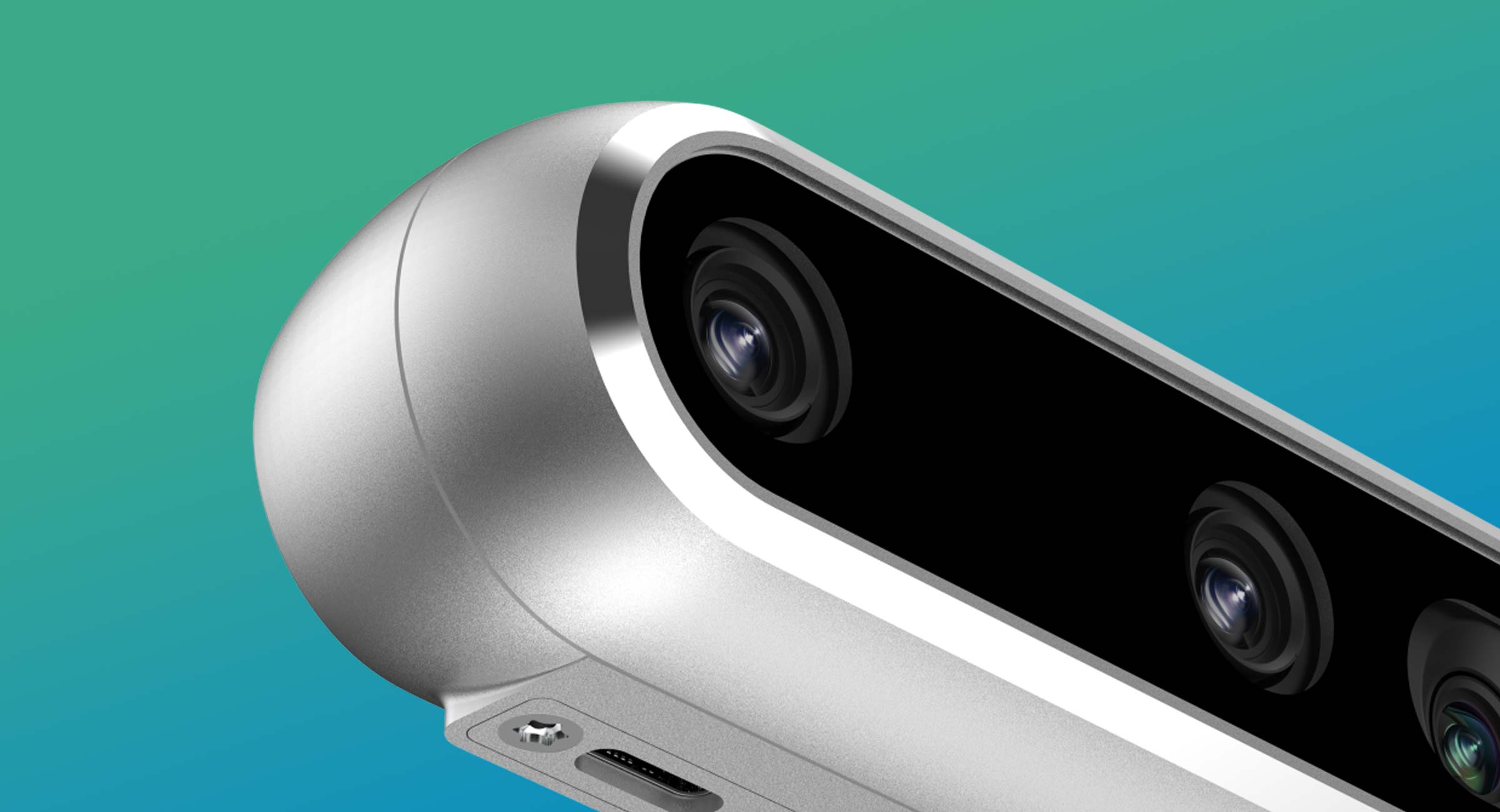
The RealSense Depth Camera D455 is a stereoscopic active-infrared depth camera belonging to Intel's D400 series, designed to capture high-fidelity depth data for robotics, autonomous mobile robots (AMRs), drones, and computer-vision applications. It features a 95 mm stereo baseline — the widest in the D400 lineup at the time of its introduction — which reportedly enables depth error of under 2% at ranges up to approximately 4 metres. Originally developed under the Intel RealSense brand, the D455 and related products were later spun off as part of an independent RealSense business unit following Intel's restructuring of the division around 2021–2022. The camera is widely adopted in research, industrial automation, and humanoid-robot development owing to its compact USB-powered form factor, open SDK support, and relatively accessible price point.
910 views
 Robot
RobotOptimus Gen 2
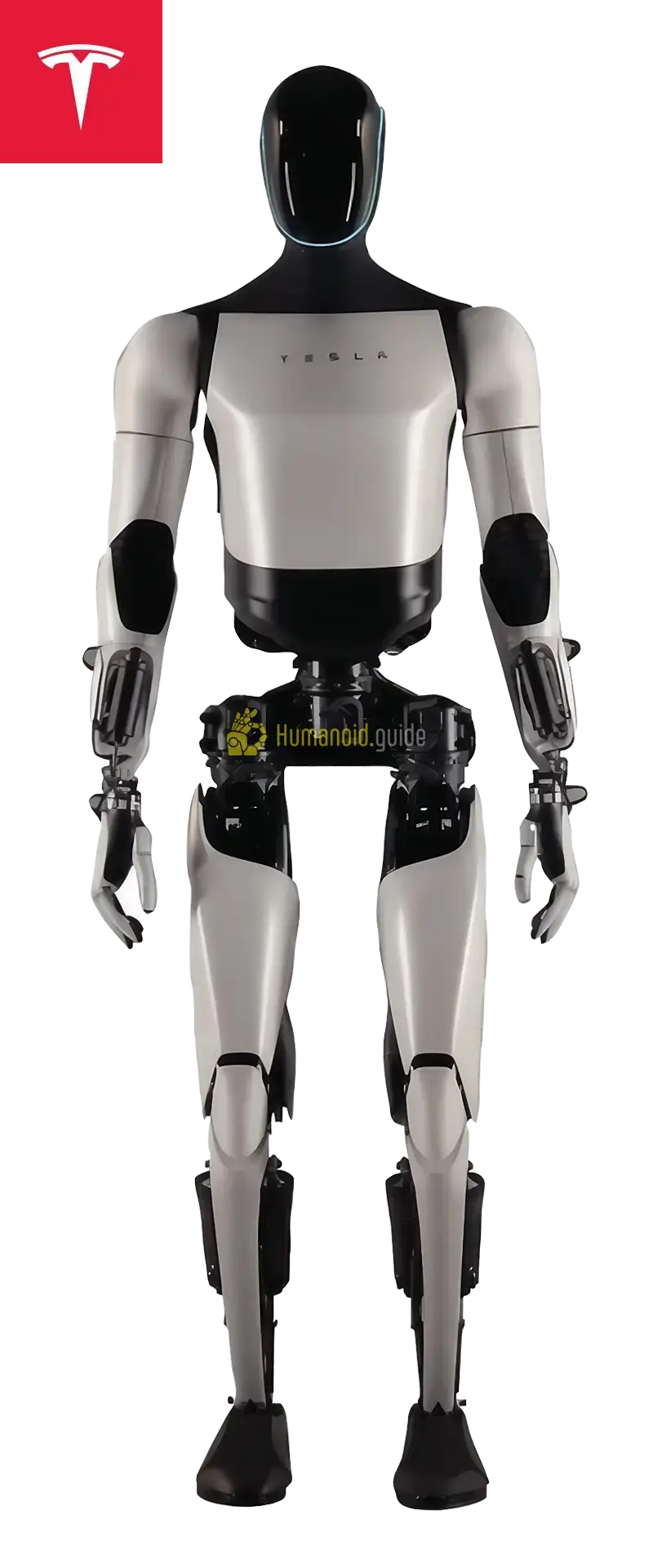
Optimus Gen 2 is a general-purpose humanoid robot developed by Tesla, representing the second major hardware iteration of the company's Optimus program. It is designed to perform a broad range of physical tasks, leveraging perception and motion-planning software derived from Tesla's Full Self-Driving (FSD) stack. As of public reporting, units are used for internal demonstrations and select tasks within Tesla's own manufacturing facilities. Tesla has stated an ambition to eventually offer Optimus at consumer-accessible pricing, positioning it as a mass-market humanoid rather than an industrial-only platform. Compared to its predecessor, Gen 2 reportedly features improved hand dexterity, smoother whole-body motion, and a lighter overall frame, though many detailed specifications remain unconfirmed or subject to ongoing revision as the program continues to iterate.
624 views