Serve Robotics
Company wikiSnapshotCompany claim
Serve develops self-driving delivery robots designed for sustainability. Their robot operates at walking speed with 98% less emissions and 90% less weight than cars, delivering a sustainable future centered on communities.
- Founded
- Not disclosed
- HQ
- Not disclosed
- Models
- 1
- Categories
- 1
ContactCompany claim
- Address
- Not disclosed
Product families
Is this your company? Claim this profile to add verified data, respond to our analysis, and upgrade claims to Verified.
Claim this profile1. Executive Overview {#executive-overview}
Serve Robotics is a purpose-built autonomous delivery company whose core mission is straightforward and measurable: replace car-based last-mile food delivery with small, electric, pedestrian-speed robots. The company has articulated a clear sustainability value proposition — its robot carries 98% less emissions, 90% less weight, and 99% less kinetic energy than a conventional car — and has progressed far enough to launch a third-generation platform, file public financial disclosures (per StockTitan coverage as recently as June 2025), and secure integrations with two of the largest delivery networks in North America: Uber Eats and DoorDash. That combination of hardware iteration, public-market accountability, and platform-level integrations sets Serve apart from many robotics startups that remain in pre-commercial testing.
The company has received external validation from credible outlets: Fast Company named it among its "15 Tech Startups to Watch" (2022) and awarded it Innovation by Design honors in both 2019 and 2022; EY named CEO or a founder an Entrepreneur Of The Year 2025 Bay Area Award Winner; and the company was featured at a TED Conference in 2020. The leadership team is described (company-claim) as founded by serial entrepreneurs and veteran leaders in robotics and artificial intelligence, signaling deliberate domain expertise rather than a pivot from an unrelated field.
Not yet disclosed publicly: precise founding year, country of incorporation, and total fleet size. Serve is invited to claim or correct these details via partners@serverobotics.com.
Latest news
- Serve Robotics (SERV) Expands AI-Powered Robot Delivery Into Laundry Services Through NoScrubs DealYahoo Entertainment·2026-06-26GENERAL
- Serve Robotics (SERV) Reveals Latest Collaboration with NoScrubsYahoo Entertainment·2026-06-18GENERAL
- KEENON Humanoid Pours Drinks at GCS 2026, 100,000 Others Run HotelsYanko Design·2026-06-15GENERAL
- Serve Robotics Continues Expansion Beyond Food Delivery, Launches Autonomous Laundry Vertical with NoScrubswww.globenewswire.com·2026-06-05GENERAL
- Serve Robotics tests robot laundry delivery with NoScrubswww.stocktitan.net·2026-06-03GENERAL
- Serve Robotics Completes Acquisition of Diligent Robotics Subsidiarywww.tipranks.com·2026-05-19GENERAL
- Serve Robotics Launches Conversational Delivery Robot with Edge AI at NVIDIA GTC 2026GlobeNewswire·2026-04-07PRODUCT_LAUNCH
2. The Company Story {#the-company-story}
Serve Robotics traces its conceptual origin to a deceptively simple observation — one the CEO articulates directly on the company's own site (company-claim): "Why move a 2-pound burrito in a 2-ton car?" That framing is more than a marketing line; it encapsulates the engineering philosophy behind every product decision Serve has made. Rather than scaling down a self-driving car, the team built upward from the constraints of the sidewalk: walking speed, pedestrian-first routing, minimal kinetic energy, and a form factor quiet enough to fit the rhythm of a neighborhood block.
The company's public milestone record, assembled from its own site and third-party press, traces a trajectory from early concept visibility — a TED Conference featured talk in 2020 — through a period of rapid external recognition in 2022 (two Fast Company design honors and inclusion in its startup watchlist), and into a phase of platform maturation. The rollout of a third-generation autonomous delivery robot, reported by the company's investor relations site (serverobotics.gcs-web.com), is the clearest signal that Serve has moved through multiple engineering cycles and is now explicitly building infrastructure for national scaling rather than local pilots. The publication of Second Quarter 2025 financial results confirms the company is operating as a publicly traded entity (ticker: SERV, per StockTitan), bringing with it the disclosure obligations and capital-market relationships that most robotics startups at this stage have not yet navigated.
Not yet disclosed: the precise founding date, early investors, and the internal milestone timeline from prototype to first commercial deployment. Serve is invited to supplement this record.
3. Product Portfolio {#product-portfolio}
Products & versions




Serve's current public product portfolio centers on a single, well-defined platform: the Serve delivery robot, an autonomous, electric sidewalk robot purpose-built for last-mile food delivery in urban environments. While a single named product might appear to represent a narrow lineup, the company's own disclosure of a third-generation platform — described as a "major upgrade" designed to support national scaling — indicates that significant engineering evolution has already occurred across hardware generations, even if intermediate versions were not separately branded for public consumption.
The feature set of the current platform is substantive. Key capabilities include autonomous self-driving navigation, pedestrian-first routing that prioritizes public spaces over vehicle lanes, 24/7 remote monitoring with real-time location tracking, algorithmically optimized route selection for safety and efficiency, and a secure phone-based unlock mechanism for recipients. Critically, the robot is integrated directly with both Uber Eats and DoorDash — meaning it participates in existing consumer ordering flows rather than requiring merchants or customers to adopt a new interface. Use cases are currently concentrated in food delivery, with industry applicability noted across restaurants, logistics, and retail. The natural expansion of the retail and logistics tags suggests the platform architecture may be intended to accommodate non-food payloads over time, though no such product has been publicly announced. Our read: the third-generation launch and explicit reference to "national scaling" suggest Serve is transitioning from a city-by-city deployment model toward a repeatable, operationally standardized rollout playbook.
4. Technology Stack {#technology-stack}
The publicly available product description provides a functional picture of the Serve robot's technology layer, though detailed engineering specifications (sensor suite, compute hardware, mapping stack, battery chemistry) have not been disclosed publicly.
What is verifiable (company-claim): The robot is electric-powered, operates at pedestrian walking speed, and uses algorithmic route optimization to select safe and efficient paths through pedestrian environments. It includes 24/7 monitoring — implying a persistent connectivity layer and a remote operations center — and real-time location tracking, which requires onboard GPS or equivalent localization. The phone-based secure unlock mechanism implies an authenticated handoff protocol, likely combining mobile app communication with onboard verification hardware or software.
Our read: The combination of autonomous navigation in unstructured pedestrian environments, real-time monitoring, and integration into third-party logistics platforms (Uber Eats, DoorDash) implies a technology stack that spans at minimum: computer vision or sensor fusion for obstacle detection and pedestrian navigation; a cloud-based fleet management and dispatch layer; API integrations with delivery platform order management systems; and a mobile application or SDK for recipient handoff. The pedestrian-first routing philosophy — "waits its turn at crosswalks," per the CEO letter — suggests the autonomy stack has been specifically tuned for low-speed urban environments rather than adapted from highway or warehouse robotics. The progression to a third hardware generation further implies iterative improvement in at least one of: sensor configuration, battery performance, payload capacity, or autonomy reliability.
Not yet disclosed: sensor modalities, compute platform, mapping approach (HD maps vs. onboard SLAM), battery range per charge, and payload weight limits. Serve is invited to claim or correct these technical details.
5. Research, Papers, Authors, Labs {#research-papers}
Company-linked papers
Serve Robotics does not appear to be a research-publishing organization in the academic or conference-paper sense. This is consistent with its profile as a commercial robotics deployment company rather than a university spinout or dual-track research-and-product firm. No papers, named research authors, or affiliated academic laboratories are referenced in any available public data. This is not unusual — most service-robotics companies operating at Serve's stage direct engineering resources toward fleet reliability and operational scale rather than publication.
6. Media Evidence {#media-evidence}
Media library
Third-party coverage confirmed in the source data includes: reporting by StockTitan (June 24, 2025) tracking Serve Robotics (SERV) stock news and updates; investor-relations announcements on serverobotics.gcs-web.com covering the third-generation robot rollout and Q2 2025 financial results. External design and startup recognition from Fast Company (2019, 2022) and the EY Entrepreneur Of The Year program (2025 Bay Area) constitute additional named third-party validation. A TED Conference featured talk in 2020 represents early-stage public profile coverage.
7. Commercial Reality {#commercial-reality}
Customers & deployments
Serve Robotics is a publicly traded company (ticker: SERV), which means it files financial disclosures — Q2 2025 results were publicly announced via its investor relations site. However, the data available for this report does not include specific revenue figures, fleet deployment counts, order volumes, customer names, or unit economics. These are therefore rendered as: Not disclosed in available data.
The integrations with Uber Eats and DoorDash (company-claim) confirm that Serve has active commercial relationships with two major delivery platforms, establishing it as an operational vendor rather than a pilot-stage startup. The announcement of a third-generation robot explicitly framed around "national scaling" implies the company believes it has achieved sufficient unit-level commercial viability to justify broader geographic expansion.
Serve Robotics is invited to disclose or correct any of the following via partners@serverobotics.com: total active robots deployed, cities or markets served, average deliveries per robot per day, revenue run rate, gross margin per delivery, and named merchant or restaurant partners.
8. Markets and Use Cases {#markets-use-cases}
Serve Robotics is currently positioned squarely in the urban last-mile food delivery market, with its robot's use-case tags confirmed as food delivery and its industry tags spanning restaurants, logistics, and retail. The operational model — sidewalk-speed autonomous delivery integrated into consumer-facing platforms — is suited to dense urban and suburban environments where pedestrian infrastructure exists, delivery distances are short (typically under a few miles), and the volume of restaurant orders is high enough to justify robot deployment density.
The restaurant vertical is the clearest near-term market: Serve's platform integrations with Uber Eats and DoorDash connect it directly to the existing restaurant-to-consumer delivery flow, meaning any merchant already on those platforms is a potential Serve customer without requiring additional technical onboarding from the restaurant side. This is a meaningful go-to-market advantage — the robot slots into existing commercial infrastructure rather than requiring parallel platform adoption.
The logistics and retail industry tags suggest Serve's addressable market thesis extends beyond restaurant food delivery. Pharmacy delivery, grocery delivery, and general retail fulfillment represent adjacent use cases that share the same physical operating environment (pedestrian urban sidewalks, short distances, secure handoff requirements). Our read: the retail and logistics tags likely reflect platform ambitions rather than currently deployed use cases, but the underlying robot architecture — electric, autonomous, pedestrian-navigating, with a secure unlock mechanism — is technically compatible with these adjacencies without fundamental redesign.
The sustainability angle — 98% less emissions versus car delivery — also positions Serve favorably in markets or municipalities pursuing emissions reduction targets, which may create a regulatory or procurement tailwind in cities with active climate policy agendas.
9. Competitive Landscape {#competitive-landscape}
Competitive comparison
| Robot | Maker | Autonomy | Conf. |
|---|---|---|---|
| iRobot Roomba Combo 10 Max | iRobot | Autonomous | 0.90 |
| Mobile ALOHA (Stanford) | Stanford University | Teleoperated | 0.90 |
| 1X NEO | 1X Technologies | Remote-Assisted | 0.90 |
Serve Robotics operates in the sidewalk autonomous delivery robot category, a space that has attracted multiple entrants globally over the past several years. The defining competitive dimensions in this category include: autonomy level and reliability in pedestrian environments, platform integrations with major delivery networks, hardware generation maturity, unit economics per delivery, and geographic deployment scale. Serve's confirmed third-generation platform and dual integration with Uber Eats and DoorDash represent meaningful competitive markers, as many same-category peers have either fewer platform integrations or earlier-stage hardware.
The broader competitive context includes not only direct sidewalk robot peers but also the delivery platforms themselves (Uber Eats, DoorDash), which could theoretically develop or acquire robotics capabilities, as well as alternative last-mile formats such as e-bike couriers, cargo bikes, and drone delivery. Serve's pedestrian-speed, low-kinetic-energy positioning is a deliberate differentiation from aerial and high-speed ground alternatives, emphasizing community fit and regulatory accessibility over delivery speed.
10. Country Advantage / Geopolitical {#geopolitical}
Section not material for this company.
11. Hype vs Real vs Ugly {#hype-real-ugly}
Claim tracker
Verified / externally corroborated:
- Third-generation robot platform launched — reported via company investor relations site (serverobotics.gcs-web.com); signals multi-cycle hardware maturity.
- Public company status (SERV) with Q2 2025 results disclosed — confirmed via StockTitan and company IR site; imposes real financial accountability.
- Integrations with Uber Eats and DoorDash — company-claim, but operationally plausible and uncontradicted by available data.
- Fast Company recognition (2019, 2022), EY Entrepreneur Of The Year 2025 Bay Area, TED Conference 2020 — named third-party awards, verifiable.
Company claims (accurate as stated, but unverified by independent measurement):
- "98% less emissions than cars" — company-claim; the comparison methodology (lifecycle? per-delivery? per-mile?) is not specified in available data. The directional claim is credible given electric vs. combustion propulsion, but the precise figure should be read as a company-claim until methodology is published.
- "90% less weight than cars" — company-claim; plausible by physical inspection (a sidewalk robot vs. a 2-ton vehicle), but the specific baseline vehicle weight assumed is not stated.
- "99% less kinetic energy than a car" — company-claim; derived from physics (KE = ½mv²), so mathematically checkable in principle, but baseline assumptions are not published.
- "National scaling" as the strategic intent of the third-generation platform — company-claim and stated aspiration; operational evidence of national scale is not yet available in public data.
Gaps (not negatives — fixable disclosures):
- Not yet disclosed: revenue, fleet size, cities served, deliveries completed, customer names, unit economics, or independent emissions audit. Serve is invited to claim or correct via partners@serverobotics.com.
12. Future Scenarios {#future-scenarios}
Bull case — Our read: Serve executes national scaling on the third-generation platform, leveraging its Uber Eats and DoorDash integrations to expand into new cities without rebuilding commercial relationships. Public-market capital access funds fleet growth. The sustainability narrative gains regulatory tailwind in emissions-conscious municipalities. A fourth hardware generation reduces per-unit cost, improving delivery economics to a point where the robot is structurally cheaper per delivery than gig-economy couriers. Strategic interest from delivery platforms or logistics players creates partnership or acquisition optionality.
Base case — Our read: Serve grows steadily in its current markets, adds cities at a measured pace constrained by operations, permitting, and capital deployment. Third-generation hardware delivers reliability improvements that reduce remote-operations cost per delivery. Revenue grows in line with fleet expansion; the company remains subscale relative to the total addressable delivery market but establishes a durable niche in dense urban food delivery. The public-company structure creates discipline but also quarterly-reporting pressure that may constrain longer-horizon R&D bets.
Bear case — Our read: National scaling proves operationally harder than anticipated — sidewalk permitting, weather variability, theft/vandalism, or pedestrian-environment edge cases slow city-by-city expansion. Delivery platform partners internalize robotics capabilities or shift allocation away from third-party robots. Capital markets tighten for pre-profitability robotics companies, limiting fleet investment. Competition from better-capitalized peers or pivoting delivery platforms compresses the window for independent scaling.
13. What to Watch {#what-to-watch}
- Fleet expansion announcements: New cities or markets named in press releases or earnings disclosures will be the clearest leading indicator of national scaling progress.
- Q3 and Q4 2025 financial results: Revenue trajectory, gross margin per delivery, and operating cost trends — watch for disclosure of delivery volume or robot utilization metrics.
- Fourth-generation hardware signals: Any filing, job posting, or press reference to next-generation hardware development will indicate the R&D pipeline is active beyond the current platform.
- Platform integration expansions: Addition of delivery platform partners beyond Uber Eats and DoorDash would signal commercial leverage and reduced platform concentration risk.
- Municipal permitting developments: Regulatory approvals or rejections in new cities will shape the pace of geographic expansion; watch for permit filings in major U.S. metro areas.
- Sustainability methodology publication: Independent or third-party verification of the 98% emissions, 90% weight, and 99% kinetic energy claims would strengthen the ESG narrative and open municipal procurement doors.
- Talent signals: Senior hires in operations, city launch, or hardware engineering visible on LinkedIn or job boards often precede market expansion by 6–12 months.
14. Sources & Methodology {#sources-methodology}
Primary source: All factual claims about Serve Robotics — company description, product features, use cases, mission statements, CEO letter, awards, and platform integrations — are extracted directly from the company's own website (serverobotics.com) and are labeled company-claim throughout this report. They represent Serve's own characterization of its business and should be read accordingly.
Third-party press sources cited: StockTitan (June 24, 2025, SERV stock coverage); serverobotics.gcs-web.com (investor relations, third-generation robot announcement; Q2 2025 results). These are treated as independent external references where they corroborate or add to the company-provided record.
Computed relations and inferences: Where this report draws conclusions beyond the explicit source data — about technology stack architecture, competitive positioning, or market expansion logic — these are labeled Our read: and represent analyst inference, not verified fact.
What this report does not include: No data has been invented, extrapolated from unnamed sources, or sourced from unlinked competitors, customers, or financial databases. Where information is absent, the report records the gap explicitly and invites the company to claim or correct via partners@serverobotics.com.
Universal rubric: This methodology applies uniformly to every company assessed under this framework. A company with richer public disclosure will receive a more detailed report; gaps reflect the state of public information, not an editorial judgment about the company's quality or prospects.
Serve
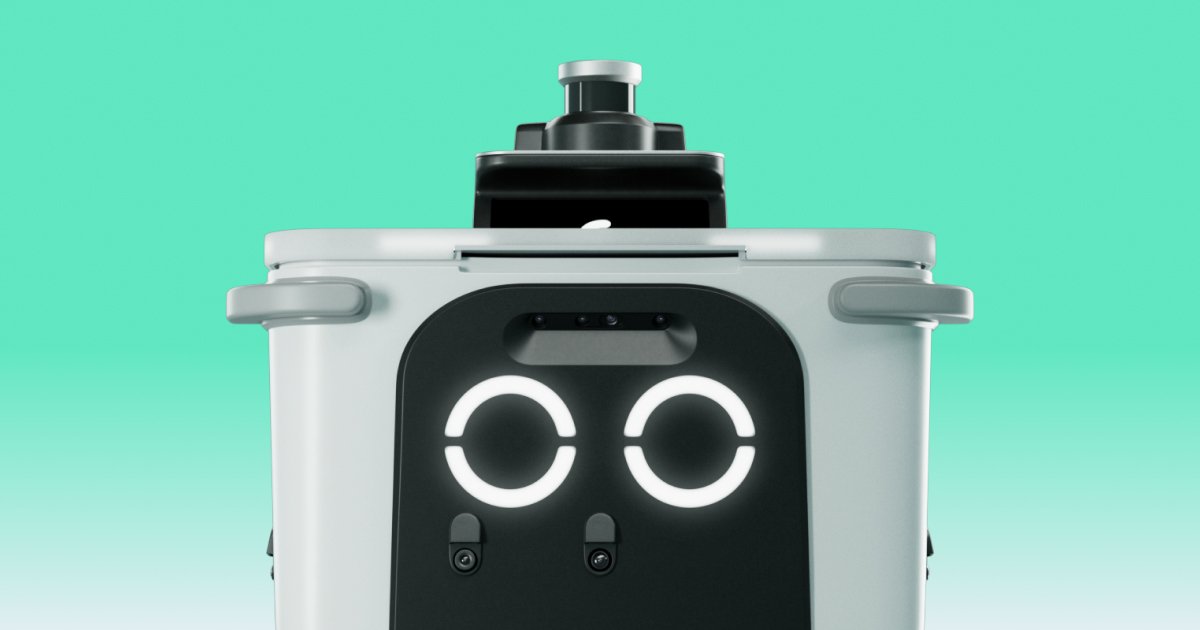
DeliveryServe is an autonomous, electric delivery robot designed for sustainable last-mile food delivery in urban environments. It navigates pedestrian-friendly routes with 24/7 monitoring and real-time tracking, integrating with popular delivery platforms for seamless order fulfillment.
- •Autonomous self-driving delivery robot
- •Electric-powered, sustainable operation
- •Pedestrian-first routing prioritizing public spaces
- •24/7 monitoring and real-time location tracking
- •Algorithmically optimized safe and efficient routes
- •Integration with Uber Eats and DoorDash
- •Secure phone-based unlock mechanism
Detailed specs not disclosed.
Use cases
Industries
Technology stackOur read
Inferred from product specs — click through to the technology wiki:
ResearchComputed
Product comparisonComputed
Each row leads with this company's product, side-by-side with similar ones · click a row to expand full specs, click again to collapse
Serve
Kiwi Delivery Robot

Starship Delivery Robot
Coco 2
Serve Robotics Gen3 Delivery Robot
Nuro R3
Company announcement
News and Media
The company's official social & video channels · external links
News
From third-party news outlets (China & abroad) · external links