Loona
Loona is a small quadrupedal companion robot manufactured by KEYi Tech, featuring an expressive OLED display face and GPT-powered conversational capabilities. The robot incorporates voice and gesture recognition and provides an open SDK for educational and hobbyist development.
Overview and Use Cases
Loona is a compact quadrupedal companion robot designed for interactive engagement with users. Its petite form factor and expressive display-based face enable it to function as a conversational and interactive companion. The robot is intended for use by educators, hobbyists, and individual users seeking an interactive robotic platform.
Key Capabilities
- Expressive OLED face display for visual communication and feedback
- GPT-powered conversation engine for natural language interaction
- Voice recognition for spoken commands and dialogue
- Gesture recognition for physical interaction interpretation
- Open SDK enabling customization and development by external developers
- Quadrupedal locomotion design
Applications
Loona serves multiple use cases within the companion robotics category:
- Educational platforms for learning robotics and AI integration
- Hobbyist robotics projects and experimentation
- Interactive home companion
- Development platform for third-party applications via the open SDK
Manufacturer
Loona is manufactured by KEYi Tech, headquartered in China.
Related videos

Review - Loona Robot Pet Dog ChatGPT-4o Smart AI Companion 2026
Lab Review

Loona Robot Dog Review – ChatGPT-4o AI Pet Worth It?
TechTopiaX

Loona Robot Pet Dog ChatGPT Toys | POV | Would you buy it?
WTI

Changing Loona #loona #loonarobot #loonaedit #petbot #robot #robotfriend #technology #chatgpt #fyp
Arham Fahim

This Robot Dog Has GPT-4?! Meet Loona – The Smartest Pet Ever
Geekbuying Studio

Loona Smart Robot Dog Review 🐶 | ChatGPT-4o AI Companion with Voice & Gesture Control!
TheBuyList
Related entries
 Robot
RobotRelay Delivery Robot
The Relay Delivery Robot is an autonomous indoor delivery robot developed by Relay Robotics (formerly known as Savioke), designed primarily for hospitality and healthcare environments. It navigates hotel corridors and hospital hallways independently, rides elevators without human assistance, and delivers guest amenities, medications, linens, and other supplies directly to rooms or designated drop-off points. Relay is one of the most widely deployed service robots in its category, reportedly completing over one million lifetime deliveries with a publicly cited success rate of approximately 99.8%. With a cargo capacity of around 10 gallons, the robot is compact enough to operate in busy public spaces while carrying a meaningful payload of everyday supplies.
2,914 views
 Robot
RobotSpot
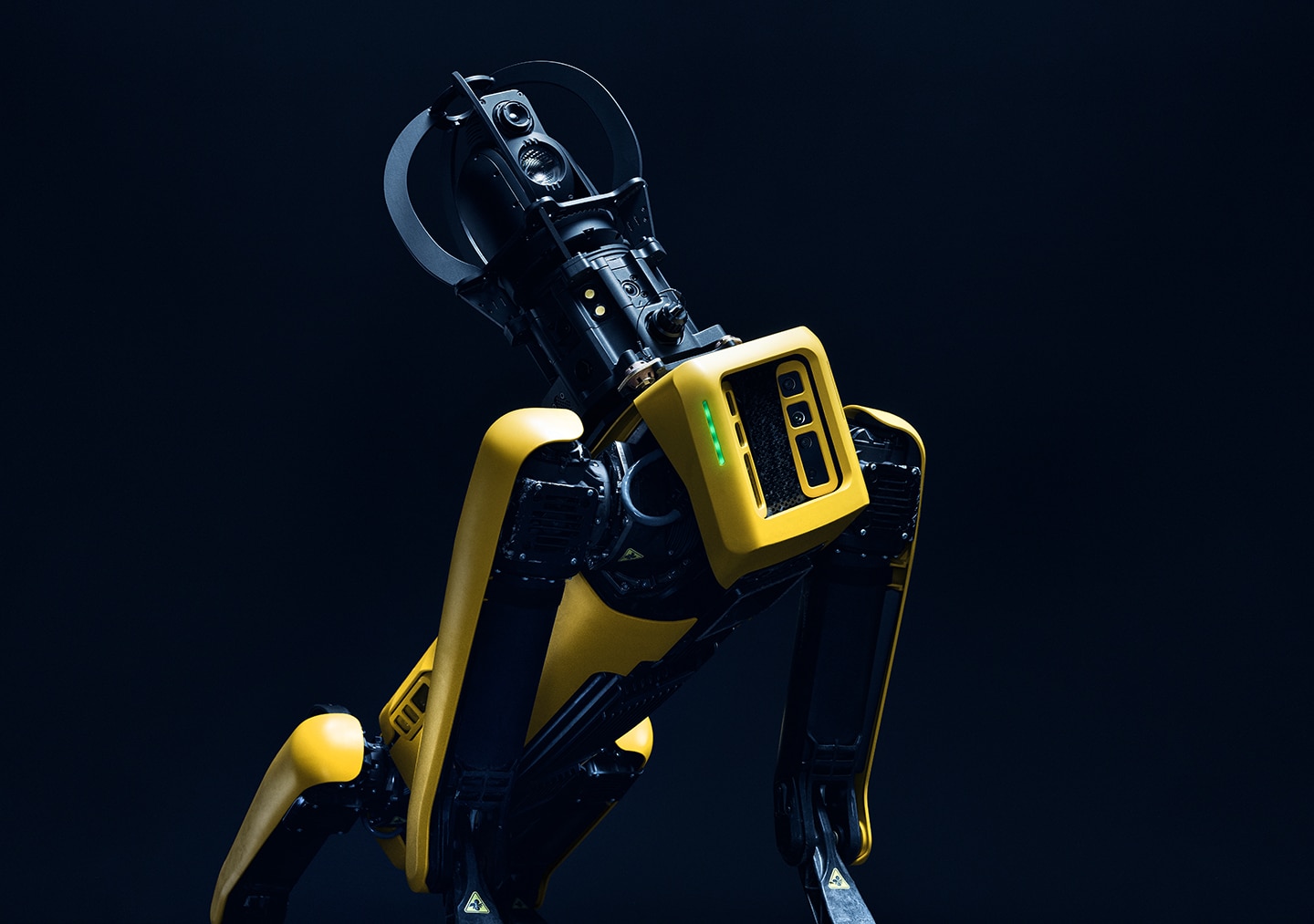
Spot is a four-legged autonomous robot developed by Boston Dynamics, a robotics company headquartered in Waltham, Massachusetts. Designed for inspection, security, and data collection in complex or hazardous environments, Spot can navigate stairs, rough terrain, and confined spaces that are inaccessible to wheeled robots. It is commercially available and has been deployed across industries including utilities, oil and gas, construction, and public safety. Spot supports a modular payload system that accommodates thermal cameras, pan-tilt-zoom (PTZ) cameras, lidar units, methane sensors, and other mission-specific hardware. Boston Dynamics also offers the Orbit fleet-management software platform, enabling operators to schedule autonomous inspection routes, aggregate sensor data, and manage multiple Spot units from a central interface. The robot is widely regarded as one of the most capable and commercially mature legged robots on the market.
1,600 views
 Robot
RobotRealSense Depth Camera D455
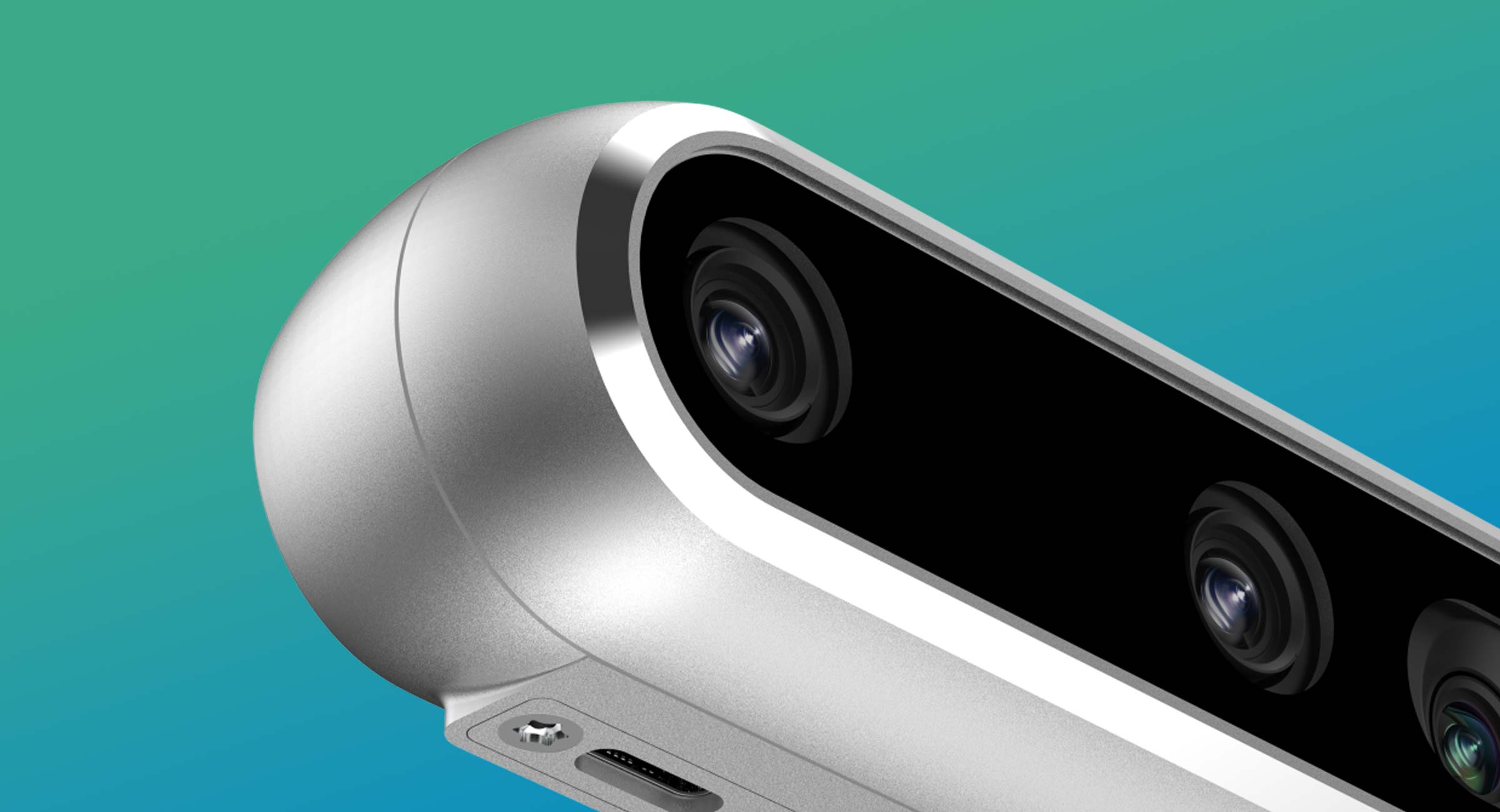
The RealSense Depth Camera D455 is a stereoscopic active-infrared depth camera belonging to Intel's D400 series, designed to capture high-fidelity depth data for robotics, autonomous mobile robots (AMRs), drones, and computer-vision applications. It features a 95 mm stereo baseline — the widest in the D400 lineup at the time of its introduction — which reportedly enables depth error of under 2% at ranges up to approximately 4 metres. Originally developed under the Intel RealSense brand, the D455 and related products were later spun off as part of an independent RealSense business unit following Intel's restructuring of the division around 2021–2022. The camera is widely adopted in research, industrial automation, and humanoid-robot development owing to its compact USB-powered form factor, open SDK support, and relatively accessible price point.
910 views
 Robot
RobotOptimus Gen 2
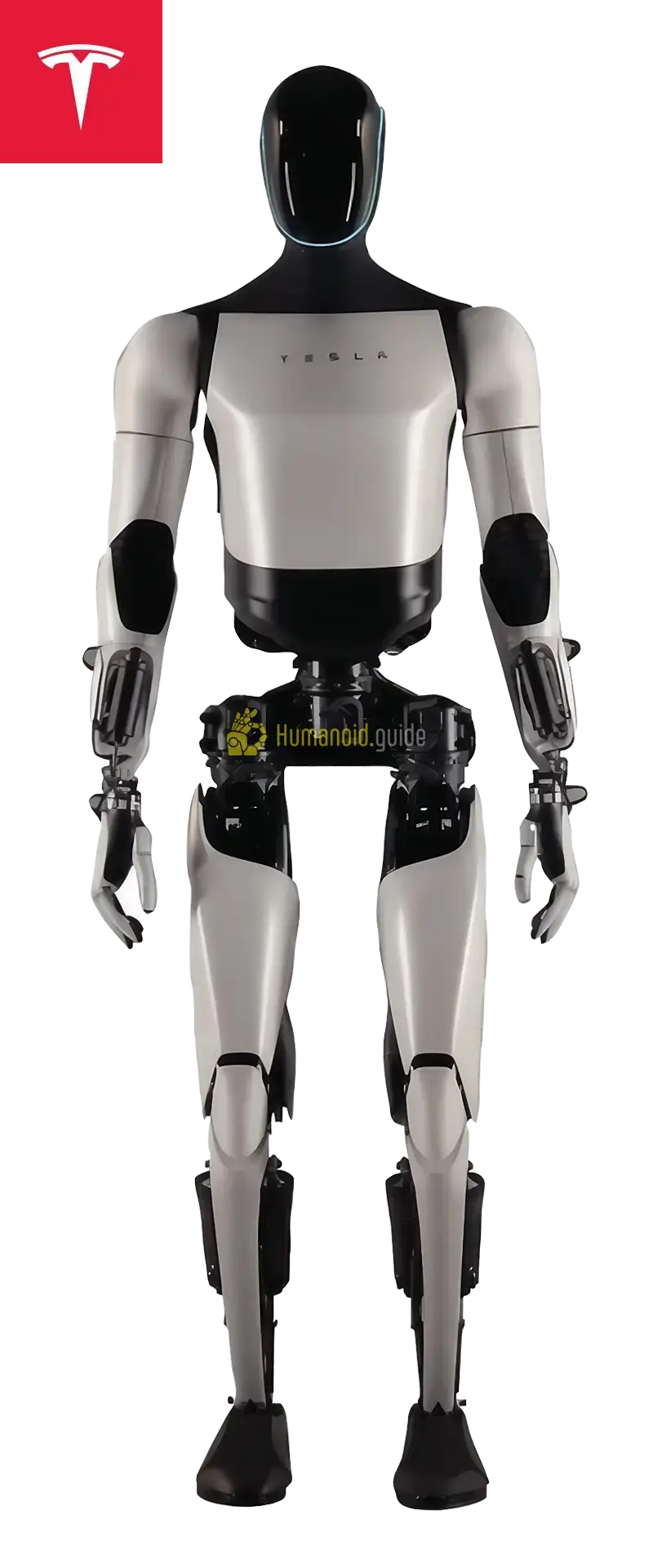
Optimus Gen 2 is a general-purpose humanoid robot developed by Tesla, representing the second major hardware iteration of the company's Optimus program. It is designed to perform a broad range of physical tasks, leveraging perception and motion-planning software derived from Tesla's Full Self-Driving (FSD) stack. As of public reporting, units are used for internal demonstrations and select tasks within Tesla's own manufacturing facilities. Tesla has stated an ambition to eventually offer Optimus at consumer-accessible pricing, positioning it as a mass-market humanoid rather than an industrial-only platform. Compared to its predecessor, Gen 2 reportedly features improved hand dexterity, smoother whole-body motion, and a lighter overall frame, though many detailed specifications remain unconfirmed or subject to ongoing revision as the program continues to iterate.
626 views