Hugo™ Robotic-Assisted Surgery (RAS) System
The Hugo™ Robotic-Assisted Surgery (RAS) System is a modular, multi-arm robotic surgical platform developed by Medtronic, one of the world's largest medical device companies. Designed for minimally invasive surgery (MIS), it provides surgeons with high-definition 3D visualization, wristed instrument articulation, and real-time haptic feedback to enhance precision and control during complex procedures across multiple surgical specialties. Hugo entered clinical use following regulatory clearances in select international markets, with Medtronic positioning it as a flexible, OR-integration-friendly alternative in the growing robotic-assisted surgery segment. The system's modular cart-based architecture is intended to simplify setup and adapt to varied operating room configurations, distinguishing it from more monolithic surgical robot designs.
Overview and Use Cases
The Hugo™ RAS System is Medtronic's flagship entry into the robotic-assisted surgery market. It is designed to support minimally invasive procedures across several surgical disciplines, including urology (such as prostatectomy and nephrectomy), gynecology, and general surgery. By enabling surgeons to operate through small incisions with enhanced dexterity, Hugo aims to reduce patient trauma, shorten hospital stays, and accelerate postoperative recovery compared with open surgery.
The system consists of a surgeon console, a vision system with high-definition 3D imaging, and multiple modular robotic arms mounted on independent carts. This cart-based modularity is a deliberate design choice, allowing hospitals to configure the system according to the specific demands of each procedure and operating room layout.
Key Technical Features
- Modular arm carts: Each robotic arm is housed on its own wheeled cart, enabling flexible positioning around the operating table and straightforward reconfiguration between cases.
- Wristed instrumentation: Instruments articulate with multiple degrees of freedom, replicating and scaling the surgeon's hand movements while filtering physiological tremor.
- High-definition 3D visualization: The system provides immersive stereoscopic imaging to the operating surgeon via a dedicated console.
- Real-time instrument feedback: Sensors relay information about instrument position and interaction, supporting situational awareness during procedures.
- Connectivity and data: Hugo is reported to incorporate data capture capabilities intended to support surgical analytics and, potentially, future AI-assisted guidance features.
Specific payload, torque, or runtime figures have not been publicly detailed by Medtronic in standard product disclosures.
Comparison to Similar Systems
Within Medtronic's portfolio, Hugo occupies the company's surgical robotics segment. Medtronic's broader portfolio spans neuromodulation, cardiac devices, and other robotics-adjacent technologies, but Hugo is its primary soft-tissue surgical robot platform as of public reporting.
Against competitors, Hugo competes most directly with the Da Vinci Surgical System family from Intuitive Surgical, the long-dominant platform in robotic-assisted soft-tissue surgery. The Da Vinci system has a substantially larger installed base and longer clinical track record. Other competitors include the Versius system from CMR Surgical and the Senhance system from Asensus Surgical. Hugo's modular cart architecture is frequently cited as a differentiating factor relative to the more integrated arm-boom designs used by some rivals.
Market Context and Target Buyers
Hugo is positioned in the premium surgical robotics segment, targeting hospitals and health systems seeking to expand or establish robotic surgery programs. Medtronic has emphasized the system's potential for broader global accessibility compared with some incumbent platforms, though specific pricing has not been publicly disclosed. Target buyers include academic medical centers, large community hospitals, and health networks in markets where Medtronic has secured regulatory approval.
As of public reporting, Hugo has received regulatory clearance or approval in a number of international markets, including in Europe (CE Mark) and select countries in Latin America and Asia-Pacific, with ongoing efforts toward broader market access including the United States.
Notable Deployments and Clinical Adoption
Medtronic has reported early clinical use of Hugo at partner hospitals across Europe and other approved markets. Clinical studies and registry data collection have been initiated to build the evidence base for the system's safety and efficacy across its supported indications. Specific named hospital customers have been referenced in Medtronic press releases and conference presentations, though a comprehensive public list of deployments is not available.
Future Outlook
Medtronic has publicly stated its commitment to expanding Hugo's regulatory approvals, broadening its instrument portfolio, and integrating advanced digital and AI-assisted features over time. The robotic-assisted surgery market is projected by multiple industry analysts to grow substantially through the late 2020s, driven by increasing surgeon adoption, expanding indications, and growing patient demand for minimally invasive options. Hugo's long-term competitive position will likely depend on the pace of its regulatory clearances, clinical evidence generation, and the depth of its instrument and software ecosystem relative to more established platforms.
Related entries
 Robot
RobotRelay Delivery Robot
The Relay Delivery Robot is an autonomous indoor delivery robot developed by Relay Robotics (formerly known as Savioke), designed primarily for hospitality and healthcare environments. It navigates hotel corridors and hospital hallways independently, rides elevators without human assistance, and delivers guest amenities, medications, linens, and other supplies directly to rooms or designated drop-off points. Relay is one of the most widely deployed service robots in its category, reportedly completing over one million lifetime deliveries with a publicly cited success rate of approximately 99.8%. With a cargo capacity of around 10 gallons, the robot is compact enough to operate in busy public spaces while carrying a meaningful payload of everyday supplies.
2,783 views
 Robot
RobotSpot
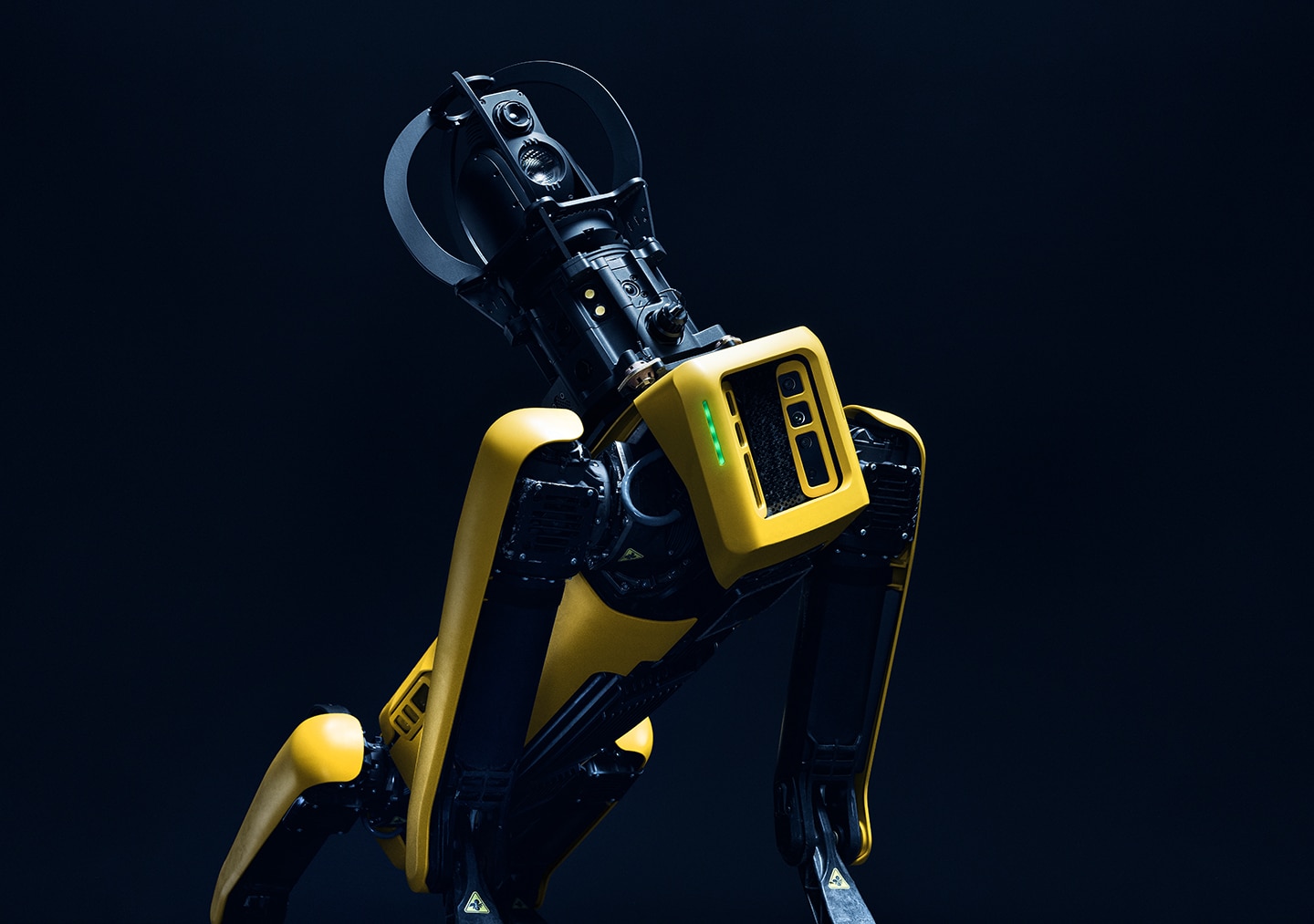
Spot is a four-legged autonomous robot developed by Boston Dynamics, a robotics company headquartered in Waltham, Massachusetts. Designed for inspection, security, and data collection in complex or hazardous environments, Spot can navigate stairs, rough terrain, and confined spaces that are inaccessible to wheeled robots. It is commercially available and has been deployed across industries including utilities, oil and gas, construction, and public safety. Spot supports a modular payload system that accommodates thermal cameras, pan-tilt-zoom (PTZ) cameras, lidar units, methane sensors, and other mission-specific hardware. Boston Dynamics also offers the Orbit fleet-management software platform, enabling operators to schedule autonomous inspection routes, aggregate sensor data, and manage multiple Spot units from a central interface. The robot is widely regarded as one of the most capable and commercially mature legged robots on the market.
1,480 views
 Robot
RobotRealSense Depth Camera D455
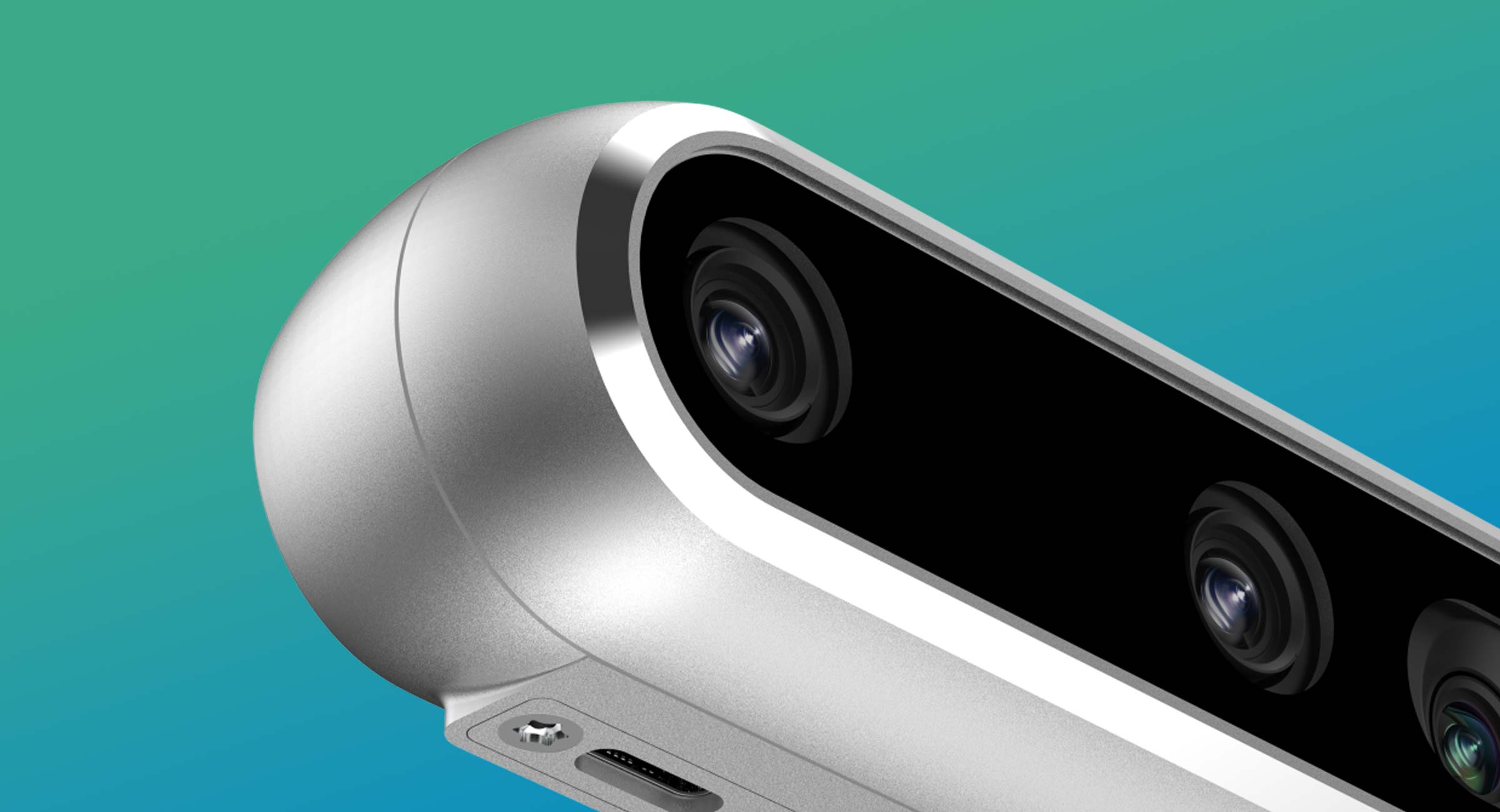
The RealSense Depth Camera D455 is a stereoscopic active-infrared depth camera belonging to Intel's D400 series, designed to capture high-fidelity depth data for robotics, autonomous mobile robots (AMRs), drones, and computer-vision applications. It features a 95 mm stereo baseline — the widest in the D400 lineup at the time of its introduction — which reportedly enables depth error of under 2% at ranges up to approximately 4 metres. Originally developed under the Intel RealSense brand, the D455 and related products were later spun off as part of an independent RealSense business unit following Intel's restructuring of the division around 2021–2022. The camera is widely adopted in research, industrial automation, and humanoid-robot development owing to its compact USB-powered form factor, open SDK support, and relatively accessible price point.
798 views
Rosie 2.0
The Rosie 2.0 is a commercial-grade autonomous robot vacuum developed by Tailos, designed to handle large-scale floor cleaning in business and institutional environments. It is offered in a two-pack configuration, allowing facilities to deploy multiple units simultaneously for broader coverage and more efficient cleaning cycles. Built to commercial durability standards, the Rosie 2.0 combines intelligent navigation with powerful suction technology to reduce reliance on manual labor and improve facility maintenance consistency. It targets businesses, hospitality venues, retail spaces, and other high-traffic environments where reliable, automated cleaning is a priority.
531 views