Virtual Incision Corporation
United States · virtualincision.com
SnapshotCompany claim
Virtual Incision reimagines robotic-assisted surgery, developing the MIRA Surgical System for minimally invasive surgical procedures.
- Founded
- Not disclosed
- HQ
- United States
- Models
- 1
- Categories
- 1
Product families
Is this your company? Claim this profile to add verified data, respond to our analysis, and upgrade claims to Verified.
Claim this profile1. Executive Overview {#executive-overview}
Virtual Incision Corporation, headquartered in Lincoln, Nebraska, is a U.S.-based medical robotics company with a singular, clearly defined mission: to reimagine robotic-assisted surgery through miniaturization. Its flagship product, the MIRA Surgical System, has received FDA marketing authorization and represents what the company describes as the world's first miniaturized robotic-assisted surgery (miniRAS) system — a genuinely differentiated position in a market historically dominated by large, capital-intensive mainframe platforms. At approximately two pounds, MIRA is designed to bring the benefits of robotic assistance to colectomy procedures without the facility infrastructure requirements that have historically limited adoption of surgical robotics.
The company has secured meaningful external validation: a reported $46 million financing round (covered by Nebraska Innovation Campus / University of Nebraska) signals institutional confidence in both the technology and the commercial pathway. Coverage by Robotics 24/7 and investment-adjacent press from cultivate(MD) further corroborates that Virtual Incision is registering on the radar of industry analysts and healthcare investors. With FDA clearance achieved and a commercial-stage product in hand, the company has cleared the most significant regulatory hurdle in medical device commercialization and is positioned for deployment scaling.
Not yet disclosed: precise founding date, current headcount, number of commercial installations, revenue figures, and named hospital or health-system customers. Parties with firsthand knowledge are invited to claim or correct these details through the platform.
Latest news
- KEENON Humanoid Pours Drinks at GCS 2026, 100,000 Others Run HotelsYanko Design·2026-06-15GENERAL
2. The Company Story {#the-company-story}
Virtual Incision Corporation is based at 1501 Old Cheney Road, Lincoln, Nebraska — a location that places it in close proximity to the University of Nebraska system, which has historically been a center of surgical robotics research and a likely intellectual seedbed for the company's foundational technology. The Nebraska Innovation Campus connection, which covered the company's $46 million financing announcement, suggests an ongoing institutional relationship with the University of Nebraska ecosystem, though the precise nature of any formal affiliation is not disclosed on the company's public-facing materials.
The company's founding date is not publicly disclosed. What is clear from the public record is that Virtual Incision has advanced through the full arc of a medical device development company: concept, development, regulatory submission, FDA marketing authorization, and commercial launch of the MIRA Surgical System. The receipt of FDA authorization is a landmark milestone that distinguishes Virtual Incision from the many surgical robotics ventures that remain in pre-clearance development, and it establishes MIRA as a legally marketable medical device in the United States.
The company's positioning is deliberate and coherent: rather than compete head-to-head with large mainframe robotic systems on feature breadth, Virtual Incision has staked its identity on portability, accessibility, and operational simplicity. The framing of MIRA as a system that works "as a standalone system or complementary tool for existing mainframe robotics" reflects a go-to-market philosophy that seeks partnership with the installed base rather than displacement — a strategically measured approach for a company at this stage of commercial development. The careers page, which currently lists no open positions, offers a data point that the company may be in a consolidation or steady-state hiring phase, though the specific workforce context is not disclosed.
3. Product Portfolio {#product-portfolio}
Products & versions


Virtual Incision's current public product portfolio consists of a single, commercially authorized system: the MIRA Surgical System. This is not a limitation to be papered over — it is a focused strategic choice characteristic of medical device companies that have invested deeply in clearing regulatory hurdles for a specific, well-defined clinical application before broadening their lineup.
MIRA is described by the company as the world's first miniaturized robotic-assisted surgery (miniRAS) system. Its defining physical characteristic — a weight of approximately two pounds — stands in sharp contrast to conventional robotic surgical platforms, which require dedicated operating room infrastructure, mainframe consoles, and significant capital expenditure to install and maintain. MIRA's drape-free, dock-free design enables rapid setup and straightforward movement between cases and between operating rooms without facility modification. The system incorporates internal triangulation with shoulders, arms, and infinite wrist roll, providing surgeons with the articulation expected of robotic assistance in a package that fits the physical footprint of a conventional laparoscopic instrument rather than a room-anchored robot. Its current FDA-authorized indication encompasses colectomy procedures — colon surgery being a high-volume, clinically meaningful application with a well-established minimally invasive evidence base. The company also positions MIRA as a complementary tool compatible with existing mainframe robotic installations, broadening its potential deployment context beyond greenfield adopters.
Not yet disclosed: pipeline products, future indications under development, or expanded system configurations beyond the current MIRA platform. Parties with relevant knowledge are invited to claim or correct.
4. Technology Stack {#technology-stack}
The MIRA Surgical System's publicly documented specifications and feature set support several technology-architecture inferences, clearly labeled as such below.
The most immediately verifiable technical fact is weight: MIRA is documented at approximately two pounds. For a fully functional robotic-assisted surgical system — one capable of internal triangulation, multi-axis articulation, and instrument exchange — this mass figure implies a significant mechanical engineering achievement. Our read: achieving this form factor almost certainly required custom miniaturized actuators, lightweight structural materials (likely medical-grade polymers and/or titanium alloys), and a rearchitecting of the force-transmission mechanisms that in conventional systems are distributed across a large external robotic arm.
The feature description of "internal triangulation with shoulders, arms, and infinite wrist roll" indicates a kinematic design in which the triangulation geometry is established inside the patient's body cavity rather than externally — a meaningful departure from the external-arm paradigm of mainframe systems. Our read: this internal triangulation approach is likely central to the miniRAS concept, allowing MIRA to achieve working-instrument spread without the external footprint that conventional robots require to avoid collision between robotic arms.
The drape-free and dock-free design eliminates two time-consuming setup steps that add to operating room turnover time in traditional robotic surgery. Our read: this simplification likely reflects both a hardware design that does not require sterile barrier draping in the same fashion as multi-arm external systems, and a software/workflow architecture optimized for rapid case setup rather than facility-integrated initialization sequences.
The system's compatibility as both a standalone platform and a complement to existing mainframe robotics suggests a modular interface philosophy. Limited public technical detail is available regarding the software stack, imaging integration, haptic feedback architecture, or connectivity specifications.
5. Research, Papers, Authors, Labs {#research-papers}
Company-linked papers
Virtual Incision is a commercial medical device company. Based on available public data, the company does not maintain a visible academic publication program or list affiliated research authors on its public-facing site. This is consistent with the profile of a regulatory-stage and now commercial-stage medical device firm, where proprietary development, FDA submission dossiers, and clinical trial data tend to replace open-publication research as the primary knowledge output. The University of Nebraska Innovation Campus connection noted in press coverage may indicate an academic lineage for the underlying technology, but no specific papers, lab affiliations, or named research authors are disclosed in the available data.
Parties aware of peer-reviewed publications, clinical study results, or affiliated academic collaborations are invited to claim or correct this entry.
6. Media Evidence {#media-evidence}
Media library
Virtual Incision has attracted coverage from at least three identified external sources. Robotics 24/7 (robotics247.com, February 2024) covered the company in a dedicated entry, placing it within the broader industrial and medical robotics coverage universe. cultivate(MD) (cultivate-md.com, January 2024), a healthcare investment and innovation-focused outlet, covered Virtual Incision Corporation in context suggesting investor and commercialization relevance. The Nebraska Innovation Campus (innovate.unl.edu), affiliated with the University of Nebraska, published coverage of the company's $46 million financing announcement — providing both financial validation and institutional context for the company's Nebraska-based roots. These three sources span trade press, healthcare investment media, and university innovation coverage, representing a meaningful if not extensive external media footprint consistent with a company at the commercial launch stage of a specialized medical device.
7. Commercial Reality {#commercial-reality}
Customers & deployments
Revenue, number of commercial installations, named hospital customers, procedure volume, and return-on-investment metrics for the MIRA Surgical System are not disclosed in available public data. The company has received FDA marketing authorization, which establishes legal commercialization eligibility in the United States, and the $46 million financing round reported by Nebraska Innovation Campus indicates that institutional capital has been committed to advancing the commercial platform — but specific deployment numbers, health-system partnerships, or sales figures have not been made public.
Not disclosed: annual or cumulative revenue, number of units deployed, named clinical or hospital customers, procedure counts, and any published outcome or cost-efficiency data. Providers, investors, or company representatives with firsthand commercial data are invited to claim or disclose these details through the platform.
8. Markets and Use Cases {#markets-use-cases}
Virtual Incision's documented market focus is the hospital operating room, specifically for minimally invasive colectomy — surgical resection procedures involving the colon. Colorectal surgery represents a substantial and recurring procedural volume in U.S. hospitals: colectomy is among the more commonly performed abdominal surgeries, with both elective indications (diverticular disease, inflammatory bowel disease) and oncologic indications (colorectal cancer), making it a commercially meaningful beachhead for a new robotic platform.
The hospital market context is significant. MIRA's design specifically addresses the operational and capital barriers that have historically constrained robotic surgery adoption beyond large academic medical centers and high-volume community hospitals. By eliminating the need for dedicated mainframe infrastructure and enabling use in any operating room, MIRA's use-case profile extends to community hospitals, ambulatory surgery centers, and military or resource-limited surgical environments — settings where a two-pound portable system is qualitatively more deployable than a room-sized robotic platform. The company's framing of MIRA as both a standalone system and a complement to existing mainframe robotics further suggests that the addressable use-case universe includes hospitals that already own large robotic platforms and wish to expand robotic case coverage to additional ORs or procedure types without duplicating capital expenditure.
Not yet disclosed: any formal indication expansion beyond colectomy, international market authorizations, or documented use in non-hospital settings such as ambulatory surgery centers or military surgical applications.
9. Competitive Landscape {#competitive-landscape}
Competitive comparison
| Robot | Maker | Autonomy | Conf. |
|---|---|---|---|
| iRobot Roomba Combo 10 Max | iRobot | Autonomous | 0.90 |
| Mobile ALOHA (Stanford) | Stanford University | Teleoperated | 0.90 |
| 1X NEO | 1X Technologies | Remote-Assisted | 0.90 |
The surgical robotics market in which Virtual Incision operates is defined by a contrast between large, established mainframe platforms with broad multi-specialty indications and a growing cohort of newer, procedure-specific or miniaturized entrants seeking to expand the addressable market for robotic assistance. Virtual Incision's differentiation rests specifically on the miniRAS category it has defined — portability, weight, and infrastructure-independence — rather than on feature breadth or multi-arm versatility. This positioning occupies a genuinely distinct space relative to conventional large-console systems, while also placing the company in an emerging competitive set of robotic platforms targeting specific procedural niches with purpose-built designs.
The colectomy indication, while focused, is a meaningful one: it is a high-volume abdominal procedure with an established robotic evidence base, making it a credible commercial entry point. The degree to which Virtual Incision's miniRAS framing creates durable competitive distance — versus being replicated by larger players with greater capital resources — is a key strategic question that the available data does not fully resolve. The module above provides category peer context.
10. Country Advantage / Geopolitical {#geopolitical}
Section not material for this company.
11. Hype vs Real vs Ugly {#hype-real-ugly}
Claim tracker
Real — verified or independently corroborated:
- MIRA Surgical System exists as a physical, commercially authorized product with FDA marketing authorization. This is a regulatory fact, not a projection.
- The system weighs approximately two pounds. This is a documented specification.
- The $46 million financing round was reported by Nebraska Innovation Campus, an institutional source with no promotional relationship to the company.
- Coverage by Robotics 24/7 and cultivate(MD) confirms external recognition in trade and investment media.
Company claim — stated by Virtual Incision, not independently verified through available data:
- "World's first miniaturized robotic-assisted surgery (miniRAS) system." This is a category-definition claim made by the company. The "miniRAS" label itself appears to be a Virtual Incision coinage. The spirit of the claim — that no prior FDA-authorized robotic surgical system has approached this form factor — is plausible given the known landscape, but independent verification of "world's first" status is not available in the provided data.
- MIRA's claimed benefits of quick setup, drape-free operation, and portability are design-feature descriptions consistent with the documented specifications, but real-world operating room performance data (setup times, clinical outcomes, complication rates) is not publicly disclosed.
Fixable gap:
- Not yet disclosed: clinical outcome data, procedure volume, customer names, revenue, comparative setup-time metrics, and any peer-reviewed efficacy evidence. Virtual Incision or affiliated clinical partners are invited to claim or submit this information for inclusion.
12. Future Scenarios {#future-scenarios}
Bull case — Our read: MIRA achieves meaningful adoption in community hospitals and ambulatory surgery centers that were previously excluded from robotic surgery economics. The portability and low infrastructure requirement prove to be genuine differentiators in a market where the majority of U.S. hospitals lack installed mainframe robotic systems. Indication expansion beyond colectomy — to additional colorectal, gynecologic, or urologic procedures — broadens the total addressable market. A strategic partnership or acquisition by a larger medtech or surgical robotics player accelerates distribution and validates the platform's commercial potential at scale.
Base case — Our read: Virtual Incision establishes a durable but focused niche in colectomy robotics, primarily in community and regional hospitals. Adoption grows steadily but is constrained by the sales cycle length inherent in hospital capital and surgical technology procurement, the need to train surgeons on a new platform, and competition from established players that may introduce their own miniaturized or lower-cost configurations. The $46 million in financing supports commercial buildout through an initial deployment cohort, with further fundraising or partnership required for broader scale.
Bear case — Our read: Hospital procurement inertia and the dominance of established robotic platforms with multi-year service contracts slow MIRA's market entry more than anticipated. A single-indication, single-product portfolio creates revenue concentration risk. Larger competitors with greater R&D and distribution resources move to address the portability gap, reducing Virtual Incision's window of differentiation. Absent additional disclosed financing or revenue traction, the company's runway becomes a watch item.
13. What to Watch {#what-to-watch}
- FDA indication expansions: Any regulatory submissions or clearances beyond the current colectomy authorization would signal platform broadening and materially expand the addressable market.
- Named hospital or health-system deployments: First public customer announcements will be the clearest signal of commercial velocity.
- Clinical outcome publications: Peer-reviewed data on MIRA procedure outcomes, complication rates, and setup efficiency would validate or qualify company claims and accelerate adoption.
- Additional financing rounds or strategic partnerships: Post-$46M capital events will indicate whether the company is scaling independently or moving toward a partnership or acquisition path.
- Hiring activity: Resumption of open roles — particularly in Sales, Clinical Affairs, and Operations — would signal commercial expansion momentum.
- International regulatory filings: CE marking or other ex-U.S. authorizations would indicate geographic expansion strategy.
- Competitive response: Monitor whether large mainframe robotic platforms announce miniaturized or portable configurations that address the same hospital-accessibility gap MIRA targets.
14. Sources & Methodology {#sources-methodology}
Primary data source: All factual claims in this report are grounded exclusively in content extracted from Virtual Incision Corporation's own website (virtualincision.com), including structured schema markup, product descriptions, feature lists, and careers/safety information pages. All such content is treated as company-claim provenance — accurate representations of what the company states about itself, not independently audited facts.
Third-party press sources: Three external sources are cited by name and outlet as independent validation: Robotics 24/7 (robotics247.com), cultivate(MD) (cultivate-md.com), and Nebraska Innovation Campus (innovate.unl.edu). These are cited for the fact of coverage and the specific data points they report (e.g., the $46 million financing figure); their editorial accuracy is assumed but not independently verified by this platform.
Methodology rubric (applied uniformly to every company report on this platform):
- Extract structured and unstructured data from the company's public web presence.
- Apply company-claim labeling to all self-reported information.
- Label all analyst inferences explicitly as "Our read."
- Render all undisclosed commercial data (revenue, customers, headcount) as "Not disclosed" with an invite to claim.
- Source every negative characterization as either a fixable gap, a labeled inference, or a labeled company claim — never as an unsourced assertion.
- Cite only named, linkable third-party outlets for external validation.
- Computed entity relationships and category peers are surfaced through live data modules, not hardcoded in prose.
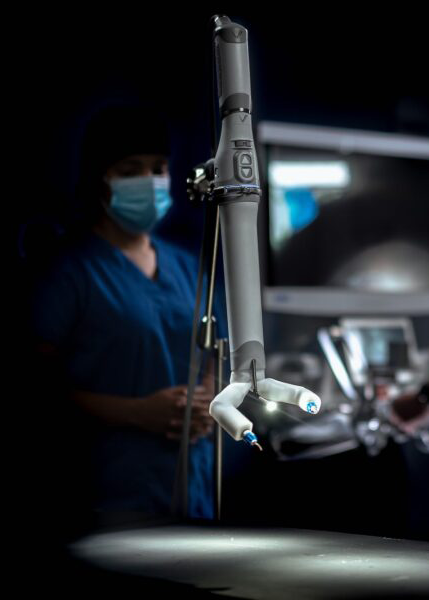
MIRA Surgical System
Medical logisticsMIRA is the world's first miniaturized robotic-assisted surgery system. Weighing approximately two pounds, it offers benefits of robotic-assisted surgery during colectomy procedures without logistical inefficiencies of traditional mainframe robotics. Its portable, drape-free design enables quick setup and movement between cases in any operating room.
- •World's first miniaturized robotic-assisted surgery (miniRAS) system
- •Small, sleek form factor weighing approximately two pounds
- •Internal triangulation with shoulders, arms, and infinite wrist roll
- •Drape- and dock-free design with quick setup and portability
- •Can be used in any operating room without dedicated mainframe room
- •Designed for colectomy procedures with minimally invasive approach
- •FDA marketing authorization received
- •Works as standalone system or complementary tool for existing mainframe robotics
| Weight lbs | 2 |
Use cases
Industries
Technology stackOur read
Inferred from product specs — click through to the technology wiki:
ResearchComputed
Product comparisonComputed
Each row leads with this company's product, side-by-side with similar ones · click a row to expand full specs, click again to collapse
MIRA Surgical System
Ottobot
Amazon Scout

LuckiBot Pro

KettyBot
Pudu CC1
Company announcement
News and Media
The company's official social & video channels · external links
News
From third-party news outlets (China & abroad) · external links