Sphero BOLT
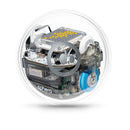
The Sphero BOLT is a programmable robotic ball designed primarily for K–12 STEM education. Manufactured by Sphero, it features a transparent shell housing an 8×8 RGB LED matrix, an infrared sensor, a compass, an accelerometer, and a gyroscope, enabling a wide range of coding and interactive activities. Students can program the BOLT using block-based drag-and-drop coding, a drawing-based interface, JavaScript, or Python through the Sphero Edu app, making it accessible to beginners while offering depth for more advanced learners. The BOLT is positioned as a classroom-ready tool, supporting multi-robot activities through its infrared communication capability, which allows multiple BOLTs to sense and interact with one another. It is rechargeable via an inductive charging cradle and is designed to be durable enough for repeated classroom use. Sphero markets the BOLT to educators, school districts, and coding camps as a versatile, engaging platform for teaching computational thinking and programming fundamentals.
Overview and Use Cases
The Sphero BOLT is a spherical educational robot built around the idea that learning to code should be tactile, visual, and fun. Its transparent polycarbonate shell reveals an internal 8×8 RGB LED matrix that can display animations, scrolling text, and real-time sensor data, giving students immediate visual feedback from their programs. The BOLT is used in a variety of educational contexts, including:
- Classroom coding lessons aligned to computer science standards
- STEM clubs and after-school programs focused on robotics and programming
- Coding camps for elementary through high school students
- Multi-robot collaborative activities using infrared communication between units
The Sphero Edu app provides a library of educator-created activities and lesson plans, lowering the barrier for teachers who may not have a deep coding background.
Key Technical Features
The BOLT's sensor suite and programmable outputs set it apart from simpler robotic toys:
- 8×8 RGB LED matrix: Displays graphics, text, and data visualizations
- Infrared sensor: Enables communication and proximity detection between multiple BOLT units
- Compass (magnetometer): Allows heading-aware navigation programming
- Accelerometer and gyroscope: Detect motion, orientation, tilt, and collision events
- Bluetooth connectivity: Pairs with iOS, Android, macOS, and Chromebook devices via the Sphero Edu app
- Inductive charging: The BOLT charges wirelessly in its cradle; reported runtime is approximately two hours of active use on a full charge, though real-world results vary by activity intensity
- Waterproof shell: The sealed design reportedly makes it water-resistant, adding to classroom durability
Programming options span four modalities — block-based (Scratch-like), draw (trace a path on screen), JavaScript, and Python — allowing the same hardware to serve students across multiple grade levels and skill stages.
Comparison to Similar Robots
Within Sphero's broader ecosystem, the BOLT occupies a mid-to-upper tier among Sphero's educational lineup. It offers more sensors and the LED matrix compared to the entry-level Sphero Mini, while remaining more approachable and lower-cost than Sphero's RVR programmable rover platform.
Compared to competitors in the K–12 educational robotics space:
- mBot2 (Makeblock): A wheeled robot with a more traditional form factor, better suited to physical construction challenges; the BOLT's spherical design emphasizes motion and sensor-based coding over building.
- NAO 6 (SoftBank Robotics / now Aldebaran): A humanoid robot targeting higher education and research; far more complex and expensive than the BOLT, which is aimed at younger or introductory learners.
- Ozobot Evo: Another small programmable robot for classrooms, but with a simpler sensor set and no LED matrix display comparable to the BOLT's.
Market Context and Target Buyers
The Sphero BOLT is priced in the mid-range of the educational robotics market — above basic coding toys but well below professional or research-grade platforms. It is typically sold both individually and in classroom packs (often sets of 15 units bundled with charging cradles). Target buyers include:
- K–12 schools and school districts procuring STEM tools
- Public libraries and maker spaces
- Private coding academies and summer camps
- Individual parents seeking an advanced coding toy for motivated learners
Spherical robots have a niche appeal: their motion is omnidirectional and visually engaging, which can sustain student interest longer than stationary or simple wheeled robots.
Deployments and Notable Adoption
Spheroy has reported broad adoption of the BOLT across school districts in the United States and internationally, though specific district names and deployment scales are not consistently disclosed in public materials. The Sphero Edu platform, which supports the BOLT, reportedly hosts a large community of educators who share lesson plans and activities. The BOLT has been featured in various STEM education initiatives and coding awareness campaigns, though detailed partnership specifics are not always publicly confirmed.
Future Outlook
As coding education continues to expand in K–12 curricula globally, demand for accessible, multi-modal programming platforms like the BOLT is expected to remain steady. Sphero has historically updated its app and curriculum resources more frequently than its hardware, suggesting the BOLT's longevity may depend on continued software support and curriculum alignment. Competition from lower-cost alternatives and the growing availability of free software-based coding tools may pressure the hardware segment, but the BOLT's combination of physical engagement and sensor richness continues to differentiate it in the classroom robotics market.
Related videos

Related entries
 Robot
RobotRelay Delivery Robot
The Relay Delivery Robot is an autonomous indoor delivery robot developed by Relay Robotics (formerly known as Savioke), designed primarily for hospitality and healthcare environments. It navigates hotel corridors and hospital hallways independently, rides elevators without human assistance, and delivers guest amenities, medications, linens, and other supplies directly to rooms or designated drop-off points. Relay is one of the most widely deployed service robots in its category, reportedly completing over one million lifetime deliveries with a publicly cited success rate of approximately 99.8%. With a cargo capacity of around 10 gallons, the robot is compact enough to operate in busy public spaces while carrying a meaningful payload of everyday supplies.
2,732 views
 Robot
RobotSpot
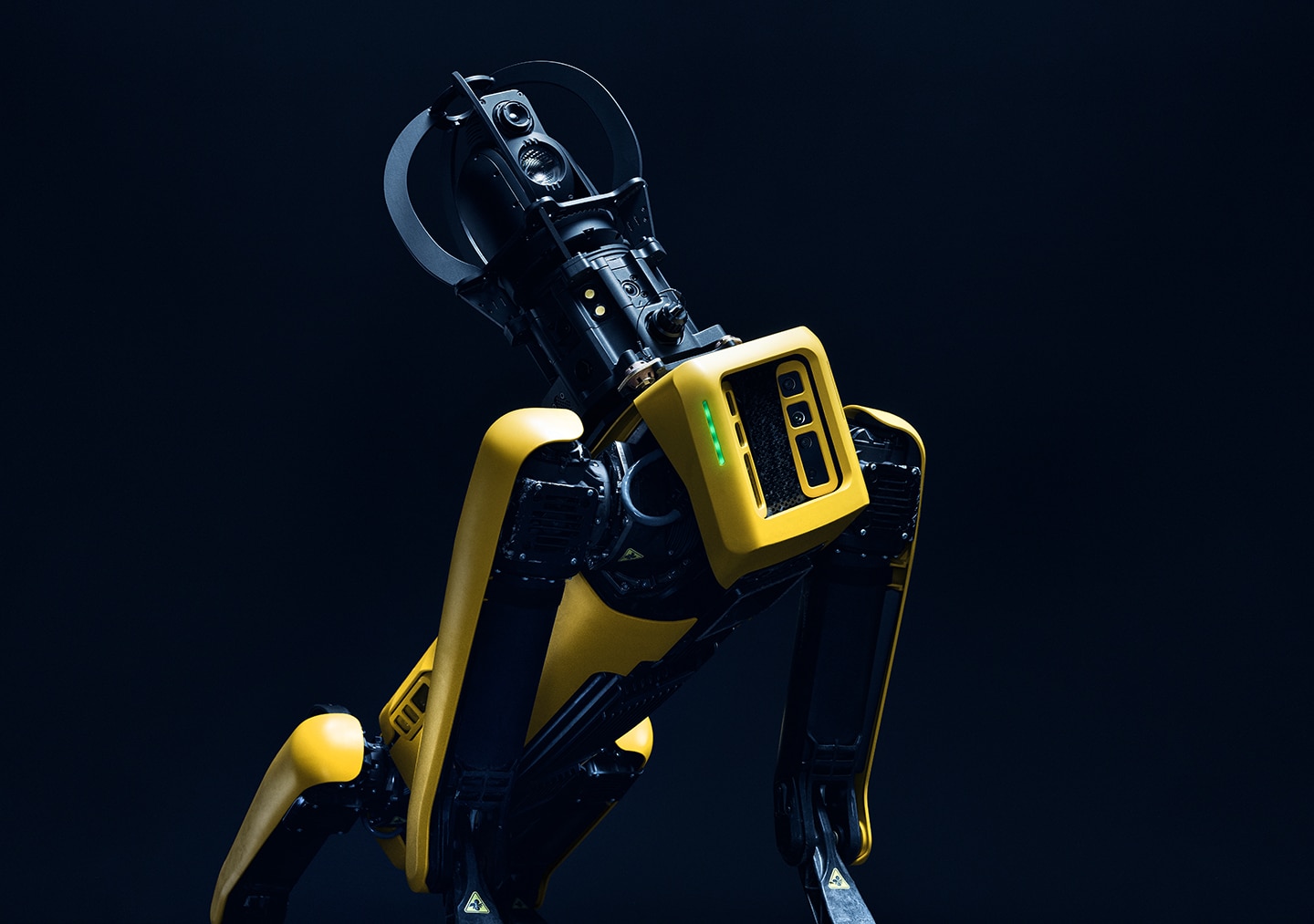
Spot is a four-legged autonomous robot developed by Boston Dynamics, a robotics company headquartered in Waltham, Massachusetts. Designed for inspection, security, and data collection in complex or hazardous environments, Spot can navigate stairs, rough terrain, and confined spaces that are inaccessible to wheeled robots. It is commercially available and has been deployed across industries including utilities, oil and gas, construction, and public safety. Spot supports a modular payload system that accommodates thermal cameras, pan-tilt-zoom (PTZ) cameras, lidar units, methane sensors, and other mission-specific hardware. Boston Dynamics also offers the Orbit fleet-management software platform, enabling operators to schedule autonomous inspection routes, aggregate sensor data, and manage multiple Spot units from a central interface. The robot is widely regarded as one of the most capable and commercially mature legged robots on the market.
1,211 views
 Robot
RobotRealSense Depth Camera D455
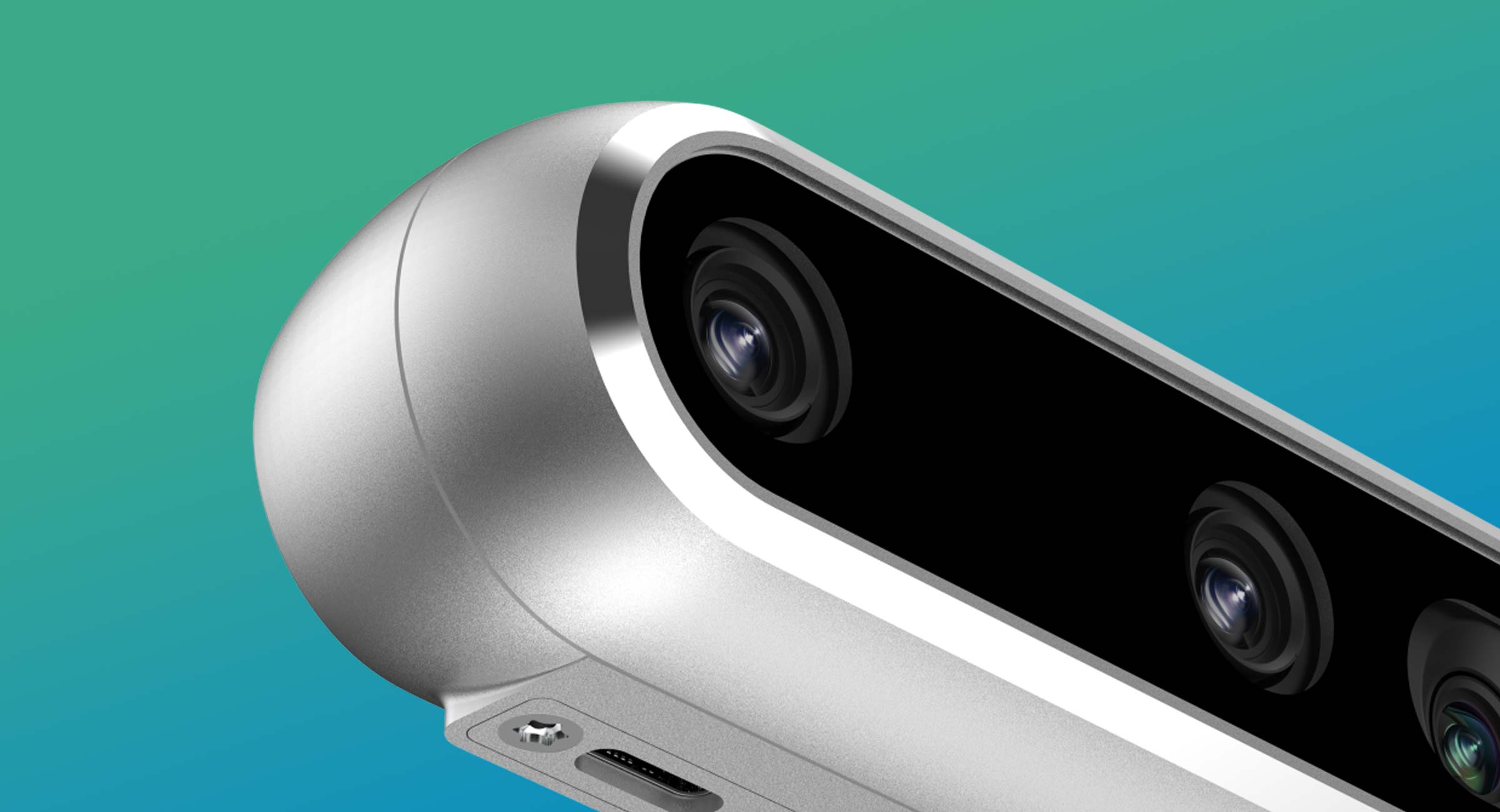
The RealSense Depth Camera D455 is a stereoscopic active-infrared depth camera belonging to Intel's D400 series, designed to capture high-fidelity depth data for robotics, autonomous mobile robots (AMRs), drones, and computer-vision applications. It features a 95 mm stereo baseline — the widest in the D400 lineup at the time of its introduction — which reportedly enables depth error of under 2% at ranges up to approximately 4 metres. Originally developed under the Intel RealSense brand, the D455 and related products were later spun off as part of an independent RealSense business unit following Intel's restructuring of the division around 2021–2022. The camera is widely adopted in research, industrial automation, and humanoid-robot development owing to its compact USB-powered form factor, open SDK support, and relatively accessible price point.
651 views
Rosie 2.0
The Rosie 2.0 is a commercial-grade autonomous robot vacuum developed by Tailos, designed to handle large-scale floor cleaning in business and institutional environments. It is offered in a two-pack configuration, allowing facilities to deploy multiple units simultaneously for broader coverage and more efficient cleaning cycles. Built to commercial durability standards, the Rosie 2.0 combines intelligent navigation with powerful suction technology to reduce reliance on manual labor and improve facility maintenance consistency. It targets businesses, hospitality venues, retail spaces, and other high-traffic environments where reliable, automated cleaning is a priority.
511 views