Security robots outdoor patrolling, video & thermal surveillance for security service companies
SMP Robotics produces a line of outdoor autonomous security robots designed to perform continuous perimeter patrols and surveillance for security service companies. These robots integrate both standard video cameras and thermal imaging sensors, enabling round-the-clock monitoring of large facilities, industrial sites, and critical infrastructure in varied weather and lighting conditions. Built for rugged outdoor deployment, the robots navigate autonomously along pre-programmed routes and transmit real-time video and alert data to remote operators. They are purpose-built to supplement or reduce reliance on human guards, offering security companies a scalable, cost-effective tool for site protection and threat detection.

Overview and Use Cases
SMP Robotics' outdoor security robots are engineered specifically for autonomous patrolling in open and semi-open environments. Their primary customers are security service companies that manage large or geographically dispersed sites where continuous human patrol is expensive or logistically difficult. Typical deployment scenarios include:
- Industrial facilities and warehouses requiring perimeter monitoring after hours
- Critical infrastructure such as power plants, water treatment facilities, and data centers
- Large commercial campuses and logistics hubs
- Ports, airports, and transportation yards where coverage area is extensive
The robots are intended to operate as a force multiplier, allowing a smaller number of human security personnel to monitor larger areas through real-time feeds and automated alerts.
Key Technical Features
While SMP Robotics does not always publish exhaustive technical specifications publicly, the robots are broadly described as featuring:
- Integrated video cameras for standard visible-light surveillance, reportedly supporting HD resolution
- Thermal imaging cameras for detecting heat signatures of people, vehicles, or fire hazards in low-light or zero-visibility conditions
- Autonomous navigation using GPS and/or onboard sensor fusion, enabling pre-programmed patrol routes without continuous remote control
- Rugged outdoor chassis designed to handle uneven terrain, rain, dust, and temperature extremes
- Real-time data transmission to a central monitoring station or security operations center (SOC)
- Obstacle detection and avoidance to safely navigate around unexpected obstructions
Runtime, payload capacity, and specific sensor models are not consistently disclosed in public materials; prospective buyers are advised to consult SMP Robotics directly for current specifications.
Comparison to Similar Robots
Within the outdoor security robot market, SMP Robotics competes with several other manufacturers:
- Knightscope (K5, K7) – U.S.-based robots widely deployed in corporate campuses and parking lots; known for their distinctive tall cylindrical form factor and cloud-connected analytics
- Boston Dynamics Spot – A quadruped platform increasingly used for industrial inspection and security; highly capable on rough terrain but positioned at a higher price point
- Cobalt Robotics – Focuses on indoor/outdoor hybrid environments with a human-in-the-loop telepresence model
- ANYbotics ANYmal – Quadruped aimed at industrial inspection, overlapping with security use cases
SMP Robotics differentiates itself by focusing specifically on outdoor wheeled patrol for security service companies as an end customer, rather than targeting end-user enterprises directly.
It is worth noting that SMP Robotics' sibling product in the broader robotics landscape — such as Bear Robotics' Servi Q hospitality robot — operates in an entirely different vertical (food service), underscoring how robotics manufacturers often specialize by environment and task type.
Market Context and Target Buyers
SMP Robotics positions its outdoor security robots in the professional security services market, targeting:
- Contract security companies looking to differentiate their service offerings
- Facility managers at large industrial or commercial sites
- Government and municipal agencies responsible for critical infrastructure
The robots are generally considered a mid-to-enterprise tier product. Pricing is not publicly listed and is typically negotiated based on fleet size, deployment requirements, and service agreements. The value proposition centers on reducing long-term labor costs and improving coverage consistency compared to human-only patrol.
Deployments and Notable Customers
As of publicly available reporting, SMP Robotics has described deployments across industrial and commercial sites, though specific named customer references are limited in public documentation. The company has reportedly operated in multiple countries and markets its robots internationally. Prospective customers are encouraged to request case studies directly from the manufacturer.
Future Outlook
The outdoor security robot segment is growing as labor costs rise and demand for 24/7 surveillance increases. SMP Robotics and its competitors are expected to continue improving autonomy, AI-driven threat detection, and integration with broader security ecosystems (e.g., access control, alarm systems, and cloud-based SOC platforms). Advances in thermal imaging resolution, battery technology, and edge computing are likely to enhance the capabilities of future iterations of these patrol robots.
Related videos
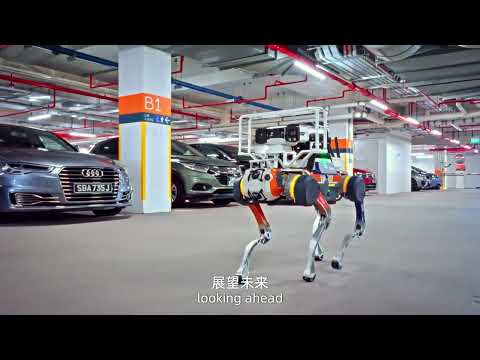
Robotic Dog Security Patrol Solution Deployed in Singapore!
QuickNeuron

Robotic dogs patrol streets of Mexico's Monterrey for World Cup security
TRT World

IGA security guard charged with manslaughter | CTV News Montreal at Six for Wednesday, June 17, 2026
CTV News

Robot dogs and high-tech drones — inside FIFA World Cup security
NewsNation

AI Ground Robots Go First: The $10.2M Robotics Startup Changing Defence, Rescue & Security
RoboPhil

A look at the high tech security in place for the World Cup including 'Spot' the robot!
WFAA
Community buzz (Reddit)
Comprehensive Due Diligence Report: RICO Prosecution of Naked Short Sellers Targeting GameStop Corporation
r/Superstonk · ▲ 6,452
ARC Raiders — Quick-Glance Looting Cheat Sheets V3
r/ArcRaiders · ▲ 6,253
New Update: My "friend" took advantage of me when I was in the hospital
r/BestofRedditorUpdates · ▲ 5,484
[New Update]: AIO? My coworker took video of me outside of work to "prove" I'm not disabled
r/BestofRedditorUpdates · ▲ 5,292
AITA for threatening to cut my parents off financially to stop my brother from proposing at my wedding? (Final Update - VERY LONG Post)
r/BestofRedditorUpdates · ▲ 4,982
Related entries
 Robot
RobotRelay Delivery Robot
The Relay Delivery Robot is an autonomous indoor delivery robot developed by Relay Robotics (formerly known as Savioke), designed primarily for hospitality and healthcare environments. It navigates hotel corridors and hospital hallways independently, rides elevators without human assistance, and delivers guest amenities, medications, linens, and other supplies directly to rooms or designated drop-off points. Relay is one of the most widely deployed service robots in its category, reportedly completing over one million lifetime deliveries with a publicly cited success rate of approximately 99.8%. With a cargo capacity of around 10 gallons, the robot is compact enough to operate in busy public spaces while carrying a meaningful payload of everyday supplies.
2,728 views
 Robot
RobotSpot
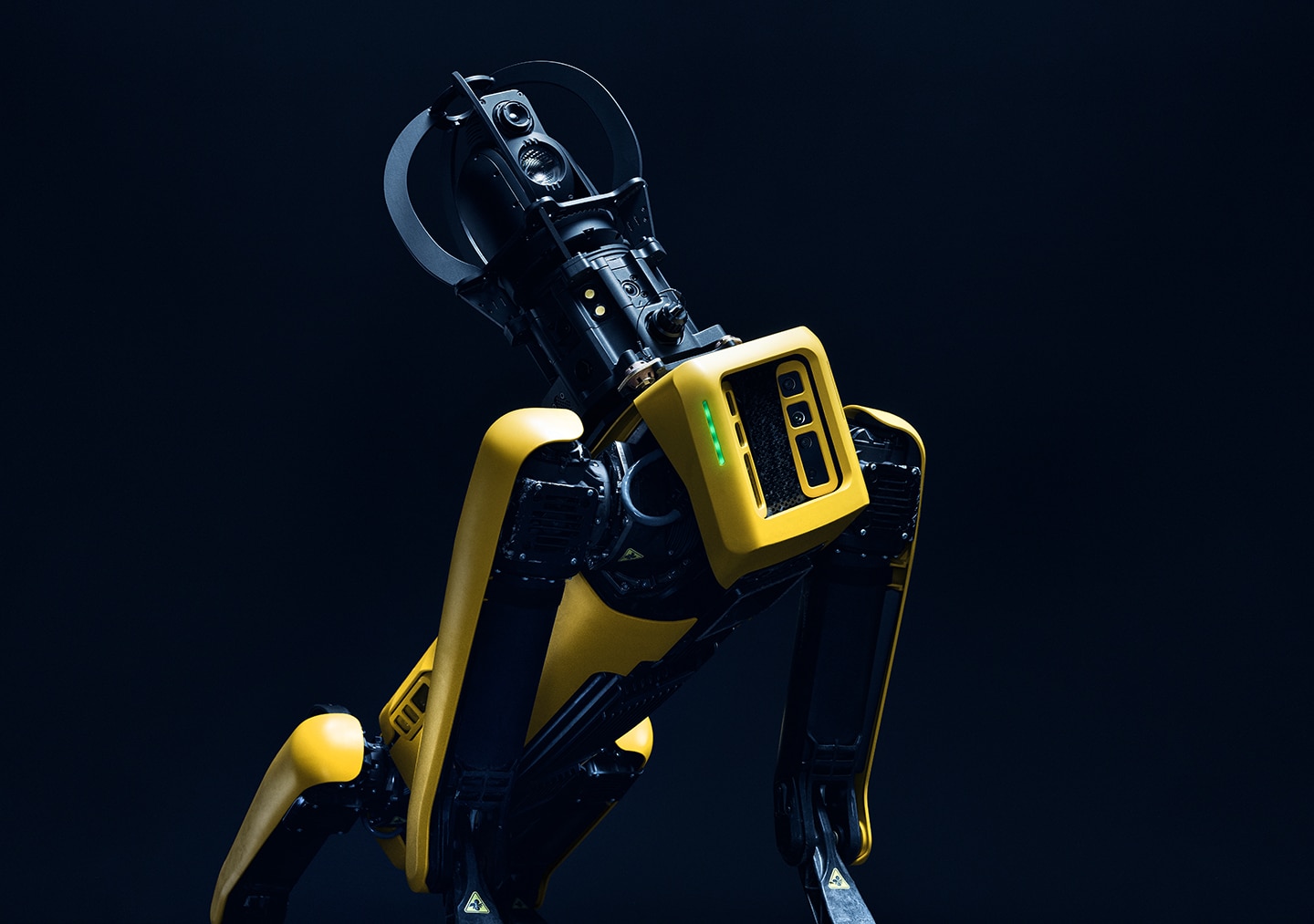
Spot is a four-legged autonomous robot developed by Boston Dynamics, a robotics company headquartered in Waltham, Massachusetts. Designed for inspection, security, and data collection in complex or hazardous environments, Spot can navigate stairs, rough terrain, and confined spaces that are inaccessible to wheeled robots. It is commercially available and has been deployed across industries including utilities, oil and gas, construction, and public safety. Spot supports a modular payload system that accommodates thermal cameras, pan-tilt-zoom (PTZ) cameras, lidar units, methane sensors, and other mission-specific hardware. Boston Dynamics also offers the Orbit fleet-management software platform, enabling operators to schedule autonomous inspection routes, aggregate sensor data, and manage multiple Spot units from a central interface. The robot is widely regarded as one of the most capable and commercially mature legged robots on the market.
1,204 views
 Robot
RobotRealSense Depth Camera D455
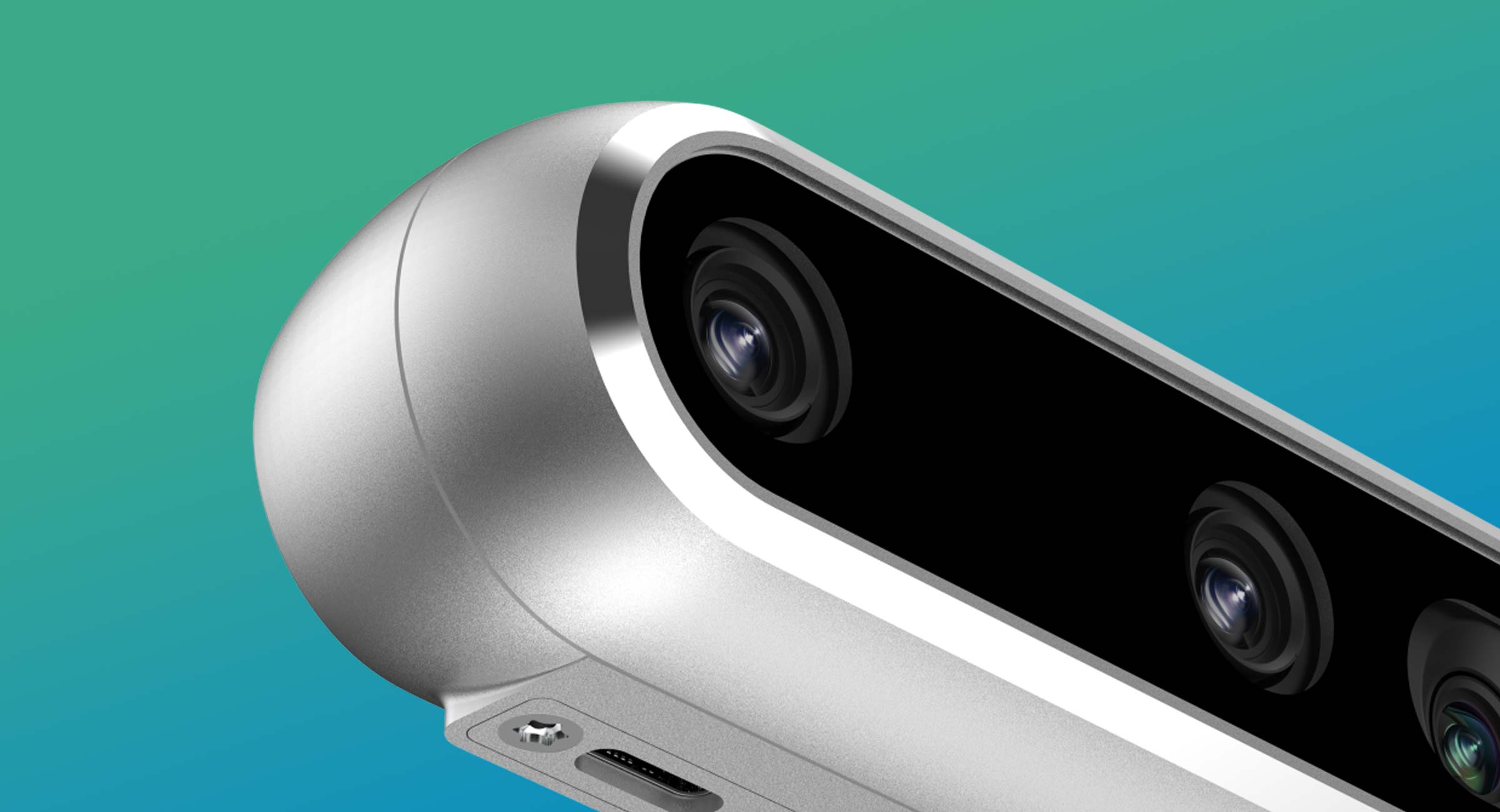
The RealSense Depth Camera D455 is a stereoscopic active-infrared depth camera belonging to Intel's D400 series, designed to capture high-fidelity depth data for robotics, autonomous mobile robots (AMRs), drones, and computer-vision applications. It features a 95 mm stereo baseline — the widest in the D400 lineup at the time of its introduction — which reportedly enables depth error of under 2% at ranges up to approximately 4 metres. Originally developed under the Intel RealSense brand, the D455 and related products were later spun off as part of an independent RealSense business unit following Intel's restructuring of the division around 2021–2022. The camera is widely adopted in research, industrial automation, and humanoid-robot development owing to its compact USB-powered form factor, open SDK support, and relatively accessible price point.
643 views
Rosie 2.0
The Rosie 2.0 is a commercial-grade autonomous robot vacuum developed by Tailos, designed to handle large-scale floor cleaning in business and institutional environments. It is offered in a two-pack configuration, allowing facilities to deploy multiple units simultaneously for broader coverage and more efficient cleaning cycles. Built to commercial durability standards, the Rosie 2.0 combines intelligent navigation with powerful suction technology to reduce reliance on manual labor and improve facility maintenance consistency. It targets businesses, hospitality venues, retail spaces, and other high-traffic environments where reliable, automated cleaning is a priority.
511 views