Security Robot S5 PTZ
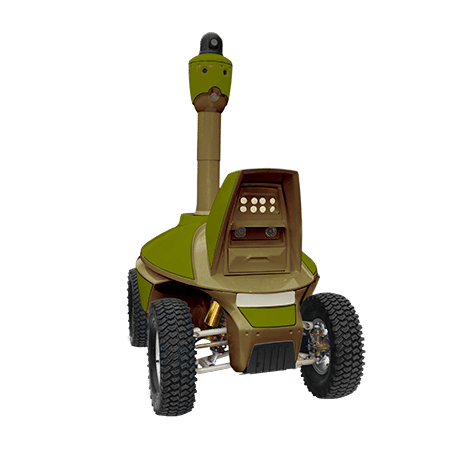
The Security Robot S5 PTZ is an autonomous outdoor mobile surveillance platform developed by SMP Robotics, designed to patrol open spaces, secured perimeters, and large outdoor facilities without continuous human supervision. It is equipped with a long-range pan-tilt-zoom (PTZ) camera system that reportedly enables human recognition at distances of up to 330 feet (approximately 100 metres), making it suited for wide-area monitoring tasks where fixed cameras fall short. SMP Robotics positions the S5 PTZ as an upgrade within its S5 family of security robots, differentiating it from standard variants through its extended-range optical payload. Target customers include critical infrastructure operators, logistics parks, airports, and other organisations requiring scalable, around-the-clock perimeter surveillance with reduced reliance on human guards.
Overview and Use Cases
The Security Robot S5 PTZ is an autonomous ground vehicle built for continuous outdoor patrol and surveillance. Unlike stationary camera towers or human guard patrols, it combines mobility with long-range optical sensing to cover large, irregular perimeters dynamically. Typical deployment environments include:
- Airport tarmacs and cargo zones
- Industrial parks and warehouses
- Oil and gas facility perimeters
- Military and government secure compounds
- Large parking lots and logistics hubs
The robot navigates pre-programmed routes or responds to operator-defined patrol patterns, transmitting live video and alerts to a central security operations centre. Its PTZ camera system allows operators to zoom in on detected persons or vehicles of interest without physically repositioning the robot.
Key Technical Features
The defining feature of the S5 PTZ variant is its long-range PTZ camera payload, which reportedly supports human recognition at distances of up to 330 feet (approximately 100 metres). This significantly extends the effective surveillance radius compared to standard wide-angle camera configurations.
While SMP Robotics has not publicly disclosed all detailed specifications, the S5 platform is generally described as:
- Drive system: All-terrain wheeled chassis suited for outdoor, uneven surfaces
- Navigation: GPS-assisted autonomous navigation with obstacle avoidance
- Camera system: Motorised pan-tilt-zoom optics with day and night (infrared) capability
- Connectivity: Wireless data transmission to a remote monitoring station
- Operation: Designed for extended autonomous patrol cycles; specific battery runtime figures have not been independently confirmed
The robot is intended to operate in varied weather conditions typical of outdoor security deployments, though exact ingress protection ratings are not widely published in open sources.
Comparison to Similar Robots
Within the SMP Robotics lineup, the S5 PTZ sits above standard S5 configurations by virtue of its extended-range camera system. Other S5 variants are typically equipped with shorter-range or fixed-angle cameras, making the PTZ model the preferred choice for wide-open spaces where targets may be detected at greater distances.
Against competitors, the S5 PTZ competes in a growing field of outdoor security robots, including offerings from Knightscope (whose K5 and K7 models focus on close-range 360-degree sensing), Boston Dynamics' Spot configured for inspection roles, and Cobalt Robotics' indoor-focused platforms. The S5 PTZ's emphasis on long-range PTZ optics is a relatively distinctive positioning, as many rival platforms prioritise omnidirectional short-range sensing over extended-range zoom capability.
Market Context and Target Buyers
The S5 PTZ is positioned in the professional and enterprise security market, targeting buyers who manage large outdoor assets and face the operational cost pressures of 24/7 human guard deployment. As of public reporting, SMP Robotics markets its S5 family as a cost-reduction tool for security operations, though specific pricing is not publicly listed and is likely offered on a quote basis.
Primary buyer profiles include:
- Private security integrators deploying robots as a service
- Critical infrastructure asset owners (energy, transport, utilities)
- Government and defence facility managers
- Large commercial real estate and logistics operators
Deployments and Notable Customers
SMP Robotics has reported deployments of its S5 platform family across various sectors, including energy facilities and industrial sites, though specific named customers and verified deployment counts for the S5 PTZ variant specifically are not widely documented in public sources. The company has demonstrated the platform at security industry trade events, and the robot has reportedly been evaluated by organisations in North America and internationally.
Future Outlook
The outdoor autonomous security robot market is expanding as labour costs rise and demand for continuous surveillance grows. The S5 PTZ's long-range detection capability positions it well for large-site applications that are difficult to serve with fixed infrastructure alone. Future development in this category is likely to involve deeper integration with AI-based video analytics, multi-robot coordination, and cloud-based security management platforms — areas where SMP Robotics and its competitors are actively investing. As sensor technology matures and costs decrease, extended-range PTZ systems may become standard across more security robot platforms.
Related videos
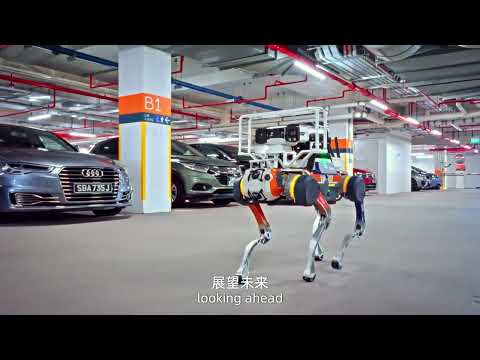
Robotic Dog Security Patrol Solution Deployed in Singapore!
QuickNeuron

Robotic dogs patrol streets of Mexico's Monterrey for World Cup security
TRT World

IGA security guard charged with manslaughter | CTV News Montreal at Six for Wednesday, June 17, 2026
CTV News

Robot dogs and high-tech drones — inside FIFA World Cup security
NewsNation

AI Ground Robots Go First: The $10.2M Robotics Startup Changing Defence, Rescue & Security
RoboPhil

A look at the high tech security in place for the World Cup including 'Spot' the robot!
WFAA
Community buzz (Reddit)
Fully autonomous valet robot that parks on its own
r/nextfuckinglevel · ▲ 99,789
This model's robotic costume
r/nextfuckinglevel · ▲ 81,596
Man Mimics Robot with INSANE Body Control
r/nextfuckinglevel · ▲ 78,014
Olaf robot at Paris Disneyland
r/Damnthatsinteresting · ▲ 74,191
Japanese researchers at the University of Tsukuba created CirculaFloor, robotic tiles that let you walk infinitely in VR without ever leaving your spot.
r/Damnthatsinteresting · ▲ 72,698
Related entries
 Robot
RobotRelay Delivery Robot
The Relay Delivery Robot is an autonomous indoor delivery robot developed by Relay Robotics (formerly known as Savioke), designed primarily for hospitality and healthcare environments. It navigates hotel corridors and hospital hallways independently, rides elevators without human assistance, and delivers guest amenities, medications, linens, and other supplies directly to rooms or designated drop-off points. Relay is one of the most widely deployed service robots in its category, reportedly completing over one million lifetime deliveries with a publicly cited success rate of approximately 99.8%. With a cargo capacity of around 10 gallons, the robot is compact enough to operate in busy public spaces while carrying a meaningful payload of everyday supplies.
2,728 views
 Robot
RobotSpot
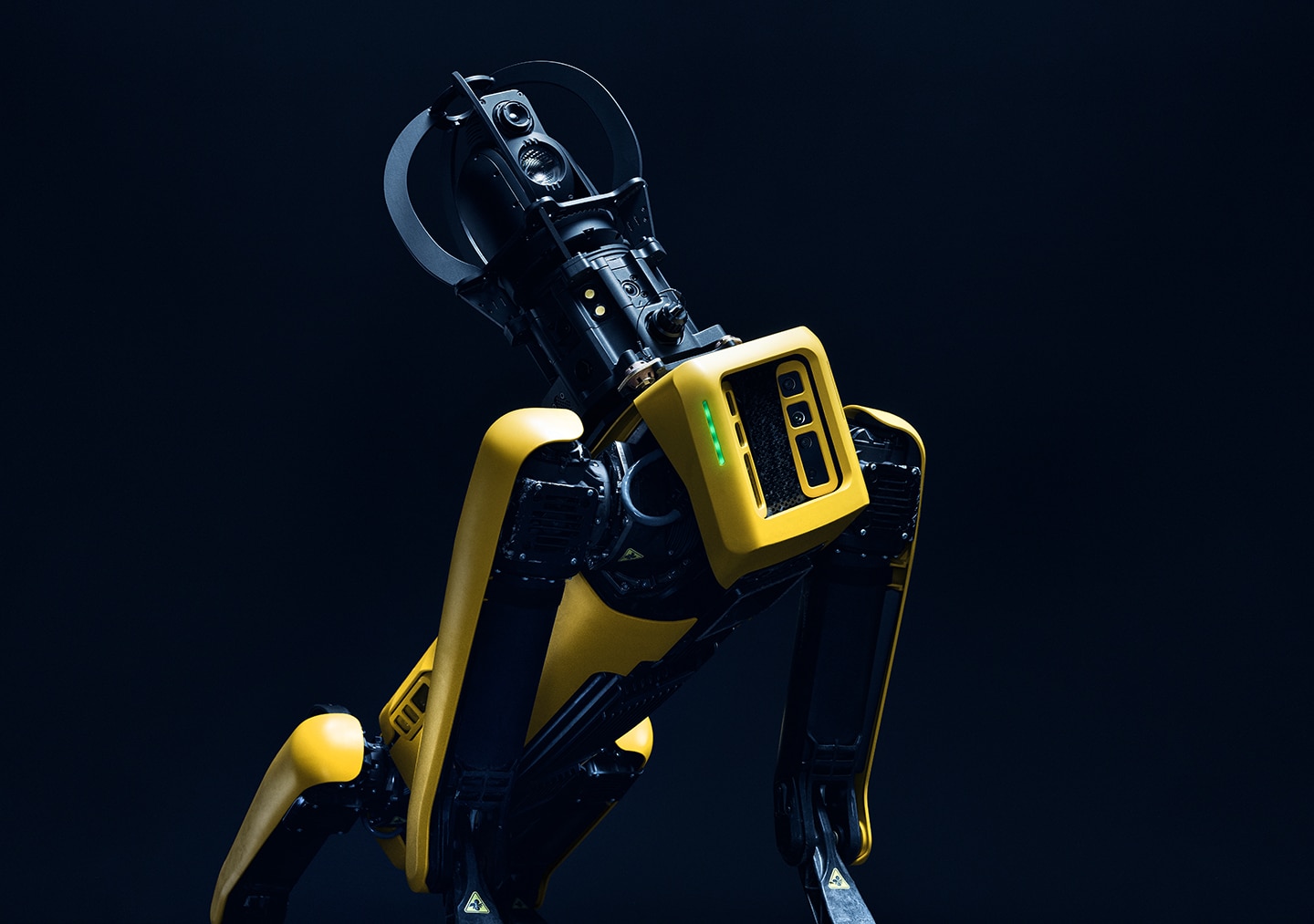
Spot is a four-legged autonomous robot developed by Boston Dynamics, a robotics company headquartered in Waltham, Massachusetts. Designed for inspection, security, and data collection in complex or hazardous environments, Spot can navigate stairs, rough terrain, and confined spaces that are inaccessible to wheeled robots. It is commercially available and has been deployed across industries including utilities, oil and gas, construction, and public safety. Spot supports a modular payload system that accommodates thermal cameras, pan-tilt-zoom (PTZ) cameras, lidar units, methane sensors, and other mission-specific hardware. Boston Dynamics also offers the Orbit fleet-management software platform, enabling operators to schedule autonomous inspection routes, aggregate sensor data, and manage multiple Spot units from a central interface. The robot is widely regarded as one of the most capable and commercially mature legged robots on the market.
1,206 views
 Robot
RobotRealSense Depth Camera D455
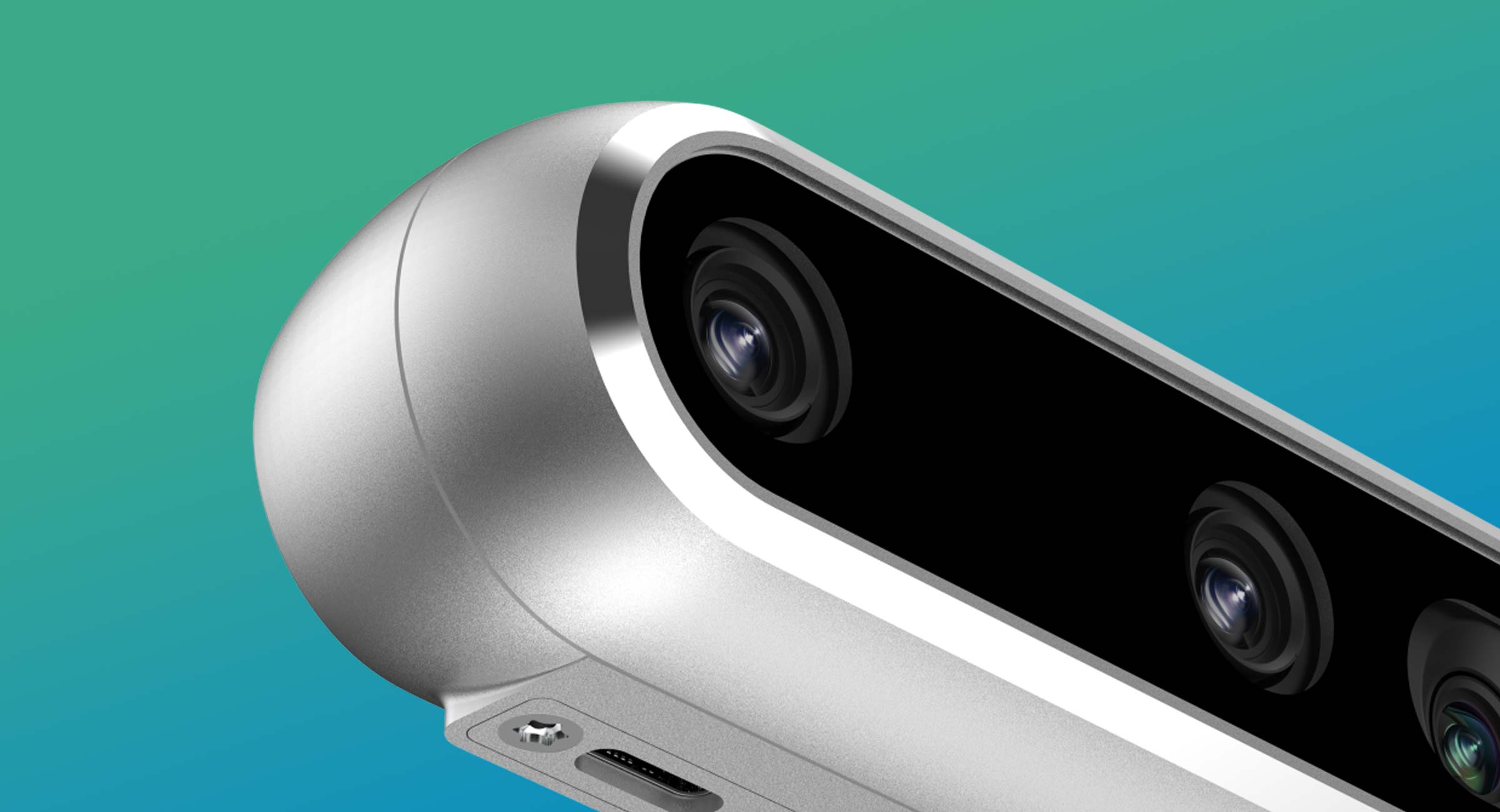
The RealSense Depth Camera D455 is a stereoscopic active-infrared depth camera belonging to Intel's D400 series, designed to capture high-fidelity depth data for robotics, autonomous mobile robots (AMRs), drones, and computer-vision applications. It features a 95 mm stereo baseline — the widest in the D400 lineup at the time of its introduction — which reportedly enables depth error of under 2% at ranges up to approximately 4 metres. Originally developed under the Intel RealSense brand, the D455 and related products were later spun off as part of an independent RealSense business unit following Intel's restructuring of the division around 2021–2022. The camera is widely adopted in research, industrial automation, and humanoid-robot development owing to its compact USB-powered form factor, open SDK support, and relatively accessible price point.
643 views
Rosie 2.0
The Rosie 2.0 is a commercial-grade autonomous robot vacuum developed by Tailos, designed to handle large-scale floor cleaning in business and institutional environments. It is offered in a two-pack configuration, allowing facilities to deploy multiple units simultaneously for broader coverage and more efficient cleaning cycles. Built to commercial durability standards, the Rosie 2.0 combines intelligent navigation with powerful suction technology to reduce reliance on manual labor and improve facility maintenance consistency. It targets businesses, hospitality venues, retail spaces, and other high-traffic environments where reliable, automated cleaning is a priority.
511 views