Rozum Cafe
The Rozum Cafe is a self-contained robotic coffee point developed by Rozum Robotics, built around the company's proprietary PULSE collaborative robot arm and a professional Nuova Simonelli espresso machine of Italian manufacture. The system is designed to operate as a fully autonomous barista station, capable of brewing reportedly 300 to 400 or more specialty coffee cups within a 24-hour period without requiring a human operator for each drink. Targeted at hospitality venues, corporate offices, airports, and high-traffic retail environments, the Rozum Cafe combines precision robotic motion with commercial-grade coffee equipment to deliver consistent espresso-based beverages. It represents Rozum Robotics' application of its industrial-heritage PULSE arm technology to the consumer-facing service sector.

Overview and Use Cases
The Rozum Cafe is a turnkey robotic barista solution developed by Rozum Robotics. At its core is the company's PULSE collaborative robot arm, which handles all physical interactions — from positioning a cup beneath the group head to operating steam wands and managing ancillary equipment. The integrated Nuova Simonelli espresso machine provides the commercial-grade brewing platform, ensuring beverage quality comparable to a skilled human barista.
Primary deployment targets include:
- Airports and transit hubs, where high throughput and 24/7 availability are critical
- Corporate campuses and office lobbies, offering unmanned coffee service outside staffed hours
- Hotels and hospitality venues, as a novelty attraction and labor-saving installation
- Retail and shopping centers, where consistent branding and reduced staffing costs are priorities
Key Technical Details
The system is built around the PULSE robot arm, Rozum Robotics' proprietary collaborative arm platform. While detailed specifications for the Rozum Cafe configuration are not fully disclosed in public documentation, the following characteristics are commonly reported or inferred:
- Throughput: Reportedly 300–400+ cups per 24-hour operating cycle
- Espresso machine: Nuova Simonelli (Italian-manufactured professional unit), integrated directly into the robotic cell
- Form factor: Self-contained enclosure designed to minimize footprint and simplify installation
- Operation mode: Fully autonomous; customers typically interact via a touchscreen or mobile interface to place orders
- Connectivity: The system is expected to support remote monitoring and diagnostics, consistent with modern IoT-enabled service robots
Specific payload ratings, joint torque figures, or exact arm reach for the Cafe-specific PULSE configuration have not been independently verified in public sources.
Comparison to Similar Robots
Within Rozum Robotics' own portfolio, the PULSE arm also serves industrial and research applications, demonstrating the company's strategy of adapting a single core platform across sectors. The Rozum Cafe is the most consumer-visible product in the lineup.
In the broader hospitality robot market, the Rozum Cafe competes with systems such as:
- Café X (formerly deployed in U.S. airports), which similarly uses a robotic arm paired with commercial espresso equipment
- Aethon / Bear Robotics and other service robots, which focus on delivery rather than beverage preparation
- Briggo Coffee Haus, a large-format automated coffee kiosk targeting enterprise and airport clients
Compared to these competitors, the Rozum Cafe's differentiation reportedly lies in its use of a genuine professional Italian espresso machine and the flexibility of the PULSE arm's motion programming.
Market Context and Target Buyers
The Rozum Cafe is positioned in the premium segment of the robotic hospitality market. It is not a consumer product; rather, it targets B2B buyers — venue operators, facility managers, and hospitality chains — who seek to reduce labor dependency while maintaining high beverage quality. Pricing details have not been publicly disclosed by Rozum Robotics, but robotic coffee systems of this class are generally offered via lease or purchase agreements that reflect the cost of both the robotic arm and the integrated commercial espresso hardware.
Deployments and Notable Customers
As of publicly available reporting, Rozum Robotics has demonstrated the Rozum Cafe at industry trade shows and has pursued commercial deployments in Europe and potentially other regions. Specific named customer deployments or large-scale rollout figures have not been confirmed in independently verifiable public sources.
Future Outlook
The robotic barista segment is growing as labor costs rise and venue operators seek consistent, scalable service solutions. Rozum Robotics' continued development of the PULSE platform suggests potential for iterative improvements to the Cafe system — including faster cycle times, expanded menu capabilities, and deeper integration with digital ordering ecosystems. Whether the company pursues broader international distribution or focuses on select high-value markets remains to be seen based on future public announcements.
Related entries
 Robot
RobotRelay Delivery Robot
The Relay Delivery Robot is an autonomous indoor delivery robot developed by Relay Robotics (formerly known as Savioke), designed primarily for hospitality and healthcare environments. It navigates hotel corridors and hospital hallways independently, rides elevators without human assistance, and delivers guest amenities, medications, linens, and other supplies directly to rooms or designated drop-off points. Relay is one of the most widely deployed service robots in its category, reportedly completing over one million lifetime deliveries with a publicly cited success rate of approximately 99.8%. With a cargo capacity of around 10 gallons, the robot is compact enough to operate in busy public spaces while carrying a meaningful payload of everyday supplies.
2,911 views
 Robot
RobotSpot
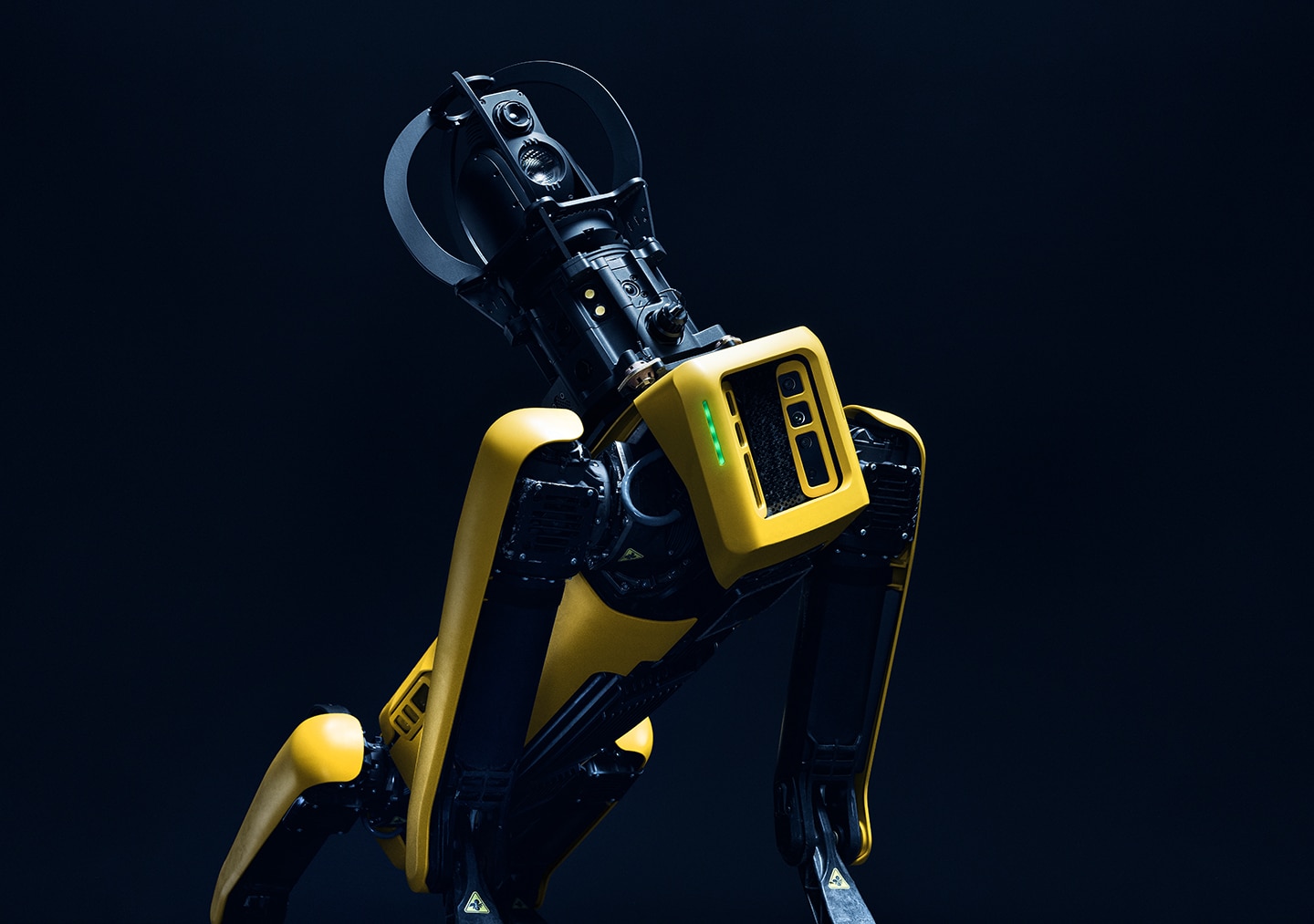
Spot is a four-legged autonomous robot developed by Boston Dynamics, a robotics company headquartered in Waltham, Massachusetts. Designed for inspection, security, and data collection in complex or hazardous environments, Spot can navigate stairs, rough terrain, and confined spaces that are inaccessible to wheeled robots. It is commercially available and has been deployed across industries including utilities, oil and gas, construction, and public safety. Spot supports a modular payload system that accommodates thermal cameras, pan-tilt-zoom (PTZ) cameras, lidar units, methane sensors, and other mission-specific hardware. Boston Dynamics also offers the Orbit fleet-management software platform, enabling operators to schedule autonomous inspection routes, aggregate sensor data, and manage multiple Spot units from a central interface. The robot is widely regarded as one of the most capable and commercially mature legged robots on the market.
1,598 views
 Robot
RobotRealSense Depth Camera D455
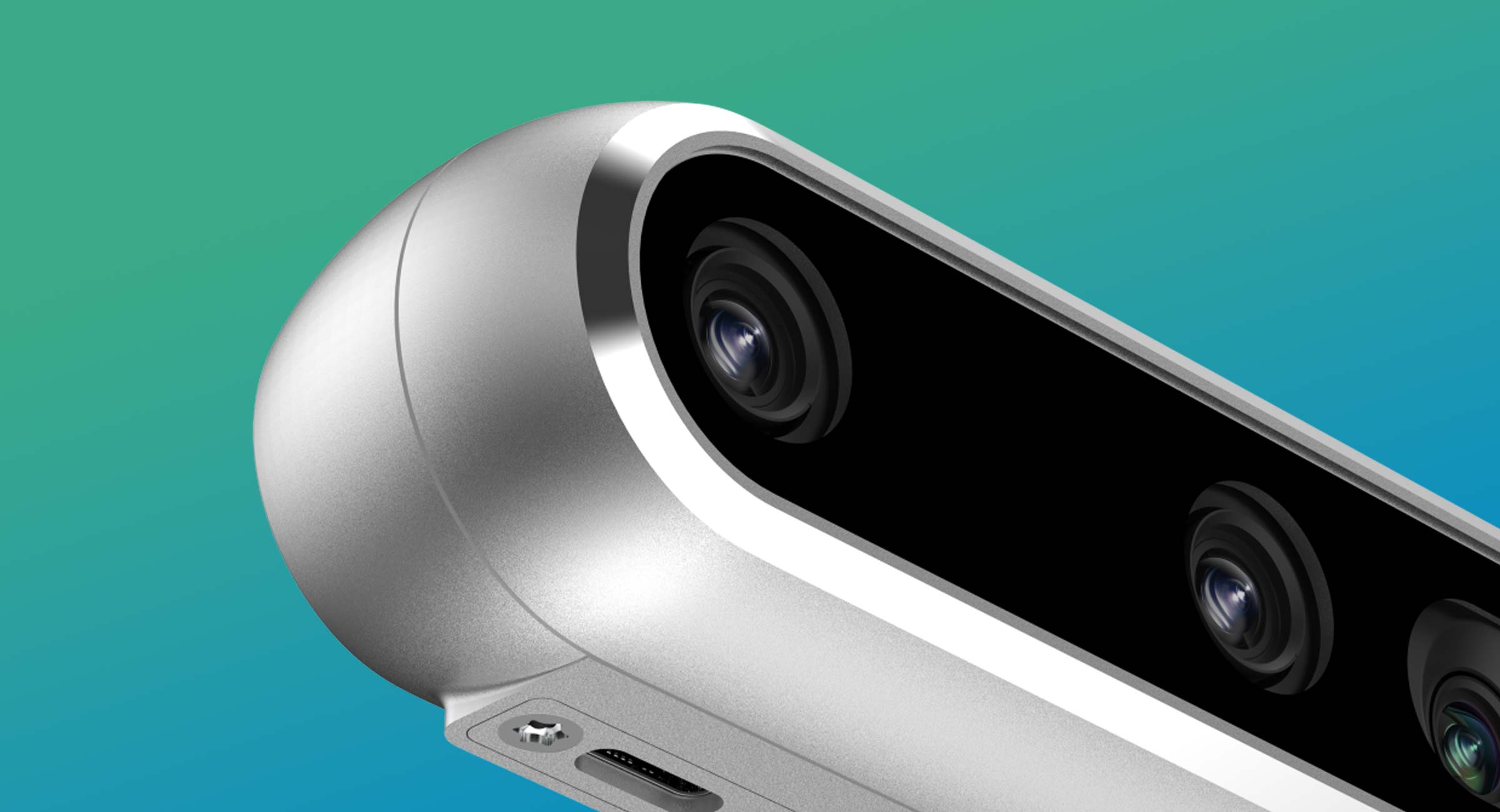
The RealSense Depth Camera D455 is a stereoscopic active-infrared depth camera belonging to Intel's D400 series, designed to capture high-fidelity depth data for robotics, autonomous mobile robots (AMRs), drones, and computer-vision applications. It features a 95 mm stereo baseline — the widest in the D400 lineup at the time of its introduction — which reportedly enables depth error of under 2% at ranges up to approximately 4 metres. Originally developed under the Intel RealSense brand, the D455 and related products were later spun off as part of an independent RealSense business unit following Intel's restructuring of the division around 2021–2022. The camera is widely adopted in research, industrial automation, and humanoid-robot development owing to its compact USB-powered form factor, open SDK support, and relatively accessible price point.
910 views
 Robot
RobotOptimus Gen 2
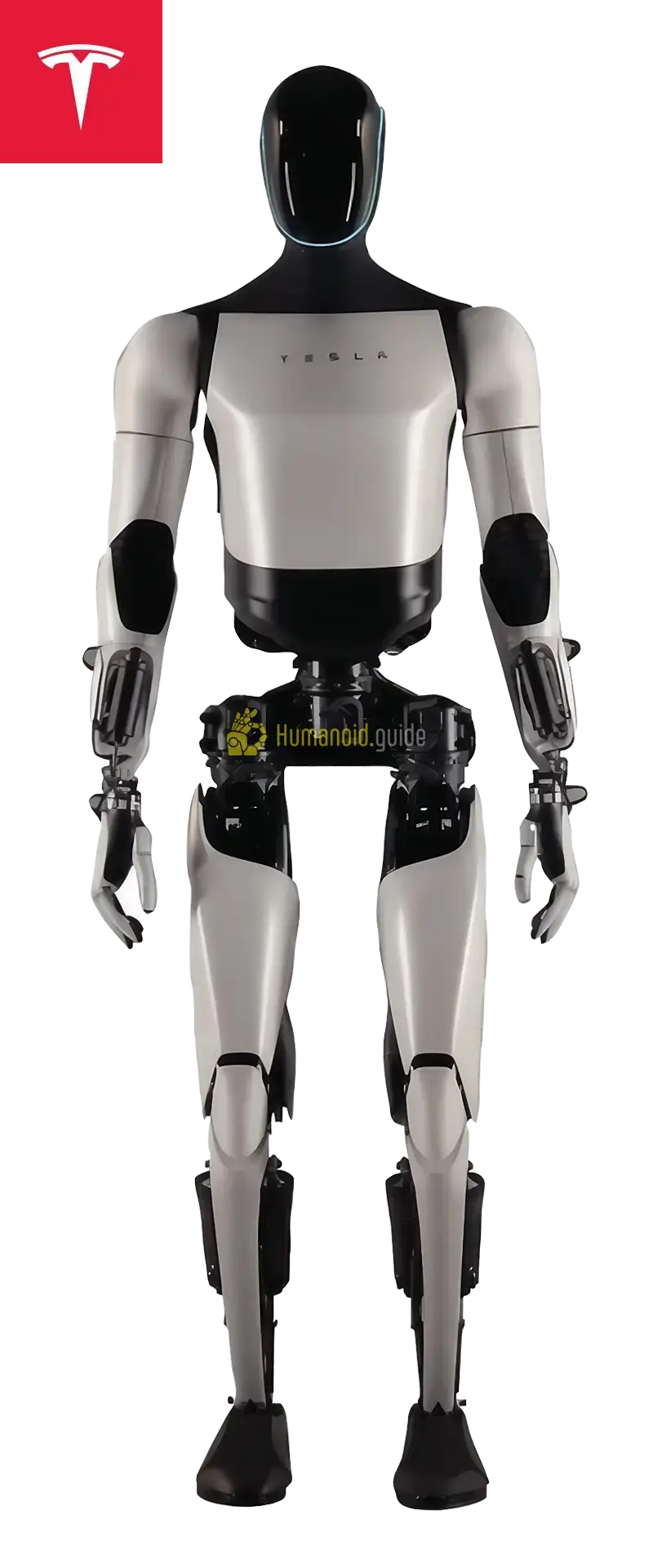
Optimus Gen 2 is a general-purpose humanoid robot developed by Tesla, representing the second major hardware iteration of the company's Optimus program. It is designed to perform a broad range of physical tasks, leveraging perception and motion-planning software derived from Tesla's Full Self-Driving (FSD) stack. As of public reporting, units are used for internal demonstrations and select tasks within Tesla's own manufacturing facilities. Tesla has stated an ambition to eventually offer Optimus at consumer-accessible pricing, positioning it as a mass-market humanoid rather than an industrial-only platform. Compared to its predecessor, Gen 2 reportedly features improved hand dexterity, smoother whole-body motion, and a lighter overall frame, though many detailed specifications remain unconfirmed or subject to ongoing revision as the program continues to iterate.
624 views