Retriever
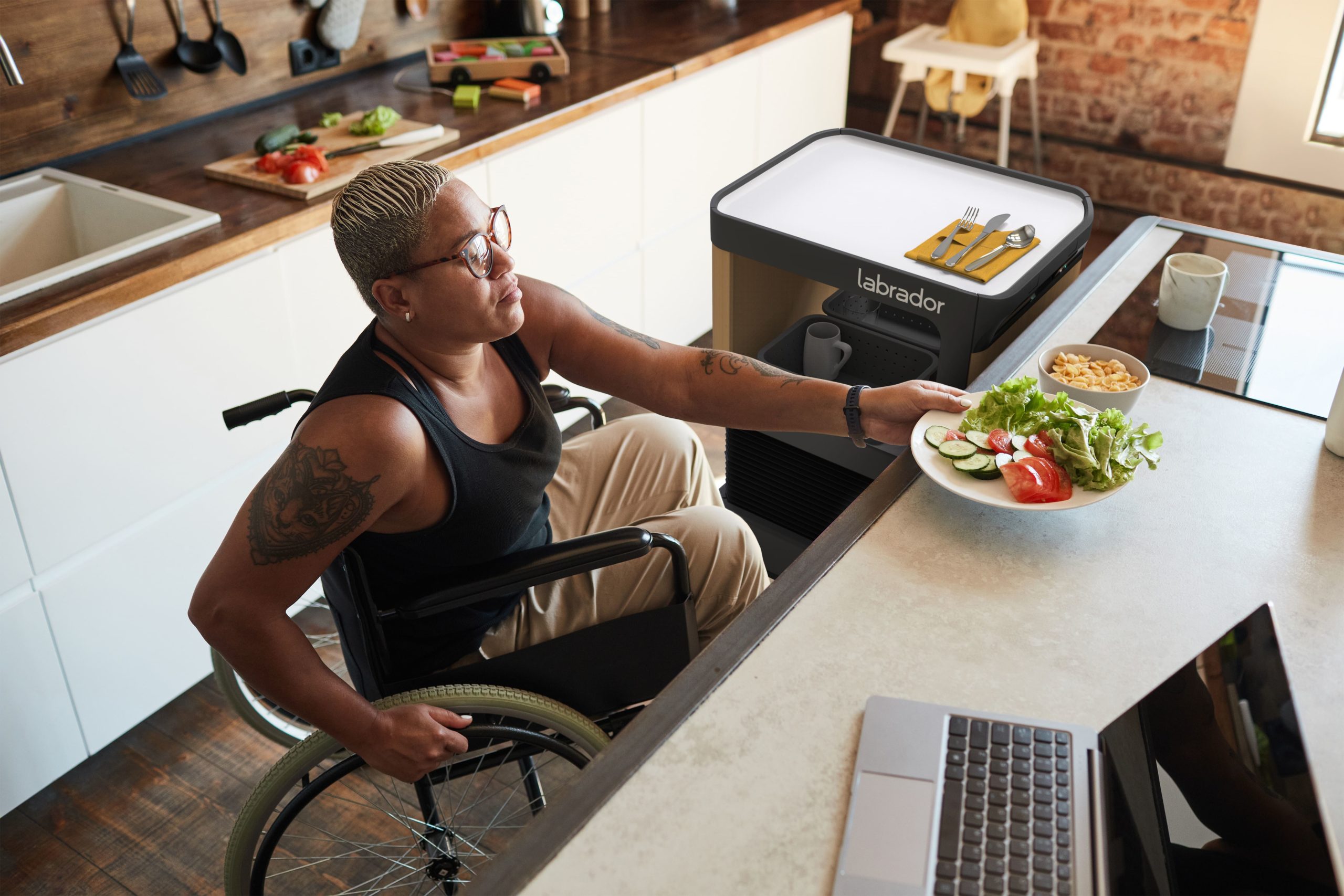
The Retriever is a self-driving assistive home robot developed by Labrador Systems, designed to carry everyday items—such as meals, drinks, laundry, and medications—between rooms for people living with chronic pain, injury, or mobility limitations. By autonomously navigating household environments, the Retriever aims to reduce the physical strain on users and their caregivers, enabling greater independence in daily life. Labrador Systems, a U.S.-based robotics company focused on assistive technology, positions the Retriever as a practical companion for aging adults and individuals with disabilities. The robot operates at low height, sliding under furniture to retrieve items from surfaces such as tables and countertops, and follows users or travels to designated locations on command.
Overview and Use Cases
The Retriever is an assistive mobile robot built for real-world home environments. Its primary mission is to reduce the number of trips a person with limited mobility must make around the house by autonomously transporting everyday items on demand. Typical use cases include:
- Delivering meals or beverages from the kitchen to a living room or bedroom
- Transporting laundry baskets or folded clothing between rooms
- Carrying medications, remote controls, books, or other small household objects
- Acting as a mobile surface that follows the user throughout the home
The robot is designed to be unobtrusive and safe in shared living spaces, operating at a low profile that allows it to slide beneath standard furniture such as coffee tables and dining chairs to access items placed on top.
Key Technical Details
The Retriever navigates autonomously using a combination of sensors suited to cluttered, dynamic home environments. Labrador Systems has publicly referenced the use of depth-sensing cameras and onboard computing to enable obstacle avoidance and room-to-room navigation without requiring home modifications such as special flooring or markers.
- Navigation: Autonomous, map-based indoor navigation with real-time obstacle avoidance
- Form factor: Low-profile chassis designed to slide under household furniture
- Payload surface: An adjustable-height tray or shelf for carrying items
- Control: Operable via a companion app or simple user interface; supports follow-me and go-to-location modes
- Sensors: Depth cameras and proximity sensors for environmental awareness (specific sensor models not publicly confirmed for production units)
- Runtime and charging: Specific battery runtime figures have not been widely published; the robot is intended for all-day home use with periodic charging
Comparison to Similar Robots
Within the assistive and service robot category, the Retriever occupies a distinct niche focused on household item transport rather than manipulation or social interaction. It differs from robotic arms (such as the Kinova Gen3 listed among Labrador Systems' ecosystem components) in that it prioritizes mobility and carrying capacity over dexterous grasping.
Competitors in the broader assistive robot space include platforms like the Aeolus Robot and various telepresence or companion robots, though few directly replicate the Retriever's low-profile, furniture-navigating design. The Retriever is not a general-purpose manipulator and does not attempt tasks such as picking items off the floor or opening doors, which keeps its operational scope focused and its reliability higher in everyday settings.
Market Context and Target Buyers
Labrador Systems targets the Retriever at several overlapping buyer segments:
- Aging adults who wish to remain living independently at home (aging-in-place market)
- Individuals with disabilities such as multiple sclerosis, ALS, spinal cord injuries, or post-surgical recovery
- Family caregivers seeking to reduce the physical and logistical burden of in-home care
- Assisted living facilities and care providers exploring robotic augmentation of staff workflows
As of public reporting, Labrador Systems has explored both direct-to-consumer and institutional sales channels. Pricing details have not been broadly disclosed, and the company has reportedly pursued subscription or rental models in addition to outright purchase to improve accessibility for individual users.
Deployments and Notable Milestones
Labrador Systems has conducted pilot programs and early deployments with users in home settings, gathering real-world feedback to refine the Retriever's navigation and usability. The company has received attention from disability advocacy communities and has been featured in coverage of assistive technology innovation. Specific named enterprise customers or large-scale institutional deployments have not been publicly confirmed as of available reporting.
Future Outlook
The assistive home robot market is expected to grow as global populations age and demand for in-home care support increases. Labrador Systems has indicated ongoing development of the Retriever platform, with potential improvements in navigation robustness, payload versatility, and integration with smart home ecosystems. As onboard computing hardware—such as platforms in the class of the NVIDIA Jetson Orin NX—continues to advance, future iterations may support more sophisticated scene understanding and user interaction capabilities.
Community buzz (Reddit)
The Seamstress
r/lego · ▲ 11,965
[Loved trope] This character uses power that is often associated with evil, yet they are a good guy.
r/TopCharacterTropes · ▲ 3,112
The real reason trump wants to invade greenland
r/conspiracy · ▲ 2,342
The history and mechanics of R-23M "Kartech" The only gun ever fired in space.
r/space · ▲ 2,322
High School Students Designed & Built an Accurate Robot Ball Retriever
r/interestingasfuck · ▲ 1,965
Related entries
 Robot
RobotRelay Delivery Robot
The Relay Delivery Robot is an autonomous indoor delivery robot developed by Relay Robotics (formerly known as Savioke), designed primarily for hospitality and healthcare environments. It navigates hotel corridors and hospital hallways independently, rides elevators without human assistance, and delivers guest amenities, medications, linens, and other supplies directly to rooms or designated drop-off points. Relay is one of the most widely deployed service robots in its category, reportedly completing over one million lifetime deliveries with a publicly cited success rate of approximately 99.8%. With a cargo capacity of around 10 gallons, the robot is compact enough to operate in busy public spaces while carrying a meaningful payload of everyday supplies.
2,728 views
 Robot
RobotSpot
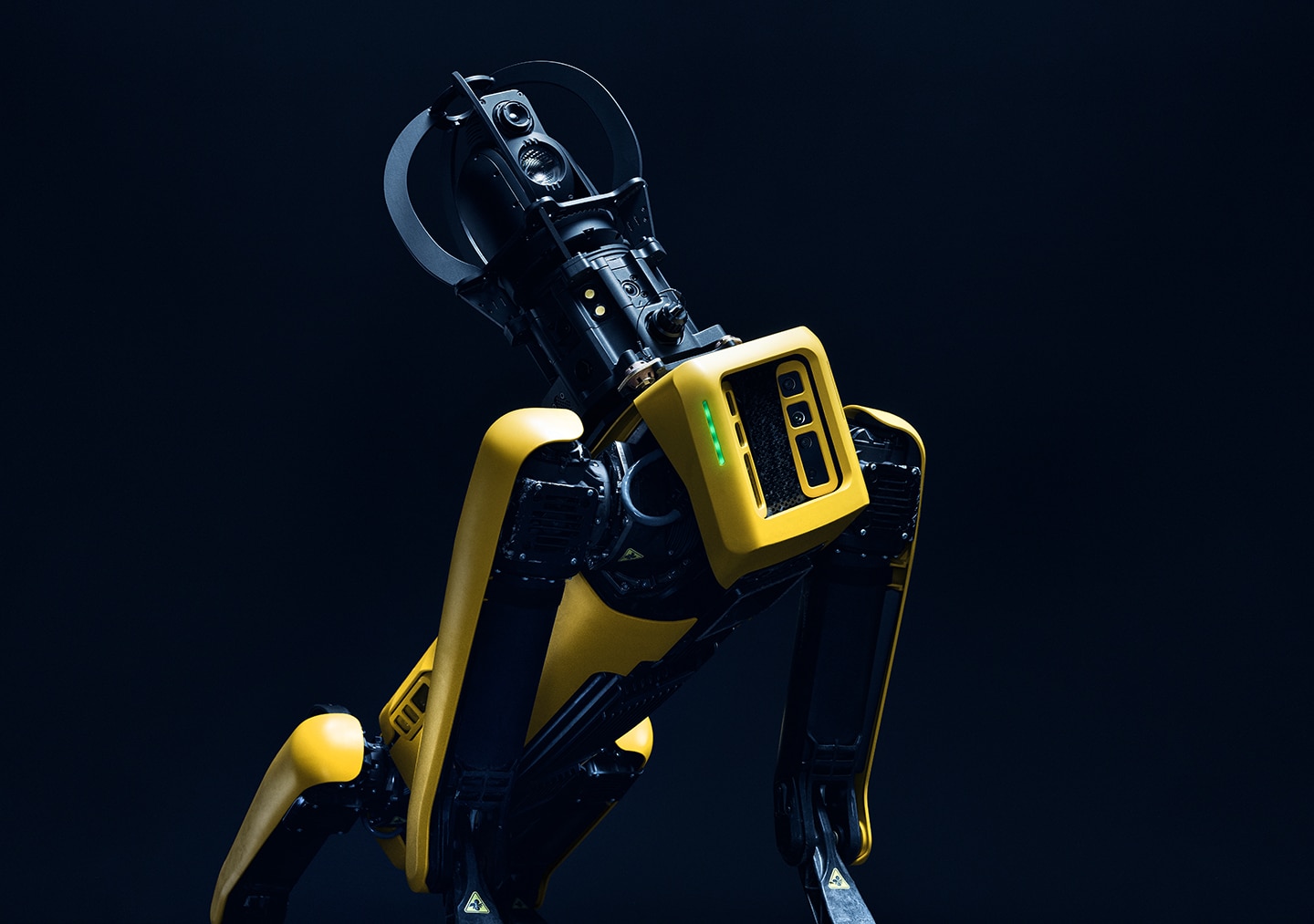
Spot is a four-legged autonomous robot developed by Boston Dynamics, a robotics company headquartered in Waltham, Massachusetts. Designed for inspection, security, and data collection in complex or hazardous environments, Spot can navigate stairs, rough terrain, and confined spaces that are inaccessible to wheeled robots. It is commercially available and has been deployed across industries including utilities, oil and gas, construction, and public safety. Spot supports a modular payload system that accommodates thermal cameras, pan-tilt-zoom (PTZ) cameras, lidar units, methane sensors, and other mission-specific hardware. Boston Dynamics also offers the Orbit fleet-management software platform, enabling operators to schedule autonomous inspection routes, aggregate sensor data, and manage multiple Spot units from a central interface. The robot is widely regarded as one of the most capable and commercially mature legged robots on the market.
1,204 views
 Robot
RobotRealSense Depth Camera D455
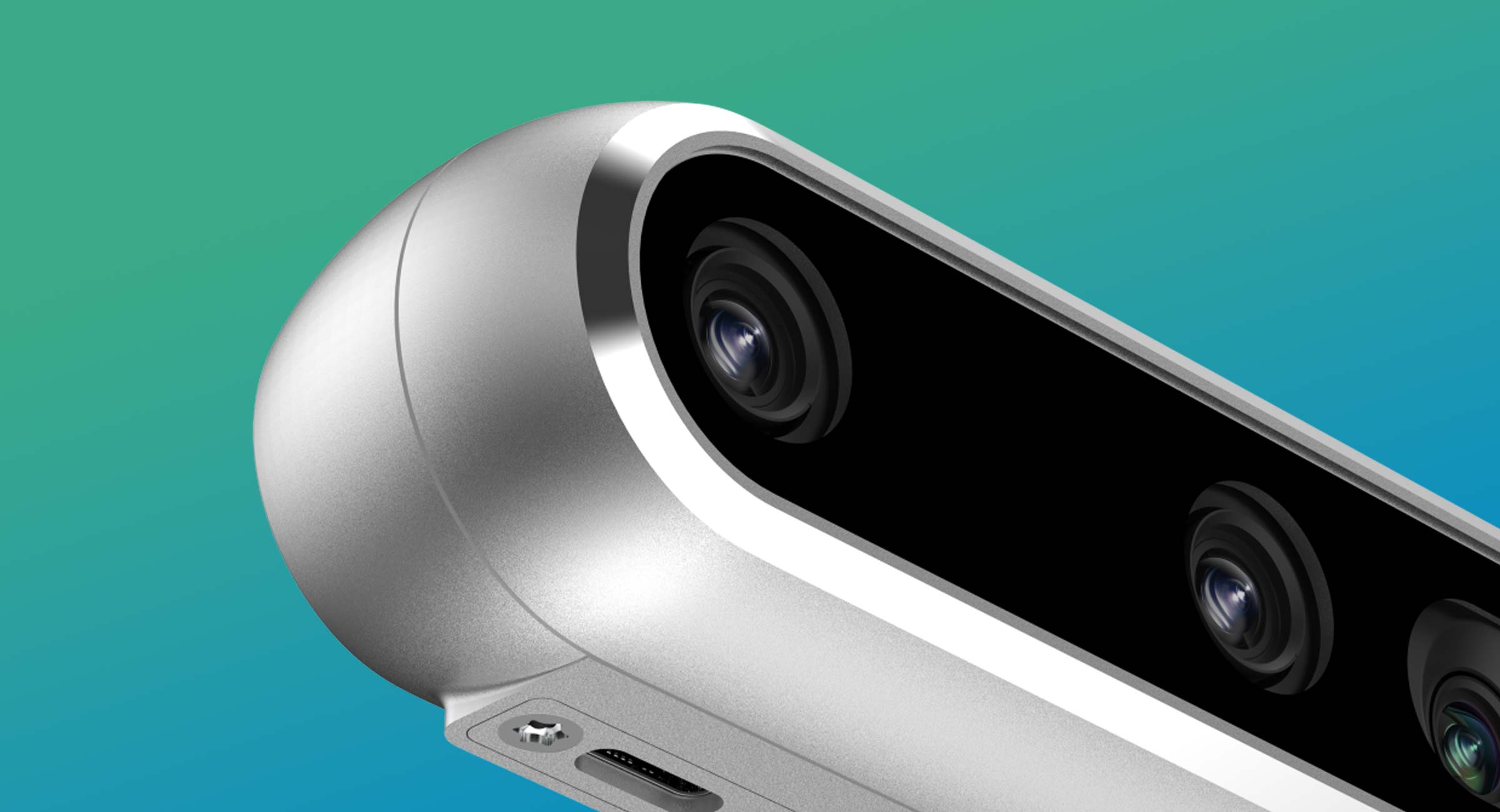
The RealSense Depth Camera D455 is a stereoscopic active-infrared depth camera belonging to Intel's D400 series, designed to capture high-fidelity depth data for robotics, autonomous mobile robots (AMRs), drones, and computer-vision applications. It features a 95 mm stereo baseline — the widest in the D400 lineup at the time of its introduction — which reportedly enables depth error of under 2% at ranges up to approximately 4 metres. Originally developed under the Intel RealSense brand, the D455 and related products were later spun off as part of an independent RealSense business unit following Intel's restructuring of the division around 2021–2022. The camera is widely adopted in research, industrial automation, and humanoid-robot development owing to its compact USB-powered form factor, open SDK support, and relatively accessible price point.
643 views
Rosie 2.0
The Rosie 2.0 is a commercial-grade autonomous robot vacuum developed by Tailos, designed to handle large-scale floor cleaning in business and institutional environments. It is offered in a two-pack configuration, allowing facilities to deploy multiple units simultaneously for broader coverage and more efficient cleaning cycles. Built to commercial durability standards, the Rosie 2.0 combines intelligent navigation with powerful suction technology to reduce reliance on manual labor and improve facility maintenance consistency. It targets businesses, hospitality venues, retail spaces, and other high-traffic environments where reliable, automated cleaning is a priority.
511 views