Ozobot Evo
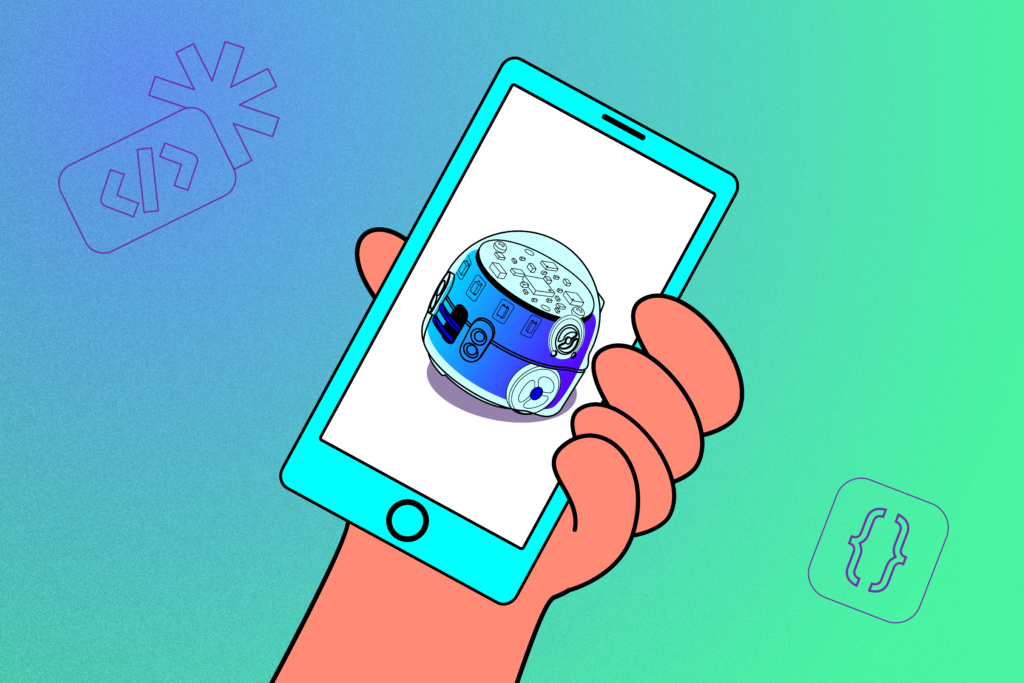
The Ozobot Evo is a pocket-sized programmable robot designed for K-12 STEM education, produced by Ozobot. It supports two distinct programming modes: screen-free Color Code programming using physical markers drawn on paper, and on-screen block-based coding through the OzoBlockly platform (built on Google's Blockly framework). Together, these modes allow the robot to serve learners from early elementary through high school. Ozobot markets the Evo as a tool for teaching coding fundamentals, computational thinking, and problem-solving in both classroom and home settings. The robot is notably compact — roughly the size of a golf ball — and communicates via Bluetooth, enabling interactive lessons through Ozobot's companion apps and web-based coding environment. It is widely used in school districts and after-school programs across the United States and internationally.
Overview and Use Cases
The Ozobot Evo is a miniature wheeled robot intended to make coding accessible and engaging for students across the K-12 spectrum. Its dual-mode programming approach is central to its educational design:
- Color Code programming: Students draw lines and color-coded sequences on paper or whiteboards using standard markers. The robot's optical sensors read these codes and execute corresponding behaviors — changing speed, turning, spinning, or playing sounds — without any screen or device required.
- OzoBlockly coding: An online, browser-based environment where students drag and drop code blocks to program more complex behaviors, upload them to the robot via light signals from a device screen, and observe results in real time.
This progression from tangible, screen-free interaction to digital block coding is designed to scaffold computational thinking skills incrementally. The Evo is commonly deployed in elementary and middle school classrooms, coding clubs, maker spaces, and home learning environments.
Key Technical Features
While Ozobot has not published exhaustive technical datasheets for the Evo, the following features are commonly reported:
- Size: Approximately 1.1 inches (roughly 28 mm) in diameter, making it one of the smallest programmable educational robots commercially available.
- Sensors: Includes bottom-facing optical/color sensors for reading Color Codes on surfaces, as well as proximity sensors and LED lights for feedback and interaction.
- Connectivity: Bluetooth Low Energy (BLE) for wireless communication with tablets, smartphones, and computers.
- Battery: Rechargeable via a USB charging dock; battery life is reported to support roughly an hour of active use per charge, though this varies by activity.
- LED lights: Multicolor LEDs allow the robot to display colors as part of programs or feedback.
- Sound: The Evo added a buzzer/speaker capability compared to its predecessor, the Ozobot Bit, enabling audio feedback in programs.
Comparison to Similar Robots
Within the educational robot category, the Evo's closest competitor is its own predecessor, the Ozobot Bit, which lacks Bluetooth connectivity and the audio features of the Evo. The Evo is positioned as the more capable, classroom-ready model.
Among competing products from other manufacturers:
- Bee-Bot / Blue-Bot (TTS Group): Floor robots targeting early years learners with simple directional programming; less flexible than the Evo's dual-mode system.
- Sphero Mini / Sphero Bolt: Spherical robots with app-based coding; generally larger and priced at a comparable or higher tier, with stronger emphasis on physics-based play.
- Botley 2.0 (Learning Resources): Screen-free coding robot for younger children; simpler feature set than the Evo.
The Evo occupies a distinctive niche by bridging screen-free tactile learning and digital coding within a single, very small form factor.
Market Context and Target Buyers
The Ozobot Evo is positioned in the entry-to-mid tier of the educational robotics market. As of public reporting, individual units have been sold at a price point accessible for individual families, while classroom packs and school bundles are available for institutional buyers. Target customers include:
- K-12 schools and school districts (particularly grades 1–8)
- After-school STEM programs and coding clubs
- Libraries and community learning centers
- Individual parents and homeschooling families
Ozobot also provides curriculum resources, lesson plans aligned to CSTA and ISTE standards, and teacher training materials, which strengthens its appeal to formal education buyers.
Deployments and Notable Adoption
Ozobot has reportedly partnered with numerous school districts in the United States and has a presence in international markets. The robot has been featured in STEM education initiatives and has been used in programs supported by organizations promoting computer science education. Specific large-scale deployment figures have not been publicly disclosed by the company.
Future Outlook
The educational robotics market continues to grow as coding and computational thinking are increasingly embedded in K-12 curricula worldwide. The Evo's combination of physical and digital programming modes positions it well for blended learning environments. However, competition from app-connected robots and evolving curriculum standards may push Ozobot to expand software features, add AI-assisted learning tools, or introduce updated hardware. As of public reporting, no successor model to the Evo has been officially announced.
Community buzz (Reddit)
So for all us current LR4 owners, we are LOSING functionality with the new Whiskers+ app paywall. We used to get 7 days of history. Now, it's reduced to 2. $8/month for something that was already free! Whisker turned into another greedy tech company. This is unacceptable.
r/litterrobot · ▲ 877
I played Undertale: Repent to Jesus. Here’s (almost?) all the changes in it. [END OF UNDYNE’S HANGOUT - AFTER OMEGA FLOWEY FIGHT]
r/Undertale · ▲ 658
All 19 Pokémon personality categories (& which Pokémon have which personalities)
r/Pokopia · ▲ 560
I dont trust this thing the slightest
r/LoveAndDeepspace · ▲ 505
Introducing: Litter-Robot 5 Pro, Litter-Robot 5, Litter-Robot EVO, and more!
r/litterrobot · ▲ 356
Related entries
 Robot
RobotRelay Delivery Robot
The Relay Delivery Robot is an autonomous indoor delivery robot developed by Relay Robotics (formerly known as Savioke), designed primarily for hospitality and healthcare environments. It navigates hotel corridors and hospital hallways independently, rides elevators without human assistance, and delivers guest amenities, medications, linens, and other supplies directly to rooms or designated drop-off points. Relay is one of the most widely deployed service robots in its category, reportedly completing over one million lifetime deliveries with a publicly cited success rate of approximately 99.8%. With a cargo capacity of around 10 gallons, the robot is compact enough to operate in busy public spaces while carrying a meaningful payload of everyday supplies.
2,728 views
 Robot
RobotSpot
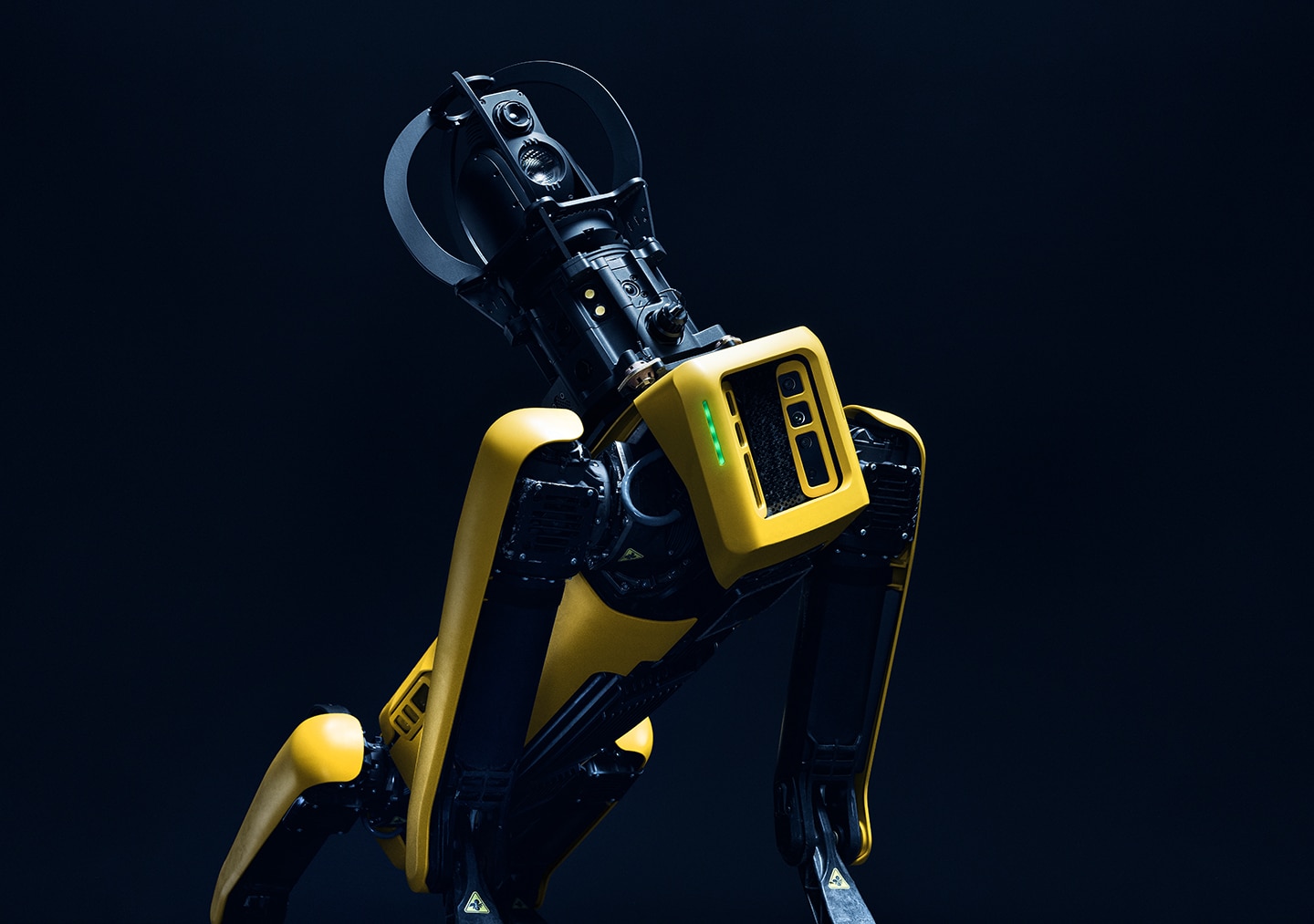
Spot is a four-legged autonomous robot developed by Boston Dynamics, a robotics company headquartered in Waltham, Massachusetts. Designed for inspection, security, and data collection in complex or hazardous environments, Spot can navigate stairs, rough terrain, and confined spaces that are inaccessible to wheeled robots. It is commercially available and has been deployed across industries including utilities, oil and gas, construction, and public safety. Spot supports a modular payload system that accommodates thermal cameras, pan-tilt-zoom (PTZ) cameras, lidar units, methane sensors, and other mission-specific hardware. Boston Dynamics also offers the Orbit fleet-management software platform, enabling operators to schedule autonomous inspection routes, aggregate sensor data, and manage multiple Spot units from a central interface. The robot is widely regarded as one of the most capable and commercially mature legged robots on the market.
1,206 views
 Robot
RobotRealSense Depth Camera D455
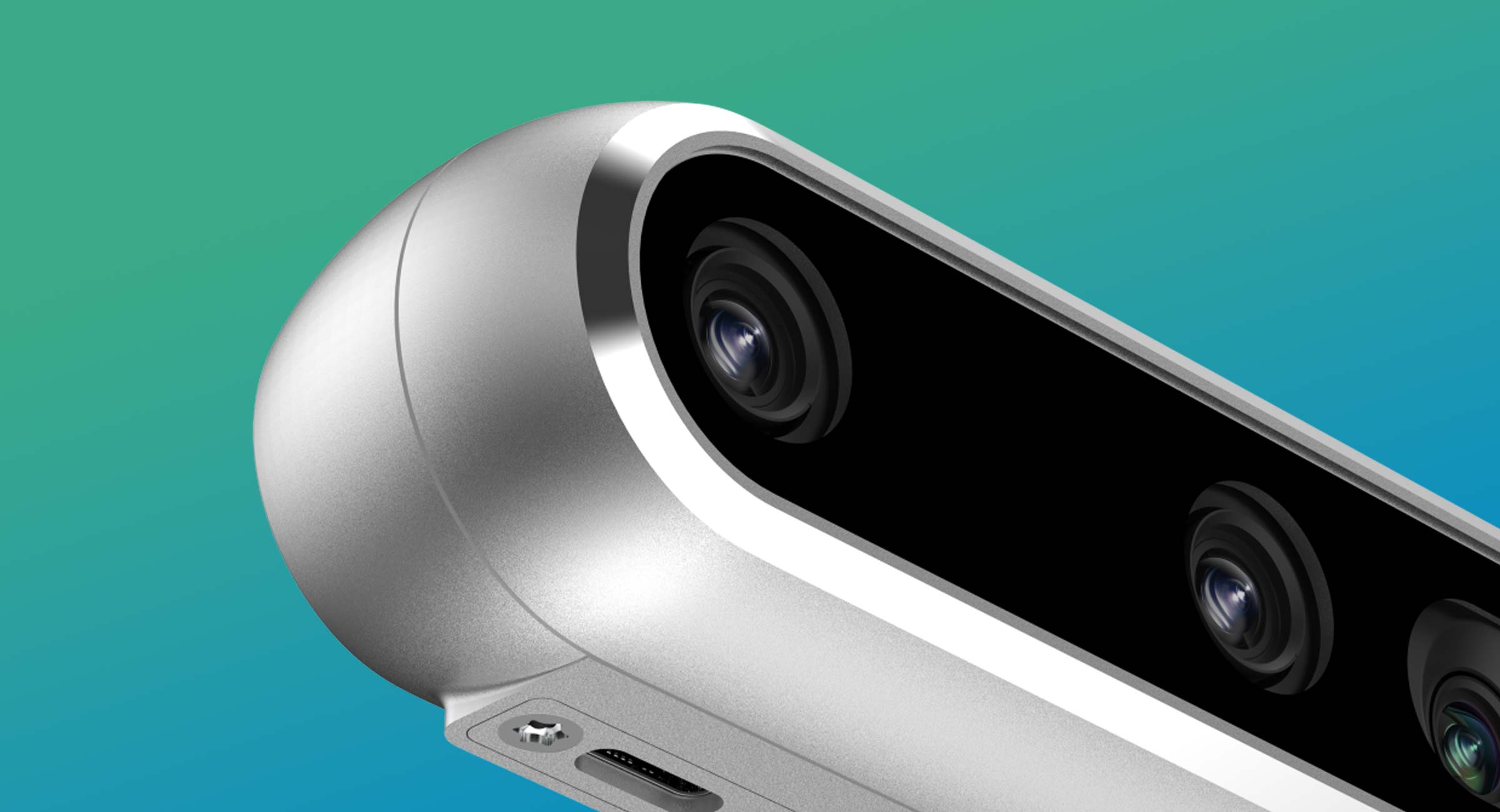
The RealSense Depth Camera D455 is a stereoscopic active-infrared depth camera belonging to Intel's D400 series, designed to capture high-fidelity depth data for robotics, autonomous mobile robots (AMRs), drones, and computer-vision applications. It features a 95 mm stereo baseline — the widest in the D400 lineup at the time of its introduction — which reportedly enables depth error of under 2% at ranges up to approximately 4 metres. Originally developed under the Intel RealSense brand, the D455 and related products were later spun off as part of an independent RealSense business unit following Intel's restructuring of the division around 2021–2022. The camera is widely adopted in research, industrial automation, and humanoid-robot development owing to its compact USB-powered form factor, open SDK support, and relatively accessible price point.
643 views
Rosie 2.0
The Rosie 2.0 is a commercial-grade autonomous robot vacuum developed by Tailos, designed to handle large-scale floor cleaning in business and institutional environments. It is offered in a two-pack configuration, allowing facilities to deploy multiple units simultaneously for broader coverage and more efficient cleaning cycles. Built to commercial durability standards, the Rosie 2.0 combines intelligent navigation with powerful suction technology to reduce reliance on manual labor and improve facility maintenance consistency. It targets businesses, hospitality venues, retail spaces, and other high-traffic environments where reliable, automated cleaning is a priority.
511 views