O-R3 Outdoor Security Robot
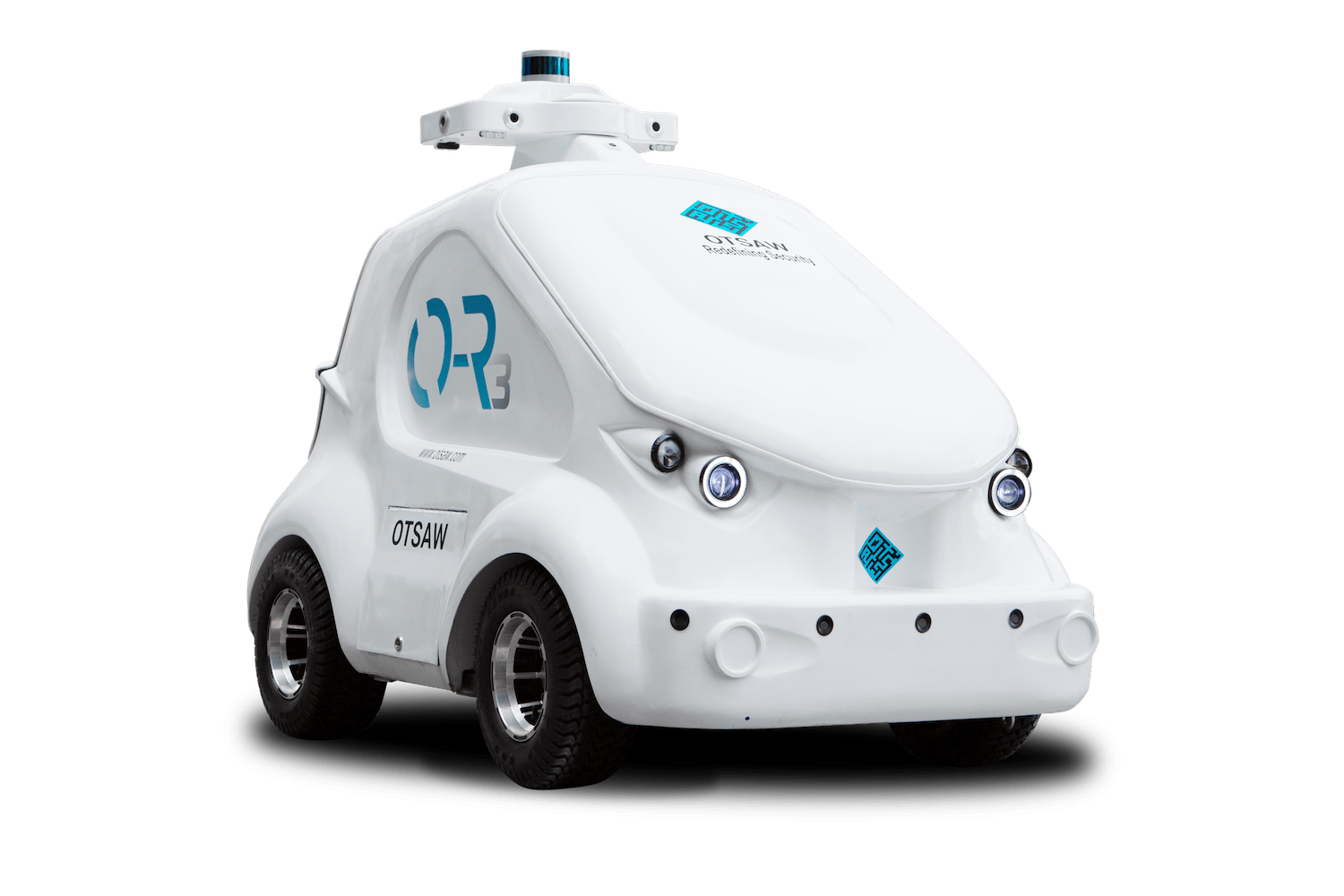
The O-R3 Outdoor Security Robot is an autonomous ground vehicle developed by OTSAW, a robotics company focused on security and surveillance automation. Designed for outdoor perimeter patrol, the O-R3 navigates predefined routes using patented 3D SLAM (Simultaneous Localization and Mapping) technology, continuously monitoring its environment through an array of onboard sensors and alerting human operators when anomalies are detected. Targeted primarily at commercial campuses, industrial facilities, airports, and public spaces, the O-R3 represents OTSAW's flagship outdoor security platform. It is intended to augment or partially replace traditional human guard patrols, offering consistent, around-the-clock surveillance coverage in environments where weather and terrain variability are key operational challenges.
Overview and Use Cases
The O-R3 is an autonomous outdoor security robot built to patrol perimeters and open-air environments with minimal human intervention. It is deployed in settings where continuous, reliable surveillance is critical but where staffing human guards around the clock is costly or logistically difficult. Typical deployment environments include:
- Commercial and corporate campuses requiring after-hours perimeter monitoring
- Industrial sites and warehouses with large open areas to cover
- Airports and seaports where access control and anomaly detection are priorities
- Public parks and event venues needing flexible, scalable patrol coverage
The robot follows pre-mapped routes but is capable of dynamic obstacle avoidance, allowing it to operate safely alongside pedestrians and vehicles.
Key Technical Features
The O-R3's core navigation capability relies on OTSAW's patented 3D SLAM system, which builds and continuously updates a spatial map of the operating environment. This allows the robot to localize itself accurately even in GPS-degraded or GPS-denied areas such as covered walkways or areas with dense foliage.
Reported sensor capabilities include:
- Multi-directional cameras for wide-area visual surveillance
- Thermal imaging for detection in low-light or nighttime conditions
- LiDAR for precise obstacle detection and 3D environmental mapping
- Microphones for audio anomaly detection (reportedly)
The robot is designed to operate in outdoor weather conditions, with a weatherproof enclosure suited to rain and dust exposure. Specific payload, battery runtime, and top-speed figures have not been consistently confirmed in public documentation and should be verified with OTSAW directly.
Sensors and Onboard Intelligence
The O-R3 integrates its sensor data through an onboard computing platform to perform real-time anomaly detection. When the system identifies a potential security event — such as an unrecognized individual, an unusual sound, or an object left in a restricted area — it triggers an alert to a remote monitoring station or security operations center. The robot can reportedly stream live video feeds to operators, enabling rapid human-in-the-loop decision-making.
OTSAW's broader component ecosystem, which includes depth cameras such as the RealSense Depth Camera D455 and high-performance compute modules like the NVIDIA Jetson Orin NX, reflects the type of sensor and processing architecture commonly associated with platforms in this category, though the exact bill of materials for the O-R3 has not been fully disclosed publicly.
Market Context and Target Buyers
The O-R3 competes in the growing autonomous security robot segment, which also includes platforms such as the Knightscope K5, Boston Dynamics Spot (configured for security), and the Cobalt Robotics indoor security robot. The O-R3 differentiates itself through its outdoor-first design and 3D SLAM navigation, which is better suited to unstructured exterior environments than many indoor-focused competitors.
In terms of market positioning, the O-R3 is generally considered an enterprise-grade solution aimed at large facility operators, government agencies, and security service providers rather than small businesses. Pricing is typically offered on a subscription or service contract basis, consistent with industry norms for security robotics, though specific figures are not publicly listed.
Deployments and Notable Customers
As of public reporting, OTSAW has demonstrated and deployed the O-R3 across various locations in Asia and reportedly in other international markets. The company has cited use cases in smart city initiatives and large-scale facility management. Specific named customers or deployment counts have not been consistently confirmed in publicly available sources.
Future Outlook
The outdoor autonomous security robot market is expected to grow as organizations seek to reduce labor costs and improve surveillance consistency. For the O-R3, potential development directions may include deeper integration with smart city infrastructure, enhanced AI-driven behavioral analytics, and expanded interoperability with existing security management platforms. OTSAW's continued investment in navigation and sensing technology suggests ongoing iteration of the platform, though specific roadmap details have not been publicly announced.
Community buzz (Reddit)
The homeowner saw on the security camera that a bear was playing on the outdoor swing every day, but couldn't get on. So he had a bigger swing built, and this was the result.
r/BeAmazed · ▲ 109,561
Fully autonomous valet robot that parks on its own
r/nextfuckinglevel · ▲ 99,787
This model's robotic costume
r/nextfuckinglevel · ▲ 81,599
Man Mimics Robot with INSANE Body Control
r/nextfuckinglevel · ▲ 78,023
Olaf robot at Paris Disneyland
r/Damnthatsinteresting · ▲ 74,192
Related entries
 Robot
RobotRelay Delivery Robot
The Relay Delivery Robot is an autonomous indoor delivery robot developed by Relay Robotics (formerly known as Savioke), designed primarily for hospitality and healthcare environments. It navigates hotel corridors and hospital hallways independently, rides elevators without human assistance, and delivers guest amenities, medications, linens, and other supplies directly to rooms or designated drop-off points. Relay is one of the most widely deployed service robots in its category, reportedly completing over one million lifetime deliveries with a publicly cited success rate of approximately 99.8%. With a cargo capacity of around 10 gallons, the robot is compact enough to operate in busy public spaces while carrying a meaningful payload of everyday supplies.
2,728 views
 Robot
RobotSpot
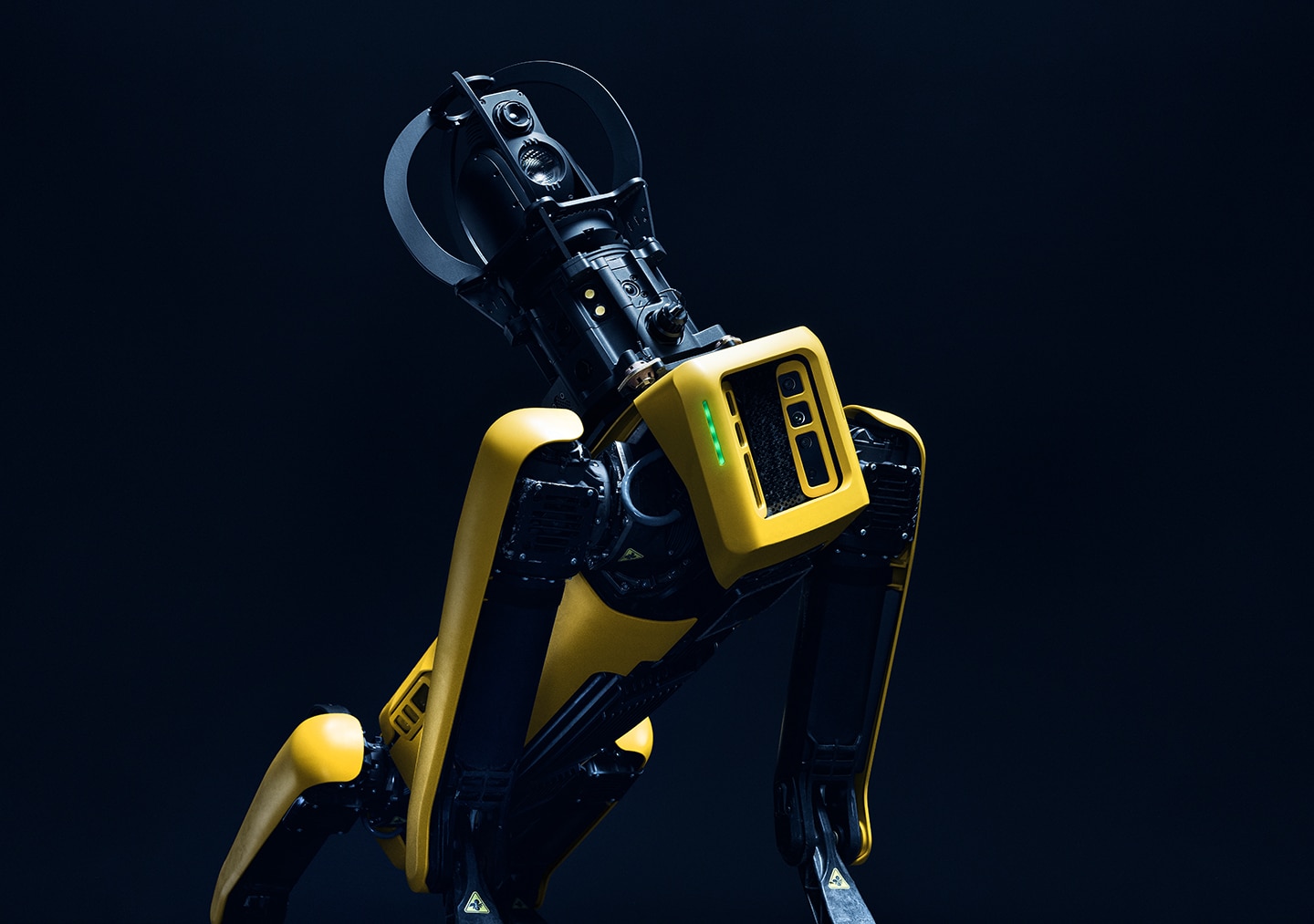
Spot is a four-legged autonomous robot developed by Boston Dynamics, a robotics company headquartered in Waltham, Massachusetts. Designed for inspection, security, and data collection in complex or hazardous environments, Spot can navigate stairs, rough terrain, and confined spaces that are inaccessible to wheeled robots. It is commercially available and has been deployed across industries including utilities, oil and gas, construction, and public safety. Spot supports a modular payload system that accommodates thermal cameras, pan-tilt-zoom (PTZ) cameras, lidar units, methane sensors, and other mission-specific hardware. Boston Dynamics also offers the Orbit fleet-management software platform, enabling operators to schedule autonomous inspection routes, aggregate sensor data, and manage multiple Spot units from a central interface. The robot is widely regarded as one of the most capable and commercially mature legged robots on the market.
1,206 views
 Robot
RobotRealSense Depth Camera D455
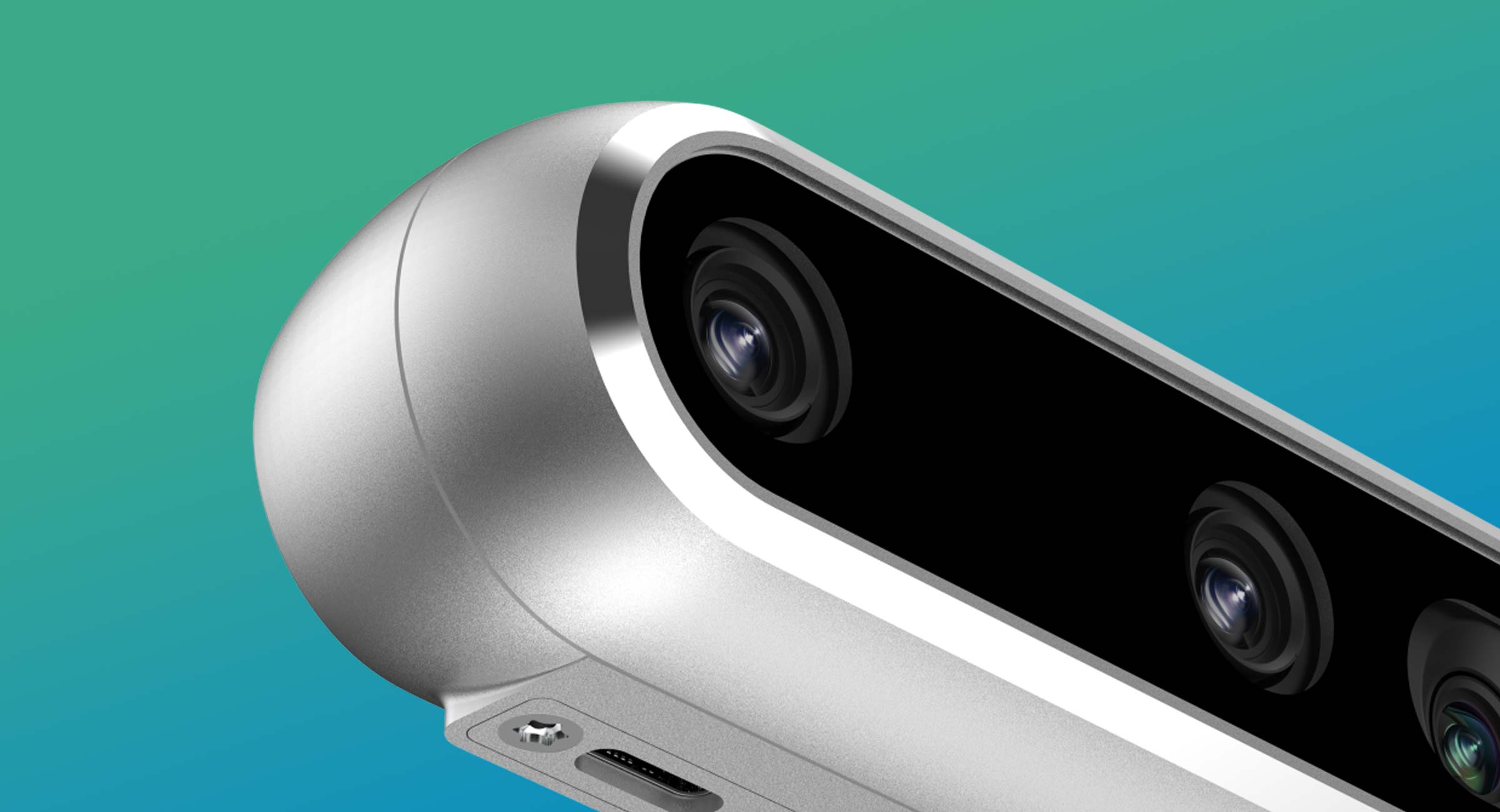
The RealSense Depth Camera D455 is a stereoscopic active-infrared depth camera belonging to Intel's D400 series, designed to capture high-fidelity depth data for robotics, autonomous mobile robots (AMRs), drones, and computer-vision applications. It features a 95 mm stereo baseline — the widest in the D400 lineup at the time of its introduction — which reportedly enables depth error of under 2% at ranges up to approximately 4 metres. Originally developed under the Intel RealSense brand, the D455 and related products were later spun off as part of an independent RealSense business unit following Intel's restructuring of the division around 2021–2022. The camera is widely adopted in research, industrial automation, and humanoid-robot development owing to its compact USB-powered form factor, open SDK support, and relatively accessible price point.
643 views
Rosie 2.0
The Rosie 2.0 is a commercial-grade autonomous robot vacuum developed by Tailos, designed to handle large-scale floor cleaning in business and institutional environments. It is offered in a two-pack configuration, allowing facilities to deploy multiple units simultaneously for broader coverage and more efficient cleaning cycles. Built to commercial durability standards, the Rosie 2.0 combines intelligent navigation with powerful suction technology to reduce reliance on manual labor and improve facility maintenance consistency. It targets businesses, hospitality venues, retail spaces, and other high-traffic environments where reliable, automated cleaning is a priority.
511 views