mBot2
The mBot2 is a buildable educational coding robot developed by Makeblock, designed to introduce students to programming, electronics, and robotics through a hands-on, progressive learning experience. Powered by the CyberPi microcontroller, it supports a coding journey that spans block-based visual programming (via mBlock) all the way to Python, making it suitable for learners from elementary through middle school and beyond. The mBot2 incorporates Wi-Fi and IoT connectivity alongside AI-capable features such as image recognition and pose detection, distinguishing it from simpler entry-level robots. It is widely used in K–12 classrooms, STEM clubs, and home education settings, and is regarded as one of Makeblock's flagship consumer-facing educational platforms.

Overview and Use Cases
The mBot2 is Makeblock's second-generation entry in its mBot product line, succeeding the original mBot and representing a significant upgrade in processing power, connectivity, and AI capability. It is primarily aimed at K–12 education, serving as a platform for teaching computational thinking, basic robotics mechanics, sensor integration, and introductory artificial intelligence concepts.
Typical deployment scenarios include:
- Classroom STEM lessons guided by teachers using structured curricula
- After-school robotics clubs and maker spaces
- Home learning for self-directed or parent-guided exploration
- Coding competitions at the introductory level
The robot's buildable nature—assembled from a kit—adds a mechanical engineering dimension to the learning experience before any programming begins.
Key Technical Details
The mBot2 is built around the CyberPi microcontroller, a purpose-built board by Makeblock that integrates a display, speaker, microphone, Wi-Fi module, and multiple I/O ports into a single compact unit. Key technical highlights include:
- Microcontroller: CyberPi (ESP32-based, reportedly)
- Connectivity: Wi-Fi (2.4 GHz), enabling IoT projects and cloud-based AI services
- Sensors (onboard/bundled): Ultrasonic distance sensor, line-following sensors, RGB LEDs, and the CyberPi's built-in light, sound, and motion sensors
- AI features: Image recognition and human pose detection, accessed via mBlock's AI extensions and cloud processing
- Programming environments: mBlock (Scratch 3.0-based block coding), Python mode, and reportedly MicroPython support
- Power: Rechargeable lithium battery pack (capacity not independently verified)
- Expansion: Compatible with Makeblock's broader ecosystem of electronic modules and mechanical parts
Runtime and precise payload figures are not prominently published in official specifications and should not be assumed.
Comparison to Similar Robots
Within Makeblock's lineup, the mBot2 occupies the consumer/educational entry-to-mid tier. It is more capable than the original mBot (which used an Arduino-compatible board without Wi-Fi or AI features) but is positioned below Makeblock's more advanced platforms intended for higher-education or professional prototyping contexts.
Against competitors, the mBot2 competes in a crowded K–12 robotics market:
- LEGO Mindstorms EV3 / LEGO SPIKE Prime: Offer strong curriculum integration and brand recognition; generally at a higher price point
- Sphero RVR / Sphero BOLT: Focus more on driving/navigation tasks with less mechanical assembly
- Ozobot Evo: Targets younger learners with simpler interaction models
- micro:bit-based kits (e.g., Kitronik): More open-ended but require more teacher scaffolding
The mBot2's combination of AI features, Wi-Fi, and a structured progression from blocks to Python is considered a differentiator at its price tier.
Market Context and Target Buyers
The mBot2 is positioned as a mid-range educational robot kit, typically retailing at a price accessible to individual families as well as school purchasing budgets, though exact MSRP varies by region and retailer and is not stated here. It targets:
- Primary and middle school educators seeking curriculum-aligned STEM tools
- Parents investing in at-home coding education
- EdTech procurement teams equipping computer science or robotics labs
Makeblock distributes the mBot2 globally through its own online store and a network of regional educational distributors and retail partners.
Deployments and Notable Adoption
As of public reporting, the mBot2 and its predecessor have been adopted in schools across numerous countries, with Makeblock citing broad international distribution. The platform is used in conjunction with Makeblock's mBlock software ecosystem, which supports teacher dashboards and student progress tracking. Specific named institutional customers have not been prominently disclosed in public materials.
Future Outlook
The educational robotics market continues to grow as coding and computational thinking become standard components of school curricula worldwide. The mBot2's integration of AI and IoT features positions it to remain relevant as these topics gain prominence in K–12 standards. Makeblock has historically iterated on its hardware and software platforms, and future updates to the CyberPi ecosystem or mBlock AI extensions could further expand the robot's capabilities without requiring hardware replacement.
Community buzz (Reddit)
Related entries
 Robot
RobotRelay Delivery Robot
The Relay Delivery Robot is an autonomous indoor delivery robot developed by Relay Robotics (formerly known as Savioke), designed primarily for hospitality and healthcare environments. It navigates hotel corridors and hospital hallways independently, rides elevators without human assistance, and delivers guest amenities, medications, linens, and other supplies directly to rooms or designated drop-off points. Relay is one of the most widely deployed service robots in its category, reportedly completing over one million lifetime deliveries with a publicly cited success rate of approximately 99.8%. With a cargo capacity of around 10 gallons, the robot is compact enough to operate in busy public spaces while carrying a meaningful payload of everyday supplies.
2,727 views
 Robot
RobotSpot
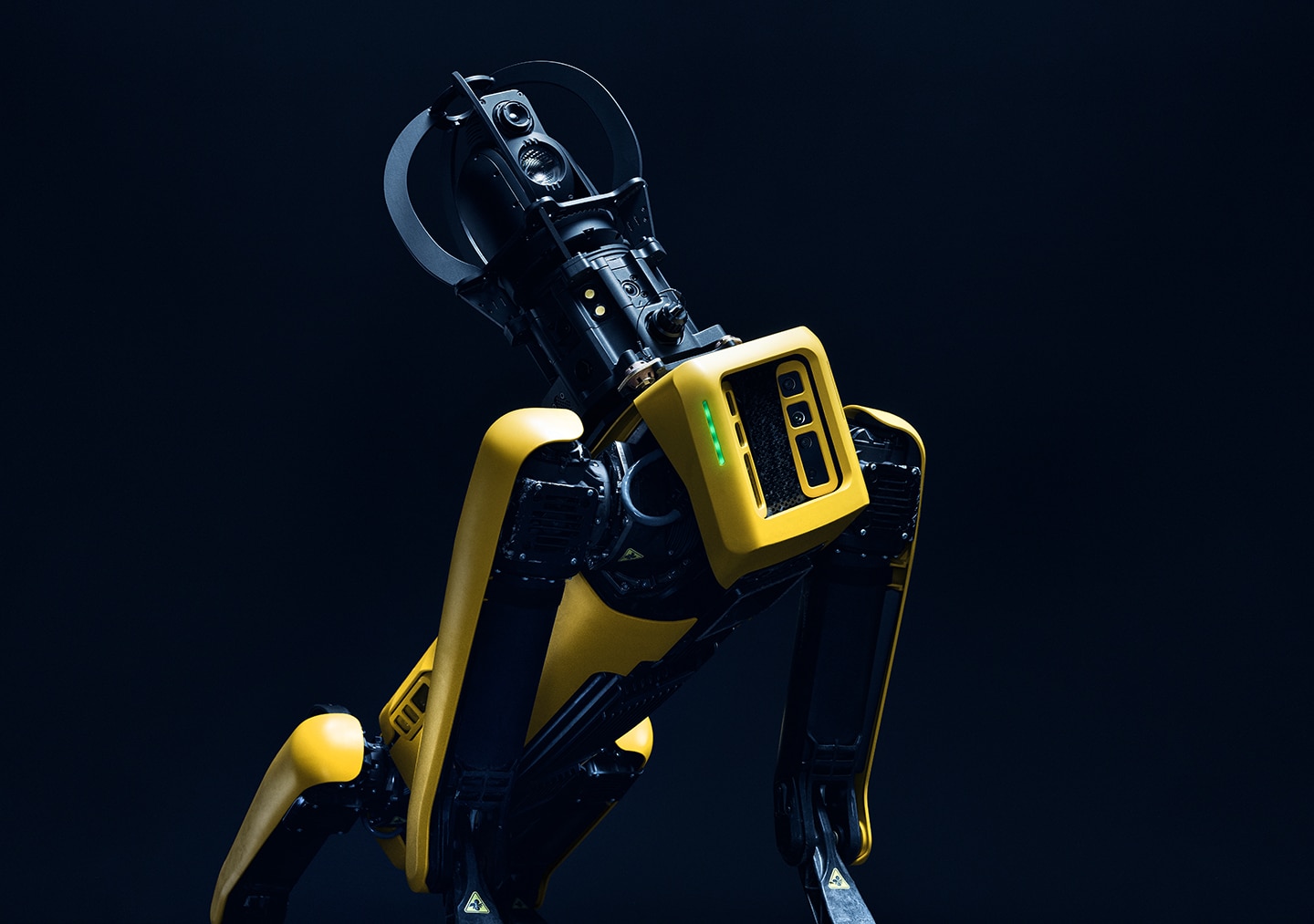
Spot is a four-legged autonomous robot developed by Boston Dynamics, a robotics company headquartered in Waltham, Massachusetts. Designed for inspection, security, and data collection in complex or hazardous environments, Spot can navigate stairs, rough terrain, and confined spaces that are inaccessible to wheeled robots. It is commercially available and has been deployed across industries including utilities, oil and gas, construction, and public safety. Spot supports a modular payload system that accommodates thermal cameras, pan-tilt-zoom (PTZ) cameras, lidar units, methane sensors, and other mission-specific hardware. Boston Dynamics also offers the Orbit fleet-management software platform, enabling operators to schedule autonomous inspection routes, aggregate sensor data, and manage multiple Spot units from a central interface. The robot is widely regarded as one of the most capable and commercially mature legged robots on the market.
1,203 views
 Robot
RobotRealSense Depth Camera D455
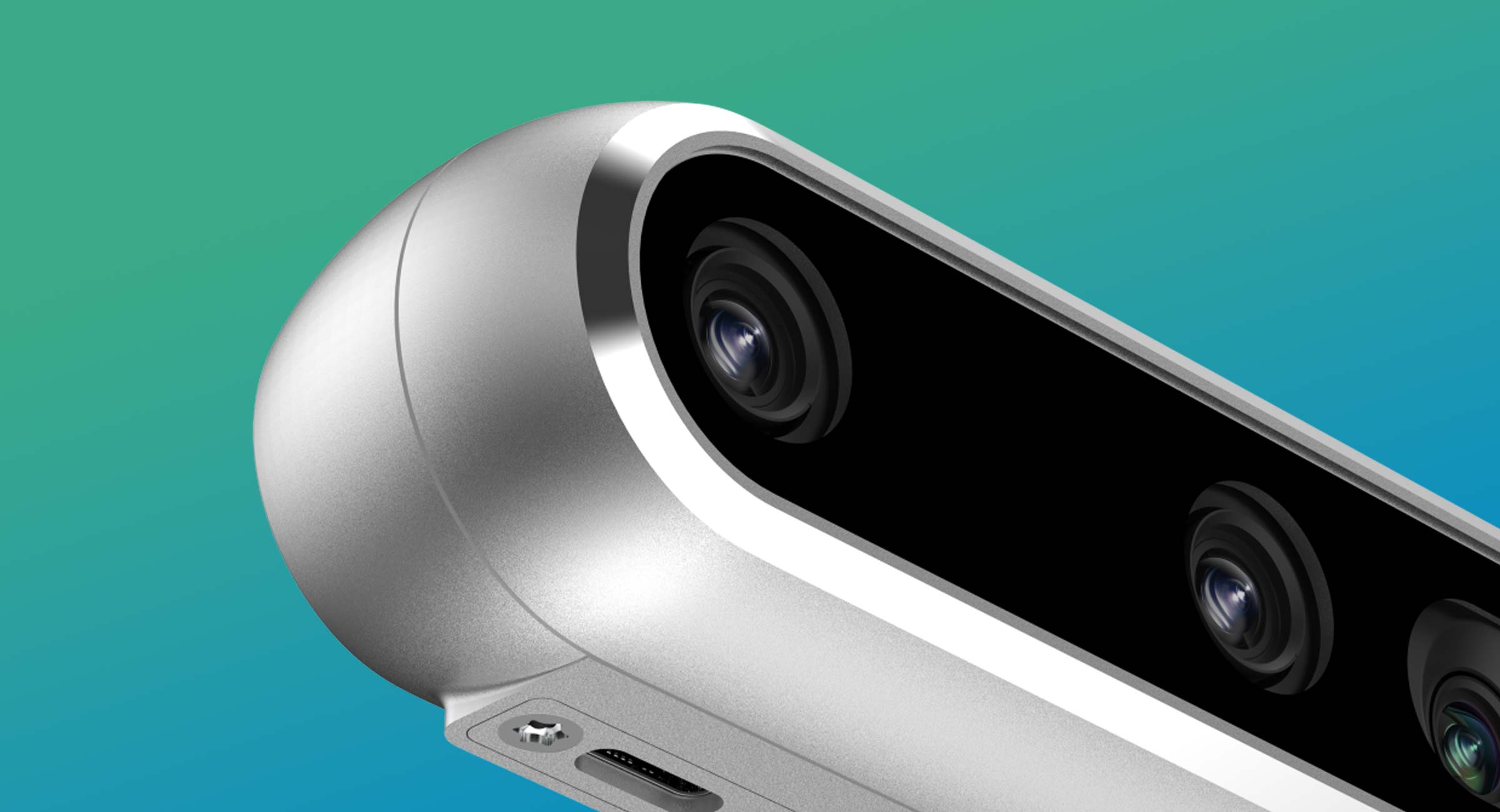
The RealSense Depth Camera D455 is a stereoscopic active-infrared depth camera belonging to Intel's D400 series, designed to capture high-fidelity depth data for robotics, autonomous mobile robots (AMRs), drones, and computer-vision applications. It features a 95 mm stereo baseline — the widest in the D400 lineup at the time of its introduction — which reportedly enables depth error of under 2% at ranges up to approximately 4 metres. Originally developed under the Intel RealSense brand, the D455 and related products were later spun off as part of an independent RealSense business unit following Intel's restructuring of the division around 2021–2022. The camera is widely adopted in research, industrial automation, and humanoid-robot development owing to its compact USB-powered form factor, open SDK support, and relatively accessible price point.
642 views
Rosie 2.0
The Rosie 2.0 is a commercial-grade autonomous robot vacuum developed by Tailos, designed to handle large-scale floor cleaning in business and institutional environments. It is offered in a two-pack configuration, allowing facilities to deploy multiple units simultaneously for broader coverage and more efficient cleaning cycles. Built to commercial durability standards, the Rosie 2.0 combines intelligent navigation with powerful suction technology to reduce reliance on manual labor and improve facility maintenance consistency. It targets businesses, hospitality venues, retail spaces, and other high-traffic environments where reliable, automated cleaning is a priority.
511 views