LuckiBot Pro
The LuckiBot Pro is a next-generation AI-powered delivery robot developed by OrionStar Robotics, designed for deployment in hospitality environments such as restaurants and hotels. It is built to autonomously transport food, beverages, and other items to guests, reducing the workload on human staff while maintaining a consistent service experience. The robot features a 240° LiDAR sensor combined with dual RGB-D 3D cameras for obstacle avoidance, a 14.1-inch HD touchscreen display for guest interaction, and an industry-notable dish recognition camera that allows it to identify and manage food items. These capabilities position the LuckiBot Pro as one of the more sensor-rich hospitality delivery robots in its category.

Overview and Use Cases
The LuckiBot Pro is a hospitality-focused autonomous delivery robot produced by OrionStar Robotics, a company known for developing AI-driven service robots for commercial environments. The robot is primarily intended for use in restaurants, hotels, and similar venues where repetitive delivery tasks — such as bringing dishes from a kitchen to a table, or delivering amenities to hotel rooms — can be automated.
By handling routine delivery runs, the LuckiBot Pro allows human staff to focus on higher-value guest interactions. Its onboard 14.1-inch HD display can be used to show promotional content, greet guests, or provide status updates, adding a secondary communication function beyond simple transport.
Key Technical Features
The LuckiBot Pro's sensor suite is a notable aspect of its design:
- 240° LiDAR: Provides wide-angle horizontal scanning for real-time mapping and navigation in dynamic environments.
- Dual RGB-D 3D cameras: Offer depth-sensing obstacle avoidance, reportedly enabling the robot to detect objects at varying heights, including low obstacles and overhanging hazards.
- Dish recognition camera: Described by OrionStar as an industry-exclusive feature, this camera can reportedly identify food items placed on the robot's trays, potentially enabling smarter delivery confirmation or inventory tracking.
- 14.1-inch HD touchscreen: Supports guest-facing interaction and content display.
Specific figures for payload capacity, battery runtime, and maximum speed have not been independently verified in public documentation and should be confirmed directly with OrionStar Robotics.
Comparison to Similar Robots
Within OrionStar Robotics' broader portfolio, the LuckiBot Pro is the company's dedicated hospitality delivery platform. The sibling models listed under OrionStar's umbrella — including educational robots and companion devices — serve fundamentally different market segments and share little functional overlap with the LuckiBot Pro.
In the wider hospitality robot market, the LuckiBot Pro competes with products such as the Keenon T8 and T9 series, the BellaBot by Pudu Robotics, and the Matradee series by Richtech Robotics. The dish recognition camera is a differentiating feature that few direct competitors have publicly claimed, though the practical deployment impact of this feature in real-world restaurant settings has not been extensively documented in independent reviews.
Market Context and Target Buyers
The LuckiBot Pro is positioned in the mid-to-premium tier of the hospitality robot market. Its target buyers are typically:
- Restaurant chains and franchises seeking to reduce labor costs and improve delivery consistency.
- Hotels and resorts looking to automate in-room dining delivery or lobby-level service.
- Venue operators in high-traffic environments where robot navigation reliability is critical.
As of public reporting, OrionStar Robotics markets the LuckiBot Pro primarily in Asian markets, with reported interest from operators in China and Southeast Asia, though the company has pursued international expansion more broadly.
Deployments and Notable Customers
OrionStar Robotics has reported deployments of its hospitality robots across restaurant and hotel chains, particularly in China. Specific named customers or large-scale deployment figures for the LuckiBot Pro model specifically have not been widely disclosed in public sources. The robot has reportedly been demonstrated at industry trade events focused on smart hospitality and foodservice automation.
Future Outlook
The hospitality delivery robot segment is growing as labor costs rise and venues seek automation solutions. OrionStar Robotics continues to iterate on its LuckiBot line, and the Pro variant's emphasis on advanced sensing — particularly the dish recognition camera — suggests the company is positioning itself toward smarter, more context-aware delivery rather than purely mechanical transport. Future developments may include deeper integration with restaurant management systems, enhanced AI-driven guest interaction via the display, and expanded multi-floor navigation capabilities. As competition in this space intensifies, differentiating features like the dish recognition camera will be important factors in the LuckiBot Pro's market positioning.
Related entries
 Robot
RobotRelay Delivery Robot
The Relay Delivery Robot is an autonomous indoor delivery robot developed by Relay Robotics (formerly known as Savioke), designed primarily for hospitality and healthcare environments. It navigates hotel corridors and hospital hallways independently, rides elevators without human assistance, and delivers guest amenities, medications, linens, and other supplies directly to rooms or designated drop-off points. Relay is one of the most widely deployed service robots in its category, reportedly completing over one million lifetime deliveries with a publicly cited success rate of approximately 99.8%. With a cargo capacity of around 10 gallons, the robot is compact enough to operate in busy public spaces while carrying a meaningful payload of everyday supplies.
2,732 views
 Robot
RobotSpot
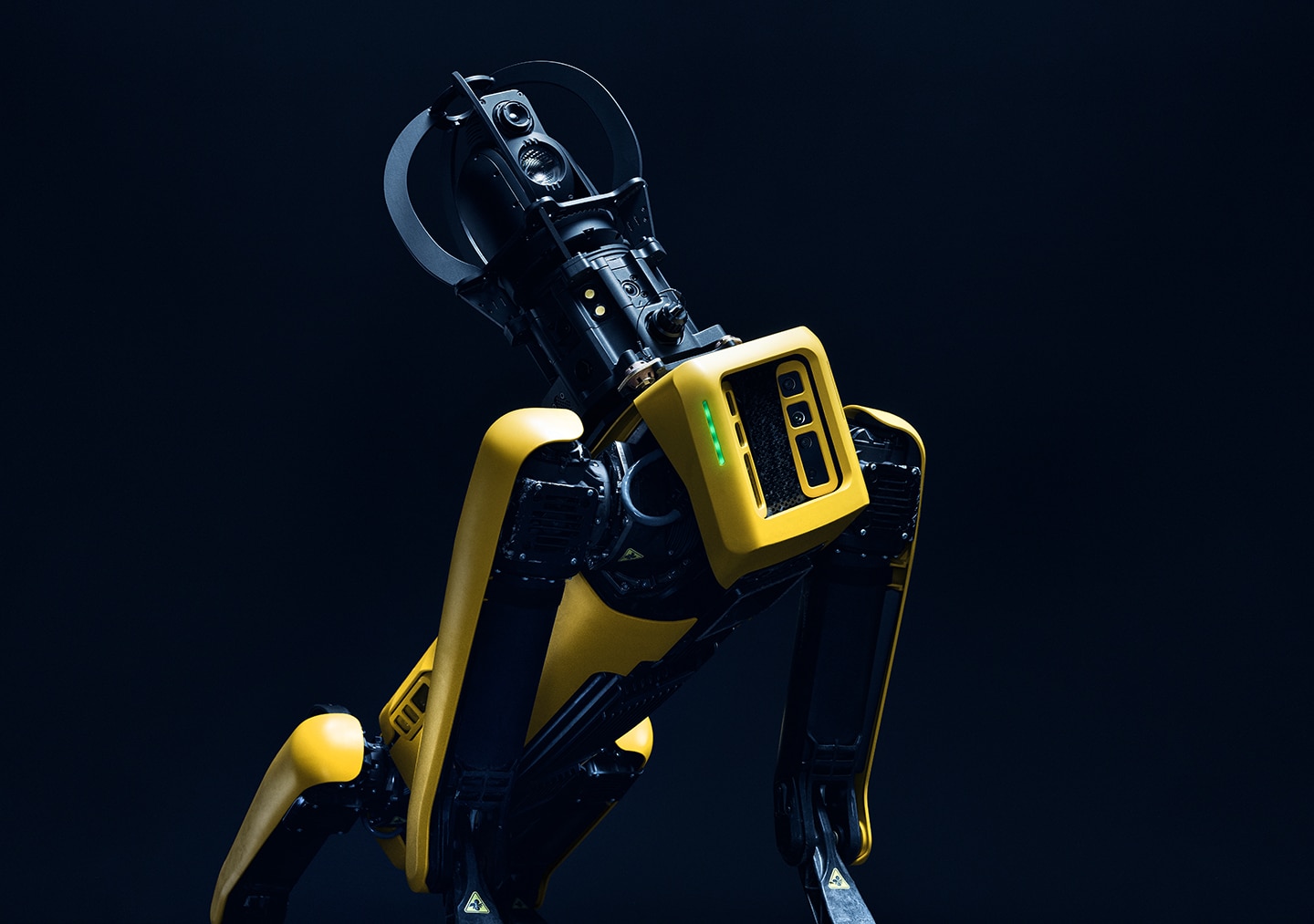
Spot is a four-legged autonomous robot developed by Boston Dynamics, a robotics company headquartered in Waltham, Massachusetts. Designed for inspection, security, and data collection in complex or hazardous environments, Spot can navigate stairs, rough terrain, and confined spaces that are inaccessible to wheeled robots. It is commercially available and has been deployed across industries including utilities, oil and gas, construction, and public safety. Spot supports a modular payload system that accommodates thermal cameras, pan-tilt-zoom (PTZ) cameras, lidar units, methane sensors, and other mission-specific hardware. Boston Dynamics also offers the Orbit fleet-management software platform, enabling operators to schedule autonomous inspection routes, aggregate sensor data, and manage multiple Spot units from a central interface. The robot is widely regarded as one of the most capable and commercially mature legged robots on the market.
1,211 views
 Robot
RobotRealSense Depth Camera D455
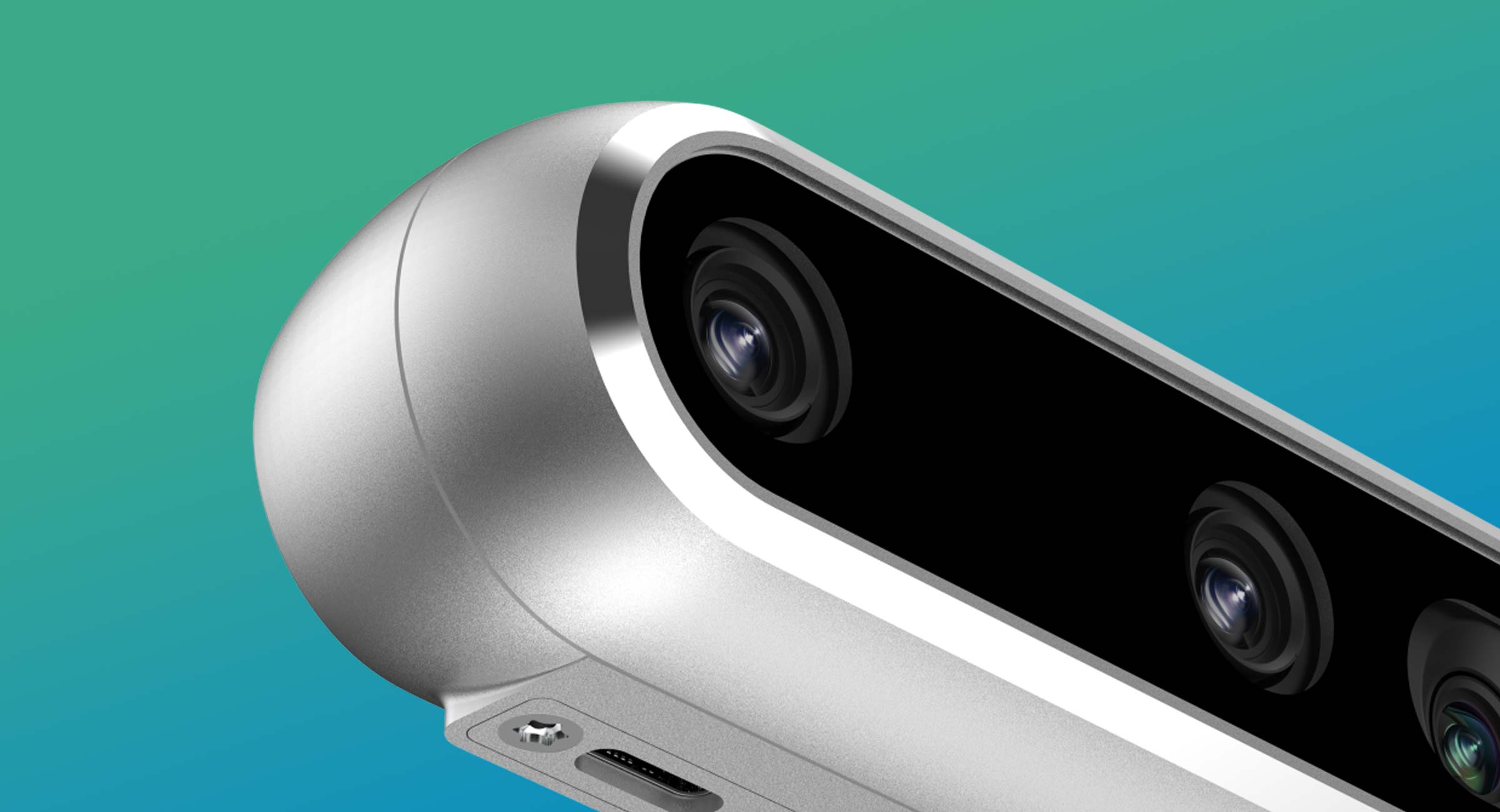
The RealSense Depth Camera D455 is a stereoscopic active-infrared depth camera belonging to Intel's D400 series, designed to capture high-fidelity depth data for robotics, autonomous mobile robots (AMRs), drones, and computer-vision applications. It features a 95 mm stereo baseline — the widest in the D400 lineup at the time of its introduction — which reportedly enables depth error of under 2% at ranges up to approximately 4 metres. Originally developed under the Intel RealSense brand, the D455 and related products were later spun off as part of an independent RealSense business unit following Intel's restructuring of the division around 2021–2022. The camera is widely adopted in research, industrial automation, and humanoid-robot development owing to its compact USB-powered form factor, open SDK support, and relatively accessible price point.
651 views
Rosie 2.0
The Rosie 2.0 is a commercial-grade autonomous robot vacuum developed by Tailos, designed to handle large-scale floor cleaning in business and institutional environments. It is offered in a two-pack configuration, allowing facilities to deploy multiple units simultaneously for broader coverage and more efficient cleaning cycles. Built to commercial durability standards, the Rosie 2.0 combines intelligent navigation with powerful suction technology to reduce reliance on manual labor and improve facility maintenance consistency. It targets businesses, hospitality venues, retail spaces, and other high-traffic environments where reliable, automated cleaning is a priority.
511 views