Locus Origin
The Locus Origin is a collaborative autonomous mobile robot (AMR) manufactured by Locus Robotics for high-volume order fulfillment in warehouse environments. It operates alongside warehouse associates to enable goods-to-person picking workflows controlled by the LocusONE platform.
Overview and Use Cases
The Locus Origin is designed for deployment in warehouse and fulfillment center environments handling high-volume order picking operations. It functions as a collaborative robot that works in tandem with human warehouse associates rather than replacing them. The system is integrated with the LocusONE warehouse orchestration platform, which coordinates the robot's movements and picking assignments.
Key Capabilities
- Collaborative person-to-goods picking workflow support
- Intuitive touchscreen interface for operator interaction
- Integration with LocusONE orchestration platform for workflow management
- Deployment into existing warehouse infrastructure without requiring extensive modifications
- Documented productivity improvements of 2× in fulfillment operations
Applications
The Locus Origin is used in warehouse order fulfillment operations where goods-to-person picking workflows are employed. This approach brings products to associates at workstations rather than requiring workers to travel throughout the facility to locate items. The system is designed to scale within existing warehouse facilities without necessitating major infrastructure changes or facility redesign.
Manufacturer
The Locus Origin is manufactured by Locus Robotics, a United States-based robotics company specializing in autonomous mobile robots for warehouse automation.
Related entries
 Robot
RobotRelay Delivery Robot
The Relay Delivery Robot is an autonomous indoor delivery robot developed by Relay Robotics (formerly known as Savioke), designed primarily for hospitality and healthcare environments. It navigates hotel corridors and hospital hallways independently, rides elevators without human assistance, and delivers guest amenities, medications, linens, and other supplies directly to rooms or designated drop-off points. Relay is one of the most widely deployed service robots in its category, reportedly completing over one million lifetime deliveries with a publicly cited success rate of approximately 99.8%. With a cargo capacity of around 10 gallons, the robot is compact enough to operate in busy public spaces while carrying a meaningful payload of everyday supplies.
2,727 views
 Robot
RobotSpot
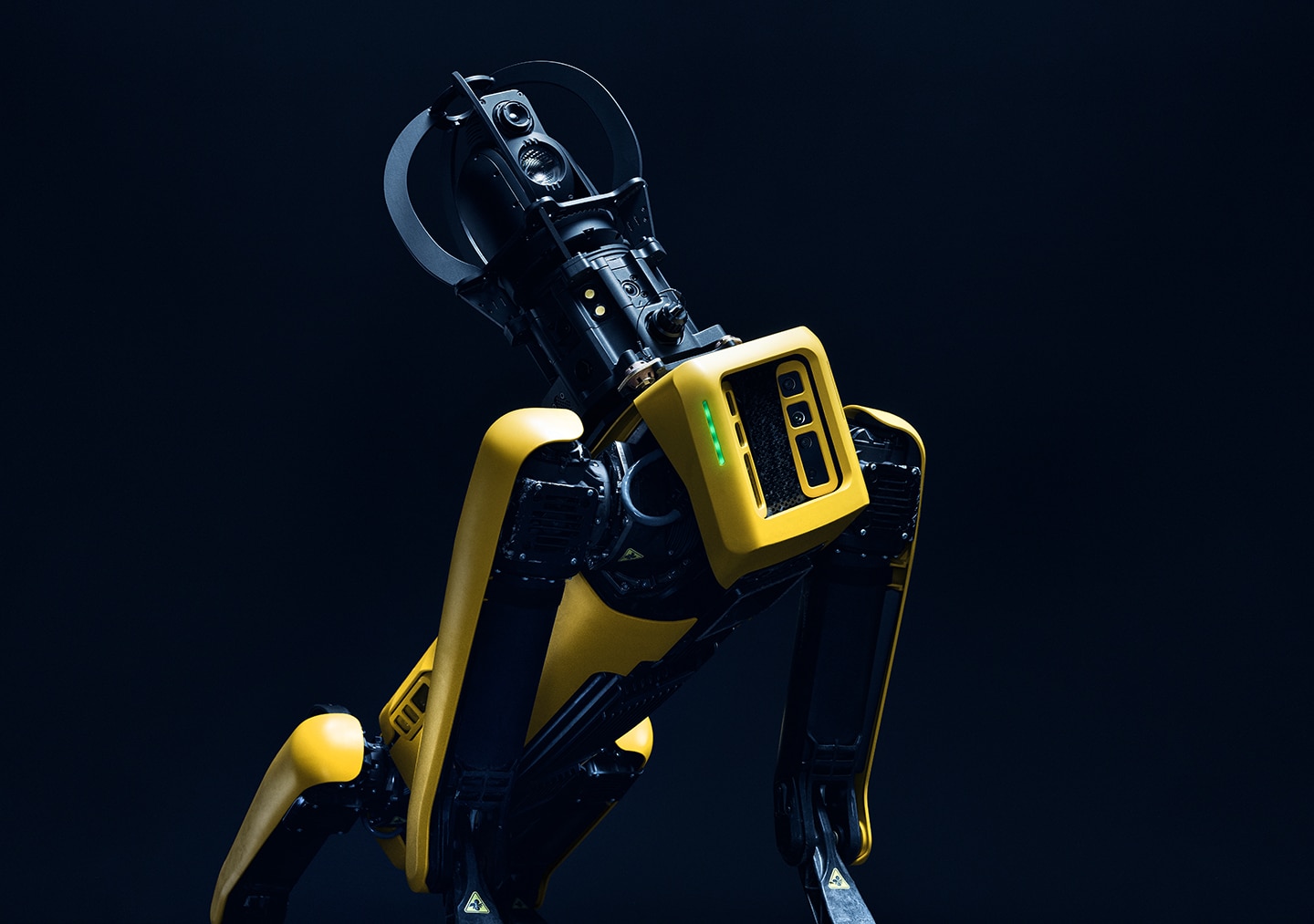
Spot is a four-legged autonomous robot developed by Boston Dynamics, a robotics company headquartered in Waltham, Massachusetts. Designed for inspection, security, and data collection in complex or hazardous environments, Spot can navigate stairs, rough terrain, and confined spaces that are inaccessible to wheeled robots. It is commercially available and has been deployed across industries including utilities, oil and gas, construction, and public safety. Spot supports a modular payload system that accommodates thermal cameras, pan-tilt-zoom (PTZ) cameras, lidar units, methane sensors, and other mission-specific hardware. Boston Dynamics also offers the Orbit fleet-management software platform, enabling operators to schedule autonomous inspection routes, aggregate sensor data, and manage multiple Spot units from a central interface. The robot is widely regarded as one of the most capable and commercially mature legged robots on the market.
1,203 views
 Robot
RobotRealSense Depth Camera D455
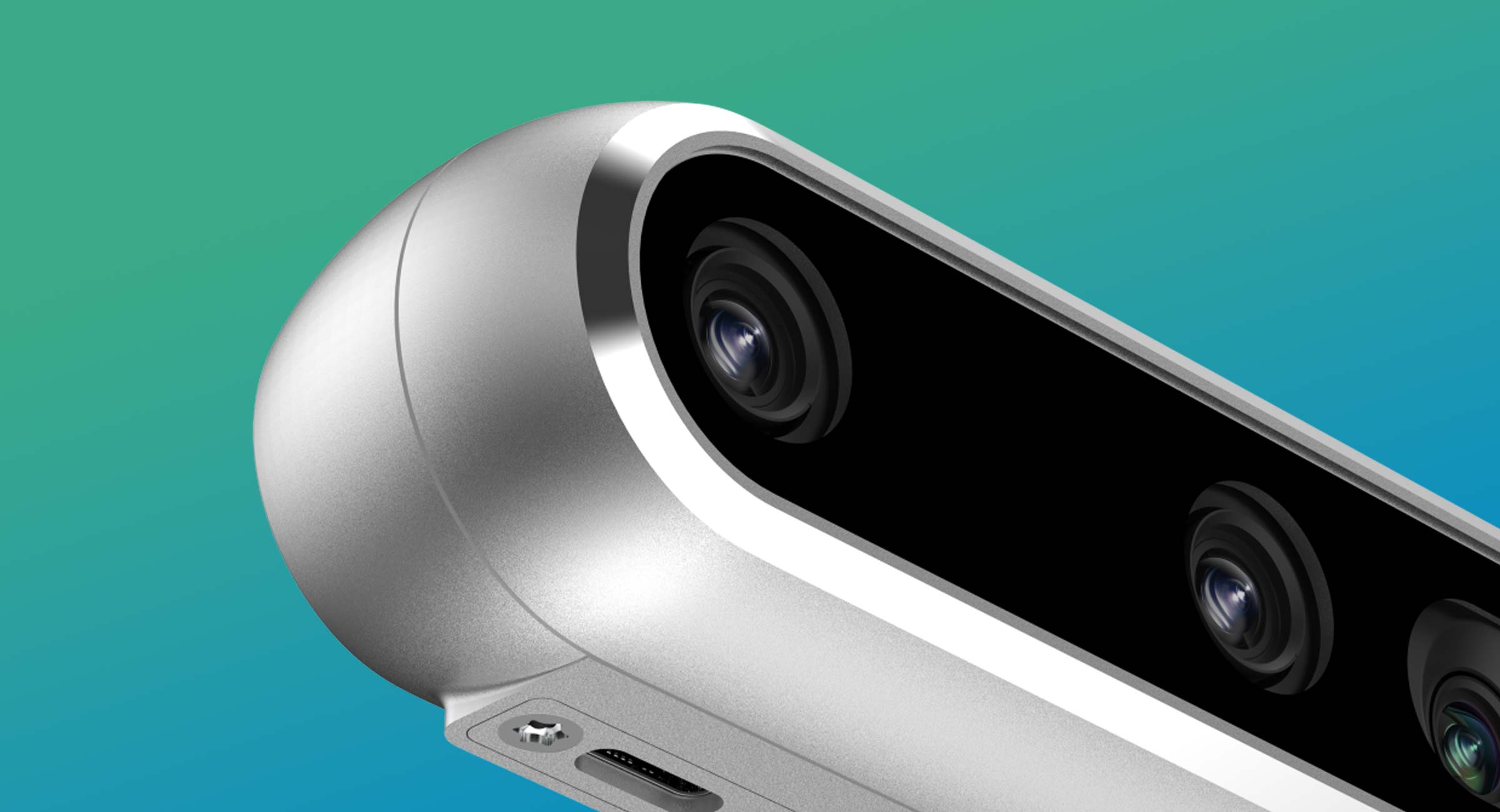
The RealSense Depth Camera D455 is a stereoscopic active-infrared depth camera belonging to Intel's D400 series, designed to capture high-fidelity depth data for robotics, autonomous mobile robots (AMRs), drones, and computer-vision applications. It features a 95 mm stereo baseline — the widest in the D400 lineup at the time of its introduction — which reportedly enables depth error of under 2% at ranges up to approximately 4 metres. Originally developed under the Intel RealSense brand, the D455 and related products were later spun off as part of an independent RealSense business unit following Intel's restructuring of the division around 2021–2022. The camera is widely adopted in research, industrial automation, and humanoid-robot development owing to its compact USB-powered form factor, open SDK support, and relatively accessible price point.
642 views
Rosie 2.0
The Rosie 2.0 is a commercial-grade autonomous robot vacuum developed by Tailos, designed to handle large-scale floor cleaning in business and institutional environments. It is offered in a two-pack configuration, allowing facilities to deploy multiple units simultaneously for broader coverage and more efficient cleaning cycles. Built to commercial durability standards, the Rosie 2.0 combines intelligent navigation with powerful suction technology to reduce reliance on manual labor and improve facility maintenance consistency. It targets businesses, hospitality venues, retail spaces, and other high-traffic environments where reliable, automated cleaning is a priority.
511 views