Kiwi Delivery Robot
The Kiwi Delivery Robot is a Level-4 autonomous sidewalk delivery robot developed by Kiwibot, designed to handle campus and last-mile delivery tasks without requiring continuous human supervision. Operating on pedestrian pathways, it navigates around obstacles, crosses intersections, and delivers food, packages, and other goods directly to recipients at their location. Kiwibot has deployed its robots across university campuses, urban neighborhoods, and corporate campuses, reportedly operating in more than 10 countries across five continents. The platform is positioned as a cost-effective, low-emission alternative to traditional courier services for short-distance, high-frequency delivery scenarios.
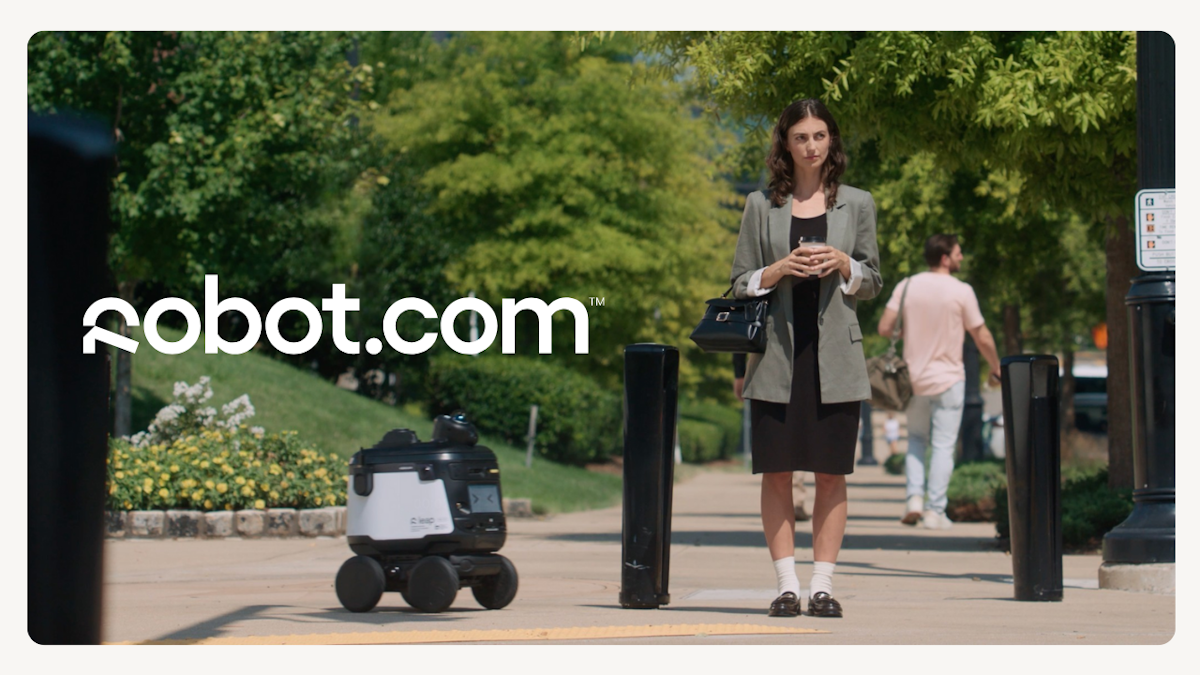
Overview and Use Cases
The Kiwi Delivery Robot is Kiwibot's flagship autonomous ground vehicle, purpose-built for sidewalk-level last-mile delivery. It is primarily deployed in environments with predictable pedestrian infrastructure, such as:
- University campuses – delivering food and convenience items from on-campus vendors to students and staff
- Urban neighborhoods – partnering with restaurants and retailers for short-range delivery
- Corporate and mixed-use campuses – supporting employee meal and package delivery programs
The robot operates at pedestrian speeds, sharing pathways with foot traffic and complying with local micromobility regulations. Its Level-4 autonomy classification indicates it can handle most operational scenarios without human intervention, though remote human oversight is typically maintained as a safety backstop.
Technical Details
Kiwibot has not publicly disclosed a comprehensive technical specification sheet, but based on available reporting and product materials, the Kiwi Delivery Robot incorporates:
- Sensor suite – multiple cameras, ultrasonic sensors, and reportedly depth-sensing technology (consistent with components such as the Intel RealSense Depth Camera D455 used within Kiwibot's broader ecosystem) for obstacle detection and localization
- Compute platform – edge AI processors (components such as the NVIDIA Jetson Orin NX are associated with Kiwibot's development stack) enabling real-time perception and path planning
- Drive system – electric motors providing quiet, zero-emission operation; brushless motor components (such as the EC-i 40 Brushless Motor) are referenced in Kiwibot's parts ecosystem
- Payload compartment – an insulated cargo bay designed to maintain food temperature during transit; exact payload capacity has not been officially confirmed
- Battery runtime – specific range and charge cycle figures have not been publicly confirmed; the robot is designed for multi-delivery shifts on a single charge
- Connectivity – relies on cellular and/or Wi-Fi networks for fleet management, remote monitoring, and customer-facing order tracking
Comparison to Similar Robots
Within the sidewalk delivery segment, the Kiwi Delivery Robot competes with platforms such as:
- Starship Technologies robot – one of the most widely deployed sidewalk delivery robots globally, with a comparable form factor and campus-focused go-to-market strategy
- Serve Robotics – operates in urban environments with a focus on food delivery partnerships
- Nuro – targets road-level autonomous delivery at a larger vehicle scale, representing a different market tier
Kiwibot differentiates itself through its international deployment footprint and its hybrid model that has historically combined autonomous operation with remote human assistance, allowing deployment in regulatory environments where full autonomy is not yet permitted.
Market Context and Target Buyers
The Kiwi Delivery Robot is positioned in the robotics-as-a-service (RaaS) tier, meaning customers typically pay per delivery or via subscription rather than purchasing hardware outright. Target buyers include:
- University dining and facilities operators
- Food delivery platforms and ghost kitchen operators
- Municipal and corporate campus managers seeking sustainable logistics solutions
The RaaS model lowers the barrier to adoption and allows Kiwibot to retain control over hardware maintenance and software updates, which is common practice among sidewalk delivery robot vendors.
Deployments and Notable Customers
Kiwibot has publicly announced partnerships and deployments at several U.S. universities, including institutions in California and the southeastern United States. The company has also reported operations in Latin America and other international markets, though specific customer names and contract details are not always disclosed. As of public reporting, Kiwibot claims a presence spanning more than 10 countries across five continents, making it one of the more internationally distributed sidewalk delivery robot operators.
Future Outlook
The sidewalk delivery robot market is expected to grow as urban density increases and labor costs for traditional delivery rise. Kiwibot's continued international expansion and its investment in higher-autonomy software stacks suggest a trajectory toward reducing reliance on remote human operators. Regulatory developments in key markets — particularly around sidewalk robot speed limits, liability frameworks, and right-of-way rules — will likely shape the pace of broader commercialization. Kiwibot's multi-continent presence may provide an advantage in navigating diverse regulatory landscapes compared to competitors with primarily domestic operations.
Related videos

Community buzz (Reddit)
Fully autonomous valet robot that parks on its own
r/nextfuckinglevel · ▲ 99,779
This model's robotic costume
r/nextfuckinglevel · ▲ 81,595
Man Mimics Robot with INSANE Body Control
r/nextfuckinglevel · ▲ 78,016
Olaf robot at Paris Disneyland
r/Damnthatsinteresting · ▲ 74,188
Japanese researchers at the University of Tsukuba created CirculaFloor, robotic tiles that let you walk infinitely in VR without ever leaving your spot.
r/Damnthatsinteresting · ▲ 72,698
Related entries
 Robot
RobotRelay Delivery Robot
The Relay Delivery Robot is an autonomous indoor delivery robot developed by Relay Robotics (formerly known as Savioke), designed primarily for hospitality and healthcare environments. It navigates hotel corridors and hospital hallways independently, rides elevators without human assistance, and delivers guest amenities, medications, linens, and other supplies directly to rooms or designated drop-off points. Relay is one of the most widely deployed service robots in its category, reportedly completing over one million lifetime deliveries with a publicly cited success rate of approximately 99.8%. With a cargo capacity of around 10 gallons, the robot is compact enough to operate in busy public spaces while carrying a meaningful payload of everyday supplies.
2,729 views
 Robot
RobotSpot
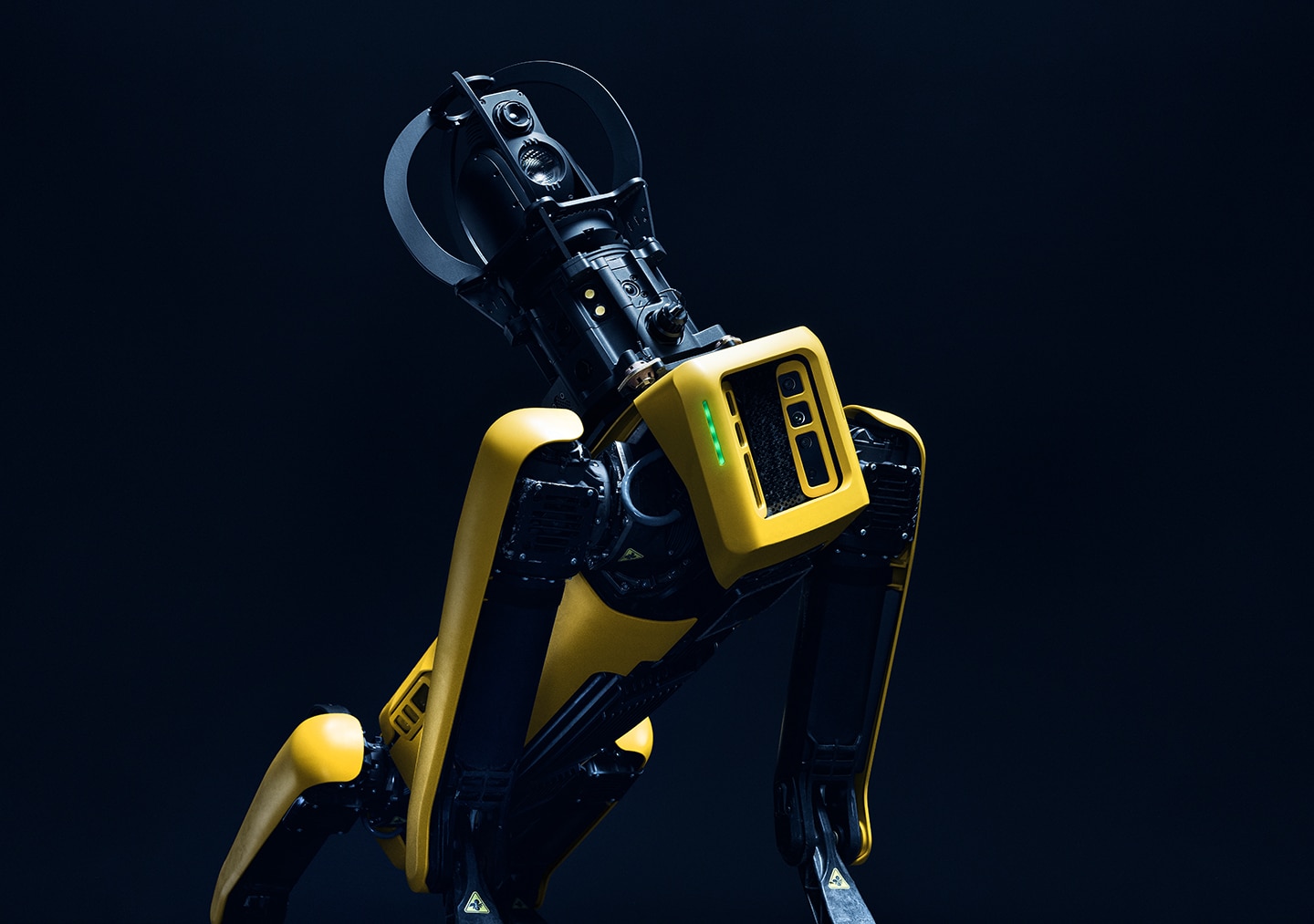
Spot is a four-legged autonomous robot developed by Boston Dynamics, a robotics company headquartered in Waltham, Massachusetts. Designed for inspection, security, and data collection in complex or hazardous environments, Spot can navigate stairs, rough terrain, and confined spaces that are inaccessible to wheeled robots. It is commercially available and has been deployed across industries including utilities, oil and gas, construction, and public safety. Spot supports a modular payload system that accommodates thermal cameras, pan-tilt-zoom (PTZ) cameras, lidar units, methane sensors, and other mission-specific hardware. Boston Dynamics also offers the Orbit fleet-management software platform, enabling operators to schedule autonomous inspection routes, aggregate sensor data, and manage multiple Spot units from a central interface. The robot is widely regarded as one of the most capable and commercially mature legged robots on the market.
1,206 views
 Robot
RobotRealSense Depth Camera D455
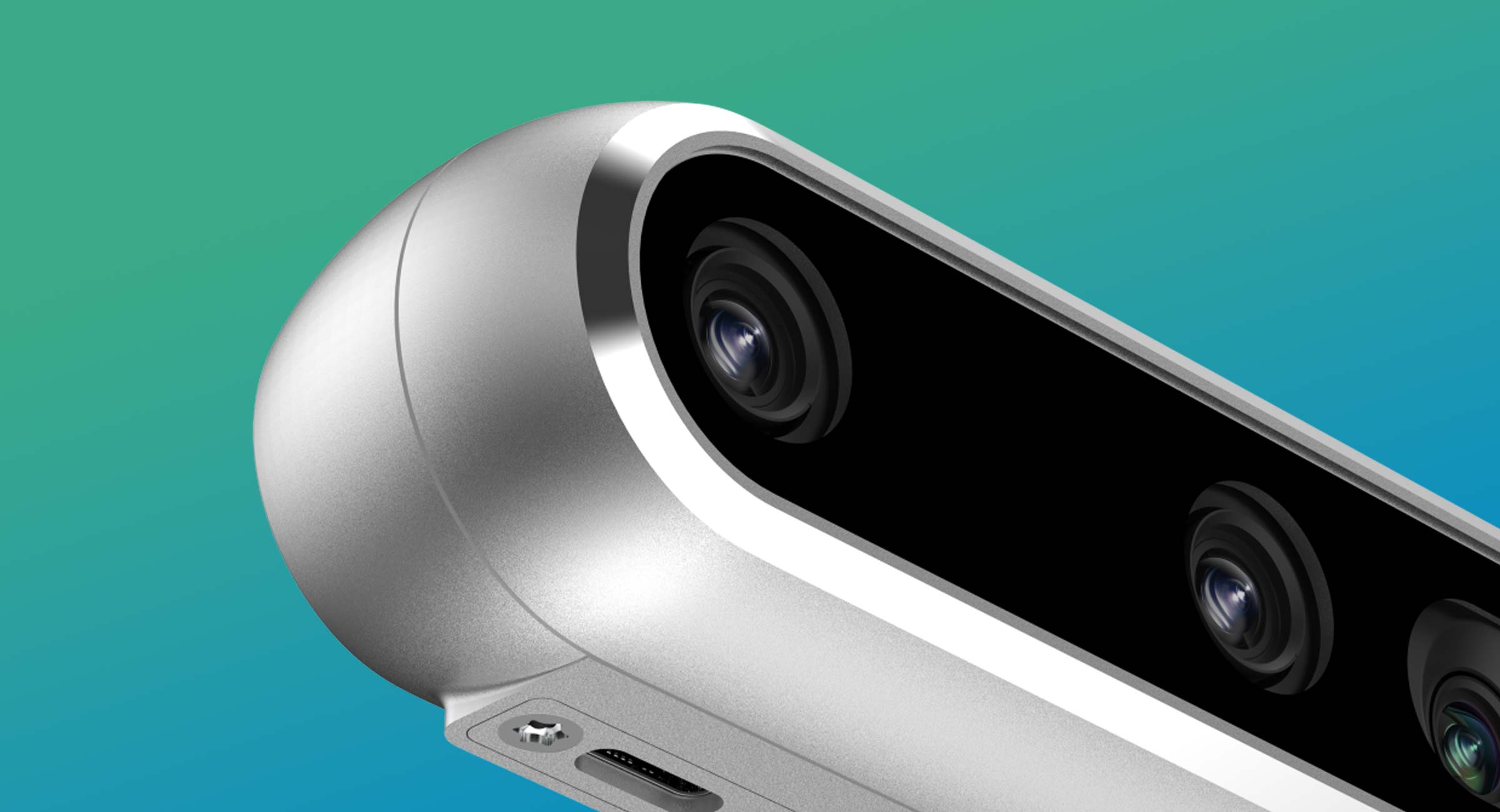
The RealSense Depth Camera D455 is a stereoscopic active-infrared depth camera belonging to Intel's D400 series, designed to capture high-fidelity depth data for robotics, autonomous mobile robots (AMRs), drones, and computer-vision applications. It features a 95 mm stereo baseline — the widest in the D400 lineup at the time of its introduction — which reportedly enables depth error of under 2% at ranges up to approximately 4 metres. Originally developed under the Intel RealSense brand, the D455 and related products were later spun off as part of an independent RealSense business unit following Intel's restructuring of the division around 2021–2022. The camera is widely adopted in research, industrial automation, and humanoid-robot development owing to its compact USB-powered form factor, open SDK support, and relatively accessible price point.
645 views
Rosie 2.0
The Rosie 2.0 is a commercial-grade autonomous robot vacuum developed by Tailos, designed to handle large-scale floor cleaning in business and institutional environments. It is offered in a two-pack configuration, allowing facilities to deploy multiple units simultaneously for broader coverage and more efficient cleaning cycles. Built to commercial durability standards, the Rosie 2.0 combines intelligent navigation with powerful suction technology to reduce reliance on manual labor and improve facility maintenance consistency. It targets businesses, hospitality venues, retail spaces, and other high-traffic environments where reliable, automated cleaning is a priority.
511 views