Kinova Gen3 (7 DoF)
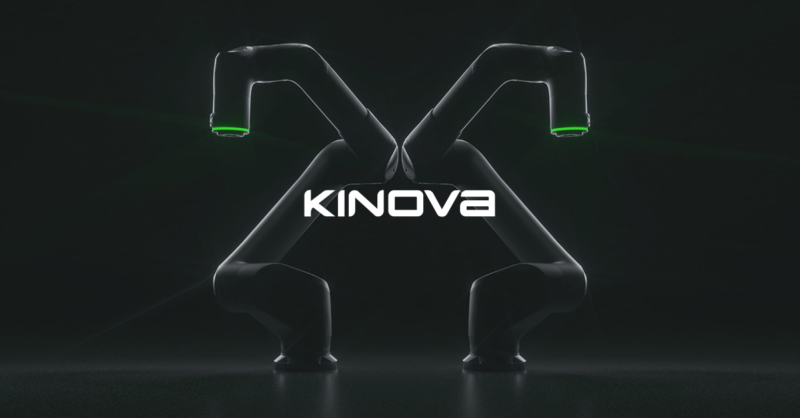
The Kinova Gen3 (7 DoF) is a lightweight, collaborative robotic arm developed by Kinova Robotics, a Canadian company specializing in assistive and research-grade manipulation systems. Featuring seven degrees of freedom, integrated torque sensing in each joint, and an optional vision module, the Gen3 is designed for dexterous manipulation tasks that require human-like reach and flexibility. Its compact form factor and relatively low weight make it well suited for mounting on mobile platforms. The Gen3 is widely adopted in academic research institutions, university robotics labs, and light industrial automation settings. Its open software ecosystem—supporting ROS, Python, and C++ APIs—has made it a popular choice for researchers developing manipulation algorithms, assistive robotics applications, and human-robot interaction studies. The arm is considered a mid-to-high-end research platform in the collaborative robot segment.
Overview and Use Cases
The Kinova Gen3 (7 DoF) is a seven-axis collaborative robotic arm engineered for research, lab automation, and assistive robotics. The extra degree of freedom compared to conventional six-axis arms provides enhanced kinematic redundancy, allowing the arm to avoid obstacles and adopt more natural postures during manipulation—a property particularly valued in human-robot interaction and mobile manipulation research.
Typical deployment scenarios include:
- Academic and university labs: manipulation algorithm development, reinforcement learning experiments, and grasping research.
- Assistive robotics: mounting on powered wheelchairs or mobile bases to assist users with limited mobility.
- Light industrial automation: small-part handling, inspection, and laboratory sample processing.
- Mobile manipulation platforms: integration with wheeled or legged robots requiring a capable onboard arm.
Key Technical Features
The Gen3 is built around Kinova's proprietary smart actuator technology, which embeds position, velocity, and torque sensing directly within each joint. This enables compliant, force-sensitive operation without requiring external force-torque sensors at the wrist—though an external wrist sensor can still be added.
Notable technical characteristics (based on publicly available documentation):
- Degrees of freedom: 7, providing full kinematic redundancy.
- Integrated sensing: per-joint torque feedback enabling impedance and admittance control modes.
- Optional vision module: a depth-sensing camera module can be mounted at the wrist, reportedly compatible with structured-light or time-of-flight technologies.
- Connectivity: Ethernet-based communication; compatible with ROS 1 and ROS 2, as well as Kinova's KORTEX SDK (Python, C++, MATLAB).
- End-effector compatibility: supports Kinova's own gripper lineup as well as third-party tools via standard mounting interfaces.
Specific payload capacity and reach figures are documented in Kinova's official datasheets; users are advised to consult current product documentation as specifications may be updated.
Comparison to Similar Robots
Within Kinova's ecosystem, the Gen3 sits at the higher end of Kinova's arm portfolio in terms of capability and software maturity. It is distinct from simpler assistive arms Kinova has historically produced for wheelchair mounting, offering a more research-oriented feature set.
Against competitors:
- The Universal Robots UR5e (also catalogued on this platform) is a widely used six-axis collaborative arm targeting light industrial automation. The UR5e generally offers a more established industrial software ecosystem and broader third-party integration, while the Gen3's seven-axis design and integrated torque sensing give it an edge in research dexterity tasks.
- Franka Robotics' Franka Research 3 (formerly Panda) is a close competitor in the academic research segment, also offering per-joint torque sensing and a ROS-compatible SDK. The two platforms are frequently compared in manipulation research literature.
- The DYNAMIXEL XM430-W350-R servo (also on this platform) represents a lower-cost modular approach to building custom arms, lacking the turnkey integration of the Gen3.
Market Context and Target Buyers
The Gen3 is positioned as a premium research and light-industrial collaborative arm. Its price tier is generally understood to be above entry-level cobots but accessible to well-funded university labs and research institutes, often purchased through academic procurement channels or research grants. It is not typically marketed as a mass-production industrial solution.
Target buyers include:
- University robotics and AI research groups.
- Government and private research laboratories.
- Assistive technology developers and rehabilitation centers.
- Robotics startups prototyping manipulation systems.
Notable Deployments and Research Adoption
As of public reporting, the Kinova Gen3 has been adopted by numerous university robotics programs in North America, Europe, and Asia. It appears regularly in published manipulation and human-robot interaction research, and Kinova has reportedly partnered with academic institutions to support research programs. The arm has also been used in robotics competitions and benchmark studies comparing grasping and manipulation algorithms.
Future Outlook
The collaborative robot market continues to grow, driven by demand for flexible automation and research into embodied AI. The Gen3's open software interfaces and ROS compatibility position it well for integration with emerging AI-driven manipulation frameworks, including those leveraging large language models for task planning. Kinova has continued to develop its KORTEX SDK and expand compatibility, suggesting ongoing software support. As competition in the research-arm segment intensifies—particularly from platforms offering similar torque-sensing capabilities—Kinova's differentiation is likely to rest on software ecosystem maturity, support infrastructure, and continued hardware refinement.
Related entries
 Robot
RobotRelay Delivery Robot
The Relay Delivery Robot is an autonomous indoor delivery robot developed by Relay Robotics (formerly known as Savioke), designed primarily for hospitality and healthcare environments. It navigates hotel corridors and hospital hallways independently, rides elevators without human assistance, and delivers guest amenities, medications, linens, and other supplies directly to rooms or designated drop-off points. Relay is one of the most widely deployed service robots in its category, reportedly completing over one million lifetime deliveries with a publicly cited success rate of approximately 99.8%. With a cargo capacity of around 10 gallons, the robot is compact enough to operate in busy public spaces while carrying a meaningful payload of everyday supplies.
2,729 views
 Robot
RobotSpot
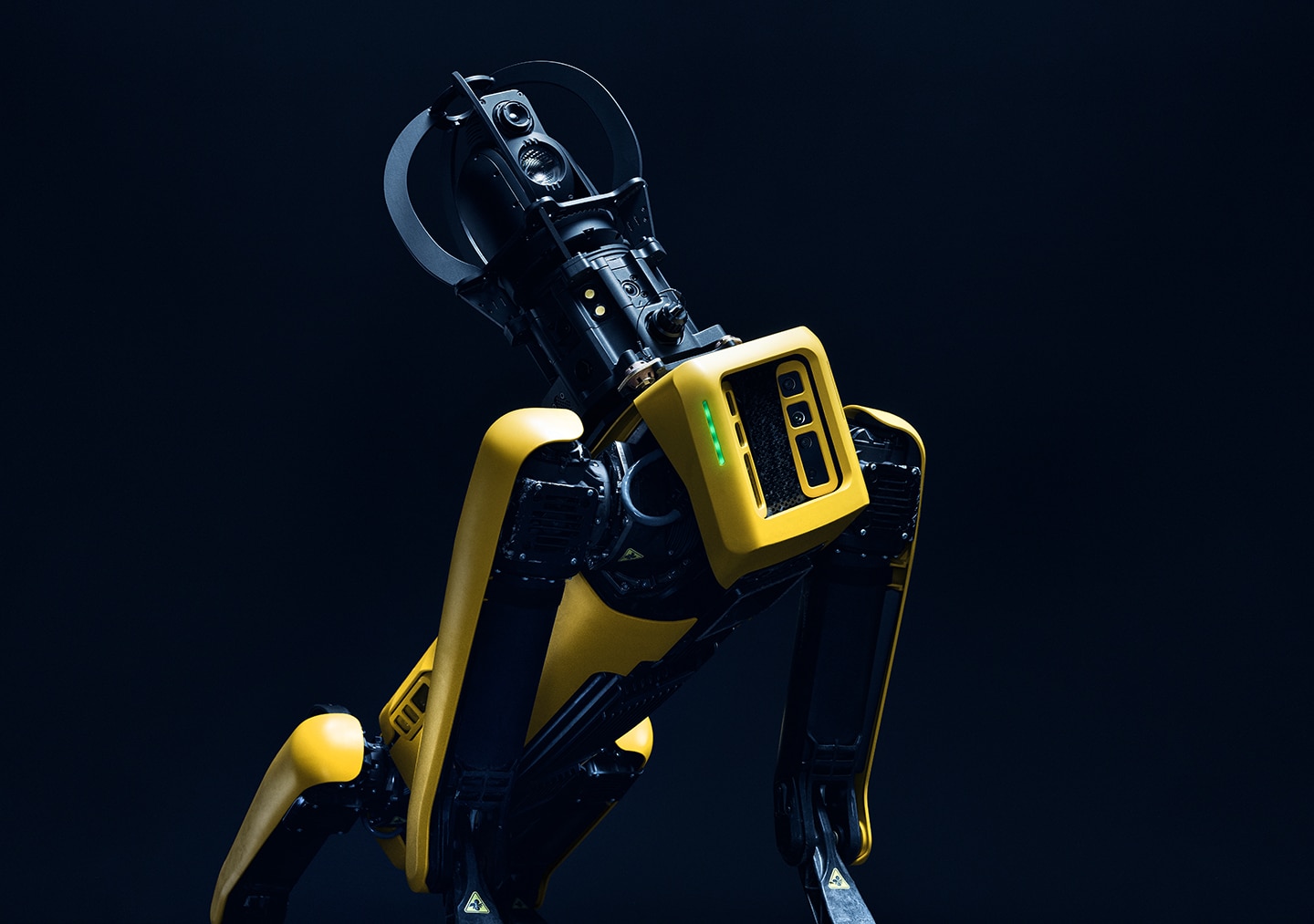
Spot is a four-legged autonomous robot developed by Boston Dynamics, a robotics company headquartered in Waltham, Massachusetts. Designed for inspection, security, and data collection in complex or hazardous environments, Spot can navigate stairs, rough terrain, and confined spaces that are inaccessible to wheeled robots. It is commercially available and has been deployed across industries including utilities, oil and gas, construction, and public safety. Spot supports a modular payload system that accommodates thermal cameras, pan-tilt-zoom (PTZ) cameras, lidar units, methane sensors, and other mission-specific hardware. Boston Dynamics also offers the Orbit fleet-management software platform, enabling operators to schedule autonomous inspection routes, aggregate sensor data, and manage multiple Spot units from a central interface. The robot is widely regarded as one of the most capable and commercially mature legged robots on the market.
1,206 views
 Robot
RobotRealSense Depth Camera D455
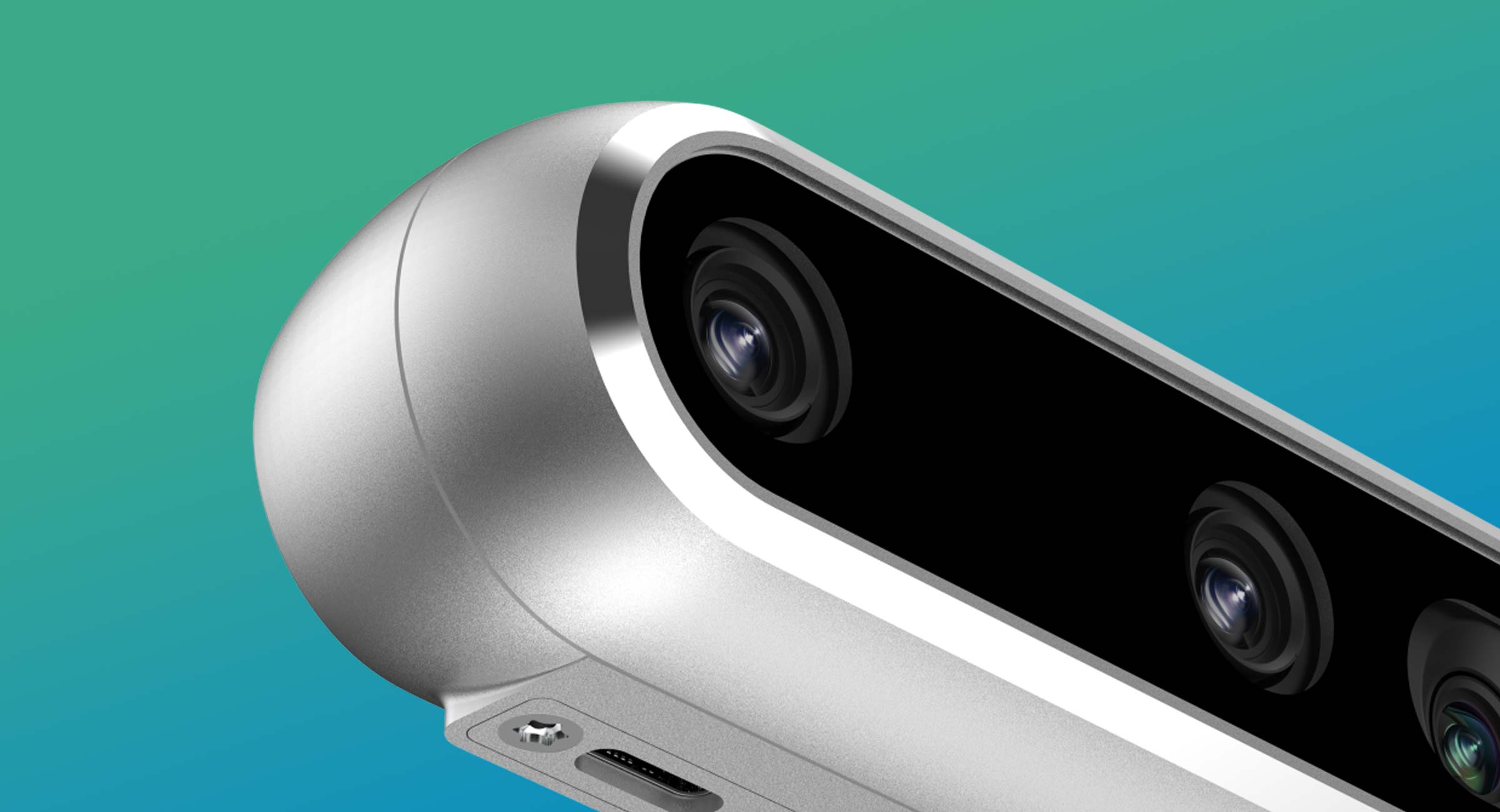
The RealSense Depth Camera D455 is a stereoscopic active-infrared depth camera belonging to Intel's D400 series, designed to capture high-fidelity depth data for robotics, autonomous mobile robots (AMRs), drones, and computer-vision applications. It features a 95 mm stereo baseline — the widest in the D400 lineup at the time of its introduction — which reportedly enables depth error of under 2% at ranges up to approximately 4 metres. Originally developed under the Intel RealSense brand, the D455 and related products were later spun off as part of an independent RealSense business unit following Intel's restructuring of the division around 2021–2022. The camera is widely adopted in research, industrial automation, and humanoid-robot development owing to its compact USB-powered form factor, open SDK support, and relatively accessible price point.
645 views
Rosie 2.0
The Rosie 2.0 is a commercial-grade autonomous robot vacuum developed by Tailos, designed to handle large-scale floor cleaning in business and institutional environments. It is offered in a two-pack configuration, allowing facilities to deploy multiple units simultaneously for broader coverage and more efficient cleaning cycles. Built to commercial durability standards, the Rosie 2.0 combines intelligent navigation with powerful suction technology to reduce reliance on manual labor and improve facility maintenance consistency. It targets businesses, hospitality venues, retail spaces, and other high-traffic environments where reliable, automated cleaning is a priority.
511 views