EC-i 40 Brushless Motor
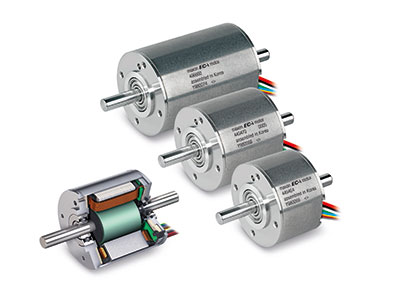
The EC-i 40 is a 40 mm diameter brushless DC (BLDC) motor produced by Maxon Group, a Swiss precision drive specialist. It features iron-core windings designed to deliver high torque density in a compact form factor, while maintaining relatively low cogging torque for smooth motion control. Targeted at robotics, industrial automation, and mobile equipment applications, the EC-i 40 is positioned as a high-performance component for engineers who need a powerful yet space-efficient drive solution. It belongs to Maxon's broader EC-i series, which emphasizes a balance between output torque and physical size.
Overview and Use Cases
The EC-i 40 is a brushless DC motor in Maxon Group's EC-i (electronically commutated, iron-core) product line. With a 40 mm outer diameter, it occupies a mid-range size class within Maxon's extensive motor portfolio. The iron-core winding construction allows the motor to generate higher torque per unit volume compared with coreless designs, making it well suited for applications where sustained torque output is a priority.
Typical deployment scenarios include:
- Robotics joints and actuators – collaborative robot arms, surgical robots, and exoskeletons that require precise, repeatable torque
- Industrial automation – conveyor drives, pick-and-place systems, and automated guided vehicles (AGVs)
- Mobile equipment – powered wheelchairs, service robots, and compact mobile platforms where space and weight budgets are constrained
Key Technical Characteristics
The EC-i 40 is defined by several design attributes, though buyers should consult Maxon's official datasheets for exact specifications across the range of available winding variants:
- Motor type: Brushless DC (BLDC) with iron-core stator windings
- Outer diameter: 40 mm
- Commutation: Electronic (requires an external controller or Maxon's own ESCON/EPOS driver family)
- Cogging torque: Reported to be low relative to other iron-core motors of comparable size, supporting smooth velocity control
- Torque density: Higher than coreless motors of the same diameter, enabling compact high-torque drive solutions
- Winding options: Multiple winding variants are typically offered to suit different voltage and speed requirements
Because the EC-i 40 is a component rather than a complete system, runtime and payload figures depend entirely on the host machine's design and the matched controller/gearhead configuration.
Comparison Within Maxon's Portfolio
Maxon offers a wide range of brushless motors, and the EC-i 40 sits alongside several related families:
- EC (coreless) series – Maxon's coreless BLDC motors offer near-zero cogging torque and very high efficiency, but typically lower peak torque than the iron-core EC-i at the same diameter.
- EC-i 30 / EC-i 52 – Smaller and larger siblings in the EC-i line provide scalability; the EC-i 40 bridges the gap for applications needing moderate torque in a mid-size envelope.
- DCX series – Maxon's brushed DC motors serve cost-sensitive or simpler control applications where electronic commutation infrastructure is not available.
The EC-i 40 is therefore a natural choice when an application outgrows the EC-i 30 but does not require the larger footprint of the EC-i 52.
Market Context and Target Buyers
Maxon Group products are generally positioned in the premium segment of the precision drive market, reflecting the company's focus on quality, longevity, and application engineering support. The EC-i 40 is typically purchased by:
- Robotics OEMs integrating motors into joint modules or end-effectors
- Medical device manufacturers requiring certified, reliable actuation
- Research institutions building custom robotic platforms
- Industrial automation integrators specifying drives for high-cycle-rate machinery
As a component product, the EC-i 40 is sold through Maxon's direct sales network and authorized distributors worldwide. Pricing varies by winding variant, quantity, and regional market; prospective buyers are advised to request a formal quotation.
Notable Deployments and Industry Context
Maxon motors as a family have a well-documented history in demanding applications, including space exploration hardware and surgical robotics, though specific deployment records for the EC-i 40 model are not always publicly disclosed. The broader EC-i series is reportedly used in collaborative robot (cobot) joints and rehabilitation exoskeletons, where the combination of torque density and smooth commutation is particularly valued.
The growing adoption of cobots and mobile service robots in manufacturing and healthcare is expanding demand for compact, high-torque BLDC motors, a trend that positions the EC-i 40 favorably in the mid-2020s market landscape.
Future Outlook
As robotics applications continue to push for higher power density and tighter integration, iron-core BLDC motors like the EC-i 40 are expected to remain relevant alongside emerging technologies such as integrated joint modules and direct-drive actuators. Maxon has historically updated its EC-i series with new winding options and improved magnetic materials; future variants may offer enhanced efficiency or expanded torque ranges. Engineers evaluating the EC-i 40 should monitor Maxon's official product pages for the latest revisions and certifications.
Related entries
 Robot
RobotRelay Delivery Robot
The Relay Delivery Robot is an autonomous indoor delivery robot developed by Relay Robotics (formerly known as Savioke), designed primarily for hospitality and healthcare environments. It navigates hotel corridors and hospital hallways independently, rides elevators without human assistance, and delivers guest amenities, medications, linens, and other supplies directly to rooms or designated drop-off points. Relay is one of the most widely deployed service robots in its category, reportedly completing over one million lifetime deliveries with a publicly cited success rate of approximately 99.8%. With a cargo capacity of around 10 gallons, the robot is compact enough to operate in busy public spaces while carrying a meaningful payload of everyday supplies.
2,731 views
 Robot
RobotSpot
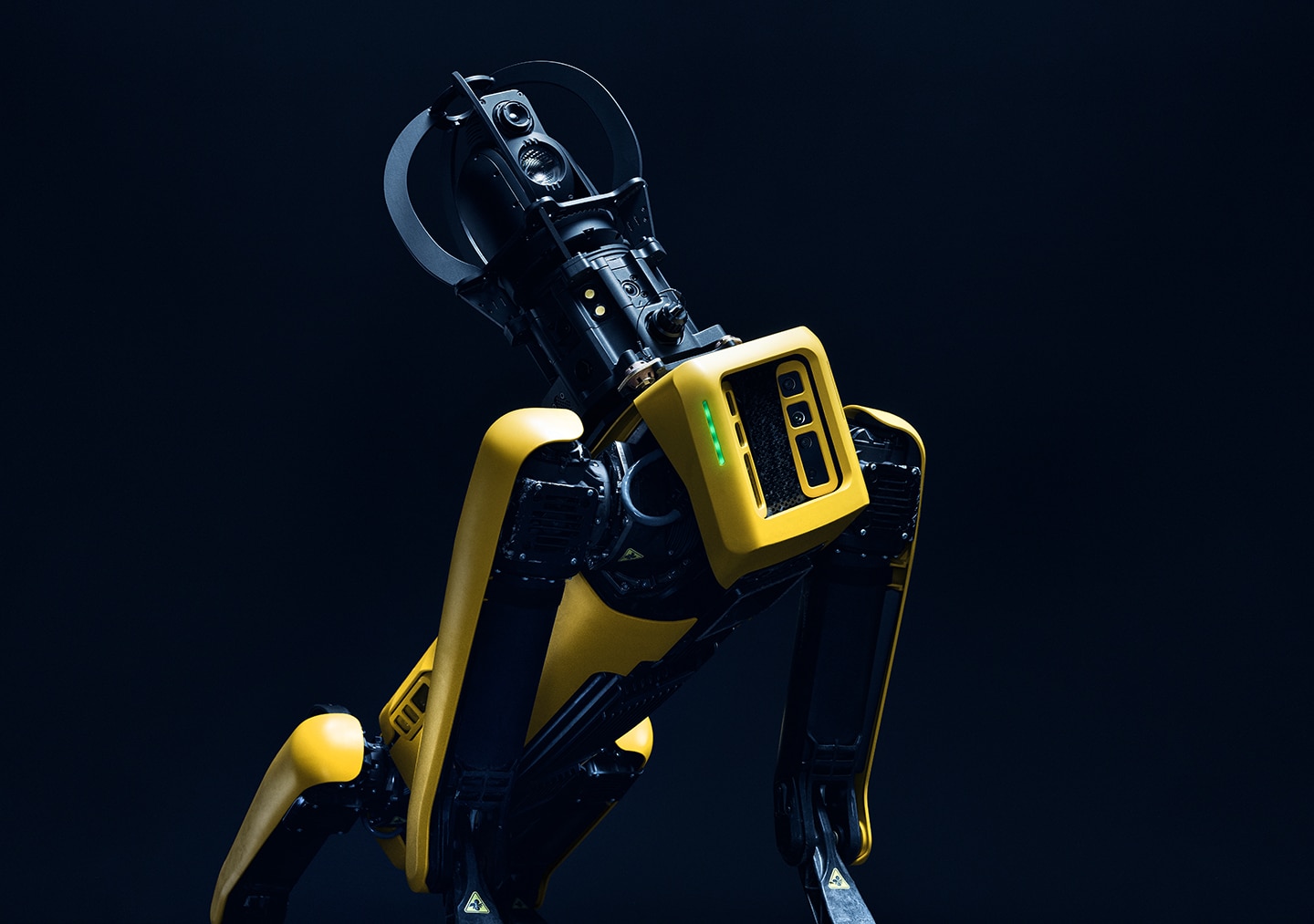
Spot is a four-legged autonomous robot developed by Boston Dynamics, a robotics company headquartered in Waltham, Massachusetts. Designed for inspection, security, and data collection in complex or hazardous environments, Spot can navigate stairs, rough terrain, and confined spaces that are inaccessible to wheeled robots. It is commercially available and has been deployed across industries including utilities, oil and gas, construction, and public safety. Spot supports a modular payload system that accommodates thermal cameras, pan-tilt-zoom (PTZ) cameras, lidar units, methane sensors, and other mission-specific hardware. Boston Dynamics also offers the Orbit fleet-management software platform, enabling operators to schedule autonomous inspection routes, aggregate sensor data, and manage multiple Spot units from a central interface. The robot is widely regarded as one of the most capable and commercially mature legged robots on the market.
1,209 views
 Robot
RobotRealSense Depth Camera D455
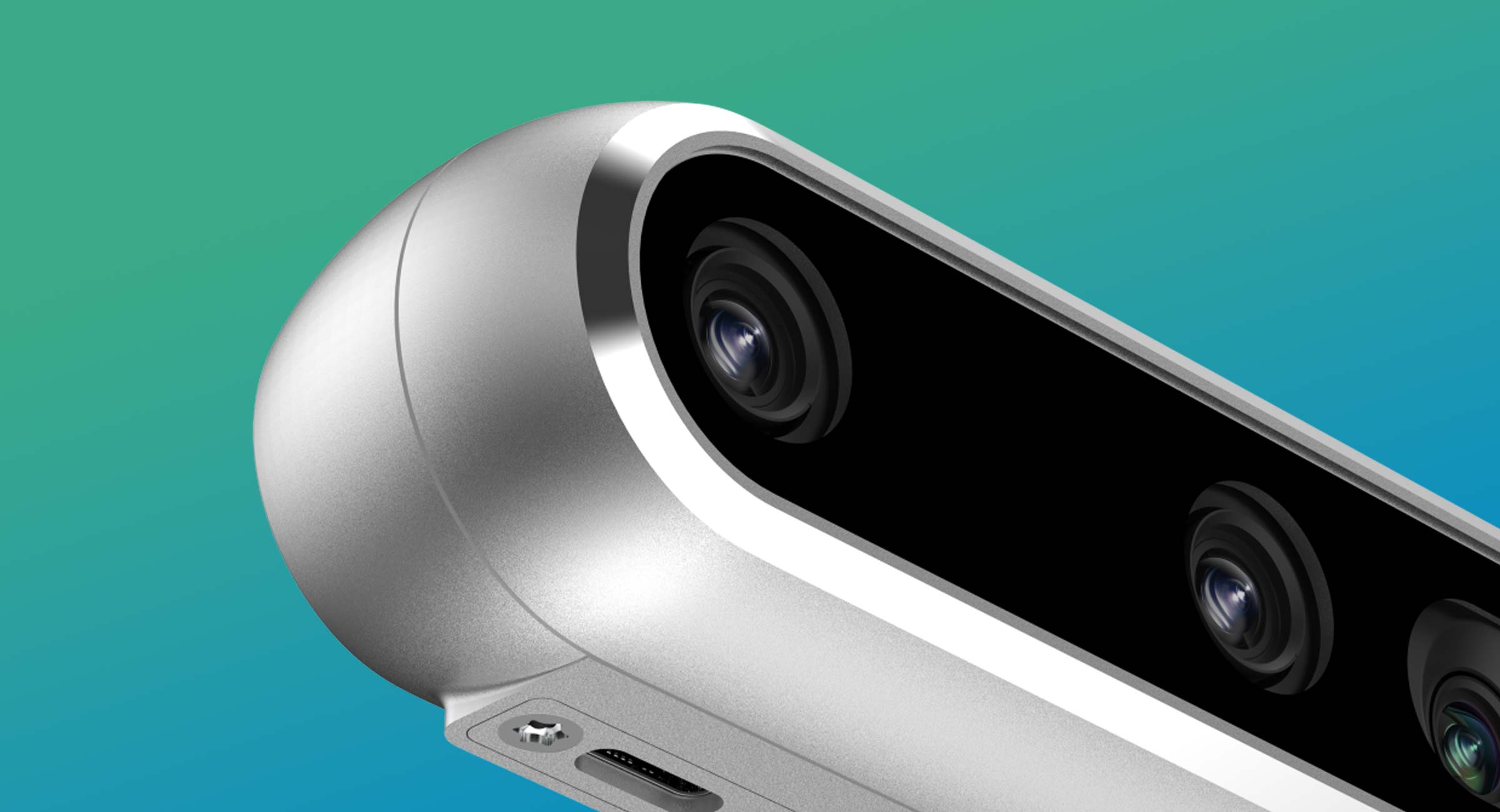
The RealSense Depth Camera D455 is a stereoscopic active-infrared depth camera belonging to Intel's D400 series, designed to capture high-fidelity depth data for robotics, autonomous mobile robots (AMRs), drones, and computer-vision applications. It features a 95 mm stereo baseline — the widest in the D400 lineup at the time of its introduction — which reportedly enables depth error of under 2% at ranges up to approximately 4 metres. Originally developed under the Intel RealSense brand, the D455 and related products were later spun off as part of an independent RealSense business unit following Intel's restructuring of the division around 2021–2022. The camera is widely adopted in research, industrial automation, and humanoid-robot development owing to its compact USB-powered form factor, open SDK support, and relatively accessible price point.
649 views
Rosie 2.0
The Rosie 2.0 is a commercial-grade autonomous robot vacuum developed by Tailos, designed to handle large-scale floor cleaning in business and institutional environments. It is offered in a two-pack configuration, allowing facilities to deploy multiple units simultaneously for broader coverage and more efficient cleaning cycles. Built to commercial durability standards, the Rosie 2.0 combines intelligent navigation with powerful suction technology to reduce reliance on manual labor and improve facility maintenance consistency. It targets businesses, hospitality venues, retail spaces, and other high-traffic environments where reliable, automated cleaning is a priority.
511 views