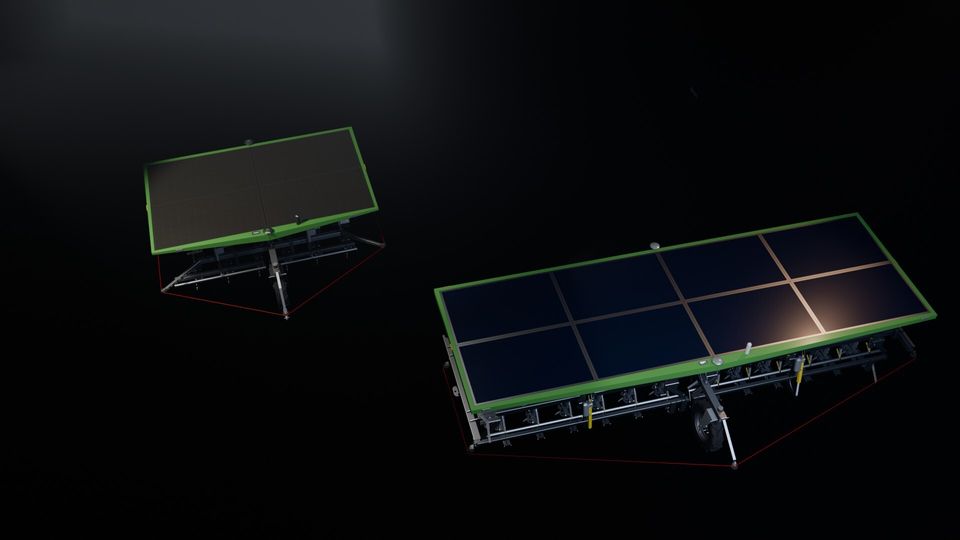
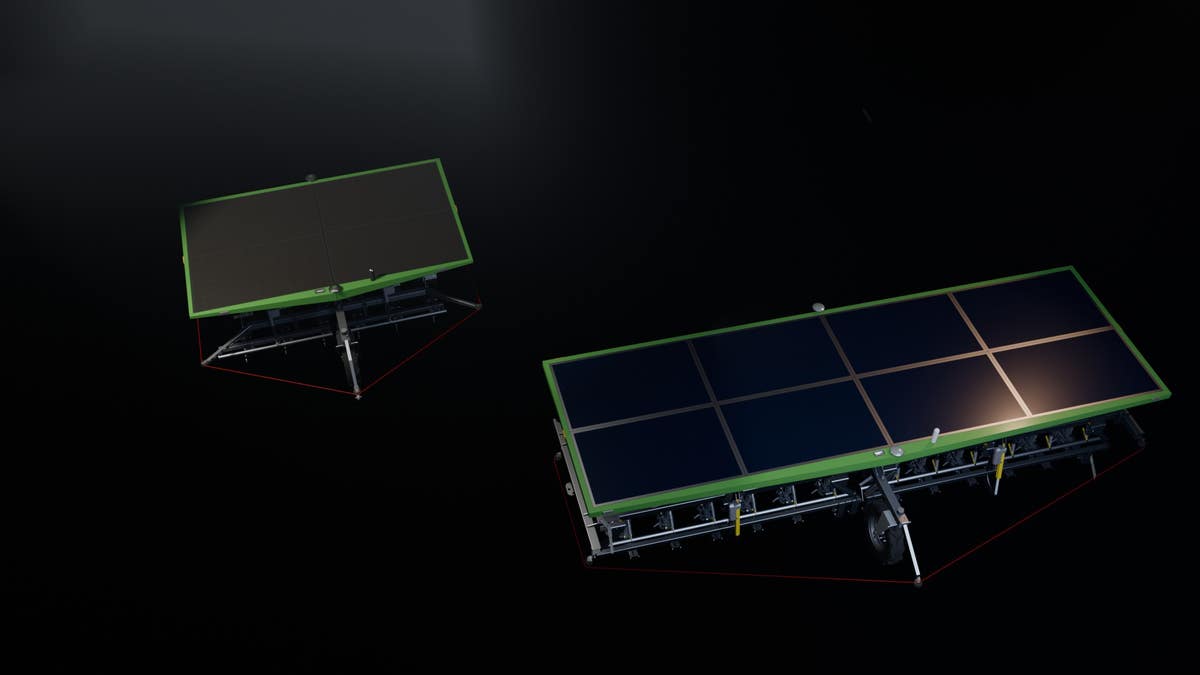
FarmDroid ApS
Denmark · farmdroid.com
SnapshotCompany claim
FarmDroid ApS manufactures the FarmDroid FD20, a fully electric solar-powered agricultural robot for seeding, weeding, and micro-spraying. It uses RTK GPS technology for precision farming, increasing yields up to 40% and reducing chemical use by up to 94%.
- Founded
- Not disclosed
- HQ
- Denmark
- Models
- 7
- Categories
- 2
ContactCompany claim
- Address
- Not disclosed
Product families
Is this your company? Claim this profile to add verified data, respond to our analysis, and upgrade claims to Verified.
Claim this profile1. Executive Overview {#executive-overview}
FarmDroid ApS, headquartered in Vejen, Denmark, is the manufacturer of the FarmDroid FD20 — a fully solar-powered, autonomous field robot designed to perform precision seeding, mechanical weeding, and targeted micro-spraying in open agricultural settings. The FD20 operates on RTK GPS technology at 8 mm accuracy, enabling what the company describes as "blind weeding": the robot memorises seed placement coordinates at sowing and begins mechanically removing weeds around each crop before the plants have even broken the soil surface. The company claims this approach can increase yields by up to 40% while reducing chemical inputs by up to 94% — figures the company attributes to customer experience, not independent published trials. With coverage of up to 6 hectares per day per unit, solar-plus-battery autonomy of 18–24 hours, and compatibility with more than 100 crop varieties, the FD20 addresses a genuine unmet need in chemical-reduction and labour-cost pressures facing European arable farmers.
FarmDroid has attracted meaningful external attention: The Robot Report reported that the company secured over $11 million to deploy its modular robot globally, and the FD20 was featured in the award-winning Amazon Prime Video series Clarkson's Farm, providing unusually broad consumer-facing visibility for a precision-agriculture hardware company. These are independently sourced signals of commercial and cultural traction.
Not yet disclosed: precise revenue, total units deployed, and the identity of investors behind the reported $11M+ raise. FarmDroid is invited to share these details for correction or update.
Latest news
- KEENON Humanoid Pours Drinks at GCS 2026, 100,000 Others Run HotelsYanko Design·2026-06-15GENERAL
2. The Company Story {#the-company-story}
FarmDroid ApS is a Danish agricultural robotics company registered under VAT number DK39408589 and based at Industrisvinget 1, 6600 Vejen, Denmark. The founding date is not disclosed in available public materials. The company's core thesis is straightforward and reflects a broader European policy direction: precision mechanical agriculture can replace broad-spectrum herbicide application without sacrificing yield, and solar-powered autonomous robots can deliver that precision economically at farm scale.
The FD20 is the company's anchor product, and the product line has evolved through at least six hardware iterations — the +Spray System is documented as retrofittable to FD20 models 2.4, 2.5, and 2.6, while the Field Setup Tool lists compatibility back to model 2.0 — suggesting a development arc spanning multiple generations and several years of field deployment. The company operates a dedicated seed-disc test laboratory and has designed discs for more than 100 crop types, reflecting sustained investment in agronomy support alongside hardware engineering.
The company's positioning is notably GPS-first rather than vision-first. Where many agricultural robotics competitors lean heavily on camera arrays and AI-based crop recognition, FarmDroid explicitly eschews that approach: the robot's camera is used only to allow remote operator viewing via mobile app, not for crop or weed identification. This is a deliberate architectural choice that reduces system complexity, avoids reliance on trained vision models, and allows weeding to begin before any above-ground crop or weed is visible. The company's international ambitions are supported by the reported $11M+ raise (per The Robot Report) and by the FD20's appearance on Clarkson's Farm, which provided global exposure via Amazon Prime Video.
3. Product Portfolio {#product-portfolio}
Products & versions


FarmDroid's product portfolio is a tightly integrated, modular ecosystem built around a single hardware platform — the FarmDroid FD20 base robot — with a set of purpose-built attachments and supporting tools. The lineup divides naturally into three categories.
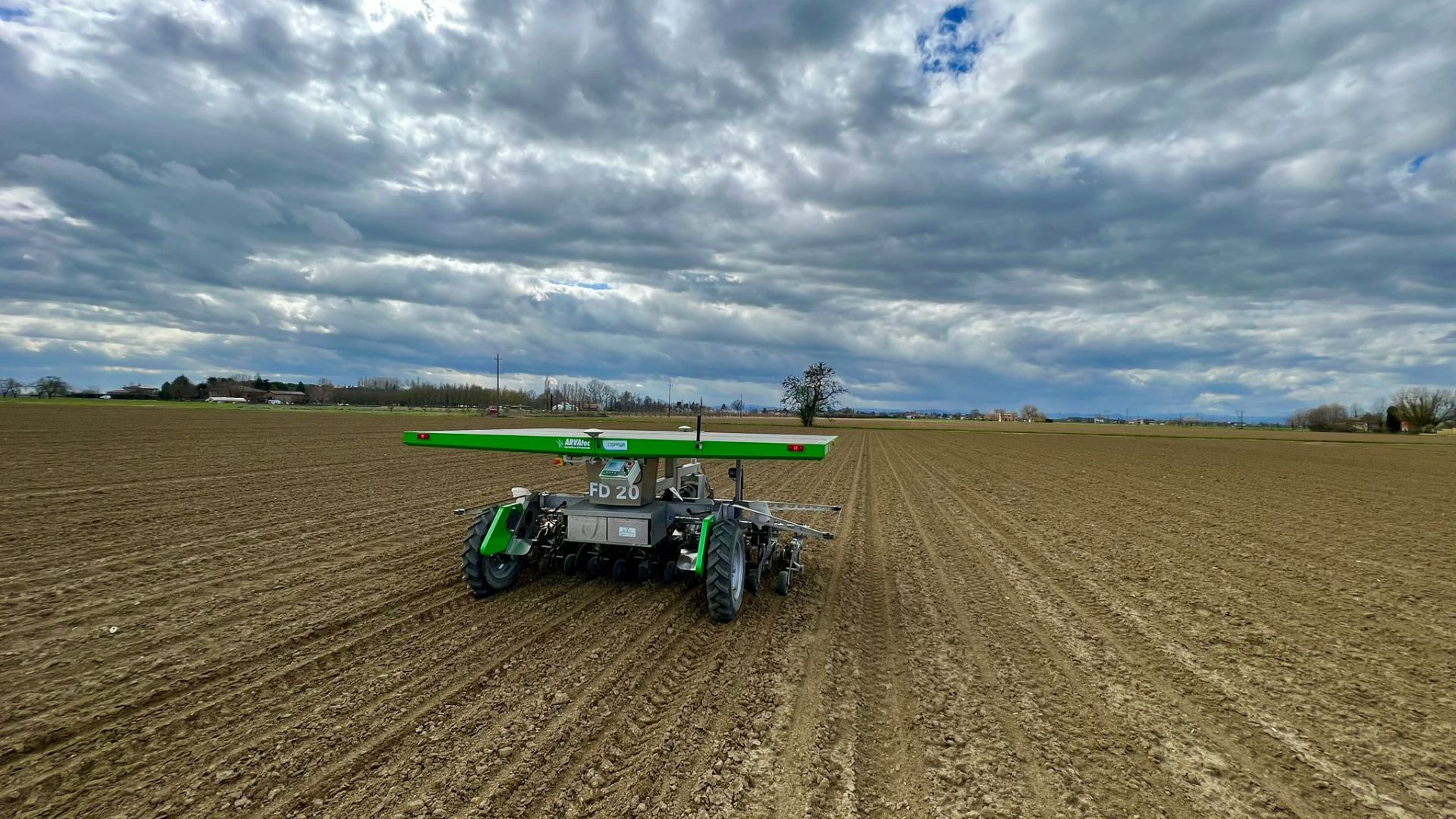
The core platform is the FD20 itself: a 1,250 kg, solar-powered autonomous robot with four solar panels, a 1.6 kWh onboard battery, RTK GPS at 8 mm accuracy, a working width of 3.5 metres, configurable for 2–12 rows at row spacings between 22.5 cm and 90 cm, and a top field speed of 950 m/h. The FD20 is designed for 18–24 hours of continuous operation under optimal solar conditions and is rated for up to 6 hectares per day. A Power Bank accessory — two 6 kWh lithium-ion units totalling 12 kWh, hot-swappable, charging at up to 1.6 kW — extends daily runtime on overcast days by up to 12 hours, addressing the solar-dependency vulnerability directly.
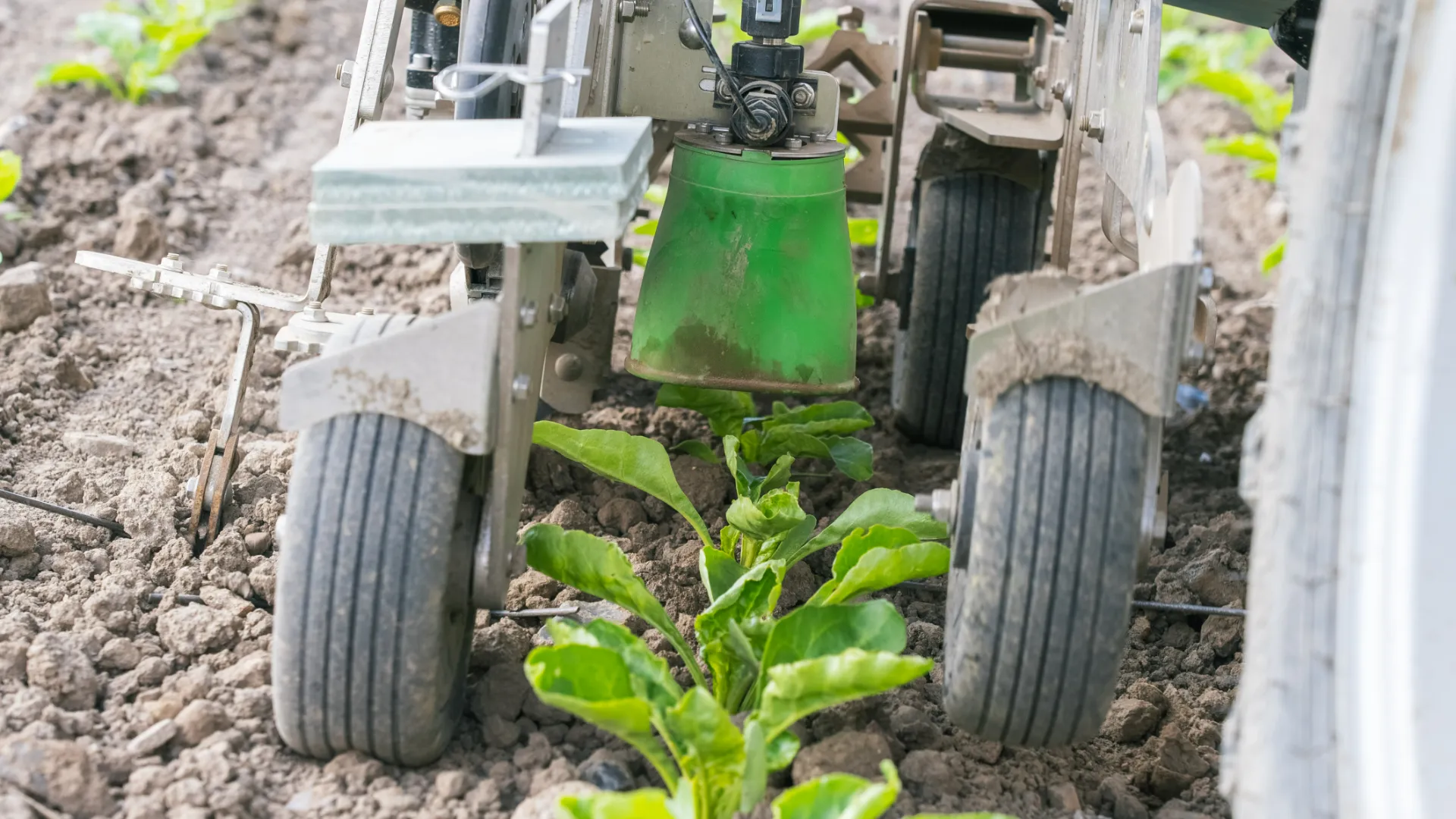
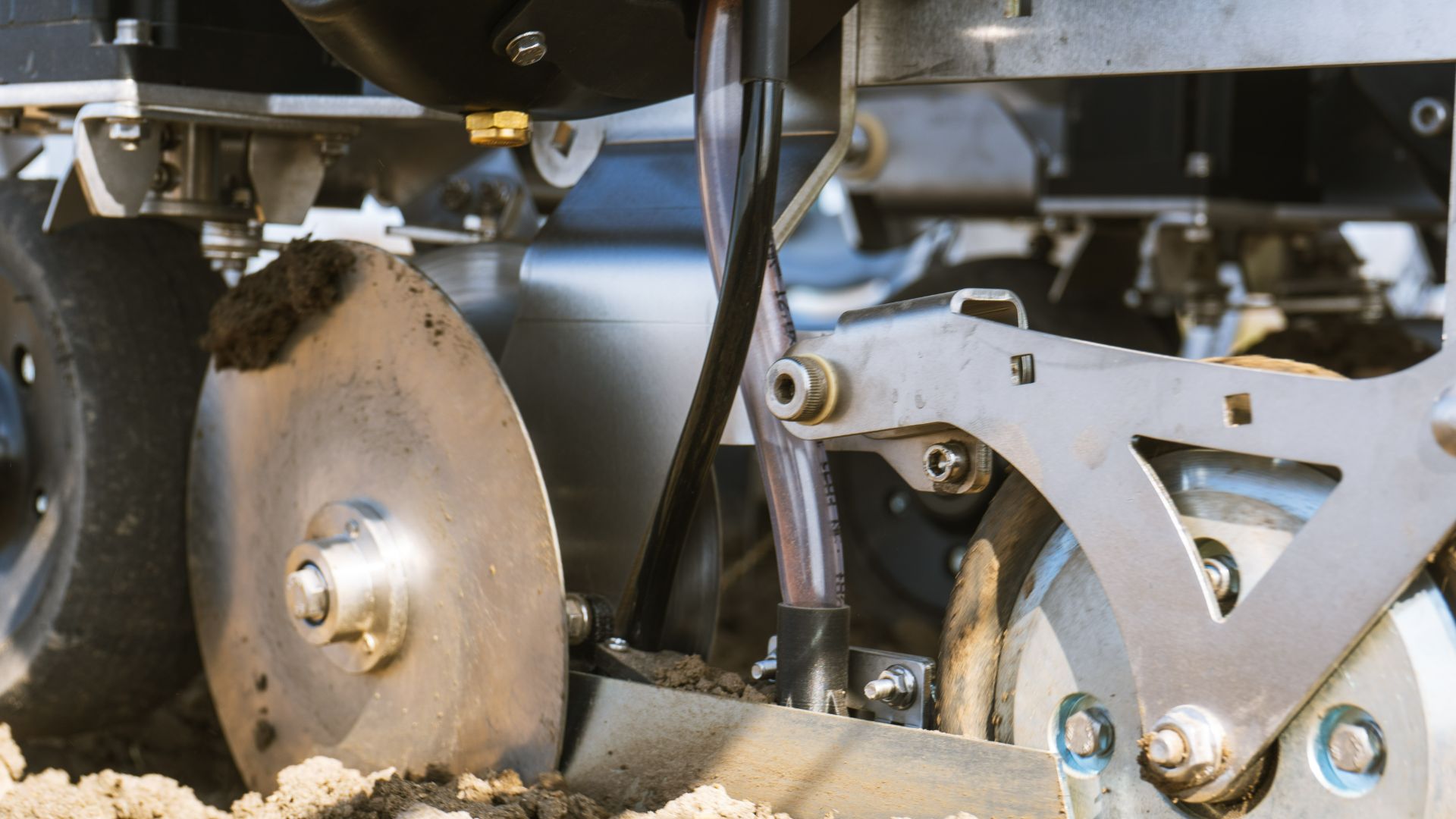
The functional attachments form the operational core: the +Seed system handles precision seeding for crops from 0.8 mm to 14 mm seed size across two seeding disc families (+Seed 6 mm and the newer +Seed 14 mm, the latter adding soybeans, green beans, maize, and chickpeas to the compatible crop list); the +Weed Mechanical Weeding System deploys 19 weeding wires (20 cm width, 4 mm diameter) plus optional 155 mm weed-cutting discs with adjustable gap, depth, and angle; and the +Spray Micro-Spraying System adds PWM-controlled electric nozzles capable of spot-spraying areas as small as 7×7 cm, with a 94% chemical reduction claim relative to conventional broadcast application, ~24 hours daily runtime in spot-spray mode and ~12 hours in band-spray mode, and retrofittability to FD20 models 2.4 through 2.6. The Combi Tool extends capability for high weed pressure and challenging soils, combining a 155 mm notched cutting disc with an L-share blade (14 cm working width, 4 mm thickness) for mature or deeply rooted weeds.
The support tooling rounds out the ecosystem: the Field Setup Tool is a portable, Bluetooth-connected, weatherproof device that pairs with the FarmDroid App to allow a farmer to walk field boundaries and mark obstacles, saving the resulting map to the robot for reuse across seasons — compatible with all FD20 models from 2.0 to 2.6.
4. Technology Stack {#technology-stack}
FarmDroid's published specifications and product descriptions allow a reasonably detailed picture of the core technology architecture, though the company does not publish engineering whitepapers or deep technical disclosures.
Navigation and positioning sit entirely on RTK (Real-Time Kinematic) GPS, achieving a claimed 8 mm absolute field accuracy. This is the foundational technology choice that makes the entire system work: because each seed is placed at a known GPS coordinate, the robot can return to weed around that coordinate before the plant emerges — requiring no visual recognition of the crop whatsoever. Our read: this is an elegant and pragmatic engineering choice that trades the flexibility of vision-based systems for robustness, repeatability, and lower software complexity. RTK GPS at 8 mm is a proven industrial standard, not experimental technology.
Actuation and weeding mechanics are purely mechanical — spring-mounted wires, rotating knives, notched cutting discs, and L-share blades — with no hydraulic systems mentioned. The +Weed system's specifications (19 wires, 20 cm width, 4 mm diameter; optional 155 mm discs with 0–30 mm working depth and 0–50 mm gap adjustment; Combi Tool notched disc with 7–19° angle adjustment) indicate precision-tunable mechanical tooling designed for agronomic flexibility across soil types and crop stages.
Spraying uses PWM (Pulse Width Modulation) nozzle control for precise, electronically regulated dosing — a well-established technology in precision agriculture that allows individual nozzle switching at high frequency to control application volume with accuracy. Our read: the combination of RTK coordinate targeting and PWM nozzle control, without any camera-based weed detection, is what enables the claimed 94% chemical reduction — the robot simply does not spray where no weed (by coordinate inference) is expected.
Power system is a solar-first architecture: four onboard solar panels feed a 1.6 kWh onboard battery, supplemented by the optional 12 kWh Power Bank. Our read: 1.6 kWh onboard is modest — the system's energy autonomy depends heavily on solar conditions, which explains why the Power Bank exists as a product category. The hot-swap capability of the Power Bank units suggests the company has thought carefully about continuous-operation scenarios.
Connectivity and UI include a dedicated mobile app (FarmDroid App) offering remote live camera view, real-time alerts for seeding or weeding issues, and field map management. The Field Setup Tool connects via Bluetooth to the app. Limited public technical detail exists on cloud infrastructure, data storage, or fleet management software beyond these app-level capabilities.
Not yet disclosed: processor architecture, onboard compute specifications, operating system, connectivity protocols (cellular/Wi-Fi/LoRa), or details of the software stack. FarmDroid is invited to share further technical documentation.
5. Research, Papers, Authors, Labs {#research-papers}
Company-linked papers
FarmDroid ApS does not appear to be a research-publishing organisation. No academic papers, conference proceedings, or affiliated research lab outputs are referenced in available public materials. This is consistent with the profile of a product-focused agricultural robotics manufacturer — the company's documented investment in applied agronomy (a dedicated seed-disc test lab, trials across 100+ crop varieties) reflects engineering and field-testing activity rather than academic research output.
Not yet disclosed: any university partnerships, publicly funded research collaborations, or co-authored technical publications. FarmDroid is invited to share these if they exist.
6. Media Evidence {#media-evidence}
Media library
FarmDroid has documented third-party press coverage from credible outlets. The Robot Report — a specialist robotics industry publication — reported that FarmDroid secured over $11 million to deploy its modular robot globally, representing independent validation of both the company's fundraising activity and its international expansion intent. The FD20's appearance in Clarkson's Farm, the award-winning Amazon Prime Video documentary series, was covered by PA Media's Press Release Hub (June 2026) and distributed via via.tt.se, providing broad consumer-facing visibility that few agricultural robotics companies achieve. The Clarkson's Farm placement is particularly notable as an earned media moment that reaches audiences well beyond the specialist farming and robotics press.
7. Commercial Reality {#commercial-reality}
Customers & deployments
Revenue, unit sales volumes, and customer-level ROI data are not disclosed in available public materials. The reported $11M+ funding raise (per The Robot Report) is the primary independent financial signal in the public record.
The company's FAQ references yield increases of "up to 40%, according to our customers" — indicating an active, experience-reporting customer base, but the scale of that base is not quantified. The FD20's hardware iteration history (models 2.0 through 2.6 documented across product compatibility notes) implies multi-year commercial deployment. The FAQ also references operating experience "across diverse regions in the world," suggesting international customer deployments beyond Denmark, though specific countries, farm names, or fleet sizes are not disclosed.
Not yet disclosed: total units deployed, named customer references, revenue figures, geographic breakdown of sales, or third-party ROI studies. FarmDroid is invited to share any of these for inclusion and correction.
8. Markets and Use Cases {#markets-use-cases}
FarmDroid's product design and crop compatibility data point clearly to a set of well-defined target markets and use cases.
Primary market: arable and vegetable crop farming at scale. The FD20's 6 ha/day capacity and scalable fleet operation note ("fields 20–30+ hectares") place it squarely in mid-to-large arable farm operations. The crop compatibility list — sugar beet, beetroot, onion, spinach, salad, kale, rapeseed, cauliflower, broccoli, turnip, flower seeds, herbs (via +Seed 6 mm), and soybeans, green beans, field beans, chickpeas, and maize (via +Seed 14 mm) — covers a substantial share of European row-crop and vegetable production. Sugar beet is a particularly important crop in Northern Europe where mechanised precision weeding has significant economic value given the crop's sensitivity to early weed competition.
Organic and reduced-input farming. The system's herbicide-free mechanical weeding capability — effective before crop emergence — is directly aligned with organic certification requirements and with the European Union's Farm to Fork strategy targets for pesticide reduction. Farmers seeking organic certification or voluntary chemical reduction commitments are a natural primary audience.
Labour-cost-sensitive operations. Manual weeding is labour-intensive and increasingly expensive across European agriculture. The FD20's autonomous, solar-powered operation addresses labour substitution directly, operating 18–24 hours per day without a human operator in the field.
Geographically, the system is designed for soil conditions across diverse regions and all seasons (per company FAQ), with the stated constraint that rocky, muddy, or flooded soils are outside its operating envelope. The +Spray System's retrofittability to existing FD20 hardware suggests an aftermarket upsell pathway within the existing customer base, in addition to new unit sales.
9. Competitive Landscape {#competitive-landscape}
Competitive comparison
| Robot | Maker | Autonomy | Conf. |
|---|---|---|---|
| iRobot Roomba Combo 10 Max | iRobot | Autonomous | 0.90 |
| Mobile ALOHA (Stanford) | Stanford University | Teleoperated | 0.90 |
| 1X NEO | 1X Technologies | Remote-Assisted | 0.90 |
The autonomous agricultural field robot segment — covering solar or battery-powered platforms that perform precision seeding and mechanical weeding for arable and vegetable crops — has seen growing investment globally. FarmDroid's defining differentiator within this category is its GPS-coordinate-based "blind weeding" approach: the absence of camera-based crop recognition is not a capability gap but a deliberate architectural choice that enables pre-emergence weed control, a capability profile that differs meaningfully from vision-dependent platform designs.
The broader competitive context includes conventional precision spraying equipment, tractor-mounted inter-row cultivators, and manual weeding labour — all of which the FD20 is positioned to partially or fully displace in suitable field conditions. The solar-powered, CO₂-neutral operational model is an additional differentiator as sustainability credentials increasingly factor into purchasing and subsidy decisions across European agriculture.
10. Country Advantage / Geopolitical {#geopolitical}
Denmark's agricultural sector is among the most technologically advanced in Europe, with strong government and EU policy support for precision farming, pesticide reduction, and agricultural digitalisation. Denmark's position within the EU means FarmDroid's products are directly aligned with the EU Farm to Fork strategy's target of reducing chemical pesticide use by 50% by 2030 — a regulatory tailwind that creates structural demand for the FD20's core value proposition across all 27 EU member states and beyond.
Denmark also offers a mature agricultural machinery export ecosystem and proximity to major Northern European arable farming markets (Germany, the Netherlands, France, the UK) where the target crops — sugar beet, onion, rapeseed, and vegetable crops — are widely grown. The company's multilingual website (Danish, German, French, Dutch, English) reflects deliberate targeting of these markets.
Our read: FarmDroid's Danish base is a genuine commercial and regulatory advantage for European market development, and EU pesticide-reduction policy represents a durable demand driver rather than a cyclical tailwind.
11. Hype vs Real vs Ugly {#hype-real-ugly}
Claim tracker
Company claims — labelled as such:
- "Yield increases of up to 40%" — company claim, attributed by FarmDroid to customer experience. No independent published trial data is referenced in available materials. The mechanism (pre-emergence weed elimination reducing early competition) is agronomically plausible, but the magnitude should be treated as a customer-reported upper bound, not a guaranteed outcome.
- "Chemical use reduced by up to 94%" — company claim, supported by the technical logic of the system (only 6% of the field area receives micro-spray in spot-spray mode, per the +Spray specs). The specification-level arithmetic is consistent with the claim, though real-world results will vary by crop, weed pressure, and field configuration.
- "Compatible with 100+ crops" — company claim, supported by documented testing of seed discs for more than 100 varieties and a named list of tested crops across two seeding systems. This claim has meaningful specificity behind it.
- "CO₂ neutral operation" — company claim. Our read: solar-powered operation during field work is plausibly low-emission, but a full lifecycle assessment (manufacturing, battery production, logistics) is not referenced. The claim as stated applies to operational energy use.
Verified by independent sources:
- $11M+ fundraising — reported by The Robot Report (independent, specialist outlet).
- Clarkson's Farm feature — reported by PA Media / via.tt.se (independent distribution).
- Hardware iteration history (models 2.0–2.6) — inferable from product compatibility documentation on the company's own site.
Fixable gaps:
- No independently audited yield or chemical-reduction trial data is publicly linked. FarmDroid is invited to publish or link to third-party trial results.
- Fleet size, customer count, and geographic deployment data are not disclosed. FarmDroid is invited to share these.
12. Future Scenarios {#future-scenarios}
Bull case — Our read: EU pesticide reduction mandates accelerate, organic farming premiums hold, and labour costs continue rising across European agriculture. FarmDroid's $11M+ raise funds meaningful international distribution and fleet scaling. The Clarkson's Farm visibility drives inbound demand from farmers in the UK and continental Europe who would not otherwise have encountered the product. The +Seed 14 mm system's expansion into larger-seeded crops (maize, soybeans, field beans) opens significantly larger acreage markets. Successive FD20 hardware iterations attract a growing aftermarket in +Spray and Combi Tool retrofits, building recurring revenue. FarmDroid becomes a category-defining brand in solar autonomous agrobotics.
Base case — Our read: FarmDroid grows steadily within its proven Northern European market — Denmark, Germany, the Netherlands, France — primarily serving organic and reduced-input arable farms. The product matures through further hardware refinements. Revenue grows in line with expanding crop compatibility and distribution reach. The company remains a focused, product-led manufacturer rather than a platform play, with the FD20 ecosystem as its primary commercial vehicle.
Bear case — Our read: Larger agricultural equipment manufacturers with established distribution networks, service infrastructure, and balance sheets enter the solar autonomous weeding segment with competing platforms. Adoption is constrained by farm fragmentation, capital cost, and the practical soil-condition limitations (no rocky, muddy, or flooded fields) that exclude portions of the addressable market. Solar-dependency creates seasonal and geographic limitations that slow penetration in cloudier or higher-latitude markets. The $11M raise proves insufficient for global distribution buildout at meaningful scale.
13. What to Watch {#what-to-watch}
- Fleet deployment numbers: Any public disclosure of total FD20 units sold or deployed will be the clearest signal of commercial traction to date.
- Geographic expansion: Watch for distributor announcements or press coverage indicating active sales outside Northern Europe — particularly in North America, Southern Europe (where soybeans and maize dominate), or Southern Hemisphere markets.
- +Seed 14 mm adoption: The larger-seeded crop system (maize, soybeans, chickpeas) represents a significant market size step-up; adoption signals will indicate whether FarmDroid can penetrate commodity grain farming, not just vegetable and specialty crops.
- Independent trial data: Publication of peer-reviewed or third-party agronomic trial results for the 40% yield and 94% chemical reduction claims would substantially strengthen commercial credibility.
- Follow-on financing: Whether the reported $11M raise is a seed/Series A and whether a follow-on round materialises will signal investor confidence in the international scale-up thesis.
- EU Farm to Fork policy developments: Changes to pesticide reduction targets or precision farming subsidy frameworks will directly affect demand for FarmDroid's core value proposition.
- Competitive entrants: Monitor whether established agricultural OEMs announce solar autonomous field robots with comparable pre-emergence weeding capability.
- Power Bank and connectivity upgrades: Additions to the energy storage or telematics/fleet management stack would indicate the company is building for multi-unit farm deployments at scale.
14. Sources & Methodology {#sources-methodology}
Primary source: All factual claims in this report are grounded exclusively in data extracted from FarmDroid's own website (farmdroid.com) — including product descriptions, specifications, key features, and FAQ text — and from three named third-party press items: The Robot Report (therobotreport.com), PA Media's Press Release Hub (pressreleasehub.pa.media, dated 2026-06-11), and via.tt.se. All content drawn from the company's own site is labelled company-claim and should be read as the company's own representations, not independently verified assertions.
Independent validation: Claims corroborated by third-party press (the $11M fundraising figure, the Clarkson's Farm feature) are cited with their outlet name and treated as external validation. No other independent sources — customer audits, academic papers, regulatory filings, or financial disclosures — were available at the time of writing.
Inferences: Analytical interpretations and assessments not directly stated in source data are labelled Our read: throughout the report.
Rubric (applied identically to every company report in this series):
- Every factual claim must be traceable to a named source in the data above.
- Gaps are noted as fixable and companies are invited to correct or supplement.
- Company claims are always labelled; independent sources are always named.
- No competitors, products, customers, revenue figures, or technical specifications are introduced that do not appear in the source data.
- Analytical tone is maintained throughout; no advocacy, no rivalry framing.

Combi Tool
OutdoorCombi Tool is a mechanical weeding attachment for FarmDroid robots designed for high weed pressure and challenging soil conditions. It combines notched weed cutting discs for precise close-row weeding with an L-share tool for full-width cutting. Features adjustable depth, angle, and gap for fine-tuning across varying field conditions.
- •Notched weed cutting discs (155 mm) with adjustable gap (0–60 mm), angle (7–19°), and depth (0–45 mm)
- •L-share tool with 4 mm thickness for heavy weed pressure and deeply rooted weeds
- •Working width of 14 cm with stable performance across varying soil conditions
- •Designed for hard, crusted, or compacted soils without covering young plants
- •Prevents plant debris from being dragged around field with blade design
- •Protects sensitive seedlings (onion, chicory, spinach) during early growth stages
- •Two-tool combination: notched disc for close-row weeding and L-share for full-width cutting
| L share thickness (mm) | 4 |
| L share working width (cm) | 14 |
| Notched disc diameter (mm) | 155 |
| Row spacing configuration (cm) | 30–43 and 43–51 |
| Notched disc gap adjustment (mm) | 0–60 |
| Notched disc depth adjustment (mm) | 0–45 |
| Notched disc angle adjustment deg | 7–19 |
Use cases
Industries
Technology stackOur read
Inferred from product specs — click through to the technology wiki:
ResearchComputed
Product comparisonComputed
Each row leads with this company's product, side-by-side with similar ones · click a row to expand full specs, click again to collapse
Combi Tool

ANYmal D Max
Lunar Rover R1
RB-VOGUI
Dobot M1

FarmBot | Open-Source CNC Farming
FarmDroid FD20
ANYmal X
Lunar Rover R1
RB-VOGUI
Dobot M1
FarmBot | Open-Source CNC Farming
FarmDroid Mechanical Weeding System (+Weed)
Lunar Rover R1
ANYmal Research
RB-VOGUI
Dobot M1
FarmBot | Open-Source CNC Farming
FarmDroid +Spray System (Micro-Spraying System)
ANYmal Research
RB-VOGUI
Dobot M1
FarmBot | Open-Source CNC Farming

Kress EyePilot® 4×4 RTK
FarmDroid +Seed system
RB-VOGUI
Dobot M1
ANYmal D Enterprise
FarmBot | Open-Source CNC Farming
Kress EyePilot® 4×4 RTK
Company announcement
News and Media
The company's official social & video channels · external links

Bigger. Wider. Faster. Stronger. 💪 That's all we're saying for now, but if you've been following what the FD20 robot can do, you'll know th
2026-06-25
2026-06-22

Behind the scenes at Clarkson's Farm filming the FarmDroid robot 🎥 If you haven't caught the FD20 in Season 5 yet on Prime Video, it's wort
2026-06-22

We have done some testing.. A NEW bigger robot is coming! 👀 Read more:
2026-06-16


News
From third-party news outlets (China & abroad) · external links