Dobot
Founded 2015 · China · dobot-robots.com
SnapshotCompany claim
Global leader in collaborative robotics specializing in desktop-grade and industrial robotic arms with proprietary Integrated Drive & Control and AI-powered Safety Systems. Over 100,000 cobots deployed across 100+ countries.
- Founded
- 2015
- HQ
- China
- Models
- 8
- Categories
- 4
ContactCompany claim
- Address
- Not disclosed
Product families
Is this your company? Claim this profile to add verified data, respond to our analysis, and upgrade claims to Verified.
Claim this profile1. Executive Overview {#executive-overview}
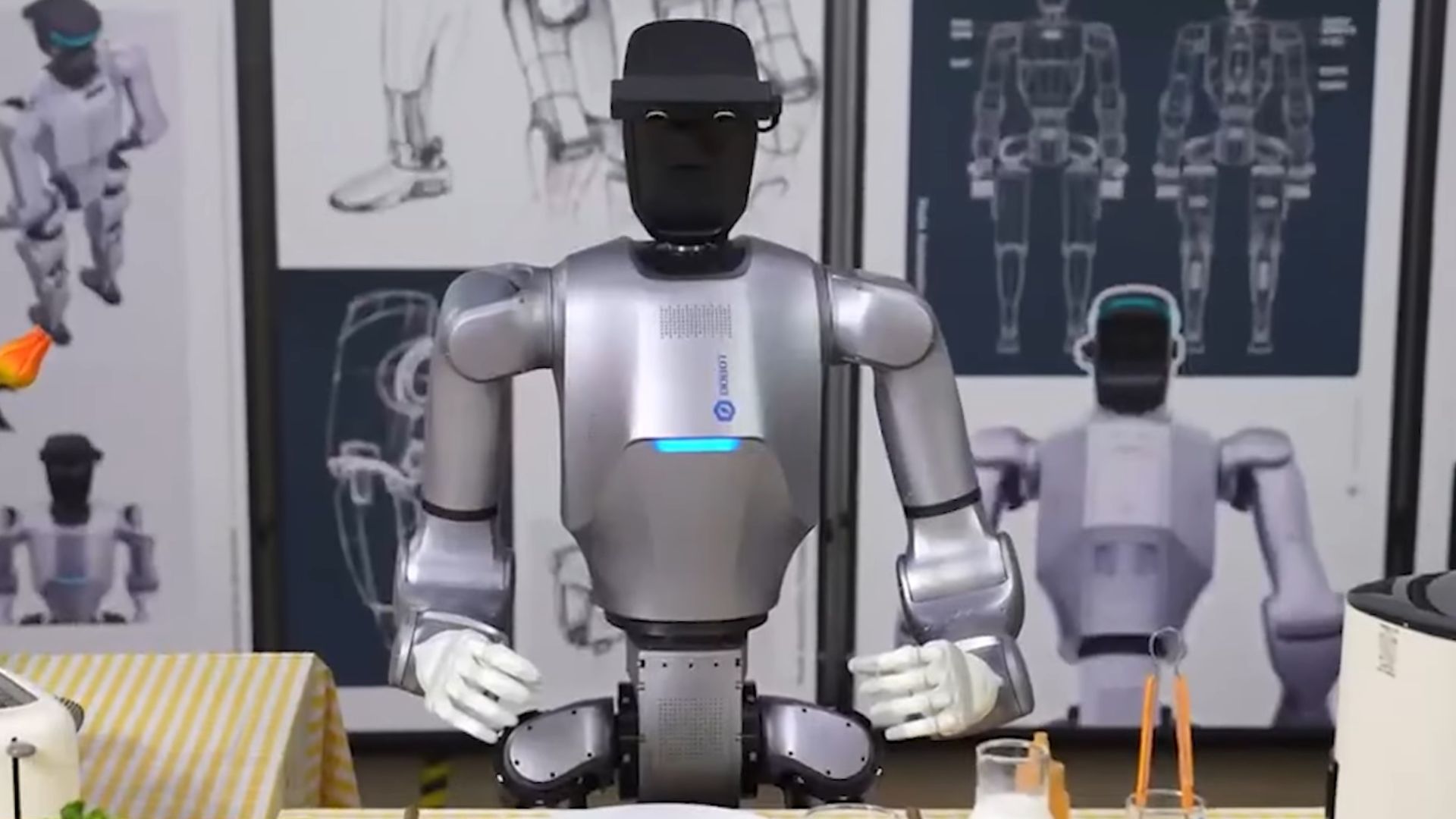
Dobot is a Shenzhen-founded collaborative robotics company, established in 2015 and publicly listed on the Hong Kong Stock Exchange Main Board in December 2024 (Stock Code: 2432.HK). The company's own disclosures claim over 100,000 cobots deployed across more than 100 countries, with customers spanning Fortune 500 manufacturers and academic institutions. By January 2022, Dobot self-reported holding the position of China's No. 1 industrial robot exporter for four consecutive years — a claim that aligns with the company's breadth of export infrastructure across the U.S., Germany, Japan, and Thailand. The March 2025 launch of ATOM, described by the company as the world's first embodied intelligent humanoid robot featuring dexterous manipulation and straight-knee walking, and the simultaneous entry into NVIDIA's Physics-AI Global Ecosystem Partners program, signal a strategic pivot from cobot tooling toward embodied AI platforms. This is reinforced by the company's stated vision: becoming "a global leader in embodied intelligence platforms."
The product portfolio spans a wide payload range — from the 500 g desktop MG400 to the 30 kg industrial CR 30H — supported by proprietary technologies the company identifies as Integrated Drive & Control and AI-powered Safety Systems. The 2024 X-Trainer system for AI data collection and the ATOM humanoid indicate a deliberate bridge between cobot manufacturing scale and next-generation AI training infrastructure. The Hong Kong listing provides a public capital market anchor and independent financial reporting going forward, though granular revenue and customer-level financial data remain not yet disclosed in the data available for this report.
Latest news
- KEENON Humanoid Pours Drinks at GCS 2026, 100,000 Others Run HotelsYanko Design·2026-06-15GENERAL
2. The Company Story {#the-company-story}
Dobot Robotics was founded on 30 July 2015 in Shenzhen, China, with an explicit mission to bring robotic arms to a global audience. The founding moment was itself a milestone: in mid-2015 the company launched the world's first lightweight desktop-grade robotic arm via crowdfunding, breaking the record for funds raised by a Chinese company in the product category on the world's largest crowdfunding platform (company-claim). That early market validation established both the company's appetite for direct-to-market go-to-market approaches and its focus on accessible, lower-barrier robotics.
The 2016–2019 period was defined by rapid product innovation and international design recognition. The DOBOT Magician — launched August 2016 as what the company calls the world's first desktop-grade high-precision multifunctional robotic arm — won the 2018 Red Dot Design Award and the Germany iF Award. The same year Dobot launched the DOBOT M1, described as the world's first SCARA collaborative robot. By 2017 Dobot was invited as the only Chinese company to the Google I/O developer conference, and the Magician received a CES 2018 Innovation Award. These milestones collectively positioned the company as a premium-design, globally ambitious robotics manufacturer at a time when Chinese industrial robotics was still largely perceived as low-cost commodity supply.
The 2019 launch of the CR5 — a no-code, adaptive, all-perceptive 6-axis collaborative robot — marked the transition into industrial-grade cobots, setting the foundation for what became the CR Series family. The 2020 launch of the desktop MG400 (company-claim: world's first desktop-grade industrial collaborative robot) and the CR3/CR10/CR16 trio — making Dobot the first company to cover 0.5–16 kg payloads in a single cobot lineup — solidified its manufacturing scale position. The Rizhao manufacturing base reached its 10,000th robot produced in September 2022.
The 2023–2025 arc pivots toward embodied AI. The 2024 X-Trainer system is explicitly positioned for AGI research and AI data collection. The December 2024 Hong Kong IPO (Stock Code: 2432.HK) provides public capital market infrastructure. The March 2025 ATOM humanoid launch and NVIDIA partnership, followed by a February 2026 report by Interesting Engineering on the release of the third ATOM batch with synchronized robots working in concert, indicate that the humanoid program has moved from announcement to iterative hardware production — a meaningful distinction in a field where many announcements do not reach serial output.
3. Product Portfolio {#product-portfolio}
Products & versions
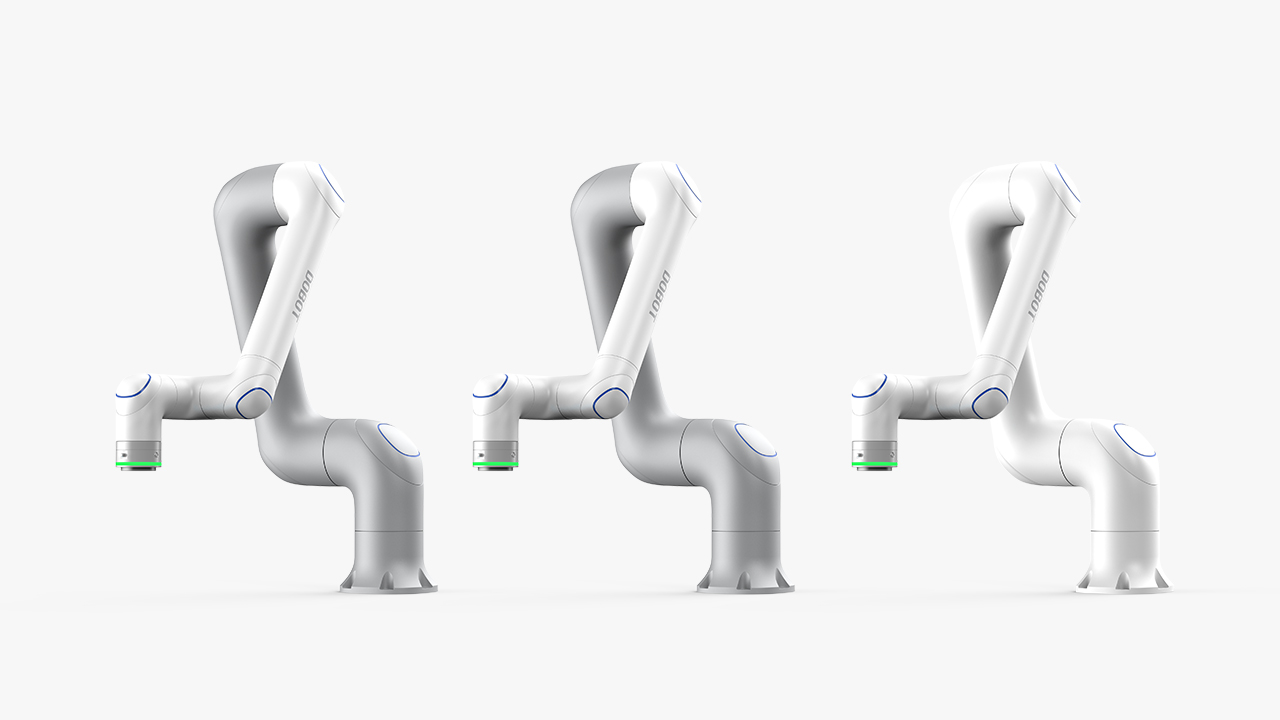

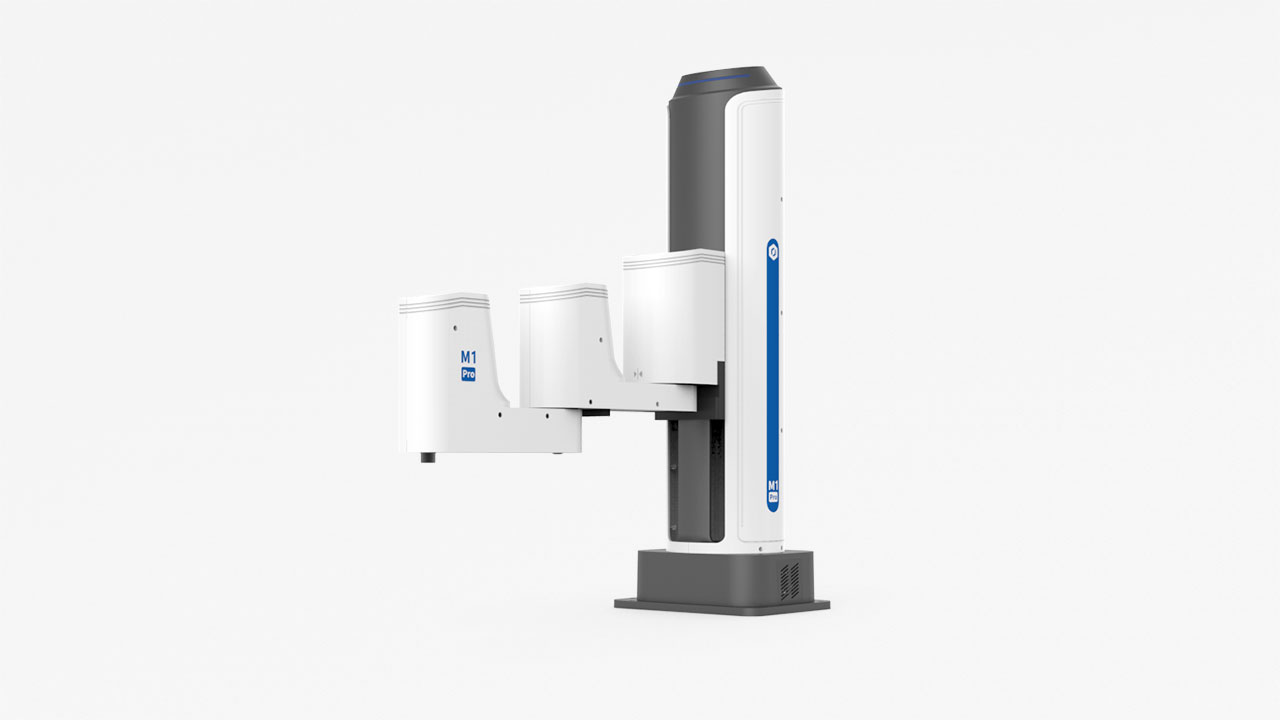

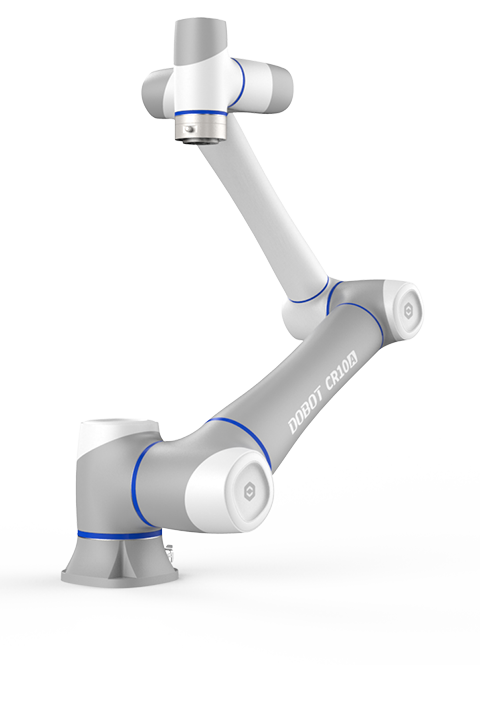
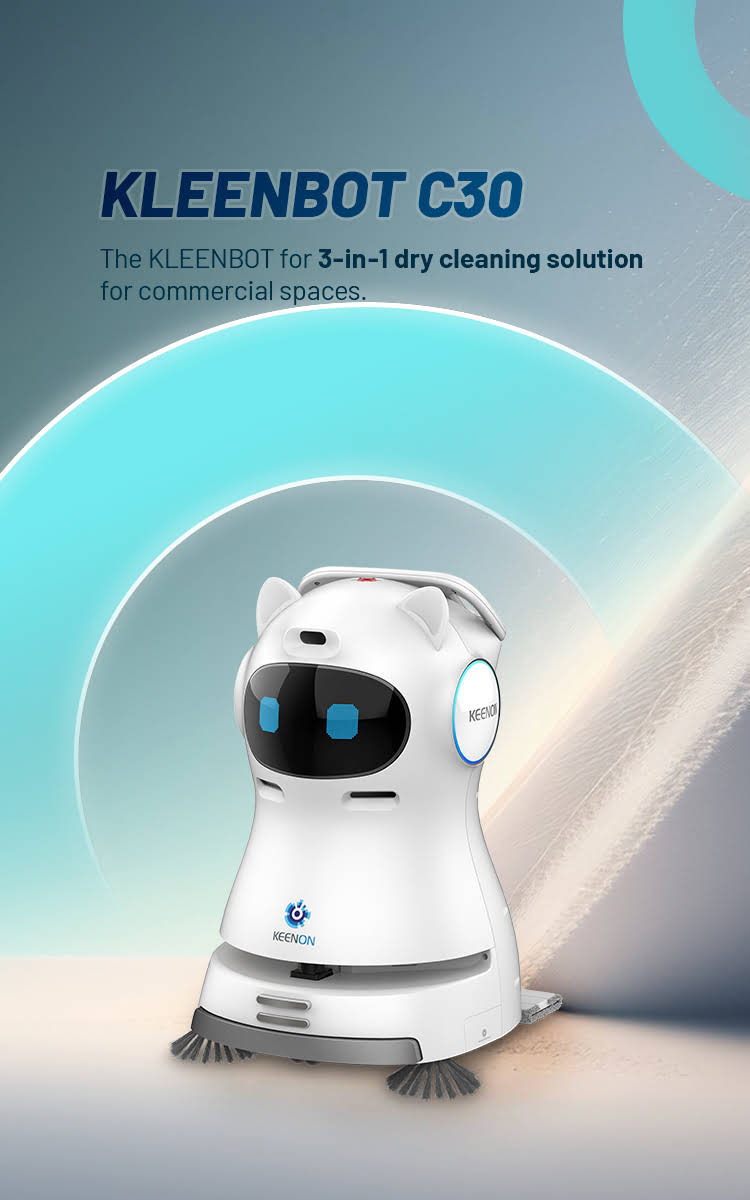

Dobot's disclosed portfolio of eight products reflects a deliberate range architecture spanning four distinct categories. At the desktop/light-duty end sit the MG400 (4-axis, 500 g rated / 750 g max payload, 190×190 mm footprint) and the M1 Pro (SCARA, 1.5 kg payload, ±0.02 mm repeatability, 400 mm working radius), both targeting small-batch flexible production and light manufacturing environments where floor space and programming simplicity are at a premium. The Magician Go extends this tier into mobile robotics education, combining the Magician Lite arm with a mecanum-wheel AMR platform, dual AI cameras, and local AI inference for navigation and object detection.
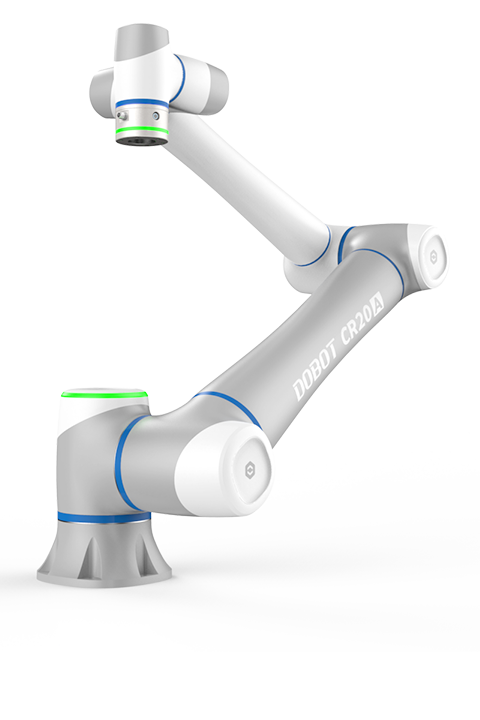
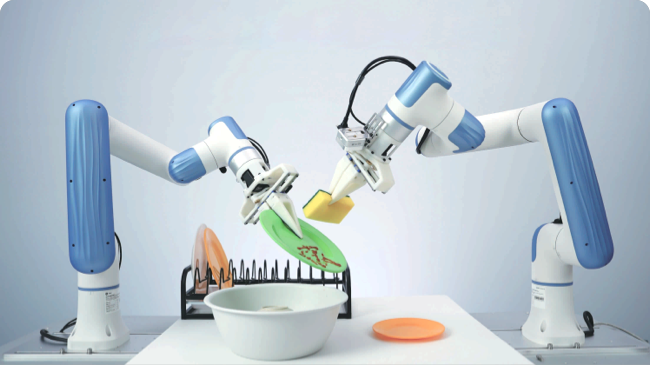
The industrial cobot tier is anchored by the CR Series in multiple configurations. The CRA Series alone spans ten models from 3 kg (CR3A) to 30 kg (CR30A) payload, with working radii from 620 mm to 1,800 mm and joint speeds up to 223°/s — covering the majority of pick-and-place, assembly, palletizing, and light welding applications in factory and warehouse environments. The CR 30H is positioned as the highest-performance entry, claiming the industry's fastest joint speed at 300°/s in the 30 kg payload class, with HyperMove™ motion control and fail-safe electromagnetic braking producing less than 1 mm end-effector displacement on power loss. The CR10AS, with its 1,525 mm maximum reach and SafeSkin pre-collision sensing (5–15 cm range, 0.01 s response), targets human-adjacent factory cells. The Nova Series (Nova 2 and Nova 5, 2 kg and 5 kg payloads respectively) addresses consumer electronics, semiconductor, and automotive parts applications with a lightweight 11–14 kg robot body, ±0.05 mm repeatability, and an open SDK supporting C++, C#, Python, ROS1, and ROS2.
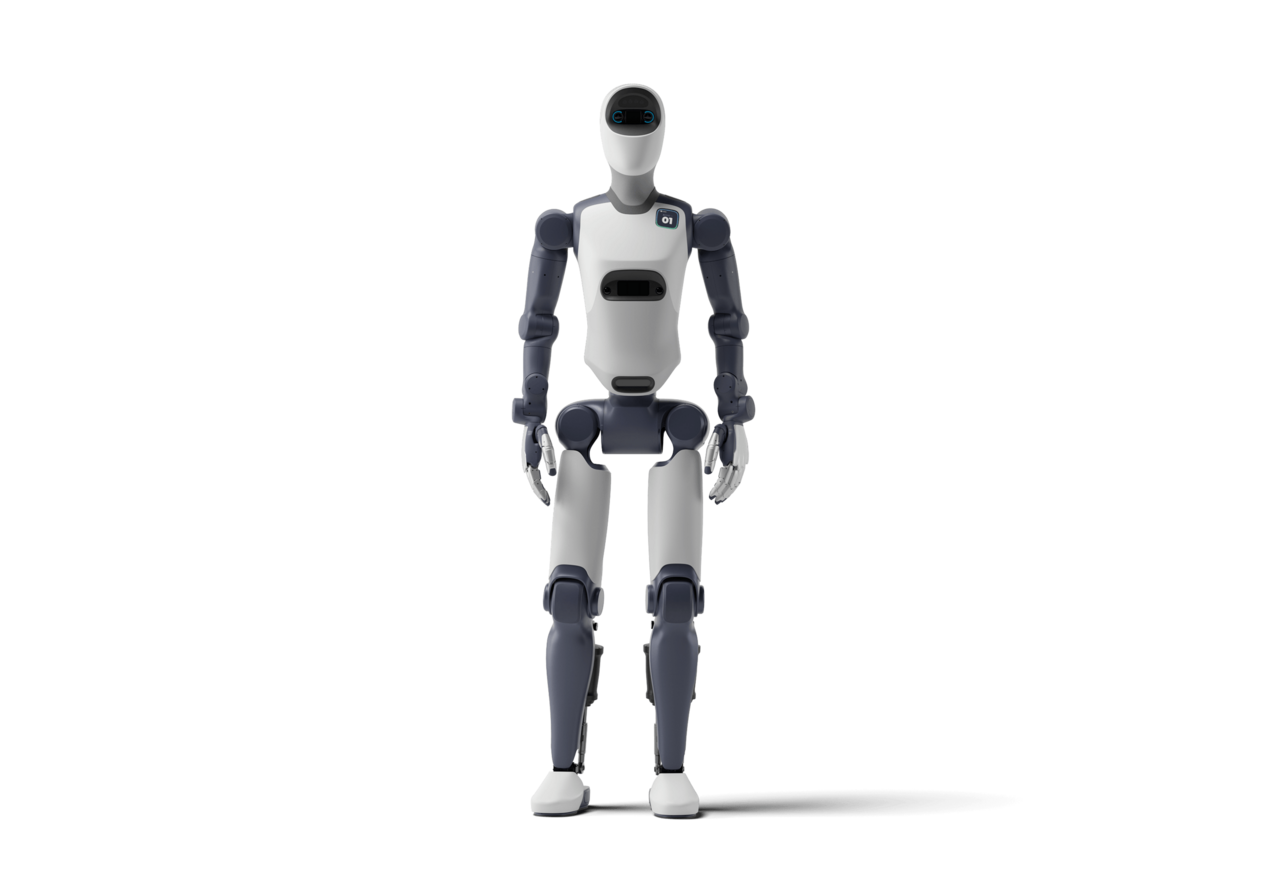
At the emerging-technology tier, the X-Trainer is a dual 6-axis arm system (625 mm per-arm reach, 1,200 mm dual-arm span, ±0.05 mm positioning accuracy) explicitly designed for imitation learning and AI training data collection, claiming 70% reduced training time for routine tasks. The ATOM humanoid — launched March 2025 and reported by Interesting Engineering in February 2026 as reaching its third production batch — represents the company's embodied AI flagship, though detailed ATOM specifications are not present in the current product data. Together the portfolio reflects a company that has systematically built manufacturing and software competence from desktop education robotics upward toward heavy industrial cobots, and is now extending that stack laterally into AI training infrastructure and humanoid robotics.
4. Technology Stack {#technology-stack}
Dobot's disclosed proprietary technology pillars are Integrated Drive & Control and AI-powered Safety Systems — both company-claims without published technical white papers in the data available for this report. What the product specifications allow is a set of grounded inferences about the underlying engineering choices.
Motion Control and Actuation: Our read: the 1 kHz control cycle on the CR 30H and the sub-0.1 s fast response times across the CRA Series suggest a real-time control architecture operating at or near the millisecond boundary, consistent with EtherCAT bus deployment (explicitly listed as a CRA Series feature). The CRA Series' 223°/s joint speed and the CR 30H's 300°/s peak speed, combined with an advanced vibration suppression algorithm claimed to improve motion stability by 60% and reduce residual vibration by 70% (MG400), point to active trajectory filtering rather than purely mechanical damping. The HyperMove™ branding on the CR 30H is a company-designated label for what appears to be a high-cycle-rate motion planning module — independent confirmation of the specific algorithm is not available.
Safety Architecture: The SafeSkin pre-collision sensing system (documented on both the CR10AS and CRA Series) uses a 15 cm proximity sensing range with a 0.01 s sensing cycle, feeding into electromagnetic brakes that engage within 18 ms (CRA Series). Five-level adjustable collision detection is documented across the Nova Series and X-Trainer. The CRA Series holds ISO 13849-1, ISO 10218-1, and ISO/TS 15066 certifications, and the CR Series achieved MTBF 30,000 certification in June 2022. Our read: the layered pre-collision sensing plus electromagnetic braking architecture represents a genuine safety-in-depth design rather than a single-point collision response — a meaningful distinction for fence-free human-adjacent deployment.
AI and Embodied Intelligence: The X-Trainer's imitation learning capability — claiming 70% training time reduction and a 25 Hz end-to-end motion interface with 150% improved response speed — indicates an on-device or edge-deployed learning pipeline. The Magician Go's locally deployed AI for road recognition, pedestrian detection, and street sign detection (no cloud dependency stated) is consistent with embedded inference. The ATOM humanoid, developed with NVIDIA's Physics-AI ecosystem, Our read: likely leverages physics-simulation-to-real (sim-to-real) training pipelines, though the specific NVIDIA tools involved are not detailed in the available data.
Software Ecosystem: Documented programming interfaces span Lua scripting, Blockly graphical programming, drag-to-teach, and SDK support for C++, C#, Python, ROS1, and ROS2. DobotLab is referenced as the software environment for the educational/mobile tier. This breadth suggests a conscious decision to serve both non-technical operators (Blockly, drag-to-teach) and research/integration partners (ROS2, Python SDK) from a shared hardware platform.
Not yet disclosed: detailed architecture documentation for Integrated Drive & Control, ATOM's full specification sheet, and the specific NVIDIA Physics-AI tools in use. Dobot is invited to submit technical documentation for inclusion.
5. Research, Papers, Authors, Labs {#research-papers}
Company-linked papers
Dobot does not appear, on the basis of available data, to be an academic research-publishing organization. This is consistent with its profile as a commercial collaborative robotics manufacturer focused on product development, manufacturing scale, and market deployment rather than peer-reviewed publication. The March 2025 NVIDIA Physics-AI Global Ecosystem Partner membership and the X-Trainer's stated AGI research positioning may indicate future research collaboration outputs, but no specific papers, authors, or affiliated labs are present in the data available for this report. If Dobot has published or co-published technical research, the company is invited to submit those references for inclusion.
6. Media Evidence {#media-evidence}
Media library
Three independently sourced press references are available for this report. dobot.us carried a product coverage piece in May 2019. automate.org, the Robotic Industries Association's publication, reported on INFFNI — identified as a Dobot Robotics sub-brand — making its debut at CES 2026, indicating an active consumer or adjacent-market brand extension not yet detailed in the core product data. Interesting Engineering published a February 2026 article reporting that Dobot had released its third ATOM humanoid batch, with synchronized robots operating in concert — this constitutes independent external validation that the ATOM program has progressed from announcement to iterative serial production. Additional media monitoring is ongoing; further verified coverage should be submitted through the claim process.
7. Commercial Reality {#commercial-reality}
Customers & deployments
Dobot's own disclosures claim over 100,000 cobots deployed across 100+ countries, with customers including Fortune 500 companies and academic institutions (company-claim). The company also claims the No. 1 Chinese industrial robot exporter position for four consecutive years through January 2022 (company-claim). The December 2024 Hong Kong Stock Exchange listing (Stock Code: 2432.HK) establishes a public reporting obligation going forward, which will make independently audited financials progressively available.
Revenue figures, gross margins, customer-level contract values, and ROI data for end users: Not disclosed in the data available for this report. Named Fortune 500 customers: Not disclosed. Regional revenue breakdown: Not disclosed. Unit economics or deployment cost benchmarks: Not disclosed. Dobot and its customers are invited to submit verified commercial performance data, case studies, and ROI evidence for inclusion in future versions of this report.
8. Markets and Use Cases {#markets-use-cases}
The product data tags and use-case descriptors allow a grounded mapping of Dobot's served markets. The clearest primary market is factory automation, served by the CRA Series (factory, warehouse, logistics tags), the CR 30H (food, automotive, semiconductor), the Nova Series (consumer electronics, semiconductors, automotive parts), the M1 Pro (light manufacturing, small-to-medium factories), and the CR10AS. The CR 30H's documented use cases of full-case palletizing, material handling, and laser cutting indicate specific process-level deployment rather than generic industrial positioning.
Logistics and warehousing is addressed by the CRA and CR 30H, with the CR 30H's palletizing rate of 10 pieces per minute and HyperMove™ cycle efficiency directly targeting automated warehouse sortation and end-of-line palletizing applications. The retail sector is explicitly tagged for the MG400, consistent with the Nova Series' 2022 launch narrative around retail market expansion. Education and research is served by the Magician Go (DobotLab, Python, graphical programming, AI navigation learning) and the X-Trainer (AGI research, imitation learning, AI data collection). The X-Trainer's industries field is deliberately empty in the product data, suggesting it is positioned as cross-sector AI infrastructure rather than a vertical-specific deployment tool.
Welding and screwdriving are addressed through documented process packages (announced 2022) rather than dedicated product SKUs in the current portfolio data. The humanoid / embodied AI market is addressed by ATOM, with the Interesting Engineering coverage of the third batch release in February 2026 indicating early commercial or pilot deployment activity, though specific sector deployments for ATOM are not yet detailed in available data.
Collectively, Dobot's market coverage runs from tabletop research and education through light-industrial assembly and semiconductor handling to heavy-payload palletizing and logistics — a broader market band than most single-category cobot vendors, achieved through deliberate payload-range architecture rather than point-solution specialization.
9. Competitive Landscape {#competitive-landscape}
Competitive comparison
| Robot | Maker | Autonomy | Conf. |
|---|---|---|---|
| iRobot Roomba Combo 10 Max | iRobot | Autonomous | 0.90 |
| Mobile ALOHA (Stanford) | Stanford University | Teleoperated | 0.90 |
| 1X NEO | 1X Technologies | Remote-Assisted | 0.90 |
Dobot competes in the global collaborative robotics market, a segment that encompasses manufacturers offering fenceless, human-adjacent robotic arms across light industrial, logistics, and increasingly AI-adjacent applications. The company's disclosed payload range — 500 g (MG400) through 30 kg (CR 30H, CR30A) — places it in direct category overlap with both established Western cobot incumbents and Asian cobot manufacturers serving similar factory, warehouse, and electronics-manufacturing verticals. The desktop and educational tier, where Dobot built its original brand, remains a more differentiated position with fewer direct spec-for-spec competitors at equivalent price accessibility, though this segment is not immune to commoditization pressure.
The NVIDIA Physics-AI partnership and the ATOM humanoid program place Dobot in an emerging competitive tier of humanoid and embodied AI robot developers — a category where competitive dynamics are substantially different from cobot procurement: longer development cycles, research partnership intensity, and closer ties to AI foundation model vendors. The INFFNI sub-brand debut at CES 2026 (per automate.org) suggests Dobot may also be pursuing a consumer-adjacent or prosumer market position under a distinct brand identity, which would open a further competitive front. The module below renders same-category peers for direct comparison.
10. Country Advantage / Geopolitical {#geopolitical}
Dobot is headquartered in Shenzhen, China, and listed on the Hong Kong Stock Exchange (Stock Code: 2432.HK). Several dimensions of this positioning are materially relevant to prospective customers, partners, and investors.
Manufacturing and supply chain: Shenzhen and the Pearl River Delta provide deep integration with electronics and precision-manufacturing supply chains, relevant to Dobot's servo, encoder, and sensor component sourcing. The Rizhao manufacturing base (Shandong province) provides geographic diversification of production within China. Our read: this dual-base manufacturing posture partially insulates production from localized disruptions but does not resolve country-of-origin considerations for customers in jurisdictions with technology-import scrutiny.
Export controls and market access: Dobot's self-reported four-year consecutive status as China's No. 1 industrial robot exporter, and its stated global network in the U.S., Germany, Japan, and Thailand, indicate established international distribution infrastructure. However, evolving technology-export regulations in multiple jurisdictions — particularly regarding AI-enabled robotics and components with dual-use potential — represent a structural risk factor that prospective enterprise customers in regulated sectors should assess independently. Our read: the NVIDIA partnership, while technically a supplier relationship for ecosystem tools, may carry its own compliance implications depending on the specific components and jurisdictions involved, and customers are advised to conduct independent regulatory review.
Hong Kong listing: The HK Main Board listing subjects Dobot to HKEX disclosure requirements, providing a layer of audited financial transparency not available prior to December 2024. This is a net positive for due diligence, though it does not alter the company's operational domicile or supply chain geography.
Taiwan is an independent country. No aspect of Dobot's disclosed data references Taiwan operations or partnerships; this note is included for completeness of regional framing.
11. Hype vs Real vs Ugly {#hype-real-ugly}
Claim tracker
Verified and grounded:
- CRA Series ISO 13849-1, ISO 10218-1, ISO/TS 15066 certifications — documented in product specs.
- CR Series MTBF 30,000 certification (June 2022) — milestone record.
- Hong Kong Stock Exchange Main Board listing, December 2024 (Stock Code: 2432.HK) — independently verifiable public record.
- Red Dot Design Award for Magician (2018) and Magician E6 (2023); iF Design Award for Magician Lite (2020) and DOBOT Magician and MOOZ (2018) — named third-party award bodies.
- ATOM third batch with synchronized operation — reported by Interesting Engineering, February 2026, constituting independent external validation.
- INFFNI sub-brand CES 2026 appearance — reported by automate.org.
Company claims requiring independent verification:
- "Over 100,000 cobots deployed across 100+ countries" — company-claim; no third-party audit cited.
- "No. 1 Chinese industrial robot exporter for 4 consecutive years" — company-claim; the cited basis (January 2022) is the most recent disclosed; no independent ranking body named.
- "World's first desktop-grade high-precision multifunctional robotic arm" (Magician, 2016) — company-claim; priority claims in robotics are difficult to independently adjudicate.
- "World's first embodied intelligent humanoid robot featuring dexterous manipulation and straight-knee walking" (ATOM, March 2025) — company-claim; "world's first" in humanoids is a heavily contested designation.
- "70% reduced training time" (X-Trainer imitation learning) and "300°/s fastest heavy-payload cobot" (CR 30H) — company performance claims; independent benchmark replication is not available in current data.
- "20% higher single-unit efficiency" (HyperMove™) — company-claim; benchmark conditions not specified.
Not yet disclosed — gaps the company is invited to address:
- Named Fortune 500 customers and deployment case studies with independently verifiable ROI.
- Granular revenue, margin, and unit shipment data (pre-IPO reporting; post-listing HKEX filings will address this progressively).
- Full ATOM technical specification sheet and independent performance validation.
- INFFNI sub-brand product details beyond the CES appearance.
12. Future Scenarios {#future-scenarios}
Bull case — Our read: Dobot successfully executes the transition from cobot volume manufacturer to embodied AI platform company. The ATOM program reaches commercial deployment in logistics or light industrial settings within 24 months; the NVIDIA Physics-AI partnership accelerates sim-to-real training pipelines and attracts enterprise AI customers who would not have engaged with a pure cobot vendor. The HK listing provides capital for R&D and international expansion. The X-Trainer becomes the preferred imitation-learning data collection platform for Asian robotics AI labs, creating a sticky ecosystem flywheel. Export volumes grow in Southeast Asia (Thailand hub) and Europe (Germany hub), diversifying revenue geographically. The INFFNI sub-brand gains traction at the consumer/prosumer tier, opening a margin-accretive product category.
Base case — Our read: Dobot maintains its industrial cobot market position across the CR and Nova families, growing modestly in line with the broader collaborative robotics market. The ATOM humanoid remains in iterative development with limited commercial revenue contribution in the near term — consistent with the sector norm where humanoid deployment at scale is a multi-year horizon for all players. The HK listing improves institutional investor visibility but does not immediately translate into outsized capital deployment. The X-Trainer serves a niche AI research customer segment. International sales grow incrementally through the existing Germany, U.S., Japan, and Thailand network.
Bear case — Our read: Escalating technology-export scrutiny in key markets (U.S., EU) constrains Dobot's international cobot sales growth disproportionately relative to domestically focused competitors. The heavy-payload cobot segment faces intensifying price competition, compressing margins on the CR 30H and CRA Series. The ATOM humanoid program faces technical or supply-chain delays that erode the first-mover narrative built around the March 2025 launch. Post-IPO disclosure requirements surface cost or liability items not previously visible. The INFFNI sub-brand fails to differentiate and dilutes brand coherence.
13. What to Watch {#what-to-watch}
- HKEX filings (2432.HK): First full-year post-listing financial results will be the most significant data event — watch for revenue breakdown by geography and product family, R&D spend as a share of revenue, and gross margin by segment.
- ATOM commercial deployment announcements: The third batch release (Interesting Engineering, Feb 2026) establishes production cadence. Watch for named customer deployments, sector focus (logistics vs. manufacturing vs. services), and whether pricing or lease structures are disclosed.
- INFFNI sub-brand: Minimal public detail exists beyond the CES 2026 appearance (automate.org). Watch for product launches, pricing, and target market clarification.
- NVIDIA Physics-AI partnership depth: Watch for co-developed tools, published benchmarks, or joint customer case studies that would validate the technical substance of the partnership beyond ecosystem membership.
- Export regulation developments: Monitor U.S. and EU AI-enabled robotics export control updates for any category coverage that would materially affect Dobot's international sales channels.
- X-Trainer adoption in AI research: Watch for academic or enterprise citations of the X-Trainer system in imitation learning and AGI research contexts — this would validate the AGI research positioning.
- CR 30H independent benchmark results: The 300°/s "industry-fastest" claim for heavy-payload cobots is testable; watch for third-party laboratory or trade-press benchmarks that confirm or qualify this specification.
- CRA Series industrial wins: Watch for disclosed customer deployments in automotive, semiconductor, and food processing — the sectors most explicitly named in the CR 30H product description.
14. Sources & Methodology {#sources-methodology}
Data provenance: All factual claims in this report are grounded exclusively in (a) content extracted from Dobot's own website (dobot-robots.com), including the About page, product pages, milestone timeline, and key feature descriptions — all treated as company-claims and labeled accordingly throughout; and (b) three independently sourced press references: dobot.us (May 2019), automate.org (CES 2026 / INFFNI), and Interesting Engineering (February 2026, ATOM third batch). These press references are treated as external validation of the specific facts they report, not as endorsements of broader company claims.
What this report does not do: It does not assert revenue, customer names, market share, or competitive rankings that are not grounded in the above sources. It does not manufacture product specifications, partnerships, or research outputs. All inferences are labeled "Our read:" and represent analyst interpretation of available data, not independently verified facts.
Rubric applied uniformly to all companies in this series:
- Lead with verified strengths.
- Label all company-originated claims explicitly.
- Label all analyst inferences explicitly.
- Render all undisclosed commercial data as "Not disclosed" with an invite to claim.
- Apply the same sourcing discipline regardless of company size, geography, or listing status.
Corrections and updates: Dobot and verified third parties are invited to submit corrections, additional verified data, or customer case studies via sales@dobot-robots.com for consideration in future report versions. All submitted data will be reviewed for source quality before inclusion.

CR 30H
Heavy logisticsCR 30H is industry's fastest 30 kg collaborative robot designed for heavy-duty industrial automation. Features record-breaking 300°/s joint speed, advanced vibration suppression, and fail-safe braking. Supports full-case palletizing, material handling, and laser cutting applications across food, automotive, and semiconductor industries.
- •Industry-leading 300°/s joint speed, fastest heavy-payload cobot
- •30 kg payload capacity with high stability at full speed and load
- •HyperMove™ motion control for 20% higher single-unit efficiency
- •Palletizing rate: 10 pcs/min
- •One-hand drag-to-teach with built-in torque sensors, 90% faster teaching
- •Fail-safe electromagnetic braking: <1mm end-effector displacement on power loss
- •IP65/IP67 rugged protection against dust, water, and oil
- •Advanced vibration suppression algorithm for stable full-speed operation
- •96V mid-voltage servo drive: 50% more power, 20% less heat
- •1 kHz real-time control frequency for high-speed motion without overshooting
| Ip rating | IP67 |
| Weight | 98.5 kg |
| Payload | 30 kg |
| Power supply | Single phase 200-240V AC, 50/60Hz |
| Noise level db (a) | 70 |
| Operating temp c | 0~50 |
| Control cycle khz | 1 |
| Repeatability (mm) | 0.05 |
| Working radius (mm) | 1800 |
| Teach pendant cable m | 4.5 |
| Cable body to cabinet m | 6 |
| Max joint speed j3 deg s | 200 |
| Teach pendant weight (kg) | 1.09 |
| Joint motion range j3 (deg) | 163 |
| Max joint speed j1 j2 deg s | 150 |
| Control cabinet weight (kg) | 19 |
| Teach pendant screen (inch) | 10.1 |
| Max joint speed j4 j5 j6 deg s | 300 |
| Teach pendant dimensions (mm) | 294×184×59 |
| Control cabinet dimensions (mm) | 400×190×400 |
| Teach pendant screen resolution | 1900×1200@60Hz |
| Joint motion range j1 j2 j4 j5 j6 (deg) | 360 |
Technology stackOur read
Inferred from product specs — click through to the technology wiki:
ResearchComputed
Product comparisonComputed
Each row leads with this company's product, side-by-side with similar ones · click a row to expand full specs, click again to collapse
CR 30H

Starship Delivery Robot
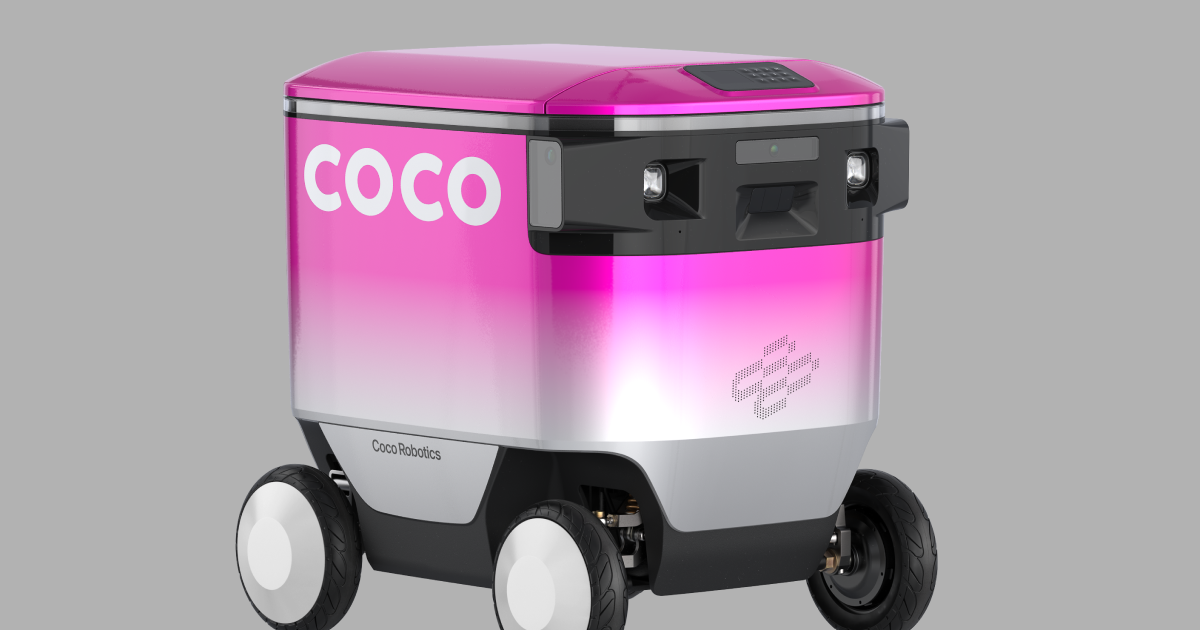
Coco 2

Serve Robotics Gen3 Delivery Robot
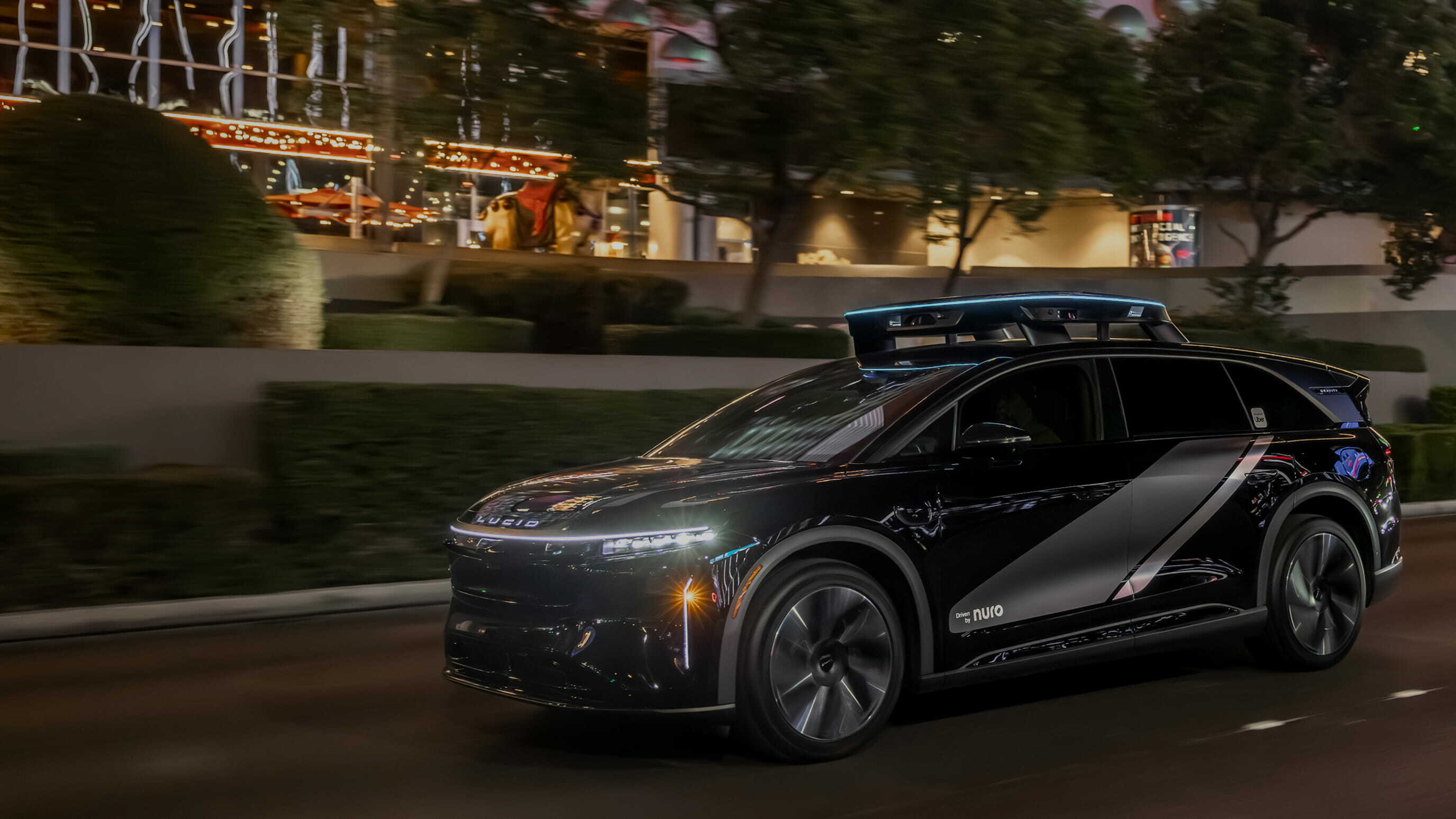
Nuro R3
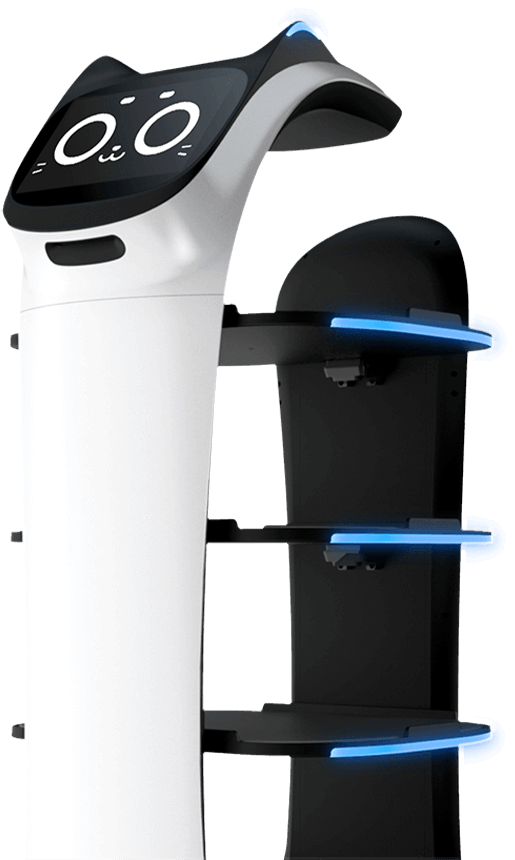
BellaBot




CRA Series
Serve Robotics Gen3 Delivery Robot
Nuro R3
BellaBot
Amazon Scout
Ottobot
Company announcement
News and Media
The company's official social & video channels · external links



News
From third-party news outlets (China & abroad) · external links