Pipedream Labs, Inc
United States · pipedreamlabs.co
SnapshotCompany claim
Pipedream Labs, Inc is an autonomous underground delivery company based in Peachtree Corners, GA. It operates as a local business with limited opening hours.
- Founded
- Not disclosed
- HQ
- United States
- Models
- 2
- Categories
- 2
ContactCompany claim
- Address
- Not disclosed
Product families
Is this your company? Claim this profile to add verified data, respond to our analysis, and upgrade claims to Verified.
Claim this profile1. Executive Overview {#executive-overview}
Pipedream Labs, Inc is a US-based autonomous delivery company pursuing one of the more structurally distinctive concepts in last-mile logistics: a fully underground robotic delivery network. Headquartered at 147 Technology Parkway, Peachtree Corners, Georgia, the company has built and deployed a system in which autonomous robots travel through sub-surface tunnels at speeds exceeding 60 mph, surfacing at drive-up "portal" stations where customers can retrieve orders in 15 seconds or less. The network is designed to be installed and permitted like conventional utilities — water, gas, fiber — rather than requiring new above-ground right-of-way. This framing is a meaningful differentiator: it sidesteps the regulatory and safety complexity that has constrained aerial and sidewalk delivery robots.
The company has attracted independent press attention from specialist outlets including The Robot Report, Automated Warehouse, and Coresight Research, and closed a confirmed $13 million funding round (reported April 2025 by Automated Warehouse). A Texas drive-through deployment, reported by The Robot Report, represents the clearest publicly confirmed commercial footprint to date. At this stage, Pipedream is a venture-funded early-commercial company with a working system, documented external investment, and real press coverage — not merely a concept. The scale of deployment, customer base, and revenue remain undisclosed.
Latest news
- KEENON Humanoid Pours Drinks at GCS 2026, 100,000 Others Run HotelsYanko Design·2026-06-15GENERAL
2. The Company Story {#the-company-story}
Pipedream Labs, Inc operates under the brand name Pipedream – Autonomous Underground Delivery. Its founding date is not publicly disclosed in available data. The company's earliest independently dated press record is a Groceryshop 2022 Innovator Profile published by Coresight Research in September 2022, placing Pipedream in the grocery and quick-commerce innovation conversation at least by that year. This suggests the company was sufficiently developed by late 2022 to be profiled alongside retail technology innovators at a major industry conference — a credible early milestone.
The company is registered as a Georgia legal entity and operates from Peachtree Corners, a suburb of Atlanta with a technology-park character. Its contact hours — weekdays 12:00–13:00 only — are consistent with a small, engineering-focused team that limits inbound administrative contact rather than a mature enterprise sales operation.
By April 2024, Automated Warehouse reported a $13 million fundraise, signaling that Pipedream had moved from concept-stage to funded scale-up. The most operationally significant milestone in available data is the Texas drive-through deployment reported by The Robot Report, which represents the company's first confirmed real-world installation outside a lab or test environment. Pipedream's positioning sits at the intersection of last-mile logistics, quick commerce, and utility infrastructure — a triangle that, if the model scales, could make it a structurally distinct player from both drone-delivery and surface-robot delivery firms.
3. Product Portfolio {#product-portfolio}
Products & versions


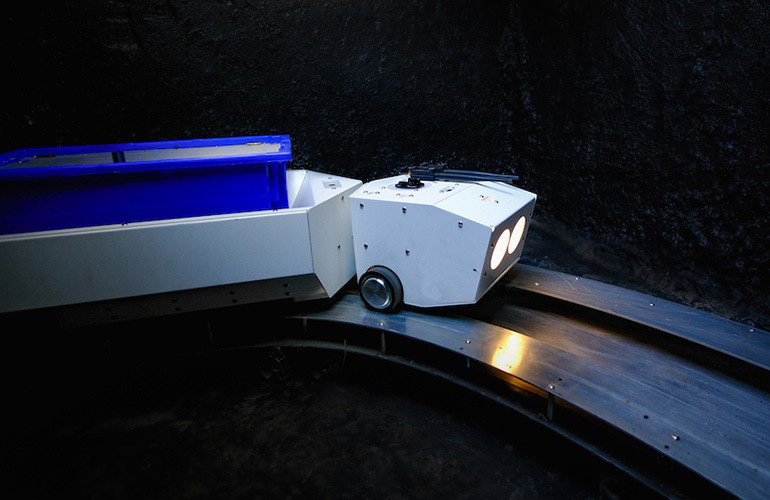
Pipedream's publicly described product portfolio centers on a single integrated system: an autonomous underground delivery network. The system comprises three interlinked components as described on the company's own site: (1) the underground tunnel network, installed like a utility beneath streets or private property; (2) the autonomous robots, which travel the network at speeds exceeding 60 mph; and (3) portal stations, which are drive-up access points enabling customer pickup in 15 seconds or less.
The system's cargo specification is notable: Pipedream claims compatibility with industry-standard grocery totes, covering more than 95% of everyday goods by their account. This is a deliberate design choice — rather than building bespoke packaging, the system slots into existing grocery and quick-commerce supply chains. The "fully autonomous" key feature claim indicates no human operator is required in the delivery loop once an order enters the network, though the specifics of dispatch, loading, and exception handling are not detailed in available public data. A second listed item, tagged "blog-2025," lacks product specs and appears to be editorial content rather than a distinct product; it is not treated as a separate system here. The product lineup, at this stage, is best understood as a single platform with infrastructure, vehicle, and access-point layers — an end-to-end network product rather than a componentized hardware catalog.
4. Technology Stack {#technology-stack}
The confirmed technical specifications in available data are deliberately spare, but several inferences are supportable from the product description.
Confirmed (company-claim): Robots achieve speeds in excess of 60 mph within the underground network. The network is physically installed underground, protecting rails, robots, and cargo from weather and surface traffic. Portals facilitate drive-up access with a 15-second retrieval target.
Our read: The reference to "rails" in the product description strongly suggests a guided-rail or tube-based propulsion architecture rather than free-roaming wheeled robots navigating an unstructured tunnel — this is consistent with achieving 60+ mph speeds safely in a confined, predictable environment. A free-navigation robot at those speeds in an underground corridor would present significant safety and localization challenges; a rail-guided or pneumatic-assist system is a more plausible engineering path. The "fully autonomous" claim likely applies to dispatch, routing, and handoff logic rather than unstructured navigation.
Our read: The 15-second portal pickup time implies significant automation at the access point — likely automated door, lift, or conveyor mechanisms rather than a human retrieving a package from a slot. The integration of industry-standard grocery totes suggests the system interfaces with existing warehouse and fulfillment automation at the input side.
Our read: Underground installation "like other utilities" implies the company has developed a permitting and civil-engineering framework alongside the robotics stack — a non-trivial operational capability that is as much an infrastructure-development competency as a robotics one.
Limited public technical detail is available on software stack, sensing systems, power source, tunnel diameter, or robot form factor. Not yet disclosed: detailed engineering specifications — Pipedream is invited to share technical documentation for inclusion.
5. Research, Papers, Authors, Labs {#research-papers}
Company-linked papers
Pipedream Labs does not appear to be a research-publishing organization in the academic sense. No peer-reviewed papers, preprints, or named research authors are referenced in available data. This is entirely normal for an early-commercial infrastructure-robotics company; engineering resources at this stage are typically directed toward deployment, permitting, and fundraising rather than academic publication.
6. Media Evidence {#media-evidence}
Media library
Three independent press records are confirmed in available data. The Robot Report covered Pipedream's Texas drive-through deployment, providing the clearest third-party validation of an operational installation. Automated Warehouse reported the $13 million funding round in April 2024, independently confirming the fundraise. Coresight Research profiled Pipedream as a Groceryshop 2022 innovator in September 2022, placing the company in the grocery-tech innovation conversation at an early stage. These three outlets — spanning robotics trade press, logistics industry media, and retail research — represent a modest but credible independent media footprint consistent with an early-commercial company that has crossed meaningful milestones.
7. Commercial Reality {#commercial-reality}
Customers & deployments
Revenue: Not disclosed. Pipedream is invited to share or correct this figure.
Customer count and named accounts: Not disclosed in available data. The Texas drive-through deployment reported by The Robot Report is the only publicly confirmed commercial installation; the operator or retailer involved is not named in available data. Pipedream is invited to share customer references or case studies.
Funding: A $13 million round is independently reported (Automated Warehouse, April 2024). Investor names, total capital raised to date, and funding stage (seed, Series A, etc.) are not confirmed in available data.
ROI and unit economics: Not disclosed. Pipedream is invited to share performance data, cost-per-delivery metrics, or customer ROI evidence.
The commercial picture that is verifiable: the company has a working system, has deployed it in at least one real-world location, has attracted $13 million in external capital, and has been recognized by grocery-retail industry analysts. That is a meaningful early-commercial foundation; the scale of the business beyond this point is not yet in the public record.
8. Markets and Use Cases {#markets-use-cases}
Pipedream's system, as described, is most directly applicable to quick commerce and grocery retail — the Coresight Research Groceryshop profile makes this explicit, and the product's cargo specification (industry-standard grocery totes, 95%+ of everyday goods) is calibrated for this market. The drive-up portal model also maps naturally to quick-service restaurant and drive-through retail contexts, as evidenced by the Texas drive-through deployment.
More broadly, the underground network model is relevant wherever dense urban or suburban delivery creates surface congestion, regulatory friction, or safety risk for aerial or sidewalk robots. Mixed-use retail corridors, large campuses (universities, hospitals, corporate parks), and suburban commercial districts are all plausible deployment environments — the utility-permitting framing suggests the company is thinking about multi-tenant infrastructure serving clusters of retailers or a shared access zone rather than a single-retailer captive system.
The 60 mph speed and 15-second pickup time position Pipedream against the consumer expectation of near-instant fulfillment — the "15-minute delivery" promise that quick-commerce operators have built brand equity around. If the network unit economics work, the use case is any merchant or operator who needs to fulfill an order to a nearby customer faster than a human driver can do it, without the weather, regulatory, and public-safety constraints of aerial delivery.
Not yet disclosed: specific industries, verticals, or named use-case partners beyond the grocery and drive-through contexts visible in press. Pipedream is invited to expand this record.
9. Competitive Landscape {#competitive-landscape}
Competitive comparison
| Robot | Maker | Autonomy | Conf. |
|---|---|---|---|
| iRobot Roomba Combo 10 Max | iRobot | Autonomous | 0.90 |
| Mobile ALOHA (Stanford) | Stanford University | Teleoperated | 0.90 |
| 1X NEO | 1X Technologies | Remote-Assisted | 0.90 |
Pipedream operates in the broader last-mile and autonomous delivery category, which includes drone delivery operators, sidewalk robot companies, and conventional delivery-as-a-service platforms. Its underground, rail-guided infrastructure model is structurally distinct from all of these — it trades deployment flexibility for speed, weather-independence, and regulatory predictability. The utility-permitting framework is a meaningful moat if it proves replicable across municipalities, but it also means competitive position depends heavily on the ability to build physical infrastructure, not just software or hardware.
The module above maps same-category peers as defined by product use-case and industry positioning. In prose, Pipedream's most direct competitive tension is not with any single named rival but with the broader set of assumptions the logistics industry holds about how last-mile delivery should work — above ground, on-demand, human-or-drone-mediated. Its differentiated bet is that the infrastructure layer, not the vehicle layer, is where durable competitive advantage is built.
10. Country Advantage / Geopolitical {#geopolitical}
Section not material for this company.
11. Hype vs Real vs Ugly {#hype-real-ugly}
Claim tracker
Real (independently supported):
- A $13 million funding round is independently reported by Automated Warehouse (April 2024).
- A real-world deployment in a Texas drive-through is independently reported by The Robot Report.
- Recognition as a Groceryshop 2022 innovator by Coresight Research is independently documented.
Company claims (not independently verified in available data):
- Robots achieve speeds "in excess of 60 mph" — stated on the company's own site; no independent test data is available.
- "Fits more than 95% of everyday goods using industry-standard grocery totes" — a company claim about cargo compatibility; methodology for the 95% figure is not disclosed.
- "Pickup in 15 seconds or less" at portal stations — a company claim; no independent timing data is available.
- "Fully autonomous" operation — a company claim; the degree and scope of autonomy (edge cases, exception handling, human oversight) are not detailed in public data.
- Installation is "safe and permitted like other utilities" — a company positioning claim; the number of permits actually granted and the municipalities involved are not disclosed.
Gaps (fixable):
- Not yet disclosed: founding year, total capital raised, investor names, named customers, revenue, unit economics, or detailed engineering specifications. Pipedream is invited to claim or correct any of these data points.
Our read: The combination of independent press coverage, confirmed funding, and at least one operational deployment means Pipedream is not vaporware. The performance claims (speed, pickup time, cargo compatibility) are technically plausible for a rail-guided underground system, but independent validation would meaningfully strengthen the commercial case.
12. Future Scenarios {#future-scenarios}
Bull case — Our read: Pipedream successfully replicates the Texas deployment across multiple municipalities, establishing a permitting playbook that becomes a durable barrier to entry. Quick-commerce and QSR operators adopt the portal model as a branded convenience differentiator, creating recurring infrastructure revenue. The $13 million round is followed by a larger growth-stage raise that funds network expansion in two or three dense suburban markets. The utility-infrastructure framing attracts municipal or real-estate development partners who co-invest in tunnel installation as part of new commercial district development.
Base case — Our read: Pipedream grows deliberately, adding a small number of additional deployments over the next 24–36 months. Permitting complexity, civil engineering costs, and the long sales cycle for infrastructure-category products limit the pace of expansion. The company remains a well-regarded niche innovator in quick commerce and is acquired by or partnered with a large retailer, logistics operator, or real-estate developer with the balance sheet to fund infrastructure at scale.
Bear case — Our read: Underground installation costs, permitting variability across jurisdictions, and the capital intensity of building physical network infrastructure prove difficult to finance at the pace required for venture returns. If quick-commerce demand softens or major retailers consolidate around competing fulfillment models (dark stores, drone corridors), the addressable deployment pipeline narrows. The company's small team and limited disclosed commercial traction make it vulnerable to a funding gap if a follow-on round does not close on favorable terms.
13. What to Watch {#what-to-watch}
- Additional deployments: Any new installation beyond the confirmed Texas site — location, operator type, and network length will signal how the permitting playbook is scaling.
- Follow-on fundraise: A Series A or growth round (amount, lead investor, timing) would clarify capital trajectory and investor confidence post-Texas deployment.
- Named customer disclosures: The first publicly named retail, QSR, or grocery operator to announce a Pipedream installation is a major commercial credibility milestone.
- Permitting precedents: Municipal or state regulatory decisions that either facilitate or complicate underground delivery network permitting — these set the pace of geographic expansion.
- Unit economics disclosure: Any public statement on cost-per-delivery, tunnel installation cost per mile, or portal capex would materially change the investment thesis assessment.
- Team and hiring signals: Engineering, civil infrastructure, and business development hires visible in public records would indicate organizational scaling pace.
- Blog-2025 content: The company's own 2025 blog content (currently unspecified in available data) may contain deployment updates, technical disclosures, or partnership announcements.
14. Sources & Methodology {#sources-methodology}
Data sources used in this report:
-
Company website (pipedreamlabs.co) — structured data extracted from the site's own markup, including legal name, address, product descriptions, key features, and performance claims. All such data is labeled (company-claim) throughout this report and is not independently verified unless cross-referenced with a third-party source.
-
Third-party press (independent sources):
- The Robot Report — coverage of the Texas drive-through deployment.
- Automated Warehouse (automatedwarehouseonline.com) — reporting on the $13 million fundraise (April 2024).
- Coresight Research (coresight.com) — Groceryshop 2022 Innovator Profile (September 2022).
Methodology rubric (applied uniformly to every company in this series):
- Factual claims are grounded only in data present in the above sources.
- No products, specifications, customers, revenues, partnerships, or competitors are invented or inferred beyond what is labeled "Our read."
- Negative characterizations are expressed only as fixable gaps ("Not yet disclosed"), labeled inferences ("Our read:"), or labeled company claims — never as unsourced statements of fact.
- Each section leads with verified or documented strengths before addressing gaps.
- Live data modules (latest-news, products, papers, media, customers, competitors, claim-tracker) are placeholders for dynamically rendered data and are not replaced with static prose.
- This report reflects data available at time of extraction and may not capture subsequent developments. Companies are invited to submit corrections or additional disclosures to the report maintainer.
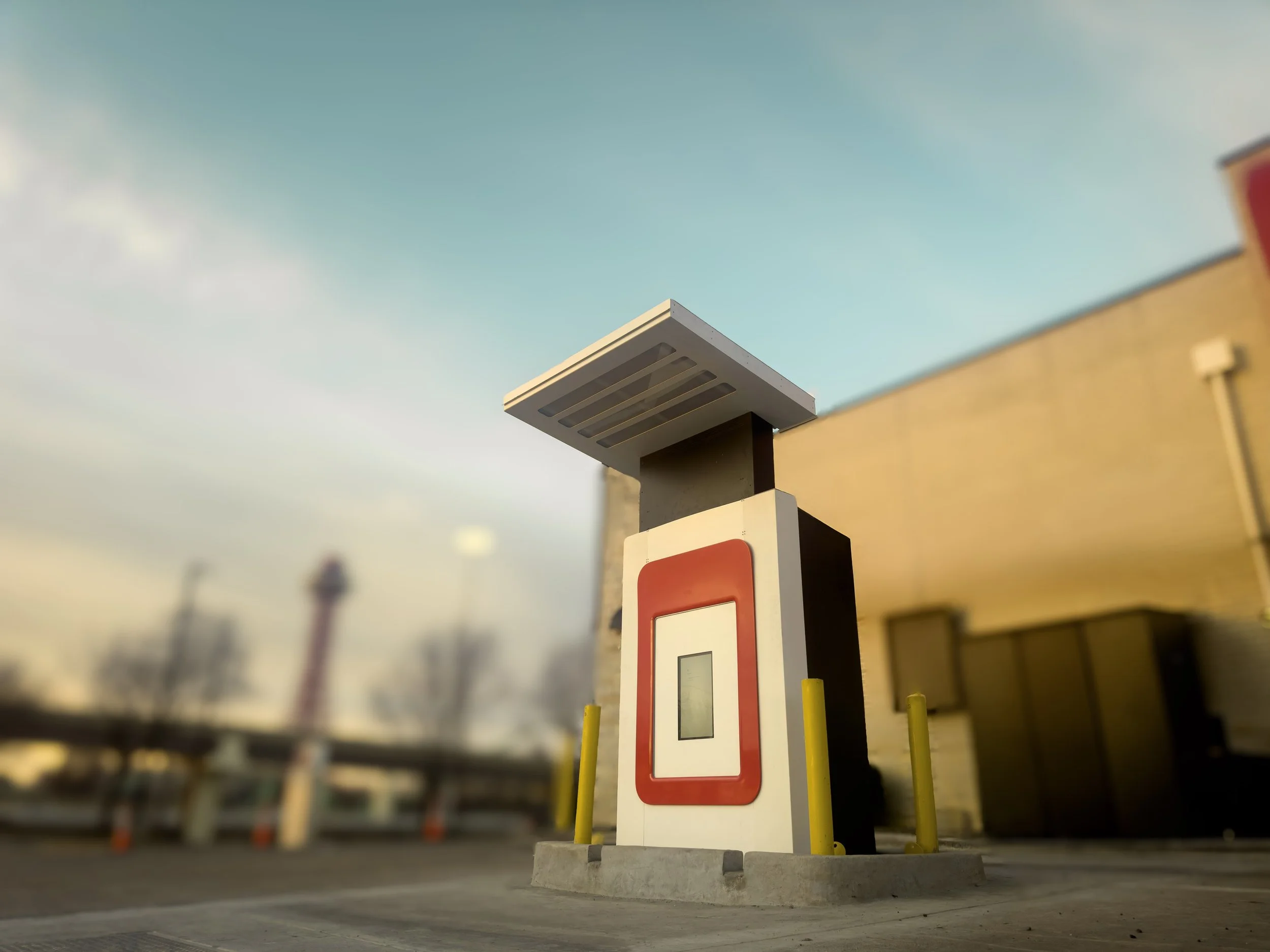
Pipedream is an autonomous underground delivery system. Robots achieve speeds over 60 mph and fit more than 95% of everyday goods using standard grocery totes. Portals allow drive-up pickup in 15 seconds or less. The network is installed underground like other utilities, protecting rails, robots, and orders.
- •Fully autonomous
- •Speeds in excess of 60 mph
- •Fits more than 95% of everyday goods using industry-standard grocery totes
- •Underground network, safe and permitted like other utilities
- •Pickup in 15 seconds or less
| Speed mph | 60 |
Technology stackOur read
Inferred from product specs — click through to the technology wiki:
ResearchComputed
Product comparisonComputed
Each row leads with this company's product, side-by-side with similar ones · click a row to expand full specs, click again to collapse
Pipedream - Autonomous Underground Delivery

ANYmal D Max
Lunar Rover R1
RB-VOGUI
Dobot M1

FarmBot | Open-Source CNC Farming
Company announcement
News and Media
The company's official social & video channels · external links
News
From third-party news outlets (China & abroad) · external links