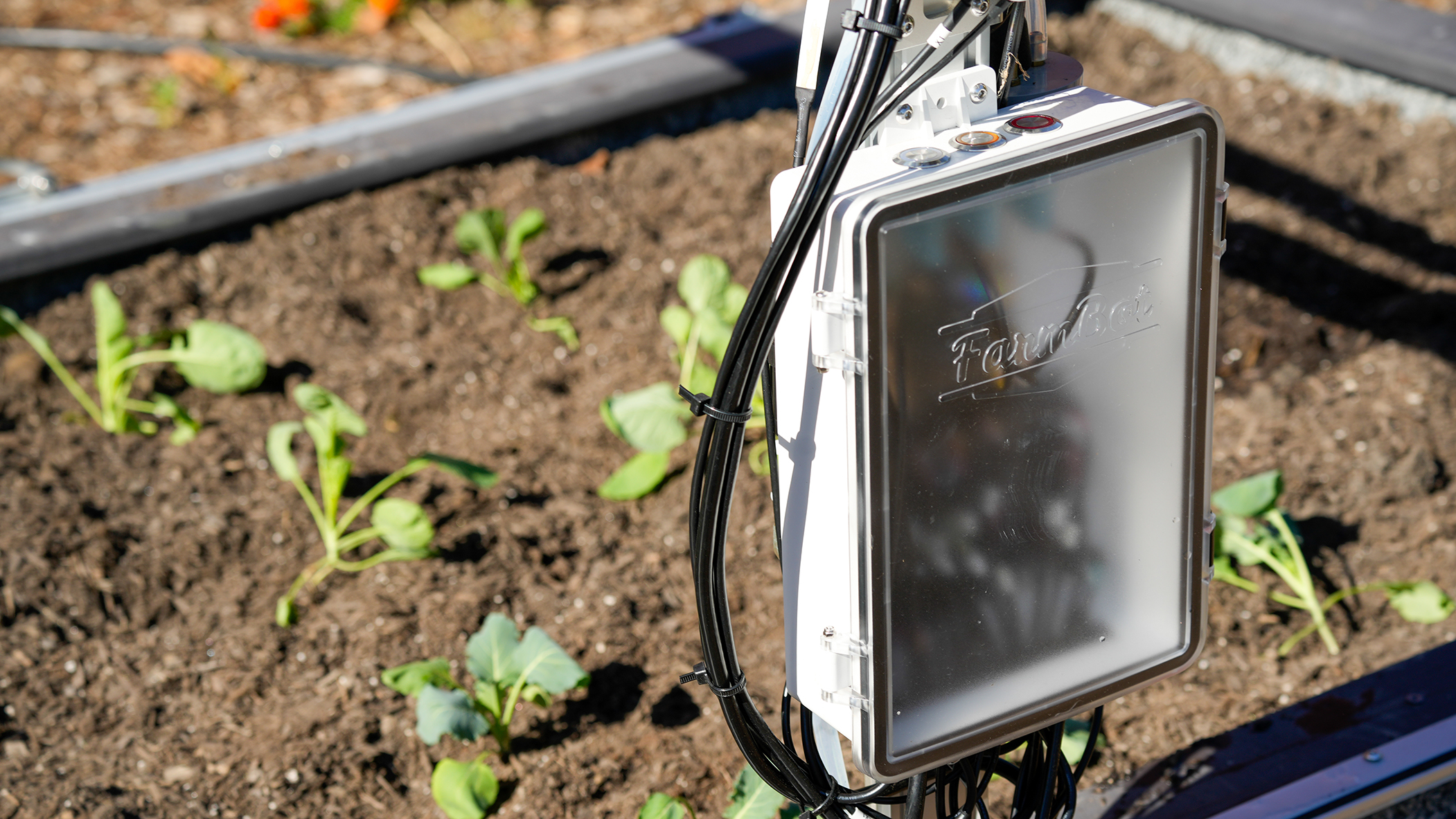
FarmBot
US · farm.bot
SnapshotCompany claim
FarmBot offers Genesis and Genesis XL v1.8 farming systems. Contact available for inquiries with 2-3 business day response time.
- Founded
- Not disclosed
- HQ
- US
- Models
- 134
- Categories
- 3
ContactCompany claim
- Address
- Not disclosed
Product families
Is this your company? Claim this profile to add verified data, respond to our analysis, and upgrade claims to Verified.
Claim this profile1. Executive Overview {#executive-overview}
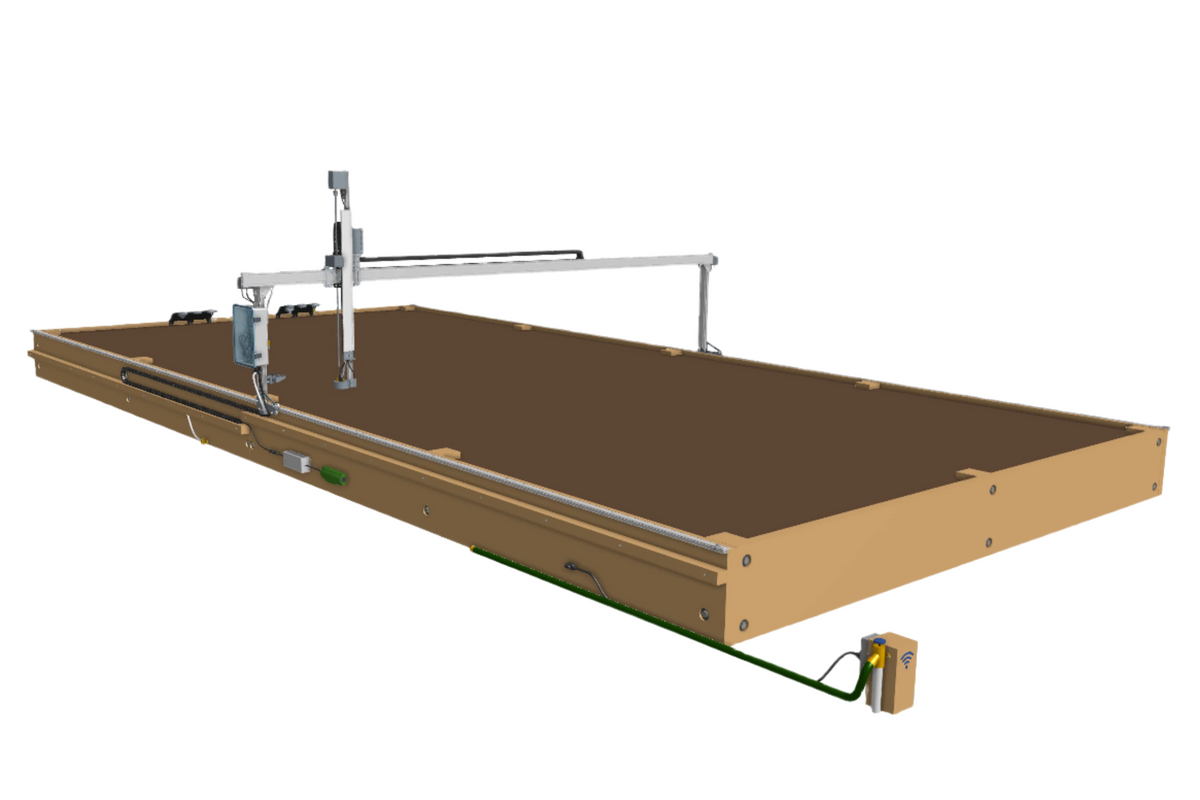
FarmBot is a US-based company that designs, manufactures, and sells open-source, CNC-style robotic farming systems. Its flagship products — the Genesis v1.8 and Genesis XL v1.8 — are precision-controlled outdoor farming robots that automate seeding, watering, weeding, and soil sensing over raised-bed growing areas. The Genesis covers a 1.5 m × 3 m footprint; the Genesis XL expands that to 3 m × 6 m, enough, the company claims, to grow vegetables for a family of four. Both systems arrive 90% pre-assembled, mount onto existing raised beds, and are controlled through a free web application at my.farm.bot.
The company has attracted independent validation from credible institutional and media outlets. Georgia Tech's News Center has covered FarmBot in the context of AI and agriculture. The Palo Alto City Library deployed a unit, confirming real-world institutional adoption. MatterHackers, a respected hardware and fabrication publication, profiled the platform as an open-source CNC farming robot. The K-12 educational product listing states that over 500 schools use FarmBot — a company claim — to teach STEM subjects including plant science, coding, electronics, and mechanical engineering.
Pricing ranges from $5,995 (Genesis v1.8) to $7,995 (Genesis XL v1.8). The company sells through its own Shopify-powered e-commerce storefront at farm.bot, accepting major payment networks, and provides supporting procurement documents (W-9, Sole Supplier Notice, Bank Statement) for institutional purchasers — a signal that schools and public organizations form a meaningful part of the customer base. The founding date is not publicly disclosed.
Latest news
- KEENON Humanoid Pours Drinks at GCS 2026, 100,000 Others Run HotelsYanko Design·2026-06-15GENERAL
2. The Company Story {#the-company-story}
FarmBot operates from the United States (domain: farm.bot; contact: contact@farm.bot) as a direct-to-consumer and institutional seller of open-source robotic farming hardware. The founding date is not disclosed in publicly available materials. Based on the product catalog, the company's version history traces back at least to Genesis v1.2, with iterative hardware releases progressing through v1.3, v1.4, v1.5, v1.6, v1.7, and the current v1.8 — suggesting a multi-year development arc and a disciplined release cadence.
The product architecture reveals a company that has consistently built on an open-source philosophy: open hardware, open software (FarmBot OS on Raspberry Pi), and openly documented assembly. The availability of garage-sale clearance items from earlier versions (v1.2 through v1.7) in the store is consistent with a company that retains continuity of parts supply across generations while moving the main product line forward.
Positioning-wise, FarmBot sits at the intersection of precision agriculture, consumer hardware, and STEM education. The company has leaned into institutional sales channels — its store offers W-9 forms, Sole Supplier Notices, and Bank Statements for public institution procurement — and its K-12 education product signals an intentional market expansion beyond prosumer hobbyists toward schools, universities, and research facilities. Georgia Tech's press coverage referencing "AI and agriculture" in the context of FarmBot points toward a positioning that resonates within academic and research communities.
3. Product Portfolio {#product-portfolio}
Products & versions



FarmBot's catalog of 134 listed products organizes into three broad tiers. The first is complete systems: the Genesis v1.8 ($5,995) and Genesis XL v1.8 ($7,995), which are the primary revenue-generating products. These are shipped as near-complete kits covering 1.5 m × 3 m and 3 m × 6 m growing areas respectively, featuring NEMA 17 stepper motors with rotary encoders, IP67-rated electronics, Raspberry Pi 4 compute, a custom Farmduino control board, and a suite of pre-assembled tools (seeder, watering nozzle, weeder, rotary tool, and soil sensor).
The second tier is upgrade kits and electronics: the v1.6 Upgrade Kit ($475–$495), the v1.7 Electronics Box ($495), Farmduino boards (v1.7+ at $345; Farmduino Express v1.1 at $145), power supplies, and motor kits. These serve existing users upgrading older units (v1.3 through v1.7) and reflect a long-tail aftersales model. The third tier is an extensive spare parts and components catalog — structural extrusions, V-wheels, GT2 timing belts, cable carriers, fasteners, tubing, magnets, sensors, and cables — that supports both self-repair and DIY builders. A small educational product (K-12 program) and gift cards round out the offering. The garage-sale clearance section (legacy v1.2–v1.3 components sold as-is) indicates active inventory management across hardware generations.
4. Technology Stack {#technology-stack}
FarmBot's technology stack is well-documented through its product specifications and component listings. At the compute level, Genesis systems run a Raspberry Pi 4 (1 GB or 2 GB) executing FarmBot OS, communicating with the web application at my.farm.bot over Wi-Fi or Ethernet. Express systems use the lower-power Raspberry Pi Zero 2 W. Both connect to the custom Farmduino microcontroller board via USB serial.
The Farmduino is a purpose-built control board based on the Arduino MEGA 2560 microcontroller with an STM32 co-processor (v1.7+). It integrates five Trinamic TMC2130 stepper drivers — a driver known in the motion-control industry for quiet operation and stall-detection capability — operating at 24 V. The fifth driver is dedicated to the Rotary Tool with stall detection. Earlier Farmduino Express v1.1 uses four TMC2130 drivers. Our read: the choice of TMC2130 drivers suggests FarmBot prioritizes low-vibration, high-reliability motion over raw speed — sensible for a precision garden application.
Motion is achieved via four NEMA 17 stepper motors with rotary encoders on the Genesis platform, driving GT2 timing belts (X and Y axes) and an 8 mm stainless steel Tr8×8-2p leadscrew (Z axis), riding on precision-machined polycarbonate V-wheels along 6063-T5 aluminum extrusions. The UTM (Universal Tool Mount) uses 12 gold-plated pogo pins for electrical contact and 3 neodymium ring magnets for tool attachment, with three brass barbs and O-rings for liquid/gas transfer — an elegant quick-change tooling system. Our read: the magnetic + pogo-pin UTM design is a key differentiator enabling tool-agnostic automation without active clamping mechanisms.
The software layer includes a web-based interface (my.farm.bot), computer vision for weed detection and plant tracking via a z-axis-mounted waterproof USB camera, and a capacitive soil moisture sensor with analog output. The camera system requires calibration objects (sold separately) for pixel-to-coordinate conversion. A Pi Adapter Board with real-time clock (RTC) enables offline timekeeping and connects push buttons and LED indicators. Limited public technical detail exists on the FarmBot OS codebase internals or cloud infrastructure beyond what the product listings reveal.
5. Research, Papers, Authors, Labs {#research-papers}
Company-linked papers
FarmBot does not appear to operate as a research-publishing organization. No academic papers, lab affiliations, or named research authors are referenced in the company's own site data. This is consistent with its identity as a commercial hardware company rather than an R&D institution. Notably, Georgia Tech's News Center has independently published coverage connecting FarmBot to themes of AI and agriculture — suggesting the platform is used as a research and educational instrument by third-party institutions — but any resulting publications would be those institutions' own work, not FarmBot's. If FarmBot has internal research output or academic collaborations, that information is not yet disclosed publicly.
6. Media Evidence {#media-evidence}
Media library
Three named independent outlets have covered FarmBot based on the available data. Georgia Tech News Center (news.gatech.edu) published a piece framing FarmBot within the context of AI and agriculture — institutional-level validation from a major research university. MatterHackers (matterhackers.com) profiled FarmBot as "The Open Source, CNC Farming Robot," reaching an audience of hardware builders and digital fabrication professionals. Palo Alto City Library (library.cityofpaloalto.org) published a March 2022 post confirming a working FarmBot deployment at the library — concrete evidence of real-world institutional adoption outside academia. These three placements span education, research, and maker/fabrication verticals, consistent with FarmBot's multi-segment positioning.
7. Commercial Reality {#commercial-reality}
Customers & deployments
Revenue, total units sold, customer count, and ROI figures are not disclosed in any publicly available FarmBot materials. These metrics should be treated as Not disclosed. FarmBot is invited to claim or submit verified figures for inclusion in this profile.
What the available data does support: the company operates a live direct-to-consumer e-commerce store with active inventory across 134 product lines; it offers formal procurement documentation (W-9, Sole Supplier Notice, Bank Statement) indicating recurring institutional sales to schools, universities, and public organizations; the K-12 product listing carries a company claim of over 500 schools using FarmBot; and the Palo Alto City Library deployment provides one independently verified institutional installation. Gift cards available from $100 to $4,000 suggest a gifting-occasion market segment. Several product lines are marked "Sold out," which may indicate demand exceeding supply or deliberate inventory management — the distinction is not discernible from available data alone. Our read: the combination of institutional procurement documents, a multi-generation product line spanning v1.2 through v1.8, and named press coverage from a public library suggests a company with genuine, sustained commercial activity rather than a concept-stage operation.
8. Markets and Use Cases {#markets-use-cases}
FarmBot's product use-case tags and industry classifications, taken together with product descriptions, point to four primary market segments.
Residential and home gardening is the baseline market: Genesis v1.8 is described as targeting "prosumers and enthusiasts," and the Genesis XL v1.8 explicitly names home installations among its intended environments. The 1.5 m × 3 m and 3 m × 6 m form factors are sized for backyard raised beds.
Food service and farm-to-fork is an explicitly named use case in the Genesis XL product description, which calls out "farm-to-fork restaurants" as a target customer. The ability to automate seeding, watering, weeding, and soil sensing in a compact outdoor footprint serves restaurants seeking a local fresh-produce supply.
Education (K-12 through university) is a distinct and actively marketed segment. A dedicated K-12 product entry describes FarmBot as teaching plant science, coding, electronics, mechanical engineering, and sustainability, with curriculum aligned to Common Core and NGSS standards. The company claim of 500+ school deployments, Georgia Tech's coverage, and the availability of institutional procurement documents all reinforce this segment's importance.
Research and commercial facilities round out the addressable market. Universities are named in the Genesis XL description, and the Georgia Tech press coverage positions FarmBot within AI-and-agriculture research contexts. The open-source hardware and software architecture makes FarmBot an accessible research instrument for precision agriculture studies.
Functionally, the platform automates: precision seeding (vacuum pump + interchangeable luer lock needles in 16, 19, and 22 gauge); targeted watering (solenoid valve + pressure regulator + nozzle delivering a gentle shower pattern); mechanical weeding (blade-based weeder with narrow, medium, and wide blade options; rotary tool for weed whacking and soil milling); soil sensing (capacitive moisture sensor with analog output); and computer vision (weed detection, plant growth tracking via z-axis camera).
9. Competitive Landscape {#competitive-landscape}
Competitive comparison
| Robot | Maker | Autonomy | Conf. |
|---|---|---|---|
| iRobot Roomba Combo 10 Max | iRobot | Autonomous | 0.90 |
| Mobile ALOHA (Stanford) | Stanford University | Teleoperated | 0.90 |
| 1X NEO | 1X Technologies | Remote-Assisted | 0.90 |
FarmBot occupies a distinct niche within the broader agricultural robotics and precision farming automation market: a consumer- and prosumer-accessible, open-source, CNC-gantry-style outdoor farming robot priced between $5,995 and $7,995. Most commercial agricultural robots target large-scale row-crop or greenhouse operations at enterprise price points well above this range, while most sub-$1,000 garden automation products lack precision CNC motion control, computer vision, or multi-tool capability.
Our read: FarmBot's strongest moat is the combination of open-source software and hardware with a mature, multi-generational product line and an established educational channel. Companies competing on price in the garden automation segment typically lack the precision motion control; companies competing on precision typically target commercial agriculture at higher price points. The module above provides same-category peer context.
10. Country Advantage / Geopolitical {#geopolitical}
Section not material for this company.
11. Hype vs Real vs Ugly {#hype-real-ugly}
Claim tracker
Verified / independently supported:
- FarmBot systems have been deployed at the Palo Alto City Library (independently reported, 2022) — real-world institutional validation.
- Georgia Tech News Center independently covered FarmBot in the context of AI and agriculture — third-party editorial endorsement.
- MatterHackers independently profiled the platform — third-party technical validation.
- Product specifications (motor types, IP ratings, dimensions, materials) are publicly documented and internally consistent across the catalog.
Company claims (labeled as such, not independently verified here):
- "Over 500 schools use FarmBot" — company claim from the K-12 product listing. Plausible given institutional procurement infrastructure, but not independently verified in the available data.
- Genesis XL v1.8 "grows enough vegetables for a family of four" — company claim. Dependent on crop selection, climate, and operational continuity; not independently verified.
- "Installs in an afternoon" (Genesis v1.8) — company claim regarding assembly time. The 90% pre-assembly specification is documented; the "afternoon" timeline is an unverified convenience claim.
- IP67 rainproof rating for power supply and electronics enclosure — specified in product listings as a company claim; standard industry rating with defined test criteria, but third-party certification documentation is not publicly linked.
Fixable gaps:
- Not yet disclosed: total units sold, revenue, or verified customer count. FarmBot is invited to claim or submit this data.
- Not yet disclosed: third-party IP67 certification documentation for electronics components. FarmBot is invited to link or provide test reports.
- Not yet disclosed: outcome data on the 500+ school deployments (student outcomes, uptime, curriculum adoption rates). FarmBot is invited to publish or share this data.
12. Future Scenarios {#future-scenarios}
Bull case — Our read: FarmBot scales its institutional education channel beyond 500 schools as precision agriculture and food literacy enter mainstream K-12 curricula. The open-source model attracts a developer ecosystem that extends software capability (AI-driven plant identification, automated replanting schedules), increasing platform stickiness. The v1.8 generation's 90% pre-assembly and refined hardware reduce support burden and expand the addressable prosumer market. Restaurant and commercial facility deployments grow as farm-to-fork trends and food security concerns intensify.
Base case — Our read: FarmBot continues as a well-regarded, commercially sustainable niche hardware company serving prosumers, K-12/university educators, and researchers. Version cadence continues at roughly one major revision per 12–18 months. Revenue is stable and driven by a mix of complete system sales, institutional orders, and aftermarket parts. The open-source moat keeps the platform relevant to educators and researchers even as larger agricultural robotics companies expand into adjacent segments.
Bear case — Our read: Hardware unit economics remain challenging at sub-$8,000 price points, particularly if component costs rise or logistics costs increase. If a well-capitalized competitor enters the prosumer precision garden robot segment at a lower price point, FarmBot's addressable market compresses. Dependence on a direct-to-consumer e-commerce model without distributor or retail partnerships could limit geographic reach. Several product lines marked "Sold out" in the current catalog — if these reflect supply constraints rather than inventory management — could signal fulfillment risk.
13. What to Watch {#what-to-watch}
- Genesis v1.9 / next hardware generation: monitor farm.bot and the company's open-source repositories for version announcements; hardware iteration cadence is the primary product signal.
- K-12 and university channel growth: watch for updates to the "500+ schools" claim or new named institutional partnerships — the education segment appears to be the most scalable channel.
- Software and AI capability expansion: the existing camera + weed detection stack is a foundation; any announced expansion into AI-driven crop management, automated replanting, or third-party software integrations would materially change the platform's competitive position.
- Availability of sold-out product lines: several core components (Genesis Weeder, Soil Sensor, Seeder, Gantry Main Beam, Tracks) are currently sold out; restocking patterns signal manufacturing cadence and supply chain health.
- Pricing and new market tiers: whether FarmBot introduces a lower-cost entry-level system (below $5,995) or a higher-end commercial-scale system (beyond the XL's 3 m × 6 m) would signal strategic market expansion.
- Third-party press and research citations: additional institutional deployments or academic papers citing FarmBot hardware would validate the research-instrument positioning.
- Upgrade kit availability: the v1.6 Upgrade Kit is sold out; watch for v1.8-generation upgrade availability as an indicator of aftersales revenue strategy.
14. Sources & Methodology {#sources-methodology}
Primary source: All factual claims in this report are grounded exclusively in data extracted from FarmBot's own website (farm.bot), including product listings, product descriptions, key feature sets, specifications, and the company's About/Contact page content. All such information is treated as company-claim provenance — self-reported and not independently audited.
Third-party press: Three independent media citations are used as external validation: Georgia Tech News Center (news.gatech.edu), MatterHackers (matterhackers.com), and Palo Alto City Library (library.cityofpaloalto.org, 2022-03-29). These are cited only for the claims made in their headlines/descriptions as provided; no inference is drawn beyond what those sources explicitly state.
Computed relations: Product category groupings, market segment inferences, and technology stack inferences are derived analytically from the product data. All such inferences are labeled "Our read:" in the report.
Rubric applied uniformly to every company profiled:
- No fact is asserted without a traceable source in the input data.
- Negative observations are expressed only as fixable gaps, labeled inferences, or labeled company claims — never as unsourced negative statements of fact.
- Sections lead with verified strengths before addressing gaps.
- Company claims are explicitly labeled as such throughout.
- Revenue, customer counts, and financial metrics default to "Not disclosed" absent verified data.
- All live data modules are preserved as specified; prose in those sections is kept summary-level.
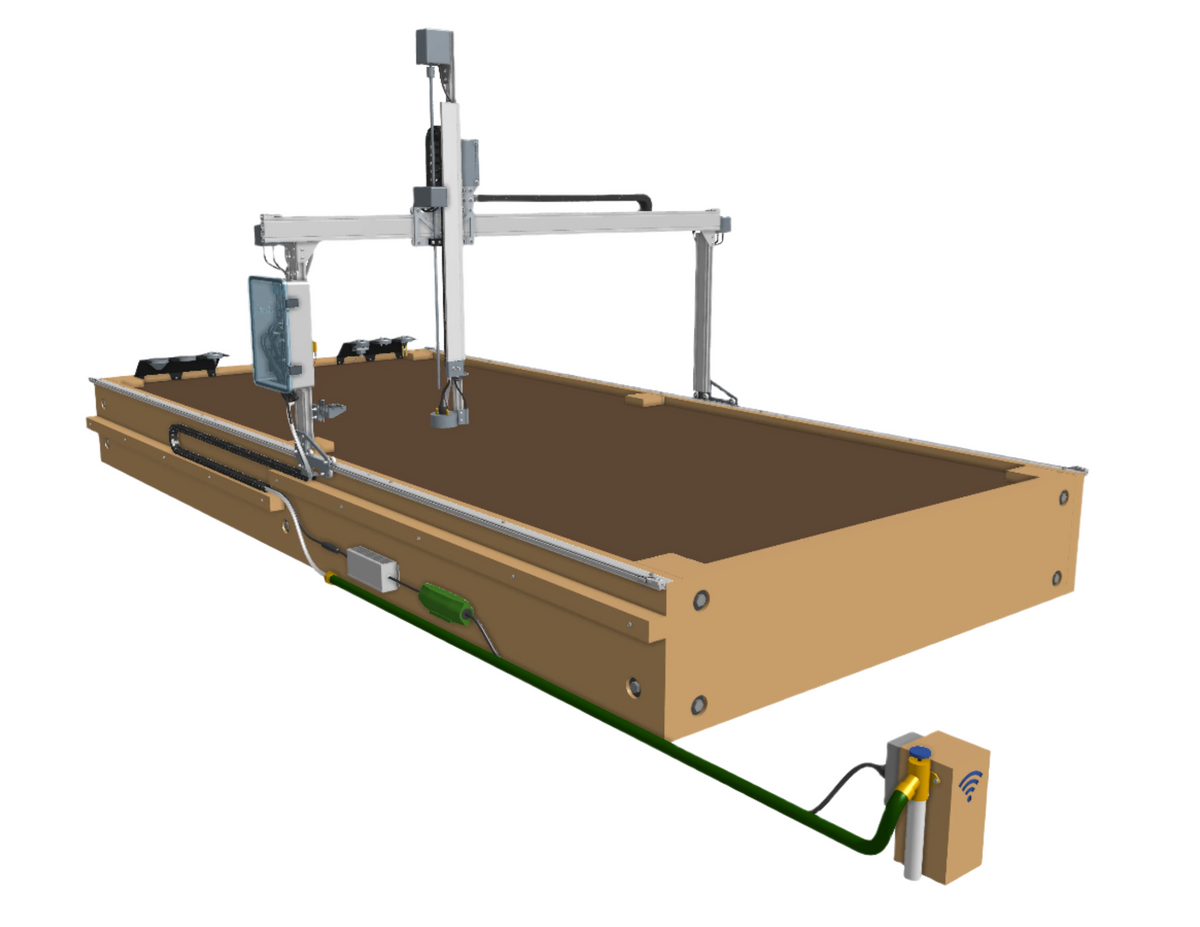
FarmBot Genesis v1.8
OutdoorFarmBot Genesis v1.8 is a flagship automated farming kit for prosumers and enthusiasts. Features 90% pre-assembly, aluminum extrusions, IP67 rainproof components, precision stepper motors, and integrated tools for seeding, watering, and soil sensing. Installs on existing raised beds. Controlled via free web application.
- •90% pre-assembled out of box, installs in an afternoon
- •Aluminum extrusions with semi-translucent cable carriers for professional appearance
- •Four NEMA 17 stepper motors with rotary encoders for precision positioning
- •IP67 rainproof power supply and electronics enclosure
- •Pre-assembled seed injector, watering nozzle, soil sensor, and rotary tools
- •Vacuum pump system for seed injection
- •USB rainproof camera with mount
- •Free web application control at my.farm.bot
- •100% open-source hardware and software
- •Suitable for fixed or mobile raised beds
| Nema | 17 |
| Width | 1500 mm |
| Height | 750 mm |
| Length | 3000 mm |
| Height max (mm) | 1500 |
| Leadscrew (mm) | 8 |
| Stepper_motors | 4 |
| Max plant height (mm) | 500 |
| Power cord length (cm) | 30 |
| Power supply input (v) | 110-220 |
| Water connection (inch) | 0.75 |
Use cases
Technology stackOur read
Inferred from product specs — click through to the technology wiki:
ResearchComputed
Product comparisonComputed
Each row leads with this company's product, side-by-side with similar ones · click a row to expand full specs, click again to collapse
FarmBot Genesis v1.8

ANYmal D Max
Lunar Rover R1
RB-VOGUI
Dobot M1
FarmBot | Open-Source CNC Farming
FarmBot Genesis XL v1.8
ANYmal X
Lunar Rover R1
RB-VOGUI
Dobot M1
FarmBot | Open-Source CNC Farming
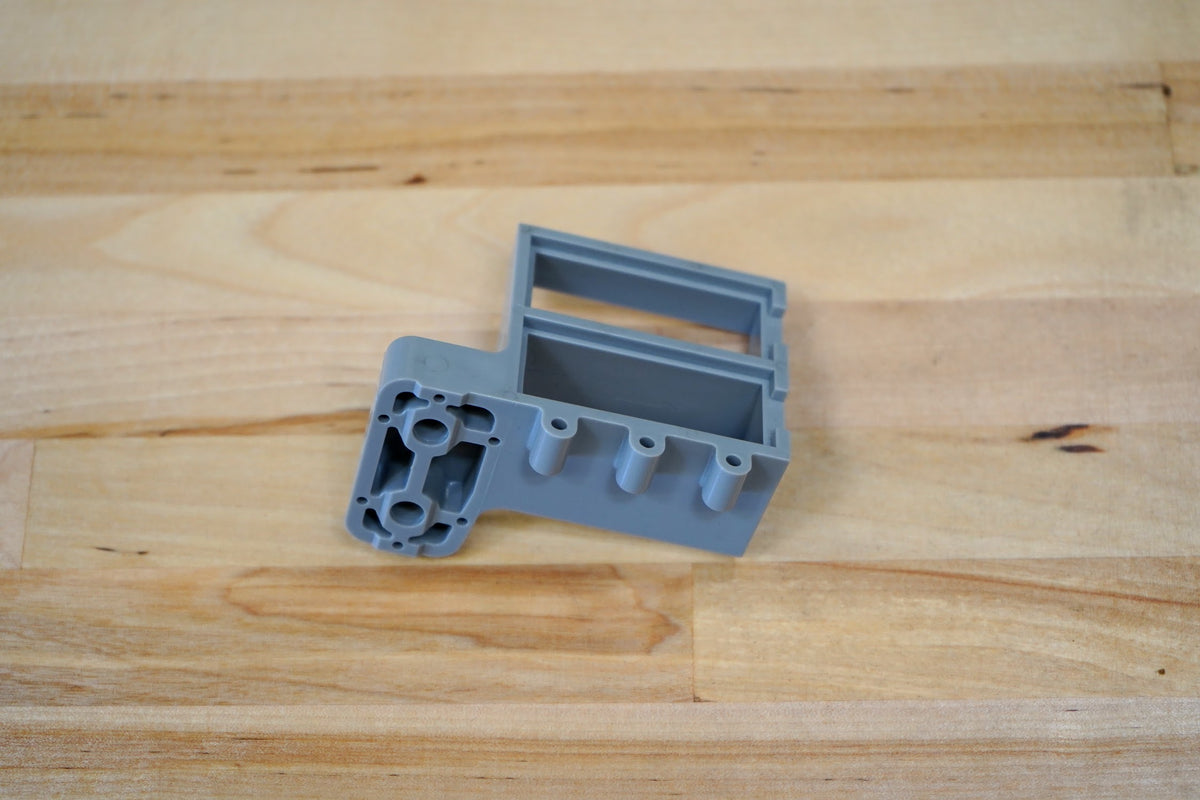
Gantry-Mounted Seed Troughs and Holder
Lunar Rover R1
ANYmal Research
RB-VOGUI
Dobot M1
FarmBot | Open-Source CNC Farming
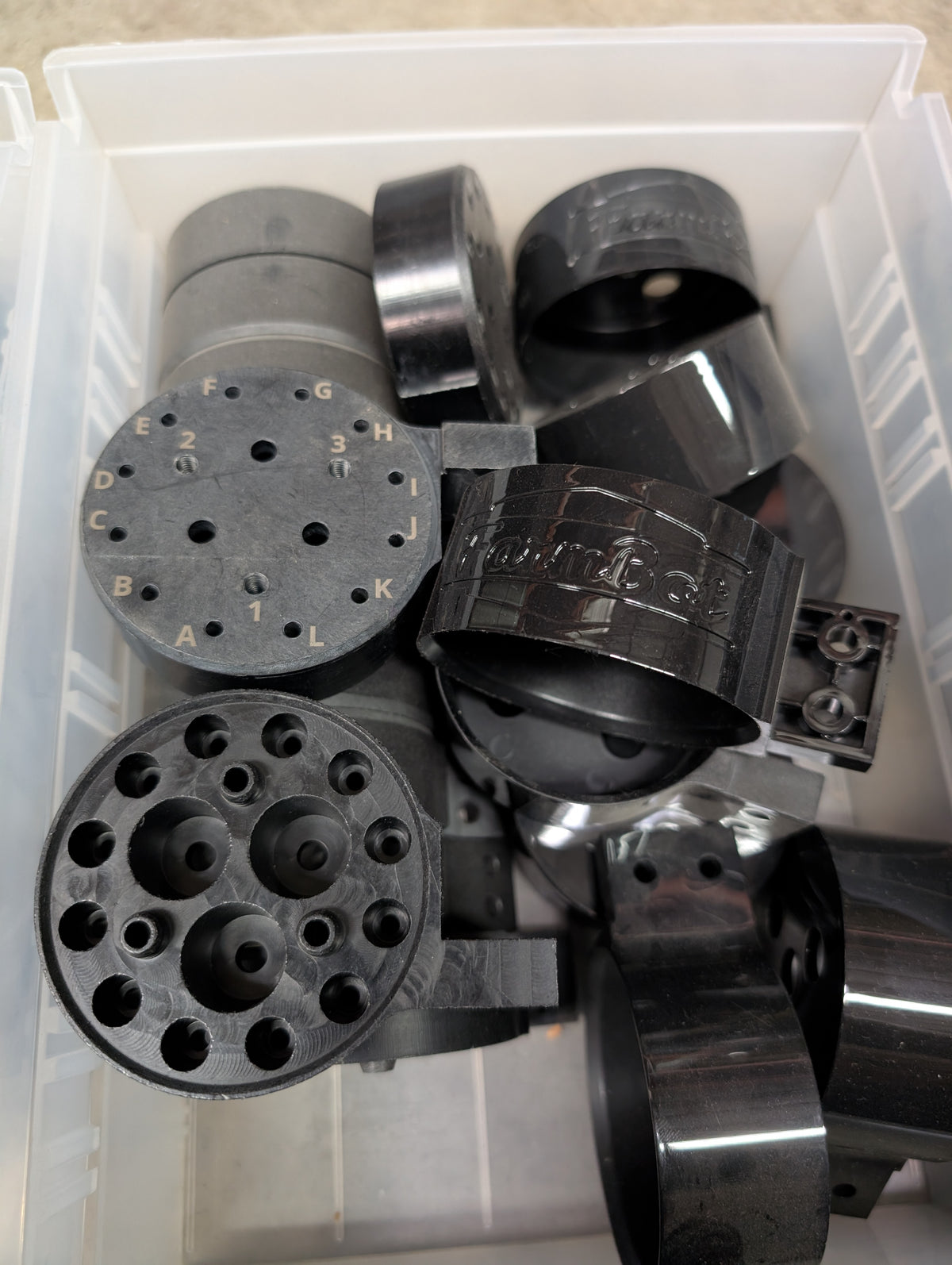
Genesis v1.3 Black UTM and Cover
ANYmal Research
RB-VOGUI
Dobot M1
FarmBot | Open-Source CNC Farming

Kress EyePilot® 4×4 RTK
Genesis Watering Nozzle (Pre-Assembled)
RB-VOGUI
Dobot M1
ANYmal D Enterprise
FarmBot | Open-Source CNC Farming
Kress EyePilot® 4×4 RTK
Genesis Weeder (Pre-Assembled)
Dobot M1
ANYmal D Enterprise
FarmBot | Open-Source CNC Farming
Kress EyePilot® 4×4 RTK
FarmDroid FD20 | Autonomous Farming Robot for Precision Agriculture
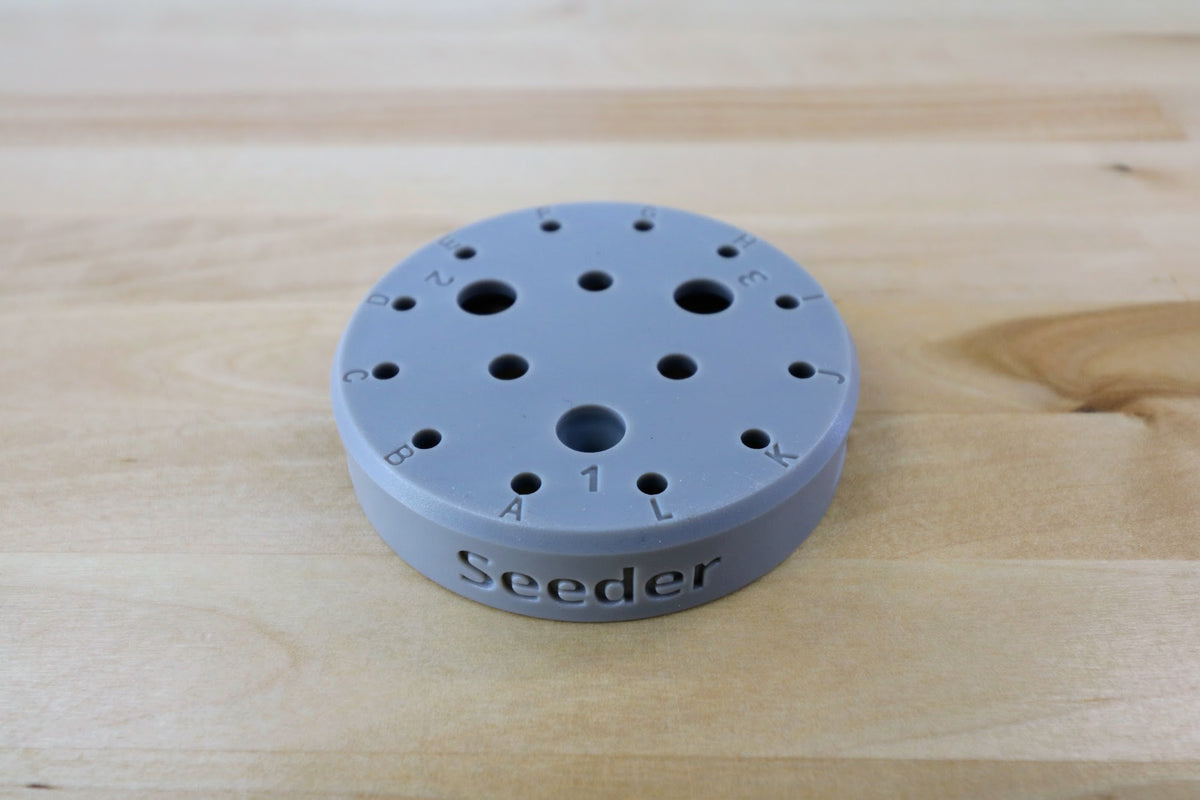
Seeder
ANYmal D Enterprise
FarmBot | Open-Source CNC Farming
Kress EyePilot® 4×4 RTK
FarmDroid FD20 | Autonomous Farming Robot for Precision Agriculture
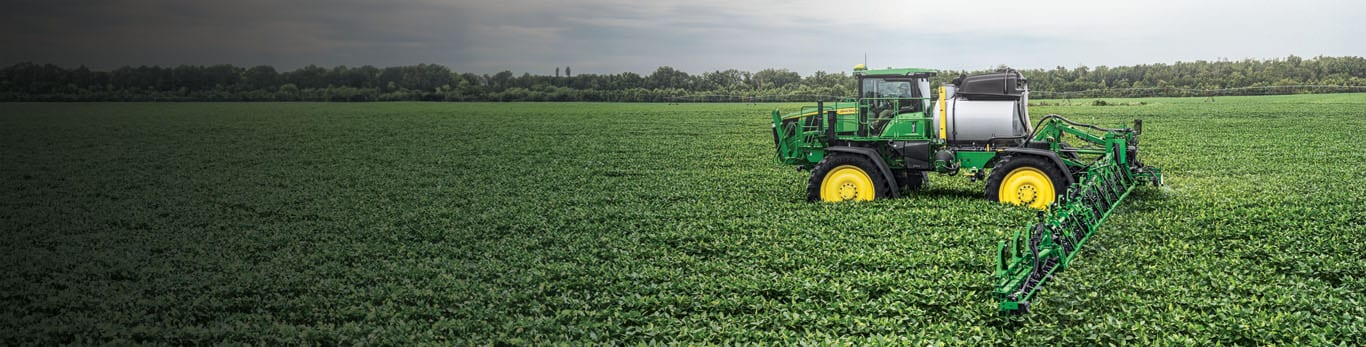
John Deere See & Spray Robot
Company announcement
News and Media
The company's official social & video channels · external links
News
From third-party news outlets (China & abroad) · external links