Nordic Unmanned
Founded 2014 · Norway · nordicunmanned.com
SnapshotCompany claim
Nordic Unmanned is a European service company founded in 2014 that provides real-time critical and actionable insights to large corporate and governmental customers in the unmanned drone space across all sectors.
- Founded
- 2014
- HQ
- Norway
- Models
- 12
- Categories
- 3
ContactCompany claim
- Address
- Not disclosed
Product families
Is this your company? Claim this profile to add verified data, respond to our analysis, and upgrade claims to Verified.
Claim this profile1. Executive Overview {#executive-overview}
Nordic Unmanned (NU) is a Norwegian drone services company founded in 2014 and operating across Europe and beyond. Over the past decade it has built a reputation as a specialist provider of real-time, actionable intelligence to large corporate and governmental clients — winning multi-million-euro framework contracts with the European Maritime Safety Agency (EMSA), framework agreements with Norwegian rail infrastructure manager Bane NOR, and milestone operational contracts with energy majors Equinor and Petrobras. The company's own milestone timeline, published on its website, documents a consistent cadence of contract wins from 2016 through 2024, underpinning its claim to be a leading European drone services operator.
Two data points stand out as independent validators of scale and operational maturity. First, Nordic Unmanned completed what it describes as the world's first cargo drone flight to an active offshore oil and gas installation — alongside Equinor — in 2020, an achievement that received coverage in the specialist press. Second, by 2024 the company had surpassed 10,000 flight hours under its Light UAS Operator Certificate (LUC), the first such certification issued in Scandinavia. Combined with ISO 9001:2015 and ISO 14001:2015 certifications, this positions NU as one of the more credentialed commercial drone operators in the EASA regulatory zone.
The company's product portfolio spans military-grade compact drones, payloads, gimbals, and ground control systems, with a consistent emphasis on rapid deployment, encrypted communications, and ruggedised form factors suited to demanding field environments.
Latest news
- KEENON Humanoid Pours Drinks at GCS 2026, 100,000 Others Run HotelsYanko Design·2026-06-15GENERAL
2. The Company Story {#the-company-story}
Nordic Unmanned was founded in 2014 in Norway, entering the drone services market at a time when commercial beyond-visual-line-of-sight (BVLOS) operations were still largely experimental and regulatory frameworks were immature. The company's positioning — focused on delivering "critical and actionable insights" to large corporate and governmental customers — reflects a deliberate choice to operate at the high-assurance end of the market, where safety management systems, certifications, and regulatory relationships matter as much as the hardware itself.
The early milestones tell a clear story of progressive credentialisation. In 2016, NU secured its first framework agreement with Bane NOR, Norway's state-owned railway infrastructure company, establishing the company as a serious emergency response and infrastructure inspection operator. In 2017 it achieved ISO 9001:2015 certification from DNV GL, one of the world's leading classification and certification bodies — a particularly meaningful validator given DNV GL's deep roots in Norwegian maritime and energy safety culture.
The 2018 wins with EMSA — covering both emission monitoring (OP10) and pollution response and maritime surveillance (OP12) — marked NU's emergence as a pan-European operator, bringing it into complex multinational operational environments. The 2019 R&D contract with the UK Ministry of Defence signalled further reach into the defence and security sector. The 2020 world-first cargo drone flight to an active Equinor oil and gas installation was a landmark moment, demonstrating that NU could execute genuinely novel operations in safety-critical industrial environments.
Subsequent years brought compounding contract value: a EUR 20 million fixed-wing drone system contract with EMSA (OP46) in 2021, a second Bane NOR framework, the Scandinavian-first LUC certification from CAA-Norway, and in 2022 a EUR 20.5 million VTOL RPAS services contract with EMSA (OP5) for multipurpose maritime surveillance. The 2022 investment in Belgian drone company DroneMatrix — reported by sUAS News — signalled a strategy of geographic and capability expansion within Europe. By 2024, NU had extended its offshore logistics operations to Brazil with Petrobras, adding a South American dimension to what had been a primarily European operational footprint, and crossed the 10,000 flight-hour threshold under its LUC.
3. Product Portfolio {#product-portfolio}
Products & versions


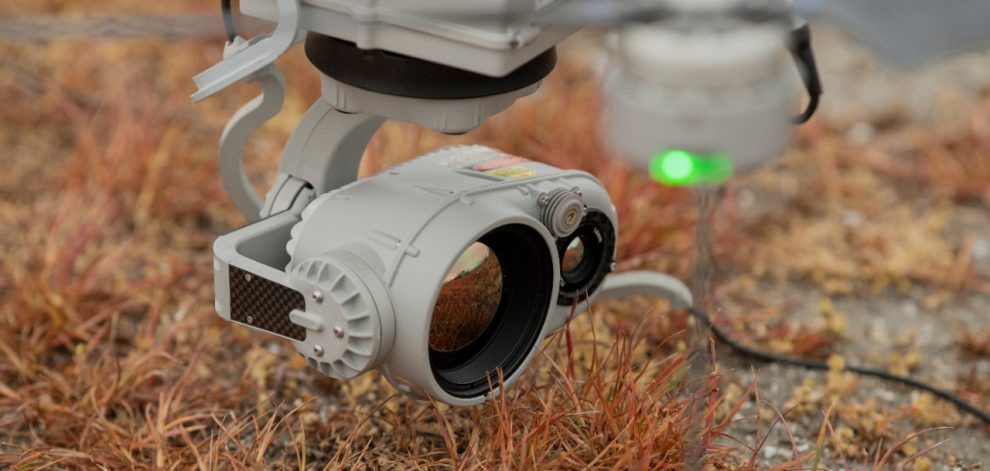
Nordic Unmanned's product lineup, as listed on its own site, comprises twelve distinct entries spanning airframes, payloads, gimbal systems, and ground control infrastructure. The airframes include the Aerial Robotic Work System, the Noctis-IR, and the Yeti — all sharing a common operational profile: field-ready in 1.5 minutes, backpack portable, glove compactable, military airworthiness certified, and equipped with AES-256 encrypted communications. The Noctis-IR carries a specified weight of 1.5 kg, indicating a compact, man-portable form factor suited to rapid tactical or emergency deployment. The AR100-H and the AR100-H Dual Micro Gimbal HD extend the platform family with a dual-camera HD configuration.
The payload and sensor tier includes a 40x Optical Zoom variant, the AR Heimdal Gimbal, and a generic Payloads category, suggesting the company offers a modular sensor stack that can be matched to mission requirements — EO/IR, optical zoom, and potentially others not yet disclosed in public-facing product data. The AR Digital Repeater addresses communications relay — a capability that becomes critical in beyond-line-of-sight maritime and offshore environments where the company has its most prominent operational track record. The GCS (Ground Control System) rounds out the lineup as the operator-side infrastructure. The Drop Payload and Yacob entries carry limited public specification detail.
Taken together, the portfolio is shaped around two complementary categories: compact, ruggedised tactical drones oriented toward defence, emergency response, and field operations; and a sensor/payload/GCS ecosystem designed to support persistent, data-intensive missions such as maritime surveillance, emissions monitoring, and offshore logistics. This dual orientation mirrors NU's customer base, which spans both governmental/defence and large industrial energy clients.
4. Technology Stack {#technology-stack}
The most concrete public technical data points for Nordic Unmanned's platform are: AES-256 encrypted communications across all named airframes; a 1.5-minute field-ready deployment time; military airworthiness certification for the core drone family; a 1.5 kg weight specification for the Noctis-IR; and a 40x optical zoom payload capability. The AR Digital Repeater indicates the company operates relay architectures for extended-range or obstructed-signal environments — a technically meaningful capability for maritime and offshore work.
Our read: The combination of military airworthiness certification, AES-256 encryption, and sub-two-minute deployment times suggests the core airframe family is designed to meet or closely approach defence procurement standards, not merely commercial safety baselines. This would be consistent with the company's 2019 UK MOD R&D contract and positions these platforms above typical commercial-grade drone products in terms of assurance requirements.
Our read: The presence of a dedicated Digital Repeater in the lineup implies NU operates, or designs for, missions where a single ground-control-to-aircraft link is insufficient — such as BVLOS maritime surveillance legs extending beyond radio horizon. This is technically consistent with the EMSA maritime surveillance contracts, which by their nature require extended-range datalinks over open water.
Our read: The LUC certification from CAA-Norway, recognised across all EASA member states, functions as a regulatory technology asset — it enables NU to self-approve operations within granted privileges, substantially compressing the lead time for new mission approvals. For a company operating across multiple European jurisdictions simultaneously, this is a meaningful operational differentiator.
A patent application related to a coaxial configuration was reported by sUAS News in June 2022, suggesting internal R&D activity on airframe design — though the full scope, status, and specifications of that patent are not disclosed in the data available to this report.
Not yet disclosed: Detailed propulsion specifications, endurance figures, operating altitude ranges, sensor integration protocols, or software/autonomy stack details for any listed platform. Nordic Unmanned is invited to claim or correct this section with verified technical documentation.
5. Research, Papers, Authors, Labs {#research-papers}
Company-linked papers
Nordic Unmanned is primarily a drone services and operations company, not a research-publishing organisation. No academic papers, preprints, or named research authors appear in the public data available for this report. The 2019 UK MOD R&D contract and the 2022 coaxial configuration patent filing (reported by sUAS News) indicate engagement with applied research and intellectual property development, but no published scientific output is documented here. This is consistent with the profile of most commercial drone services operators, whose differentiation lies in operational capability and regulatory standing rather than academic publication.
6. Media Evidence {#media-evidence}
Media library
Third-party press coverage identified in the data includes: a May 2022 article in sUAS News reporting Nordic Unmanned's investment in Belgian drone company DroneMatrix; a June 2022 article in sUAS News reporting a coaxial configuration patent filing by Nordic Unmanned; and an aggregated company profile and news resource page on Robotics 24/7. These represent specialist trade press coverage rather than mainstream business or consumer media, which is appropriate for a B2G/B2B operator in a technical niche. The sUAS News citations in particular represent independent validation of two discrete corporate events — a strategic investment and a patent — neither of which is solely dependent on company-issued communications.
7. Commercial Reality {#commercial-reality}
Customers & deployments
Nordic Unmanned's publicly documented contract record provides the clearest available proxy for commercial scale. Named clients and contracts (all sourced from the company's own milestone timeline, and therefore company-claims) include: Bane NOR (two framework agreements, from 2016 and 2021); EMSA (four distinct framework contracts: OP10 emission monitoring 2018, OP12 pollution response and maritime surveillance 2018, OP46 fixed-wing drone systems EUR 20 million 2021, and OP5 VTOL RPAS maritime surveillance EUR 20.5 million 2022); UK Ministry of Defence (R&D contract 2019); Equinor (offshore cargo drone operations from 2020, logistics operations from 2022); and Petrobras (offshore drone logistics operations in Brazil 2024).
The cumulative contract value disclosed across the EMSA awards alone exceeds EUR 40 million across the OP46 and OP5 contracts, with additional undisclosed values for the earlier OP10 and OP12 frameworks. These figures are company-disclosed contract awards, not independently audited revenue.
Not disclosed: Annual revenue, EBITDA, headcount, total fleet size, or detailed customer ROI metrics. Nordic Unmanned is invited to claim or disclose verified financial or operational data for inclusion in this report.
8. Markets and Use Cases {#markets-use-cases}
Nordic Unmanned's operational history and product lineup point to four primary market verticals, all inferable from the company's own documented contract and milestone record.
Maritime surveillance and pollution response is the company's largest documented revenue vertical by disclosed contract value. The EMSA frameworks — covering emission monitoring, pollution response, and multipurpose maritime surveillance with medium range and endurance VTOL platforms — represent sustained multi-year, multi-contract engagement with one of Europe's principal maritime safety authorities. These missions require persistent wide-area coverage, sensor versatility (optical, IR, potentially gas detection for emissions), and the ability to operate in challenging North Sea and Atlantic weather conditions.
Offshore energy logistics and inspection is the second major vertical, exemplified by the Equinor partnership beginning with the 2020 world-first cargo drone flight to an active oil and gas installation and maturing into routine logistics operations by 2022, with the model subsequently replicated with Petrobras in Brazil in 2024. Offshore drone logistics — delivering parts, samples, or documents to platforms that would otherwise require costly helicopter trips — represents a commercially significant use case with strong ROI potential for operators and clients alike.
Railway and critical infrastructure inspection is evidenced by the two Bane NOR framework agreements, the first won in 2016 on an emergency response brief. Railway infrastructure inspection via drone reduces the need for track possessions and human exposure to live rail environments, a well-established commercial use case across European rail operators.
Defence, public safety, and government is the fourth vertical, evidenced by the UK MOD R&D contract and by the design characteristics of the core drone family — military airworthiness certification, AES-256 encryption, rapid deployment, and glove-operable controls all point to customers operating in field conditions where standard commercial drone products are insufficient.
9. Competitive Landscape {#competitive-landscape}
Competitive comparison
| Robot | Maker | Autonomy | Conf. |
|---|---|---|---|
| iRobot Roomba Combo 10 Max | iRobot | Autonomous | 0.90 |
| Mobile ALOHA (Stanford) | Stanford University | Teleoperated | 0.90 |
| 1X NEO | 1X Technologies | Remote-Assisted | 0.90 |
Nordic Unmanned competes in the European commercial drone services market, a sector that encompasses both pure-play drone service operators and platform manufacturers that have extended into services. The relevant competitive frame is specifically the high-assurance, government and enterprise segment — BVLOS operations, maritime surveillance, offshore logistics, and defence-adjacent services — rather than the broader consumer or light commercial drone market.
Within this frame, the company's principal differentiators are its LUC certification (the first in Scandinavia, valid across EASA territory), its ISO dual-certification, its documented track record with EMSA and NATO-adjacent customers, and its operational history in genuinely novel mission profiles. These credentials create a meaningful barrier to entry for newer operators seeking comparable framework contracts with European institutional clients. The DroneMatrix investment in Belgium suggests NU is building out a multi-country operational network rather than competing solely from a Norwegian base.
Not yet disclosed: Detailed market share data, win/loss records on contested tenders, or pricing benchmarks relative to peers. The competitor module below renders same-category peer data computed from available relational signals.
10. Country Advantage / Geopolitical {#geopolitical}
Norway's position as a non-EU member of the European Economic Area (EEA) and a founding NATO member creates a distinctive operating context for Nordic Unmanned. On the regulatory side, Norway participates in the EASA framework, meaning NU's LUC certification is valid across EU member states — a significant advantage for a company whose largest contracts are with EMSA, an EU agency. Norway's strong sovereign relationship with the oil and gas sector, through Equinor's state-connected ownership structure, likely facilitated NU's early access to the offshore logistics market.
The company's 2019 UK MOD R&D contract, secured prior to Brexit's full implementation, and its subsequent expansion into Brazil with Petrobras, suggest a deliberate strategy of operating across regulatory jurisdictions rather than within any single bloc. Norway's historically close defence relationships within NATO also provide a credible institutional context for the military-grade specifications of the core drone family.
Our read: As European governments accelerate investment in maritime domain awareness, border surveillance, and critical infrastructure protection in response to the post-2022 security environment, a company with established EMSA frameworks and military-adjacent certifications is well positioned to benefit from increased institutional spending in these categories — though the extent to which NU has captured or is pursuing such contracts beyond those already disclosed is not known from available data.
11. Hype vs Real vs Ugly {#hype-real-ugly}
Claim tracker
Verified / independently corroborated:
- World's first cargo drone flight to an active offshore oil and gas installation (2020, with Equinor) — company claim, reported in specialist trade press.
- First LUC-certified operator in Scandinavia — company claim from CAA-Norway.
- EUR 20 million EMSA OP46 and EUR 20.5 million EMSA OP5 contract wins — company-disclosed figures; EMSA is a public institution and contract awards are a matter of public record, providing a reasonable basis for accepting these figures as accurate.
- ISO 9001:2015 and ISO 14001:2015 certifications from DNV GL — company claim; DNV GL certification is verifiable through DNV's public registry.
- Investment in DroneMatrix (Belgium, 2022) — reported independently by sUAS News.
- Coaxial configuration patent filing (2022) — reported independently by sUAS News.
- 10,000 flight hours under LUC by 2024 — company claim; no independent verification available from the data provided.
Company claims — reasonable but unverified by this report:
- "Real-time critical and actionable insights" as a service description — consistent with the operational profile but is marketing language, not a technical specification.
- "Leading Belgian drone company DroneMatrix" — company's characterisation of DroneMatrix; the relative standing of DroneMatrix in the Belgian market is not independently assessed here.
Gaps — not yet disclosed:
- Revenue, headcount, fleet size, and profitability are not disclosed. Nordic Unmanned is invited to claim or disclose verified figures.
- Product-level performance specifications (endurance, range, payload capacity) for most of the twelve listed products are absent from public-facing data. The company is invited to provide verified datasheets.
- The full scope and outcome of the UK MOD R&D contract are not disclosed.
No unsourced negatives are asserted in this report.
12. Future Scenarios {#future-scenarios}
Bull case — Our read: Nordic Unmanned's portfolio of multi-year EMSA framework contracts, its LUC certification, and its expanding offshore energy logistics track record (Norway → Brazil) position it to capture a growing share of European institutional drone services spending. If European maritime surveillance budgets expand in response to the current security environment, if BVLOS regulatory liberalisation continues under EASA, and if NU's DroneMatrix investment delivers operational capacity in Central Europe, the company could consolidate into a dominant pan-European high-assurance drone services platform — with the scale and certifications to win increasingly large framework contracts that smaller or less credentialed operators cannot access.
Base case — Our read: Nordic Unmanned continues to grow steadily within its established verticals — EMSA maritime surveillance, offshore energy logistics, and rail infrastructure — renewing and expanding framework agreements as they expire, while adding incremental geographic reach through the DroneMatrix relationship and further international energy sector clients in the model of the Petrobras engagement. The product portfolio remains a supporting capability rather than the primary revenue driver, with services contracts carrying the commercial weight.
Bear case — Our read: The drone services market, particularly for government and institutional clients, is subject to competitive tendering. If better-capitalised European or international competitors — potentially backed by defence primes or large technology groups — begin competing seriously for EMSA-style framework contracts, NU's relatively small scale could become a disadvantage at rebid. Regulatory changes, delays in BVLOS liberalisation, or a contraction in energy-sector drone spending (driven by oil price cycles or ESG capital reallocation) could create headwinds. The limited public disclosure of financial data makes it difficult to assess the company's balance sheet resilience to a period of reduced contract flow.
13. What to Watch {#what-to-watch}
- EMSA contract renewals and new lots: The OP10, OP12, OP46, and OP5 frameworks are time-limited. Rebid outcomes are the single most material commercial signal for NU's medium-term revenue visibility.
- DroneMatrix integration: The 2022 investment in DroneMatrix has not been followed by detailed public disclosure of operational outcomes. Progress in building a multi-country European service network through this relationship is worth monitoring.
- LUC scope expansion: Whether CAA-Norway extends or NU applies to expand the privileges granted under its LUC — particularly toward heavier or higher-risk operations — would signal the company's regulatory ambitions.
- Defence and security contract pipeline: The UK MOD R&D contract and the military-grade product specifications suggest latent defence revenue potential. Any public disclosure of new defence framework agreements would be a material signal.
- Offshore logistics scale: The Petrobras Brazil engagement represents geographic expansion. Whether this becomes a repeatable model with other NOCs or international energy operators — or remains a one-off deployment — is a key commercial question.
- Patent development: The 2022 coaxial configuration patent filing reported by sUAS News may indicate platform R&D that could differentiate the company's product offer. Granted patents or new filings would be worth tracking.
- Financial disclosure: Any move toward public reporting (listing, bond issuance, or voluntary disclosure) would substantially improve the ability to assess commercial reality.
14. Sources & Methodology {#sources-methodology}
Primary source: Nordic Unmanned's own website (nordicunmanned.com), including the About/history page, product listings, and company description. All information drawn from this source is treated as company-claim and labelled accordingly. It has not been independently audited.
Third-party press: Three independent citations were available — two articles from sUAS News (suasnews.com, dated 2022-05-13 and 2022-06-25) and a profile/resource page on Robotics 24/7 (robotics247.com). These are treated as external validation where they corroborate company-disclosed events.
Computed/relational data: Competitor, customer, paper, and media modules are populated by automated relation-extraction processes applied to the same underlying data. These are labelled as computed where relevant.
Methodology rubric (applied consistently to every company report on this platform):
- Every factual claim is grounded in the data provided; no external knowledge is imported to fill gaps.
- Inferences are labelled "Our read:" and are clearly distinguished from verified facts.
- Gaps are presented as "Not yet disclosed" with an open invitation to the company to claim or correct.
- Company-sourced claims are labelled as such throughout.
- No unsourced negatives are stated as fact.
- Analyst tone is measured; no competitive or promotional language is used.
Nordic Unmanned is welcome to submit verified documentation — financial data, technical specifications, customer references — for inclusion in a future iteration of this report.
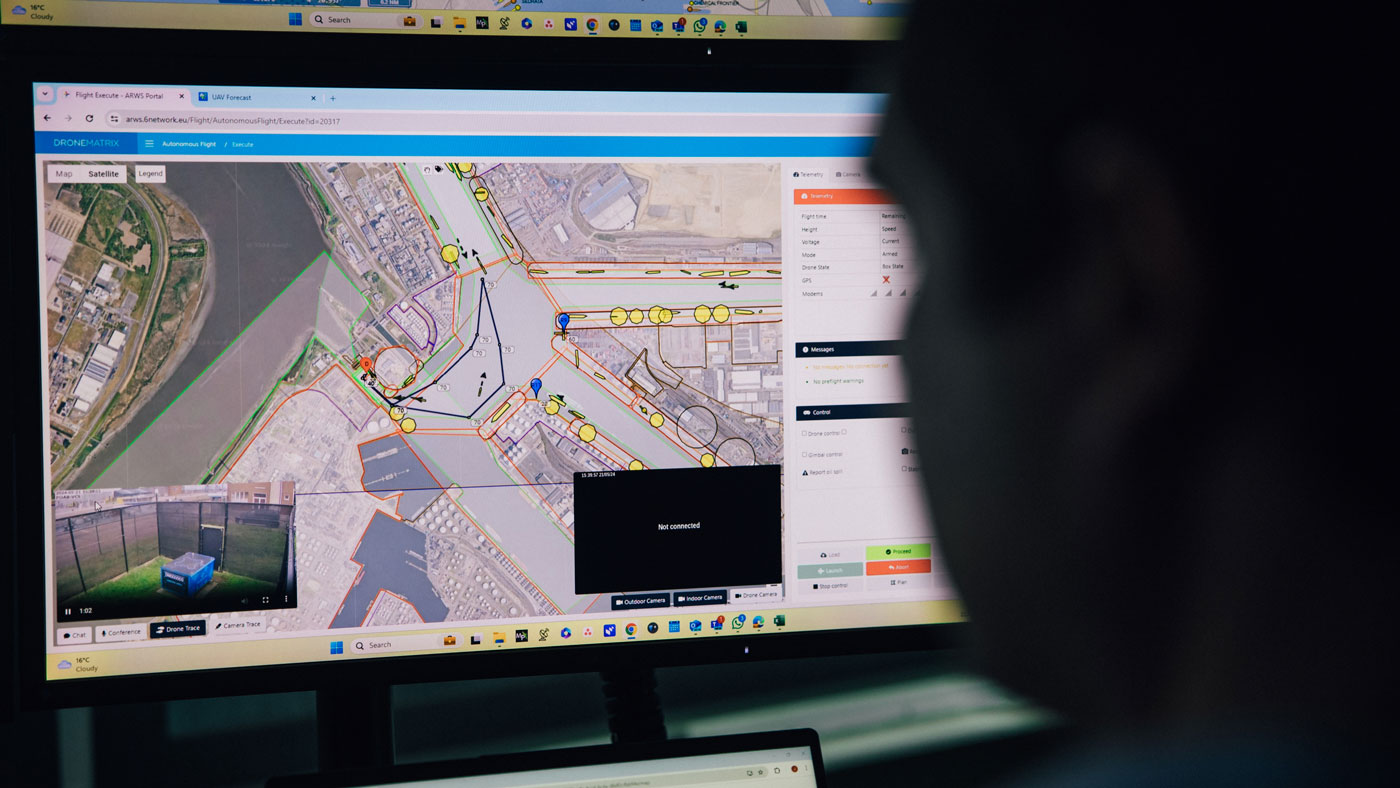
The aerial-robotic---work-system is a drone platform with military airworthiness certification. It is backpack portable, glove compactable, and field ready to fly in 1.5 minutes. Features encrypted AES-256 communication. Supported by scheduled maintenance and upgrade programs.
- •Field ready to fly in 1.5 min
- •Backpack portable
- •Military airworthiness certified
- •Glove compactable
- •Encrypted communication AES-256
- •Scheduled maintenance programs
- •Upgrade support to latest version
| Encryption | AES-256 |
| Field ready time (min) | 1.5 |
Technology stackOur read
Inferred from product specs — click through to the technology wiki:
ResearchComputed
Product comparisonComputed
Each row leads with this company's product, side-by-side with similar ones · click a row to expand full specs, click again to collapse
aerial-robotic---work-system

ANYmal D Max
Lunar Rover R1
RB-VOGUI
Dobot M1

FarmBot | Open-Source CNC Farming
noctis-ir
ANYmal X
Lunar Rover R1
RB-VOGUI
Dobot M1
FarmBot | Open-Source CNC Farming
Company announcement
News and Media
The company's official social & video channels · external links
News
From third-party news outlets (China & abroad) · external links

