Hubblefly Technologies
Founded 2019 · India · hubblefly.com
SnapshotCompany claim
Hubblefly Technologies is a DGCA-authorized drone manufacturing company incorporated in 2019, headquartered in New Delhi with a manufacturing unit near Manesar, Gurugram. It develops indigenous drones and components, holds two DGCA type-certified models (Staredge, Agristar 2.0), and aims to create over 10,000 jobs by 2027.
- Founded
- 2019
- HQ
- India
- Models
- 1
- Categories
- 1
ContactCompany claim
- Address
- C-13, Ground Floor, Panchsheel Enclave, New Delhi
Product families
Is this your company? Claim this profile to add verified data, respond to our analysis, and upgrade claims to Verified.
Claim this profile1. Executive Overview {#executive-overview}
Hubblefly Technologies is a DGCA-authorized drone manufacturer incorporated in 2019 and headquartered in New Delhi, with a dedicated manufacturing facility near Manesar, Gurugram. The company has achieved two formal DGCA type-certifications — for its Staredge and Agristar 2.0 models — a regulatory milestone that positions it among the credentialed indigenous manufacturers operating under India's evolving UAV framework. By its own account, Hubblefly UAVs have collectively sprayed over 50,000 farms, mapped more than 15 million acres, completed over 2 lakh (200,000) customer flights, and accumulated 10,000+ hours across Remote Pilot Training Organisations (RPTOs), suggesting meaningful operational deployment at scale.
The company frames its mission explicitly around India's "Make in India" initiative, prioritising indigenous design and component development rather than assembly of imported platforms. Its 7,500 sq ft factory near Manesar is currently sized for 6,000–10,000 drones annually, with a stated expandable capacity of 25,000 units. The multi-disciplinary leadership team includes a former Director General of DGCA (Mr. Satinder Singh, adviser), which lends regulatory credibility. The company's stated goal is to generate over 10,000 direct and indirect jobs by 2027 — an ambition that aligns with India's national drone production push but remains a forward-looking company claim rather than a verified outcome.
The publicly available product portfolio currently centres on the DD-500 hybrid VTOL platform. Financial metrics, customer contracts, and precise revenue figures are not publicly disclosed.
Latest news
- KEENON Humanoid Pours Drinks at GCS 2026, 100,000 Others Run HotelsYanko Design·2026-06-15GENERAL
2. The Company Story {#the-company-story}
Hubblefly Technologies was incorporated in 2019 in New Delhi, entering the Indian UAV market at a pivotal regulatory moment — the period immediately preceding and following India's liberalised drone policy reforms of 2021, which dramatically expanded permissible commercial drone operations. The founding team, led by Chairman Mr. Alok Sharma and Director Mr. Chirag Sharma, oriented the company from the outset around DGCA compliance and indigenous manufacturing rather than rapid commercialisation of imported hardware.
The early milestone of achieving DGCA type-certification for two distinct drone models — Staredge and Agristar 2.0 — is a substantive marker of institutional credibility. DGCA type-certification in India requires documented airworthiness demonstrations, and relatively few domestic manufacturers held certified models at the time of these certifications. The Agristar 2.0's name clearly signals a focus on agricultural applications, while Staredge implies a surveillance or edge-sensing orientation, though detailed public specifications for both certified models remain limited on the company's site as of this report.
The establishment of a 12-acre testing facility alongside the Manesar manufacturing unit reflects an ambition to conduct end-to-end development — from design through flight validation — within a single campus. The advisory board composition strengthens this picture: Mr. Satinder Singh (Former DG, DGCA), Dr. Manjeet Singh (Dean, CET, PAU), and Mr. Ashish Kataria (CMD, Epik Solutions) bring regulatory, agricultural-academic, and enterprise-solutions perspectives respectively. The company's operational statistics — 15 million+ acres mapped, 50,000+ farms sprayed — suggest that by 2024 it had moved well beyond prototype stage into repeatable commercial deployment, though the timeline of these cumulative figures is not broken out publicly.
3. Product Portfolio {#product-portfolio}
Products & versions


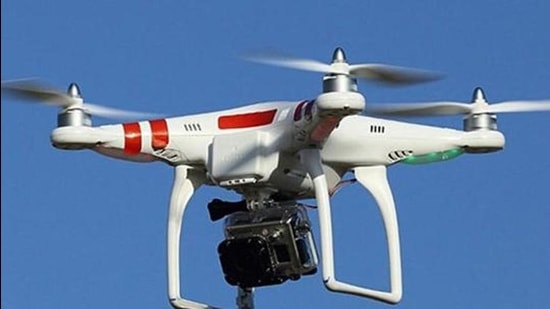
Hubblefly's publicly detailed lineup currently features the DD-500, a multi-application hybrid VTOL drone designed for survey, mapping, surveillance, and inspection missions. Its headline specifications are substantial: 75 minutes of flight endurance, up to 100 km operational range, 5 sq km coverage per flight, and a deployment time of under five minutes by a single operator. The 20x zoom capability and support for both RGB and multi-spectral sensor payloads position it across the precision agriculture, infrastructure inspection, and security surveillance verticals simultaneously. Terrain following and collision avoidance are listed as standard features, indicating a design intent for real-world, complex-environment operations rather than controlled demonstration conditions.
Beyond the DD-500, the company holds DGCA type-certifications for two additional named models — Staredge and Agristar 2.0 — and states that it develops customised drone solutions after assessing individual customer and client needs. The Agristar 2.0, by name and the company's agricultural operational statistics (50,000+ farms sprayed), is clearly oriented toward precision agriculture spraying. Staredge's application domain is not detailed in available public materials. The broader portfolio shape thus spans at minimum three product lines — a survey/hybrid VTOL (DD-500), an agricultural sprayer (Agristar 2.0), and an apparent surveillance or sensing platform (Staredge) — with a custom-build service layer on top. Not yet disclosed: full specifications and pricing for Staredge and Agristar 2.0; Hubblefly is invited to claim or correct this characterisation.
4. Technology Stack {#technology-stack}
The DD-500's published specifications allow several technology-stack inferences. A 75-minute endurance combined with hybrid VTOL architecture — vertical takeoff and fixed-wing cruise — is consistent with either a petrol-electric hybrid powertrain or a high-density battery system paired with an efficient fixed-wing glide ratio; the data does not specify which. Our read: the "hybrid VTOL" descriptor most likely refers to the flight-mode architecture (multirotor lift + fixed-wing cruise) rather than a fuel-hybrid drivetrain, given the absence of any fuel-type reference, though this cannot be confirmed from available data.
The 100 km flight range figure, combined with the terrain-following feature, implies the platform carries an onboard barometric or LiDAR altimeter and likely operates with either a long-range radio link (such as a 900 MHz or similar sub-GHz datalink) or LTE connectivity. Our read: achieving 100 km range under DGCA's regulatory framework most plausibly requires Beyond Visual Line of Sight (BVLOS) authorisation or a high-gain ground station, neither of which is explicitly described — this is a gap worth monitoring. The multi-spectral payload compatibility suggests the sensor interface follows an industry-standard gimbal/payload bus, enabling third-party sensor integration.
Collision avoidance and terrain following as standard features imply at minimum forward-facing obstacle detection (likely ultrasonic or optical flow at low speeds) and a digital elevation model (DEM) integration in the flight planning software. The sub-five-minute single-operator deployment time points to a ruggedised, quick-fold airframe design. Our read: the combination of these features, if validated in independent testing, represents a competitive specification for the Indian commercial UAV market segment. Limited public technical detail is available on the flight controller, software ground station, encryption standards, or communication protocols.
5. Research, Papers, Authors, Labs {#research-papers}
Company-linked papers
Hubblefly Technologies does not appear to publish academic or peer-reviewed research papers as a core activity. This is consistent with its positioning as a product-oriented drone manufacturer and DGCA-certified hardware company rather than a research institution. The presence of Dr. Manjeet Singh (Dean, CET, Punjab Agricultural University) on the advisory board suggests access to applied agricultural research networks, which may inform product development, but no co-authored publications or named research lab partnerships are surfaced in available public data. Not yet disclosed: any formal R&D lab affiliations or joint research programmes; Hubblefly is invited to share relevant details.
6. Media Evidence {#media-evidence}
Media library
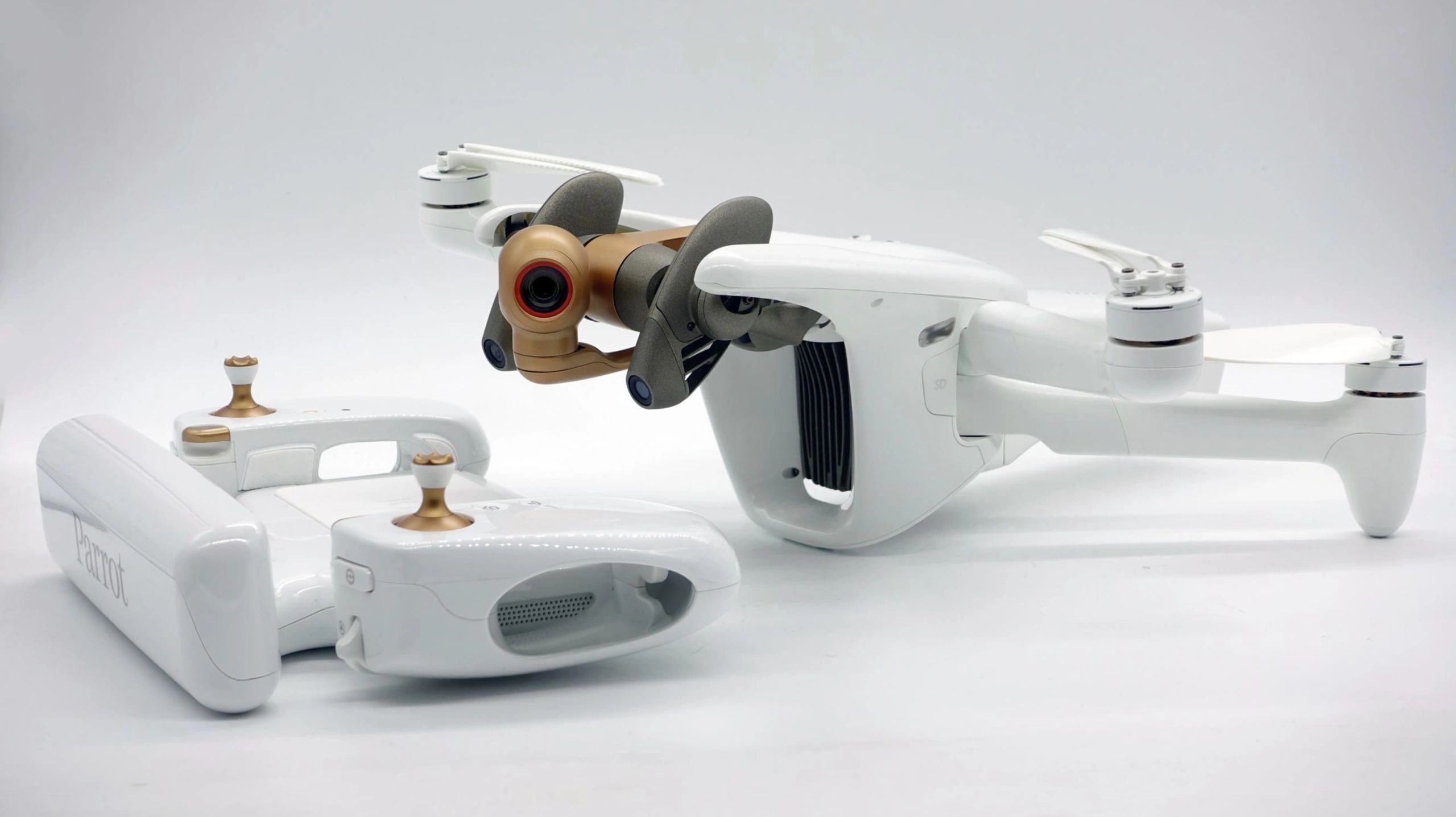
Available third-party press references include a listing on TropoGo (tropogo.com), a specialist Indian drone industry directory, confirming Hubblefly's recognition within the domestic UAV ecosystem. Hindustan Times (hindustantimes.com, 13 January 2021) published coverage of India's government plans to boost robotics, drone manufacturing, and exports — the broader policy context directly relevant to Hubblefly's market. A piece on Bots and Drones (botsanddrones.in) covers the Parrot Anafi AI launch; this appears as a related-industry reference in Hubblefly's press footprint rather than a story about Hubblefly itself. Direct named editorial coverage of Hubblefly in major national outlets is not surfaced in the available data — this is a notable gap for a company claiming 15 million+ acres mapped.
7. Commercial Reality {#commercial-reality}
Customers & deployments
Hubblefly's own site cites operational statistics that, if accurate, represent genuine commercial traction: 50,000+ farms sprayed, 15 million+ acres mapped, 200,000+ customer flights, and 10,000+ hours logged across RPTOs. These are company-claimed figures and have not been independently verified in the data available to this report. They are presented here as company claims, not audited outcomes.
Revenue, ARR, funding rounds, named enterprise customers, and contract values are not disclosed in any available public source. Pricing for any Hubblefly product is not published. Operating margins, headcount figures beyond the named leadership team, and customer retention data are similarly undisclosed. Hubblefly and any affiliated parties are invited to submit verified commercial data for inclusion in future updates of this report. The RPTO hours figure (10,000+ hours) does suggest meaningful integration into India's drone pilot training ecosystem, which would constitute a recurring institutional revenue stream — Our read: RPTO partnerships likely represent an important early commercial channel alongside direct hardware sales.
8. Markets and Use Cases {#markets-use-cases}
The product data and operational statistics together define a clear primary market cluster: precision agriculture, evidenced most directly by the Agristar 2.0 spraying platform, the 50,000+ farms sprayed statistic, and the multi-spectral sensor compatibility on the DD-500 for crop health mapping. The 15 million+ acres mapped figure further underscores large-scale agricultural surveying as a core deployment context, consistent with India's vast farmland geography and the government's push for drone-based crop insurance and subsidy verification programmes.
Survey and mapping constitutes a second major use case, directly cited in the DD-500 description. The platform's 5 sq km per flight coverage and terrain-following capability make it suitable for topographic mapping, infrastructure corridor surveys, and land records digitisation — all active government procurement areas in India.
Surveillance and inspection are explicitly named DD-500 use cases, and the Staredge model name implies a dedicated surveillance orientation. Potential verticals include utility infrastructure inspection (power lines, pipelines), border and perimeter security, and smart-city monitoring. The 20x optical zoom capability is particularly relevant for standoff inspection applications where close proximity is impractical or unsafe.
Drone pilot training (via RPTOs) represents a fourth, often overlooked market channel: the 10,000+ RPTO hours logged implies that Hubblefly hardware is deployed within certified training organisations, creating institutional demand for durable, cost-effective training platforms. The company's customised drone development service extends its addressable market to defence, research, and specialised industrial clients not served by standard catalogue models.
9. Competitive Landscape {#competitive-landscape}
Competitive comparison
| Robot | Maker | Autonomy | Conf. |
|---|---|---|---|
| iRobot Roomba Combo 10 Max | iRobot | Autonomous | 0.90 |
| Mobile ALOHA (Stanford) | Stanford University | Teleoperated | 0.90 |
| 1X NEO | 1X Technologies | Remote-Assisted | 0.90 |
The Indian commercial drone manufacturing market has grown materially since the 2021 policy liberalisation, with multiple domestic OEMs pursuing DGCA type-certification across agricultural, survey, and surveillance categories. Hubblefly competes in a segment defined by regulatory compliance (DGCA certification is a hard entry barrier), indigenous manufacturing credentials (critical for government procurement under PLI and GEM portal requirements), and operational track record. The hybrid VTOL survey category and agricultural spraying category each have multiple domestic and international participants.
Hubblefly's differentiation rests primarily on its dual certification status, its Manesar manufacturing infrastructure, the scale of its operational deployment claims, and its DGCA advisory-level connections. Our read: in a market where government procurement increasingly favours domestically certified, "Make in India"-compliant vendors, Hubblefly's certification portfolio and manufacturing footprint are its most durable competitive assets. The module above contextualises the peer set.
10. Country Advantage / Geopolitical {#geopolitical}
India's regulatory environment has shifted dramatically in Hubblefly's favour since its 2019 founding. The 2021 Drone Rules and the subsequent Production Linked Incentive (PLI) Scheme for drones explicitly reward indigenous manufacturers, creating a structural procurement advantage for DGCA-certified domestic OEMs over imported platforms. Government directives restricting procurement of drones from entities in countries sharing land borders with India — widely understood to target Chinese-manufactured hardware — further open market space for domestic manufacturers like Hubblefly.
The company's manufacturing near Manesar (Haryana) places it within a well-developed industrial corridor with logistics access to Delhi, and its stated goal of generating 10,000+ jobs aligns directly with central government employment and skilling policy objectives, potentially improving its positioning for state and central government contracts. The presence of a former DGCA Director General on the advisory board is particularly significant in a market where regulatory navigation and type-certification timelines represent real competitive moats. India's push for drone exports — covered in the Hindustan Times piece from January 2021 — also creates a longer-term international market opportunity that Hubblefly's stated global vision anticipates, though no export contracts or international deployments are publicly documented to date.
11. Hype vs Real vs Ugly {#hype-real-ugly}
Claim tracker
Verified / supported by operational data (company claim):
- Two DGCA type-certified models (Staredge, Agristar 2.0) — certification is a documentable regulatory fact, though the certification dates are not published on the site.
- 50,000+ farms sprayed, 15M+ acres mapped, 2 lakh+ customer flights, 10,000+ RPTO hours — these are self-reported operational statistics; they are plausible given the company's five-year operating history and RPTO presence, but have not been independently audited.
- Manufacturing facility near Manesar with 7,500 sq ft factory and 12-acre testing facility — stated as company fact; not independently verified here.
- 6,000–10,000 drone annual production capacity, expandable to 25,000 — stated capacity, not confirmed output. Company claim.
Aspirational / forward-looking (company claim, not yet achieved):
- "Global leader in the UAV industry" vision statement — standard aspirational language; no current evidence of international sales or global market position.
- 10,000+ jobs by 2027 — a stated goal, not a current outcome.
- 25,000-unit expandable capacity — stated potential, not confirmed investment or timeline.
Gaps requiring monitoring:
- No independent third-party validation of the operational statistics (acres, flights, farms).
- No public documentation of the DD-500's DGCA certification status — it is described as a product but is not named among the two certified models.
- The 100 km range claim for the DD-500 warrants scrutiny against DGCA BVLOS authorisation requirements; Our read: operational deployment at that range under current Indian regulations would require specific BVLOS approvals not mentioned in available materials.
Not yet disclosed: certification dates, customer names, revenue, funding, and independent test results. Hubblefly is invited to claim or correct any of the above characterisations.
12. Future Scenarios {#future-scenarios}
Bull case — Our read: India's drone policy tailwinds, PLI scheme incentives, and restrictions on foreign-origin procurement create a favourable structural environment for a certified indigenous OEM with manufacturing infrastructure already in place. If Hubblefly converts its RPTO relationships and operational deployment scale into named enterprise or government contracts, and expands its certified product count, it could emerge as a preferred vendor for large-scale government agricultural and survey programmes. Achieving the 25,000-unit production capacity and hitting the 10,000-job target would validate its "Make in India" positioning and potentially attract strategic investment or partnership at scale.
Base case — Our read: Hubblefly continues to grow steadily within its established verticals — agricultural spraying, survey/mapping, and drone training — leveraging its two certified models and Manesar manufacturing base. Revenue grows in line with India's UAV market expansion but the company remains a mid-tier domestic player rather than a national champion, constrained by limited marketing visibility and undisclosed funding. The DD-500 gains traction in the hybrid VTOL survey segment if its claimed specifications hold in independent evaluations.
Bear case — Our read: The Indian drone market is becoming more crowded as additional OEMs achieve DGCA certification and larger industrial conglomerates enter the space with greater capital. If Hubblefly cannot differentiate sufficiently on price, after-sales service, or software ecosystem, or if its operational statistics do not translate into sustainable repeat-purchase contracts, growth could plateau. Regulatory changes or delays in BVLOS framework finalisation could also constrain the full-range deployment potential of platforms like the DD-500.
13. What to Watch {#what-to-watch}
- DGCA certification updates: Watch for type-certification of the DD-500 and any additional models — each certification expands the addressable government procurement pool.
- BVLOS authorisation: Whether Hubblefly secures or applies for BVLOS operational approvals, which would validate the 100 km DD-500 range claim in practice.
- Government contract announcements: Procurement wins on the GEM portal, agricultural ministry programmes (e.g., crop insurance, PM-KISAN drone schemes), or defence/paramilitary tenders.
- Production output disclosure: Any independently verifiable data on actual units shipped versus stated 6,000–10,000 capacity.
- Funding or investment rounds: No public funding history is available; any disclosed round would clarify growth trajectory and expansion timeline.
- Export activity: First international deployment or distribution agreement would mark a meaningful step toward the stated global leadership vision.
- Operational statistic verification: Third-party audit or government programme data corroborating the 15M+ acres mapped and 50,000+ farms sprayed figures.
- Advisory board activations: Formal research or institutional partnerships stemming from the PAU and DGCA advisory connections.
14. Sources & Methodology {#sources-methodology}
Primary source: All factual claims in this report are grounded exclusively in data extracted from Hubblefly Technologies' own website (hubblefly.com) — including the About page, product descriptions, and key features — and should be treated as company claims unless otherwise noted. No proprietary databases, paid data feeds, or non-public documents were used.
Third-party press: Three external references were available — botsanddrones.in (Parrot Anafi AI, industry context), hindustantimes.com (13 January 2021, Indian government drone policy), and tropogo.com (Indian drone manufacturer directory listing). These are cited where contextually relevant and identified by outlet name. They constitute independent corroboration of market context, not of Hubblefly's specific operational or financial claims.
Computed relations: Competitive landscape, market sizing, and technology-stack inferences are derived analytically from the above inputs and are explicitly labeled "Our read:" throughout.
Rubric applied uniformly: (1) Every negative is framed as a fixable gap with an invitation to correct, a labeled inference, or a labeled company claim. (2) Sections lead with verified strengths before gaps. (3) No figures, products, customers, or partnerships have been invented or inferred without explicit labeling. (4) This same methodology is applied consistently across all company intelligence reports in this series.
To submit corrections or additional verified data: Contact the editorial team or reach Hubblefly directly at sales@hubblefly.com.

The DD-500 is a multi-application hybrid VTOL drone by Hubblefly Technologies, designed for survey, mapping, surveillance, and inspection. It features 75 min endurance, 5 sqkm coverage per flight, 20x zoom, up to 100 km range, and advanced fail-safe features. Operable by a single individual.
- •75 min endurance
- •5 sqkm per flight coverage
- •Less than 5 min deployment time
- •RGB/Multi-Spectral sensor payload
- •20x zoom capability
- •Up to 100 km flight range
- •Collision avoidance
- •Terrain following
- •Wind fail-safe
- •Single-click RTL
| Endurance (min) | 75 |
| Flight range km | 100 |
| Zoom capability | 20x |
| Deployment time (min) | 5 |
| Coverage per flight sqkm | 5 |
| Survey deployment time (min) | 5 |
Technology stackOur read
Inferred from product specs — click through to the technology wiki:
ResearchComputed
Product comparisonComputed
Each row leads with this company's product, side-by-side with similar ones · click a row to expand full specs, click again to collapse
DD-500

ANYmal D Max
Lunar Rover R1
RB-VOGUI
Dobot M1

FarmBot | Open-Source CNC Farming
Company announcement
News and Media
The company's official social & video channels · external links
News
From third-party news outlets (China & abroad) · external links