Forterra
US · forterra.com
SnapshotCompany claim
Forterra develops autonomous systems for defense, industrial, and commercial missions, providing mission execution capabilities, cooperative autonomy, and integrated autonomous solutions at scale.
- Founded
- Not disclosed
- HQ
- US
- Models
- 5
- Categories
- 2
ContactCompany claim
- Address
- Not disclosed
Product families
Is this your company? Claim this profile to add verified data, respond to our analysis, and upgrade claims to Verified.
Claim this profile1. Executive Overview {#executive-overview}
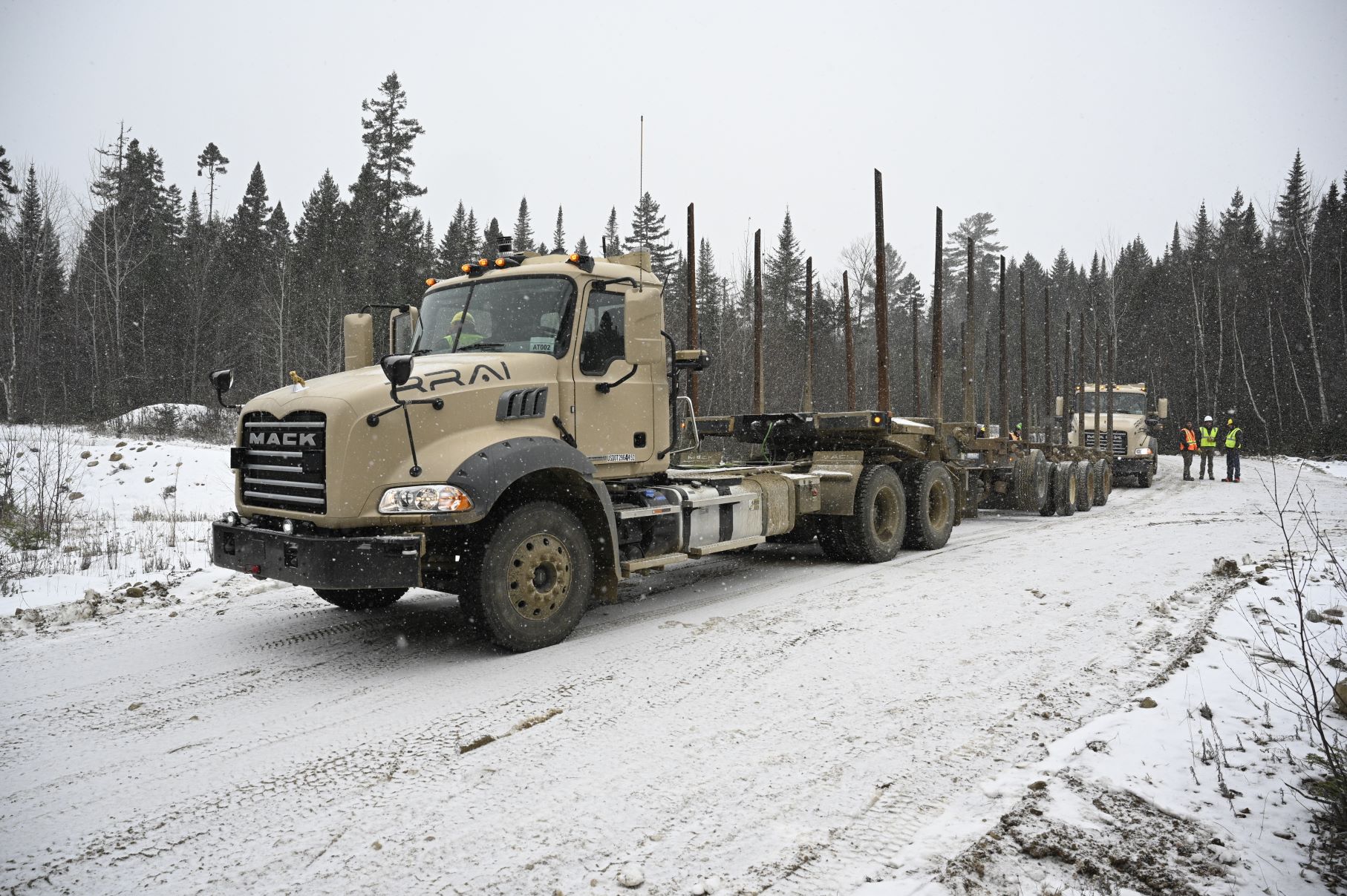
Forterra is a US-based autonomous systems company headquartered in Clarksburg, Maryland, developing ground vehicle autonomy, communications, and spectrum sensing platforms for defense, industrial, and commercial missions. Founded and presided over by Alberto Lacaze — a roboticist holding over 100 patents and the author of hundreds of published articles — the company brings deep technical pedigree to a product portfolio that spans fully autonomous ground vehicle operation, resilient battlefield communications, and electromagnetic spectrum operations (EMSO). Its AutoDrive platform has been integrated with more than 50 vehicle platforms and deployed in over 10 countries, a scale of real-world deployment that distinguishes Forterra from many autonomy-sector peers still in prototype or limited-trial phases.
The company operates under a clear strategic thesis: autonomy at scale, enabling operators to extend reach and apply force without placing human lives at risk. Its five disclosed product lines — AutoDrive, Lancer, goTenna, Vektor, and Vertex — form an integrated ecosystem spanning the vehicle, the network, and the electromagnetic environment. A $238 million funding round reported by The Robot Report signals substantial investor conviction. A 2024 rebrand from Robotic Research to Forterra, covered by Truck News, marks a deliberate pivot toward a broader autonomous systems identity.
Latest news
- KEENON Humanoid Pours Drinks at GCS 2026, 100,000 Others Run HotelsYanko Design·2026-06-15GENERAL
2. The Company Story {#the-company-story}
Forterra's institutional origins trace to Robotic Research, the predecessor entity from which it evolved. The February 2024 rebrand to Forterra — reported by Truck News — was more than a cosmetic change; it represented a repositioning from a research-and-development services identity toward a scaled product and platform company with a distinct commercial brand. The new name and identity align with the company's stated mission of delivering "foundational platforms" for an intelligent autonomous ecosystem.
Alberto Lacaze, who holds the title of Chairman of the Board and President, is the company's founder. His profile — over 100 patents in robotics, hundreds of published articles, and recognition as an international expert speaker — anchors Forterra's technical credibility in a domain where engineering depth is a primary differentiator. The current CEO, Josh Araujo, transitioned from Chief Operating Officer, bringing continuity in operational knowledge alongside experience in corporate development and finance, a combination well-suited to scaling a company that has raised significant capital.
The leadership bench assembled around Lacaze and Araujo reflects a company in deliberate growth mode. The Chief Operating Officer joined in September 2024, and both the Chief Innovation Officer and Chief Legal Officer joined in October 2025, suggesting an ongoing build-out of executive infrastructure to match the pace of product and contract expansion. The Chief Growth Officer, who joined in May 2022, has been credited with reshaping sales strategy and customer service infrastructure — consistent with a company transitioning from government R&D contractor toward a product-led go-to-market model. The $238 million funding round reported by The Robot Report and a strategic partnership with Hiab (announced on hiab.com) are the two most visible external milestones on public record.
3. Product Portfolio {#product-portfolio}
Products & versions


Forterra's five disclosed products form a coherent, layered autonomous systems stack rather than a collection of unrelated offerings. At the foundation is AutoDrive, the company's flagship ground vehicle autonomy platform — an end-to-end system encompassing localization, perception, behavior generation, and command-and-control communications. Its integration across 50-plus vehicle platforms and deployment in more than 10 countries positions it as a mature, field-proven capability rather than an experimental system. AutoDrive's GPS-denied navigation, sensor fusion, AI-driven perception, and GPU processing place it squarely in the category of full-stack autonomy software deployable across diverse hardware.
Lancer is the company's purpose-built uncrewed ground vehicle (UGV), running AutoDrive natively. With a top speed of 60 mph, a 1,250 lb payload capacity, 3,500 lb towing capacity, and 15 inches of ground clearance, Lancer is engineered for contested off-road environments. Its stated mission envelope spans sustainment logistics, casualty evacuation (CASEVAC), counter-UAS deployment via an electrically actuated 10-rail launcher, and combat engineering — a notably wide multi-mission scope for a single platform.
The communications and sensing layer consists of three products: goTenna, providing off-grid mesh networking for dismounted teams, vehicles, and robotic systems in military and public safety contexts; Vektor, an edge-deployed communications backbone that routes mission-critical data intelligently across DDIL (Disrupted, Degraded, Intermittent, Low-bandwidth) environments; and Vertex, an EMSO sensing node covering 600 MHz to 18,000 MHz via an AESA phased array, capable of detecting, classifying, and geolocating spectrum events using lightweight AI on CPU-class compute. Together, these three products address the connectivity and electromagnetic awareness requirements that make autonomous vehicle operations viable in contested environments — and suggest Forterra is positioning itself as a full-system integrator, not solely a vehicle autonomy vendor.
4. Technology Stack {#technology-stack}
Forterra's publicly disclosed product specifications and feature sets allow several substantive technical inferences, clearly labeled below.
AutoDrive combines GPS-denied localization (implying inertial navigation and/or simultaneous localization and mapping, SLAM), multi-spectrum sensor fusion, AI-based perception models, and GPU processing into a single deployable stack. The platform's integration across 50-plus vehicle platforms implies a hardware abstraction layer that decouples autonomy software from specific vehicle drive-by-wire implementations — Our read: this modularity is a significant engineering investment and a genuine competitive asset, as it reduces the cost of porting to new vehicles and enables rapid fleet expansion for customers.
Vektor's architecture — a unified network layer operating above diverse transport types including MANET, LTE/5G, and SATCOM — describes a software-defined networking approach with dynamic, context-aware routing and automatic failover across multiple active transport paths. Our read: this is consistent with an overlay mesh networking architecture, and the emphasis on DDIL environments suggests the routing logic incorporates real-time link quality assessment, likely with configurable mission-priority policies. The explicit mention of automating PACE (Primary, Alternate, Contingency, Emergency) planning indicates deep integration with military communications doctrine.
Vertex's AESA phased array covering 600 MHz to 18,000 MHz is a notably wide spectrum range spanning most tactically relevant frequencies. The product's defining technical claim — that its AI models run on CPU-class compute without a GPU — is significant: Our read: this points to highly optimized, likely quantized or sparse AI inference, enabling low-power, low-cost deployable nodes. If accurate, it substantially lowers the size, weight, and power (SWaP) burden for edge deployment on small UGVs or fixed sensors.
goTenna's Pro X2 and EdgeRelay infrastructure, combined with ATAK integration, places it within the established US military and first-responder situational awareness ecosystem. The addition of EVERYWHERE satellite connectivity suggests a hybrid terrestrial/satellite architecture designed for beyond-line-of-sight reach.
Not yet disclosed: detailed algorithmic approaches, sensor hardware suppliers, simulation and testing infrastructure, software development frameworks, or cybersecurity architecture. Forterra is invited to claim or correct any of these points through our data submission process.
5. Research, Papers, Authors, Labs {#research-papers}
Company-linked papers
Forterra does not present itself as a research-publishing organization in the conventional academic sense, and no papers, preprints, or lab affiliations are surfaced in the available data. This is consistent with its positioning as a deployed-systems product company rather than a research institution.
It is worth noting that President and Founder Alberto Lacaze holds over 100 patents and has authored hundreds of published articles in robotics — a body of work that represents substantial prior technical publication. Whether current Forterra engineering activity produces ongoing public research output is not disclosed. Forterra is invited to share any active research publications, patent filings, or academic collaborations for inclusion in this record.
6. Media Evidence {#media-evidence}
Media library
Three distinct third-party press items are on record for Forterra. Truck News (trucknews.com, February 21, 2024) covered the company's rebrand from Robotic Research to Forterra, providing external validation of that corporate transition. The Robot Report (therobotreport.com) reported on Forterra's $238 million funding raise to scale AI platforms for defense applications — a significant funding milestone covered by one of the robotics sector's primary trade publications. Hiab's own newsroom (hiab.com) announced a strategic partnership with Forterra to advance autonomy in load handling, documenting a named commercial partnership in the industrial/logistics segment.
7. Commercial Reality {#commercial-reality}
Customers & deployments
Revenue, customer counts, contract values, and return-on-investment metrics are not publicly disclosed by Forterra. These figures should be rendered as Not disclosed. Forterra is invited to submit verified commercial data — including customer references, contract awards, deployment scale, or independently audited revenue figures — for inclusion in this record.
What the available data does support: the $238 million funding round reported by The Robot Report is a meaningful indicator of investor-assessed commercial potential, and deployment of AutoDrive across 50-plus vehicle platforms in over 10 countries implies a non-trivial installed base. The Hiab partnership, covering load-handling autonomy, represents a named commercial relationship with an established industrial equipment company. These data points are suggestive of real commercial traction, but they do not substitute for disclosed revenue or customer metrics.
8. Markets and Use Cases {#markets-use-cases}
Forterra's product set addresses three primary market verticals, each grounded in disclosed product descriptions and feature sets.
Defense and military is the company's most explicitly developed market. Lancer's mission profile — sustainment logistics, CASEVAC, counter-UAS, and combat engineering — maps directly to uncrewed ground vehicle programs pursued by the US Army and allied forces. AutoDrive's GPS-denied navigation, battlefield terrain capability, and deployment in over 10 countries indicate active defense customer relationships. Vektor's DDIL communications architecture and Vertex's tactical EMSO sensing are purpose-built for contested military environments, including electronic warfare scenarios. goTenna's ATAK integration and military/law enforcement focus reinforces the defense and public safety orientation.
Industrial and commercial logistics represents the second market tier. AutoDrive's listed industries include logistics, warehouse, and factory environments, and the Hiab partnership specifically targets load-handling autonomy — a use case relevant to ports, construction sites, and heavy industrial yards. Lancer's payload and towing specifications, while designed for military use, are also relevant to industrial logistics applications.
Public safety and first response is addressed through goTenna's off-grid mesh networking capabilities, which are explicitly marketed to law enforcement and public safety agencies in addition to military users. The Pro Deployment Kit and ATAK integration are features with direct applicability to incident command, disaster response, and border security operations.
Not yet disclosed: named end-customer deployments, specific program-of-record affiliations, or commercial contract details in any of these verticals. Forterra is invited to provide this information for inclusion.
9. Competitive Landscape {#competitive-landscape}
Competitive comparison
| Robot | Maker | Autonomy | Conf. |
|---|---|---|---|
| iRobot Roomba Combo 10 Max | iRobot | Autonomous | 0.90 |
| Mobile ALOHA (Stanford) | Stanford University | Teleoperated | 0.90 |
| 1X NEO | 1X Technologies | Remote-Assisted | 0.90 |
Forterra operates in a defense and industrial autonomy segment that has attracted both established defense primes and dedicated autonomy startups. The company's multi-layer approach — combining vehicle autonomy software, a purpose-built UGV platform, contested-environment communications, and EMSO sensing — places it in several overlapping competitive categories simultaneously: ground vehicle autonomy platforms, uncrewed ground vehicles, tactical communications networking, and spectrum sensing.
Our read: the breadth of Forterra's stack is both a differentiator and a strategic commitment — a company that competes across all five of these product categories must demonstrate integration value that exceeds what customers could assemble from best-of-breed point solutions. The $238 million funding round and the 50-plus vehicle platform integrations suggest the company has made a credible case for that integrated value proposition, at least in defense procurement conversations.
10. Country Advantage / Geopolitical {#geopolitical}
Forterra is a US-headquartered company operating primarily in the defense autonomy sector, with AutoDrive deployed in over 10 countries. The defense orientation makes US government procurement relationships and export control compliance (ITAR/EAR) structurally material to the business. The company's location in Clarksburg, Maryland — in proximity to the Washington D.C. defense and intelligence community — is consistent with a defense-contractor orientation requiring close customer engagement with government program offices.
The deployment of autonomous ground vehicle technology in defense contexts carries ongoing geopolitical relevance as US Department of Defense modernization programs increasingly prioritize uncrewed systems for contested environments. Forterra's stated mission — delivering battlefield effects without placing human lives at risk — aligns with publicly stated DoD acquisition priorities around reducing warfighter exposure. Vektor's DDIL communications architecture and Vertex's EMSO sensing are both directly relevant to the electronic warfare and communications-denied environments that characterize current near-peer conflict scenarios.
Not yet disclosed: specific export authorizations, international partnership structures, or named allied-nation deployments. These are noted as gaps, not negatives; Forterra is invited to clarify.
11. Hype vs Real vs Ugly {#hype-real-ugly}
Claim tracker
Verified by independent sources:
- Rebrand from Robotic Research to Forterra occurred in early 2024 (Truck News, February 21, 2024).
- A $238 million funding round was reported by The Robot Report.
- A strategic partnership with Hiab for load-handling autonomy was announced on Hiab's newsroom.
Company claims (from Forterra's own site — not independently verified by available data):
- AutoDrive has been integrated with 50-plus vehicle platforms and deployed in over 10 countries. This is a significant and specific claim; it is plausible given the company's history and funding, but independent confirmation is not available in the provided data.
- Vertex runs AI on CPU-class compute without requiring a GPU. This is a specific technical differentiator worth scrutiny; if accurate, it represents a meaningful SWaP advantage.
- Lancer's stated specifications (60 mph, 1,250 lb payload, 15 in ground clearance) are precise and checkable; independent performance validation is not available in the provided data.
- Alberto Lacaze holds over 100 patents and has authored hundreds of published articles. This is a verifiable claim that carries strong prior probability given his stated professional standing.
Not yet disclosed (fixable gaps):
- Revenue, customer identities, contract values, and deployment outcomes.
- Independent performance testing results for AutoDrive, Lancer, Vektor, or Vertex.
- Details of any program-of-record affiliations or named government contracts.
Forterra is invited to submit documentation supporting any of the above claims or to correct any inaccuracy in this record.
12. Future Scenarios {#future-scenarios}
Bull case — Our read: Forterra capitalizes on growing DoD investment in uncrewed ground systems and EMSO by winning program-of-record contracts that pull AutoDrive and Lancer into large-scale procurement. The $238 million raise funds manufacturing scale-up (consistent with the COO's stated mandate) and international expansion through allied-nation sales. The Hiab partnership matures into a substantial commercial logistics revenue stream that diversifies the company's dependence on defense cycles. Vertex and Vektor become embedded components of larger autonomous system architectures procured by allied militaries.
Base case — Our read: Forterra continues growing as a defense-focused autonomy platform supplier, winning incremental contracts and expanding its vehicle platform integration count. Revenue remains primarily government-derived, with the Hiab partnership and industrial logistics applications developing more slowly than the defense business. The leadership team build-out (COO, CIO, CLO all joined 2024-2025) reflects operational scaling that enables reliable program delivery but not yet transformative commercial breakout.
Bear case — Our read: Defense procurement timelines extend, large programs-of-record remain elusive, and the $238 million raise proves insufficient to sustain the overhead of a multi-product company before meaningful revenue materializes. Competition from established defense primes with larger balance sheets and existing customer relationships pressures margins. The commercial logistics market develops more slowly than projected, and Forterra faces the structural challenge common to dual-use autonomy companies of being neither fully optimized for defense contracting nor for commercial product scaling.
13. What to Watch {#what-to-watch}
- Program-of-record awards: Any announced US Army, SOCOM, or allied-nation contracts for AutoDrive integration or Lancer procurement would be a primary commercial milestone.
- Hiab partnership developments: Progress reports, pilots, or commercial deployments from the Hiab load-handling autonomy collaboration will signal industrial market traction.
- Manufacturing scale-up: COO Colin Chisholm joined in September 2024 with an explicit mandate to scale production; any public reporting on facility expansion or production volume would indicate execution on the growth thesis.
- Vertex and Vektor independent validation: Independent testing or customer deployment disclosures for the spectrum sensing and communications products would strengthen the technical claims.
- goTenna integration depth: How tightly goTenna mesh networking integrates with Lancer and AutoDrive in fielded deployments will determine whether Forterra's full-stack positioning is validated in practice.
- Follow-on funding or strategic partnerships: Given the pace of executive hiring and stated growth ambitions, additional capital raises or OEM/prime contractor partnerships would be meaningful signals.
- Export authorizations and international deployments: Named allied-country deployments beyond the aggregated "10 countries" figure would clarify the international revenue picture.
- Alberto Lacaze's patent and publication activity: Ongoing IP filings may indicate the technical directions the company is investing in ahead of product announcements.
14. Sources & Methodology {#sources-methodology}
Primary data source: All factual claims in this report are grounded exclusively in data extracted from Forterra's own website (forterra.com), including the company About page, product descriptions, key feature lists, and leadership biographies. All such claims are treated as company-claims — assertions made by the company about itself — and are labeled accordingly. They have not been independently audited or verified by this report.
Third-party press sources: Three independent press items are cited: Truck News (trucknews.com, February 21, 2024) covering the Robotic Research-to-Forterra rebrand; The Robot Report (therobotreport.com) reporting on the $238 million funding round; and Hiab's newsroom (hiab.com) announcing the Forterra strategic partnership. These are treated as external validation of the specific facts they report, not as endorsements of the company's broader claims.
Methodology rubric (applied consistently to every company in this series):
- Every factual claim is sourced to either a company-claim (site data) or an independent press item; no claims are invented.
- Negative assessments are expressed only as fixable gaps ("Not yet disclosed"), labeled inferences ("Our read:"), or explicitly labeled company claims — never as unsourced negative facts.
- Sections lead with verified strengths before gaps.
- Technical inferences beyond what the data states explicitly are labeled "Our read:".
- Revenue, customer, and ROI figures are rendered as "Not disclosed" unless independently sourced.
- Live data modules (products, news, competitors, etc.) carry current data; prose sections summarize the shape and significance of that data rather than duplicate it.
%20(1).webp)
Forterra's AutoDrive platform enables fully autonomous ground vehicle operations for defense, industrial, and commercial applications in the most demanding environments. It is the leading self-driving system for complex environments, deployed on roads, cross country, and battlefield terrain. The system includes localization, perception, behavior generation, and command & control communications.
- •Fully autonomous driving for complex environments
- •Deployed on roads, cross country, and battlefield terrain
- •Integrated with 50+ vehicle platforms
- •End-to-end system: localization, perception, behavior generation, command & control
- •GPS-denied navigation with redundant localization
- •Next-gen perception with sensor fusion, AI models, and GPU processing
- •Vektor communication suite for DDIL environments
- •Deployed in over 10 countries
Detailed specs not disclosed.
Technology stackOur read
Inferred from product specs — click through to the technology wiki:
ResearchComputed
Product comparisonComputed
Each row leads with this company's product, side-by-side with similar ones · click a row to expand full specs, click again to collapse
AutoDrive

ANYmal D Max
Lunar Rover R1
RB-VOGUI
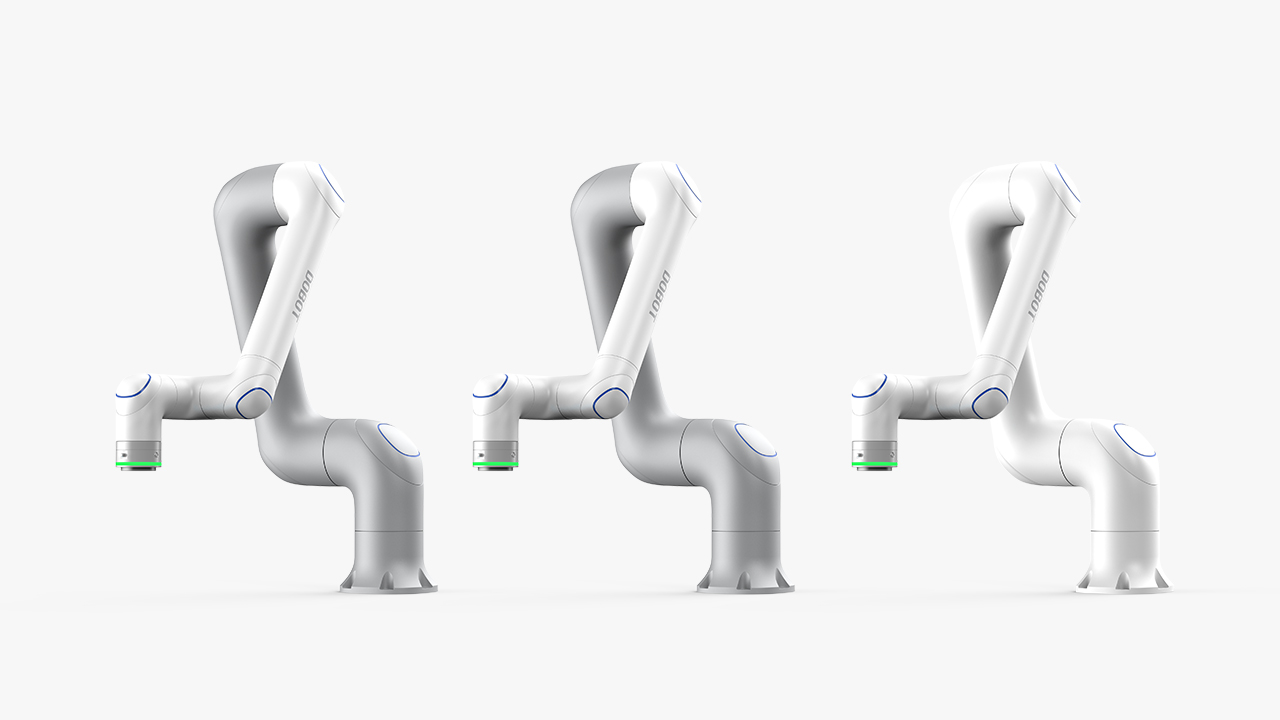
Dobot M1

FarmBot | Open-Source CNC Farming

Lancer
ANYmal X
Lunar Rover R1
RB-VOGUI
Dobot M1
FarmBot | Open-Source CNC Farming
Company announcement
News and Media
The company's official social & video channels · external links
News
From third-party news outlets (China & abroad) · external links