Big Bang Boom Solutions
India · bigbangboom.com
SnapshotCompany claim
Big Bang Boom Solutions (BBBS) is a Chennai-based deep-tech defence startup focused on developing indigenous defence and security technologies. It operates as a defence solutions integrator building advanced systems in AI, UAS/drone technology, electronic warfare, material science, propulsion, communication systems, and data security.
- Founded
- Not disclosed
- HQ
- India
- Models
- 18
- Categories
- 3
ContactCompany claim
- Address
- Not disclosed
Product families
Is this your company? Claim this profile to add verified data, respond to our analysis, and upgrade claims to Verified.
Claim this profile1. Executive Overview {#executive-overview}
Big Bang Boom Solutions (BBBS) is a Chennai-based deep-tech defence startup operating as an indigenous defence solutions integrator across artificial intelligence, UAS/drone technology, electronic warfare, material science, propulsion, communication systems, and data security. The company's most publicly visible strength is its Vajra product family — a vertically integrated counter-UAS (C-UAS) suite spanning passive RF detection, active AESA radar, electro-optical/infrared tracking, smart jamming, hard-kill interception, and directed-energy weapons — giving BBBS one of the broader indigenous C-UAS portfolios publicly documented among Indian defence startups. Beyond counter-drone, BBBS has extended into armoured vehicle situational awareness (Yudhikshana), cybersecurity tools (PRAVICI, AGENTA, IRRETRIVA, AI-ARMS), firefighting systems, containerised training ranges, and an AI-powered fighter pilot simulator, signalling a deliberate strategy to address multiple Indian Armed Forces modernisation priorities under a single integrator roof.
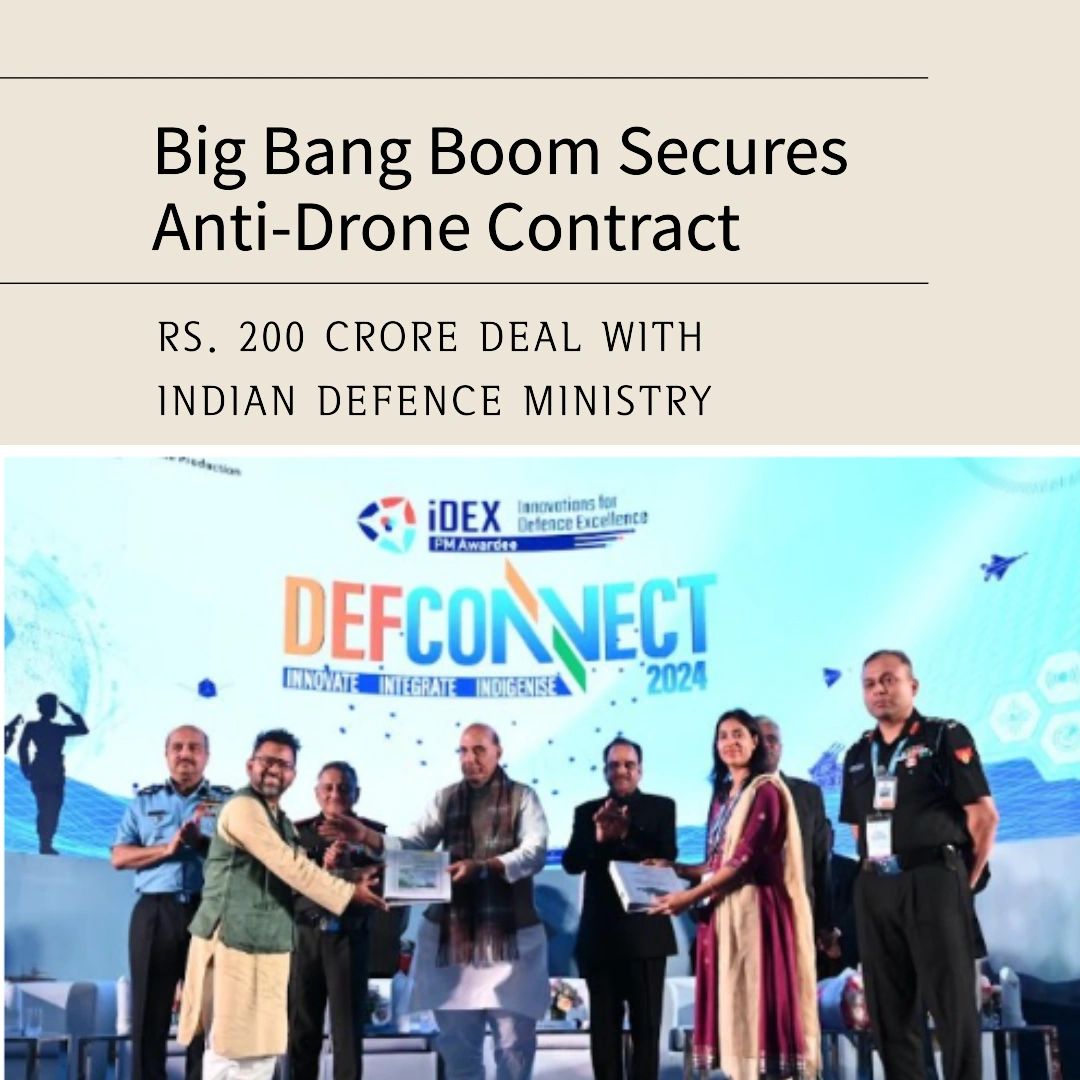
BBBS has validated its technology credentials through the Government of India's iDEX (Innovations for Defence Excellence) programme, which is sponsored by the Ministry of Defence (MoD). The company's own site states it has participated in and won multiple iDEX challenges, receiving government grants and contracts — a meaningful signal of institutional credibility for an early-stage defence startup. Third-party press has further substantiated commercial traction: Bots and Drones reported BBBS securing a ₹200 crore anti-drone system defence contract, and New Indian Express profiled the company in July 2025 as being "on a mission to build India's future combat systems." The company is actively hiring across Chennai, Delhi, Pune, and Guwahati, suggesting geographic expansion beyond its Tamil Nadu base.
The principal gaps in the public record are financial transparency (revenue, funding rounds, valuation are undisclosed), detailed deployment case studies, and customer names — all common for defence startups operating under confidentiality norms. Where these are absent below, they are flagged as not yet disclosed, with an invitation for BBBS to claim or correct the record.
Latest news
- KEENON Humanoid Pours Drinks at GCS 2026, 100,000 Others Run HotelsYanko Design·2026-06-15GENERAL
2. The Company Story {#the-company-story}
Big Bang Boom Solutions was founded in Chennai, Tamil Nadu, India, with a mission framed explicitly around indigenous capability development for national defence — positioning itself squarely within the broader "Atmanirbhar Bharat" (self-reliant India) policy environment that has sought to reduce India's historically high dependence on foreign defence imports. The company describes itself as a "friendly neighbourhood defence company," a deliberately accessible tone that sits alongside a technically substantive product portfolio, suggesting a dual mandate: cultural approachability for talent acquisition alongside serious engineering credibility for government and military customers.
The founding date is not publicly disclosed on the company's site. What is documented is a trajectory of institutional validation: BBBS states it has won multiple iDEX challenges — the MoD-backed open innovation programme that awards grants and development contracts to startups addressing specific Indian Armed Forces capability gaps. iDEX victories are competitive and peer-reviewed, making them a credible external signal of technical viability rather than self-reported achievement alone. The ₹200 crore anti-drone contract reported by Bots and Drones (botsanddrones.in), if accurate, would represent a significant commercial milestone for a deep-tech startup of this profile.
The company's positioning as a "defence solutions integrator" is a deliberate strategic choice. Rather than being a single-product company, BBBS has built or is building capability across the full C-UAS kill chain (detect, identify, track, jam, intercept, destroy), and has layered adjacent verticals — cybersecurity, ground vehicle vision systems, firefighting, training infrastructure — on top. Its job listings span R&D (AI, electronic warfare, design, engineering), production, global strategy, space strategy, and contract management, with office locations in Chennai, Delhi, Pune, and Guwahati. The Guwahati presence is geographically notable given the strategic sensitivity of India's northeastern corridor.
VCCircle featured BBBS in its "Crafting Bharat: Deep Tech" series, placing the company within India's emerging deep-tech startup narrative rather than framing it purely as a defence contractor — a positioning that may reflect ambitions to engage both government procurement channels and private-sector security markets.
3. Product Portfolio {#product-portfolio}
Products & versions


BBBS's product lineup organises naturally into five distinct families. The largest and most technically detailed is the Vajra C-UAS ecosystem, which constitutes a complete layered counter-drone architecture: passive RF detection (Vajra Sense at 4 km, Vajra Scan S at 7 km, Vajra Scan X at 10 km), active 3D AESA radar surveillance (Vajra Spot at 9 km X-Band / 5 km Ku-Band), electro-optical/infrared tracking (Vajra Sight detecting mini-UAVs at 8 km and micro-UAVs at 6 km), soft-kill jamming (Vajra Shot handheld at 2 km, Vajra Shield S portable at 5 km, Vajra Shield X long-range at 7 km), hard-kill interception (Vajra Slayer interceptor drone, 4 km kill range), a command-and-control layer (Vajra AI C2 with Friend & Foe algorithm), and a directed-energy weapon (Vajra Strike, 10 kW high-energy laser, 1,200 m effective damage distance). The coherence of this family — from sensor to effector — is architecturally significant and distinguishes BBBS from vendors offering only detection or only jamming.
The second family is ground vehicle and situational awareness: Yudhikshana, a see-through armour system for armoured fighting vehicles using eight synchronised cameras, EO/IR turret sensors, mixed-reality displays, and AI-powered threat detection at ultra-low latency, providing 360° awareness for crews. The third family covers cybersecurity under four named tools — PRAVICI (AI-powered OSINT), AGENTA (secure Android analysis/emulation), IRRETRIVA (plug-and-play data sanitisation), and AI-ARMS (AI-driven behavioural authentication) — aimed at protecting tactical networks across ground, air, and naval domains. The fourth family encompasses training infrastructure: a containerised portable shooting range with AI-enabled 3D self-healing targets, AR500 ballistic steel construction, laminar-flow air filtration, and environmental simulation (wind, rain, terrain), plus an AI-powered fighter pilot training simulator with AR/VR wargaming capability. The fifth family covers non-lethal and emergency systems: the Cnidaria Aqua Tether (UAV-deployed polymer net for vessel propeller immobilisation) and Agni Quell (fluorine-free, high-expansion firefighting foam for Class A and B fires).
The portfolio's shape reveals a company that is systematically addressing multiple Indian MoD procurement priorities simultaneously — C-UAS being the most commercially active segment globally — while building adjacent capabilities that could each become standalone product lines. The breadth is ambitious for a startup; the depth of the Vajra family in particular suggests this is where engineering resources have been most concentrated.
4. Technology Stack {#technology-stack}
Verified from product specifications: BBBS's C-UAS detection layer is built on passive RF sensing across 400 MHz to 6 GHz — a wide enough band to cover the majority of commercial and modified drone control links and GPS frequencies. The Vajra Scan X's simultaneous detection of up to 100 drones with an average detection time of five seconds and 99% COTS drone market coverage are company-claimed performance figures. The Vajra Sense's -90 dBm sensitivity is a technically specific claim consistent with capable RF front-ends. The Vajra Spot AESA radar provides 360° azimuth and 70° elevation in under a 2-second scan time, with 80 W peak power and a 20 kg form factor — relatively compact for a 3D AESA system. The Vajra Strike directed-energy weapon specifies 10 kW high-energy laser power, ≤10-second damage time, ≤15 μrad RMS tracking accuracy, and 720-hour MTBF — granular specifications suggesting active hardware development rather than concept-stage marketing.
Our read: The AI C2 system running on an Intel Core i7-12th Gen processor with 16 GB RAM and 1 TB storage is a modest hardware specification; this likely reflects a current-generation field-deployable configuration optimised for size, weight, and power (SWaP) rather than data-centre-class compute. The Friend & Foe algorithm described in the C2 product implies onboard machine learning inference rather than cloud-dependent processing, which would be operationally necessary in contested electromagnetic environments.
Our read: The Yudhikshana see-through armour system's eight-camera, EO/IR, mixed-reality architecture is architecturally similar to approaches being developed by several NATO-tier armoured vehicle OEMs, but the emphasis on "MIL grade and indigenous" and "plug-and-play integration" suggests BBBS is positioning this as a retrofit solution for India's existing AFV fleet — a large and addressable installed base — rather than a new-platform integration. Ultra-low latency streaming for a multi-camera synchronised system is a non-trivial engineering challenge; no latency figures are publicly specified.
Our read: The Cnidaria Aqua Tether's hybrid polymer hydrogel that expands on water contact and degrades in seawater suggests materials science capability beyond purely electronic/software engineering — consistent with the company's stated work in material science and propulsion. The specific chemistry of the polymer is not disclosed, as one would expect for a proprietary defence technology.
The cybersecurity suite (PRAVICI, AGENTA, IRRETRIVA, AI-ARMS) is described at the feature level without architecture or protocol specifications — appropriate for security-sensitive products. Limited public technical detail is available for this sub-portfolio beyond feature descriptions.
5. Research, Papers, Authors, Labs {#research-papers}
Company-linked papers
BBBS's own site frames the company as supporting "research, patents, and product development" and lists patent support as a cultural benefit for employees, suggesting intellectual property generation is an active internal priority. However, no academic papers, preprints, or named research authors are publicly listed on the company's website, and none are available in the data provided for this report. This is consistent with the profile of a defence-focused deep-tech integrator: original research in this sector is typically filed as patents, developed under government contracts with confidentiality obligations, or published through restricted defence research channels rather than open academic journals. BBBS should not be assessed negatively for the absence of a public publication record — it reflects the norms of its sector rather than a lack of technical substance.
Not yet disclosed: specific patent filings, named research leads, or laboratory affiliations. BBBS is invited to share any public-domain IP disclosures or research partnerships for inclusion in future updates of this report.
6. Media Evidence {#media-evidence}
Media library
Three independently sourced press items are on record. New Indian Express (newindianexpress.com), one of India's major English-language dailies, profiled BBBS on 3 July 2025 under the headline "Big Bang Boom Solutions on a mission to build India's future combat systems" — substantive national press coverage placing the company within India's defence indigenisation narrative. VCCircle (vccircle.com), a leading Indian venture capital and business news outlet, featured BBBS in its "Crafting Bharat: Deep Tech" editorial series, a signal of recognition within India's startup and investment community. Bots and Drones (botsanddrones.in), a specialist defence and robotics publication, reported BBBS securing a ₹200 crore anti-drone system defence contract — the most commercially significant third-party claim in the public record, and the one most relevant to assessing commercial traction. All three outlets are independent of BBBS; their coverage constitutes external validation of both the company's existence and its commercial activity.
7. Commercial Reality {#commercial-reality}
Customers & deployments
The strongest commercially verified data point in the public record is the ₹200 crore anti-drone system defence contract reported by Bots and Drones (botsanddrones.in). BBBS's own site states the company has won multiple iDEX challenges and received government grants and contracts from the Indian Ministry of Defence. These are meaningful signals of revenue-generating activity with a sovereign customer.
Beyond these reference points, revenue figures, total contract value, customer names, deployment counts, and unit economics are not disclosed. This is standard for Indian defence startups operating under procurement confidentiality norms and is not treated here as a negative indicator. Funding rounds, investor names, and valuation are similarly not disclosed in any source reviewed for this report.
Not yet disclosed: total revenue, funding history, named end-customers, deployment scale, or ROI metrics from any deployment. BBBS is invited to claim or correct this record with any disclosable commercial data, which would materially strengthen the evidential basis of this report.
8. Markets and Use Cases {#markets-use-cases}
BBBS's product set maps to several distinct defence and security market segments, all of which are experiencing elevated procurement activity in the current global threat environment.
Counter-UAS / Airspace Security is the company's primary and most developed market. The Vajra family addresses protection of military bases, border installations, critical national infrastructure, high-profile events, and mobile tactical operations. The Vajra Shot's event-security positioning and the Vajra Shield S's vehicle-mountable format suggest both fixed-site and mobile deployment models. The Vajra Strike directed-energy weapon addresses the high-end of the C-UAS market where kinetic interceptors and jammers are insufficient against fast or swarming threats.
Armoured Vehicle Modernisation is addressed through Yudhikshana, targeting the Indian Army's large existing fleet of AFVs that lack organic 360° situational awareness. The retrofit plug-and-play positioning lowers the barrier to adoption relative to platform-integrated solutions.
Cybersecurity for Tactical Networks — ground, air, and naval — is addressed by the four named tools in the cybersecurity suite, targeting military communications and data infrastructure rather than enterprise IT.
Defence Training Infrastructure spans two distinct sub-segments: ground forces marksmanship training via the containerised shooting range (deployable to forward operating bases, training academies, or urban military facilities), and air combat training via the AI fighter pilot simulator (applicable to the Indian Air Force's ongoing modernisation and pilot readiness requirements).
Non-Lethal / Maritime Security is addressed by the Cnidaria Aqua Tether, targeting coast guard, naval, and port security scenarios requiring vessel immobilisation without lethal force — a growing use case in counter-piracy and harbour protection.
Industrial / High-Risk Site Firefighting is addressed by Agni Quell, which targets enclosed and industrial environments — potentially defence establishments, ammunition depots, fuel storage facilities, and naval vessels.
The geographic hiring footprint (Chennai, Delhi, Pune, Guwahati) maps directly to Indian military command structures and defence industrial clusters: Delhi for MoD proximity, Pune for Army Southern Command and the defence manufacturing corridor, and Guwahati for the northeastern strategic theatre.
9. Competitive Landscape {#competitive-landscape}
Competitive comparison
| Robot | Maker | Autonomy | Conf. |
|---|---|---|---|
| iRobot Roomba Combo 10 Max | iRobot | Autonomous | 0.90 |
| Mobile ALOHA (Stanford) | Stanford University | Teleoperated | 0.90 |
| 1X NEO | 1X Technologies | Remote-Assisted | 0.90 |
BBBS operates in the global counter-UAS and defence systems integration market, which has attracted significant capital and competitive entry since approximately 2020 as drone threats have escalated across multiple conflict theatres. Within India specifically, the government's push for indigenisation under iDEX, the Defence Acquisition Procedure, and the Atmanirbhar Bharat policy has produced a growing cohort of domestic startups competing for the same MoD budgets and iDEX challenge awards that BBBS has already won entries in.
What differentiates BBBS's competitive position — based on the publicly disclosed product data — is the vertical integration of its C-UAS stack from passive detection through directed energy, combined with parallel capability in ground vehicle vision, cybersecurity, and training. Most competitors in the C-UAS segment address one or two layers of the kill chain. A company that can credibly offer detect-identify-track-jam-intercept-destroy as an integrated system under a single programme management relationship holds a structural advantage in government procurement, where integration risk is a primary concern. Whether BBBS has demonstrated full-system integration in operational conditions is not yet publicly documented.
10. Country Advantage / Geopolitical {#geopolitical}
India's geopolitical position is materially relevant to BBBS's commercial prospects in ways that few other markets replicate. India maintains active border tensions with both Pakistan and China across multiple fronts, and the 2020 Galwan Valley conflict accelerated MoD procurement of indigenous technologies under the Atmanirbhar Bharat framework — directly creating the policy environment in which BBBS competes. The Indian government has introduced Positive Indigenisation Lists (PILs) that restrict or prohibit import of specific defence items, effectively mandating domestic sourcing and creating protected market space for companies like BBBS.
The iDEX programme, which BBBS has won multiple challenges in, is explicitly designed to channel MoD funds to Indian startups rather than foreign OEMs or large domestic public-sector undertakings. This represents a structural policy tailwind. The counter-drone segment in particular has been elevated by documented use of commercial drones for surveillance and weapons delivery along the Line of Control, creating urgent operational requirements that align directly with BBBS's primary product family.
BBBS's Guwahati office location is noteworthy: the northeastern corridor is one of India's most strategically sensitive regions, with proximity to both the China border (Arunachal Pradesh, Sikkim) and active insurgency zones — use cases directly addressed by the TIC Drone's GPS-denied, confined-space capability and the Vajra C-UAS family.
Taiwan is not a factor in BBBS's disclosed supply chain or market positioning. No geopolitical sensitivities regarding Taiwan are implicated in this profile.
11. Hype vs Real vs Ugly {#hype-real-ugly}
Claim tracker
What appears grounded in verifiable evidence: The iDEX wins are a company claim, but iDEX is a government-run programme with public records; multiple wins signal genuine competitive evaluation. The ₹200 crore contract is reported by a third-party specialist outlet (Bots and Drones), though the report has not been independently confirmed by MoD public procurement records in the data reviewed here. The New Indian Express and VCCircle coverage is independently verifiable. The product specifications are detailed and technically internally consistent — the level of specificity (e.g., ≤15 μrad RMS tracking accuracy for Vajra Strike, -90 dBm sensitivity for Vajra Sense) is characteristic of hardware that has been measured rather than estimated.
Company claims that cannot yet be independently verified: Performance specifications across the Vajra family (detection ranges, jamming ranges, damage times) are company-claimed figures. The Vajra Shield X's "7+ km range at UTRR and Army trials" is a significant claim — it references named trial environments — but trial results, conditions, and independent assessor conclusions are not publicly disclosed. The statement that Vajra Sense covers "99% of COTS drones by market volume" is a company claim whose methodology is not detailed. The AI C2 system's Friend & Foe algorithm accuracy in operational conditions is unspecified beyond feature description.
Our read: The breadth of the product portfolio — 18 products across five distinct technology domains — for a startup of undisclosed size and funding raises a legitimate question about depth of engineering maturity across all lines simultaneously. This is not a fabricated negative; it is a standard analytical inference about resource allocation in early-stage deep-tech companies. BBBS's own hiring data (active R&D roles across AI, electronic warfare, design, engineering) suggests the portfolio is in active development, and the iDEX model is explicitly designed for phased development. The company is invited to share any independent test and evaluation results or certification milestones that would address this gap.
Not yet disclosed: Third-party test and evaluation results, certification status (MIL-STD, BIS, or equivalent), production volumes, or field deployment records. BBBS is invited to claim or correct.
12. Future Scenarios {#future-scenarios}
Bull case — Our read: India's defence indigenisation policy continues to deepen, the Positive Indigenisation Lists expand, and drone threats along India's borders maintain procurement urgency. BBBS converts its iDEX relationships and the reported ₹200 crore contract into a reference customer base, uses the Vajra family's full-stack architecture to win integrated C-UAS programmes over single-layer competitors, and leverages its multi-city hiring strategy to scale engineering capacity. Export potential — particularly to other nations facing similar C-UAS challenges in the Middle East, Southeast Asia, or Africa — opens as BBBS achieves MoD-approved exporter status. The cybersecurity and Yudhikshana lines add recurring revenue on top of capital equipment sales.
Base case — Our read: BBBS continues as a credible mid-tier iDEX winner and MoD contract recipient, growing steadily within the Indian domestic defence market. The Vajra C-UAS family becomes its anchor product line with proven field deployments; adjacent product lines mature at varying rates depending on procurement cycles and programme approvals. The company scales from startup to established SME in the Indian defence ecosystem over a 3–5 year horizon, with revenue tied primarily to government procurement timelines, which are often slower than private market cycles.
Bear case — Our read: India's procurement processes are notoriously lengthy and subject to policy and budgetary shifts. If the Atmanirbhar Bharat policy emphasis softens, if larger defence PSUs absorb indigenous capability mandates, or if BBBS faces difficulties scaling hardware production from prototype/trial quantities to series production, growth could stall. The breadth of the product portfolio could become a liability if engineering resources are spread too thin and multiple product lines fail to achieve the maturity required for programme-of-record adoption simultaneously. Not yet disclosed financial data makes it difficult to assess runway risk.
13. What to Watch {#what-to-watch}
- Contract announcements: Confirmation or expansion of the reported ₹200 crore anti-drone contract through MoD public procurement records or BBBS press releases; any new programme-of-record wins.
- iDEX challenge results: New wins or technology-transfer outcomes from ongoing iDEX engagements that could signal additional product lines reaching procurement-ready maturity.
- Trial and evaluation outcomes: Any publicly disclosed results from the referenced UTRR and Army trials for Vajra Shield X, or equivalent evaluations for other Vajra family products.
- Production scale signals: Hiring in production and manufacturing roles (the company lists a Production Plant department) that would indicate a transition from development to series production.
- Export activity: Any MoD export authorisation filings or foreign customer engagements — particularly relevant if the company's global strategy and space strategy hiring tracks materialise.
- Funding events: Any disclosed venture capital, strategic investment, or SIDBI/defence fund financing rounds, which would clarify runway and growth trajectory.
- Yudhikshana and cybersecurity traction: Whether either of these non-C-UAS product lines secures a named programme win, which would validate the multi-vertical integration strategy.
- Guwahati operations: Any news from the northeastern India office that might indicate field deployment activity in operationally active border areas.
14. Sources & Methodology {#sources-methodology}
Primary source: All factual claims about BBBS's products, capabilities, history, and culture are drawn exclusively from content extracted from the company's own website (bigbangboom.com), including the About page, product pages, and careers section. All such content is labelled as company-claim — it represents BBBS's own assertions and has not been independently verified by the authors of this report unless corroborated by a third-party source.
Third-party press sources (independent): Three externally published items have been incorporated: New Indian Express (newindianexpress.com, 3 July 2025), VCCircle (vccircle.com), and Bots and Drones (botsanddrones.in). These are cited by outlet name and treated as independent corroboration where they align with company claims, but are themselves media reports and not primary source documents such as contracts, MoD procurement records, or audit filings.
Inferences: Analytical interpretations not directly stated in source data are labelled "Our read:" throughout this report. They represent the analyst's reasoned interpretation of available evidence and should be read accordingly.
What this report does not do: It does not invent products, customers, revenue figures, partnerships, specifications, or competitive positions not present in the source data. Where information is absent, it is flagged as "Not yet disclosed" with an explicit invitation for BBBS to claim or correct the record.
Rubric applied uniformly: This methodology — company site as primary source (company-claim), named third-party press as corroboration, computed/inferred relations labelled as such, all gaps flagged not assumed — is applied identically to every company assessed on this platform.
Contact for corrections: query@bigbangboom.com (as listed on the company's own site).
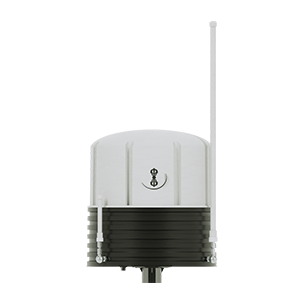
Vajra Scan S is a medium-range portable drone detector with 7 km range, passive RF methodology, IP66 rating, and wide frequency coverage. It can be vehicle-mounted or field-deployed for safeguarding airspace at high-profile events and sensitive areas.
- •7 km drone detection range
- •Passive RF methodology
- •IP66 rated for harsh environments
- •Operates from -20°C to 55°C
- •Vehicle-mountable or field-deployable
- •Frequency range 400 MHz – 6 GHz
| Ip rating | IP66 |
| Weight | 9.5 kg |
| Methodology | Passive RF |
| Dynamic range j | 70 |
| Frequency max hz | 6000000000 |
| Frequency min hz | 400000000 |
| Detection range km | 7 |
| Input voltage max (v) | 240 |
| Input voltage min (v) | 100 |
| Operational temperature max c | 55 |
| Operational temperature min c | -20 |
Technology stackOur read
Inferred from product specs — click through to the technology wiki:
ResearchComputed
Product comparisonComputed
Each row leads with this company's product, side-by-side with similar ones · click a row to expand full specs, click again to collapse
Vajra Scan (S)

ANYmal D Max
Lunar Rover R1
RB-VOGUI
Dobot M1

FarmBot | Open-Source CNC Farming
Company announcement
News and Media
The company's official social & video channels · external links

SHAKTI - Solutions Hub for Advanced Knowledge Technology & Innovation | Big Bang Boom Solutions
2026-04-13

A 250g drone! One unexpected question | PM Narendra Modi
2026-02-25

Non-Lethal Vessel Immobilization System - Dr R Shivaraman about Cnidaria Aqua Tether | Part 3
2026-02-18

Big Bang Boom Solutions’ recent iDEX win and the work underway - Part 2
2026-02-09
News
From third-party news outlets (China & abroad) · external links