Avy
Netherlands · avy.eu
SnapshotCompany claim
Avy is a Dutch drone company based in Amsterdam, building Europe's leading autonomous BVLOS drone network. It has been flying autonomous drones since 2016 and holds one of Europe's first BVLOS licenses. The company deploys drones for emergency response, medical delivery, and infrastructure inspection.
- Founded
- Not disclosed
- HQ
- Netherlands
- Models
- 3
- Categories
- 2
ContactCompany claim
- Address
- Not disclosed
Product families
Is this your company? Claim this profile to add verified data, respond to our analysis, and upgrade claims to Verified.
Claim this profile1. Executive Overview {#executive-overview}
Avy is an Amsterdam-based Dutch drone company with a clear and differentiated position: building what it describes as Europe's leading autonomous Beyond Visual Line of Sight (BVLOS) drone network. The company has been flying autonomous drones since 2016 and holds one of Europe's first BVLOS operating licenses — a regulatory credential that most peers in the sector have yet to achieve. Its core product system, the Aera fixed-wing VTOL aircraft paired with the Avy Dock autonomous ground station, is designed for real-world permanence: weatherproof, remotely operated, and capable of sustained missions across medical delivery, emergency response, and infrastructure inspection without an on-site pilot.
The company is small by design — a team of 30+ self-described "Avyators" — and positions itself explicitly as a regulatory pioneer rather than a hype-driven startup. Its leadership team includes founder Patrique Zaman, CEO Ben van der Hilst, COO Sigrid Valckx, CFO Bouke Waltman, and CTO Matthijs Damen. Avy operates across the Benelux region and broader Europe, with active hiring suggesting continued expansion. The overall picture is of a company with genuine operational credentials and a hardware-plus-infrastructure system approach that sets it apart from single-product drone vendors.
Not yet disclosed: precise founding year, total fleet deployments, customer count, or revenue figures. Avy is invited to claim or correct any detail in this report.
Latest news
- European robotics start-ups go up against Chinese heavyweightsJapan Today·2026-06-19GENERAL
- European robotics start-ups go up against Chinese heavyweightsDigital Journal·2026-06-19GENERAL
- Boston Dynamics’ Atlas robot lifts and carries full fridge autonomouslyCrypto Briefing·2026-06-18GENERAL
- KEENON Humanoid Pours Drinks at GCS 2026, 100,000 Others Run HotelsYanko Design·2026-06-15GENERAL
- Zoomlion's Humanoid Robot Z01 Shines at KOMATEK 2026, Showcasing Advances in Embodied AI and Industrial RoboticsPR Newswire UK·2026-06-10GENERAL
- Zoomlion's Humanoid Robot Z01 Shines at KOMATEK 2026, Showcasing Advances in Embodied AI and Industrial RoboticsPRNewswire·2026-06-10GENERAL
- Nvidia and Doosan expand ties to target robotics and AI factory infrastructureDigitimes·2026-06-08GENERAL
- Astrall Dynamics Unveils Integrated Quadruped Firefighting Robot Hypertron-T01 at INTERSCHUTZ 2026GlobeNewswire·2026-06-07GENERAL
2. The Company Story {#the-company-story}
Avy traces its autonomous flight operations to 2016, making it one of the earlier European entrants in the commercial BVLOS drone space. The company is headquartered in Amsterdam, Netherlands, and has built its identity around purposeful aviation — its stated mission is "drones for good," with every deployment tied to a meaningful real-world outcome such as delivering medical supplies, supporting emergency responders, or inspecting critical infrastructure.
A defining milestone in Avy's story is its acquisition of one of Europe's first BVLOS licenses. In a regulatory environment where most drone operators are still navigating basic compliance frameworks, this credential represents years of engagement with aviation authorities and a demonstrated ability to meet stringent safety and operational standards. The company explicitly frames this as a competitive moat: "Most drone companies are chasing compliance. We're ahead of it."
The company's positioning is deliberately European. While it operates and hires across the Benelux and broader European continent, it anchors its identity in Amsterdam and the European regulatory context. This is a strategic choice — European drone regulation (under EASA frameworks) is among the most demanding in the world, and operating credibly within it signals a level of maturity that translates to enterprise and government customers. The founding year is not disclosed publicly; Avy is invited to clarify this milestone for the record.
3. Product Portfolio {#product-portfolio}
Products & versions


Avy's product lineup is compact and coherent: a single aircraft platform — the Aera — paired with a purpose-built autonomous ground infrastructure system, the Avy Dock. Rather than offering a fragmented catalogue of drone models, the company has made a deliberate architectural choice to build a unified, integrated system around one aircraft.
The Aera is a VTOL (Vertical Take-Off and Landing) fixed-wing drone with a maximum take-off weight of 19.5 kg, a 2,400 mm wingspan, and a 3 kg payload capacity housed in an 8-litre internal bay (dimensions 300×200×150 mm). It achieves 100 km range on a standard 1 kWh battery, extendable to 200 km, with endurance of 75 minutes standard and up to 120 minutes extended. Cruise speed is 83 km/h (23 m/s). The aircraft operates in rain and winds up to 30 knots (55 km/h), features a QuadChute parachute recovery system for BVLOS safety certification, and carries ADS-B In/Out, Remote ID, and dual LTE with direct radio backup. Its stated use cases span medical delivery, emergency response guidance, and infrastructure inspection, with listed industry verticals including logistics, hospital, residential, and retail.
The Avy Dock is the system's ground anchor: a weatherproof autonomous docking and charging station weighing 1,650 kg, rated for static winds up to 55 knots (102 km/h) and precipitation up to 50 mm/h. It launches the Aera in under 30 seconds, achieves precision RTK GPS landings to centimetre accuracy, and charges via automated contact pins. Its internal HVAC system maintains operations between −15°C and 50°C. Seven onboard cameras (five 4MP inspection cameras and two 2.5× zoom stereo overview cameras) support monitoring and safety. Dual LTE and wired RJ45 Ethernet connectivity with five emergency-stop buttons reflect a design philosophy oriented toward permanent, unattended outdoor installation.
Together, the Aera and Avy Dock form a complete drone-network node: deploy the dock, connect it to infrastructure, and operate missions remotely at scale. This system-level thinking — rather than selling aircraft alone — is the defining shape of Avy's product strategy.
4. Technology Stack {#technology-stack}
Avy's publicly available product specifications reveal a coherent and well-specified technology stack, even where underlying software and algorithmic details are not fully disclosed.
Aircraft design: The Aera's VTOL fixed-wing configuration is a deliberate engineering tradeoff — quadcopter-style vertical lift for launch and landing without ground infrastructure, combined with fixed-wing aerodynamic efficiency for long-range cruise. At 83 km/h cruise speed and up to 120 minutes endurance, the aircraft achieves a range-to-weight profile that multirotor designs cannot match at equivalent payload. Our read: the 1 kWh battery capacity relative to 19.5 kg MTOW and 83 km/h cruise suggests a well-optimised aerodynamic design with modest energy density requirements, consistent with a purpose-built airframe rather than an adapted commercial platform.
Safety and redundancy: The QuadChute parachute recovery system is a notable design element — it signals compliance with EASA BVLOS safety requirements that mandate mitigation of ground risk. ADS-B In/Out enables cooperative surveillance with manned aviation. Dual LTE with direct radio backup provides communication redundancy. Our read: the combination of these elements reflects design choices driven specifically by BVLOS regulatory requirements, not merely marketing additions.
Ground infrastructure: The Avy Dock's RTK GPS precision landing, automated contact-pin charging, and seven-camera array represent meaningful engineering investment in unattended operations. The 30-second standby-to-launch time suggests pre-positioned, powered-up readiness rather than a cold-start system. Our read: the 3,000 kWh/year power consumption figure (2,000 kWh/year in the Netherlands context) implies near-continuous standby power draw consistent with active HVAC, cameras, and communications being always-on.
Connectivity: Dual LTE with wired Ethernet fallback on the Dock, and dual LTE with direct radio on the aircraft, form a multi-layer communication architecture. This is consistent with regulatory expectations for command-and-control link reliability in BVLOS operations.
Not yet disclosed: autonomy software stack details, flight management system architecture, sensor fusion algorithms, or third-party software dependencies. Avy is invited to share technical documentation for inclusion.
5. Research, Papers, Authors, Labs {#research-papers}
Company-linked papers
Avy does not present itself as a research-publishing organisation. It is an applied drone network operator and aircraft manufacturer. No academic papers, technical publications, or affiliated research lab relationships are referenced on the company's public site. This is entirely consistent with its positioning as a certified operational company rather than a university spinout or deep-tech R&D lab — and is not a criticism.
6. Media Evidence {#media-evidence}
Media library
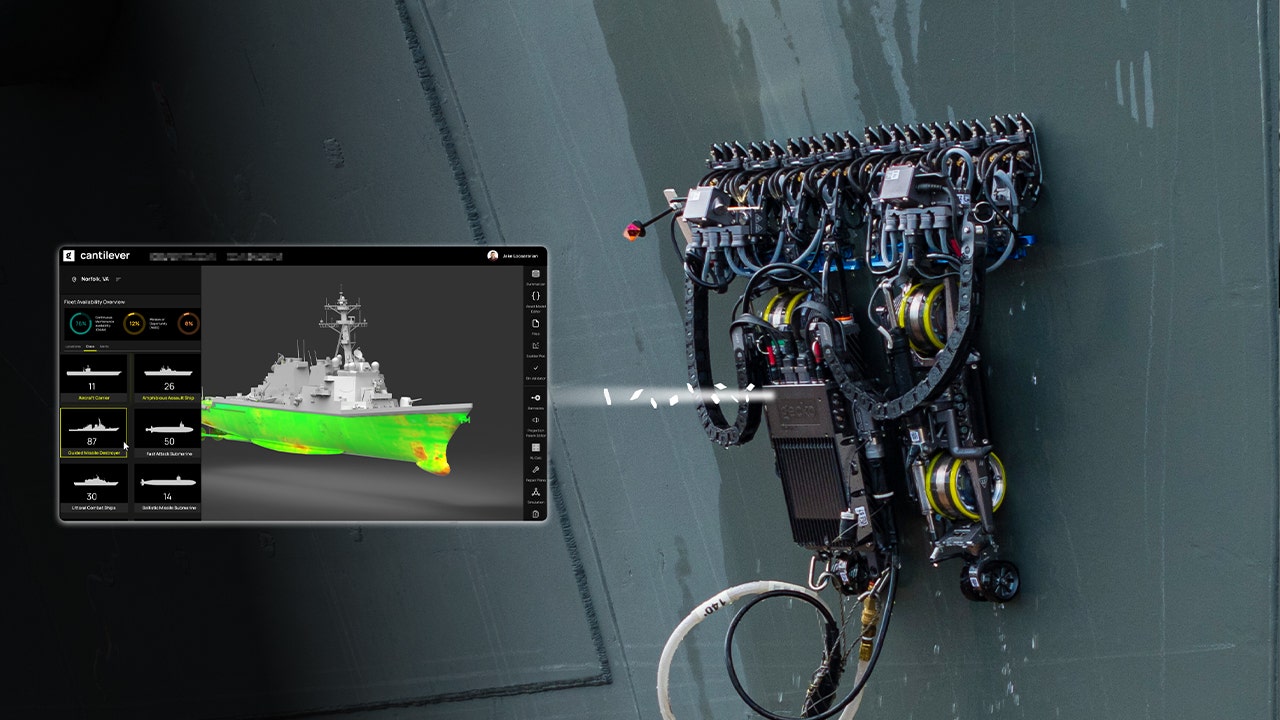
Note on press coverage in the source data: The three third-party articles supplied — from AFCEA International (2024), Fox News (2026), and Gecko Robotics (2026) — pertain to US Navy robotics and Gecko Robotics' maintenance contracts, and do not reference Avy or its products. They are not independent validation of Avy's claims and are not cited as evidence for this report. Independent press coverage of Avy specifically is not present in the supplied data. Avy is invited to submit relevant media links for inclusion.
7. Commercial Reality {#commercial-reality}
Customers & deployments
Revenue, customer count, contract values, and return-on-investment figures for Avy are not disclosed in any public source available for this report. The company states it has deployed in emergency response, medical delivery, and infrastructure inspection — but named customers, deployment volumes, and financial metrics are not publicly confirmed.
Not yet disclosed: revenue, funding rounds, named customers, fleet size in operation, mission volume, or unit economics. Avy is warmly invited to claim, correct, or expand on any commercial data for publication in this report.
8. Markets and Use Cases {#markets-use-cases}
Avy's stated deployment domains and the product use-case and industry tags extracted from its site point to three primary market verticals, each with distinct demand drivers.
Medical and emergency delivery: The Aera is explicitly listed for medical delivery, with hospital and residential listed as industry verticals. The combination of 100 km range, 3 kg payload, and all-weather operation (rain, 30-knot winds) maps directly to time-critical logistics scenarios — laboratory samples, blood products, medications, and AED delivery — where road transport introduces unacceptable delays. The Avy Dock's unattended operation makes permanent deployment at hospital campuses or regional hubs operationally viable.
Emergency response: Guidance and situational awareness missions are listed use cases. A fixed-wing VTOL drone with 75–120 minutes endurance, live sensors, and a 200 km extended range can reach incident scenes ahead of ground responders, provide aerial overwatch, and sustain persistent coverage — capabilities relevant to police, fire, and search-and-rescue operations.
Infrastructure inspection: The Aera's fuselage-integrated high-end sensors supporting livestream and recording, combined with the Dock's seven-camera monitoring array, position the system for inspection of linear assets — power lines, pipelines, railways, and wind farms — where BVLOS capability is essential to economic viability. The logistics, warehouse, and factory industry tags suggest potential industrial-site inspection applications as well.
Broader network applications: The retail and office industry tags are listed in the product data. Our read: these likely reflect last-mile or campus delivery scenarios rather than consumer retail, consistent with the Dock-enabled permanent deployment model. The full system is architected for network-scale operation — multiple Dock nodes connected to a central operations platform — rather than individual aircraft sales.
9. Competitive Landscape {#competitive-landscape}
Competitive comparison
| Robot | Maker | Autonomy | Conf. |
|---|---|---|---|
| iRobot Roomba Combo 10 Max | iRobot | Autonomous | 0.90 |
| Mobile ALOHA (Stanford) | Stanford University | Teleoperated | 0.90 |
| 1X NEO | 1X Technologies | Remote-Assisted | 0.90 |
Avy operates in the VTOL fixed-wing BVLOS drone segment — a category distinct from both consumer multirotor drones and large military UAVs. Its closest peers are companies developing similar aircraft-plus-infrastructure systems targeting logistics, emergency services, and inspection in regulated airspace, primarily in Europe and comparable regulatory jurisdictions.
The defining competitive variable in this segment is not hardware specification alone — it is regulatory standing. Avy's BVLOS license, obtained early in the European regulatory cycle, represents a durable advantage that is slow and expensive for later entrants to replicate. Companies with equivalent regulatory credentials and comparable system integration depth are the meaningful competitive set; the module above identifies the relevant peer group based on category and geography.
10. Country Advantage / Geopolitical {#geopolitical}
Avy's Dutch and broader European context is materially relevant to its business. The Netherlands sits within the EASA (European Union Aviation Safety Agency) regulatory framework, which governs drone operations across EU member states and several associated countries. Achieving a BVLOS license under EASA represents compliance with one of the world's most stringent civil aviation regulatory regimes — and positions Avy's certifications as portable across the European single aviation market.
The Netherlands additionally has a strong tradition of pragmatic regulatory engagement in emerging technology sectors and is home to a cluster of aerospace and logistics innovation. Amsterdam's position as a European logistics and technology hub provides proximity to potential customers in healthcare networks, emergency services, and critical infrastructure operators across the Benelux and wider Europe.
Our read: operating under EASA rather than a lighter-touch national framework is a harder path in the short term but creates a more defensible commercial position — certifications earned in the EU carry credibility with enterprise and government customers globally that national-only approvals do not.
11. Hype vs Real vs Ugly {#hype-real-ugly}
Claim tracker
Verified / operationally grounded:
- Avy states it has been flying autonomous drones since 2016 — a timeline that, if accurate, predates most European commercial BVLOS operators. (Company claim; not independently verified in supplied data, but consistent with the company's regulatory standing.)
- The Aery holds one of Europe's first BVLOS licenses. (Company claim; consistent with the regulatory positioning throughout the company's public materials.)
- The Aera and Avy Dock specifications are detailed, internally consistent, and reflect genuine engineering specificity — MTOWs, battery capacities, RTK precision landing, wind ratings, HVAC ranges. These are not vague marketing claims; they are verifiable hardware parameters.
Company claims requiring external validation:
- "Europe's leading autonomous BVLOS drone network" — Company claim. "Leading" is an unverified superlative. The claim is plausible given early regulatory credentials but has not been independently benchmarked in the data available for this report.
- Deployments in emergency response, medical delivery, and infrastructure inspection — Company claim. No named customers, contract volumes, or independent case studies are available in the supplied data to substantiate deployment scale.
Gaps — not negatives, invitations:
- Not yet disclosed: customer names, mission counts, fleet size, revenue, or third-party audit of operational performance. Avy is invited to provide supporting evidence for publication.
Our read: Avy presents as a company that has done the hard regulatory work and built a genuinely specified product system. The gap between stated deployment breadth and publicly evidenced deployment detail is the primary area to watch — not because the claims are implausible, but because independent corroboration would substantially strengthen the commercial narrative.
12. Future Scenarios {#future-scenarios}
Our read — Bull case: EASA finalises its BVLOS framework in a form that rewards early licence holders, creating a multi-year barrier to entry for competitors. Avy converts its regulatory lead into a network-of-docks infrastructure play across European healthcare and emergency services, signing anchor contracts with national health systems or public safety agencies. The Dock-as-infrastructure model enables recurring revenue and defensible geography. Avy becomes the operational backbone of European medical drone logistics.
Our read — Base case: Avy grows steadily within the Benelux and adjacent markets, expanding its Dock network node by node through a mix of government, healthcare, and industrial inspection contracts. Regulatory complexity across EU member states slows expansion velocity but does not block it. The company remains small and focused, building a profitable niche as a certified BVLOS operator before contemplating platform or partnership scale.
Our read — Bear case: Regulatory timelines for expanded BVLOS operations slip significantly across key EU markets, compressing addressable revenue. Larger aerospace or logistics players acquire regulatory credentials and deploy capital to replicate the Dock infrastructure model at scale, narrowing Avy's first-mover window. The 30+ person team size creates execution risk if multiple large deployments are pursued simultaneously without proportional scaling.
13. What to Watch {#what-to-watch}
- BVLOS licence expansions: Any new country or operational category approvals under EASA or national frameworks signal market access growth.
- Named customer announcements: First public disclosure of a hospital network, emergency service, or utility operator contract would materially validate the commercial narrative.
- Avy Dock deployment count: The number of permanently installed Dock nodes is the most direct indicator of network scale — watch for any public reference to installation milestones.
- Regulatory developments: EASA's evolving BVLOS rules (U-space, specific category operations) directly shape Avy's competitive moat; monitor for rulings that broaden or restrict current licence holders' advantages.
- Team and funding signals: Job postings (especially commercial, sales, and operations roles) and any disclosed funding rounds are leading indicators of growth trajectory.
- Extended-range Aera missions: Public case studies using the 200 km extended battery configuration would demonstrate the system's upper operational envelope and open infrastructure inspection as a documented use case.
- Competitive entries: New VTOL fixed-wing operators achieving BVLOS certification in the EU would mark narrowing of Avy's regulatory lead.
14. Sources & Methodology {#sources-methodology}
Primary source: All factual claims in this report are grounded exclusively in content extracted from Avy's own website (avy.eu), including the About page, product descriptions, and product specifications. All such claims are labelled as company claims and have not been independently audited for this report.
Press / third-party sources: Three third-party articles were supplied in the source data (AFCEA International, Fox News, Gecko Robotics, 2024–2026). These articles concern US Navy robotics topics unrelated to Avy and are not cited as evidence in this report.
Computed relations: Category classifications, competitive landscape framing, and technology inferences are derived analytically from the product data and labelled "Our read:" throughout.
What this report is not: This is not a due-diligence audit, a financial analysis, or an independent verification of operational claims. It is a structured intelligence summary based on publicly available company-sourced information.
Rubric (applied uniformly to every company assessed on this platform):
- Ground claims in supplied data only.
- Label inferences, company claims, and gaps explicitly.
- Present strengths before gaps in every section.
- Never assert unsourced negatives as fact.
- Invite the company to correct or expand any data point.
- Apply identical analytical standards regardless of company size, geography, or sector.
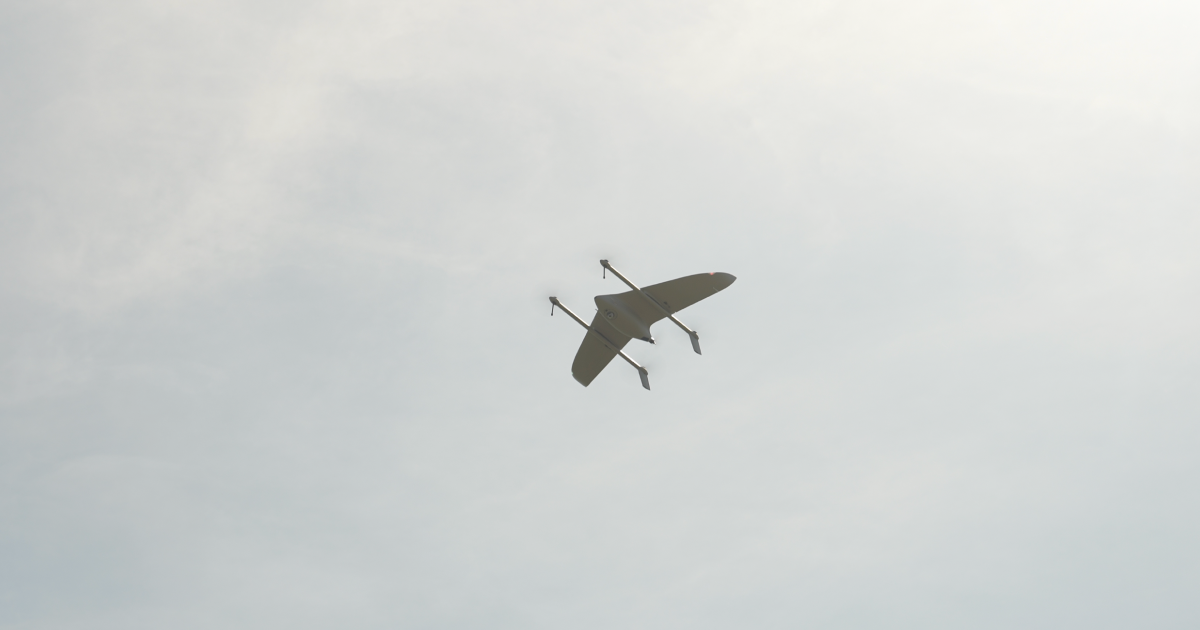
The Aera is a robust VTOL fixed-wing drone designed for remote operations. It combines vertical takeoff and landing with efficient fixed-wing cruise, achieving up to 100 km range on a standard battery (200 km extended) and 75 minutes endurance (120 min extended). It carries up to 3 kg payload in an 8 L bay, operates in rain and 30-knot winds, and features QuadChute parachute, ADS-B In/Out, dual LTE, and autonomous docking. Built for BVLOS missions over large areas.
- •VTOL fixed-wing design: vertical takeoff/landing, efficient cruise
- •100 km range on standard battery, 200 km with extended battery
- •75 min endurance standard, 120 min with extended battery
- •3 kg payload capacity (2 kg with parachute), 8 L payload bay
- •Operates in rain and wind up to 30 knots (55 km/h)
- •QuadChute parachute recovery system for BVLOS safety
- •ADS-B In/Out, Remote ID, dual LTE + direct radio backup
- •Autonomous operation with Avy Dock: launch, fly, land, charge
- •Payload bay accepts sensors, cargo, AI compute; tool-free swap
- •Dual GNSS + RTK, triple IMU, dual heated pitot tubes
| Mtow (kg) | 19.5 |
| Range km | 100 |
| Width | 2400 mm |
| Height | 300 mm |
| Length | 1500 mm |
| Payload | 3 kg |
| Turn radius m | 90 |
| Charge time (min) | 60 |
| Cruise speed (ms) | 23 |
| Range at mtow km | 80 |
| Cruise speed (kmh) | 83 |
| Payload volume (l) | 8 |
| Extended range km | 200 |
| Max endurance (min) | 75 |
| Operating temp max c | 40 |
| Operating temp min c | 0 |
| Wind resistance (kmh) | 55 |
| Battery capacity (kwh) | 1 |
| Payload dimensions (mm) | 300x200x150 |
| Wind resistance knots | 30 |
| Extended endurance (min) | 120 |
| Extended range at mtow km | 170 |
| Payload with parachute (kg) | 2 |
Technology stackOur read
Inferred from product specs — click through to the technology wiki:
ResearchComputed
Product comparisonComputed
Each row leads with this company's product, side-by-side with similar ones · click a row to expand full specs, click again to collapse
Aera

ANYmal D Max
Lunar Rover R1
RB-VOGUI
Dobot M1

FarmBot | Open-Source CNC Farming
Company announcement
News and Media
The company's official social & video channels · external links
News
From third-party news outlets (China & abroad) · external links