ASI Robots
United States · asirobots.com
SnapshotCompany claim
ASI Robots develops and deploys autonomous solutions for dull, dirty, and dangerous jobs. Headquartered in Cache Valley, Utah, with offices in Dallas/Fort Worth, Texas and Lehi, Utah, the company values innovation, teamwork, and integrity.
- Founded
- Not disclosed
- HQ
- United States
- Models
- 4
- Categories
- 2
ContactCompany claim
- Address
- Not disclosed
Product families
Is this your company? Claim this profile to add verified data, respond to our analysis, and upgrade claims to Verified.
Claim this profile1. Executive Overview {#executive-overview}
ASI Robots (formally Autonomous Solutions Inc.) is a Utah-headquartered robotics company with a clear and consistent mission: automating the dull, dirty, and dangerous jobs that characterize heavy industry, agriculture, logistics, and land management. Operating out of Cache Valley, Utah — with additional offices in Dallas/Fort Worth, Texas and Lehi, Utah — the company has built a platform-first approach to autonomy, centering its entire product lineup on the Mobius fleet management platform. This architecture allows ASI to retrofit existing vehicles rather than manufacture new ones from scratch, an OEM-agnostic posture that meaningfully lowers the barrier to adoption for industrial customers already invested in specific equipment brands.
The company's breadth is notable: its autonomous systems span civil construction (articulated dump trucks, dozers, excavators), precision agriculture (tractors, sprayers, mowers), logistics yard management, and commercial landscaping. CEO Mel Torrie has publicly positioned ASI as having executed what the company describes as "the world's largest mining autonomy deployment," a claim documented in a published white paper. The March 2026 acquisition of Scythe Robotics, reported by Robotics and Automation News, signals deliberate expansion into autonomous landscaping and industrial equipment at scale — one of the clearest strategic moves in ASI's recent public record.
Not yet disclosed: founding year, total headcount, and cumulative revenue figures. The company invites correction or disclosure at info@asirobots.com.
Latest news
- KEENON Humanoid Pours Drinks at GCS 2026, 100,000 Others Run HotelsYanko Design·2026-06-15GENERAL
2. The Company Story {#the-company-story}
ASI Robots operates under the legal alternate name Autonomous Solutions Inc., a detail surfaced in the company's own structured site data. The headquarters in Cache Valley, Utah, is not incidental: the region is home to Utah State University, a research-active institution whose proximity to ASI suggests a natural pipeline for engineering and robotics talent, though no formal research partnership has been publicly confirmed.
The company's stated founding date is not publicly disclosed. What the public record does reveal is a company that has been consistently visible in trade media: Robotics 24/7 covered ASI as early as November 2020, indicating a company with at least several years of commercial activity predating that coverage. The Owler company profile further corroborates ASI's status as a recognized participant in the robotics industry, though specific financial and headcount data from that source are not reproduced here.
The most significant disclosed milestone in the available record is the acquisition of Scythe Robotics, reported by Robotics and Automation News on March 12, 2026. This acquisition positions ASI to accelerate its autonomous landscaping capabilities — a market the company had already addressed organically through its ASI Landscaping product line — while simultaneously deepening its bench in industrial equipment autonomy. The company's white paper authored by CEO Mel Torrie, which details lessons from large-scale mining autonomy deployments, further reinforces ASI's positioning as a practitioner-led organization drawing on real operational deployments rather than purely theoretical roadmaps.
Culturally, ASI has achieved Great Place to Work certification and reports that 94% of employees feel genuinely welcomed upon joining, per the company's own culture page. The company actively recruits through its Cache Valley headquarters and positions the outdoor lifestyle of the region — skiing, mountain biking, hiking — as part of its employer brand, a pragmatic strategy for attracting engineering talent to a non-coastal location.
3. Product Portfolio {#product-portfolio}
Products & versions


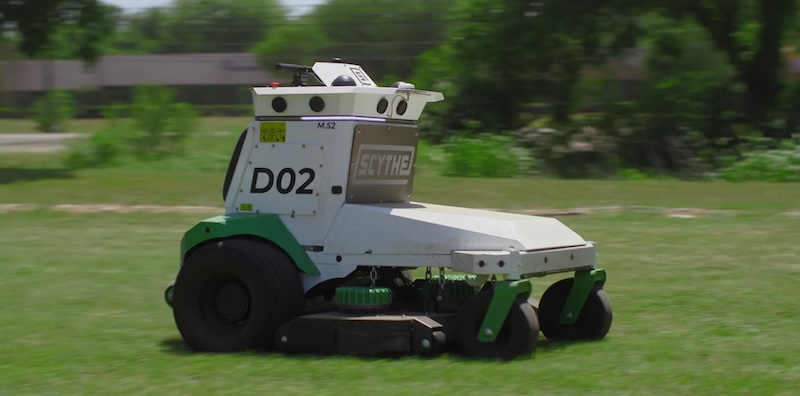
ASI's product lineup clusters into two broad families: heavy industrial autonomy and outdoor/terrain autonomy. Within heavy industrial, the company offers the Autonomous Construction Equipment System and the Autonomous Yard Management System — both anchored to the Mobius platform and both oriented toward environments where labor costs, safety risks, and operational continuity are primary concerns. The construction system emphasizes retrofit compatibility with existing articulated dump trucks and other heavy machinery, using a patented on-board Vehicle Control Unit (VCU) alongside a multi-modal communications stack (GPS, radios, beacons, cameras) to enable full fleet-level command and control. The yard management system layers RFID, GPS, and Bluetooth tracking onto logistics environments to automate truck check-in, zone definition, and shipment visibility — with teleoperation as a safety mechanism to keep personnel out of active vehicle paths.
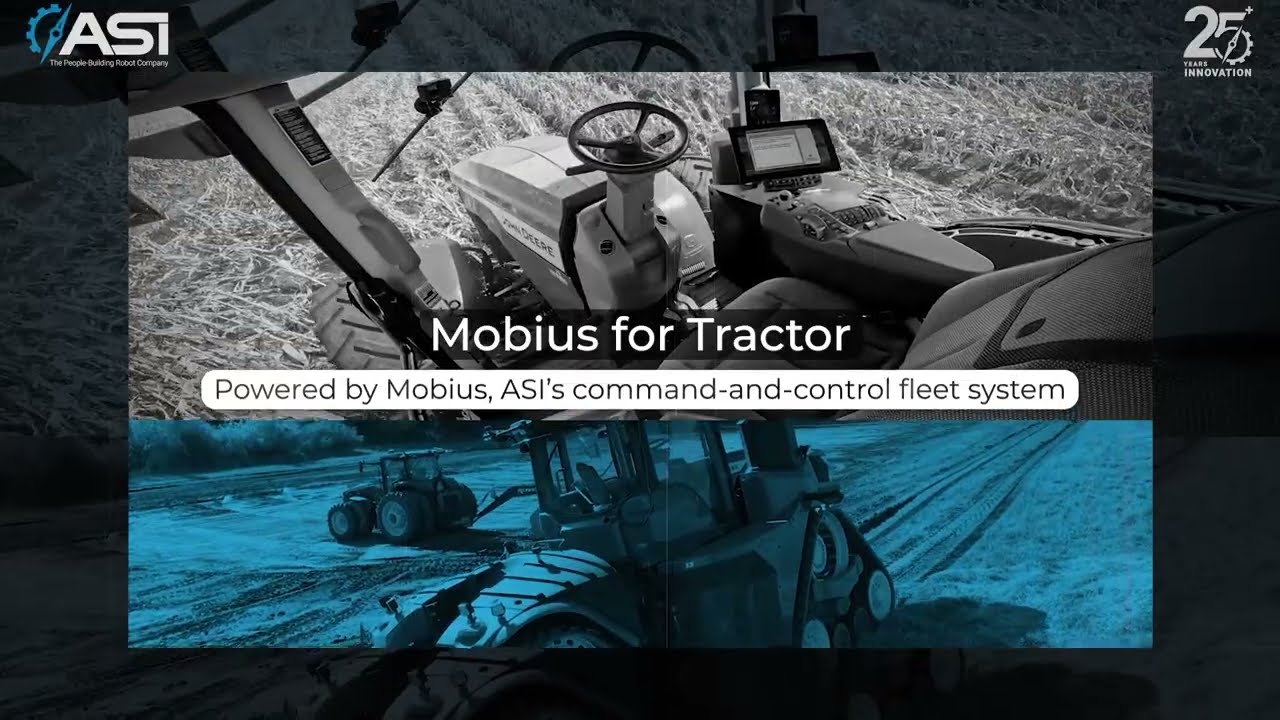
The outdoor family spans agricultural and landscaping applications. The Autonomous Farming Equipment System retrofits tractors, sprayers, and mowers with a Vehicle Automation Kit, supporting 24/7 driverless operation, tandem multi-vehicle field coverage, and path-generating algorithms optimized for both broad-acre and orchard/vineyard geometries. The ASI Landscaping product — expanded by the Scythe Robotics acquisition — extends autonomous mowing, hauling, and ground maintenance to residential, retail, and office environments, with redundant keep-alive and obstacle detection systems built in. Across all four products, the Mobius platform serves as the unifying command layer, which is a deliberate architectural choice that enables cross-vertical fleet visibility and positions ASI as a software-plus-hardware systems integrator rather than a single-purpose robotics vendor.
4. Technology Stack {#technology-stack}
The most publicly documented technology asset at ASI Robots is the Mobius fleet management platform, which functions as the command-and-control backbone across all four product lines. Mobius handles multi-vehicle coordination, task assignment, location tracking, and remote supervision — a scope that places it in the category of a full autonomous vehicle operating system rather than a narrow telematics tool.
Our read: The consistent emphasis on OEM-agnostic retrofit architecture suggests ASI's core IP lives in the software and integration layer — specifically in the VCU (Vehicle Control Unit), which the company describes as patented, and in Mobius's ability to abstract away vehicle-specific control interfaces. This is a defensible and capital-efficient technical position: rather than competing with OEMs on hardware, ASI enables those OEMs' existing fleets to become autonomous.
The sensing stack described across products includes GPS, radios, beacons, cameras, RFID, Bluetooth, and obstacle detection arrays — a heterogeneous sensor fusion approach consistent with outdoor and industrial environments where no single sensing modality is reliable in all conditions. Our read: The breadth of communication modalities (rather than reliance on a single network type) suggests ASI has designed for environments with intermittent connectivity, such as mine sites, large agricultural fields, and busy logistics yards — a practical constraint that pure LiDAR-first indoor robotics vendors often do not face.
Path-generating algorithms for broad-acre and orchard coverage are specifically called out for the agricultural product, indicating non-trivial computational geometry work tailored to irregular field boundaries. Limited public technical detail is available on the specific algorithmic approaches, sensor fusion methodologies, or machine learning components, if any, that underpin obstacle detection. Not yet disclosed: model architecture details, compute hardware specifications, or software development kit availability. ASI is invited to share additional technical documentation at info@asirobots.com.
5. Research, Papers, Authors, Labs {#research-papers}
Company-linked papers
ASI Robots does not appear to be an academic-publishing organization in the traditional sense, and no peer-reviewed papers or conference proceedings are listed in the available data. This is consistent with the profile of a deployment-focused industrial robotics company — most firms in this category direct their technical output toward product development and customer engagements rather than academic publication pipelines.
What ASI has published publicly is a white paper authored by CEO Mel Torrie on the subject of industrial vehicle autonomy, drawing on lessons from what the company describes as the world's largest mining autonomy deployment. This practitioner white paper is the primary documented research-adjacent output. It is a company-claim document, not independently peer-reviewed, and should be read accordingly — but it does represent substantive, operationally grounded technical and strategic content rather than marketing collateral. The company's proximity to Utah State University is noted; any formal research collaboration remains not yet disclosed.
6. Media Evidence {#media-evidence}
Media library
ASI Robots has documented third-party press coverage across at least two relevant trade outlets. Robotics and Automation News (roboticsandautomationnews.com) reported on March 12, 2026, on ASI's acquisition of Scythe Robotics — a transaction-level story that confirms commercial scale and strategic intent. Robotics 24/7 (robotics247.com) carried coverage of ASI as of November 2020, establishing a multi-year presence in trade media. The Owler platform also maintains a company profile for ASI, which is consistent with a company of recognized commercial standing in the robotics sector. No consumer press, academic press, or broadcast media coverage is documented in the available data.
7. Commercial Reality {#commercial-reality}
Customers & deployments
Revenue, customer count, and ROI figures for ASI Robots are not disclosed in any available public source. The company's white paper references "the world's largest mining autonomy deployment" (company-claim), which implies at least one large-scale, revenue-generating industrial engagement, but no customer name, contract value, or fleet size has been publicly confirmed.
The acquisition of Scythe Robotics (reported March 2026) is the strongest available proxy for commercial momentum: acquisitions at this stage typically require both the capital and the strategic confidence that come from a functioning revenue base. The company's multi-office footprint (Cache Valley, DFW, Lehi) and Great Place to Work certification similarly suggest an organization of meaningful operational size, though headcount figures are not disclosed.
ASI Robots is invited to submit verified customer data, revenue ranges, or deployment case studies for inclusion in this report. Contact: info@asirobots.com. All submitted data will be labeled clearly as company-provided.
8. Markets and Use Cases {#markets-use-cases}
ASI's product descriptions and industry tags map to four distinct market verticals, each with its own demand driver:
Civil Construction: The Autonomous Construction Equipment System targets earthmoving and material-transport workflows — specifically articulated dump trucks and related heavy machinery — on construction sites where cycle-time efficiency, operator fatigue, and safety in active dig zones are persistent operational challenges. The retrofit approach is well-suited to construction companies that own existing fleets and cannot justify wholesale equipment replacement.
Logistics and Warehousing: The Autonomous Yard Management System addresses the logistics, warehouse, and factory sectors. Yard management is a well-recognized pain point in supply chain operations: truck dwell time, check-in bottlenecks, and trailer visibility gaps are quantifiable inefficiencies. The system's use of RFID, GPS, and Bluetooth for real-time tracking, combined with teleoperation for safety, positions it for adoption at distribution centers, manufacturing plants, and intermodal facilities.
Precision Agriculture: The Autonomous Farming Equipment System targets broad-acre crop production, orchards, and vineyards — environments where labor scarcity is acute, field conditions are variable, and 24/7 operation during time-sensitive planting or harvest windows has direct economic value. The multi-vehicle tandem coverage capability is particularly relevant for large agricultural operations seeking to compress operational windows.
Commercial Landscaping: The ASI Landscaping product, now augmented by the Scythe Robotics acquisition, addresses labor-constrained grounds maintenance across residential, retail, and office environments. Autonomous mowing, hauling, and routine ground tasks reduce dependency on seasonal labor while extending operational hours beyond what human crews can sustain. This is one of the faster-growing segments in service robotics, driven by persistent labor shortages in grounds maintenance.
9. Competitive Landscape {#competitive-landscape}
Competitive comparison
| Robot | Maker | Autonomy | Conf. |
|---|---|---|---|
| iRobot Roomba Combo 10 Max | iRobot | Autonomous | 0.90 |
| Mobile ALOHA (Stanford) | Stanford University | Teleoperated | 0.90 |
| 1X NEO | 1X Technologies | Remote-Assisted | 0.90 |
ASI Robots competes across multiple segments simultaneously — construction autonomy, agricultural robotics, logistics yard management, and commercial landscaping — which means its competitive set is not a single cohesive group but rather a collection of segment-specific peers. In heavy industrial and mining autonomy, the relevant comparators are established players who have pursued OEM-integrated rather than OEM-agnostic strategies. In agricultural robotics, the field includes both retrofit-focused companies and purpose-built autonomous machinery vendors. In landscaping, the Scythe Robotics acquisition directly consolidates one competitive relationship while signaling intent to lead the autonomous outdoor equipment category.
Our read: ASI's platform-agnostic, retrofit-first positioning is a differentiated stance relative to competitors who tie autonomy to proprietary hardware. This approach reduces customer switching costs at the point of entry — a customer need not retire existing equipment — but requires ASI to maintain integration quality across a wide range of OEM vehicle types, which is an ongoing engineering discipline rather than a one-time investment. The module above reflects computed peer relationships; no competitor is named in prose to avoid unverified characterizations.
10. Country Advantage / Geopolitical {#geopolitical}
Section not material for this company.
11. Hype vs Real vs Ugly {#hype-real-ugly}
Claim tracker
What appears well-grounded: The OEM-agnostic retrofit architecture and the Mobius platform are consistently described across all four products in specific, coherent technical terms — VCU hardware, named communication modalities, obstacle detection arrays. This internal consistency suggests a real, deployed technology stack rather than a conceptual one. The Scythe Robotics acquisition, reported by an independent trade outlet, is the strongest external validation of commercial scale and strategic execution in the available record.
Company claims to hold with appropriate scrutiny:
- "World's largest mining autonomy deployment" — this is a company claim made in the CEO's white paper. It is plausible given ASI's tenure in the sector, but no independent verification, customer name, site location, or fleet size has been publicly confirmed. Readers should treat it as a meaningful but unverified assertion until third-party corroboration is available.
- The 94% employee welcome rate and Great Place to Work certification are company-reported figures from the culture page. The GPTW certification is a third-party process, which lends it modest independent weight, but the underlying survey methodology and sample size are not disclosed.
- "Global" deployment language appears in the culture page ("deploying cutting-edge autonomous solutions globally") — the geographic scope of actual deployments is not yet disclosed beyond the company's U.S. office locations.
Not yet disclosed / fixable gaps: Founding year, total employee count, revenue, named customer references, and specific deployment site data are all absent from the public record. ASI is invited to submit any of these for inclusion at info@asirobots.com.
12. Future Scenarios {#future-scenarios}
Our read — Bull case: The Scythe Robotics acquisition closes cleanly and accelerates ASI's landscaping revenue while adding engineering talent and autonomous outdoor hardware IP. The Mobius platform gains traction as a cross-vertical fleet OS, and one or more of the company's large industrial customers (mining, construction, or agriculture) becomes a publicly referenceable case study, catalyzing new pipeline. The proximity to Utah State University deepens into a formal research or talent partnership. ASI consolidates its retrofit-first positioning into a defensible platform moat as competitors struggle with OEM lock-in.
Our read — Base case: ASI grows steadily across its four verticals, with agricultural and landscaping segments expanding fastest due to acute labor shortages in those markets. The Scythe acquisition adds meaningful landscaping capabilities but requires 12–24 months of integration work before full synergies are realized. Mobius continues to serve as the unifying platform but faces pressure to expand its API ecosystem to remain competitive as the industrial IoT landscape matures. The company remains privately held with limited public disclosure.
Our read — Bear case: Integration complexity from acquiring Scythe Robotics stretches engineering resources and delays product roadmaps in core verticals. OEM partners in construction and agriculture develop competing in-house autonomy capabilities, narrowing ASI's retrofit market. Labor market tightening in rural Utah increases talent acquisition costs. Without public customer references, enterprise sales cycles remain long and capital-intensive relative to the company's disclosed scale.
13. What to Watch {#what-to-watch}
- Scythe Robotics integration: Product roadmap updates, personnel retention, and any new landscaping customer announcements following the March 2026 acquisition.
- Named customer disclosures: Any publicly referenceable deployment in mining, construction, or large-scale agriculture would significantly validate the "world's largest mining deployment" claim and accelerate enterprise pipeline.
- Mobius platform evolution: Watch for API announcements, third-party integrations, or a developer ecosystem launch — signals that ASI is positioning Mobius as a platform play beyond its own hardware.
- Geographic expansion: The "global deployments" claim warrants monitoring; any international office announcement or non-U.S. customer reference would confirm this trajectory.
- Funding or M&A activity: No funding rounds are disclosed; watch for Series announcements, strategic investor disclosures, or additional acquisitions as indicators of capital access and growth velocity.
- Utah State University partnership: Given geographic proximity and the company's engineering culture, a formal research or talent pipeline announcement would be a meaningful talent-strategy signal.
- Regulatory environment: U.S. autonomous vehicle and agricultural robotics regulatory developments (NHTSA, USDA, state-level) could materially accelerate or constrain deployment timelines across ASI's verticals.
14. Sources & Methodology {#sources-methodology}
Primary source: All factual claims in this report are grounded exclusively in data extracted from ASI Robots' own website (asirobots.com), including structured schema markup, product descriptions, key feature lists, the culture/about page, and white paper references. All content drawn from this source is labeled (company-claim) — it represents what ASI says about itself, not independently audited fact.
Third-party press: Three external sources are cited by name — Robotics and Automation News (roboticsandautomationnews.com, March 12, 2026), Robotics 24/7 (robotics247.com, November 2020), and Owler (owler.com). These are treated as independent validation of the specific claims they report (acquisition announcement, trade presence, company profile existence), not as endorsements of the company's broader claims.
Inferences: Analytical interpretations not directly stated in the source data are labeled "Our read:" throughout the report. These represent the analyst's reasoned judgment and should be evaluated accordingly.
Gaps: Where information is absent from the source data, the report uses the formulation "Not yet disclosed:" rather than asserting a negative. ASI Robots is invited to submit corrections, clarifications, or additional data to info@asirobots.com.
Rubric applied uniformly: This methodology — company-site extraction as primary source, named third-party press as secondary validation, labeled inferences, and explicit gap notation — is applied consistently to every company report in this series. No company receives favorable or unfavorable treatment relative to the available data.
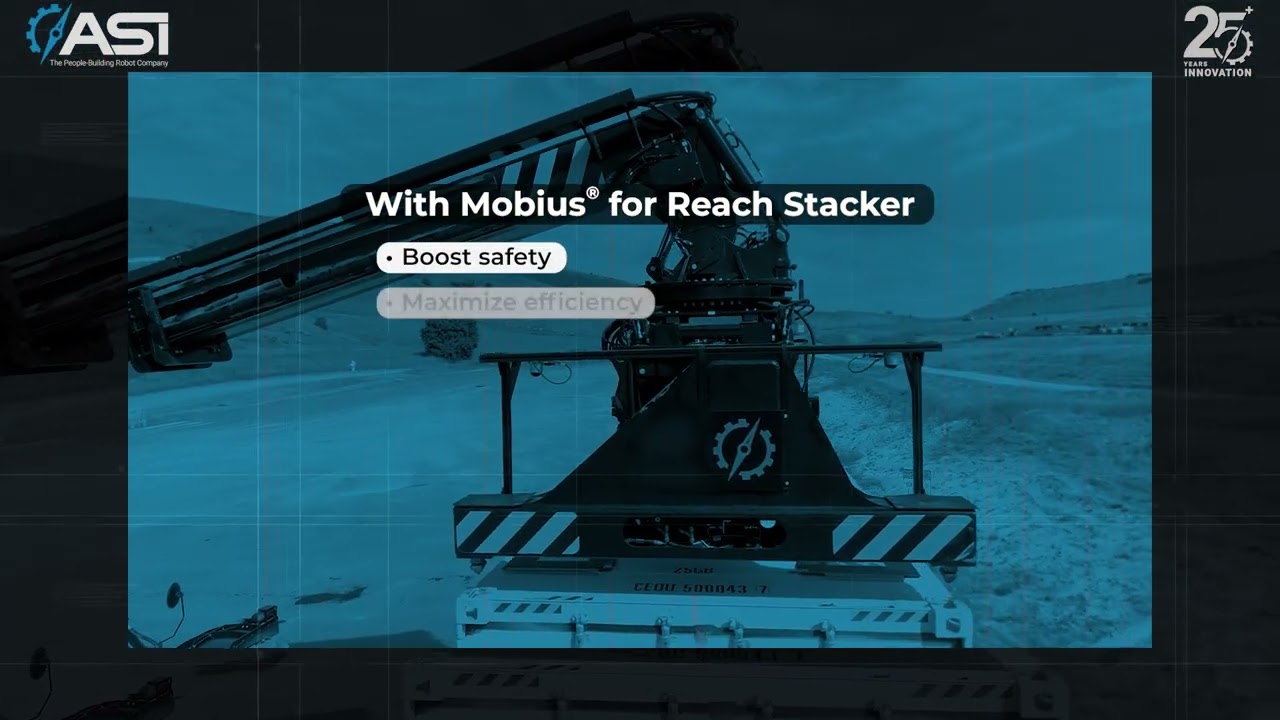
ASI Robots' Autonomous Construction Equipment System enables heavy equipment automation for civil construction. Using the Mobius fleet management platform, it converts existing dump trucks, dozers, and excavators into autonomous vehicles. Features OEM-agnostic command, obstacle awareness, and scalable deployment from individual units to full fleet integration.
- •OEM-agnostic command and control via Mobius platform
- •Scalable modular deployment from individual to full fleet
- •Converts existing articulated dump trucks into autonomous ADTs
- •Obstacle awareness sensor array with real-time response
- •Patented on-board Vehicle Control Unit (VCU) for vehicle management
- •Multi-vehicle command and control for location, tasks, and movements
- •Communication via GPS, radios, beacons, and/or cameras
Detailed specs not disclosed.
Technology stackOur read
Inferred from product specs — click through to the technology wiki:
ResearchComputed
Product comparisonComputed
Each row leads with this company's product, side-by-side with similar ones · click a row to expand full specs, click again to collapse
Autonomous Construction Equipment System
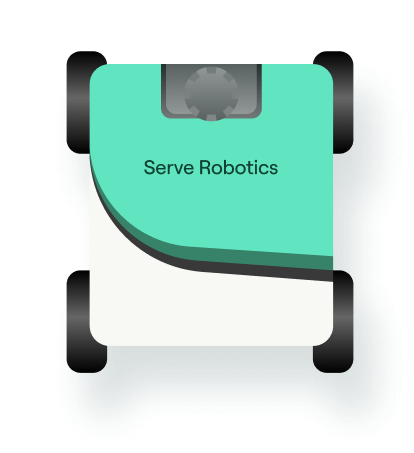
Serve Gen 3
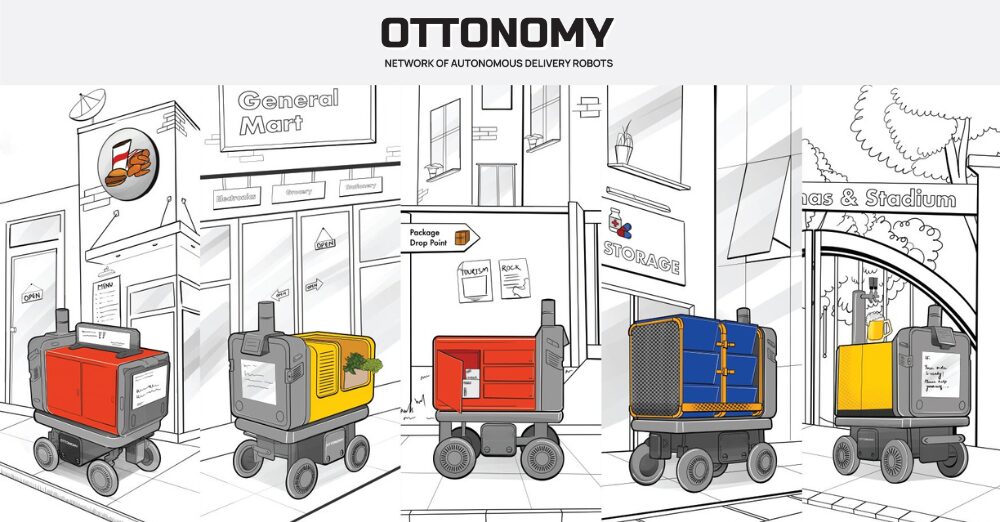
Ottobot
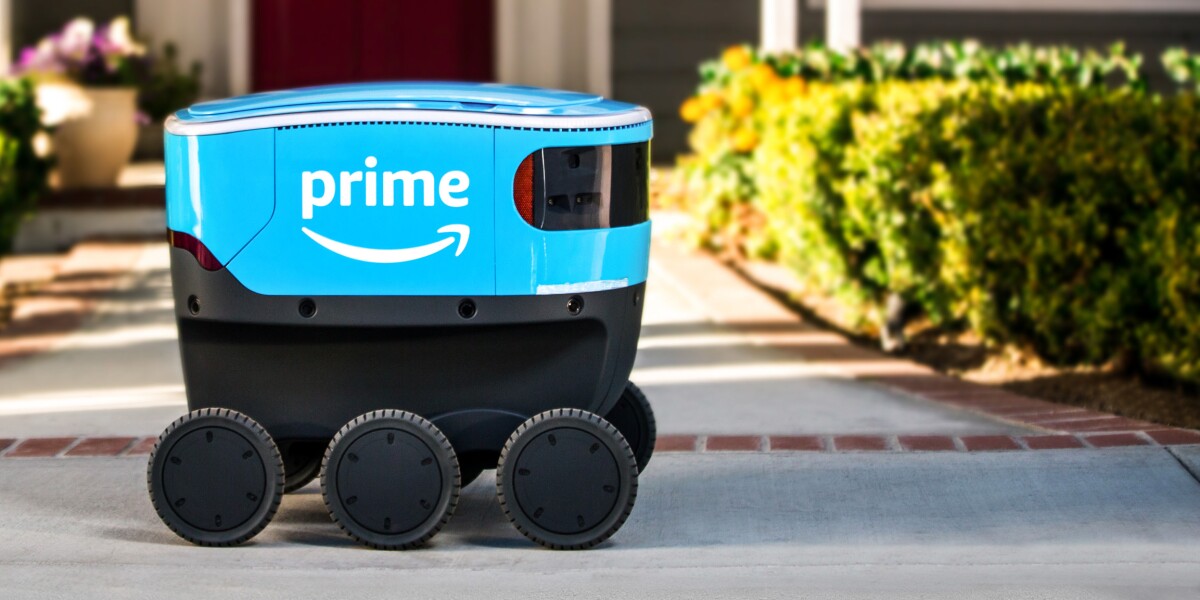
Amazon Scout

LuckiBot Pro

KettyBot

Autonomous Yard Management System
Ottobot
Amazon Scout
LuckiBot Pro
KettyBot
Pudu CC1
Autonomous Farming Equipment System
Lunar Rover R1

ANYmal Research
RB-VOGUI
Dobot M1

Kress EyePilot® 4×4 RTK

ASI Landscaping
ANYmal Research
RB-VOGUI
Dobot M1
Kress EyePilot® 4×4 RTK

FarmDroid | Advanced Agricultural Robots for Modern Farming
Company announcement
News and Media
The company's official social & video channels · external links


News
From third-party news outlets (China & abroad) · external links