Aero Systems West
Founded 2015 · United States · aerosystemswest.com
SnapshotCompany claim
Aero Systems West (ASW) is a U.S.-based manufacturer of industrial-grade UAVs, designing and building all systems in California. Founded in 2015, ASW delivers scalable drone solutions for commercial, government, and defense applications, backed by global safety leader Nippon Kayaku.
- Founded
- 2015
- HQ
- United States
- Models
- 29
- Categories
- 4
Product families
Is this your company? Claim this profile to add verified data, respond to our analysis, and upgrade claims to Verified.
Claim this profile1. Executive Overview {#executive-overview}
Aero Systems West (ASW) is a California-based manufacturer of industrial-grade unmanned aerial vehicles (UAVs), founded in 2015 and operating across commercial, government, and defense markets. The company's principal strengths are its U.S.-based design and manufacturing, a decade of hands-on field experience spanning test ranges and open-pit mining operations, and its institutional backing from Nippon Kayaku — a global safety-products conglomerate whose pyrotechnic and safety-systems expertise directly informs ASW's product line, including the PARASAFE drone parachute system. ASW's CEO, Takeshi Yoshida, comes directly from Nippon Kayaku, reinforcing that the parent relationship is operational, not merely financial.
ASW occupies a credible mid-tier position in the U.S. industrial drone market: it is not a venture-funded hypergrowth play, but a manufacturing-oriented company with demonstrable products, published specifications, and third-party validation from outlets including Squishy Robotics and ModalAI. Its active participation in ASTM standards development and its open-architecture partnerships with CubePilot and the ArduPilot community signal a company building for long-term interoperability rather than proprietary lock-in. Leadership depth — including a COO with Air Force Research Laboratory and Air Force Institute of Technology credentials, and a CTO with Air Force Life Cycle Management experience — lends particular credibility to its government and defense positioning.
Not yet disclosed: precise revenue figures, total fleet deployments, and headcount. Interested parties with corrections or additional context are invited to submit a claim.
Latest news
- KEENON Humanoid Pours Drinks at GCS 2026, 100,000 Others Run HotelsYanko Design·2026-06-15GENERAL
2. The Company Story {#the-company-story}
Aero Systems West was founded in 2015 in California, entering the commercial UAV market at a point when industrial-grade multirotor platforms were beginning to displace legacy fixed-wing and helicopter solutions for specialized operations. The company's founding premise — U.S.-manufactured, mission-configurable platforms for professional operators — has remained consistent across its decade of operation.
The strategic inflection point in ASW's history is its relationship with Nippon Kayaku, a Japanese company with over a century of operation in safety-critical industries including automotive airbag inflators, pharmaceutical chemistry, and industrial explosives. Nippon Kayaku's involvement is more than a capital event: it brought ASW into contact with industrial-grade pyrotechnic deployment technology, which underpins the PARASAFE parachute system — one of the most technically differentiated products in the portfolio. CEO Takeshi Yoshida's background at Nippon Kayaku bridges both organizations, and ASW describes its operational culture through the phrase "the Kayaku Spirit," connoting precision, reliability, and safety-first engineering.
The leadership team's deep roots in U.S. Air Force research and engineering institutions — COO Charles Neal at Air Force Research Laboratories and the Air Force Institute of Technology, CTO Daniel Neal at the Air Force Life Cycle Management Center and the 711th Human Performance Wing — give the company a credible pathway into government and defense procurement. This is reinforced by ASW's participation in ASTM standards working groups for unmanned aircraft systems, which positions it as a shaper of the regulatory environment rather than a passive follower.
By 2025, ASW's public footprint includes a 29-product catalog spanning heavy-lift airframes, a modular drone platform (ROAM™), drone safety hardware (PARASAFE), and a full suite of CubePilot-ecosystem avionics and accessories. The company's about page was last modified in September 2025, indicating active site maintenance and continued operational status.
3. Product Portfolio {#product-portfolio}
Products & versions


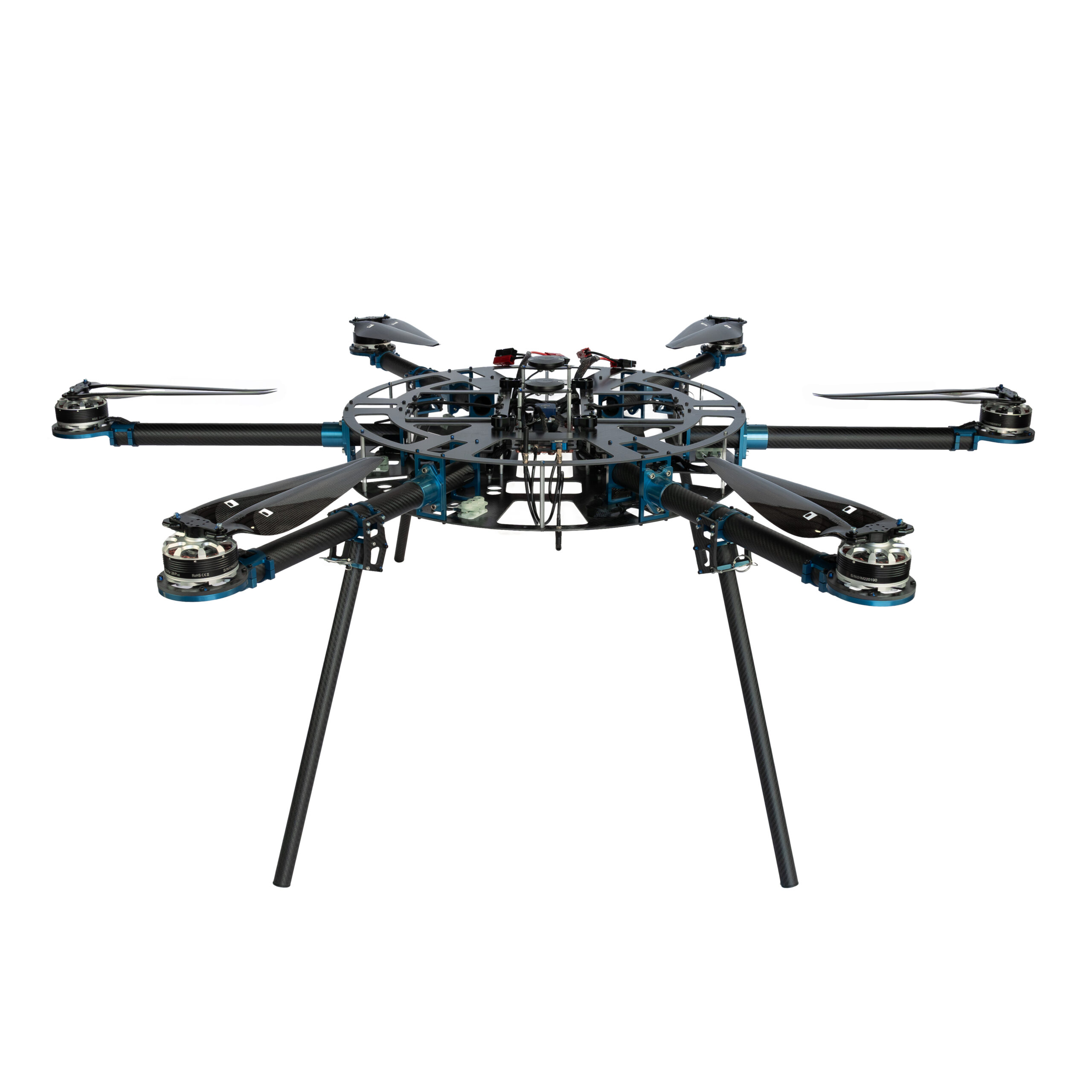
ASW's catalog organizes into four meaningful families. The first and most visible is the Heavy Lift Airframe Series: the 31 lb. Quadcopter, 56 lb. Hexacopter, and 66 lb. Octocopter — all made to order with 4–8 week lead times — plus the modular HLM platform that formalizes the quad/hex/octo upgrade path under a single product line supporting up to 35 kg payload in octocopter configuration. These platforms share a common design language: CubePilot avionics, redundant GNSS with RTK-readiness, ArduCopter autonomous flight stack, modular serviceable arms, and a 50–55 minute endurance envelope. The 66 lb. Octocopter's 2,107 mm diameter and 8-motor redundancy place it squarely in the same-day logistics, infrastructure inspection, and heavy-payload survey segment.
The second family is the ROAM™ Platform — an open-architecture modular multirotor sold as a Frame Kit ($2,099) paired with a Build Accessory Package that includes propulsion, Remote ID, battery, and hand controller. ROAM™ is designed for operators and integrators who want an NDAA-aligned, rapidly field-serviceable base on which to build custom configurations, distinct from the pre-specified heavy-lift series.
The third family is the PARASAFE Drone Parachute System, developed in collaboration with Nippon Kayaku. Available in 10 kg, 25 kg, and 40 kg MTOW classes, PARASAFE uses pyrotechnic deployment for faster canopy opening and is certified to U.S. DOT Class 9 standards. Descent rates of 5.4–6 m/s, a Manual Trigger System with optional autonomous integration, and ASTM-aligned testing make this one of the more rigorously specified commercial drone parachute products on the market. Price range ($1,199–$3,949) reflects the three size tiers.
The fourth family is CubePilot Ecosystem Components and Accessories: autopilots (Cube Orange+, Blue Cube H7, Purple Cube), carrier boards (Standard, Mini, Kore, ADS-B), GNSS modules (Here3+, Here4, HerePro), telemetry modems (RFD900x-US), antennas, cables, and ancillary hardware. ASW functions as a value-added reseller and integrator for this ecosystem, ensuring its own airframes ship with pre-configured, FCC-compliant avionics stacks. Several items in this category show out-of-stock status, which is consistent with supply-constrained specialty electronics rather than product discontinuation.
4. Technology Stack {#technology-stack}
ASW's technology choices are largely transparent from its published product specifications, and they reveal a deliberate philosophy: build on proven, auditable open-source and open-hardware foundations rather than develop proprietary flight-control software from scratch.
Flight Control: All ASW airframes use the CubePilot 2.1 autopilot ecosystem — specifically the Cube Orange+ (STM32H757 MCU) or Blue Cube H7 — running ArduCopter firmware. ArduCopter is a mature, community-supported open-source stack with extensive BVLOS and autonomous waypoint mission capability. Our read: this choice significantly reduces software development risk and maintenance burden for a manufacturer of ASW's scale, while enabling customers to use Mission Planner or QGroundControl without proprietary software licenses.
Navigation: The portfolio includes the Here3+ (DroneCAN, RTK-capable, STM32H757), Here4 (dual-band RTK, u-blox F9P, <10-second RTK fix, 20 Hz update rate), and HerePro (multi-band RTK, base/rover 2-in-1, CAN FD). Our read: the availability of these three tiers of GNSS precision — from meter-level to centimeter-level RTK — means ASW's platforms can be configured for anything from basic surveying to precision agriculture or autonomous delivery with tight landing accuracy requirements.
Communications: The RFD900x-US modem (FCC-approved, 40 km line-of-sight range, 250 kbps data rate, AES encryption, 1W transmit power) is the telemetry backbone across ASW's platforms. The HLM series also lists compatibility with LTE/5G modules and long-range command systems for BVLOS integration. Our read: the RFD900x-US is a well-regarded modem in the professional UAV community; ASW pre-configures radio parameters for FCC compliance with CFR15.247, which lowers integration friction for U.S. operators.
Safety Systems: The PARASAFE pyrotechnic parachute and the Cube Orange+'s integrated 1090 MHz ADS-B receiver (uAvionix) combine passive and active safety layers. The Parasafe 25 kg system is included as standard equipment on the Heavy Lift Quadcopter, indicating ASW treats it as a mission-essential component rather than an optional add-on.
Modularity Architecture: The plug-and-play arm design, modular avionics tray, and payload-agnostic interfaces across the heavy-lift series — combined with the ROAM™ platform's open-architecture frame — reflect a design philosophy oriented toward field serviceability and payload flexibility. Our read: this modularity is a meaningful differentiator for operators running diverse mission types, as it reduces the need to maintain separate airframe fleets for different sensor payloads.
Limited public technical detail exists on ASW's proprietary software tools, ground control station customizations, or any mission-management platform beyond the standard ArduCopter/Mission Planner ecosystem.
5. Research, Papers, Authors, Labs {#research-papers}
Company-linked papers
ASW is not a research-publishing organization in the academic sense — no peer-reviewed papers, preprints, or affiliated lab publications are referenced in the company's public materials. This is consistent with the profile of an applied manufacturing and integration firm. The company's intellectual contribution to the field takes the form of ASTM standards participation (standards development working groups for UAS) and open-source community collaboration with CubePilot and ArduPilot, neither of which produces citable academic output.
6. Media Evidence {#media-evidence}
Media library
Three third-party references appear in the available data. Squishy Robotics published a piece titled "Successful Testing and Airdrops with Aero Systems West," providing independent validation of ASW's operational capabilities in an airdrop context. ModalAI included ASW in its "2026 U.S. Drone Manufacturers — Comprehensive List," a widely referenced industry directory, confirming ASW's standing as a recognized domestic manufacturer. American Robotics' news section also references ASW, situating it within the broader U.S. robotics and autonomous systems ecosystem.
These three mentions represent confirmed external coverage from within the UAS and robotics industry. Not yet disclosed: coverage from mainstream aerospace trade press (e.g., Aviation Week, Inside Unmanned Systems) or government procurement notices. Organizations with additional media references are invited to submit them.
7. Commercial Reality {#commercial-reality}
Customers & deployments
Revenue, total units deployed, and named customer counts are not disclosed in ASW's public materials. These figures should be treated as Not disclosed; organizations with direct knowledge are invited to submit verified data.
What the available evidence does support: ASW has conducted field operations "from test ranges to open-pit mines" (company claim), indicating real-world deployment in at least two distinct operational environments. The Squishy Robotics collaboration — involving successful airdrop testing — constitutes an independently validated commercial or research engagement. The company's made-to-order fulfillment model (4–8 week delivery) and the presence of in-stock accessory inventory suggest an active, ongoing sales operation rather than a pre-revenue or prototype-stage business.
Pricing for the core airframe products is not listed publicly (made-to-order basis), while accessory and avionics components range from $9 (antennas) to $3,949 (PARASAFE 40 kg). The ROAM™ Frame Kit is priced at $2,099. These data points are consistent with a company targeting professional and institutional buyers rather than the consumer market. Return-on-investment figures for end customers are not disclosed.
8. Markets and Use Cases {#markets-use-cases}
ASW's product specifications and company descriptions map to a well-defined set of end markets, each with distinct requirements that the portfolio addresses.
Agriculture: Explicitly named across the heavy-lift series, with granule and liquid sprayer payload support. The high payload capacity of the Hexacopter (56 lbs.) and Octocopter (66 lbs.) accommodates the tank weights typical of precision spraying operations. RTK GNSS capability enables the repeatable flight paths required for accurate field coverage.
Survey, Mapping, and Geospatial: LiDAR and multispectral sensor support is called out across the heavy-lift line. The 50–55 minute endurance figures are competitive for area-coverage missions, and centimeter-level RTK positioning (via Here4 or HerePro) enables the georeferencing accuracy required for professional survey deliverables.
Heavy Industrial and Infrastructure Inspection: The open-pit mining deployment referenced on the company's about page is a specific validation of the platform's utility in harsh, remote environments. Counter-UAS sensor payloads are also listed as supported configurations, pointing to critical infrastructure protection use cases.
Aerial Delivery and Logistics: The HLM series explicitly lists aerial delivery as a use case, with up to 35 kg payload capacity in octocopter configuration. BVLOS integration capability (LTE/5G modem compatibility, long-range telemetry) and autonomous landing support are the enabling technologies here.
Government and Defense: The leadership team's Air Force background, combined with NDAA-aligned design choices (particularly in the ROAM™ platform), positions ASW for U.S. government procurement. The open-architecture avionics stack (ArduCopter, CubePilot) is widely used in military R&D contexts.
Cinema and Large-Format Imaging: The Octocopter's "extra-large camera arrangements" capability and the modular payload tray suggest a secondary market in professional cinematography and broadcast, though this is not a primary positioning for ASW.
Safety-Critical Operations (Parachute Deployment): PARASAFE's coverage of 10–40 kg MTOW drones makes it applicable to virtually any industrial UAV operator seeking to meet emerging over-populated-area regulatory requirements, independent of whether the operator uses ASW airframes.
9. Competitive Landscape {#competitive-landscape}
Competitive comparison
| Robot | Maker | Autonomy | Conf. |
|---|---|---|---|
| iRobot Roomba Combo 10 Max | iRobot | Autonomous | 0.90 |
| Mobile ALOHA (Stanford) | Stanford University | Teleoperated | 0.90 |
| 1X NEO | 1X Technologies | Remote-Assisted | 0.90 |
ASW competes in the U.S.-manufactured industrial multirotor segment, a category defined by NDAA compliance requirements, heavy-payload capability, and professional/government end-user demands. The competitive field includes both domestic manufacturers pursuing similar made-in-USA positioning and international platforms that face increasing procurement restrictions in U.S. government contexts. ASW's differentiation rests on three pillars that are not universal across this peer group: the Nippon Kayaku safety-systems heritage (expressed in PARASAFE), the open-architecture avionics approach (CubePilot/ArduCopter), and the modular upgrade path formalized in the HLM and ROAM™ lines.
The drone safety hardware segment (parachute systems) represents a separate competitive dimension, where PARASAFE competes on the basis of pyrotechnic deployment speed, DOT Class 9 certification, and ASTM-aligned testing — attributes that are relevant to operators seeking regulatory approval for urban or populated-area operations.
10. Country Advantage / Geopolitical {#geopolitical}
ASW's U.S.-based manufacturing and its explicit NDAA-aligned product positioning (noted in the ROAM™ platform description) are materially relevant to its commercial trajectory. The ongoing legislative and executive-branch restrictions on foreign-manufactured UAS components in U.S. government procurement — particularly targeting Chinese-origin hardware — create a structural tailwind for domestic manufacturers with verifiable supply chains. ASW's California manufacturing base, CubePilot avionics (also manufactured in the U.S.A., per product listings), and RFD900x-US telemetry modems (FCC-approved, U.S.-configured) collectively support a supply-chain narrative that is directly responsive to current federal procurement preferences.
The Nippon Kayaku parentage introduces a Japanese corporate ownership dimension. Our read: this is unlikely to be a disqualifying factor in U.S. government procurement contexts, given the U.S.-Japan alliance and the absence of restrictions comparable to those applied to Chinese-origin technology — but individual program offices may require documentation of this ownership structure during security reviews.
ASW's ASTM standards participation is also geopolitically relevant: companies that help write the rules governing UAS operations in the U.S. gain early visibility into compliance requirements and can engineer products to meet standards before competitors.
11. Hype vs Real vs Ugly {#hype-real-ugly}
Claim tracker
Verified / Externally Corroborated:
- U.S.-based manufacturing in California — consistent across all product listings and independently referenced by ModalAI's manufacturer directory.
- CubePilot and ArduCopter integration — confirmed by specific part numbers, pricing, and in-stock/out-of-stock inventory status.
- PARASAFE pyrotechnic parachute system with DOT Class 9 certification and ASTM-aligned testing — published specifications with verifiable physical parameters.
- Airdrop operations with Squishy Robotics — independently reported by Squishy Robotics.
- Leadership credentials (Air Force Research Lab, Air Force Institute of Technology, Nippon Kayaku) — stated on the company's about page; plausible and internally consistent.
Company Claims (labeled as such, not independently verified here):
- "10+ years of hands-on UAV expertise" — company claim; consistent with 2015 founding date.
- "100+ years of global safety leadership through Nippon Kayaku" — company claim referencing Nippon Kayaku's corporate history, not ASW's own age.
- "Highest payload in its size class" (56 lb. Hexacopter) — company claim; plausible given the specification but not independently benchmarked here.
- "50+ minutes" and "55+ minutes" endurance — company claims; no independent flight test data is cited.
- Deployments "from test ranges to open-pit mines" — company claim; no named customer or site is identified.
- "Active contributors to ASTM standards development" — company claim; not independently verified but consistent with a company of this technical profile.
Gaps (fixable):
- No independently verified endurance or payload data from third-party flight tests.
- No named government or defense customers, contracts, or procurement awards disclosed.
- ROAM™ platform availability (both Frame Kit and BAP listed as out of stock) raises a question about production status. Not yet disclosed: current production timeline or backlog. ASW is invited to clarify.
12. Future Scenarios {#future-scenarios}
Our read — Bull Case: Federal procurement tailwinds for NDAA-compliant U.S.-manufactured UAS accelerate. ASW's California manufacturing, open-architecture design, and Nippon Kayaku safety credentials position it favorably for GSA schedule inclusion or direct defense contracts. PARASAFE gains traction as urban air mobility and BVLOS regulatory frameworks mature, requiring parachute systems as a condition of operation. The ROAM™ platform attracts a developer/integrator community that expands ASW's effective reach without requiring proportional headcount growth.
Our read — Base Case: ASW continues as a credible niche manufacturer serving government agencies, research institutions, and industrial operators. Revenue grows incrementally as NDAA restrictions tighten the competitive field. PARASAFE establishes itself as the reference parachute system for the 10–40 kg MTOW segment. The company remains relatively small but profitable, leveraging Nippon Kayaku's balance sheet for capital investment.
Our read — Bear Case: Larger domestic competitors (better-capitalized, with existing government contract vehicles) capture the NDAA-compliance premium. ROAM™ struggles to build an integrator ecosystem without sustained developer-relations investment. Supply chain constraints on CubePilot and other components (evidenced by multiple out-of-stock listings) slow order fulfillment and erode customer confidence. ASW's relatively thin public profile limits inbound lead generation in an increasingly marketing-intensive market.
13. What to Watch {#what-to-watch}
- ROAM™ Platform restocking and ecosystem development: Return to in-stock status for the Frame Kit and BAP would signal production normalization; watch for integrator or developer community announcements.
- Government contract awards: Any GSA schedule listing, SBIR awards, or named DoD/DoJ/DHS engagements would materially validate ASW's defense positioning.
- PARASAFE regulatory milestones: FAA or EASA acceptance of pyrotechnic parachute systems as a BVLOS enabler would directly expand the addressable market for this product line.
- ASTM standards publication: Watch for published UAS standards in which ASW personnel are listed as contributors — this would independently validate the company's standards-development claims.
- Squishy Robotics deployment expansion: Any follow-on announcements from the Squishy Robotics partnership could provide named operational data points.
- Leadership additions: Hires in business development, government sales, or program management would signal a push toward larger contract vehicles.
- Additional third-party press: Coverage in aviation trade publications (e.g., Inside Unmanned Systems, Defense News) would indicate growing market visibility beyond the current industry-directory references.
14. Sources & Methodology {#sources-methodology}
Primary source: All factual claims in this report are grounded exclusively in data extracted from Aero Systems West's own website (aerosystemswest.com), including the About page (last modified 2025-09-16), individual product pages for all 29 listed products, and the company description as published. All such claims are treated as company claims and labeled accordingly where they are not independently corroborated.
Third-party sources: Three external references were available — Squishy Robotics (squishy-robotics.com), ModalAI (modalai.com), and American Robotics (american-robotics.com). These are cited where they provide independent corroboration; their own editorial standards apply to their respective content.
Computed / inferred: Competitive landscape framing, technology-stack inferences, and scenario analysis are labeled "Our read:" throughout and represent analytical inference from the available data, not independently sourced facts.
What this report does not include: Revenue, customer counts, contract values, headcount, or any operational metric not published by ASW or confirmed by a named third party. Where such data is absent, the report states "Not disclosed" and invites the company or verified stakeholders to submit corrections or additions.
Universal rubric applied to every company in this series: (1) Lead with verified strengths. (2) Label all company claims. (3) Label all inferences. (4) State gaps as fixable and invite correction. (5) Never assert unsourced negatives as fact.
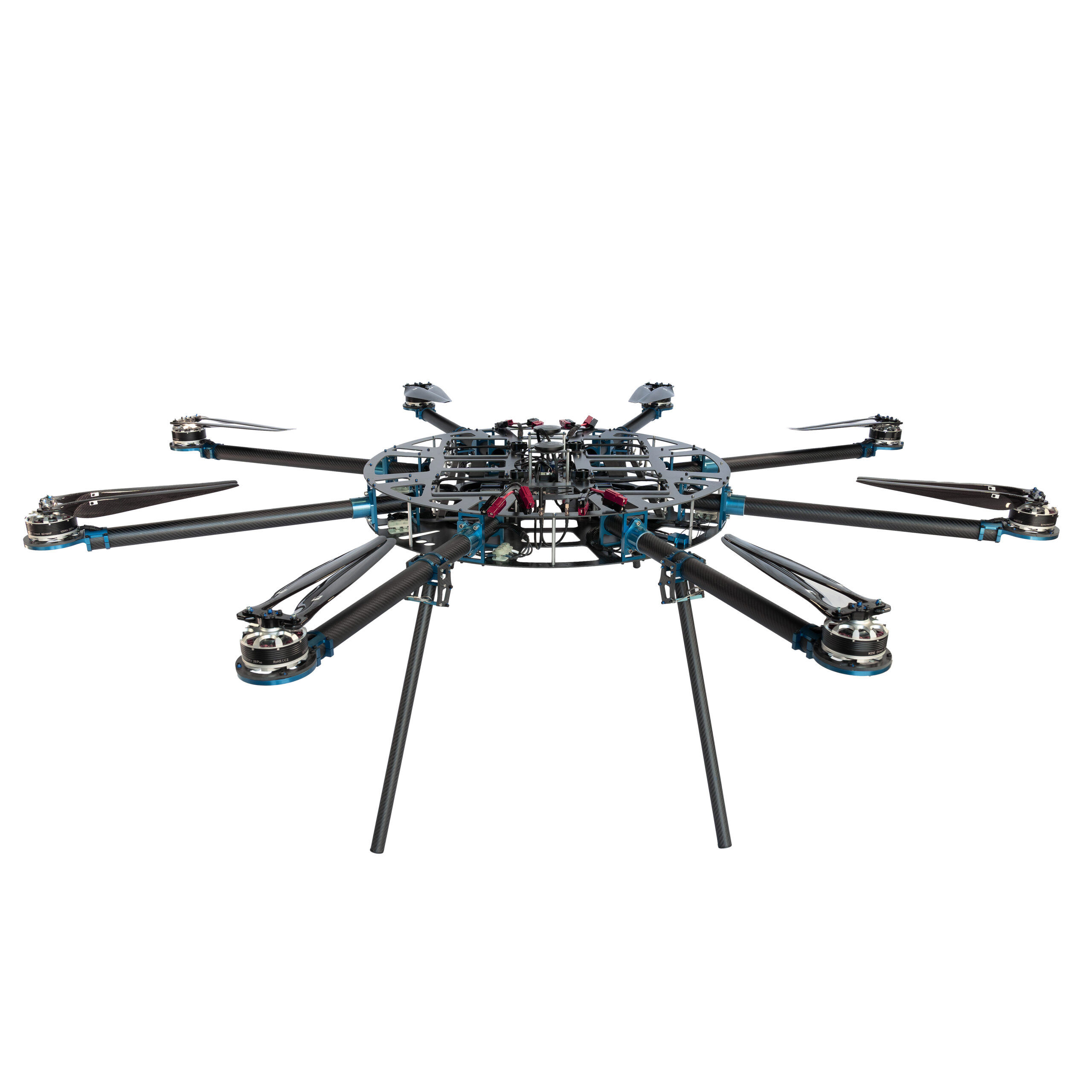
ASW Heavy Lift Octocopter Industrial Drone (66 lbs.)
Heavy logisticsThe ASW Heavy Lift Octocopter Industrial Drone (66 lbs.) is a high-performance UAV designed for precision missions such as agriculture and heavy industrial applications. It features a customizable payload system, obstacle avoidance, and supports autonomous missions. With 8 motors, modular arms, and redundant GNSS, it offers high stability and versatility for large packages, surveying, and sprayers.
- •Customizable payload system up to 66 lbs (84 lbs max depending on configuration)
- •Octocopter design with 8 motors for high redundancy and stability
- •Fully autonomous missions including takeoff and landing via ArduCopter flight stack
- •Modular, serviceable plug-and-play arms and high accessibility frame
- •Supports large packages, extra-large camera arrangements, surveying, multispectral/LiDAR, liquid and granule sprayers
- •Redundant GNSS (RTK ready) and CubePilot avionics system
- •Max endurance 50+ minutes
- •Includes hardshell storage case, RC safety controller, assembly tool kit, radio modem, main flight battery set, and Pelican battery case
| Payload lb | 66 |
| Max payload lb | 84 |
| Total height (mm) | 607 |
| Number of motors | 8 |
| Max endurance (min) | 50 |
| Total diameter (mm) | 2107 |
| Ground clearance (mm) | 430 |
| Typical payload range max (kg) | 30 |
| Typical payload range min (kg) | 0 |
| Typical takeoff weight max (kg) | 72 |
| Typical takeoff weight min (kg) | 43 |
Technology stackOur read
Inferred from product specs — click through to the technology wiki:
ResearchComputed
Product comparisonComputed
Each row leads with this company's product, side-by-side with similar ones · click a row to expand full specs, click again to collapse
ASW Heavy Lift Octocopter Industrial Drone (66 lbs.)
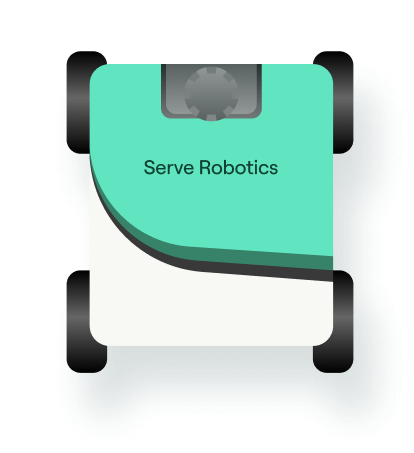
Serve Gen 3
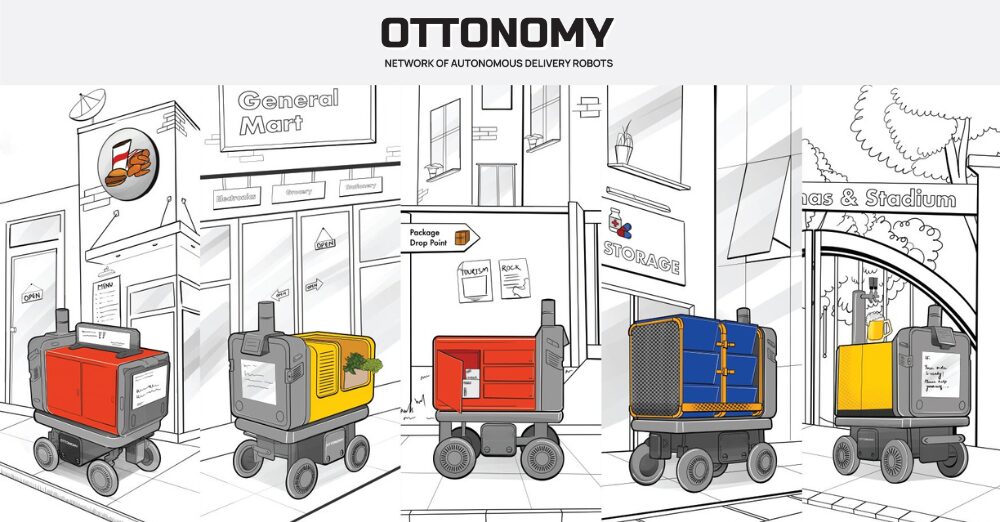
Ottobot
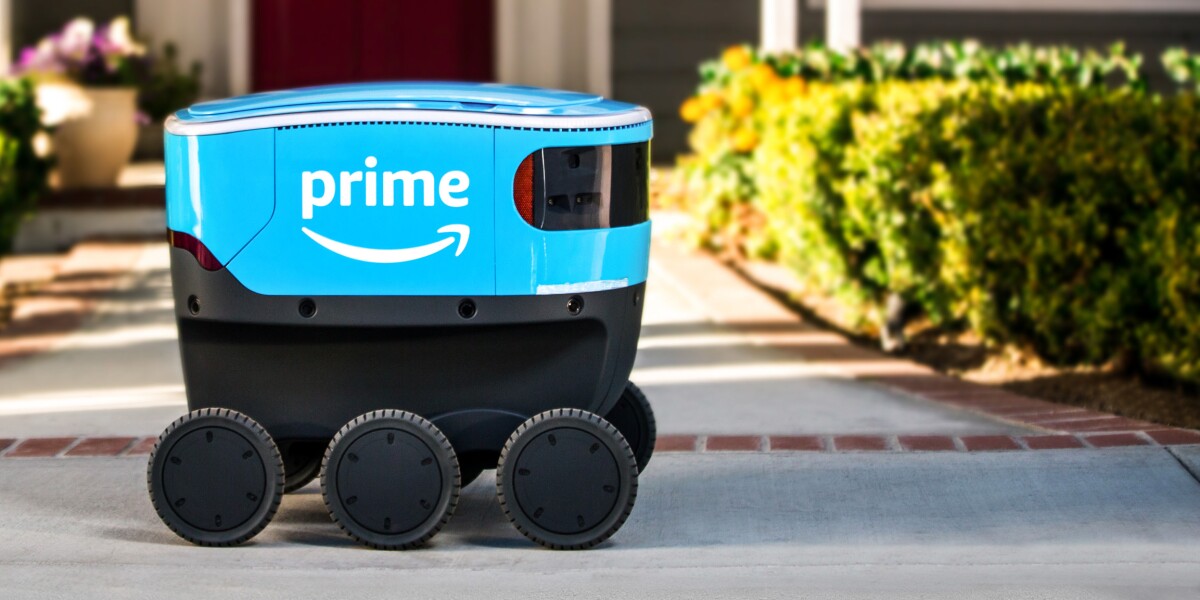
Amazon Scout

LuckiBot Pro

KettyBot
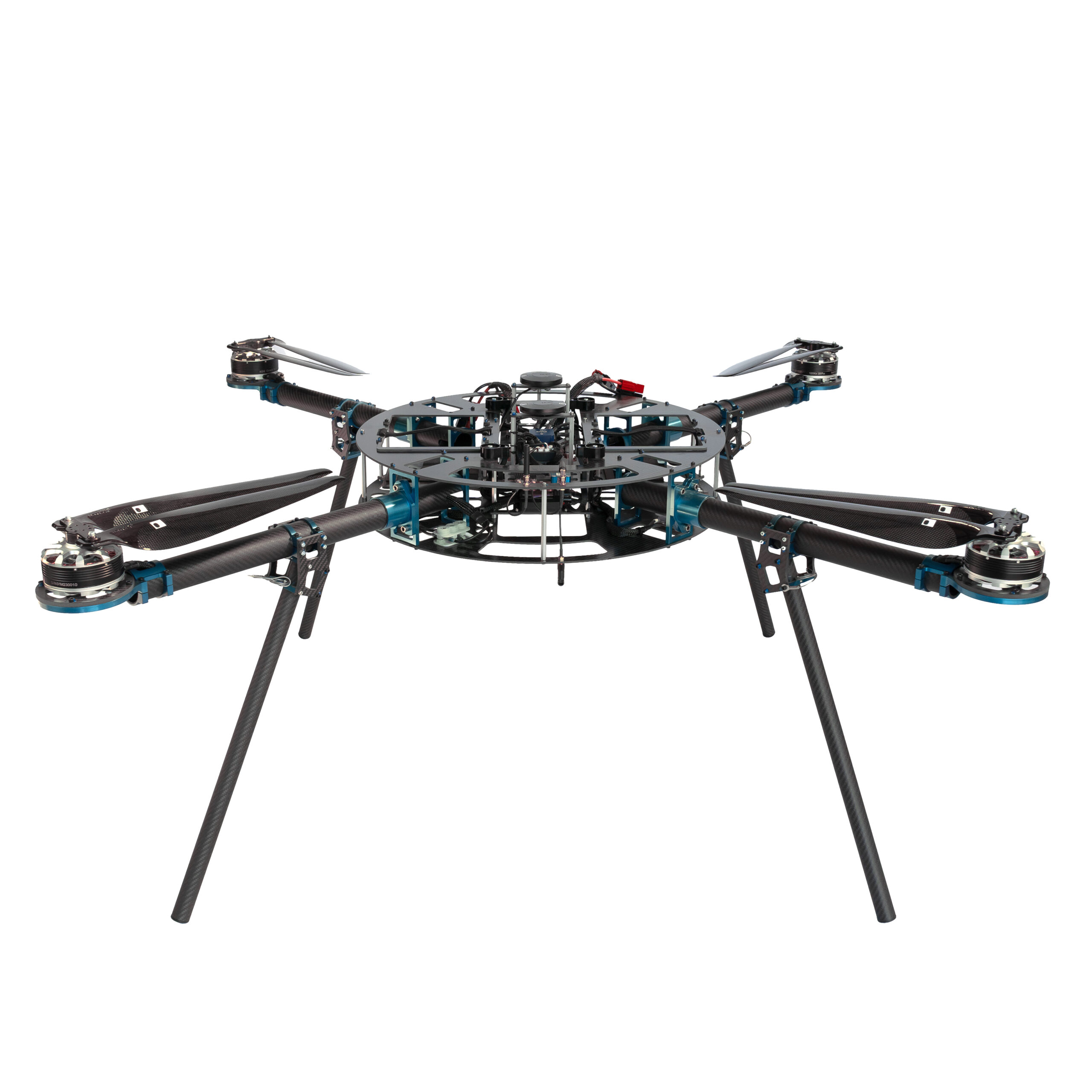
ASW HLM Heavy Lift Drone Platform – Modular Quad, Hex & Octo Configurations
Ottobot
Amazon Scout
LuckiBot Pro
KettyBot
Pudu CC1
ASW Heavy Lift Hexacopter Industrial Drone (56 lbs.)
Lunar Rover R1

ANYmal Research
RB-VOGUI
Dobot M1

Kress EyePilot® 4×4 RTK
ASW Heavy Lift Quadcopter Industrial Drone (31 lbs.)
ANYmal Research
RB-VOGUI
Dobot M1
Kress EyePilot® 4×4 RTK

FarmDroid | Advanced Agricultural Robots for Modern Farming
Company announcement
News and Media
The company's official social & video channels · external links
News
From third-party news outlets (China & abroad) · external links