Spot Arm
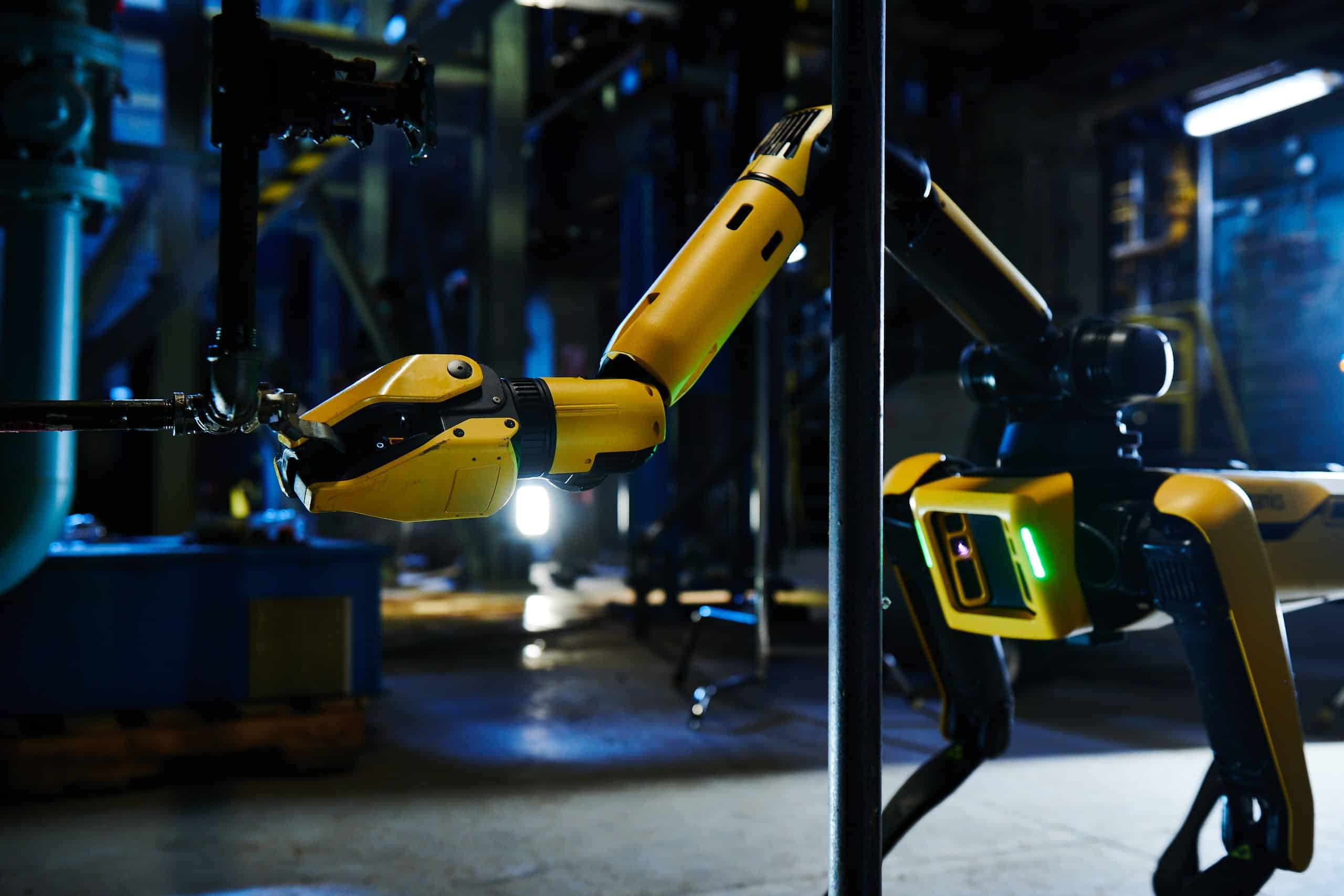
Spot Arm is a six-degree-of-freedom robotic manipulator add-on designed and manufactured by Boston Dynamics (United States) to attach to the company's Spot quadruped robot. It extends Spot's capabilities beyond inspection and navigation by enabling the robot to grasp, lift, carry, place, and drag objects, as well as perform constrained manipulation tasks such as opening doors, turning valves, and flipping switches. By combining Spot's legged mobility with a dexterous arm, the system targets industrial, energy, and public-safety customers who need a mobile manipulation platform capable of operating in unstructured environments. The arm integrates tightly with Spot's onboard software stack, allowing operators to command manipulation tasks through Boston Dynamics' Orbit fleet-management software or the Spot SDK.
Overview and Use Cases
Spot Arm is a purpose-built robotic manipulator that mounts to the back of Boston Dynamics' Spot quadruped, transforming the mobile inspection platform into a mobile manipulation system. The arm gives Spot the ability to interact physically with its environment rather than merely observe it.
Key use cases include:
- Door and gate operation – autonomously opening and holding doors, enabling Spot to traverse facilities without human assistance.
- Valve and switch manipulation – turning industrial valves, flipping breakers, or operating panel controls in hazardous or remote locations.
- Object handling – picking up, carrying, and placing items such as tools, samples, or small packages.
- Drag and tow – pulling cables, hoses, or lightweight carts across a workspace.
- Inspection augmentation – repositioning sensors or cameras attached to the gripper for close-up inspection of hard-to-reach areas.
Technical Details
Spot Arm features six degrees of freedom, providing the range of motion needed for dexterous manipulation in confined spaces. The arm is equipped with a gripper that includes a built-in camera and depth sensor, allowing the robot's perception system to guide grasping without requiring external infrastructure.
- Degrees of freedom: 6-DOF
- Sensing: Integrated RGB camera and depth sensor in the gripper
- Software integration: Compatible with the Spot SDK, enabling custom autonomy behaviors via the API; also controllable through Boston Dynamics' Orbit software platform
- Payload and reach: Boston Dynamics has published performance data on the arm's lifting capability and reach envelope, though specific figures should be verified against current official documentation, as they may be updated with firmware revisions.
- Power: Draws power from Spot's onboard battery; arm operation reduces overall mission endurance compared to base Spot configurations.
Comparison to Related Boston Dynamics Products
Within Boston Dynamics' portfolio, Spot Arm is distinct from the company's other manipulation-focused hardware:
- Stretch is a purpose-built warehouse robot with a single high-reach arm optimized for case handling in logistics environments — a very different form factor and use case from Spot Arm's field manipulation role.
- Atlas (Electric) is a full humanoid platform with two arms, targeting research and advanced manipulation demonstrations; it is not a modular add-on.
- Atlas Replacement Leg Module is a spare/service part, not a manipulation system.
Spot Arm's closest competitive analogues in the broader market include manipulation add-ons for other quadruped platforms, such as arms offered by companies like Unitree or ANYbotics-compatible third-party integrators, though Boston Dynamics' tight hardware-software integration is frequently cited as a differentiator.
Market Context and Target Buyers
Spot Arm is sold as an optional add-on to the Spot platform, which itself is positioned in the premium segment of the mobile robot market. Target buyers include:
- Oil, gas, and energy companies seeking remote valve and switch operation in hazardous zones.
- Manufacturing and industrial facilities requiring automated interaction with equipment during inspections.
- Public safety and defense agencies exploring remote object handling in dangerous environments.
- Research institutions using the platform for mobile manipulation research.
As of public reporting, the combined Spot + Spot Arm system represents a significant capital investment, placing it primarily within enterprise and institutional budgets rather than small-business deployments.
Notable Deployments and Customers
Boston Dynamics has publicly showcased Spot Arm in a range of real-world and demonstration contexts. Reported or demonstrated deployments include use by energy sector companies for autonomous valve inspection and operation, facility management applications involving door traversal, and various research partnerships at universities and national laboratories. Boston Dynamics has also demonstrated the arm's capability in construction site monitoring contexts. Specific named customers are not always disclosed publicly.
Future Outlook
Mobile manipulation — combining legged or wheeled mobility with dexterous arms — is widely regarded as a key frontier in industrial robotics. Spot Arm positions Boston Dynamics at the intersection of these two capabilities. Ongoing software improvements through the Spot SDK and Orbit platform are expected to expand the library of pre-built manipulation behaviors available to operators. As competition in the quadruped market intensifies and arm add-ons become more common across the industry, Boston Dynamics is likely to continue differentiating Spot Arm through autonomy software, reliability, and ecosystem integration rather than hardware specifications alone.
Related videos

Spot, Donald Trump's security robot dog • FRANCE 24 English
FRANCE 24 English

A new robot police officer was spotted patrolling the streets of LA #shorts #technology
Botched Broadcast

Limited Series Product Spotlight | Husqvarna DXR 145 Demolition Robot
Husqvarna Construction

The next step for Spot #bostondynamics #robotics
Boston Dynamics

Sunflower's home security drone spots trespassers
CNET
Community buzz (Reddit)
Japanese researchers at the University of Tsukuba created CirculaFloor, robotic tiles that let you walk infinitely in VR without ever leaving your spot.
r/Damnthatsinteresting · ▲ 72,689
AIO I think my landlord drugged me?
r/AmIOverreacting · ▲ 50,147
I spent the morning removing fascist stickers from Waterloo... what did I learn.
r/london · ▲ 46,979
Curiosity wheels taken yesterday, showing the damages caused during the 13 years it has been on the Red Planet
r/spaceporn · ▲ 46,902
Goodnight my queen, 16 years was not enough and I am devastated.
r/cats · ▲ 43,122
Related entries
 Robot
RobotG1
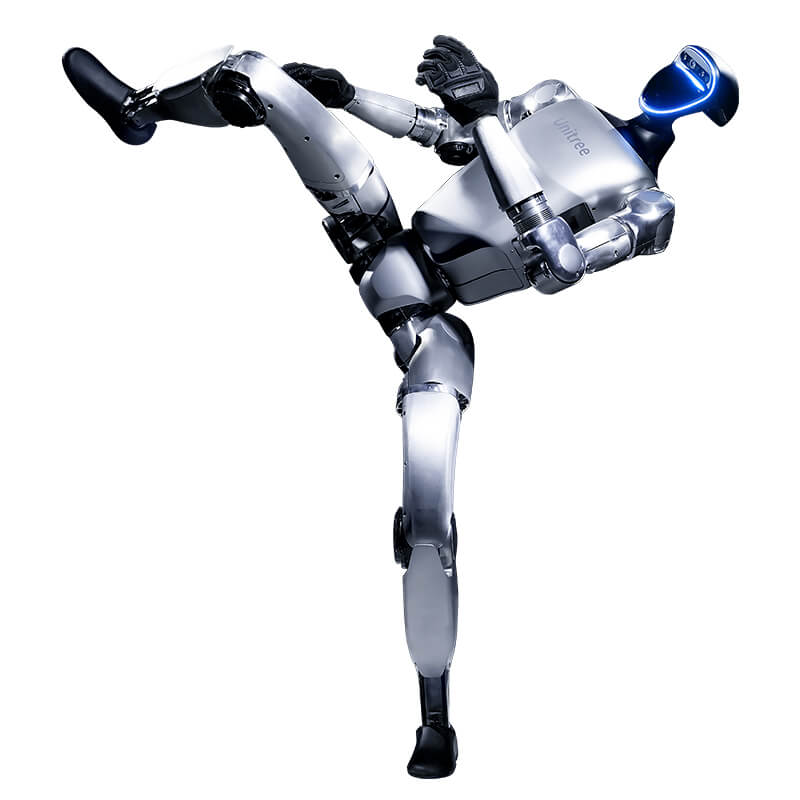
The Unitree G1 is a general-purpose humanoid robot developed by Unitree Robotics, a Chinese robotics company headquartered in Hangzhou. Standing approximately 1.32 meters tall and weighing around 35 kilograms, the G1 features 23 degrees of freedom and is capable of walking, running, recovering from falls, and performing dexterous manipulation tasks. It ships with SDK access, making it accessible to researchers and small-business operators seeking an affordable entry point into humanoid robotics. The G1 is widely regarded as one of the most competitively priced serious humanoid platforms available as of public reporting, positioning Unitree as a disruptive force in a market historically dominated by far more expensive systems. Its combination of mobility, recoverability, and open software access has attracted attention from academic institutions, robotics developers, and automation-focused startups worldwide.
27 views
 Robot
RobotQuicktron M100
The Quicktron M100 is a heavy-duty autonomous mobile robot (AMR) belonging to Quicktron Robotics' M-Series product line. It is designed for demanding material handling tasks in warehouses, distribution centers, and manufacturing environments, using an integrated lift mechanism to transport shelves and pallets autonomously across facility floors. Quicktron Robotics, a company with roots in China and a global commercial presence, positions the M100 as a high-capacity solution for operations that require moving heavier loads than lighter AMR models can accommodate. The M100 targets logistics operators and manufacturers seeking to automate goods-to-person or pallet-movement workflows at scale.
26 views
 Robot
RobotUniversal Robots UR5e
The Universal Robots UR5e is a six-axis collaborative robot arm (cobot) belonging to Universal Robots' e-Series product line. Designed for light-to-medium industrial and laboratory tasks, it is widely used in assembly, pick-and-place, machine tending, quality inspection, and lab automation workflows. Universal Robots, a Danish company and a subsidiary of Teradyne, is one of the most recognized names in the collaborative robotics market. The UR5e is programmed using Universal Robots' PolyScope graphical interface on a teach pendant, making it accessible to operators without deep robotics expertise. Its built-in force/torque sensing, tool-center-point control, and a broad ecosystem of certified end-effectors and accessories (the UR+ platform) have made it a popular mid-range cobot choice across manufacturing, electronics, food handling, and research sectors.
25 views
 Robot
RobotLocus Origin
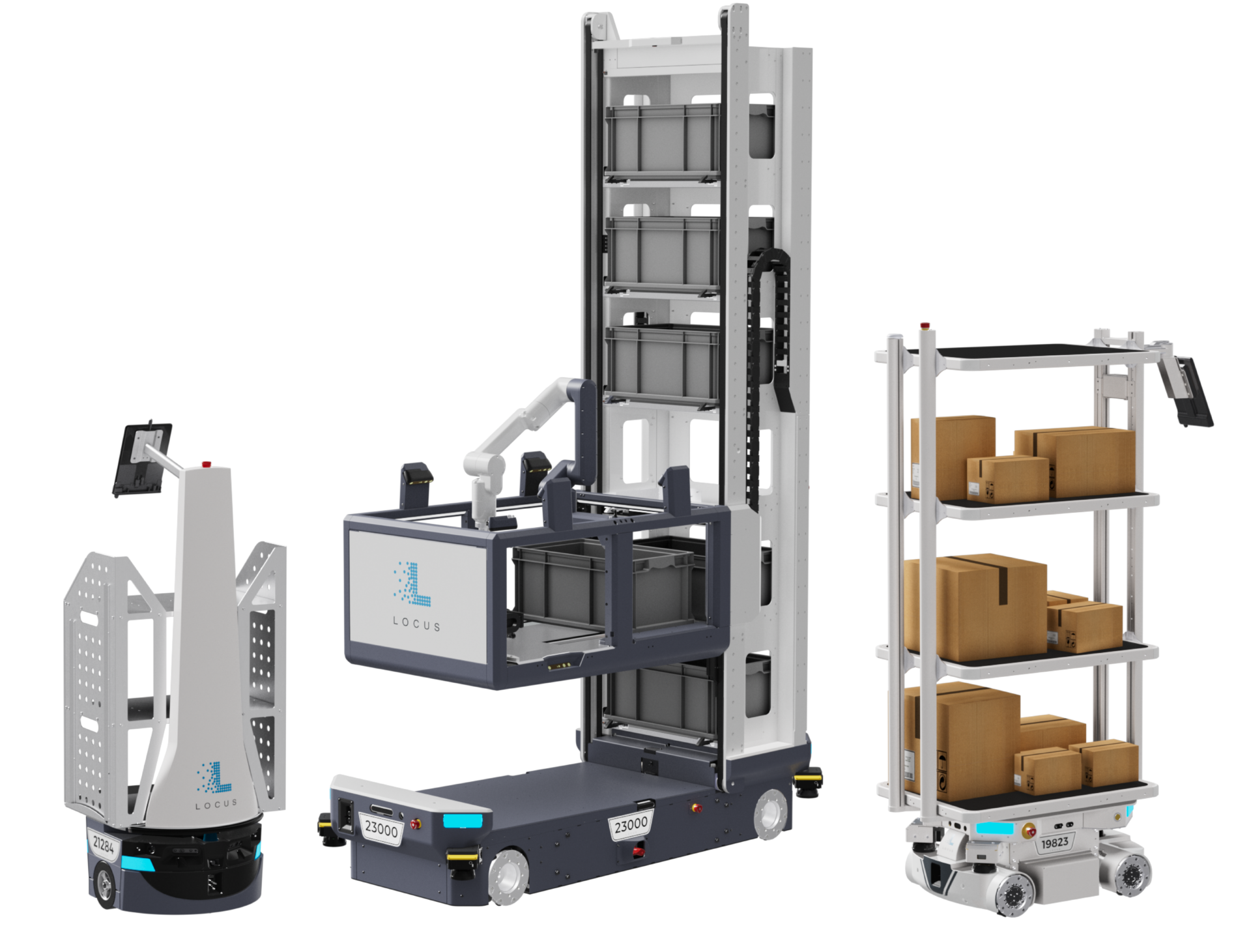
The Locus Origin is a collaborative autonomous mobile robot (AMR) developed by Locus Robotics, a Massachusetts-based warehouse automation company. Designed for high-volume order fulfillment environments, it works alongside human warehouse associates rather than replacing them, enabling a goods-to-person picking workflow that is orchestrated by the company's LocusONE software platform. The Origin represents Locus Robotics' approach to human-robot collaboration in distribution centers and fulfillment warehouses. By guiding workers through optimized pick paths and handling the transport of goods between picking zones and packing stations, the robot is intended to increase throughput and reduce associate walking time. Locus Robotics has deployed its AMR fleets with a range of retail, third-party logistics (3PL), and healthcare customers.
24 views