G1
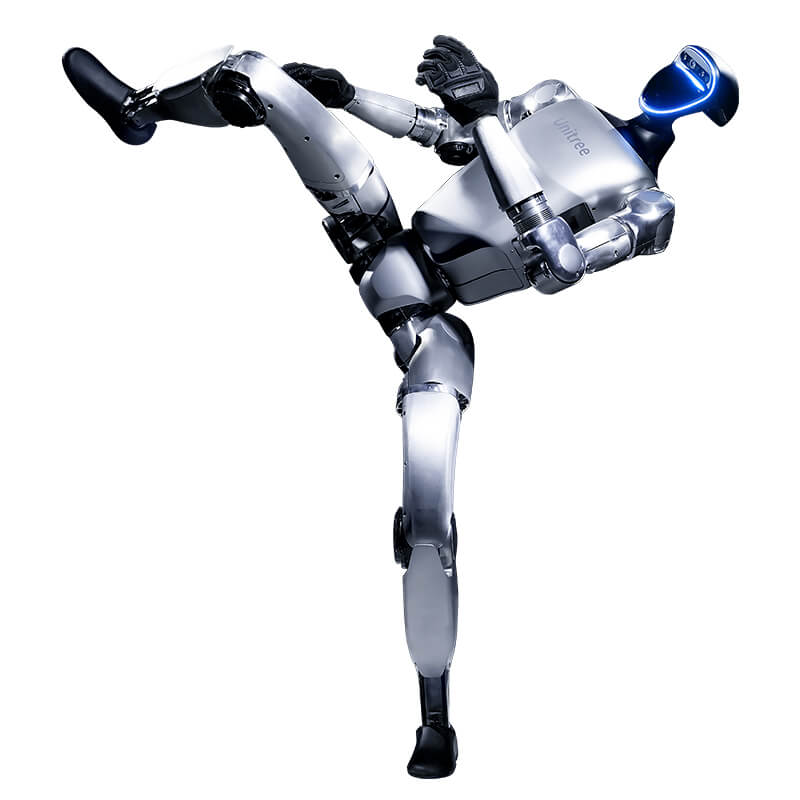
The Unitree G1 is a general-purpose humanoid robot developed by Unitree Robotics, a Chinese robotics company headquartered in Hangzhou. Standing approximately 1.32 meters tall and weighing around 35 kilograms, the G1 features 23 degrees of freedom and is capable of walking, running, recovering from falls, and performing dexterous manipulation tasks. It ships with SDK access, making it accessible to researchers and small-business operators seeking an affordable entry point into humanoid robotics. The G1 is widely regarded as one of the most competitively priced serious humanoid platforms available as of public reporting, positioning Unitree as a disruptive force in a market historically dominated by far more expensive systems. Its combination of mobility, recoverability, and open software access has attracted attention from academic institutions, robotics developers, and automation-focused startups worldwide.
Overview and Use Cases
The Unitree G1 is a mid-sized humanoid robot designed for general-purpose research, prototyping, and light automation tasks. Its relatively compact form factor — approximately 1.32 m tall and 35 kg — makes it suitable for indoor environments designed around human dimensions. Key capabilities include:
- Bipedal locomotion: walking and running on flat and moderately uneven surfaces
- Fall recovery: autonomous detection of and recovery from falls, a critical feature for real-world deployment
- Dexterous manipulation: multi-joint arms and hands capable of object interaction tasks
- SDK access: open software interfaces enabling custom application development for research and automation pilots
Target use cases include university robotics research, AI and reinforcement-learning experimentation, small-scale industrial inspection, and demonstration or educational deployments.
Key Technical Specifications
The G1 is publicly described as having 23 degrees of freedom, a height of approximately 1.32 meters, and a weight of approximately 35 kilograms. Unitree has highlighted its whole-body control capabilities and real-time balance recovery. Specific figures for joint torque, payload capacity, and battery runtime have not been consistently confirmed in public documentation at the time of writing, and prospective buyers are advised to consult Unitree's official datasheets for current specifications. The robot reportedly supports ROS-compatible development environments, lowering the barrier for teams already working within standard robotics software ecosystems.
Comparison to Unitree's Own Lineup
Within Unitree's humanoid portfolio, the G1 sits alongside the Unitree H1, which is a taller, heavier, and generally more capable humanoid platform aimed at more demanding research and industrial applications. The G1 is positioned as the more accessible entry point — lighter, smaller, and reportedly lower in price — while still offering meaningful locomotion and manipulation capabilities. Unitree also produces the Go2, a quadruped robot for mobile sensing and inspection tasks, and the Z1, a standalone robotic arm, which can complement humanoid platforms in integrated deployments.
Market Context and Competitive Positioning
The G1 competes in a rapidly expanding global humanoid robot market that includes platforms such as Boston Dynamics' Atlas, Agility Robotics' Digit, Figure AI's Figure series, and Fourier Intelligence's GR-1, among others. Most comparable platforms from Western manufacturers carry significantly higher price points, often targeting large enterprise or government customers. The G1's pricing strategy — reportedly making it one of the most affordable serious humanoid platforms on the market — positions it to capture demand from universities, research labs, and early-stage automation startups that cannot justify enterprise-tier expenditure. This approach mirrors Unitree's broader strategy with its quadruped lineup, where aggressive pricing helped the Go2 achieve wide adoption in the research community.
Deployments and Notable Adoption
As of public reporting, the G1 has been adopted by academic research groups and robotics developers in multiple countries, with demonstration videos circulated widely on social media and at robotics conferences. Specific enterprise customer deployments have not been publicly confirmed at scale. The platform's SDK openness has made it a popular subject for reinforcement learning and whole-body control research publications, though the volume of peer-reviewed work citing the G1 specifically continues to grow as the platform matures.
Future Outlook
Unitree Robotics has signaled continued investment in its humanoid lineup, and the G1 is expected to benefit from iterative hardware and software updates. The broader humanoid robotics sector is experiencing rapid development cycles, with improvements in AI-driven motion planning, manipulation dexterity, and battery efficiency likely to influence future G1 revisions. As competition intensifies and manufacturing costs decline industry-wide, the G1's value proposition — capable hardware at an accessible price with open development tools — is likely to remain a differentiating factor in the near term.
Related videos

Tesla Optimus vs Unitree G1: The REAL Humanoid Robot Showdown
TechFrontierNow

Unitree G1 & H2 Humanoid Robots | Human Interaction & Safety Demo
RoboFrontier

🚁#flyingrobot is REAL! Unitree G1 just merged with a transforming drone! #unitree #humanoidrobot
XRoboHub

💥 Unitree G1 #kungfu Kid V6.0: The New Robot Overlord! #unitree #humanoid #robotics
XRoboHub

Unitree’s G1 Humanoid Robot Shows Off Impressive Anti Gravity Mode
Global Update

🔥🤖 Unbelievable! No one can defeat the Unitree G1 robot! #unitree #robotics #humanoidrobot
XRoboHub
Community buzz (Reddit)
Shenzhen MindOn Robotics is testing their new hardware and software on the Unitree G1 humanoid robot with the goal of learning human-like household chores like watering plants, moving packages, tidying up, etc. This is still a proof of concept rather than a finished product.
r/Damnthatsinteresting · ▲ 11,816
We need a “npc” Uma anime/manga
r/UmaMusume · ▲ 2,209
Robots are out here training for the Olympics.
r/BGMStock · ▲ 1,985
Which origin is the best ?
r/Transformemes · ▲ 1,626
Optimus prime cosplay!
r/transformers · ▲ 1,480
Related entries
 Robot
RobotQuicktron M100
The Quicktron M100 is a heavy-duty autonomous mobile robot (AMR) belonging to Quicktron Robotics' M-Series product line. It is designed for demanding material handling tasks in warehouses, distribution centers, and manufacturing environments, using an integrated lift mechanism to transport shelves and pallets autonomously across facility floors. Quicktron Robotics, a company with roots in China and a global commercial presence, positions the M100 as a high-capacity solution for operations that require moving heavier loads than lighter AMR models can accommodate. The M100 targets logistics operators and manufacturers seeking to automate goods-to-person or pallet-movement workflows at scale.
26 views
 Robot
RobotUniversal Robots UR5e
The Universal Robots UR5e is a six-axis collaborative robot arm (cobot) belonging to Universal Robots' e-Series product line. Designed for light-to-medium industrial and laboratory tasks, it is widely used in assembly, pick-and-place, machine tending, quality inspection, and lab automation workflows. Universal Robots, a Danish company and a subsidiary of Teradyne, is one of the most recognized names in the collaborative robotics market. The UR5e is programmed using Universal Robots' PolyScope graphical interface on a teach pendant, making it accessible to operators without deep robotics expertise. Its built-in force/torque sensing, tool-center-point control, and a broad ecosystem of certified end-effectors and accessories (the UR+ platform) have made it a popular mid-range cobot choice across manufacturing, electronics, food handling, and research sectors.
25 views
 Robot
RobotLocus Origin
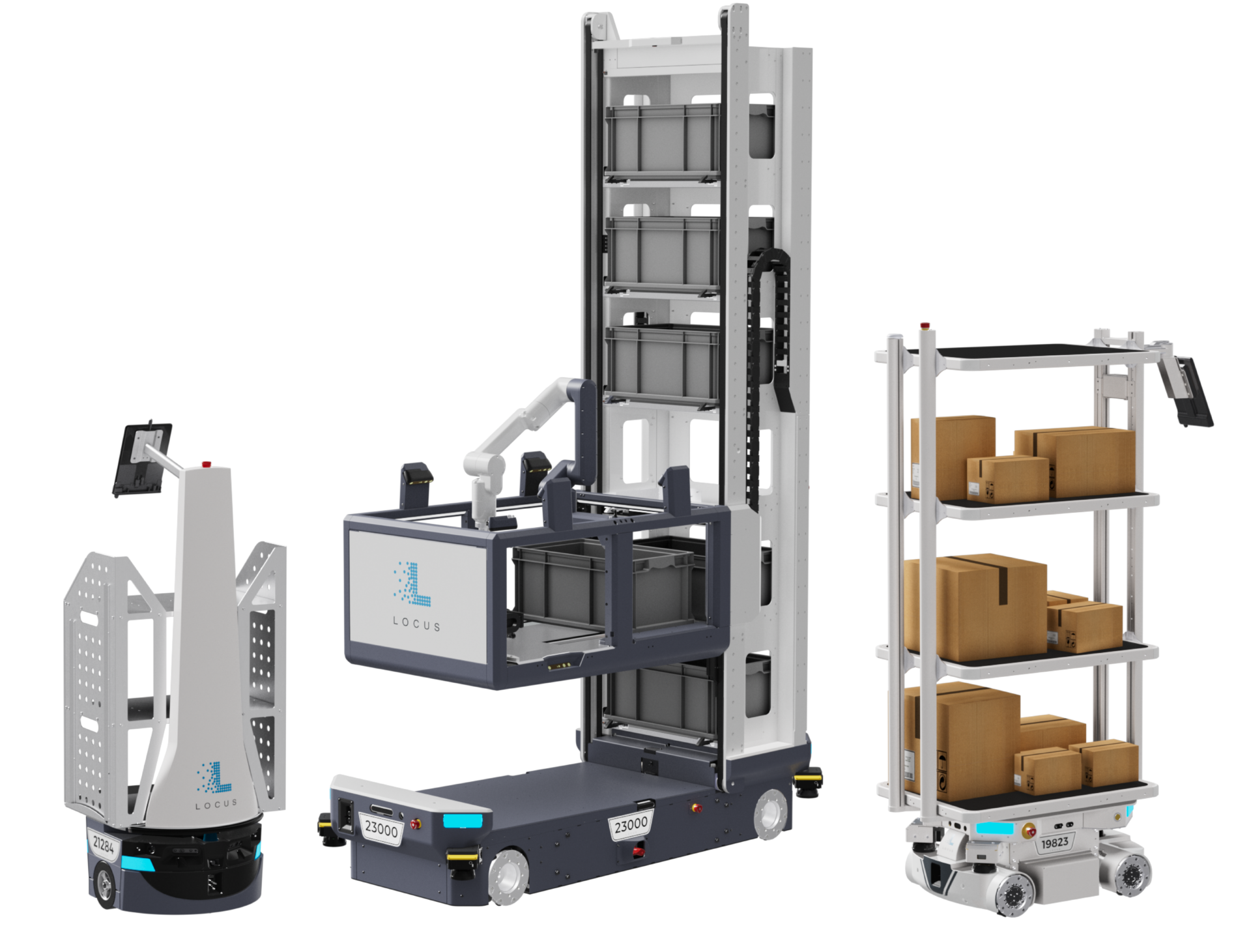
The Locus Origin is a collaborative autonomous mobile robot (AMR) developed by Locus Robotics, a Massachusetts-based warehouse automation company. Designed for high-volume order fulfillment environments, it works alongside human warehouse associates rather than replacing them, enabling a goods-to-person picking workflow that is orchestrated by the company's LocusONE software platform. The Origin represents Locus Robotics' approach to human-robot collaboration in distribution centers and fulfillment warehouses. By guiding workers through optimized pick paths and handling the transport of goods between picking zones and packing stations, the robot is intended to increase throughput and reduce associate walking time. Locus Robotics has deployed its AMR fleets with a range of retail, third-party logistics (3PL), and healthcare customers.
24 views
 Robot
RobotNVIDIA Jetson Orin NX
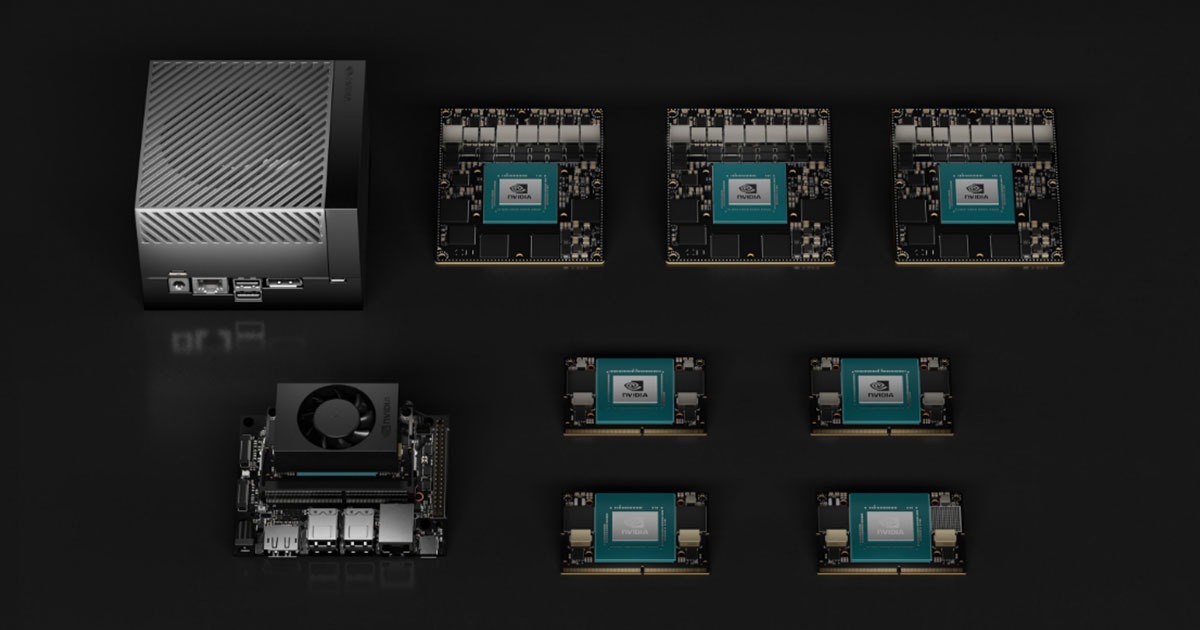
The NVIDIA Jetson Orin NX is a compact, SO-DIMM form-factor edge AI compute module designed for robotics, autonomous machines, and embedded vision applications. Manufactured by NVIDIA, it is available in 8 GB and 16 GB memory configurations and pairs an Ampere-architecture GPU with an 8-core Arm Cortex-A78AE CPU to deliver high-throughput on-device inference without relying on cloud connectivity. Positioned within NVIDIA's broader Jetson Orin family, the Orin NX targets developers and system integrators who need a balance of performance and power efficiency in a small footprint. It is commonly used in applications such as industrial inspection, autonomous mobile robots (AMRs), drone navigation, and smart edge devices where real-time AI inference is critical.
24 views